





About this worksheet
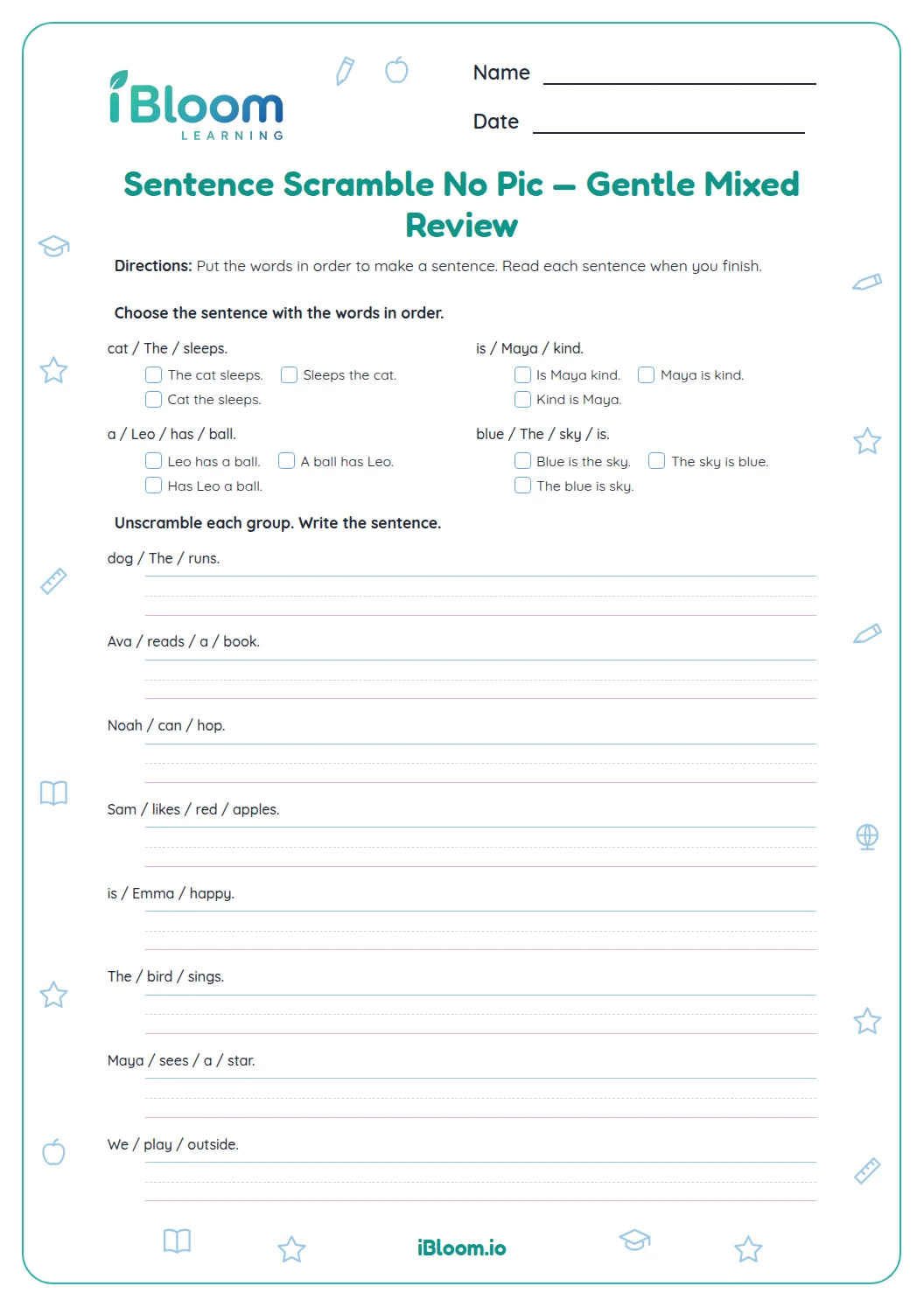
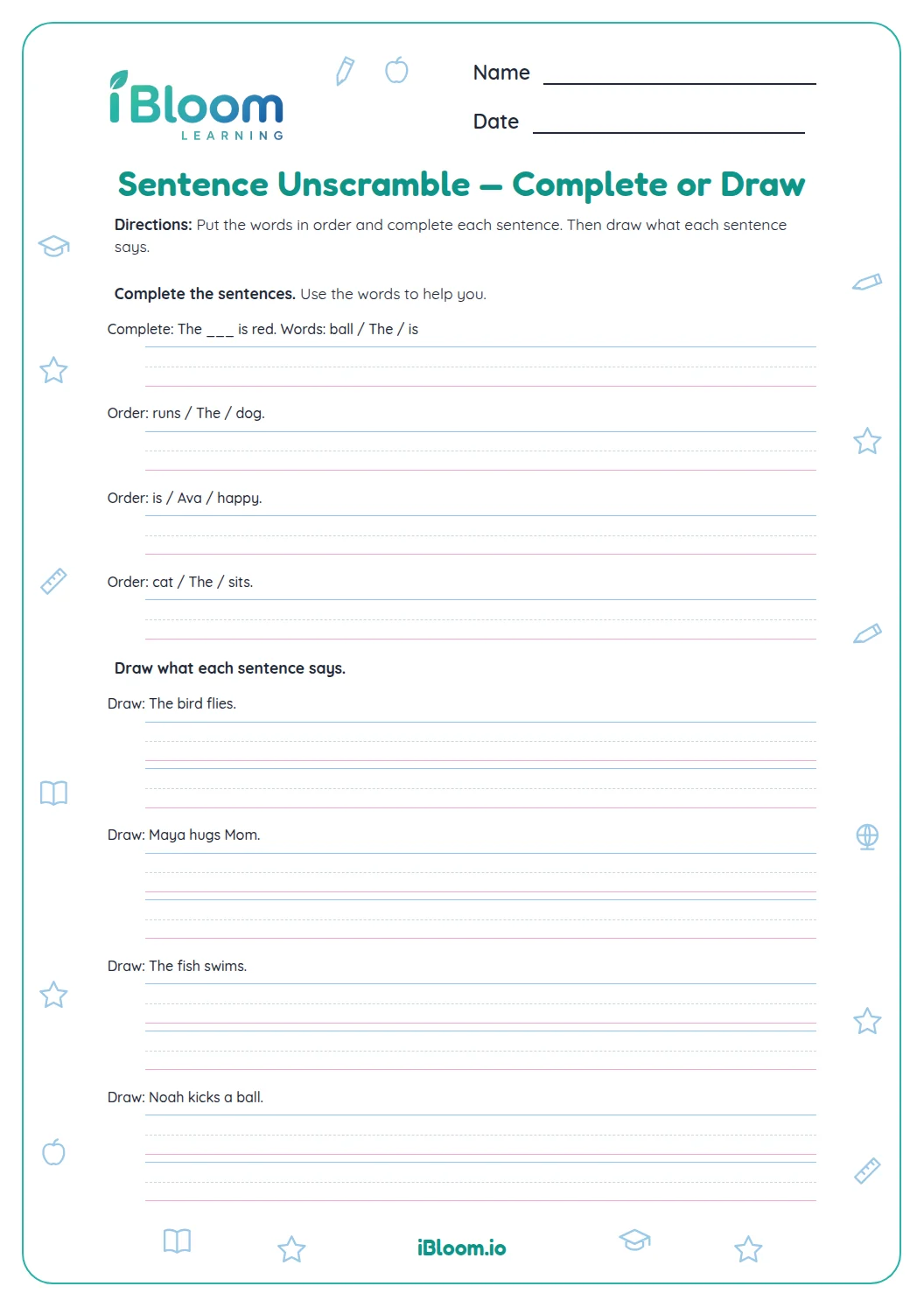
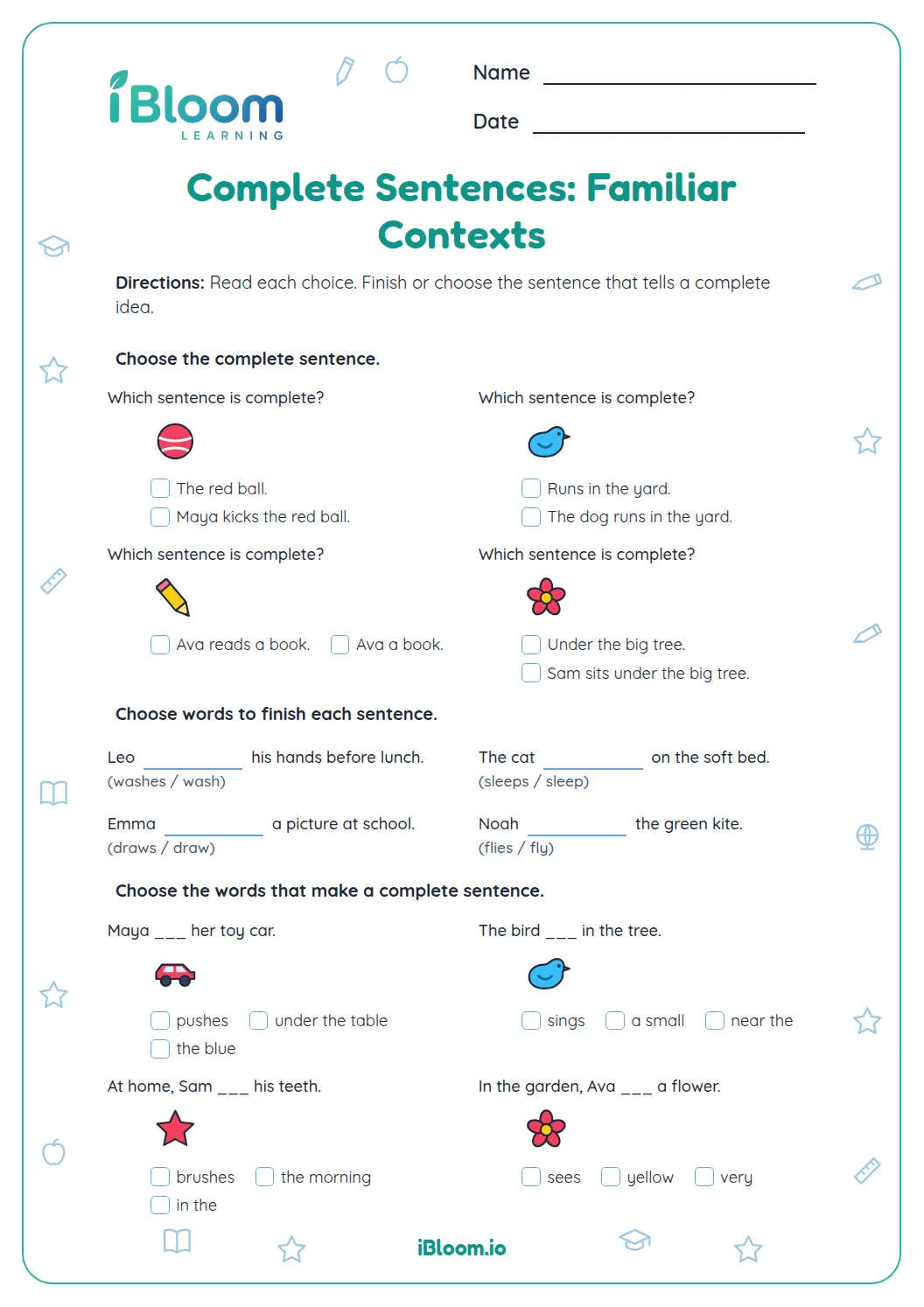
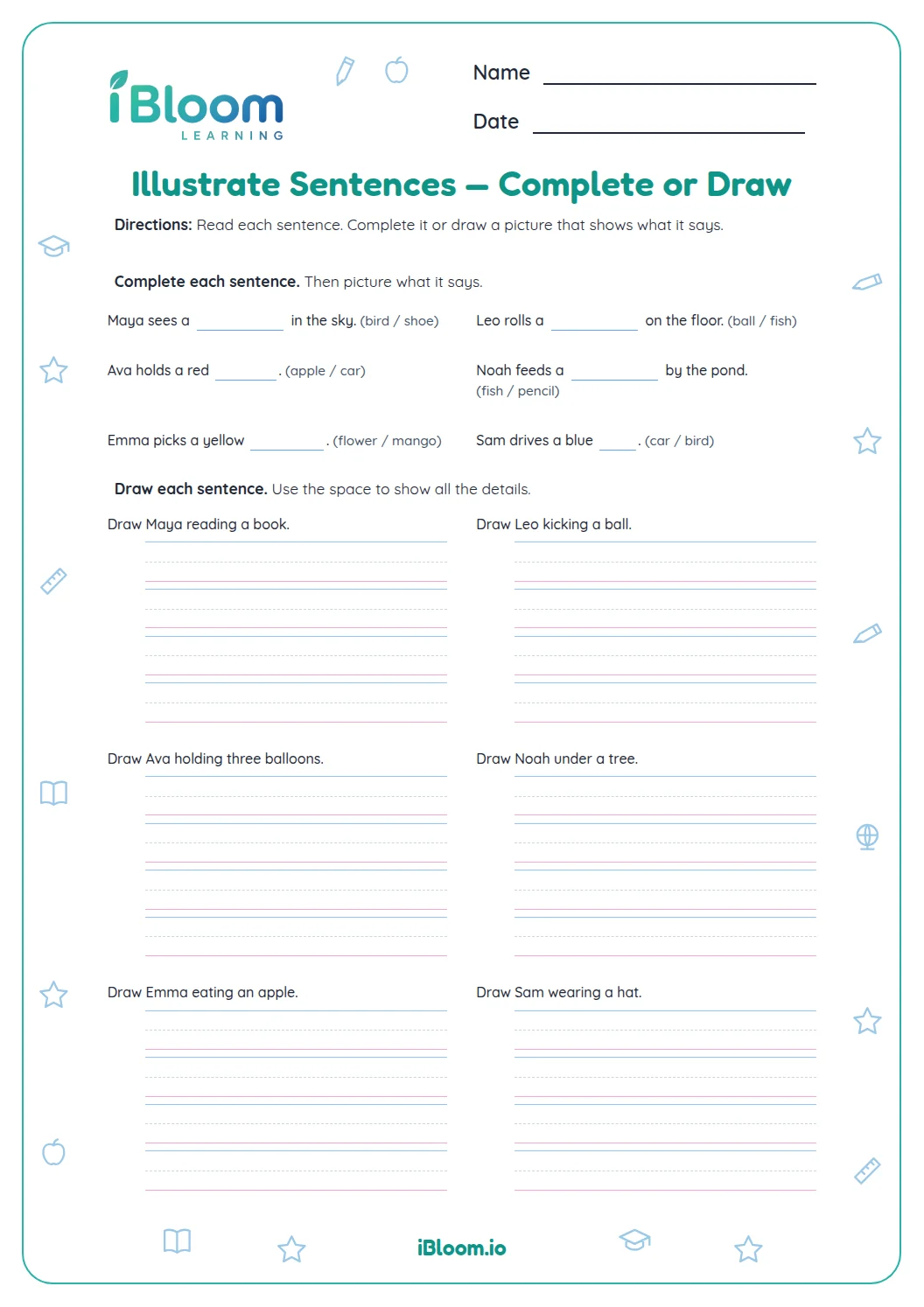
This free printable gives preschool and kindergarten children short sentence-scramble, sentence-completion, and drawing practice. Children put familiar words in order, add one fitting word to complete a thought, and draw simple sentence ideas. The activity supports complete sentence production aligned with Common Core L.K.1.f. The answer key lists the sentence order and sample details to include in each drawing.
Aligned to L.K.1.f
What will children do on the page?
Part A has eight short word groups to put into sentence order. Part B asks for one word to finish four familiar thoughts. Part C connects a sentence idea to a drawing.
- 1Words: The dog runs.
- 2Put the subject before the action: The dog runs.
How does drawing connect to reading?
A drawing gives children a way to show what a sentence means. For “Draw a little bird sitting on a branch,” look for both the bird and the branch.
How can an adult support the activity?
Read a prompt aloud, point under each word, and invite the child to say the full sentence before writing. Encourage a clear picture detail without requiring artistic skill.
How to use this worksheet
- 1Read the word group aloud and listen for a sentence that sounds complete.
- 2Find who or what the sentence is about, then place the action or detail.
- 3Say the whole sentence before writing it.
- 4For a blank, read both nearby words and choose one word that completes the thought.
- 5Read each drawing prompt and check the picture against its words.
Common mistakes and quick fixes
The mistake
Putting action words first when the sentence names who acts.
The fix
Pause and check the sentence or calculation against the clue: putting action words first when the sentence names who acts.
The mistake
Writing a group of words without saying it aloud to check its meaning.
The fix
Pause and check the sentence or calculation against the clue: writing a group of words without saying it aloud to check its meaning.
The mistake
Drawing only one detail when the prompt names two things.
The fix
Pause and check the sentence or calculation against the clue: drawing only one detail when the prompt names two things.
Common Core alignment
Produce complete sentences in response to prompts.
On this sheet: The questions ask students to practice produce complete sentences in response to prompts..
Show the official wordingHide the official wording
Produce and expand complete sentences in shared language activities.
What to practice next
Make more practice
Further reading
Questions parents and teachers ask
How do children use the sentence scrambles?
Children read each group of words and write them in an order that makes a complete sentence. The key shows one correct order, while reminding adults that some word groups can have more than one sensible spoken phrasing. Children can say each sentence aloud before writing, then compare the words and drawing with the answer key.
What does the drawing part practice?
Each drawing prompt asks the child to represent a simple sentence idea, such as a bird on a branch. This connects the words with meaning and gives early writers a way to show understanding. Children can say each sentence aloud before writing, then compare the words and drawing with the answer key.
Is this for preschool or kindergarten?
The words and sentences are short and familiar, so an adult can read prompts aloud for preschoolers. Kindergarten children can try reading and writing each sentence more independently. Children can say each sentence aloud before writing, then compare the words and drawing with the answer key.
How many questions are included?
There are 14 items: thirteen sentence-order or sentence-completion choices and one drawing prompt. The worksheet is arranged across two pages, followed by a two-page answer key. Children can say each sentence aloud before writing, then compare the words and drawing with the key.
Does it include an answer key?
Yes. The separate key gives the intended sentence order, a fitting completion for each blank, and a short description of a suitable drawing. Drawing answers can vary as long as they show the requested idea. Children can say each sentence aloud before writing, then compare the words and drawing with the answer key.