








About this worksheet
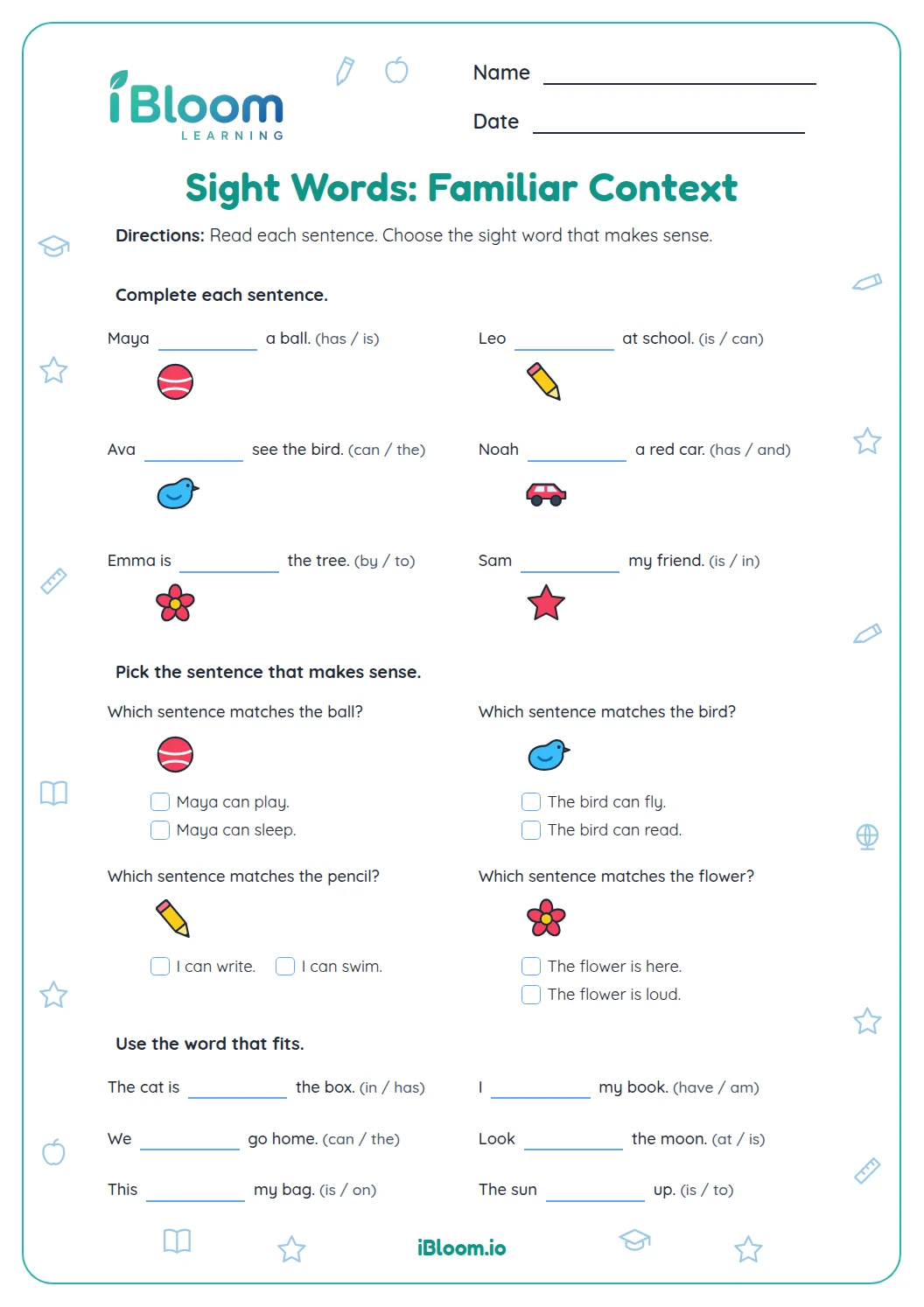
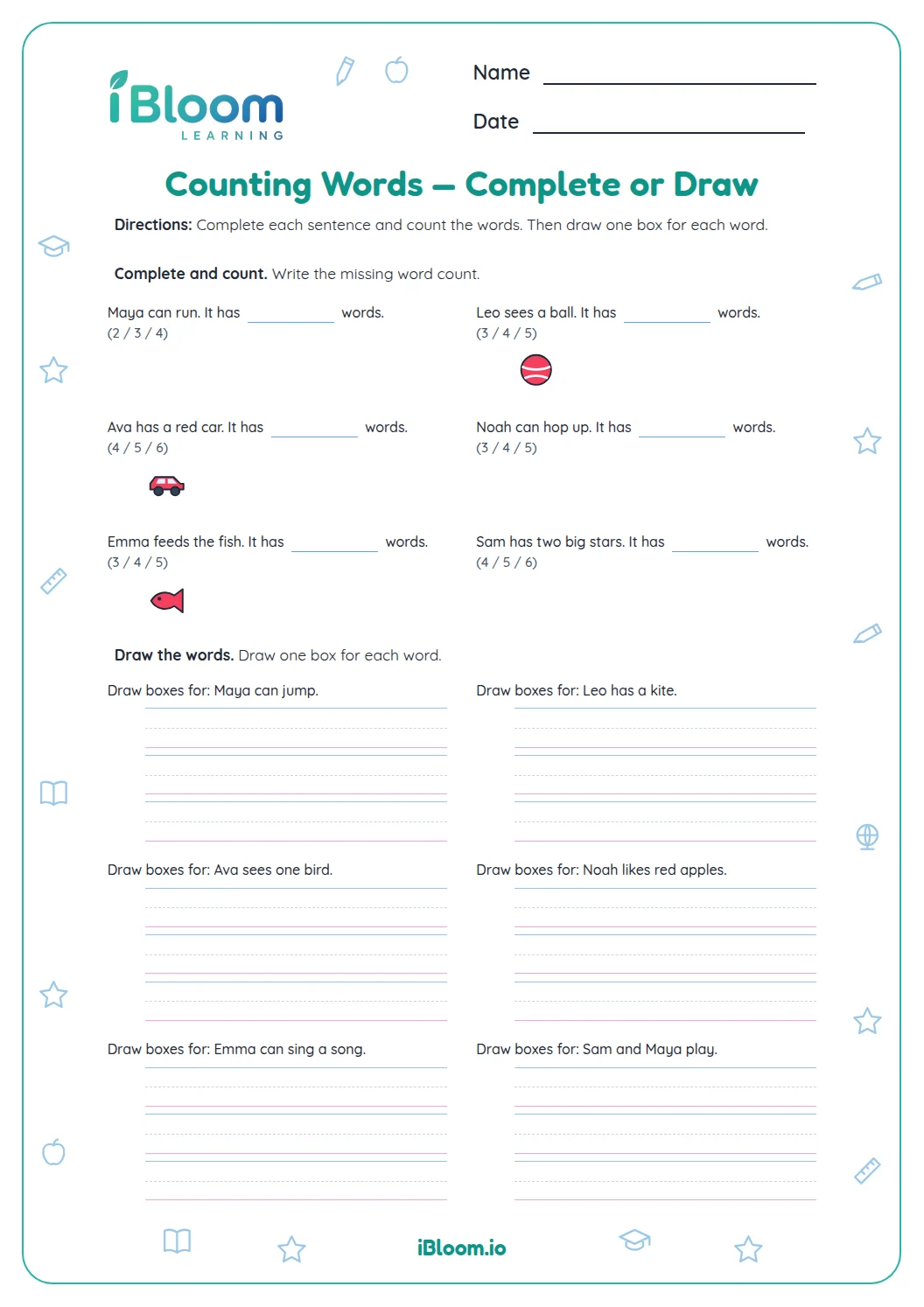
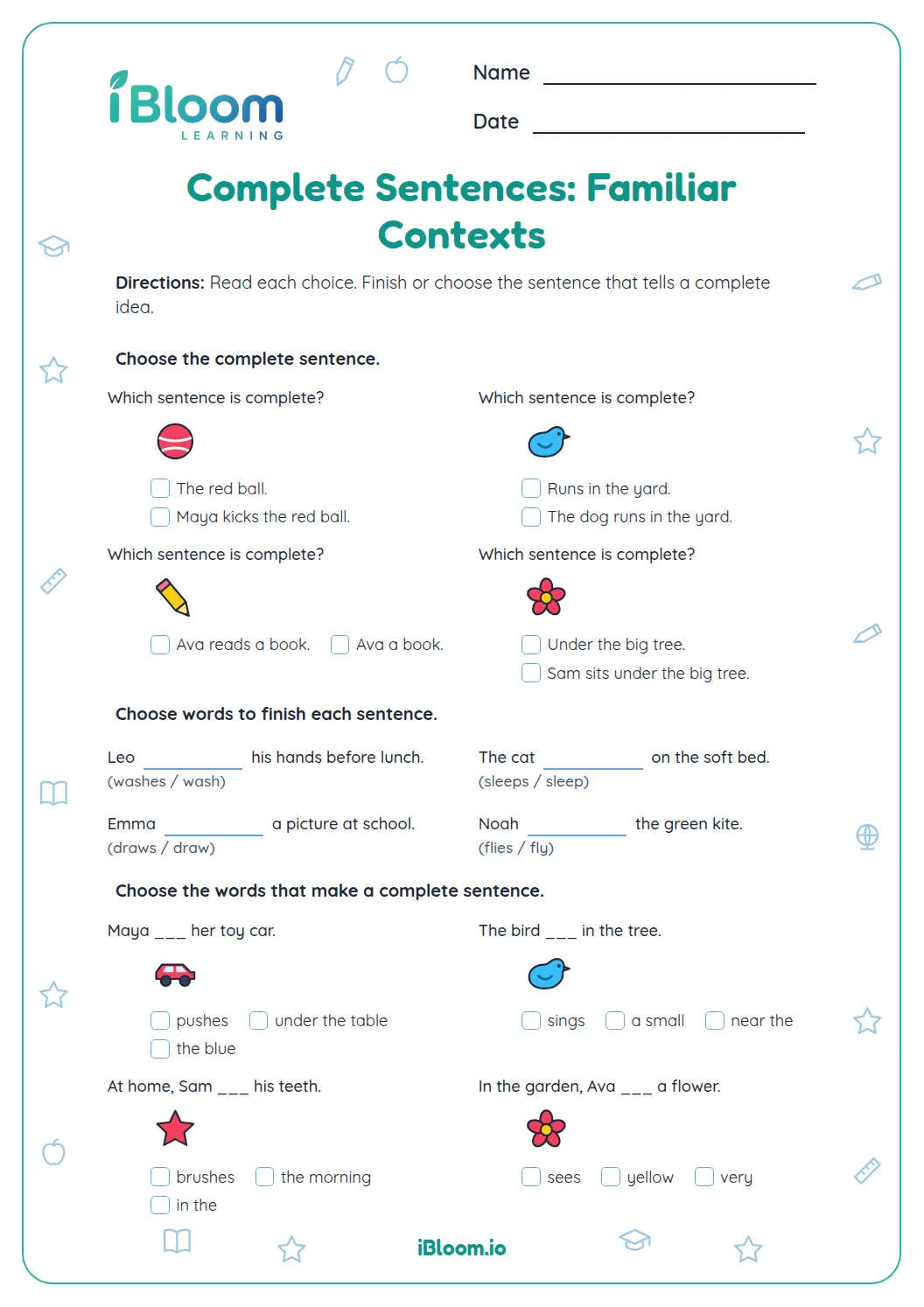
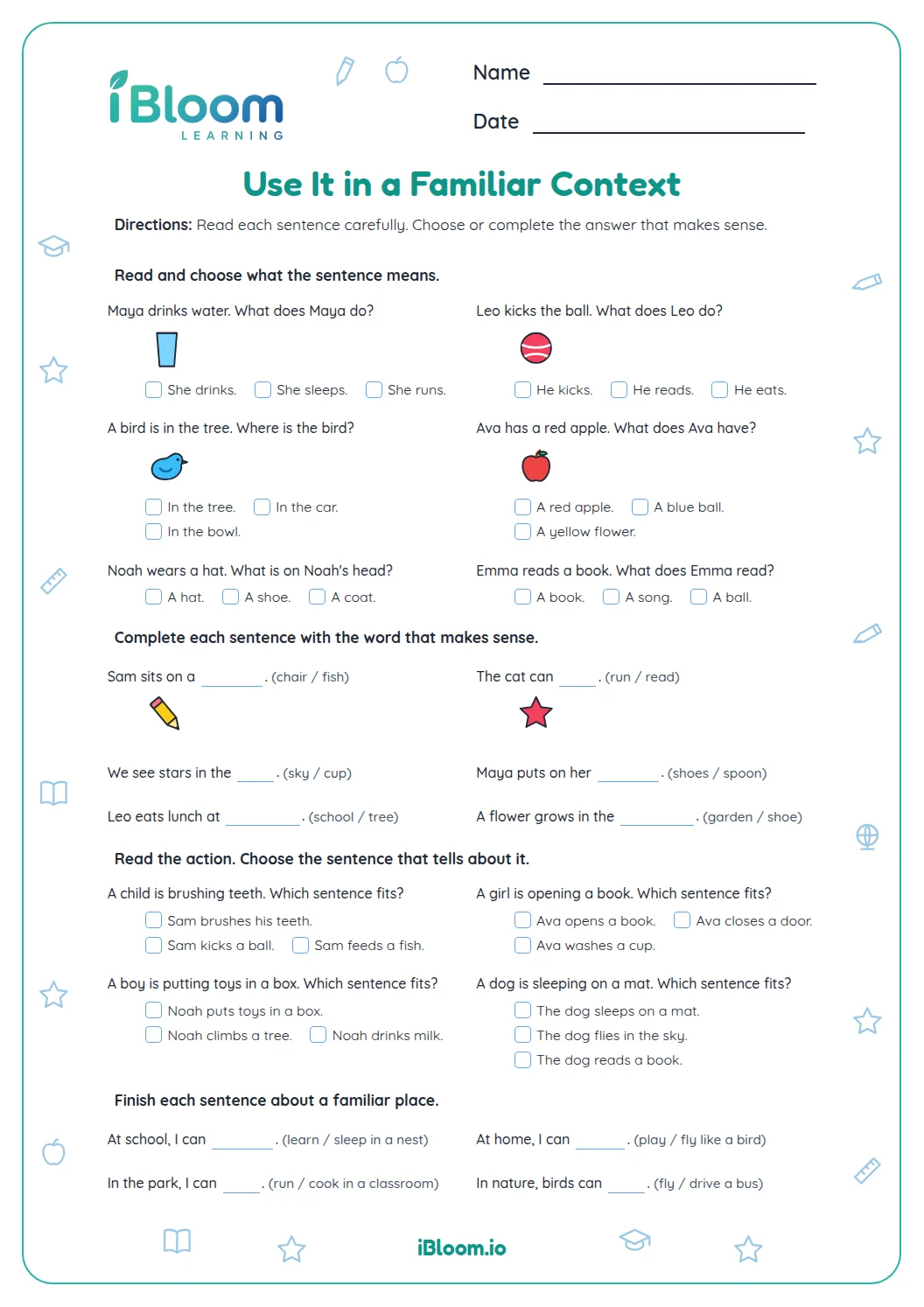
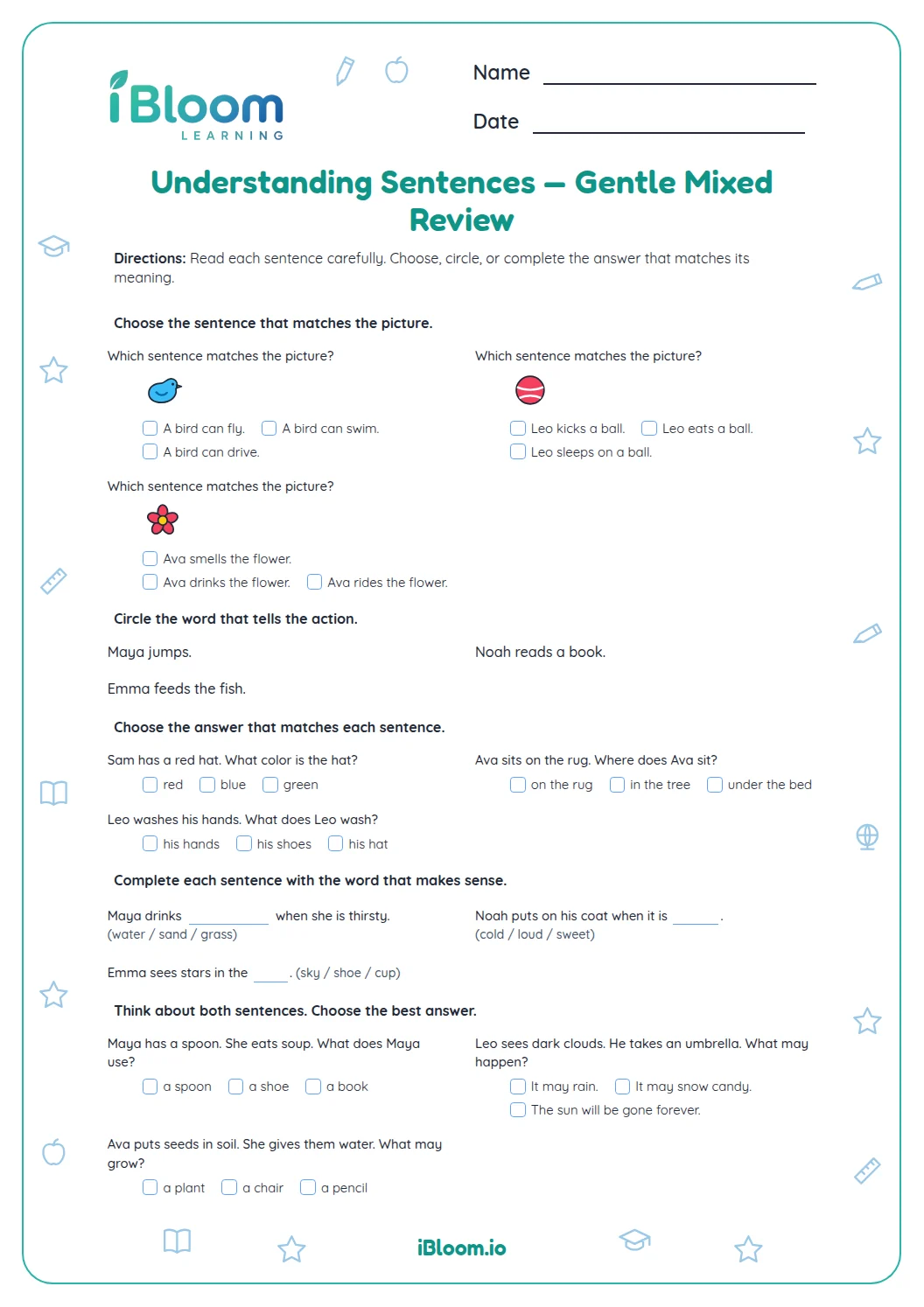
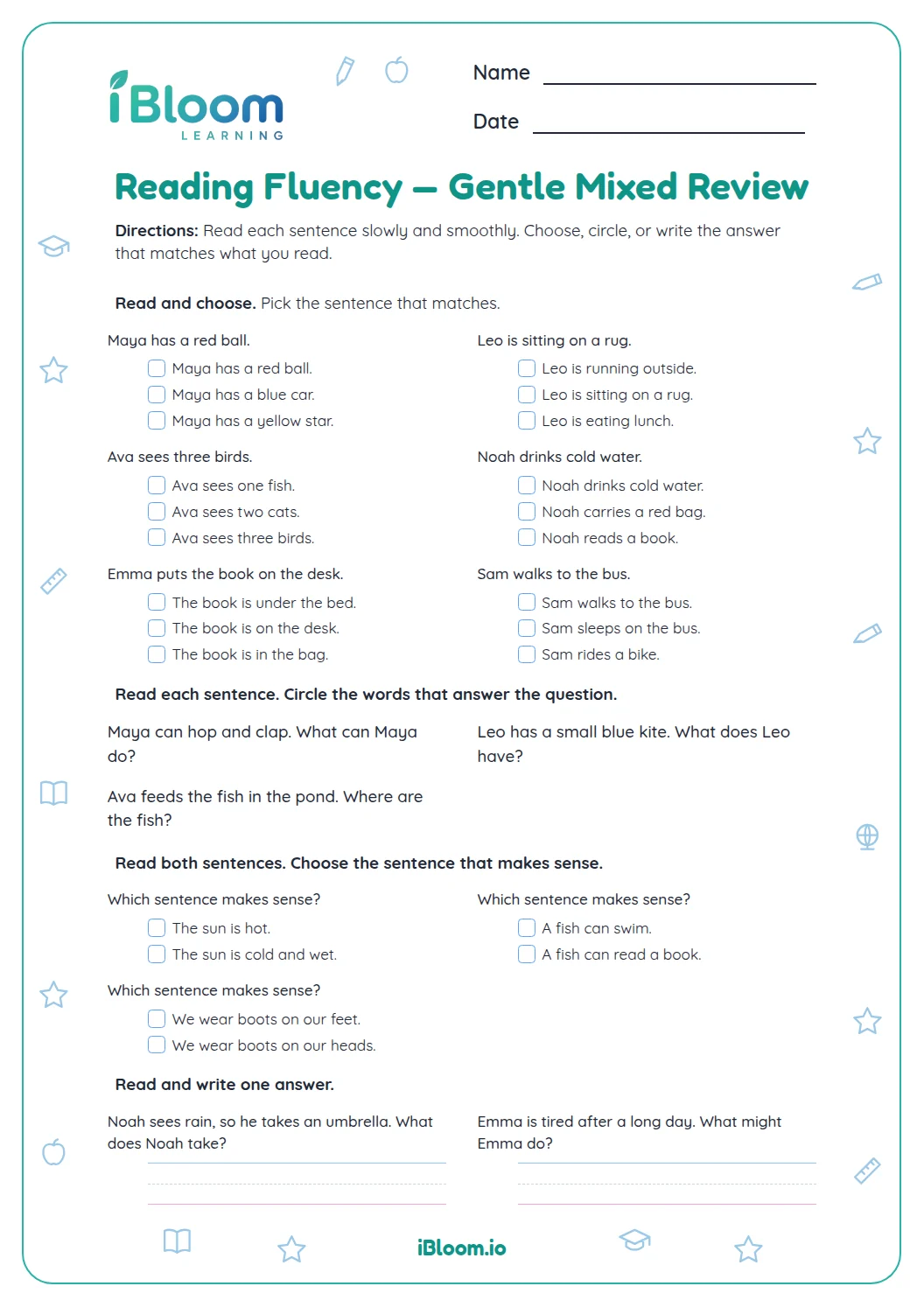
This free printable sight-word worksheet gives preschool and kindergarten children a gentle mix of sentence reading, picture choices, word finding, and sentence completion. Its 14 questions repeat familiar words including I, the, my, and is. Children read four short sentences and choose matching pictures, circle named words in four more sentences, and complete six blanks using two word choices each. The practice supports Common Core RF.K.3c, reading common high-frequency words by sight. An adult can help with directions and object names while children read the target words. A separate answer key marks the picture choices, target words, and missing words.
Aligned to RF.K.3c
How do the pictures support sentence reading?
In Part A, a sentence names one object, and children choose between two pictures. Reading “I see the sun.” leads to the sun picture. The other words still matter: ask children to point to I, see, and the as they say them.
Part C includes picture reminders for the objects in its sentences. Adults can name an unfamiliar object, then return attention to the small printed words.
Which words should children circle?
Part B names the exact targets: I, my, is, and the. Children circle only those words when they appear in each sentence. The word The at the beginning of a sentence is still the same word as the.
- 1Sentence: I see my cat.
- 2Target words: I, my, is, the
- 3Circle I and my.
- 4Read the whole sentence once more.
How should children choose a missing word?
Part C gives two words in parentheses beside each sentence. Children try each word aloud, choose the one that fits, and copy it into the blank. “The cat ___ my pet” needs is.
After a blank is filled, reread the completed sentence from the beginning. This final read joins recognizing a word with understanding the sentence.
How to use this worksheet
- 1Read the directions aloud and name the pictures if needed.
- 2For Part A, point under each word before choosing a picture.
- 3Read the four target words in the Part B directions together.
- 4Circle only the named target words, then reread each sentence.
- 5Try both word choices for each Part C blank and copy the one that fits.
Mistakes to check together
The mistake
Choosing a picture before reading the sentence.
The fix
Cover the choices briefly and read the sentence first.
The mistake
Circling every familiar word in Part B.
The fix
Return to the named targets: I, my, is, and the.
The mistake
Rejecting The because its first letter is capitalized.
The fix
Match The with the and explain that the first word of a sentence begins with a capital.
Common Core alignment
Read common words such as I, the, my, and is in short sentences.
On this sheet: Children recognize repeated high-frequency words while reading, choosing pictures, and completing sentences.
Show the official wordingHide the official wording
Read common high-frequency words by sight (e.g., the, of, to, you, she, my, is, are, do, does).
What to practice next
Make more practice
Further reading
Questions parents and teachers ask
Which sight words are repeated on the sheet?
The sheet repeats I, the, my, and is as named words to find, along with words such as see and can in sentences. Children meet the words through reading, circling, and completing blanks. Read the whole sentence after each response so the words keep their meaning.
Can a preschool child use this review?
Yes, an adult can use it with a preschool child who is beginning to recognize the printed words. Read the directions aloud, name unfamiliar pictures, and pause between parts. Let the child point, choose, or say an answer before copying words into the final blanks.
What exactly should children circle in Part B?
Children should circle only I, my, is, and the wherever those words appear in the four sentences. The directions name these targets so the activity has clear answers. A capitalized The counts as the same word, because capitalization changes at the beginning of a sentence.
Do the pictures replace reading the sentence?
No, children read each sentence to decide which picture matches it. For example, the sentence about the sun has a sun and a fish as choices. Point under the words while reading, then choose the picture. This keeps the print connected to the meaning.
What does the answer key show?
The key marks the correct picture choices, highlights the named target words, and fills the six sentence blanks. Use it after your child responds, then reread any sentence that needed help. A short second reading gives another chance to recognize the same words in context.