








About this worksheet
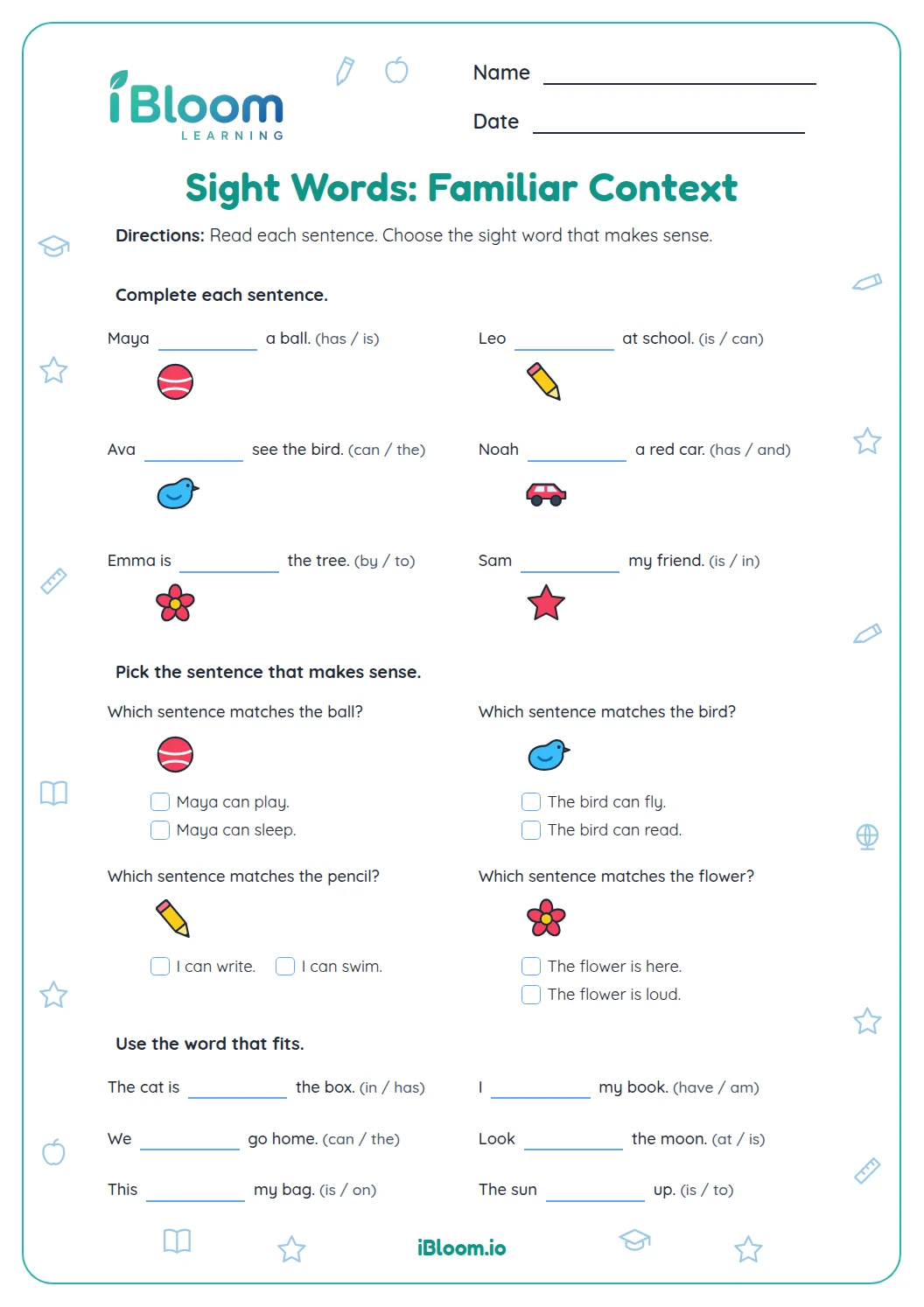
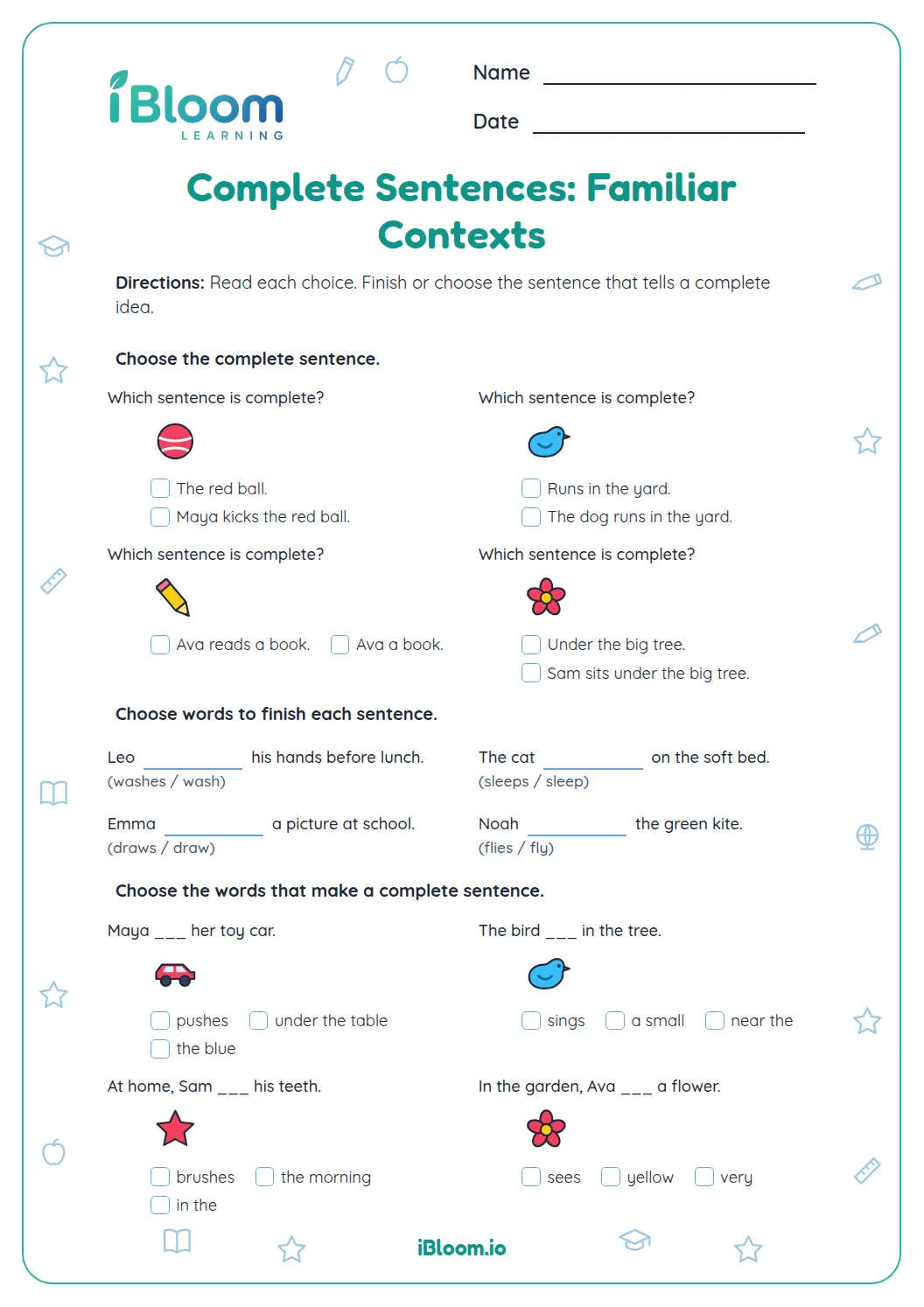
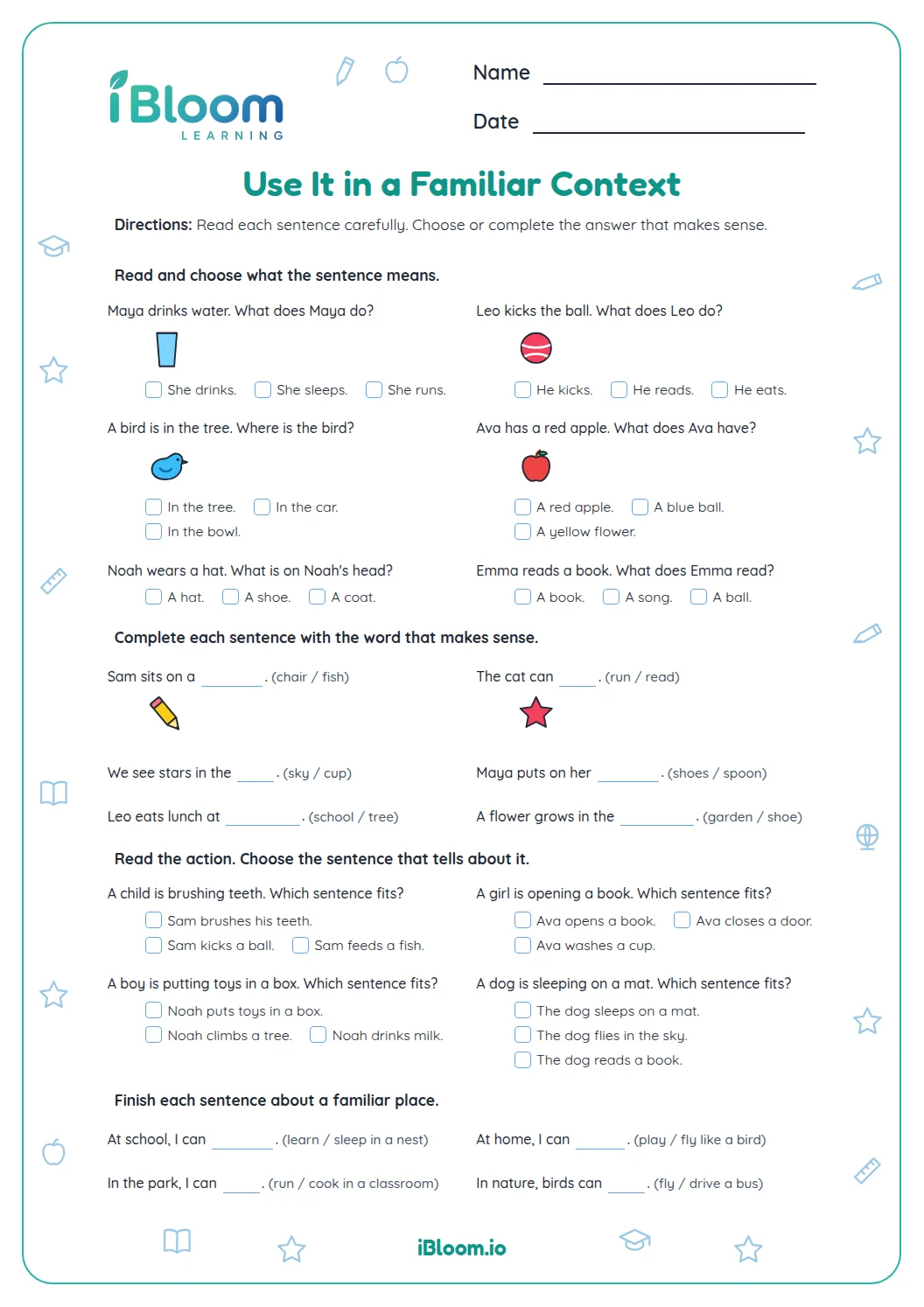
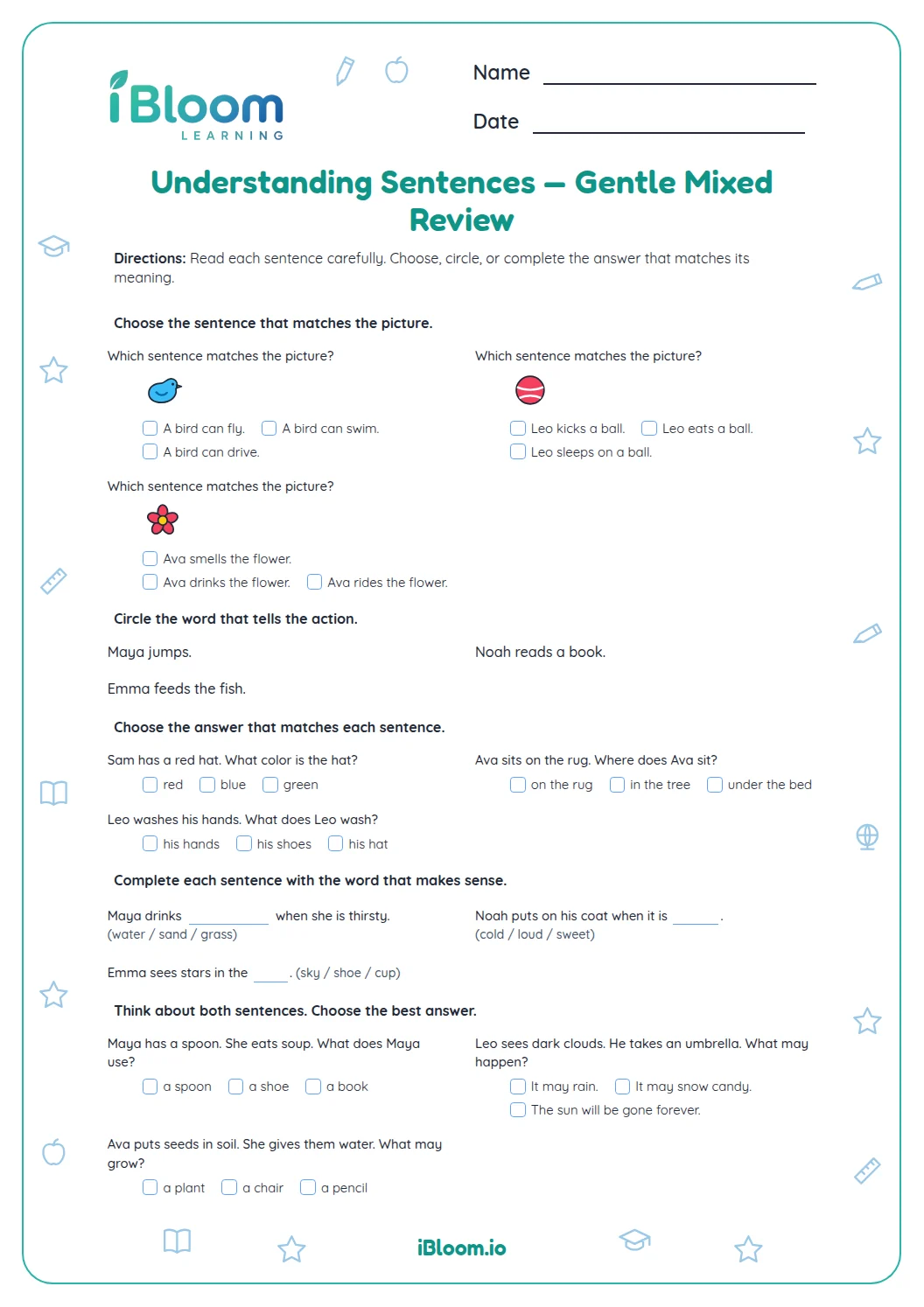
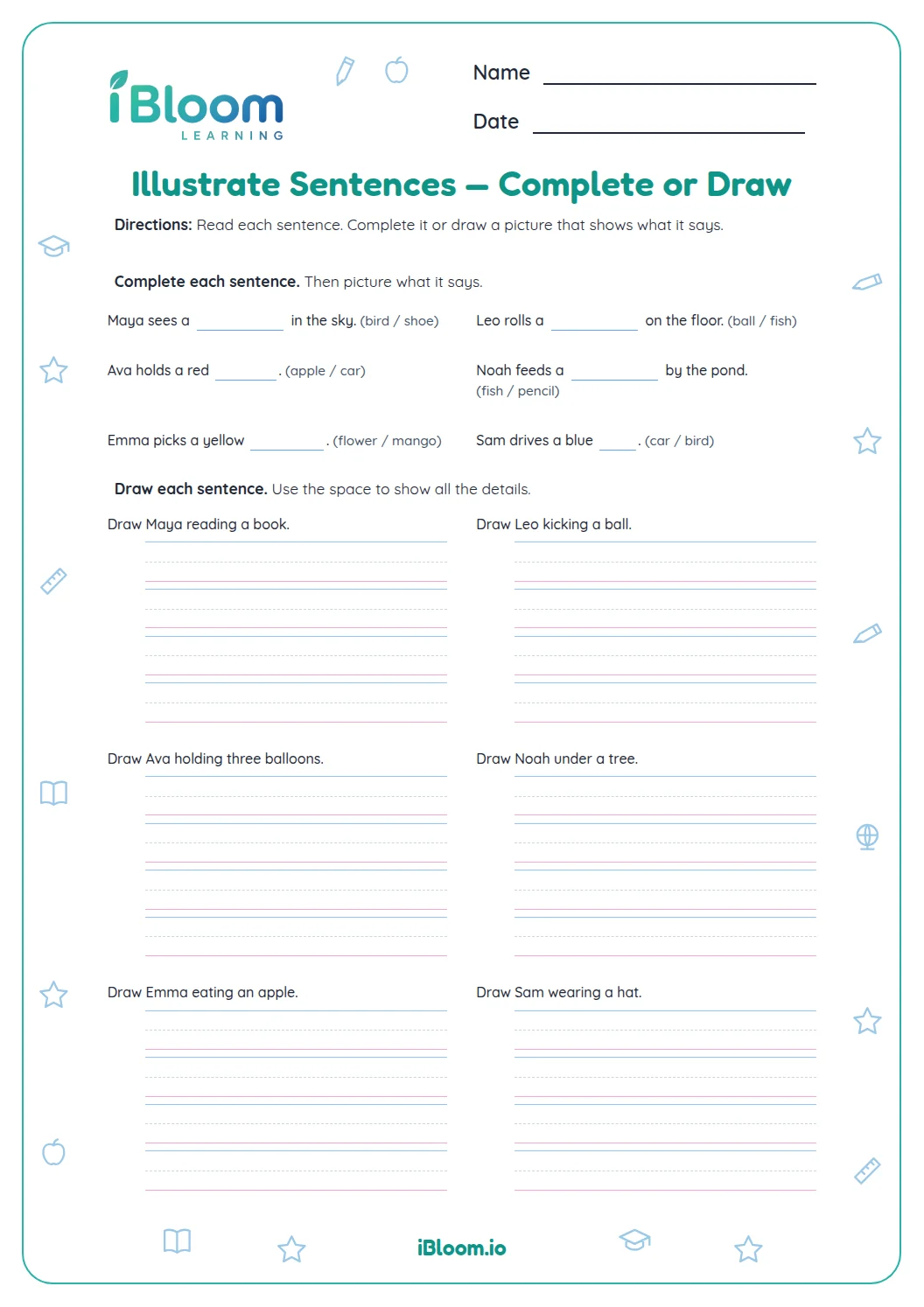
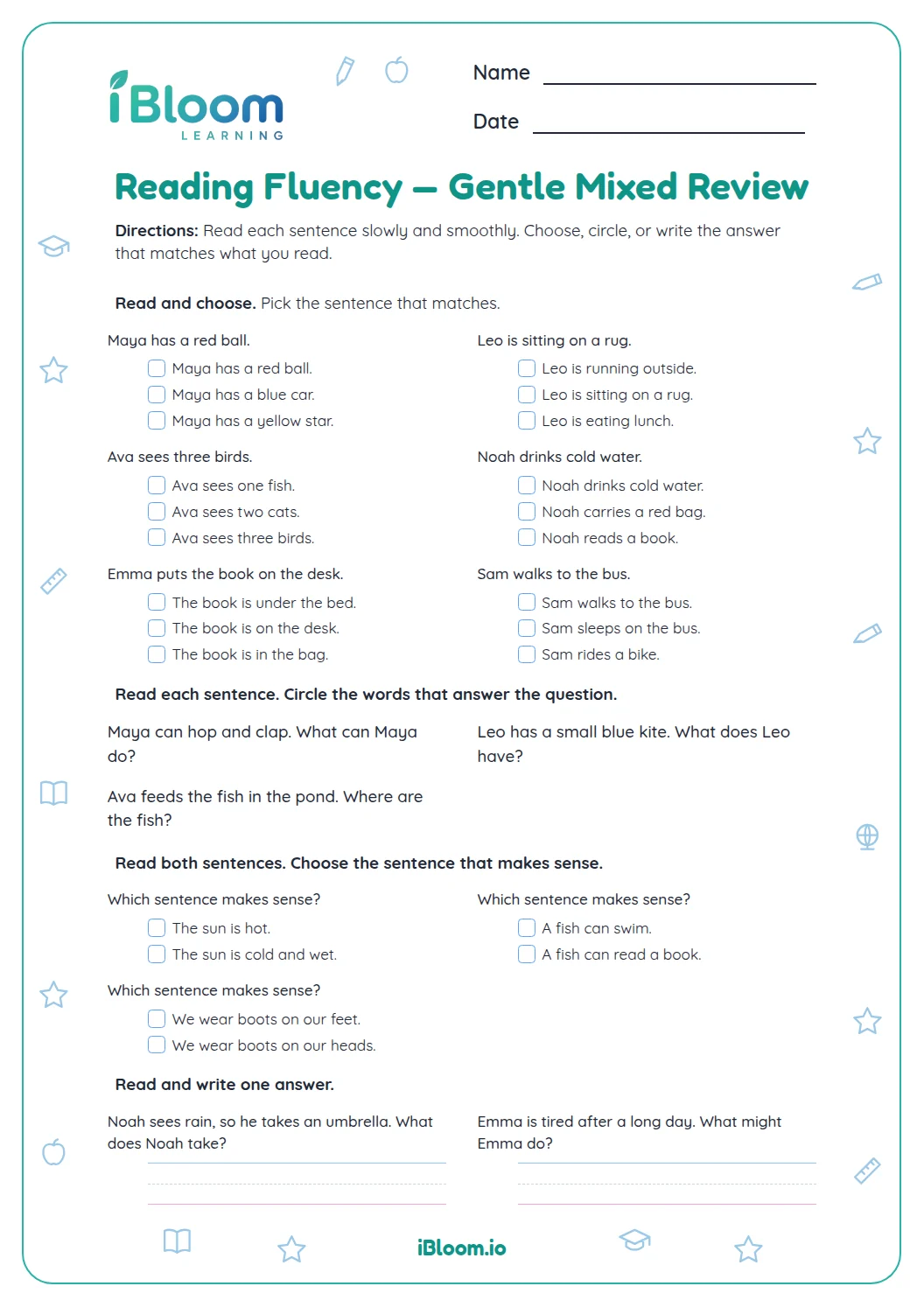
This printable preschool and kindergarten worksheet puts familiar sight words into short, readable sentences. Children complete sentence frames with words such as I, we, the, my, and is, then use a sentence to guide a drawing or select a matching picture. Picture cues support early readers while the text remains the focus. A separate key includes the choice answers and drawing examples.
Aligned to RF.K.3c
What is a sight word?
A sight word is a familiar word a child learns to recognize quickly while reading. Words like I, the, my, and we show up in many short sentences. Reading them in a sentence helps children connect the printed word to what the sentence means.
How do pictures support sentence reading?
A picture can help a child think about meaning, but the words still carry the message. Read the sentence aloud, point to each word, and ask which pictured object or action fits.
- 1I see a ___.
- 2Read the sentence and look at the pictured choices.
- 3Choose cat to make “I see a cat.”
What activities are on the pages?
Part A fills a missing word in six short sentences. Part B asks children to illustrate four sentences. Part C pairs four sentences with picture choices. An adult can read prompts aloud as needed.
A gentle routine for early readers
- 1Read the whole sentence aloud together.
- 2Point to each word as you say it.
- 3For a blank, try each choice in the sentence and listen for a sentence that makes sense.
- 4For a drawing prompt, reread the sentence and include its key detail.
- 5Look at the answer key together and talk about what the sentence means.
Common early-reading mix-ups
The mistake
Choosing a word because it is familiar without rereading the sentence.
The fix
Say the sentence with the choice in the blank and check that it makes sense.
The mistake
Looking only at the picture and guessing without reading.
The fix
Point to and read the words first, then use the picture to confirm the meaning.
The mistake
Leaving out a detail when drawing a sentence.
The fix
Reread the sentence and name one detail the drawing should show.
Common Core alignment
The worksheet supports early reading of familiar sight words in short sentences.
Read common high-frequency words by sight in short sentences.
On this sheet: Children read high-frequency words including the, my, we, is, and I in sentence frames.
Show the official wordingHide the official wording
Read common high-frequency words by sight (e.g., the, of, to, you, she, my, is, are, do, does).
What to practice next
Make more practice
Further reading
Questions parents and teachers ask
Can an adult read the directions aloud?
Yes. At this age, an adult can read the sentence and choices aloud while the child points to words or pictures. The child can still practice recognizing the printed sight words and explaining what the sentence says. Pause to let the child choose.
What does “complete or draw” mean here?
Children first choose a word that completes a short sentence. They then read a sentence and draw a matching idea, such as a big dog or a red ball. Both activities connect the printed words to a complete thought.
Do the drawings need to look exactly like the key?
No. The key gives a simple example of the idea in the sentence. A drawing can look different and still be correct when it includes the sentence detail, such as a ball colored red. Accept the child’s own way of showing the meaning.
Which sight words appear on the page?
The sentence frames use familiar words such as I, we, the, is, my, and it. Picture names and action words help make complete sentences, while the target is reading familiar words in context. An adult may read each sentence aloud as the child points to its words and picture clues.
How should I help if my child gets stuck?
Read the sentence slowly and point to each word. For a blank, try each choice aloud. Ask what the whole sentence would mean, then let the child choose or draw without rushing. A supportive reread is more useful than supplying the answer.