






About this worksheet
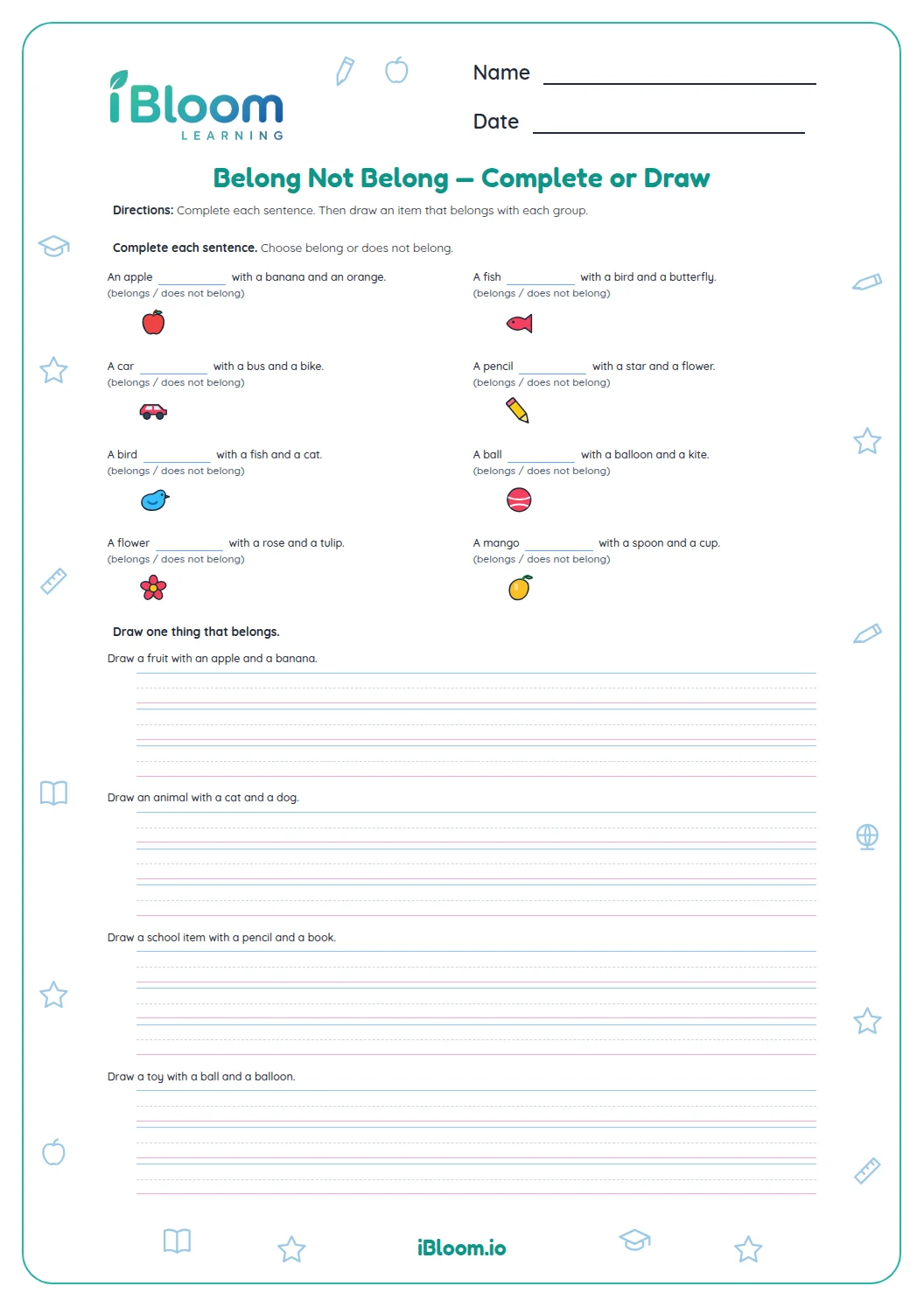
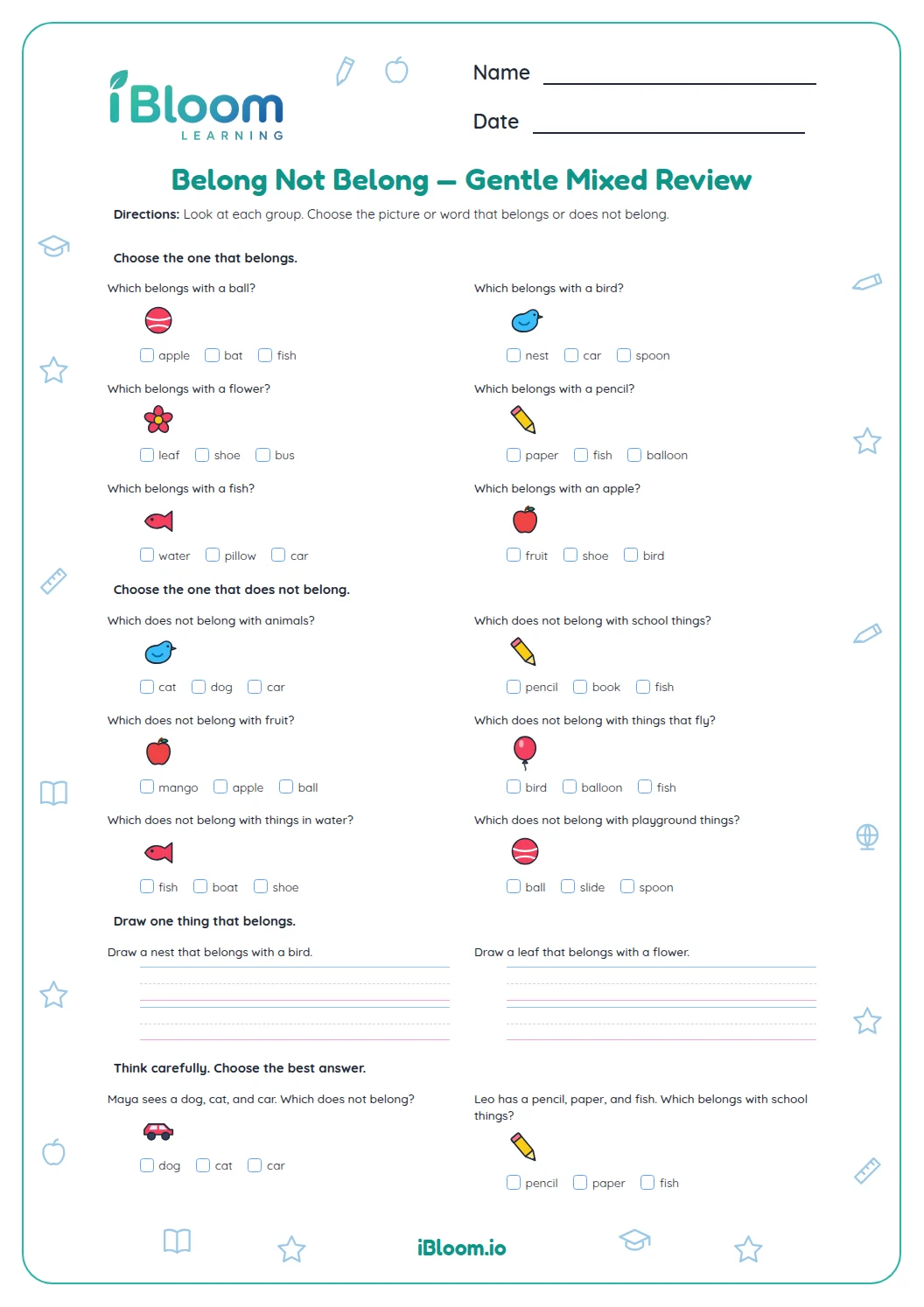
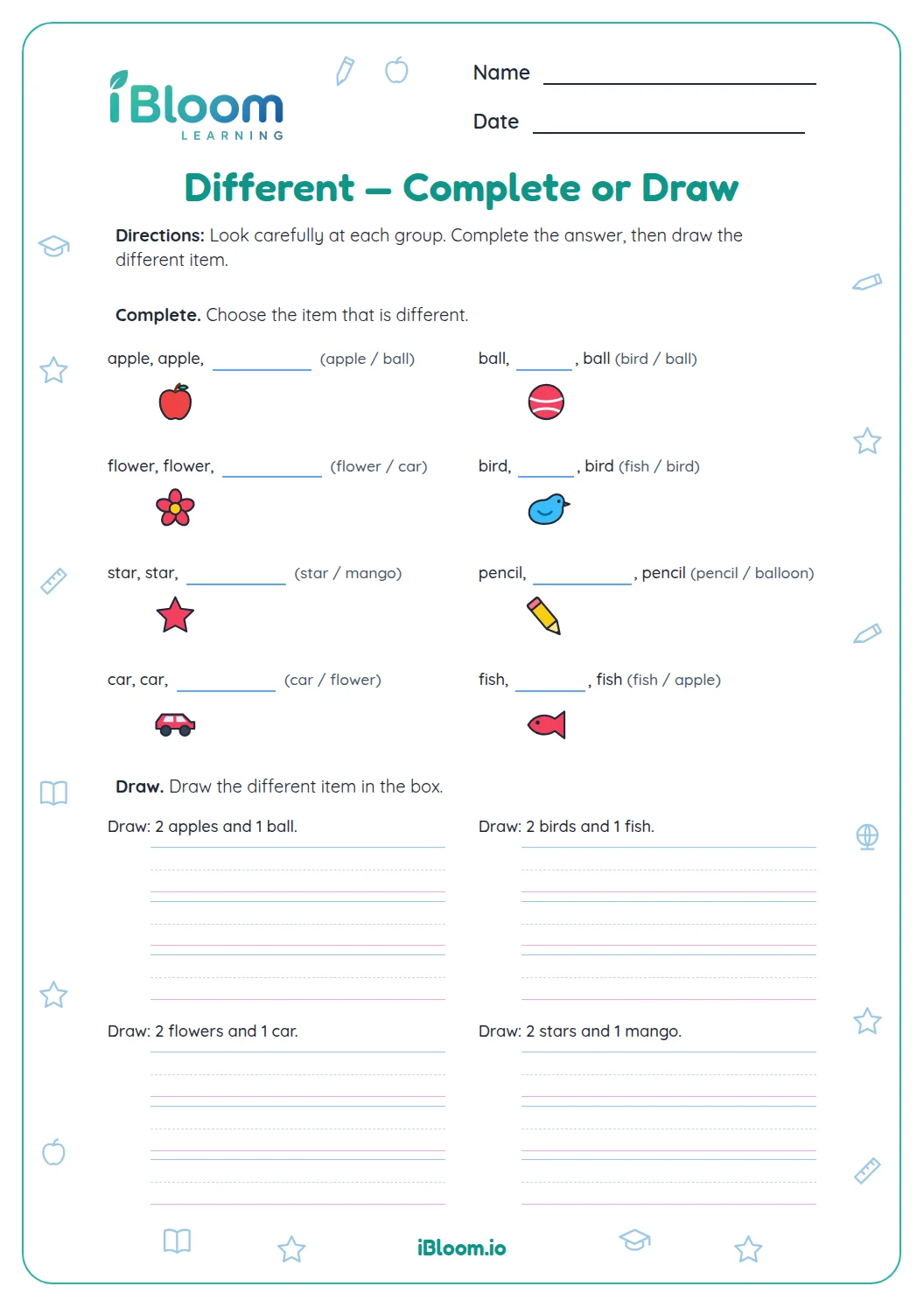
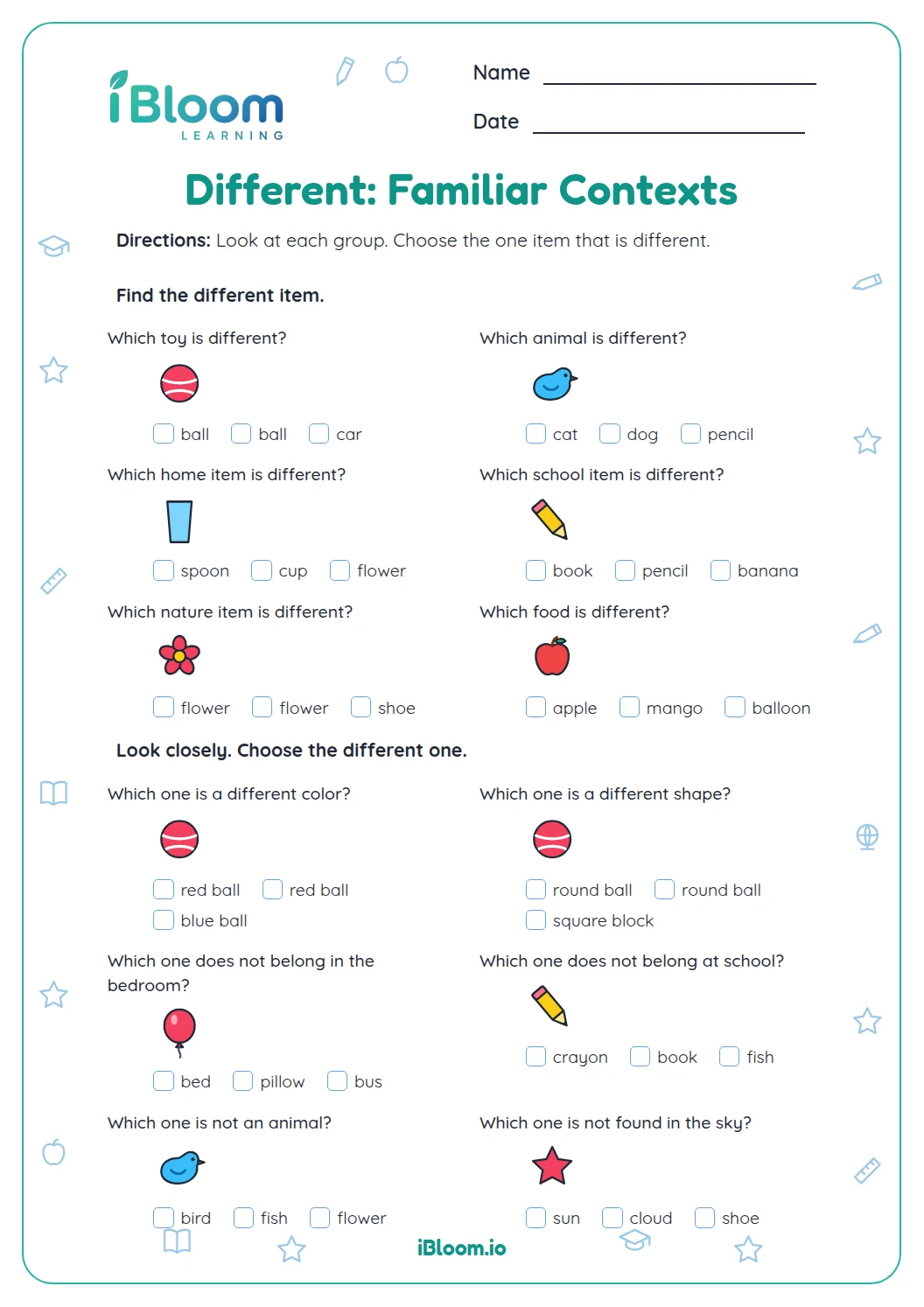
This preschool and kindergarten worksheet uses clear pictures of foods, animals, clothing, school supplies, and familiar objects. Children look for a shared group idea, circle the picture that fits or does not fit, and apply the same thinking to a simple daily situation. All 16 activities use picture rows. A separate answer key is included.
What will children practice?
Children compare a row of pictures using one clear clue, such as food, animals, or things used at school. In question 1, three pictures are fruits and the carrot is the one that does not belong.
- 1Which picture does not belong with these fruits?
How can children check their thinking?
Name each picture first, then say the group rule aloud. A choice should fit or break that one rule; avoid changing the rule halfway through.
How is the worksheet arranged?
The worksheet has 16 short picture activities in three parts. Children first find items that do not fit, then use familiar contexts to decide what belongs.
How to use the picture groups
- 1Name each picture before choosing.
- 2Say what the group has in common.
- 3Listen for whether the prompt asks what belongs or does not belong.
- 4Check each choice against the same group rule.
- 5Invite the child to explain the choice in a few words.
Common mistakes and quick fixes
The mistake
Choosing a favorite picture instead of using the group clue.
The fix
Name the group before picking.
The mistake
Switching between different group rules.
The fix
Use one clear feature for the whole question.
The mistake
Mixing up belongs and does not belong.
The fix
Repeat the key phrase in the prompt before choosing.
What to practice next
Questions parents and teachers ask
How many picture questions are there?
There are 16 picture questions across the worksheet pages, plus a separate answer key. Each prompt has a row of familiar pictures. Children select one item that fits or does not fit a group, giving repeated practice with simple clues.
What does “does not belong” mean here?
It asks a child to find the picture that does not fit the group idea named in the question. For example, three fruit pictures belong together, while a carrot is the odd one out in that group. The child can name the shared group before selecting.
Can a preschooler use this worksheet?
Yes. The questions use familiar objects and picture choices for preschool and kindergarten learners. An adult can name the pictures aloud and help the child focus on one simple clue, such as foods, animals, or school supplies. Children can answer by pointing or marking a choice.
Should children explain their choices?
A short explanation can help make the group rule clear. Ask what the pictures have in common, or why one choice does not fit. The worksheet itself is picture-choice practice, so a spoken explanation can be brief and tied to the pictures.
Is an answer key included?
Yes. The answer key is printed after the activity pages and shows the intended choice for each item. Keep it nearby to check responses after the child has tried the picture groups. An adult can also use it to talk through a clue that was confusing.