






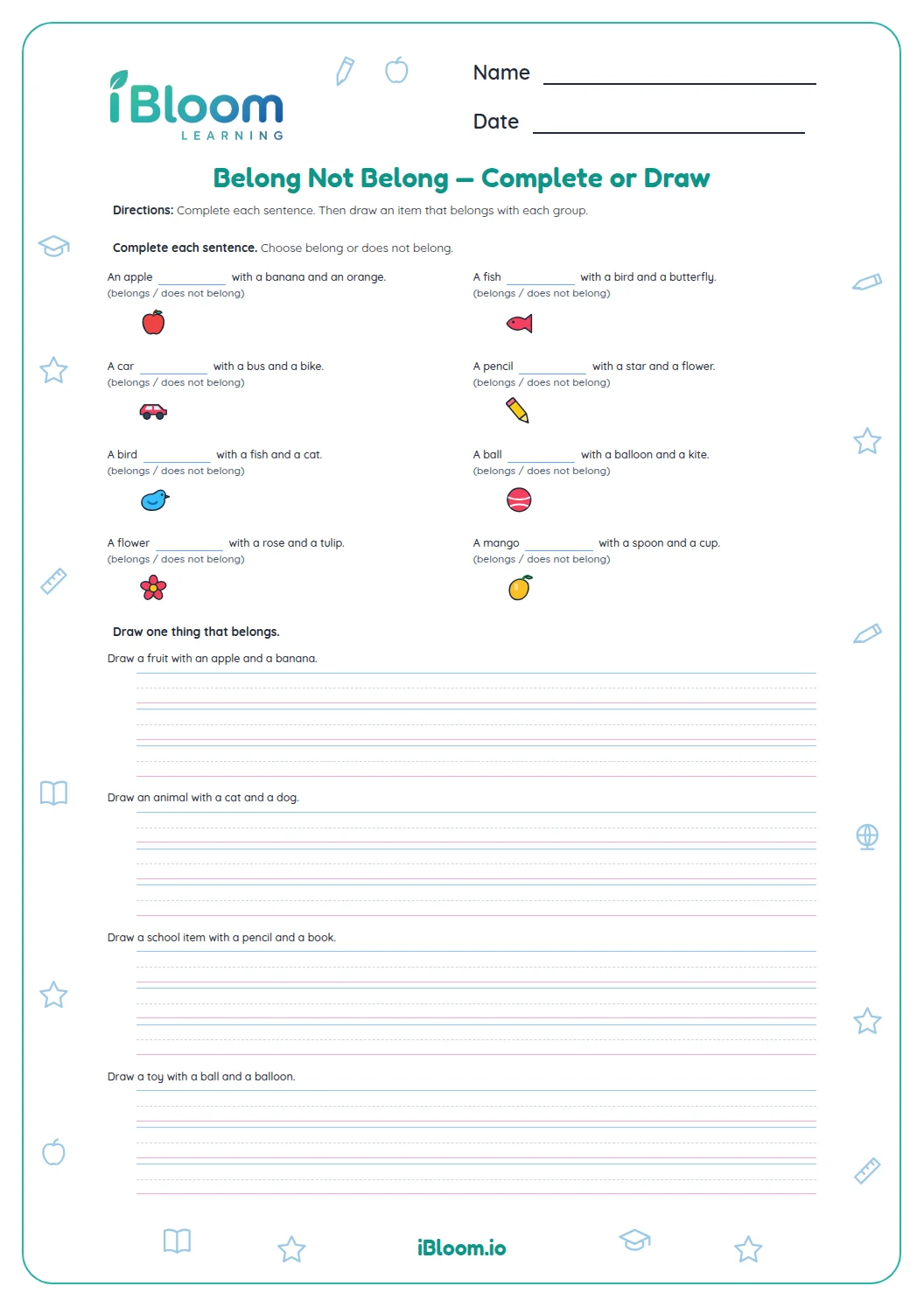


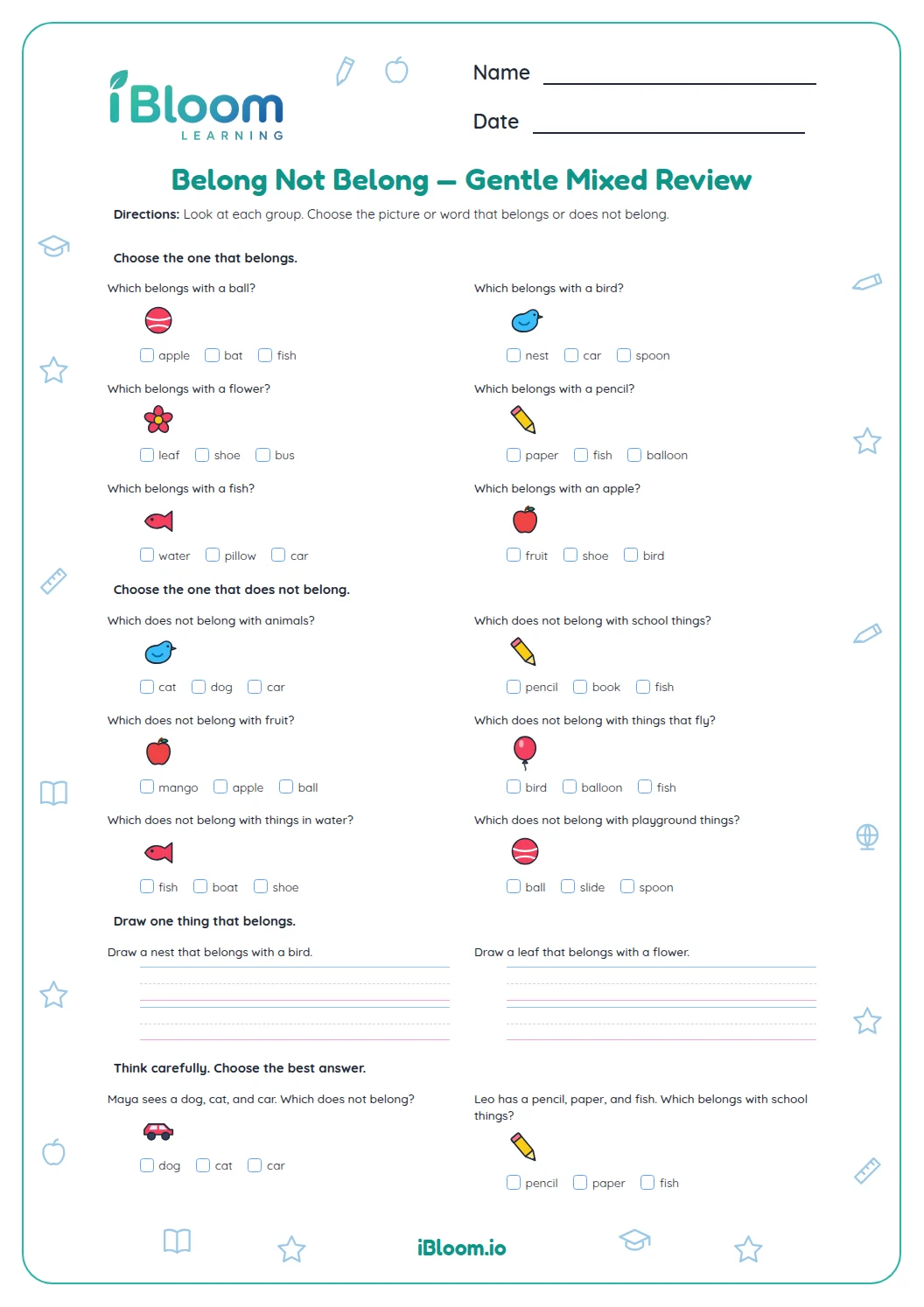
About this worksheet
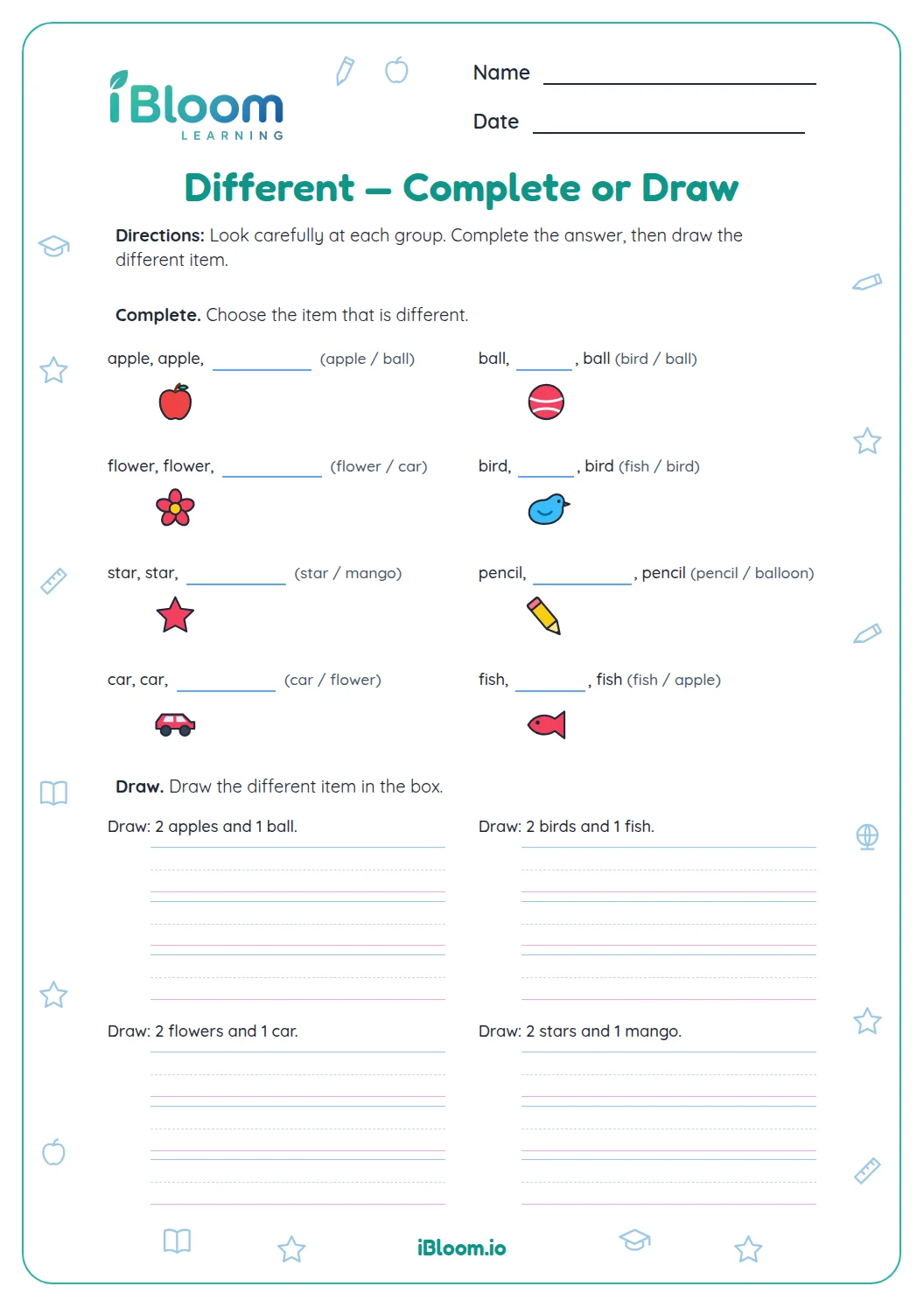
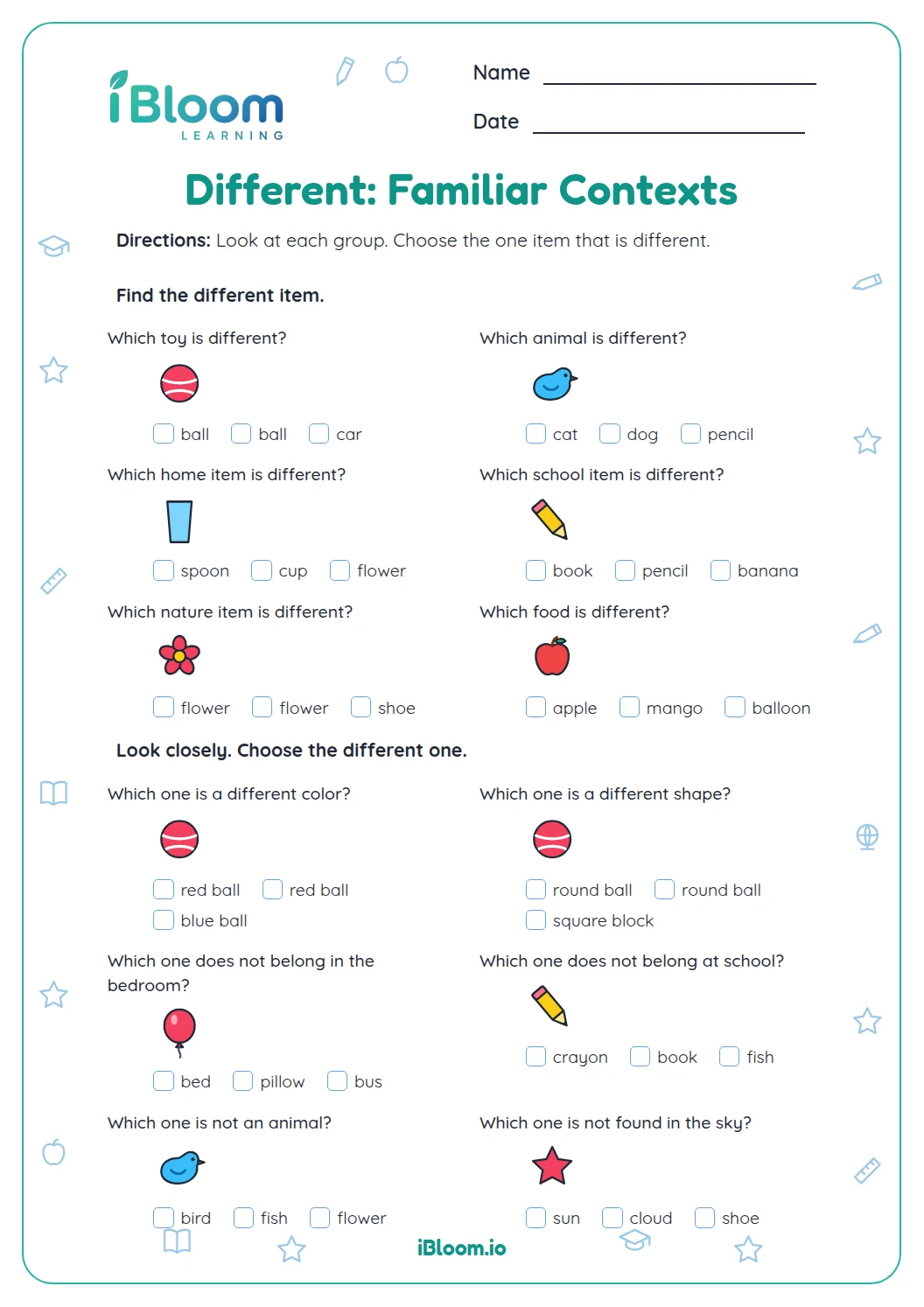
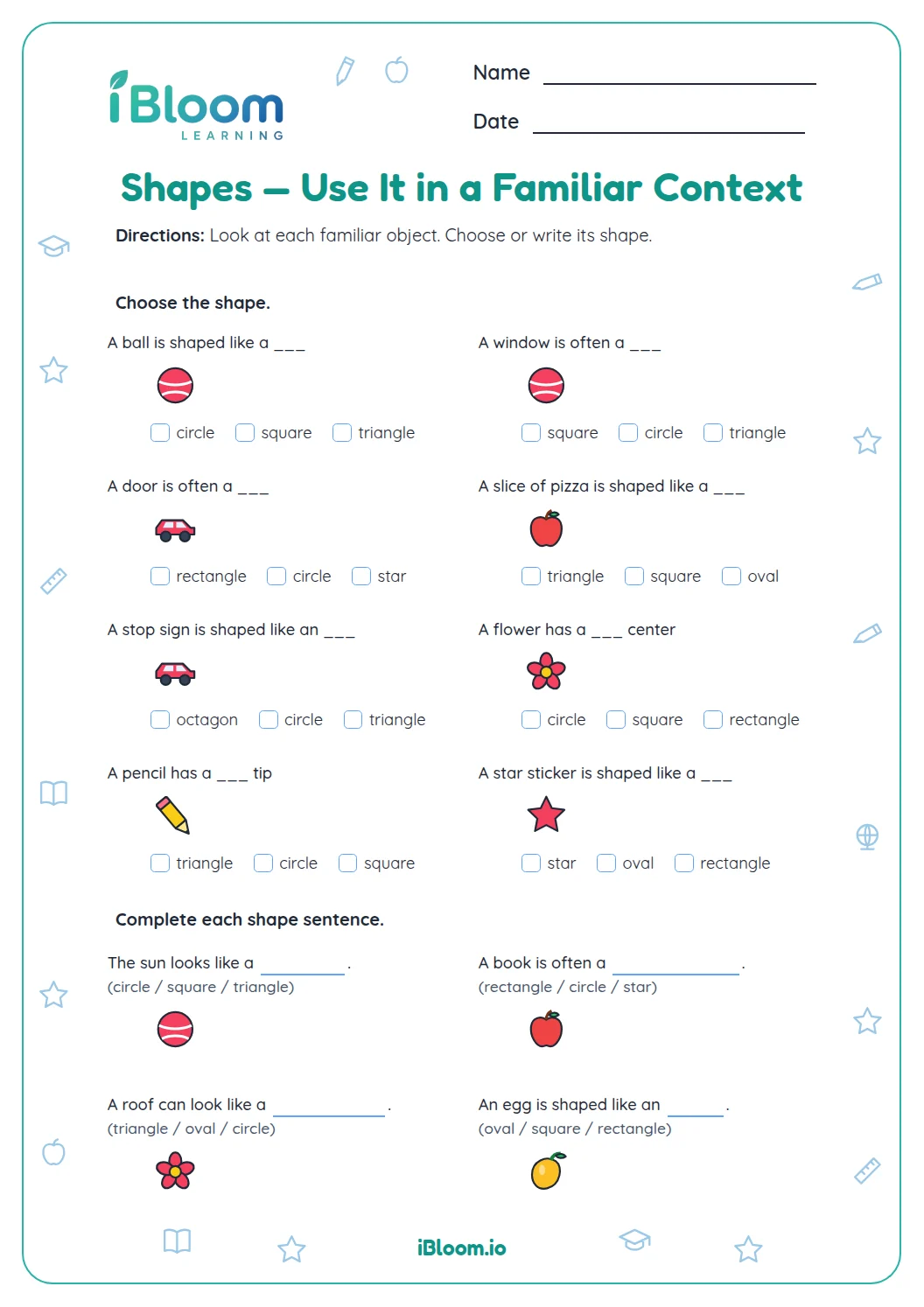
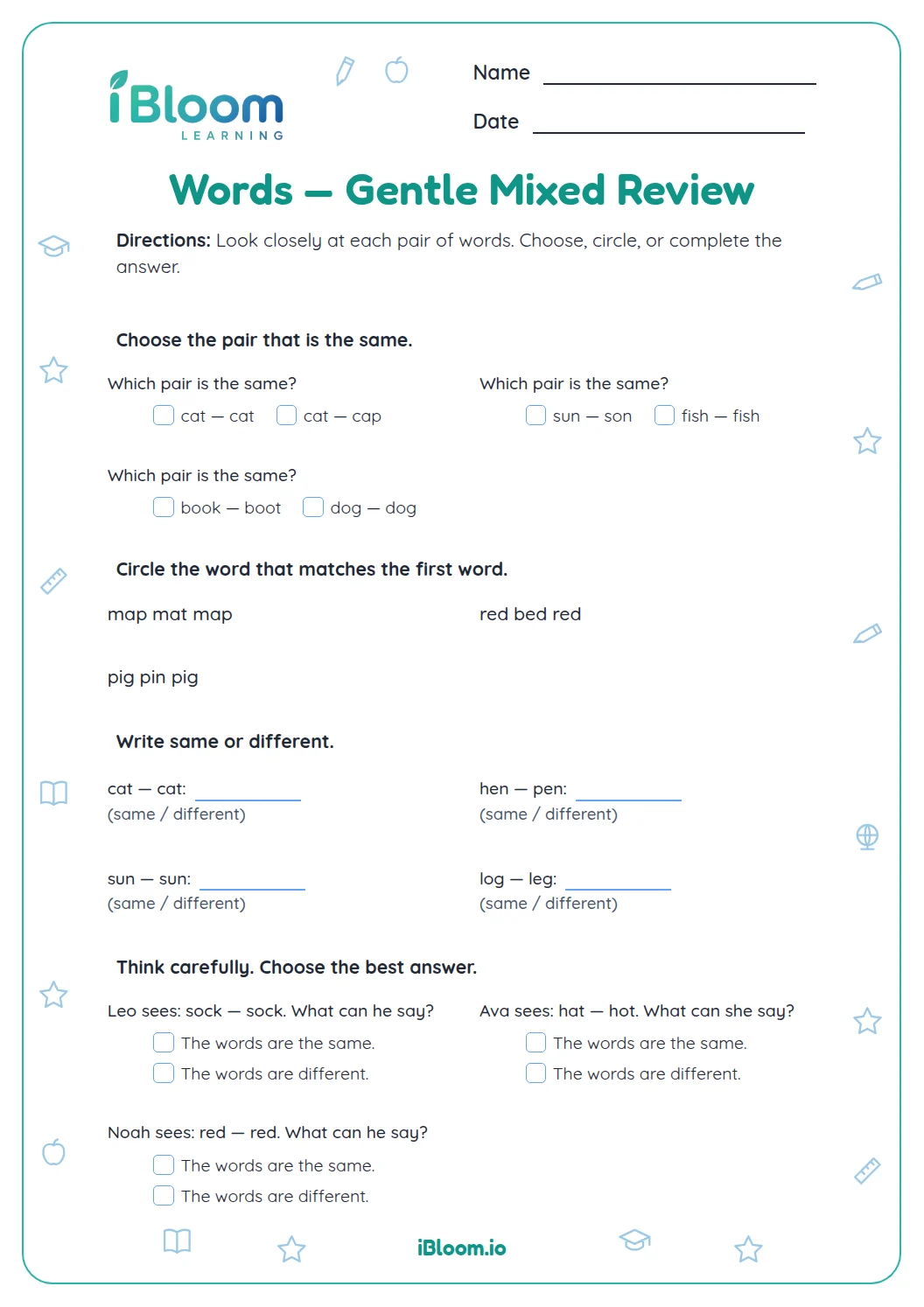
This free preschool and kindergarten review gives children several ways to notice what is different. Across four parts, they compare familiar picture groups, circle an odd word, sort pictured items, and draw a shape that differs from two others. A separate answer key gives the intended responses.
How can pictures show what is different?
Part A shows three familiar pictures. Name each one and choose the item that does not match the other two.
- 1The pictures are apple, apple, and banana.
- 2Banana is the different picture.
Which word is different in a row?
Part B uses short rows of three words. Read or listen to each word, then circle the one that names a different kind of thing.
How can children sort and draw a different item?
Part C asks which pictured item does not belong with the other two. In Part D, children draw a triangle to differ from two circles.
How to use this worksheet
- 1Look at each picture group or read the word row.
- 2Name each item.
- 3Find the one that does not match the other two.
- 4Circle or choose that item.
- 5For the last task, draw the shape that differs from the pair.
Common mistakes and quick fixes
The mistake
Choosing before looking at both pictures.
The fix
Point to each picture and name it before choosing.
The mistake
Calling two different objects the same because both are familiar.
The fix
Ask whether they show the same kind of thing, not just things the child knows.
The mistake
Mixing up the words same and different.
The fix
Practice saying “same match” and “different kinds” while pointing.
What to practice next
Make more practice
Questions parents and teachers ask
How can I help a child spot what is different?
Invite the child to name each picture or word aloud, then ask which one does not match the other two. The page uses familiar picture groups, short word rows, and one shape-drawing task so children can practice the same idea in several ways.
What age is this worksheet for?
It is intended for preschool and kindergarten learners building early comparison vocabulary. An adult can read the directions or word rows aloud while the child points, circles, chooses, or draws. The groups use familiar objects and a simple shape contrast.
Does the worksheet use pictures?
Yes. The 16 tasks include picture groups, four short word rows, familiar-item sorting, and a final shape drawing. Most tasks ask children to find the one item that differs from the other two. The separate answer key lists or describes the intended response.
What does “same” mean here?
Here, different means one item does not match the other two in its group. For example, two apples and a banana have one fruit that differs from the pair. In the word rows, the child circles the word that names a different item.
Is there an answer key?
Yes. The answer key gives the different picture or word for each choice task and describes the shape expected in the final drawing. For drawing, children can make their triangle any size as long as it differs from the two circles in the prompt.