








About this worksheet
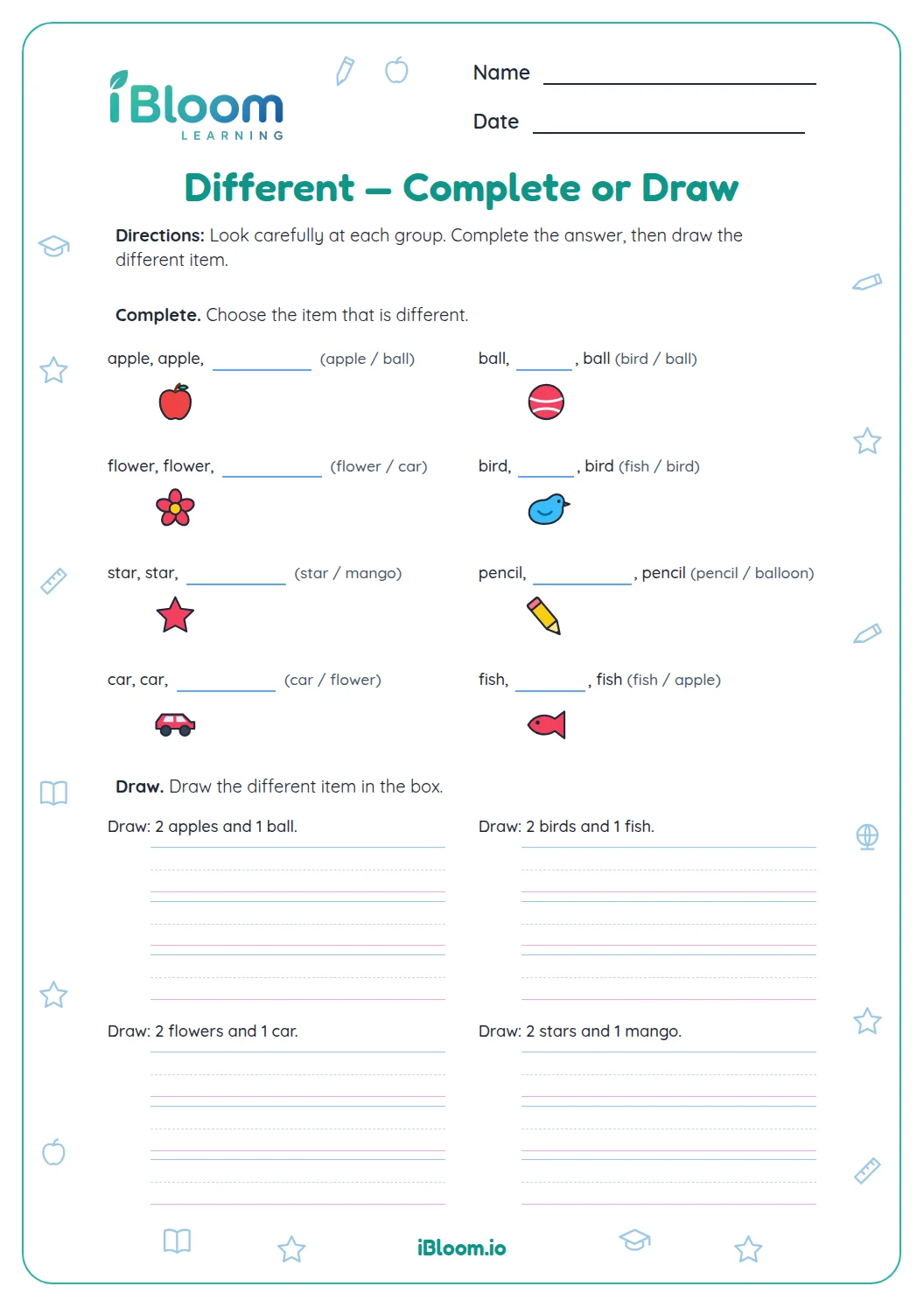
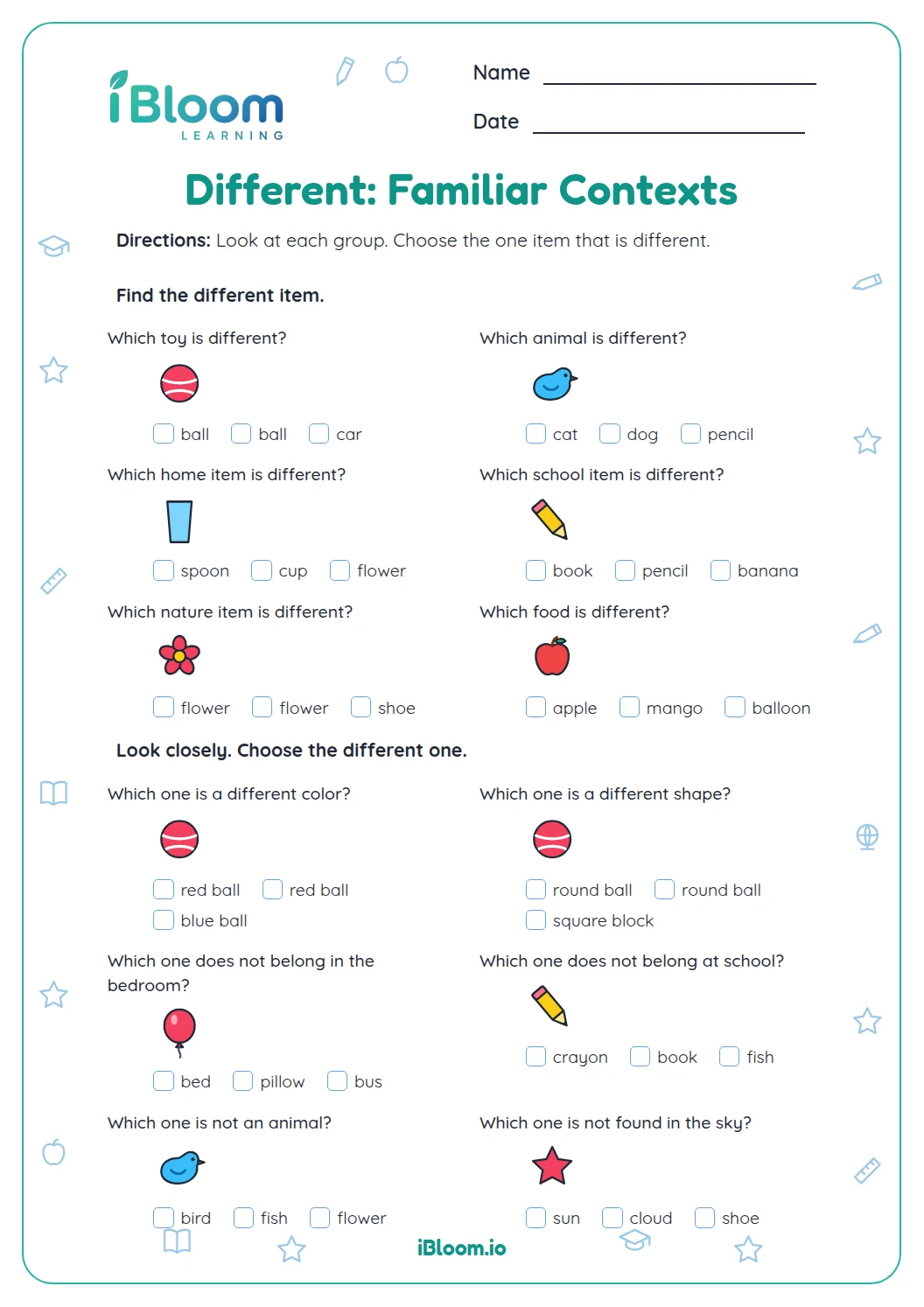
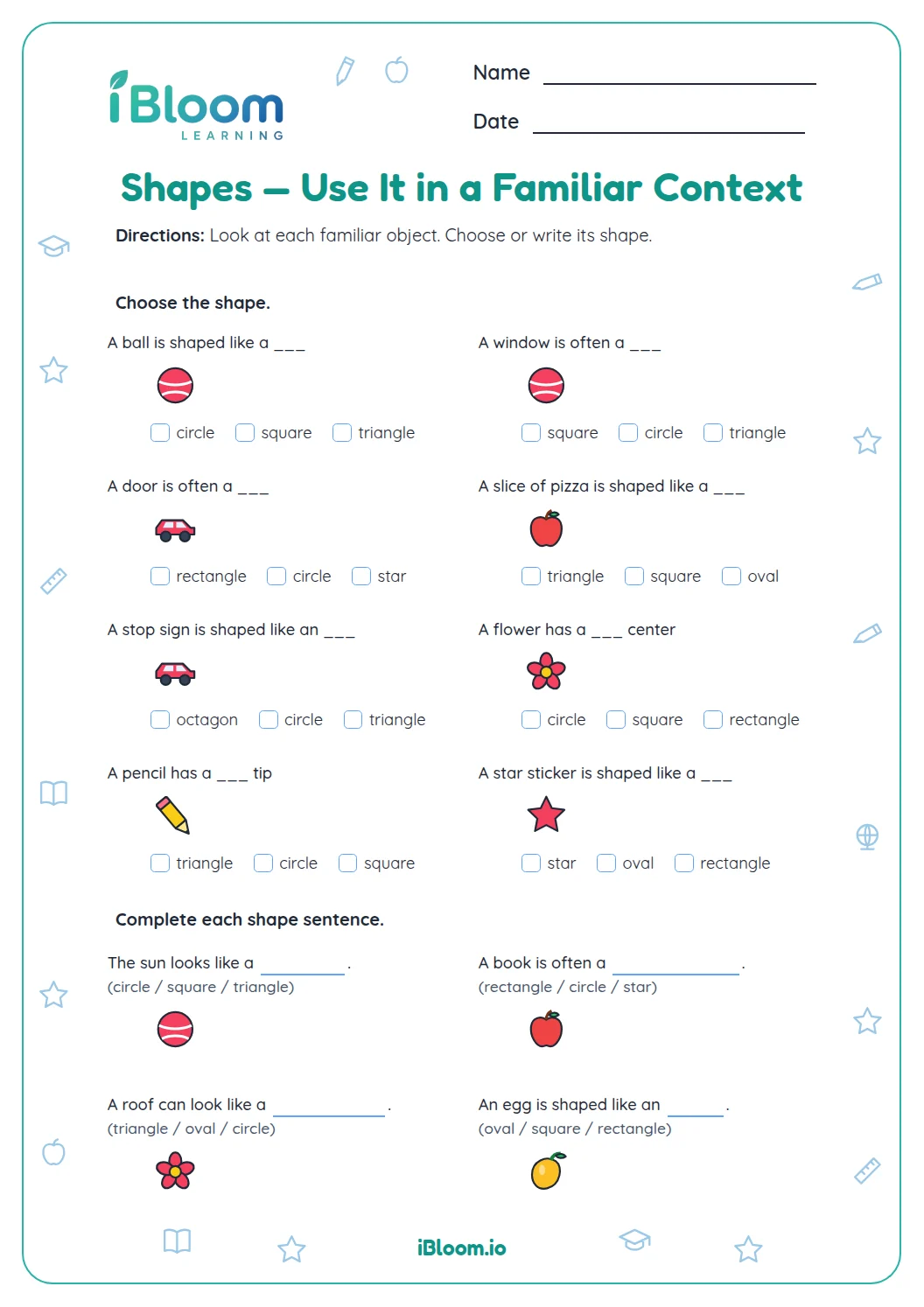
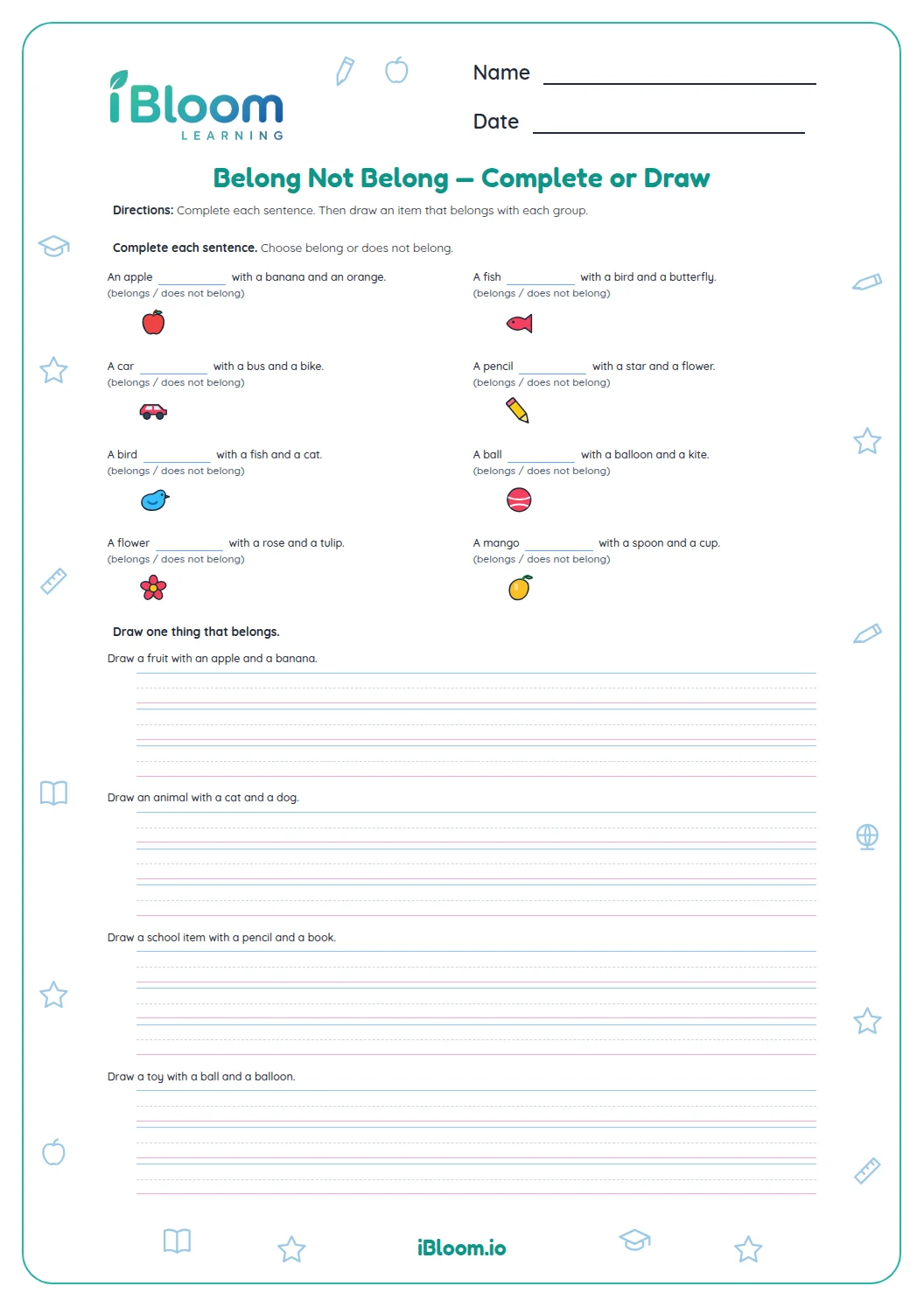
This free printable Pre-K–K worksheet pairs familiar object pictures with simple naming practice, then asks children to draw two named objects. Children look at each picture, write its name, and use the written word as a drawing prompt. The answer key lists the ten object names and gives a clear criterion for each drawing.
How can a picture help with writing its name?
Look closely at the pictured object, say its name, and write the word on the line. The picture gives a direct clue, so the child can focus on connecting the spoken word to its written form.
- 1Question 1 shows a ball.
- 2Say “ball,” then write ball as the object name.
What makes a drawing match the prompt?
Use the written object name as the drawing prompt. A drawing can be simple: a round ball, a cup with an opening, or a car with wheels. The key accepts clear drawings that show the named object.
How can an adult support the activity?
Invite the child to name the picture aloud before writing. For a drawing, ask which details help another person recognize the object, then let the child add those details.
How to use this worksheet
- 1Name the first pictured object aloud.
- 2Write its name beside the picture.
- 3Repeat for all eight picture clues.
- 4Read each drawing prompt carefully.
- 5Draw the six named objects, then compare names with the key.
Mistakes to notice and how to help
The mistake
Writing a different object name than the picture shows.
The fix
Say the name aloud and compare it with the pictured object.
The mistake
Leaving out a sound when writing a name.
The fix
Stretch the word slowly and listen for each sound.
The mistake
Making a drawing hard to recognize.
The fix
Add a clear feature, such as wheels on a car or a handle on a cup.
What to practice next
Make more practice
Questions parents and teachers ask
How many object names does the worksheet include?
There are ten picture clues: baseball, cup, car, bag, pencil, book, key, shoe, apple, and tree. Children look carefully at each familiar picture, say its name aloud, and write that object name beside the picture. An adult may read the prompt aloud.
What happens after the picture names?
Children draw two objects from written prompts: a ball and a cup. The worksheet gives a separate drawing box for each prompt, leaving room to add details that make each object easy to recognize and distinguish. Simple shapes are completely fine.
Does a drawing need to look realistic?
No. A simple drawing is enough when it clearly represents the named object. A cup can be a basic shape with an opening, and a car can have a body and wheels. The key accepts any clear drawing of the requested object.
How can I help with spelling?
Ask the child to say the object name slowly and listen for its sounds. Point to the picture and repeat the word if needed, then let the child try writing it independently. The key lists the expected name for each of the ten pictures.
What does the answer key show?
The key lists the expected name for each picture clue and gives an example criterion for each drawing. Other clear drawings of the named object are acceptable, so children do not need to copy the sample wording or style.