






About this worksheet
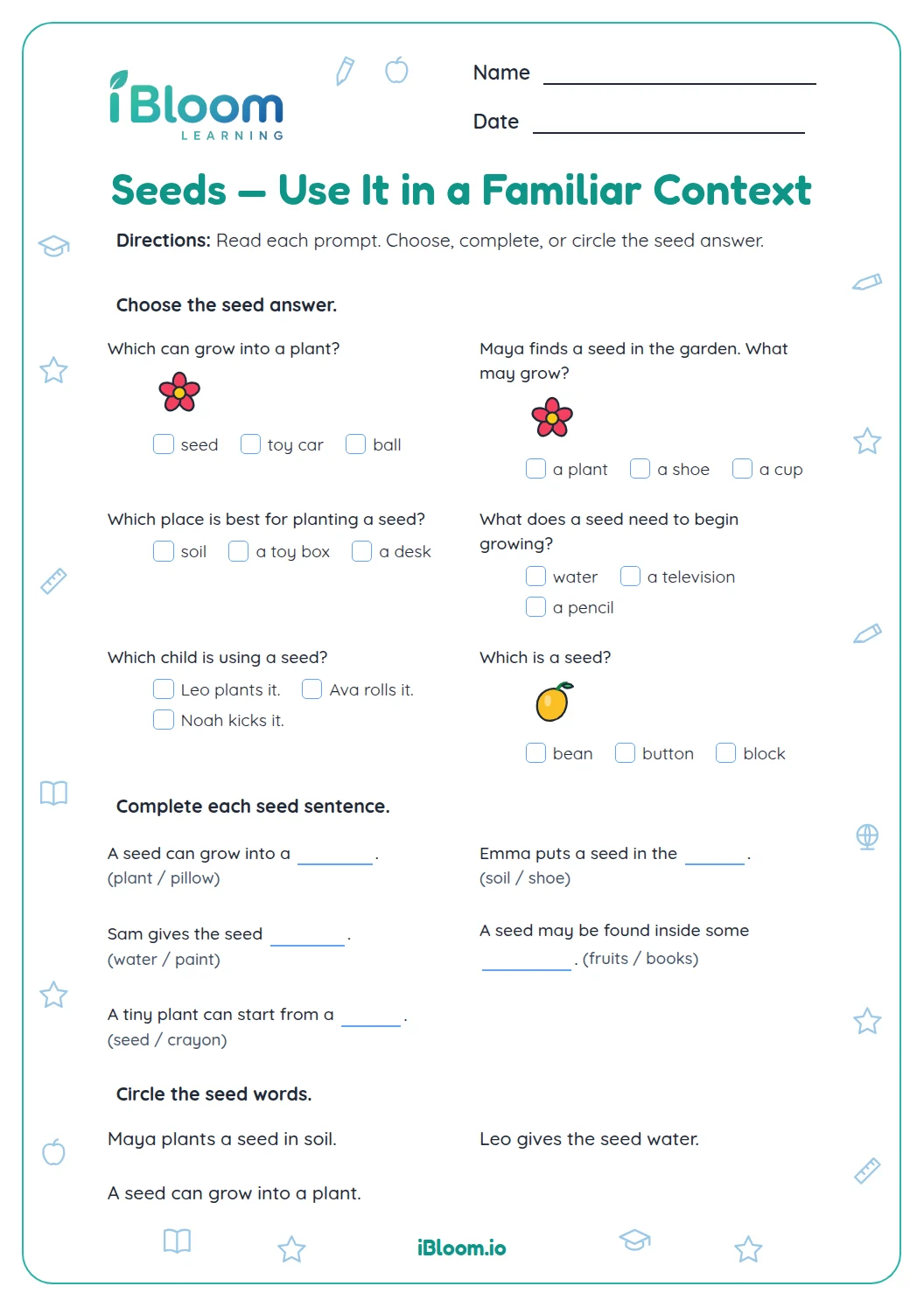
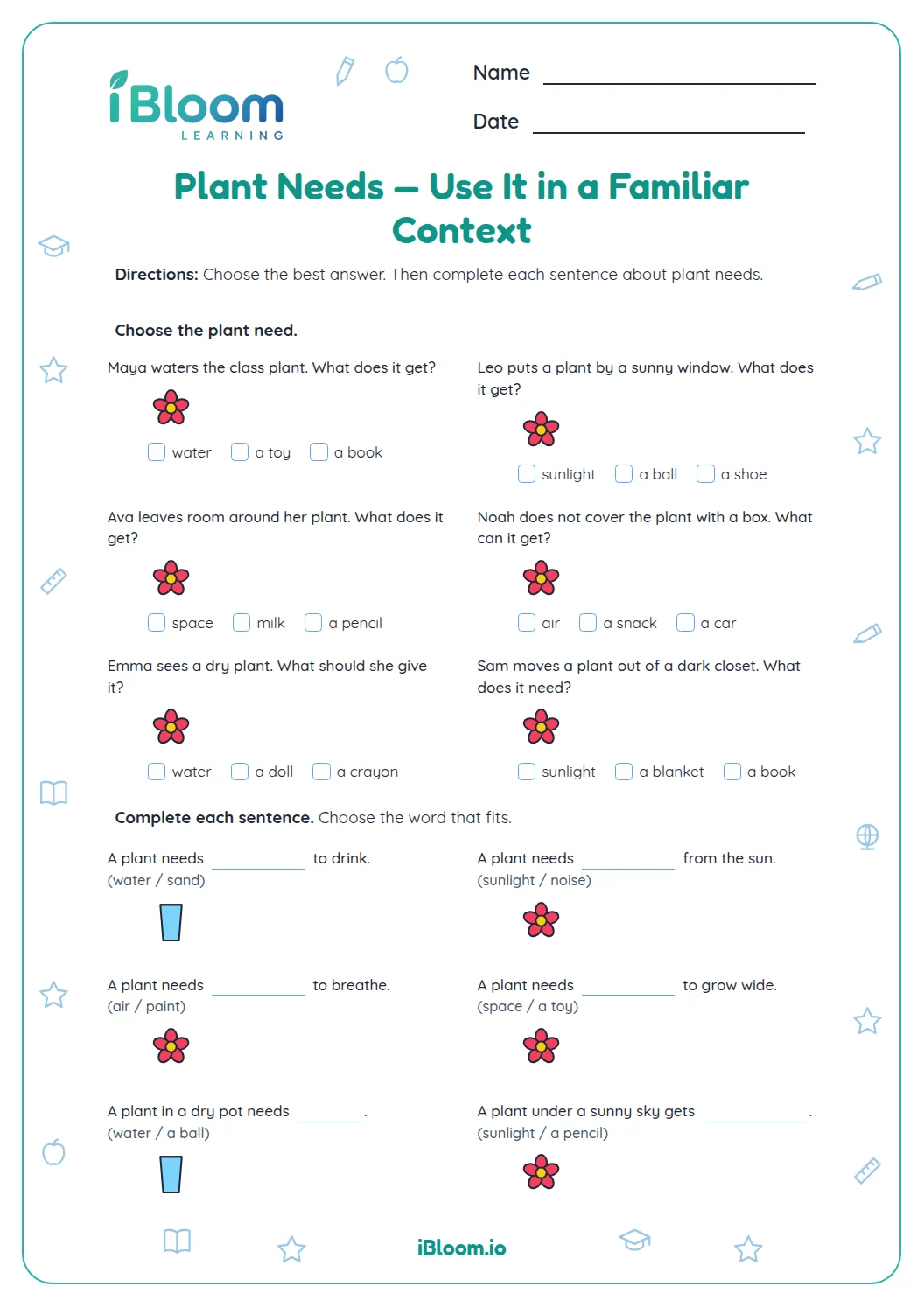
This two-page science worksheet introduces preschool and kindergarten learners to a simple plant life cycle. Fourteen picture-choice questions show a seed, seedling, and flower, with prompts about growth order and basic needs. The answer key identifies the picture that fits each question.
Which stages can children see?
The picture choices include a seed, a seedling, and a flower. Learners compare these stages and choose an order that makes sense for plant growth.
What comes before a seedling?
A seed is the starting stage in the simple sequence used here.
- 1Which comes first: a seed or a flower?
- 2A seed comes first in this growth sequence.
What helps a plant grow?
Some prompts ask children to recognize water and sunlight as things that support plant growth.
How to use this worksheet
- 1Name each plant picture.
- 2Find the stage or need named in the prompt.
- 3Put the seed, seedling, and flower in growth order.
- 4Check each choice with the answer key.
Common mix-ups and quick fixes
The mistake
Choosing a seedling when asked for a seed.
The fix
A seed is the small starting stage before visible sprouting.
The mistake
Putting a flower before a seed.
The fix
Retell the growth path from seed to young plant to flower.
The mistake
Choosing an unrelated object as a plant need.
The fix
Think of sunlight and water that plants use as they grow.
What to practice next
Make more practice
Questions parents and teachers ask
Does the worksheet show a seed?
Yes. The seed is shown as its own picture choice, separate from the seedling. Questions use the seed, young plant, and flower pictures to practice identifying a simple growth sequence from an early stage onward. The seed is represented by its written label, while other stages appear as pictures.
What plant stages are included?
Children compare a seed, a seedling, and a flower. The questions ask which stage comes first, what may grow next, and how the stages fit in order as a plant develops over time. Ask learners to describe how a young plant changes over time.
How many questions are included?
There are 14 picture-choice questions across two worksheet pages. The questions cover plant stages, growth order, and a few basic things that help plants grow, including sunlight and water. Children identify each pictured stage. Discuss what a plant needs while looking at the choices.
Can an adult read the questions aloud?
Yes. Read each question and invite the child to point to and name the choices. Talking through the order can help connect the pictures to the idea of growth and the changes a plant makes over time. Encourage children to explain the order in their own words.
What does the answer key show?
The answer key marks the correct picture or sequence for every question. Use it to check the stage names and review how the seed, seedling, and flower relate as a plant grows. Revisit the three stages together after checking.