



About this worksheet
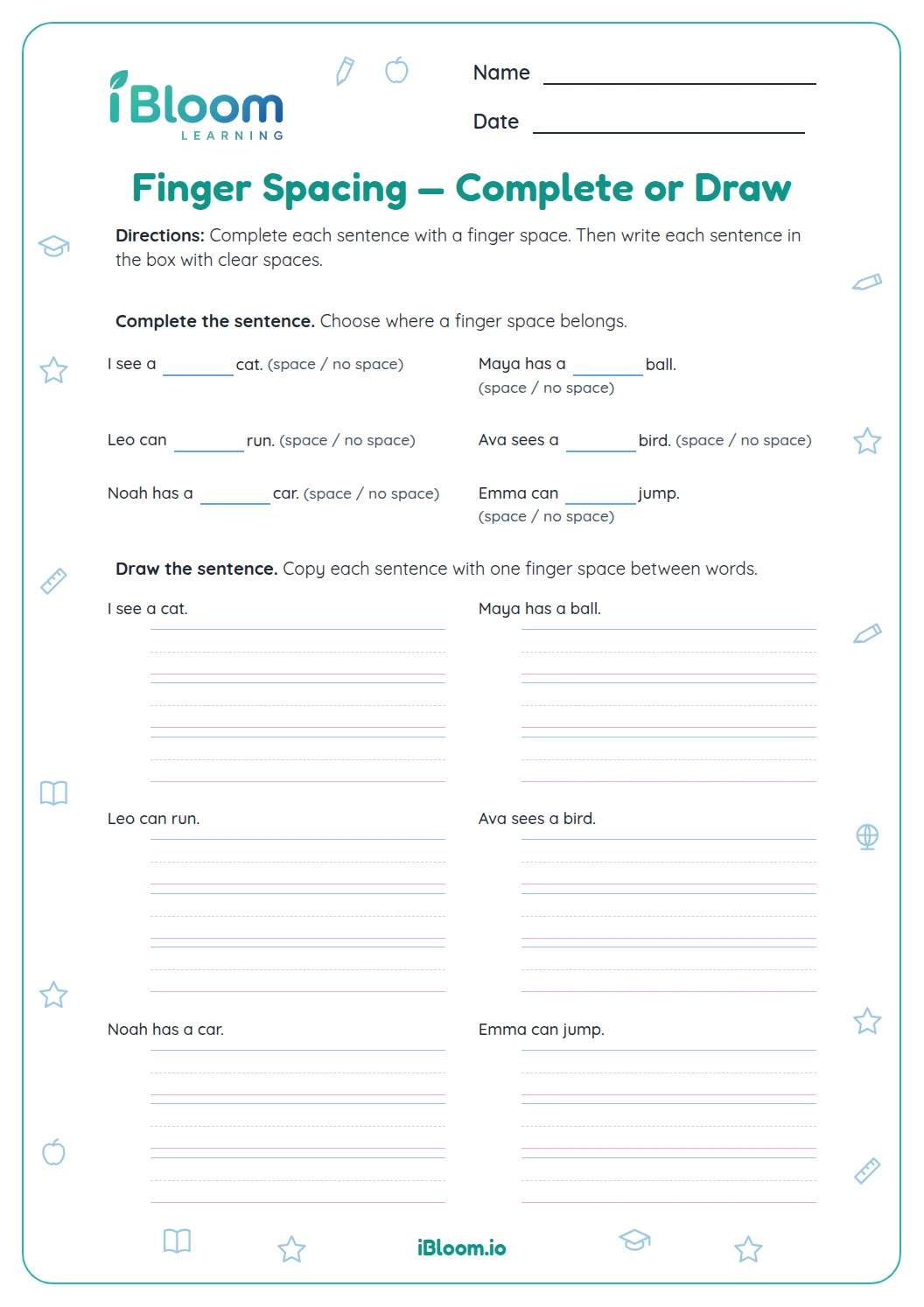
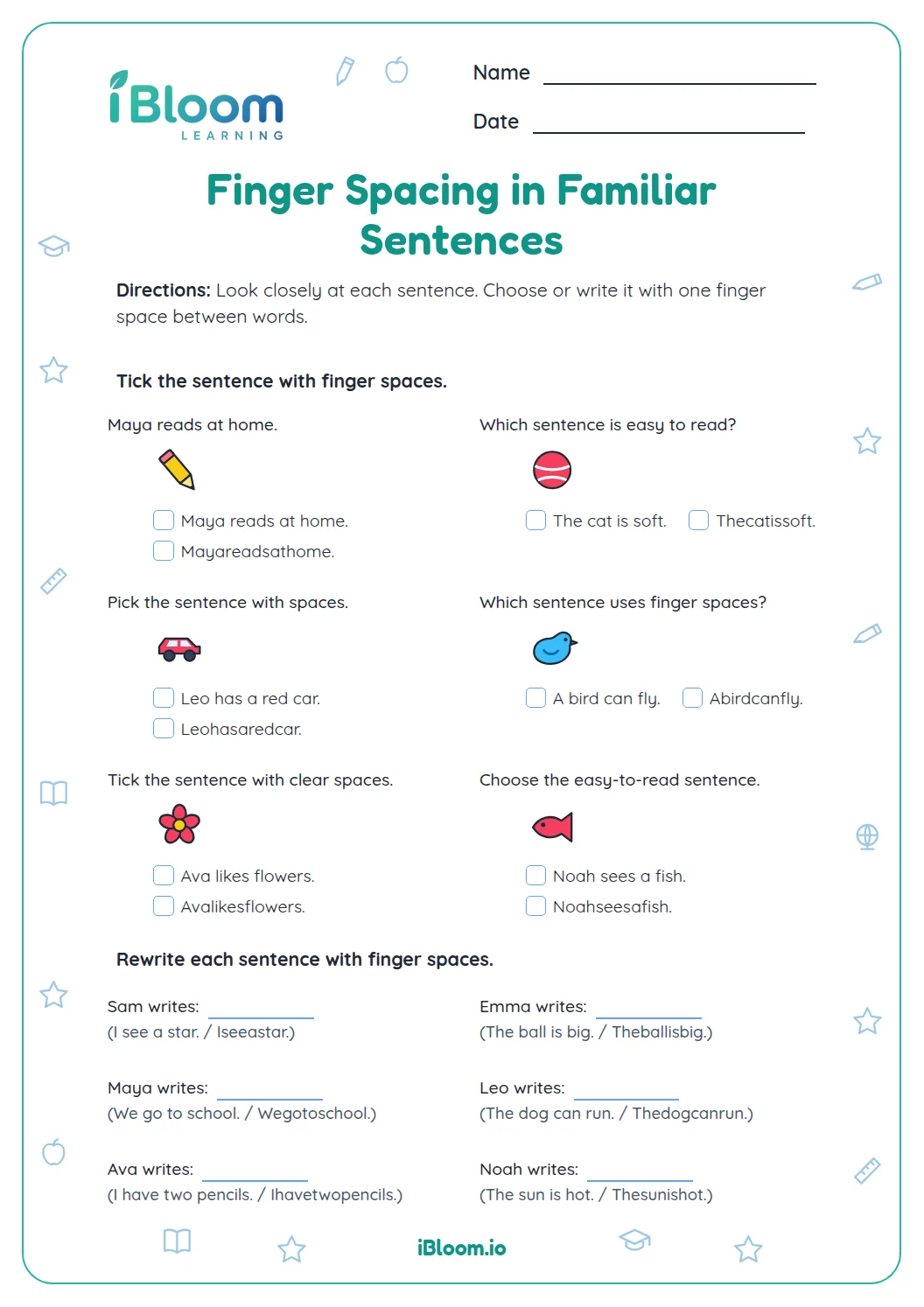
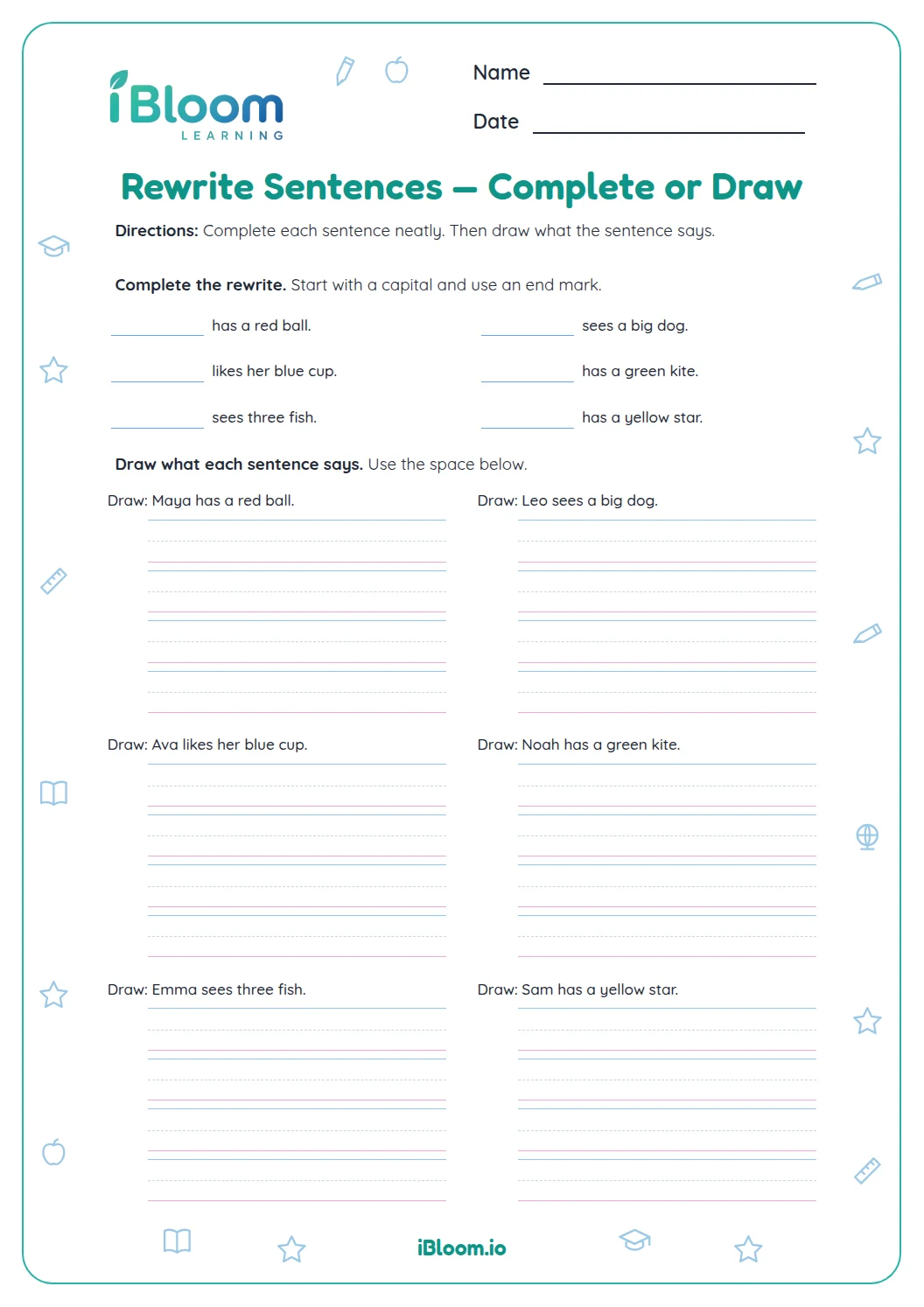
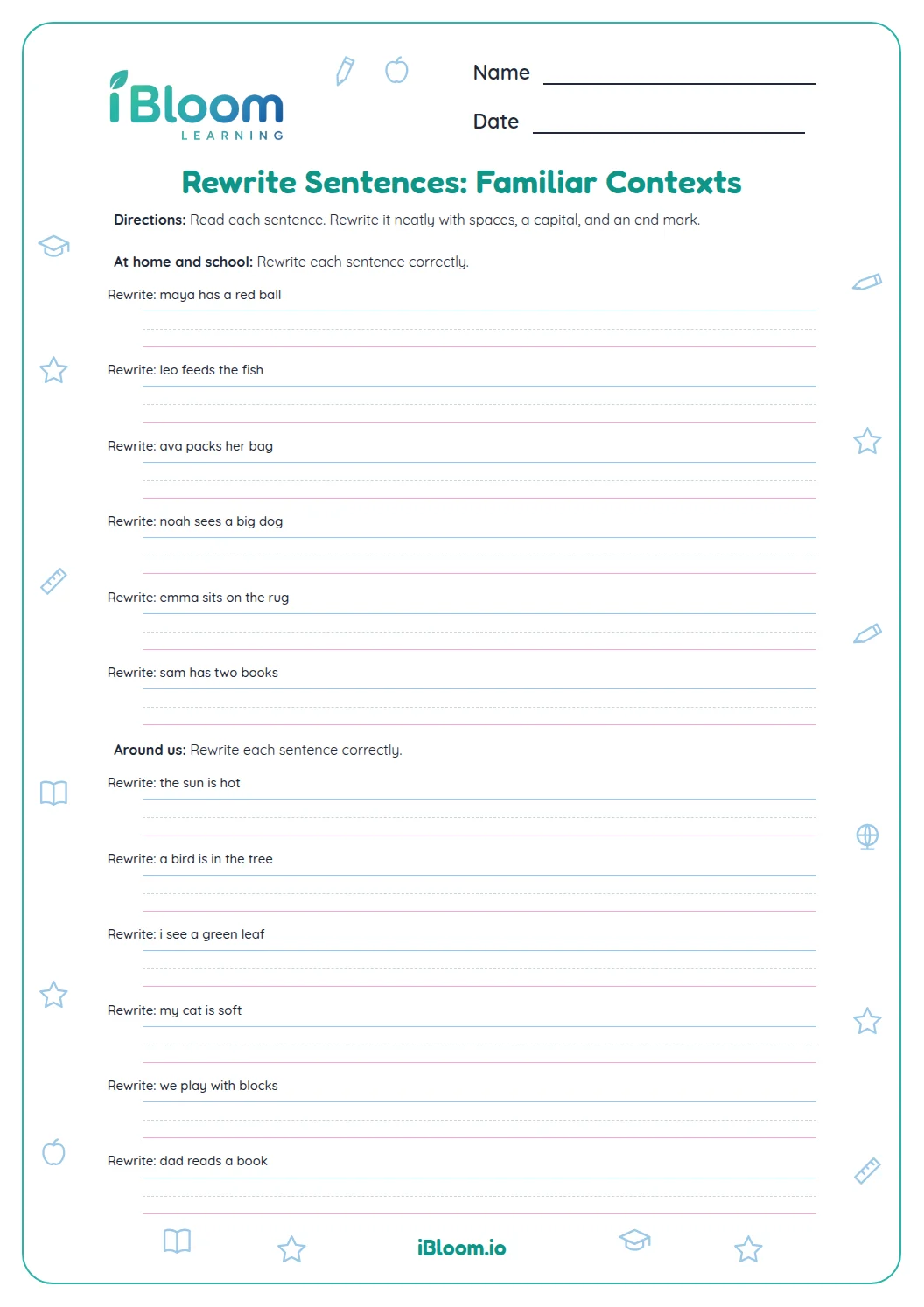
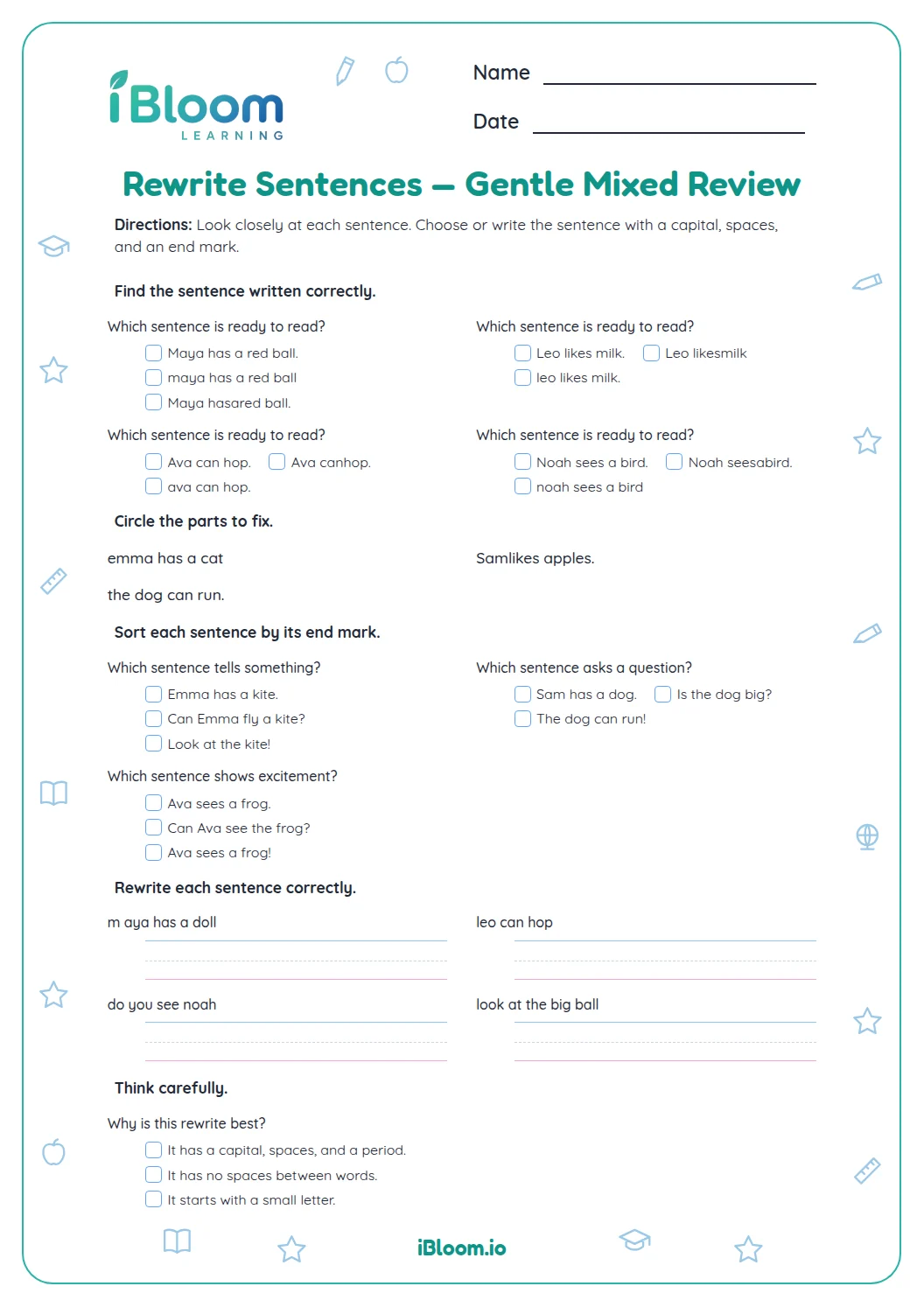
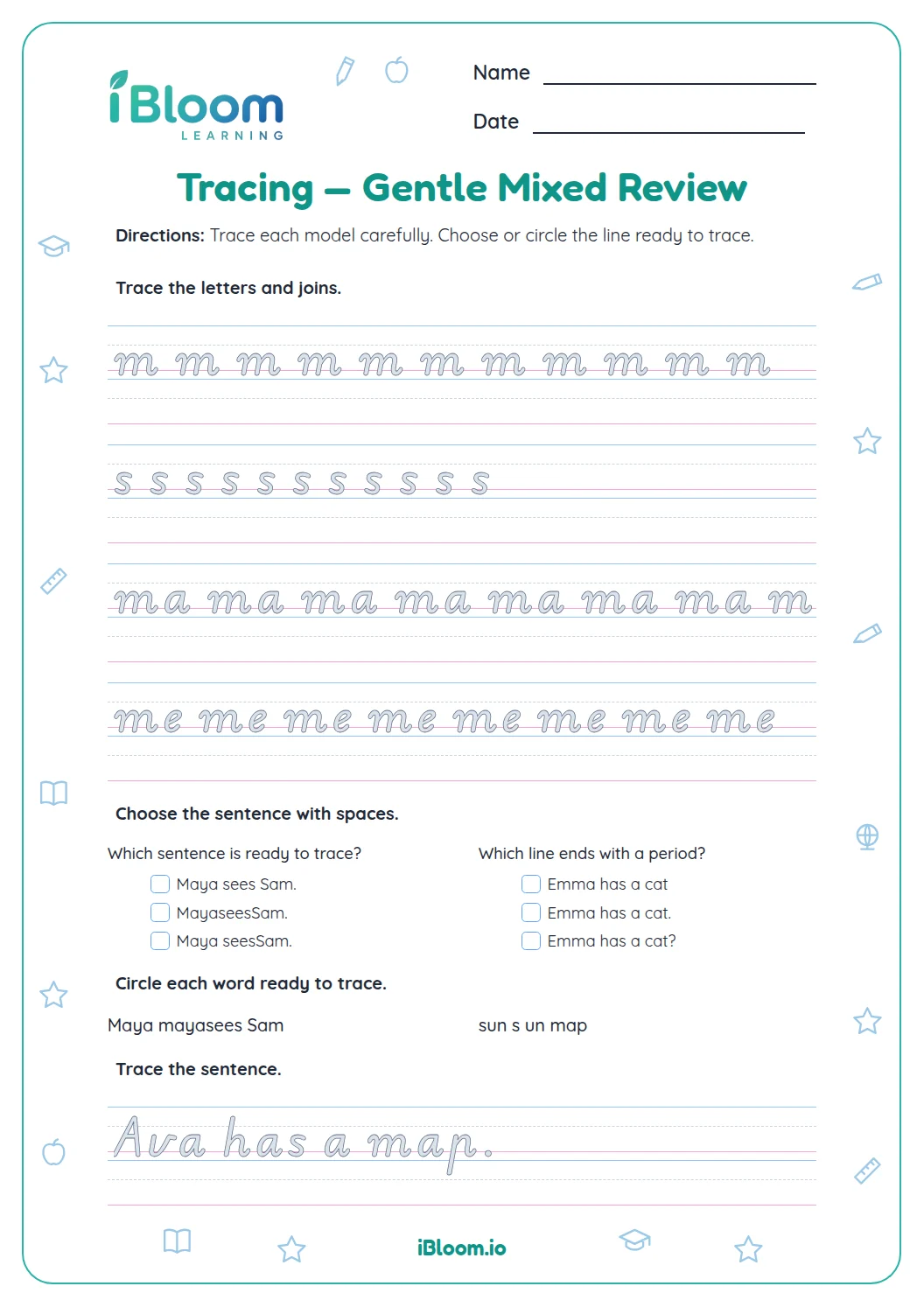
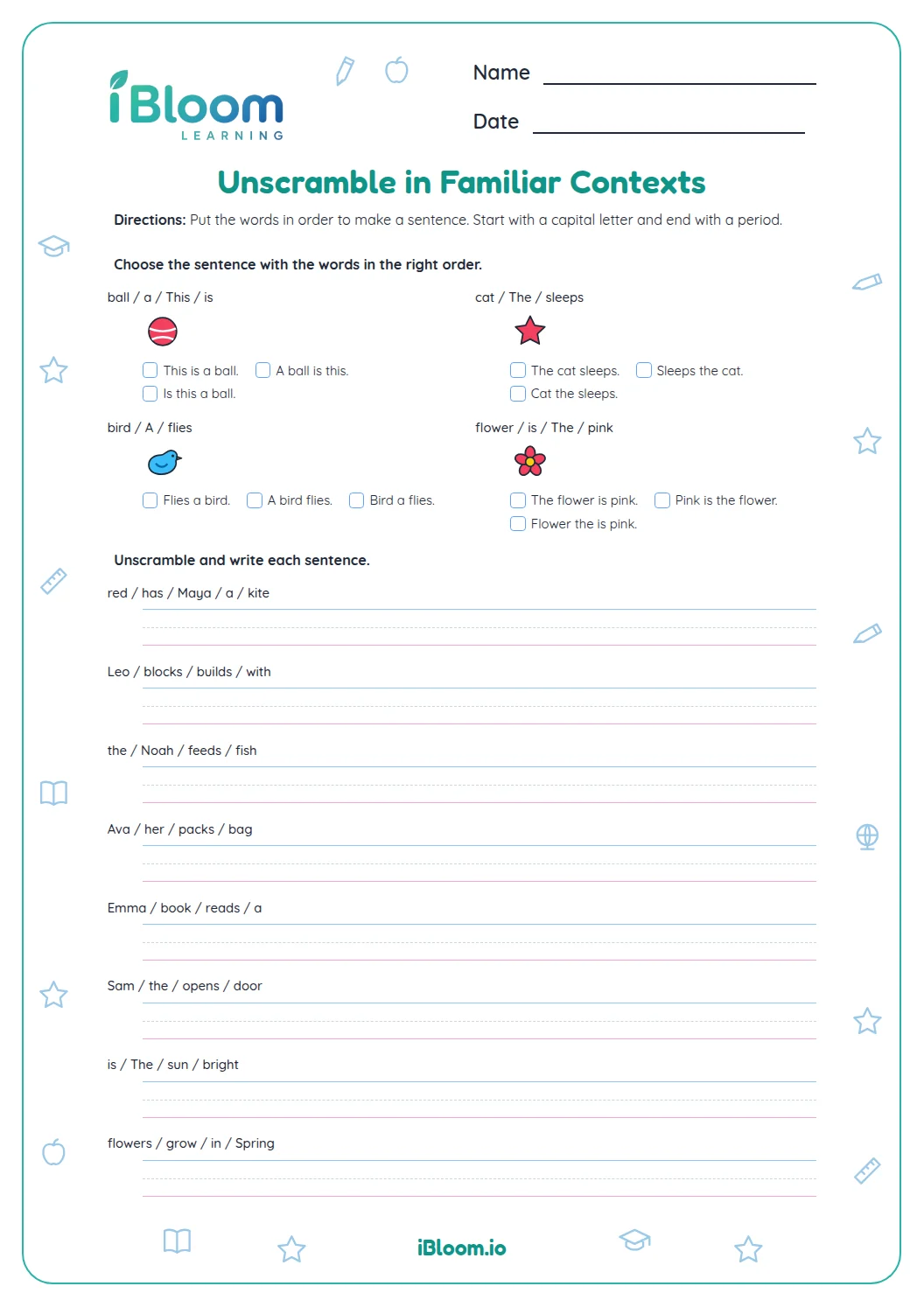
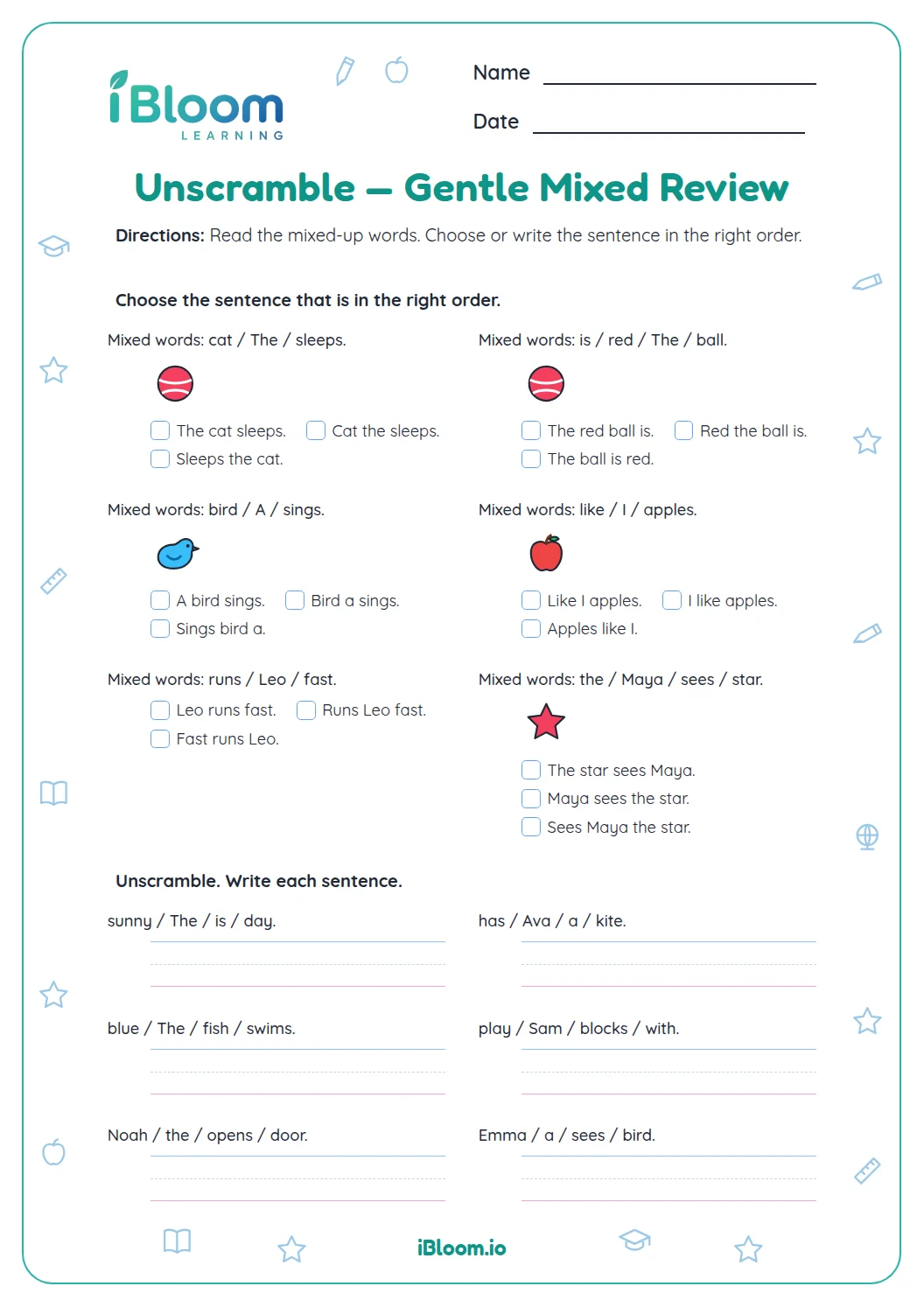
This printable gives preschool and kindergarten learners gentle practice copying short sentences with spaces between words. Familiar picture cues support the first models, followed by independent sentence copying and word-order review. Children can say each sentence aloud, point to its words, and use a finger to help leave a consistent gap. The key shows the target sentence and word order.
Where does a finger space go?
A finger space is a small gap between words. It helps the reader see where one word ends and the next begins. The gap does not go inside a word or after every letter.
- 1Mia likes apples.
- 2Mia likes apples.
- 3There is a gap after “Mia” and after “likes.”
How can a child check a copied sentence?
Say each word slowly while pointing from left to right. Leave a small gap after each word, then reread the sentence. A space should separate “Sam” from “has,” while the letters in “Sam” stay together.
- 1Sam has a red car.
- 2Sam | has | a | red | car.
- 3Five words means four spaces between words.
How does spacing help a reader?
Spaces make a sentence easier to follow because they show its separate words. If every word touches, a reader may have to stop and guess where one word ends. If letters inside a word are split apart, the word may be harder to recognize.
How can an adult support this practice?
- 1Read the sentence aloud and let the child repeat it.
- 2Point to each word from left to right.
- 3Copy one word at a time, leaving a small gap after each word.
- 4Reread the copied sentence and check that words do not touch.
Common mistakes and quick fixes
The mistake
Writing all the words together.
The fix
Pause after each spoken word and leave a small gap.
The mistake
Putting spaces between letters in a word.
The fix
Keep the letters in each word close together.
The mistake
Making very large gaps that split the sentence.
The fix
Use a small, steady space between neighboring words.
What to practice next
Make more practice
Questions parents and teachers ask
What is finger spacing?
Finger spacing means leaving a small gap between one word and the next when writing a sentence. The letters inside a word stay together. A child can use a finger or a fingertip as a simple guide for a comfortable gap.
How many spaces should go between words?
Finger spacing means leaving a small gap between one word and the next. A finger-width gap is a starting guide, but handwriting sizes differ. Keep the space visibly smaller than a whole word and similar throughout the sentence.
Should there be a space after every letter?
No. Letters that belong to the same word stay together. Put the gap after a whole word, such as after “Mia” in “Mia likes apples,” then begin the next word. Spaces separate words, so the child should not insert a gap after each letter. For example, keep the letters in “Mia” together, then leave room before “likes.”
How can pictures help with this worksheet?
The picture cues make the short sentences familiar and give young learners something concrete to talk about before copying. An adult can say the sentence aloud, point to each word, and then help the child notice where the gaps belong.
Does the answer key expect perfect handwriting?
The key gives the target sentence and word order. Adults can accept legible handwriting with consistent spacing. Praise words that remain together and gaps that make the sentence readable. The goal is clear word boundaries, not identical handwriting.