




About this worksheet
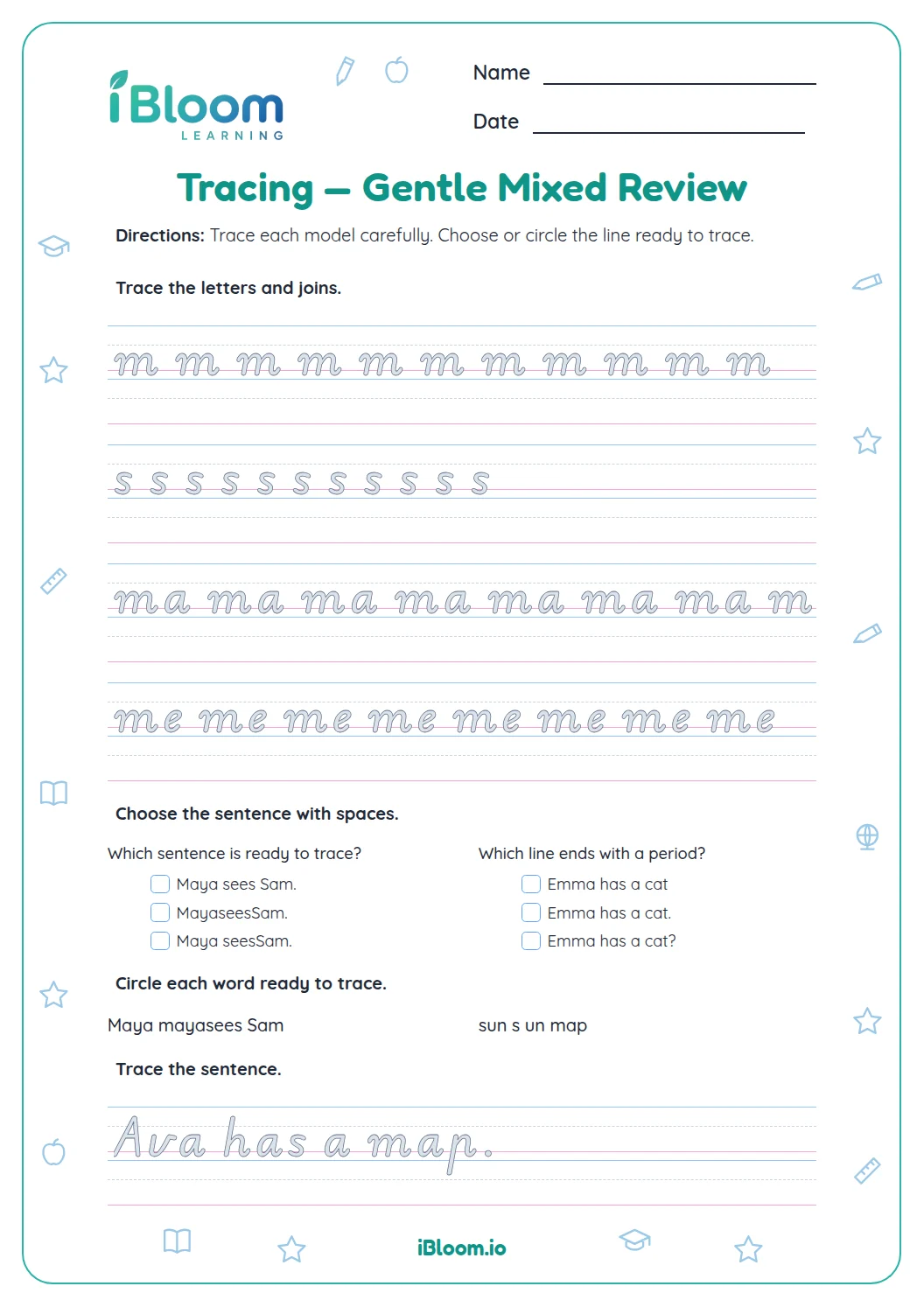
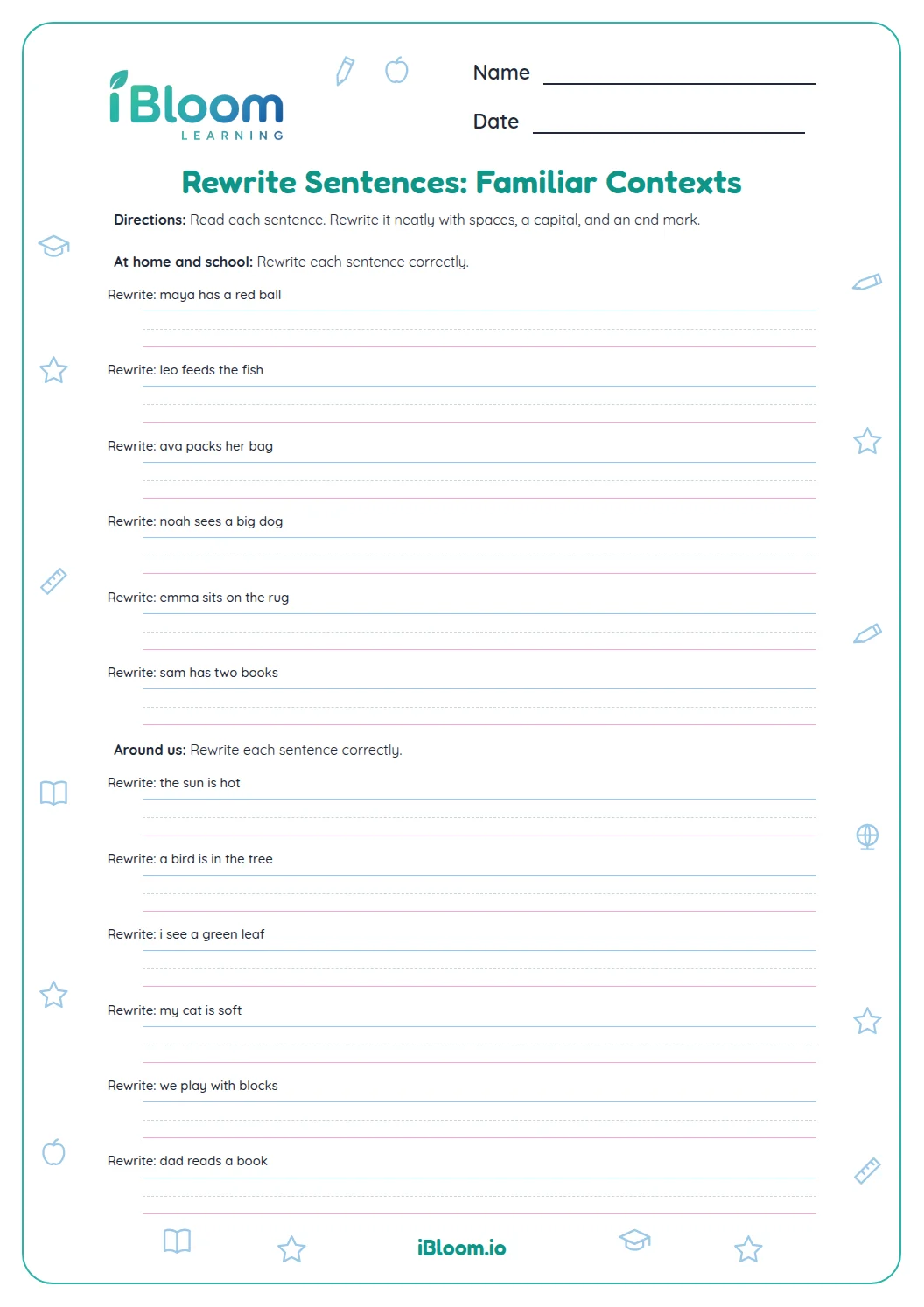
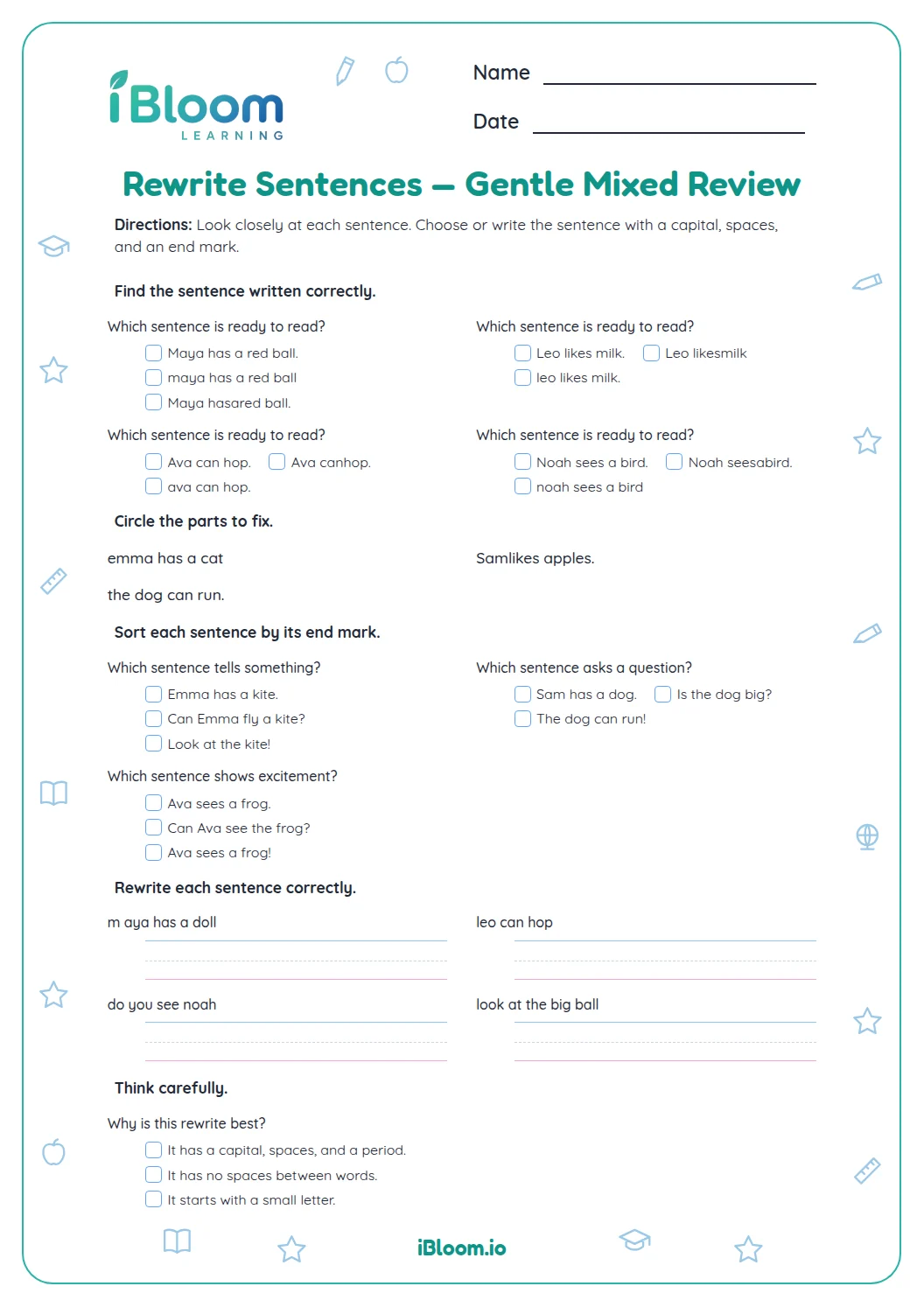
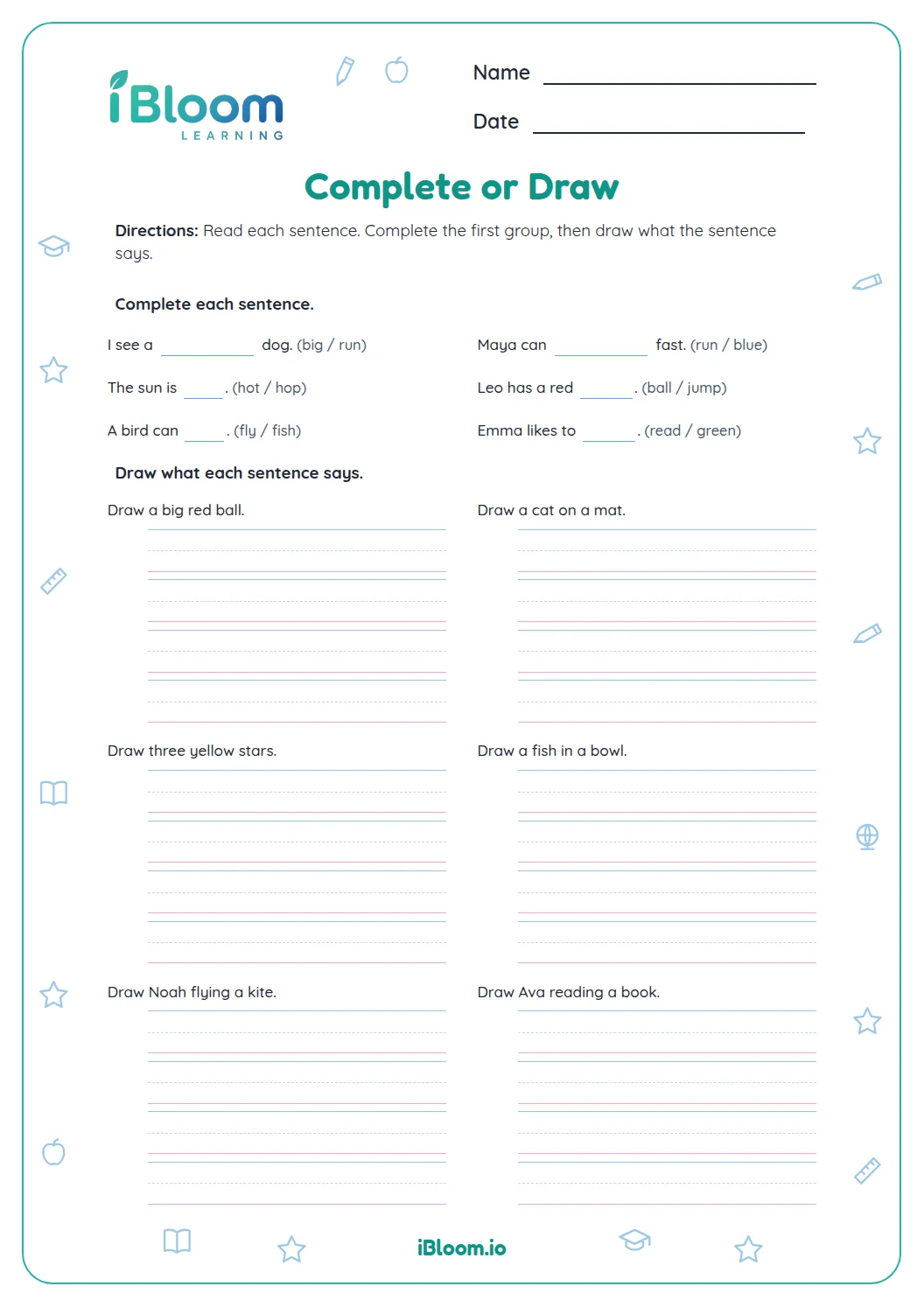
This printable gives preschool and kindergarten learners practice tracing familiar complete sentences in school cursive and copying each one independently. The 16 short sentences mention toys, animals, home, school, and play; each begins with a capital and ends with punctuation. Children follow the cursive model from left to right, then use the lined space to copy it. A separate key shows each target sentence.
What sentences will children trace?
The sentences use familiar themes including toys, animals, home, school, and places to play. Each item gives a whole sentence to trace and copy, so the child can focus on letter formation, spacing, and the direction of writing.
How should children use the tracing model?
Begin at the left edge and follow each connected letter through the period. Keep the letters sitting on the writing line, and leave a small space between words. Then try the same sentence again on the empty row.
- 1Trace: “The cat can hop.”
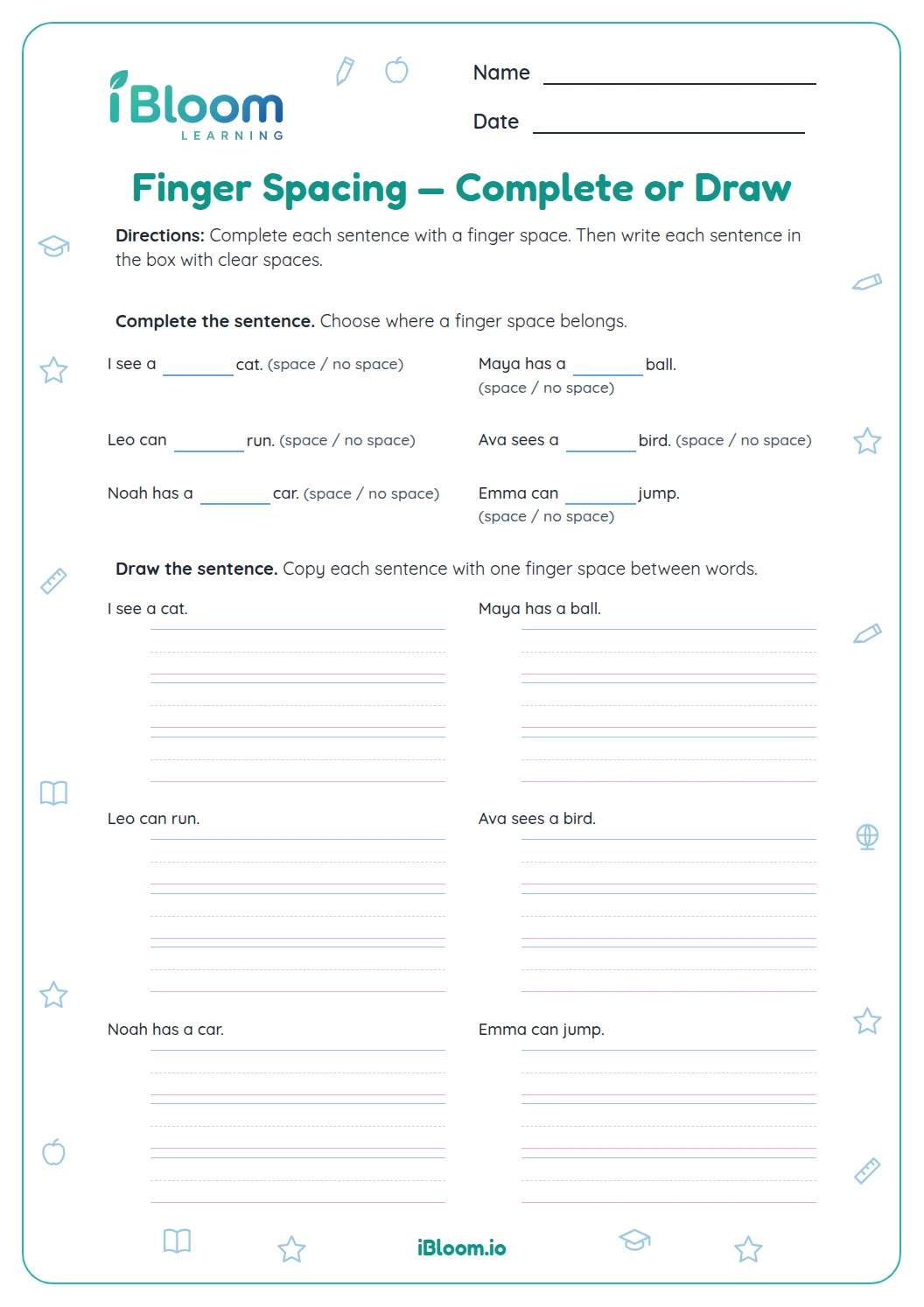
- 2Copy the same words in order, leaving a space between “cat,” “can,” and “hop.”
What should a child check while copying?
Look back at the model after each word. Check that the words are in the same order, that the first letter is a capital, and that the final mark matches the sentence. A careful copy is more useful than rushing through the whole page.
How can an adult support practice?
Let the child trace with a comfortable pencil grip and pause when a sentence feels crowded. An adult can point to the next word or read the sentence aloud, then invite the child to copy it once more.
How to use this worksheet
- 1Start at the left side of the model.
- 2Trace each connected letter slowly.
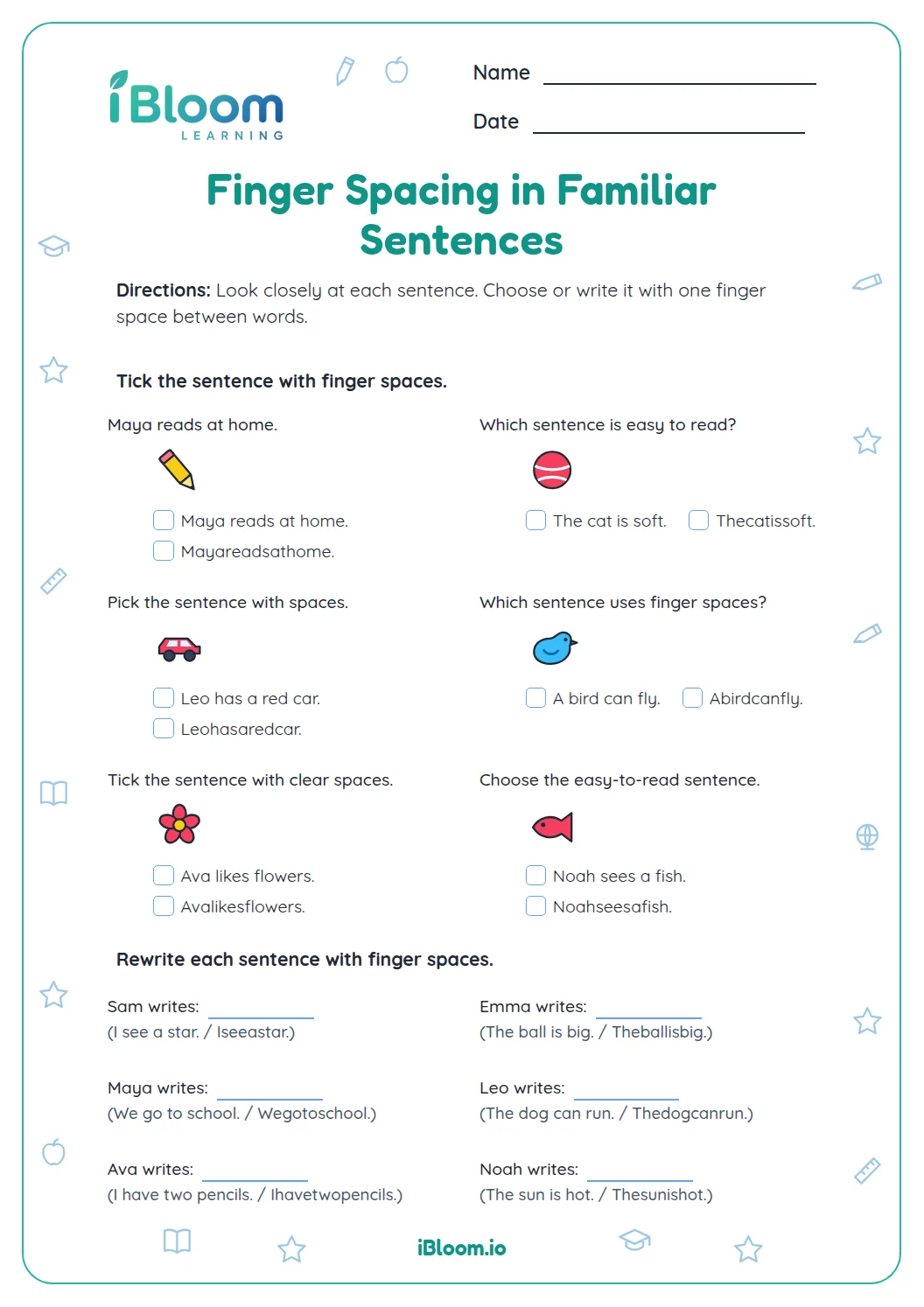
- 3Leave a small space between words.
- 4Copy the full sentence on the open line.
- 5Check the capital letter and ending punctuation.
Common mistakes and quick fixes
The mistake
Joining words together without a space.
The fix
Pause briefly between each word while copying.
The mistake
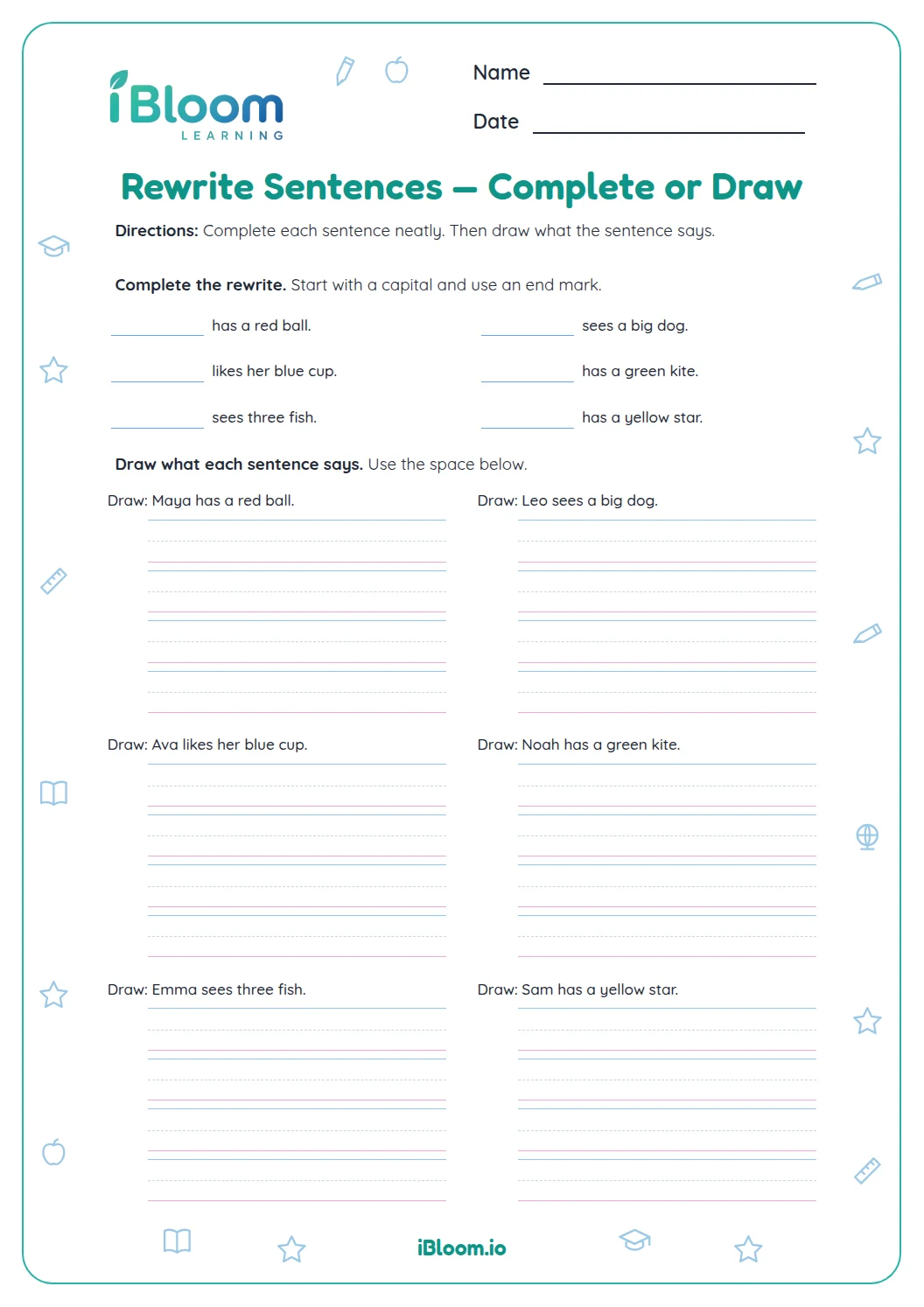
Leaving off the capital or period.
The fix
Look at the first and last marks before finishing.
The mistake
Moving too quickly through cursive joins.
The fix
Trace one letter connection at a time.
What to practice next
Make more practice
Questions parents and teachers ask
How many sentences are on the tracing page?
There are 16 complete sentences in three familiar-context groups. Each sentence has a cursive tracing model and a ruled space where the child copies the same words, keeping the order and punctuation. This gives families a simple way to review each step together at home.
Is this a letter tracing sheet or a sentence sheet?
It is a sentence tracing sheet. Children follow connected cursive letters in complete sentences, with spaces between words and punctuation at the end. The next line provides room to copy the model. This gives families a simple way to review each step together at home.
Who can use this page?
The page is labeled for preschool and kindergarten learners. An adult can read a sentence aloud or guide the pencil when the child is new to tracing connected letters and complete sentences. This gives families a simple way to review each step together at home.
What does the answer key show?
The separate key displays the target sentence for each item. Children can compare word order, the opening capital, and the final punctuation in their copy after they finish tracing and writing. This gives families a simple way to review each step together at home.
How long might this practice take?
The page includes 16 sentences across five worksheet pages, so children can complete a few at a time. A comfortable pace leaves room to trace each model and copy it carefully on the ruled line. This gives families a simple way to review each step together at home.