





About this worksheet
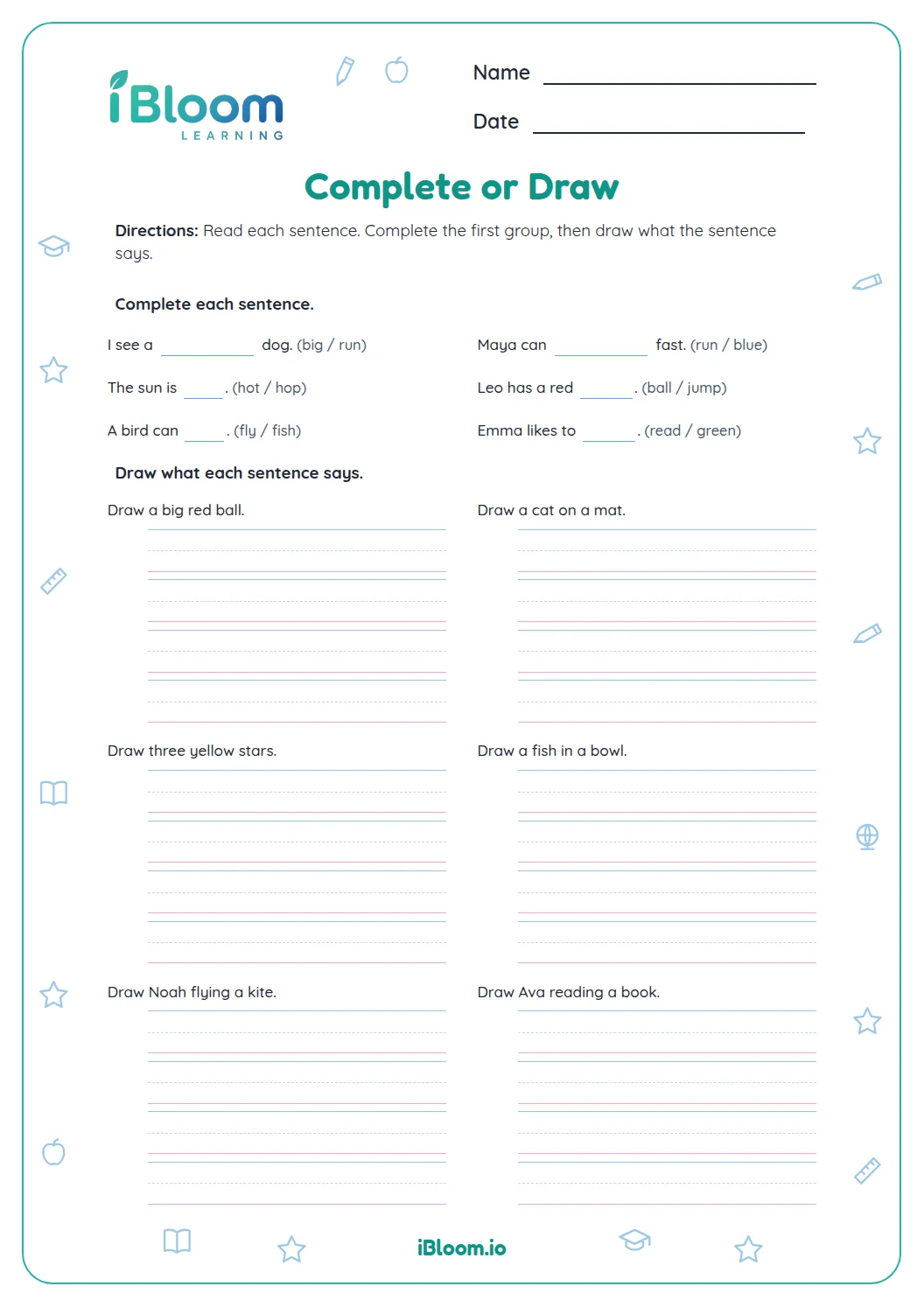
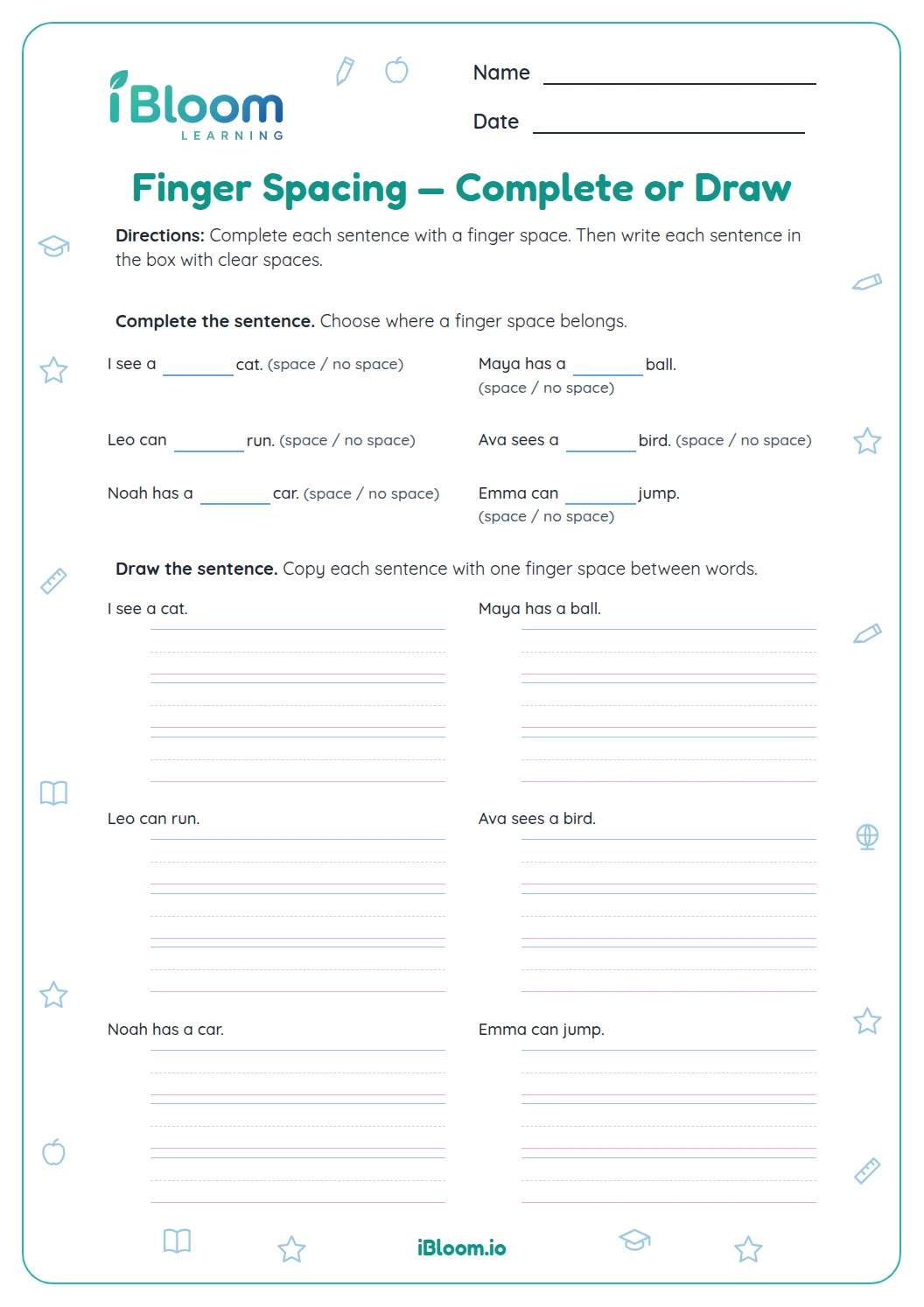
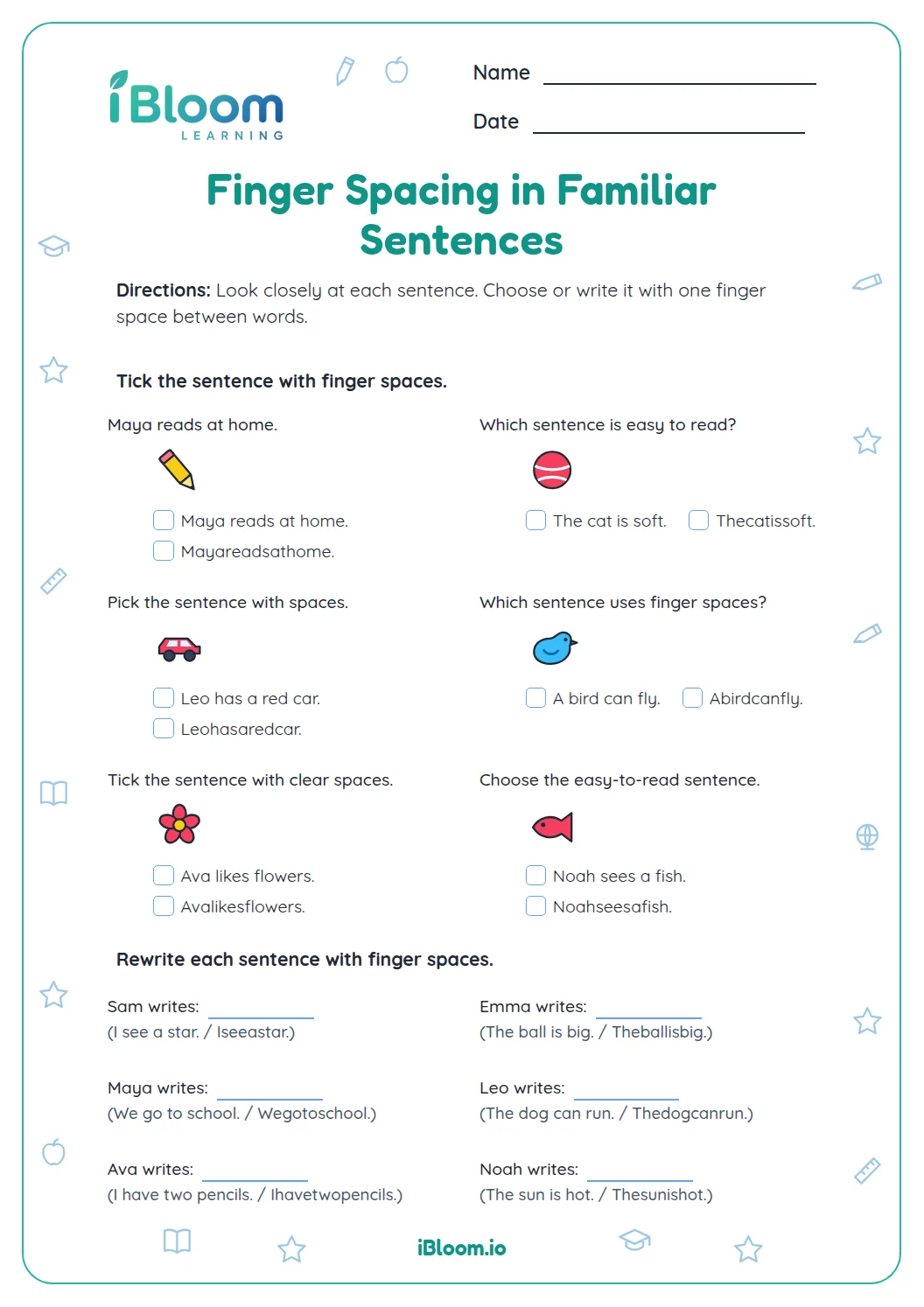
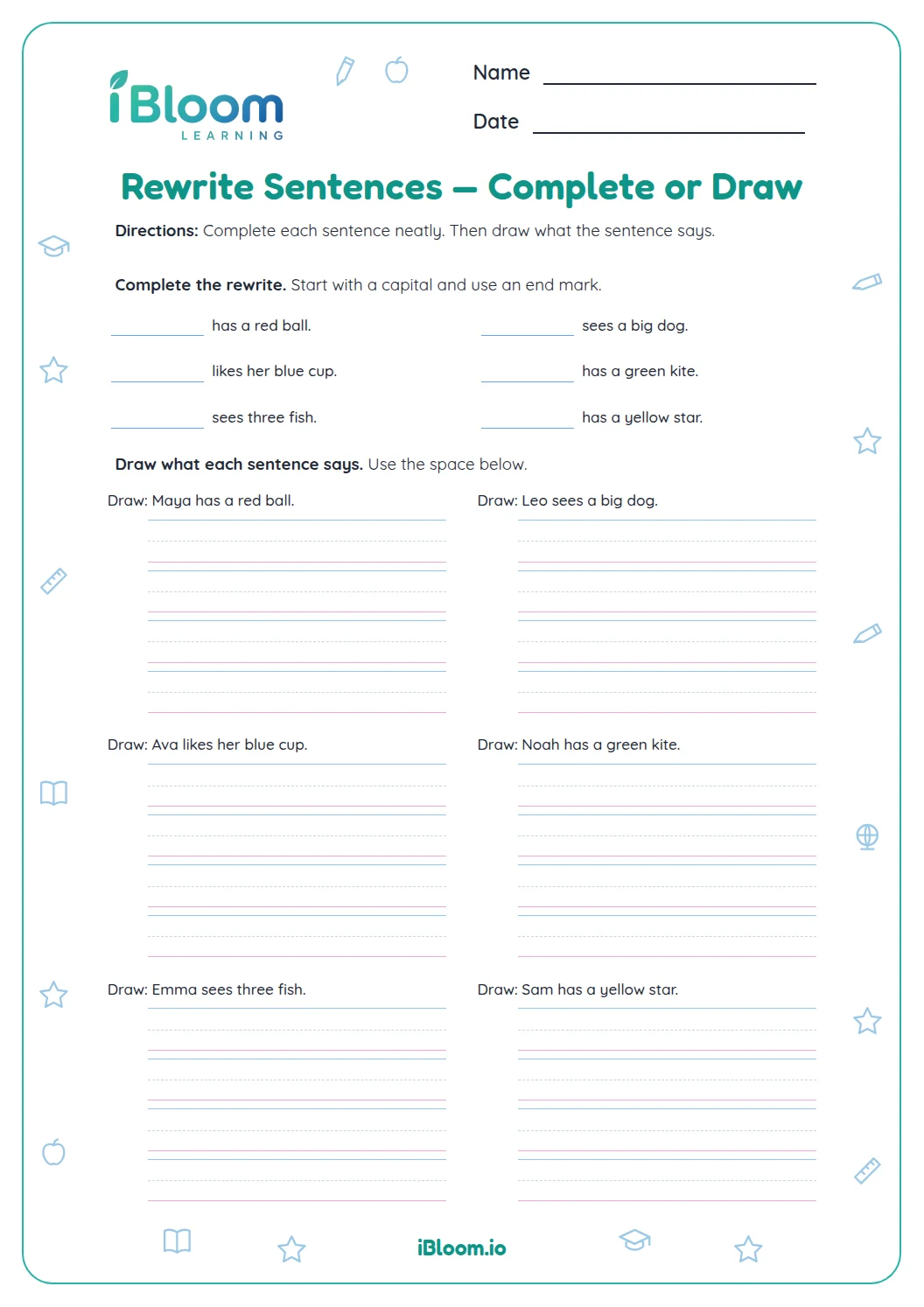
This printable gives preschool and kindergarten learners four ways to work with simple sentences: circle a naming word, choose an action word, finish a sentence, and draw an idea from a sentence. There are 16 questions in four parts, with answers marked on a matching copy of the worksheet. An adult can read prompts aloud while the child points, says an answer, or writes.
What will children practice?
Children first circle a naming word in a short sentence, then choose the word that tells what happens. The next part invites a sensible word to finish a sentence, and the final part connects a sentence idea to a drawing.
How can a child find an action word?
Read the whole sentence and ask what the person or thing does. In “The red ball rolls away,” the word rolls tells what happens.
- 1The red ball ___ away.
- 2Ask: What does the ball do?
- 3Answer: rolls
How are the questions grouped?
Part A circles naming words; Part B chooses action words; Part C completes sentence starters; Part D draws a matching idea. The key gives direct answers for the word questions and describes a fitting drawing.
How to use this worksheet
- 1Read each sentence aloud if that helps.
- 2For Part A, ask which word names a person, place, or thing.
- 3For Part B, ask what happens in the sentence.
- 4Say a possible completion before writing it.
- 5Use the final part to draw the described sentence idea.
- 6Check word answers with the key and accept sensible completions.
Common mistakes and quick fixes
The mistake
Circling an action word in Part A.
The fix
Ask “Who or what is the sentence about?” A naming word names the person, place, or thing.
The mistake
Choosing a describing word as the action.
The fix
Ask what the subject does. In “The red ball rolls away,” rolls is the action.
The mistake
Writing a word that does not finish the sentence meaningfully.
The fix
Read the sentence again with the chosen word in the blank and check that it makes sense.
What to practice next
Questions parents and teachers ask
Can an adult read this worksheet aloud?
Yes. An adult can read each sentence and choice aloud while the child points, answers, or writes. The first two parts ask the child to notice what words mean in a sentence. The later parts invite a spoken or written completion and a drawing that matches a sentence.
What is a naming word?
A naming word tells who or what a sentence is about. In “I see a sun in the sky,” sun is the naming word. The first part has four short sentences; children circle the word that names a thing rather than an action or description.
What is an action word?
An action word tells what someone or something does. In “The red ball rolls away,” rolls names the action. Part B has four questions with three choices each, so children can compare the sentence meaning with the choices before selecting one.
Are there drawing activities?
Yes. The last part has four prompts, each asking for a picture that matches a short sentence idea. The answer key describes one fitting picture, but children can draw it in their own way as long as the main idea is clear.
How many questions and pages are included?
There are 16 questions across four parts: four naming word questions, four action word choices, four sentence completions, and four drawings. The worksheet has three pages, and its matching answer key also spans three pages with answers marked.