






About this worksheet
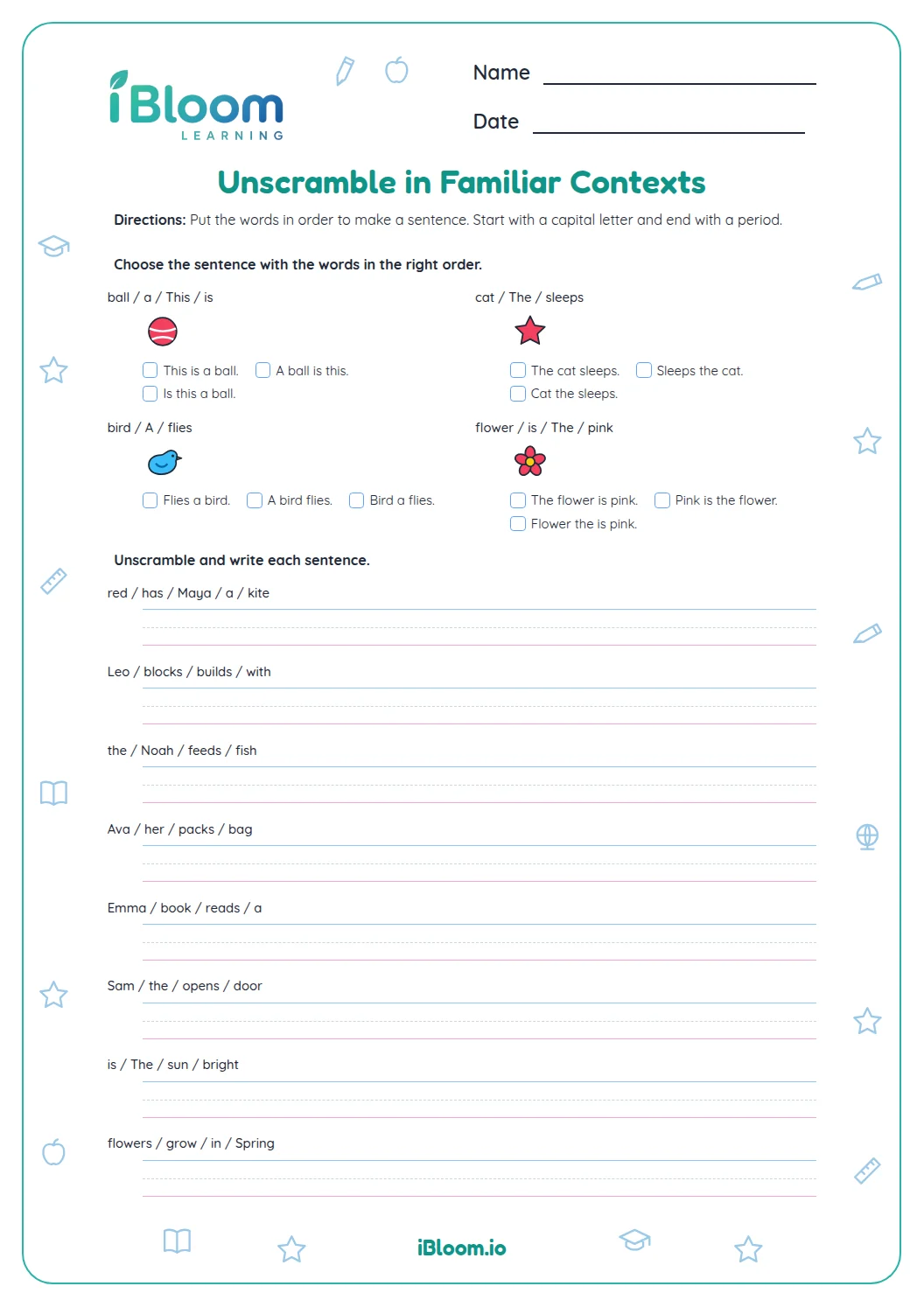
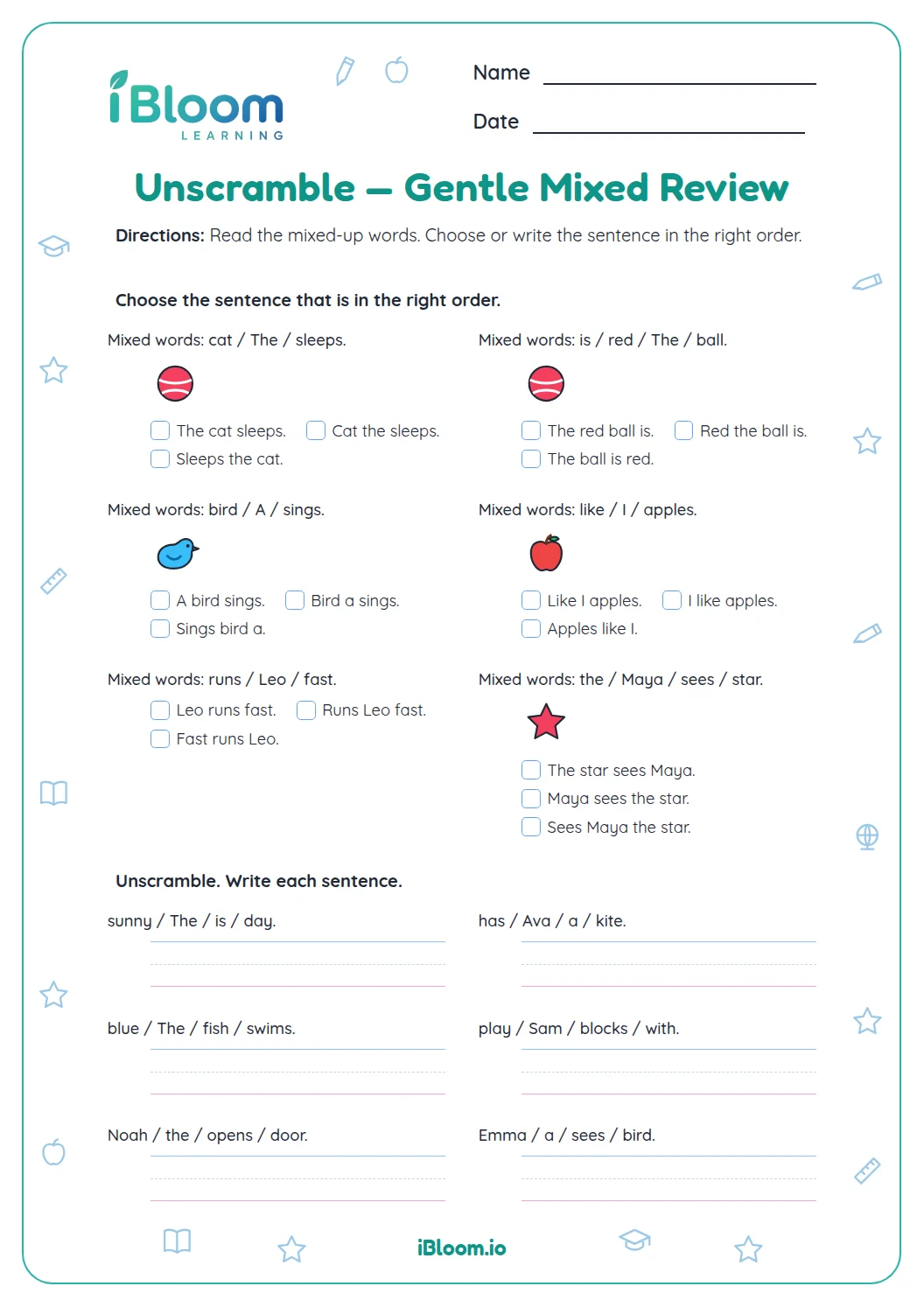
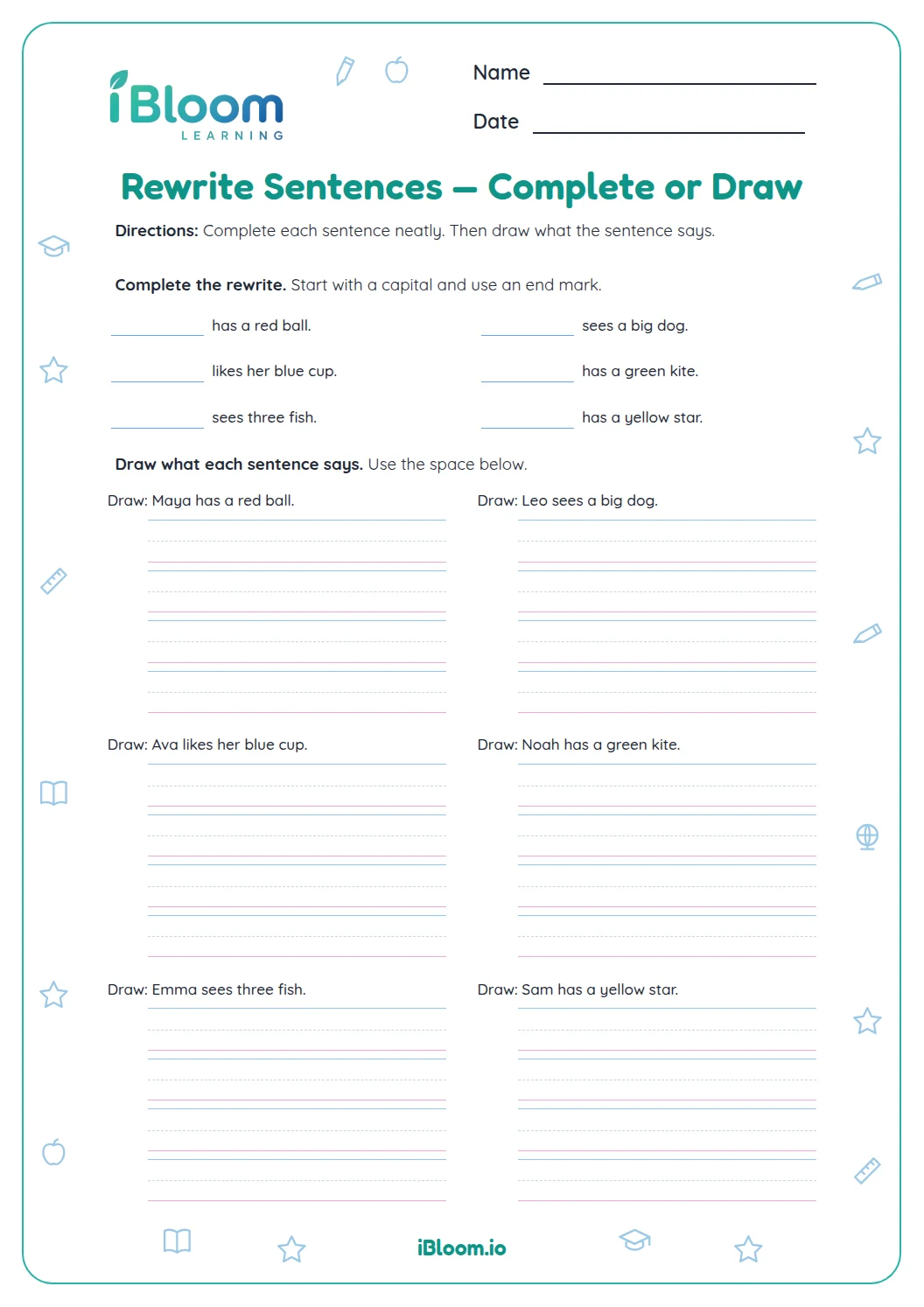
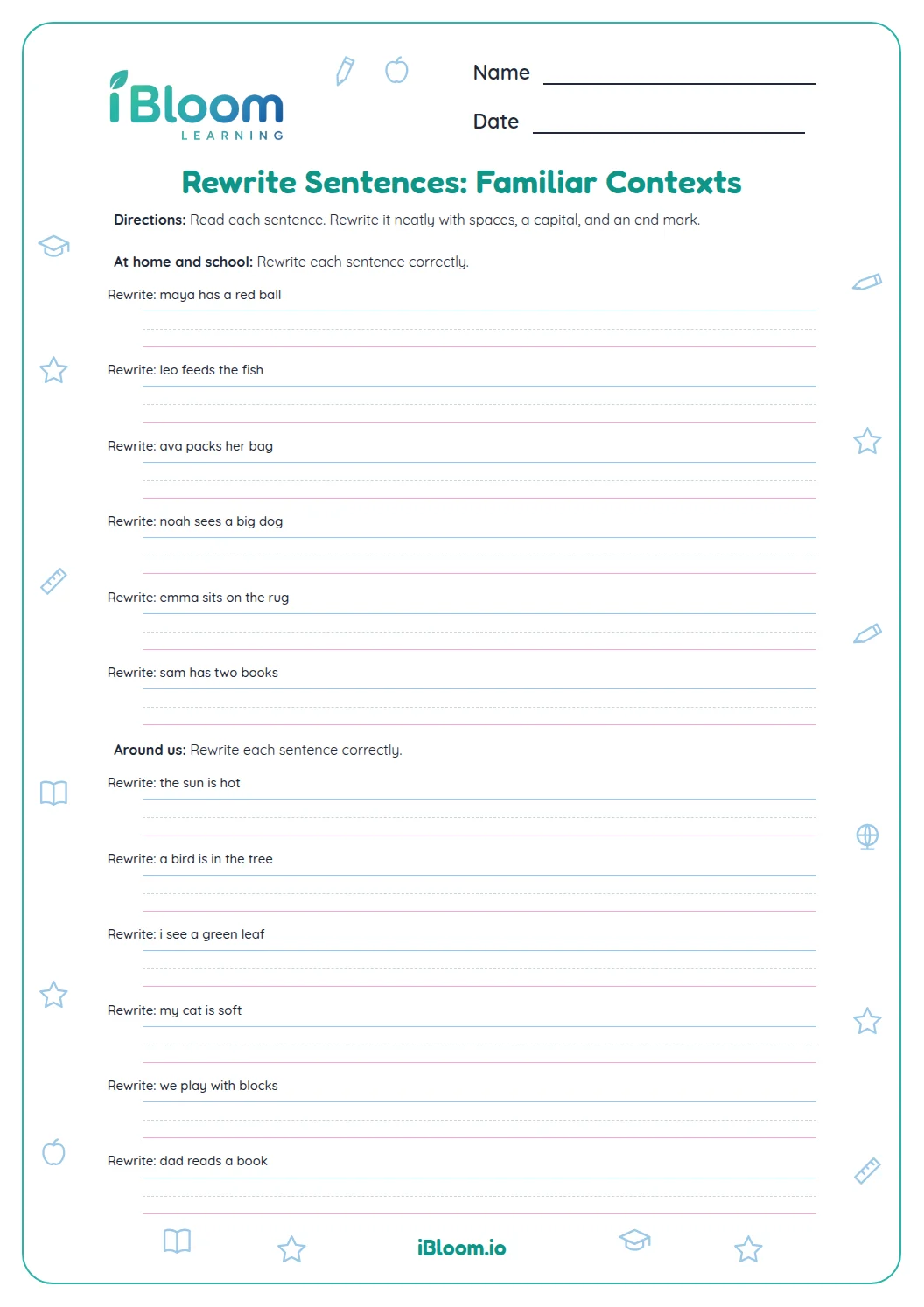
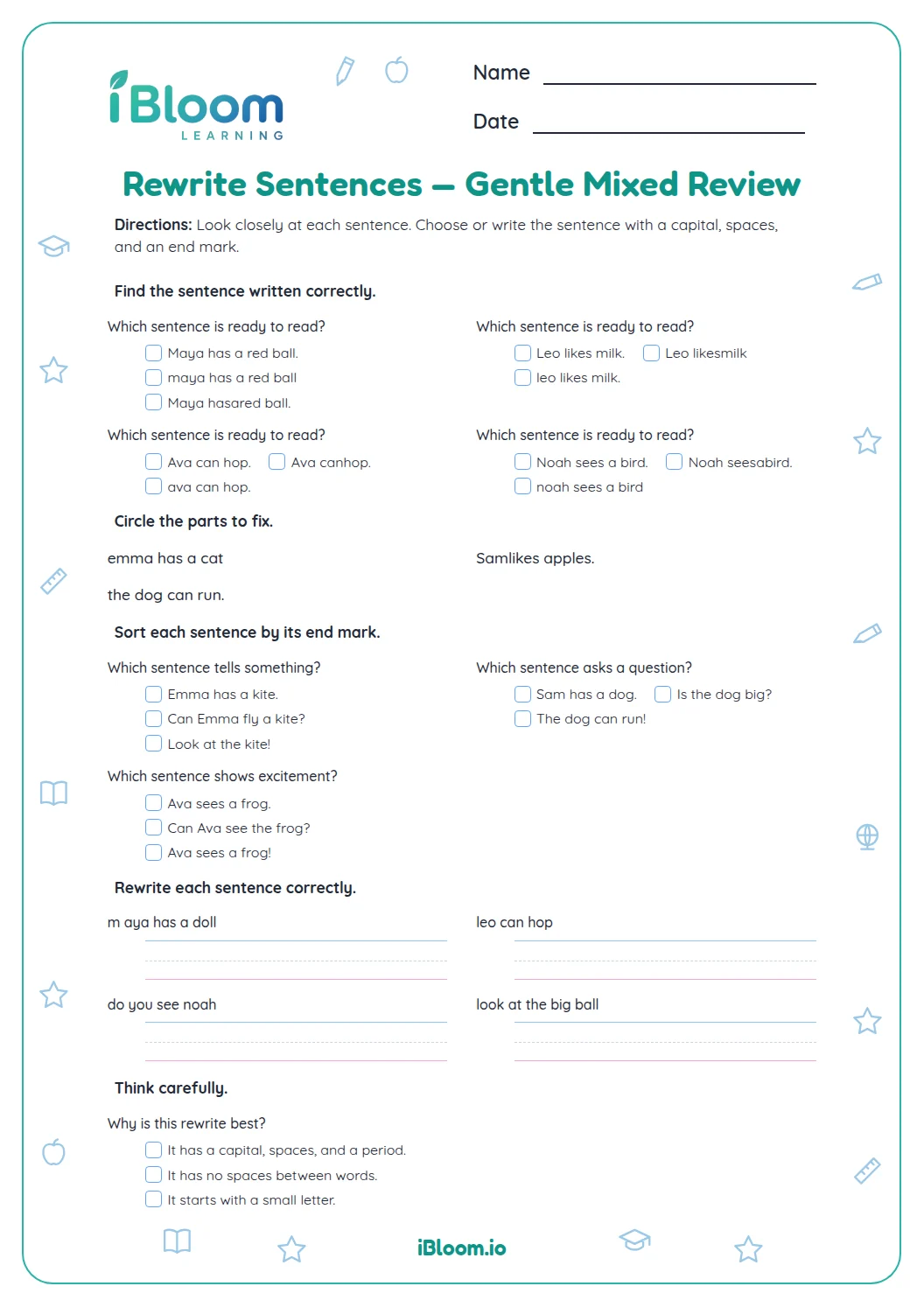
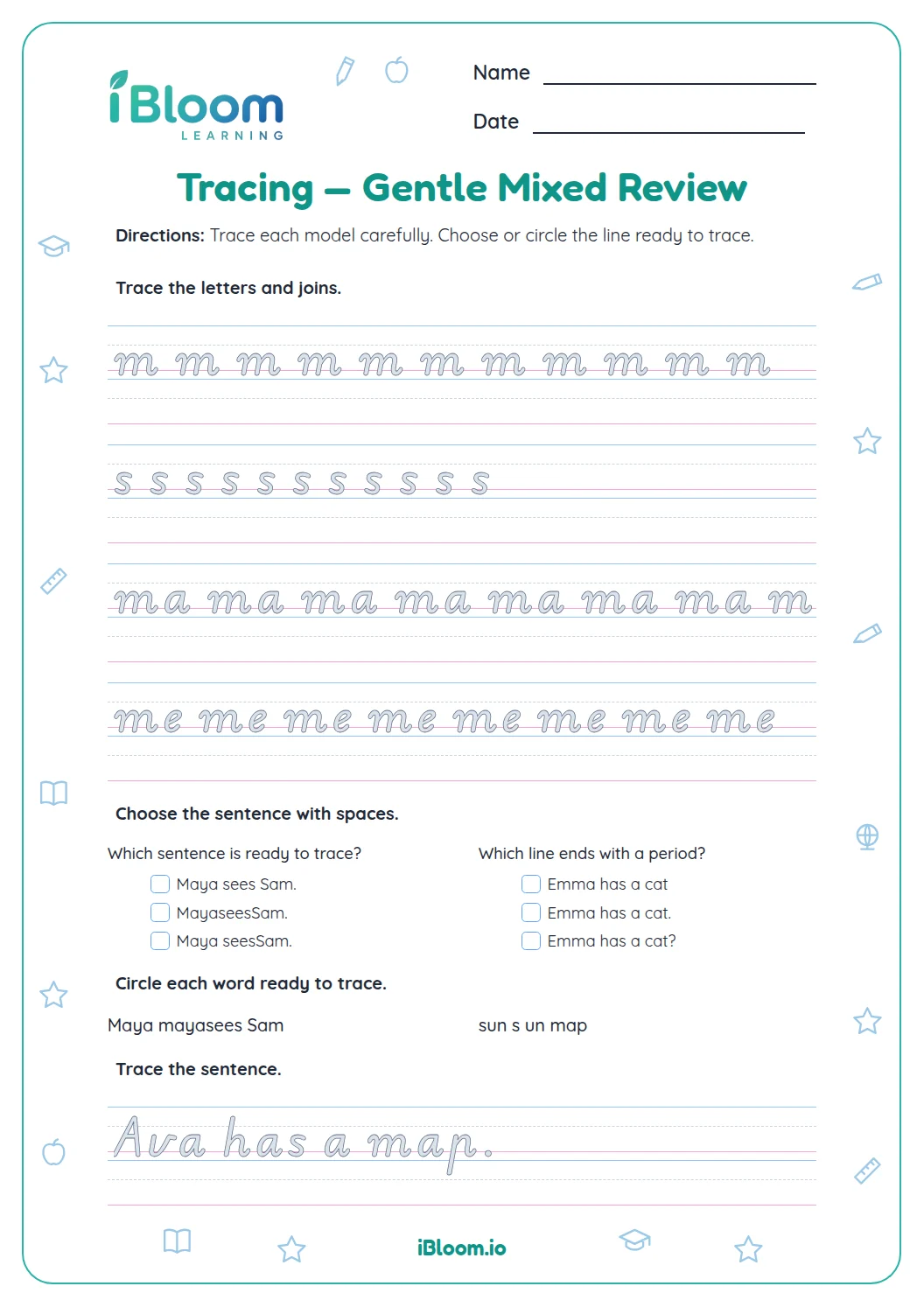
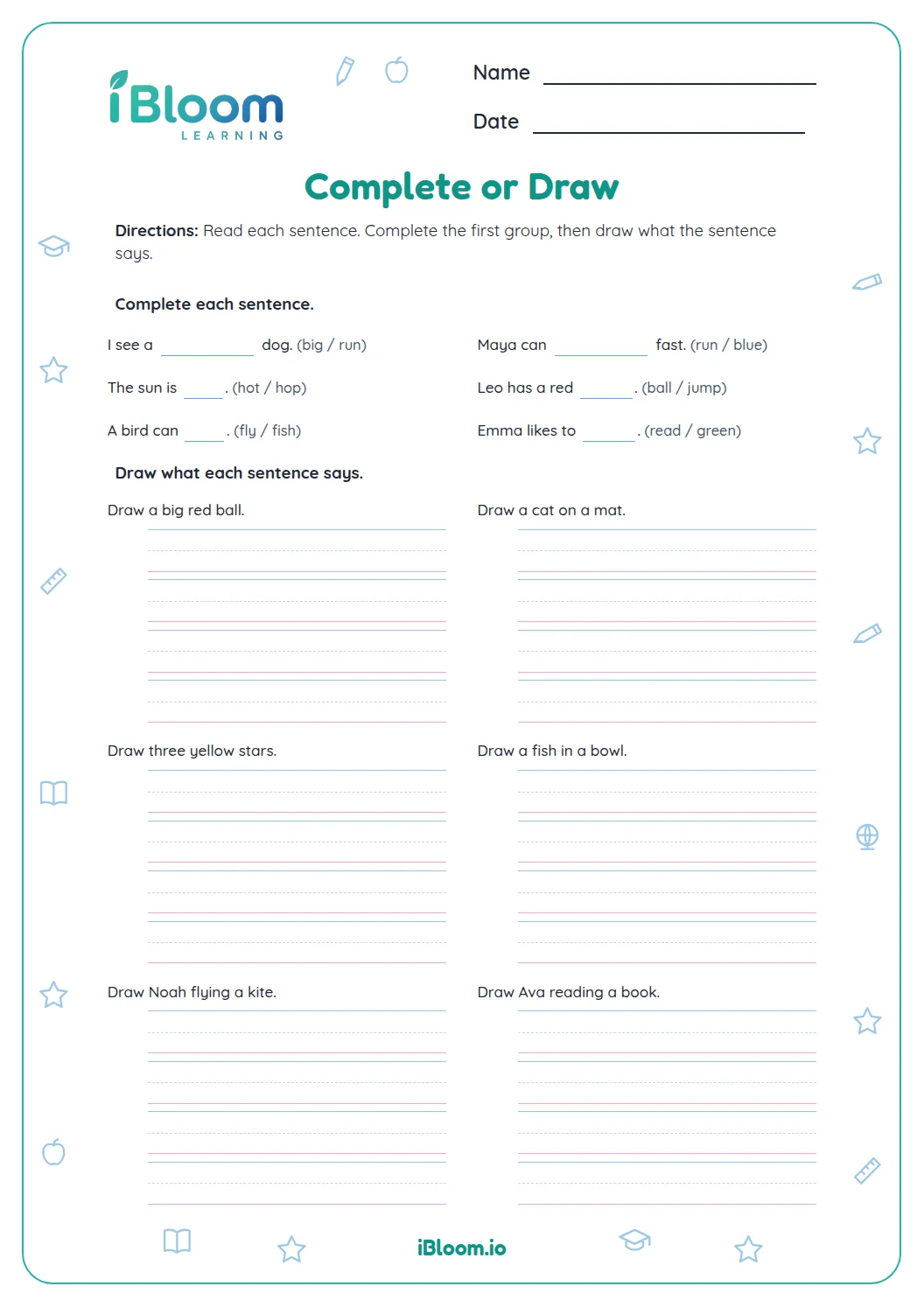
This Preschool–Kindergarten printable follows the old sheet’s sequence: identify a pictured fruit, unscramble simple sentences, complete a sentence, then unscramble and draw what the sentence says. Picture choices and short familiar words support oral practice with complete sentences, aligned to CCSS L.K.1.f. It has 14 questions on two worksheet pages and a separate two-page answer key.
Aligned to L.K.1.f
What idea helps solve these questions?
This Preschool–Kindergarten printable follows the old sheet’s sequence: identify a pictured fruit, unscramble simple sentences, complete a sentence, then unscramble and draw what the sentence says. Picture choices and short familiar words support oral practice with complete sentences, aligned to CCSS L.K.1.f. It has 14 questions on two worksheet pages and a separate two-page answer key.
How does the practice build?
Put words in an order that makes a complete thought; say the sentence aloud, then draw details that match it.
How to use this worksheet
- 1Look at both fruit pictures and choose the red one.
- 2Say the scrambled words aloud and move them into a sentence order.
- 3Read the whole sentence to check that it makes sense.
- 4Choose a word that completes the sentence idea.
- 5For the last four items, unscramble the words, write the sentence, and draw it.
Common mistakes and quick fixes
The mistake
Starting a sentence with a lowercase word when the word bank includes a capitalized one.
The fix
Use the capitalized word at the beginning.
The mistake
Leaving out a small word such as “a” or “the.”
The fix
Touch each word in the bank as you say the completed sentence.
The mistake
Drawing something that does not match the sentence.
The fix
Read the sentence once more before drawing.
Common Core alignment
Unscramble words and complete simple sentences in a shared language activity.
On this sheet: Unscramble words and complete simple sentences in a shared language activity.
Show the official wordingHide the official wording
Produce and expand complete sentences in shared language activities.
What to practice next
Make more practice
Further reading
Questions parents and teachers ask
What is on the two pages?
The pages move from a picture choice to word-order practice, one sentence completions, and one prompt where children unscramble and draw a sentence. A separate answer key gives sample sentence answers. This gives the learner a chance to connect the written clue to the strategy before moving on to another problem.
Can more than one sentence order work?
Some word groups can form more than one grammatical sentence, so read the complete sentence aloud and accept a clear order that uses all the words. The key shows a model answer. This gives the learner a chance to connect the written clue to the strategy before moving on to another problem.
What should a child draw for the last four items?
The drawing should match the completed sentence. For “The bird flies,” for example, a bird in the air is a fitting drawing; details can vary. This gives the learner a chance to connect the written clue to the strategy before moving on to another problem.
How should an adult help with unscrambling?
Invite the child to say the words aloud, find which one begins the sentence, and then try the remaining order. Rereading the whole sentence helps check the result. This gives the learner a chance to connect the written clue to the strategy before moving on to another problem.
Does the printable include an answer key?
Yes. A separate two-page key shows the fruit answer and sample sentence orders. Drawings can differ as long as they match the sentence. This gives the learner a chance to connect the written clue to the strategy before moving on to another problem.