



About this worksheet
This preschool and kindergarten printable pairs seven short sentence traces with seven matching drawing prompts. Children follow spaces and letter shapes across each sentence, then show their understanding by drawing the words. The answer key repeats the tracing models and explains what each drawing should include.
How does the tracing part work?
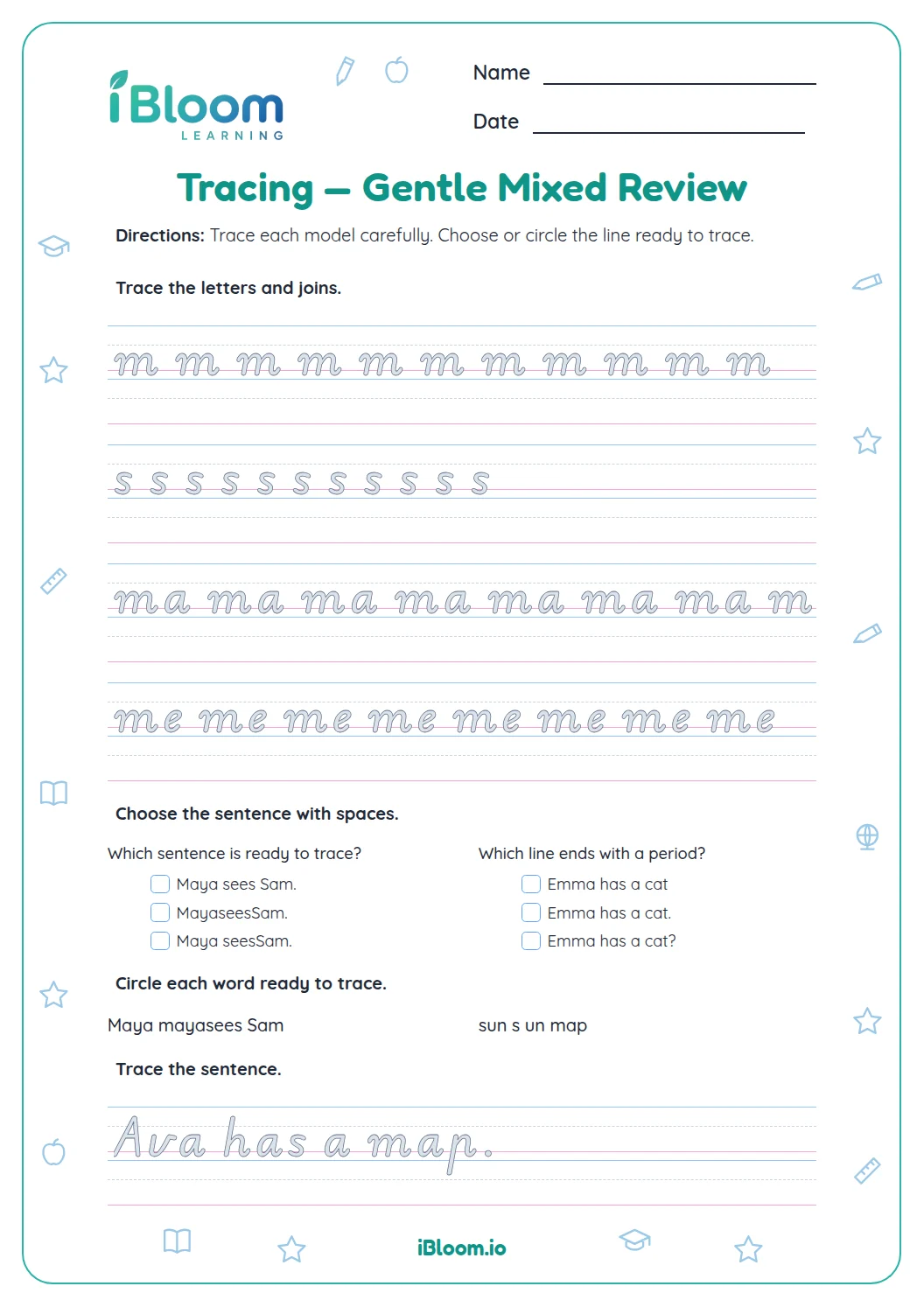
Part A has seven short, complete sentences to trace, such as “I see a cat.” Point out the spaces between words and the period at the end. The lines give children room to follow the model at a steady pace.
What should children draw?
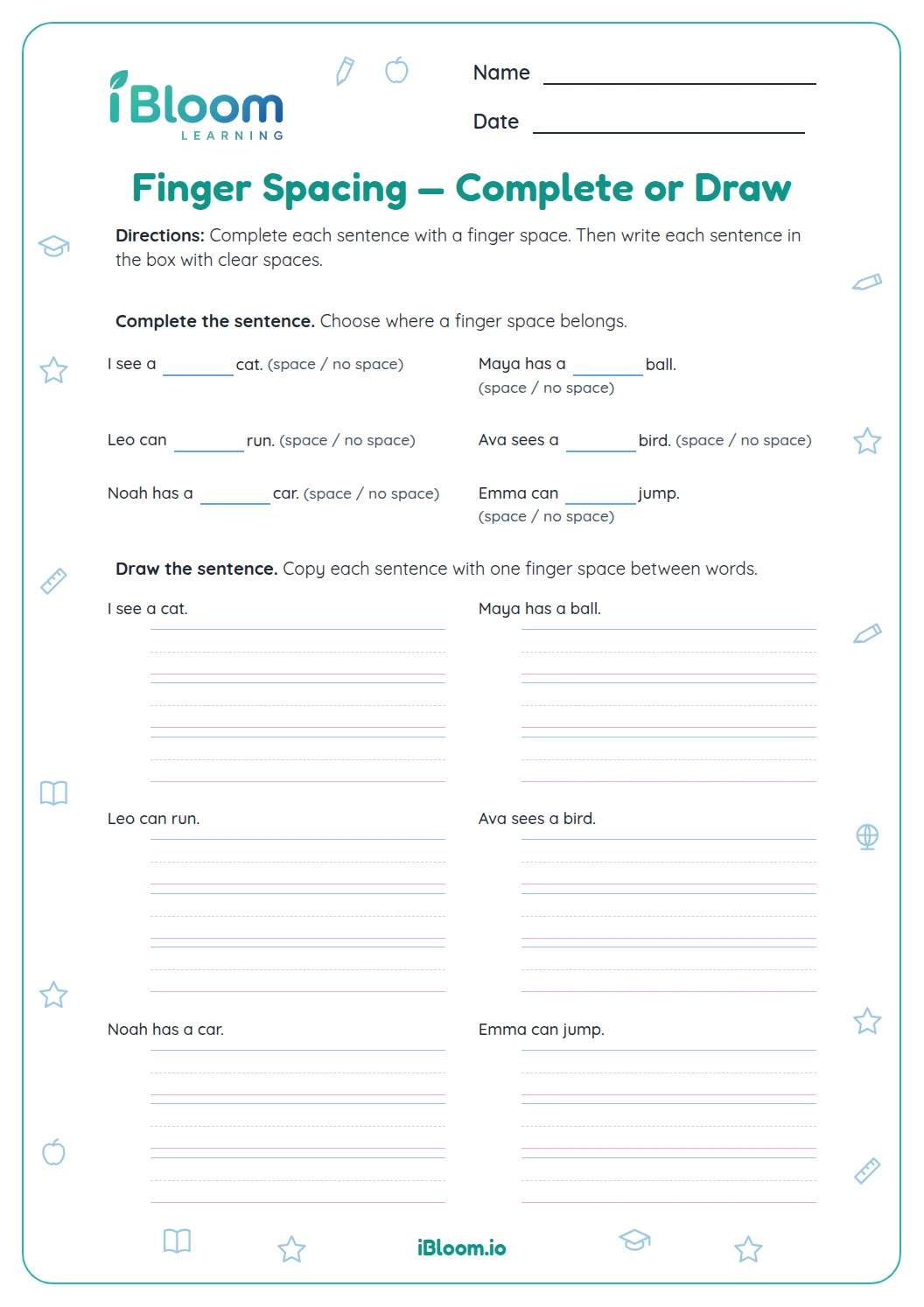
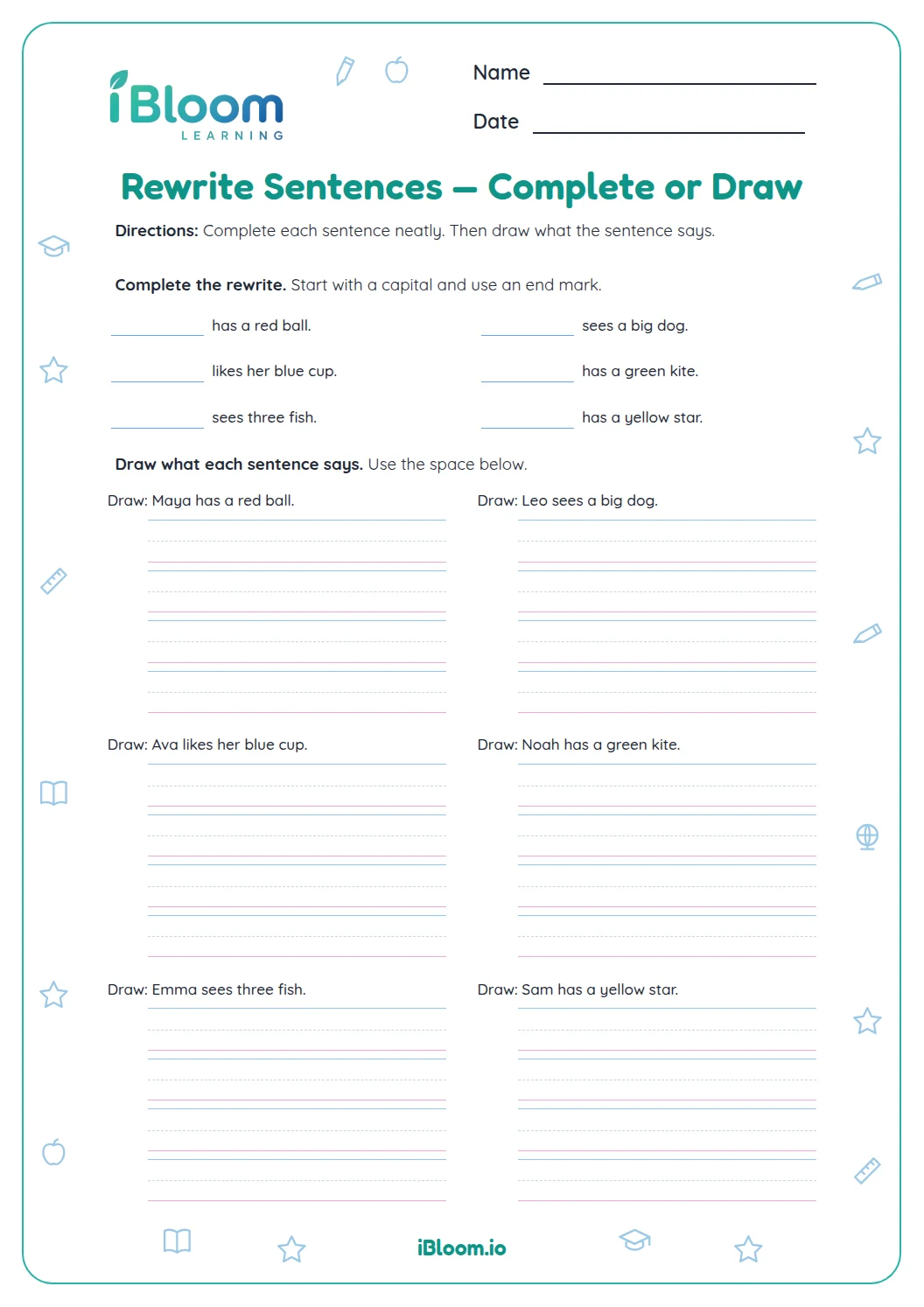
Part B has seven directions for simple pictures, including a sun above a house and one bug beside one flower. The key describes the requested objects and placement; children can draw them in their own style.
Practice one sentence at a time
- 1Read the sentence aloud before tracing.
- 2Follow the letters from left to right.
- 3Leave a visible space between each word.
- 4Check for a capital at the beginning and a period at the end.
- 5Read each drawing prompt, then include every named object and its position.
Small details to notice
The mistake
Joining words together while tracing.
The fix
Pause at each printed space and leave a gap.
The mistake
Leaving off the first capital or final period.
The fix
Look at the model’s first and last marks before moving on.
The mistake
Leaving out an object in a drawing prompt.
The fix
Name each object in the direction before starting the picture.
What to practice next
Make more practice
Questions parents and teachers ask
How many sentences will a child trace?
The sentences on the tracing page are “I see a cat,” “The sun is up,” and five other short statements about familiar things. The drawing page then asks children to create seven pictures from direct prompts. This gives a clear way to check the skill using the examples and directions printed on this page.
What comes after tracing?
The seven drawing prompts are different from the tracing sentences, so children read or listen to each one and draw the named scene. An adult can check the key for the required objects and their placement. This gives a clear way to check the skill using the examples and directions printed on this page.
Does the answer key show finished drawings?
The key repeats each sentence in a clear model and gives a short description of each requested drawing. It is a checking guide; children can use different colors, shapes, and artistic details while including what the prompt names. This gives a clear way to check the skill using the examples and directions printed on this page.
Can an adult read the prompts aloud?
Yes. Read a sentence or direction aloud if needed, then let the child follow the printed model or make the picture. This keeps the activity focused on tracing, sentence meaning, and matching a drawing to a direction. This gives a clear way to check the skill using the examples and directions printed on this page.
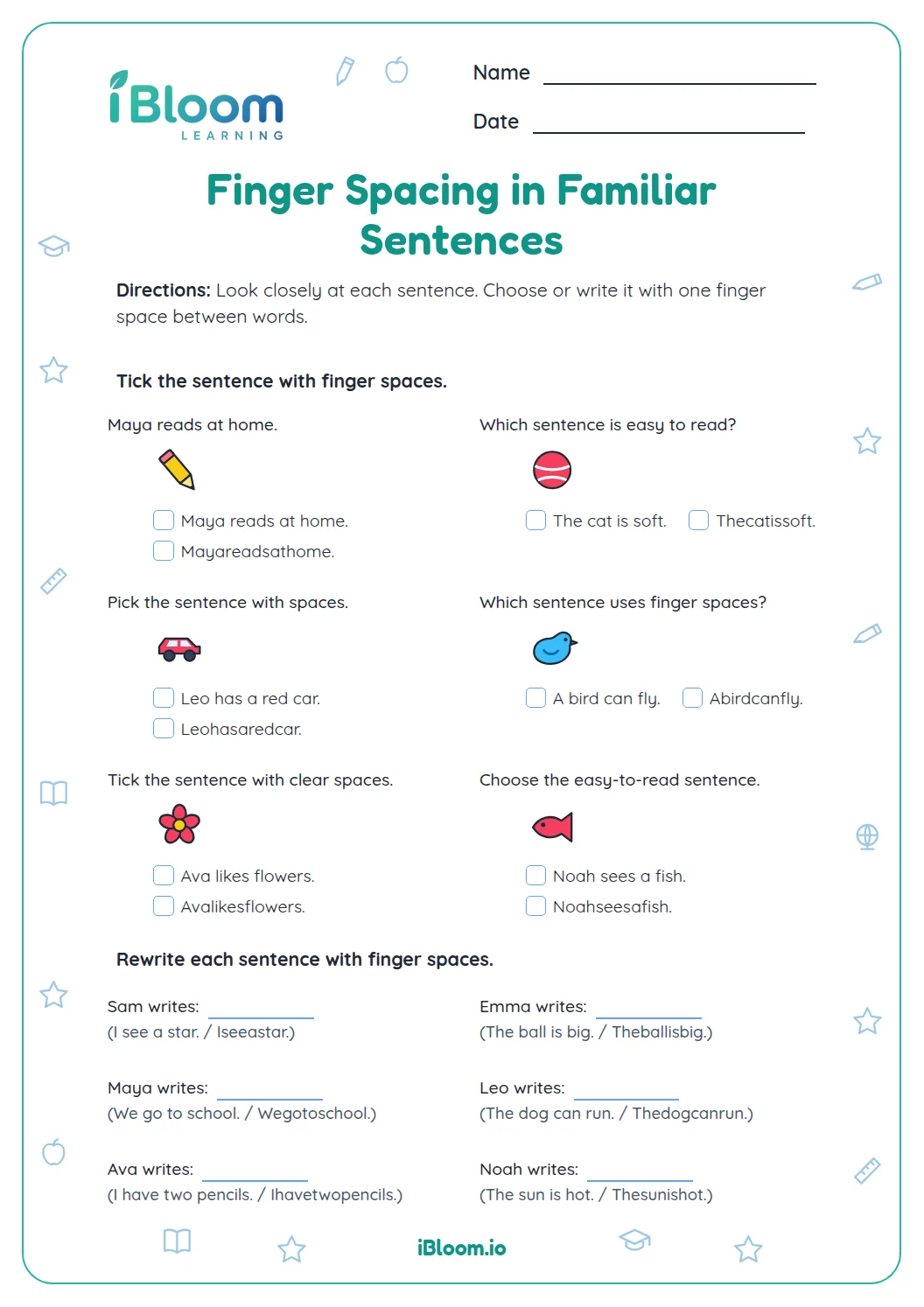
How can I help with spacing?
Look at one gap at a time and pause between words while tracing. The model also shows an uppercase first letter and a period at the end, which gives children two more visible details to check. This gives a clear way to check the skill using the examples and directions printed on this page.