




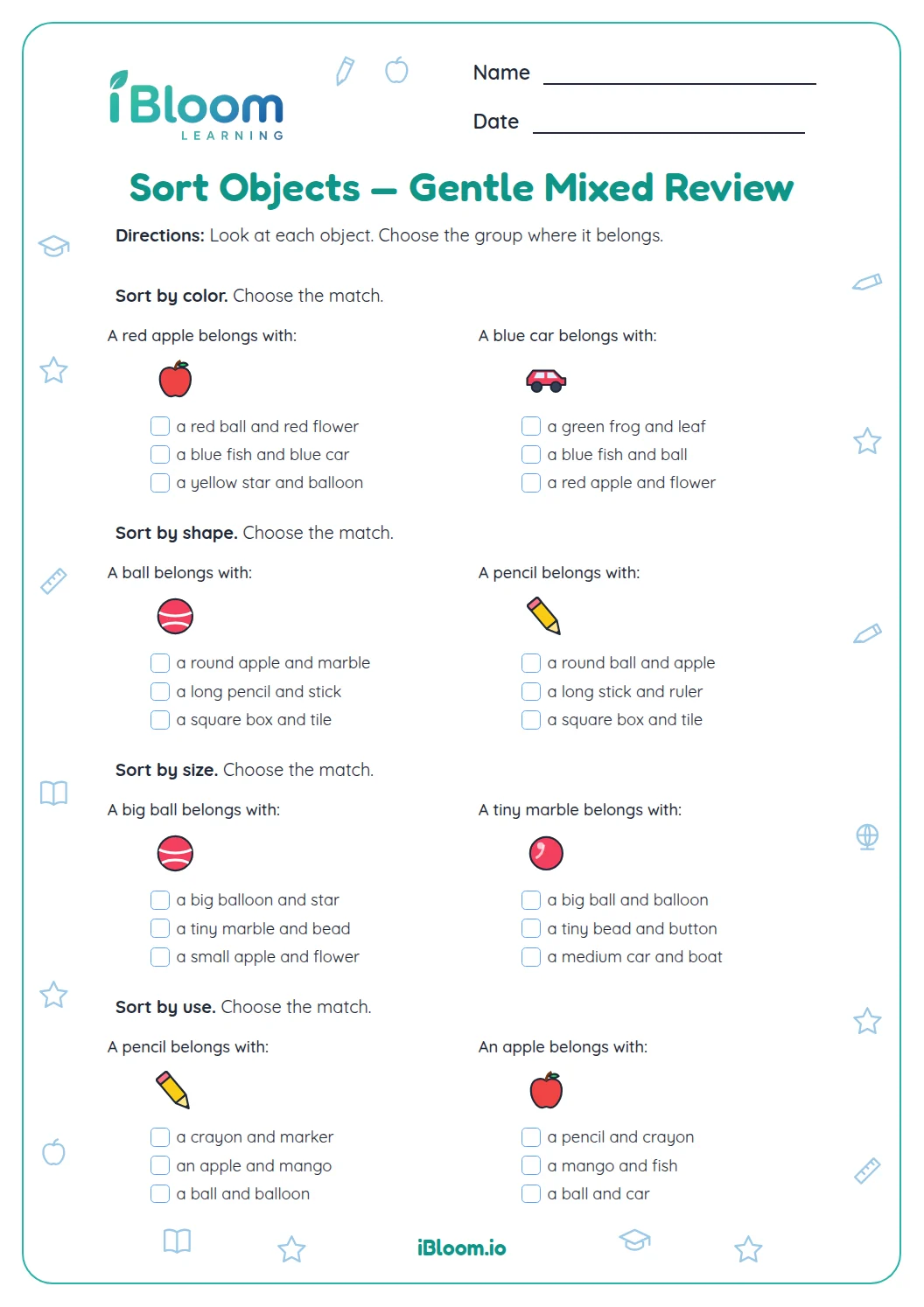


About this worksheet
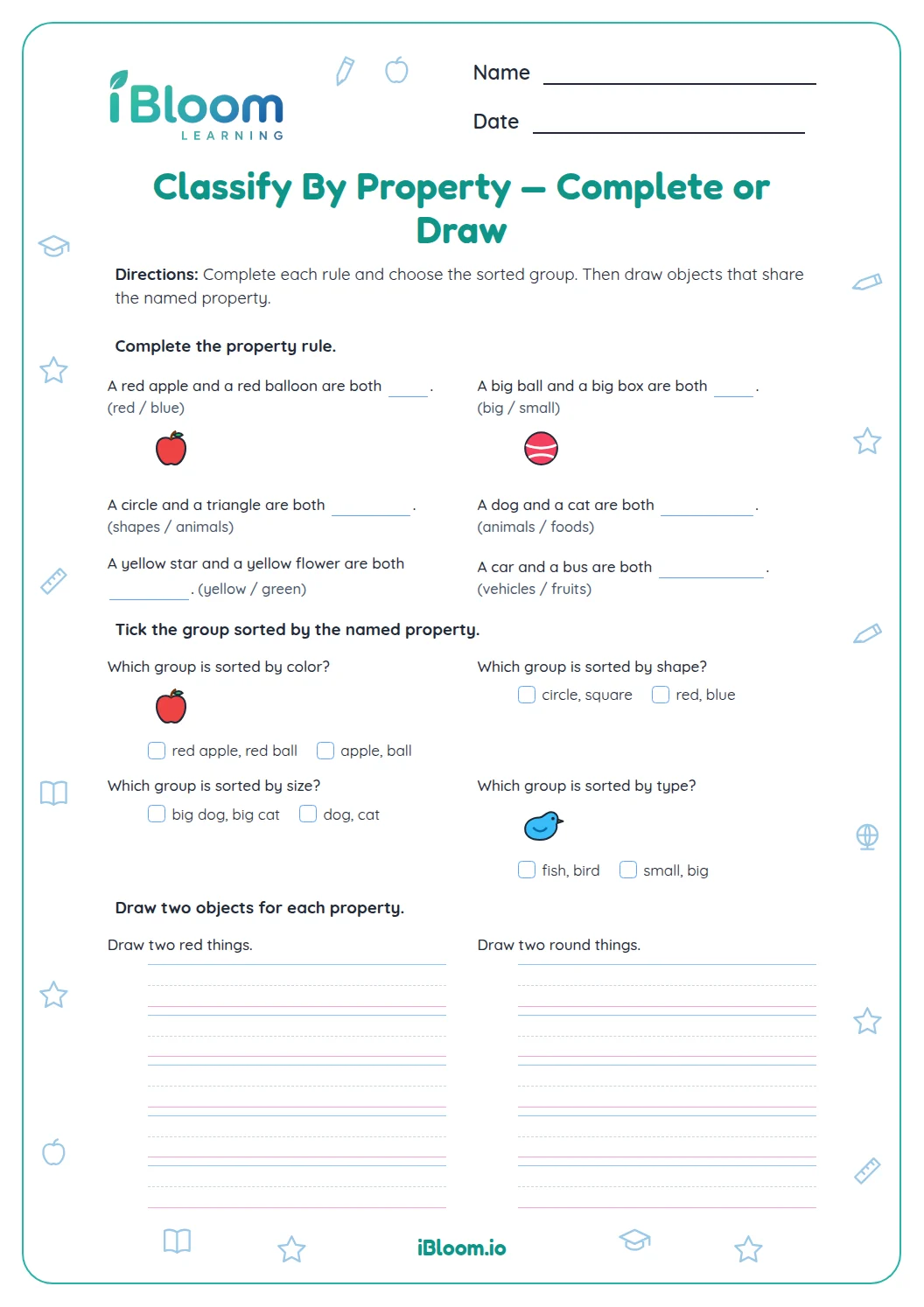
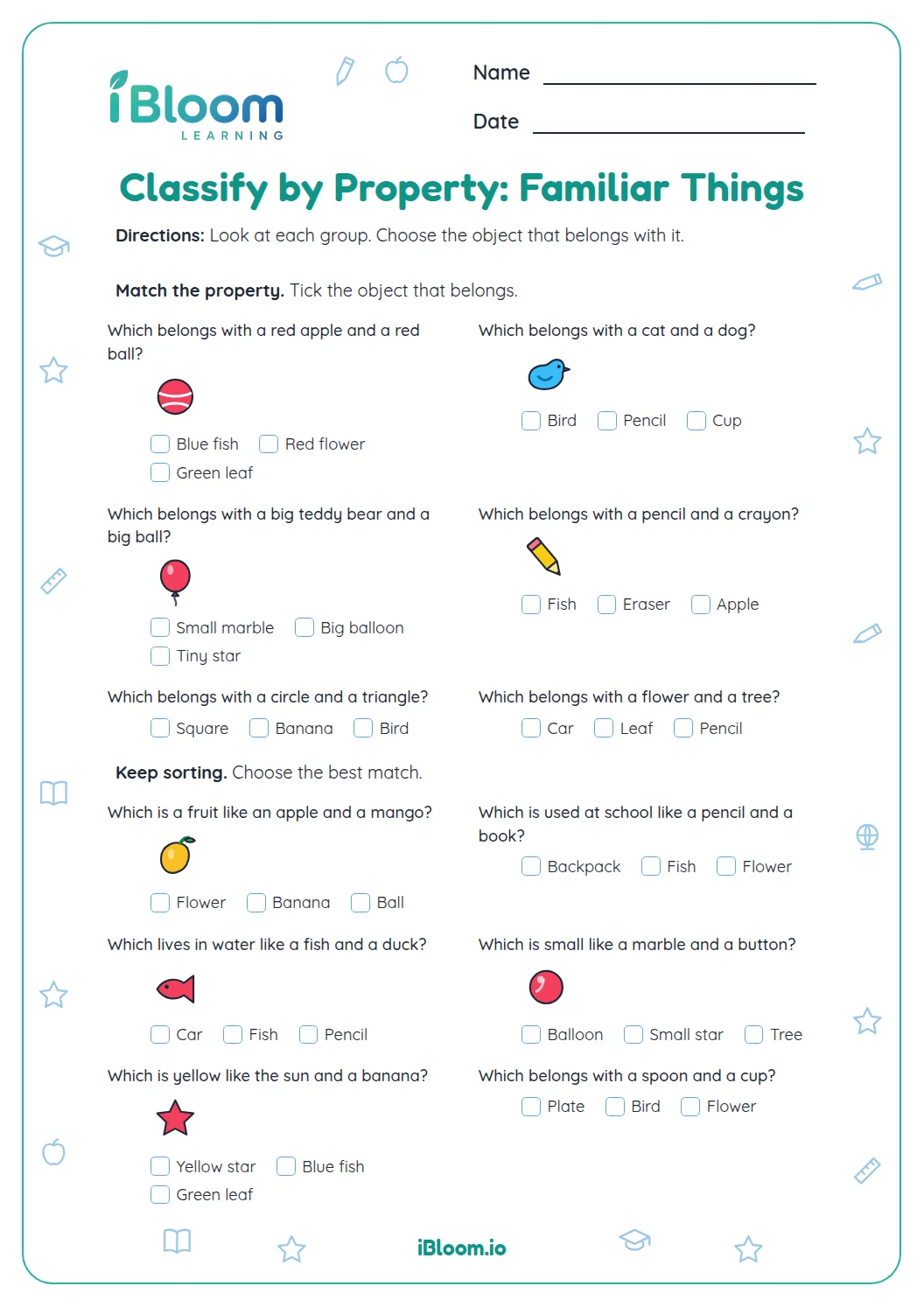
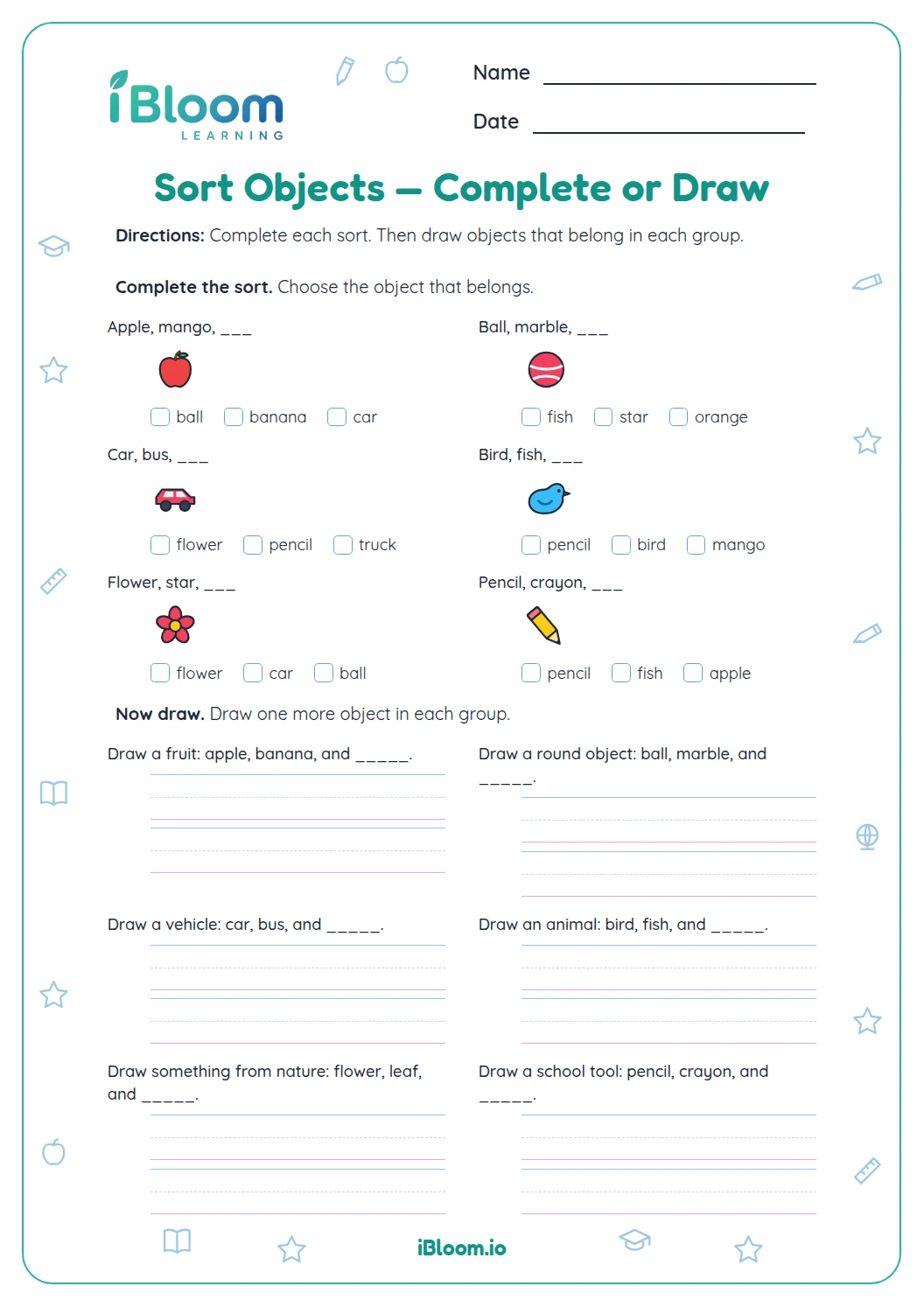
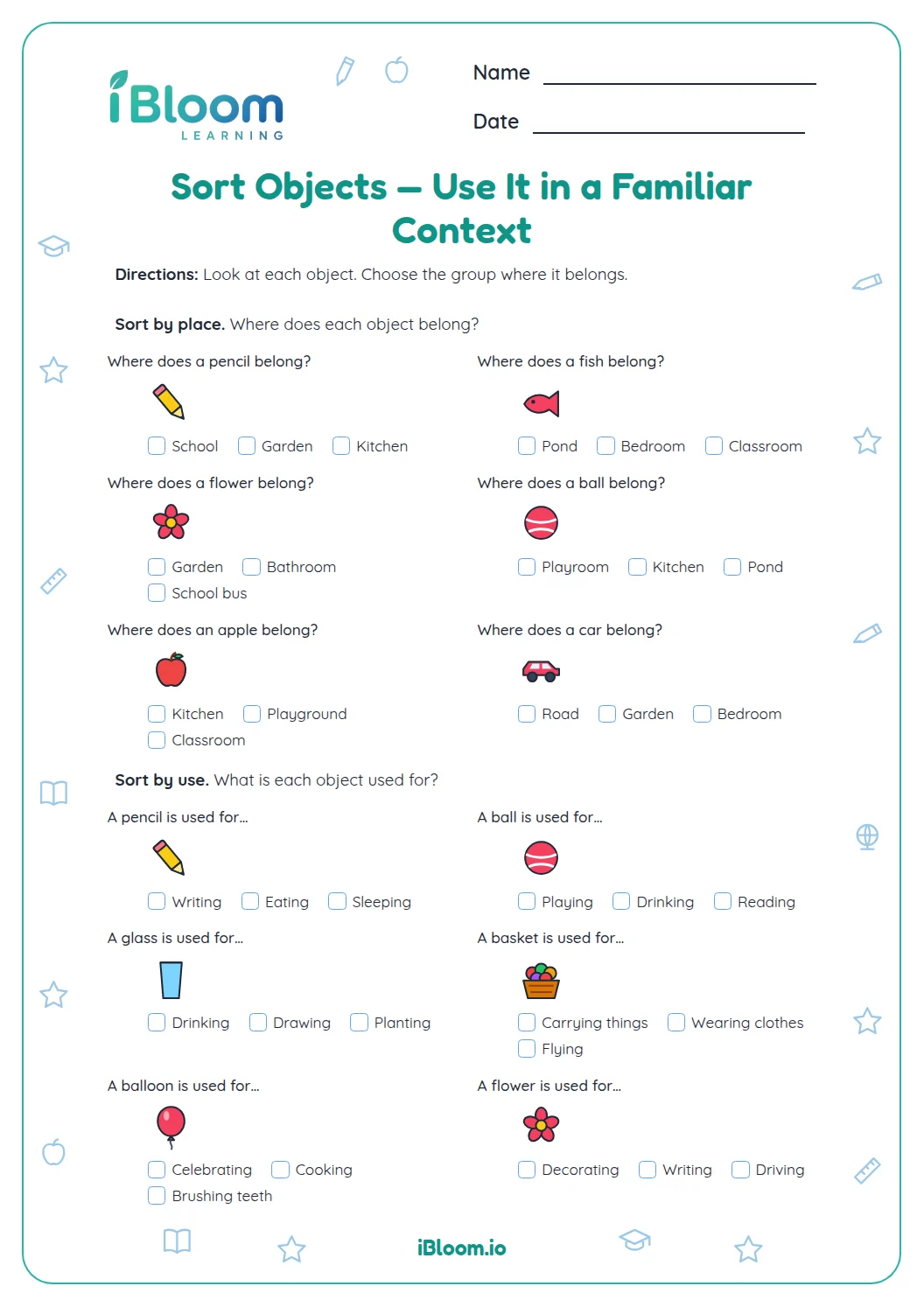
This printable is for preschool and kindergarten learners practicing how to sort and count two groups. Children identify shapes and familiar categories, count pictured sets, and compare named quantities using more or fewer. The 14 questions move from sorting to counting and comparison, with a separate answer key. Picture prompts keep early classification and quantity practice concrete.
How do children sort objects?
Look for the feature named in the prompt, such as shape or animal. For example, the pictured fruit group includes an apple, while the ball does not belong.
- 1Which fruit is pictured?
- 2Choose the apple from the pictured objects.
How can a child count each set?
Point to one picture for each number word, then say the total. The five count questions use small pictured groups.
How do children compare two groups?
Listen for whether the question asks which amount is more or fewer. Compare the two numbers written as words and select the matching numeral.
How to use this worksheet
- 1Name each pictured object before sorting.
- 2Find the feature or category named in the prompt.
- 3Point to each picture once while counting.
- 4Compare the quantities when asked for more or fewer.
- 5Check each group name and count with the answer key.
Common slips and quick fixes
The mistake
Sorting by position instead of category.
The fix
Name each item and check whether it fits the group.
The mistake
Skipping or recounting a picture.
The fix
Point to each object once as you count aloud.
The mistake
Mixing up more and fewer.
The fix
Compare the quantities before naming the group.
What to practice next
Make more practice
Questions parents and teachers ask
What kinds of sorting are included?
The sheet uses familiar shapes, fruit, balls, birds, flowers, cars, and stars. Children sort by shape or category, count four pictured sets, and compare six pairs of quantities. The answer key lists the intended choices and all four pictured counts.
How many picture groups do children count?
There are two pictured counting questions, with small groups of balls and apples. A child can point to each object once, say the number, and choose it from three numerals. Other items compare quantities using familiar objects and numerals.
What does more or fewer mean here?
More names the larger amount, and fewer names the smaller amount. The comparison questions use familiar objects and numbers written in words, then provide numeral choices. One item asks for a named group’s amount, so learners practice counting as well.
Is this worksheet suitable for preschool?
Yes. The page is designed for preschool and kindergarten learners. An adult can read prompts aloud, invite the child to name each pictured item, and point while counting. Children may answer orally or write the number or group name.
How should we use the answer key?
Use the key to check sorting choices, the two picture counts, and comparisons. Children can recount a pictured set if their total differs, then check the numeral options for the remaining questions. The key lists every intended answer.