






About this worksheet
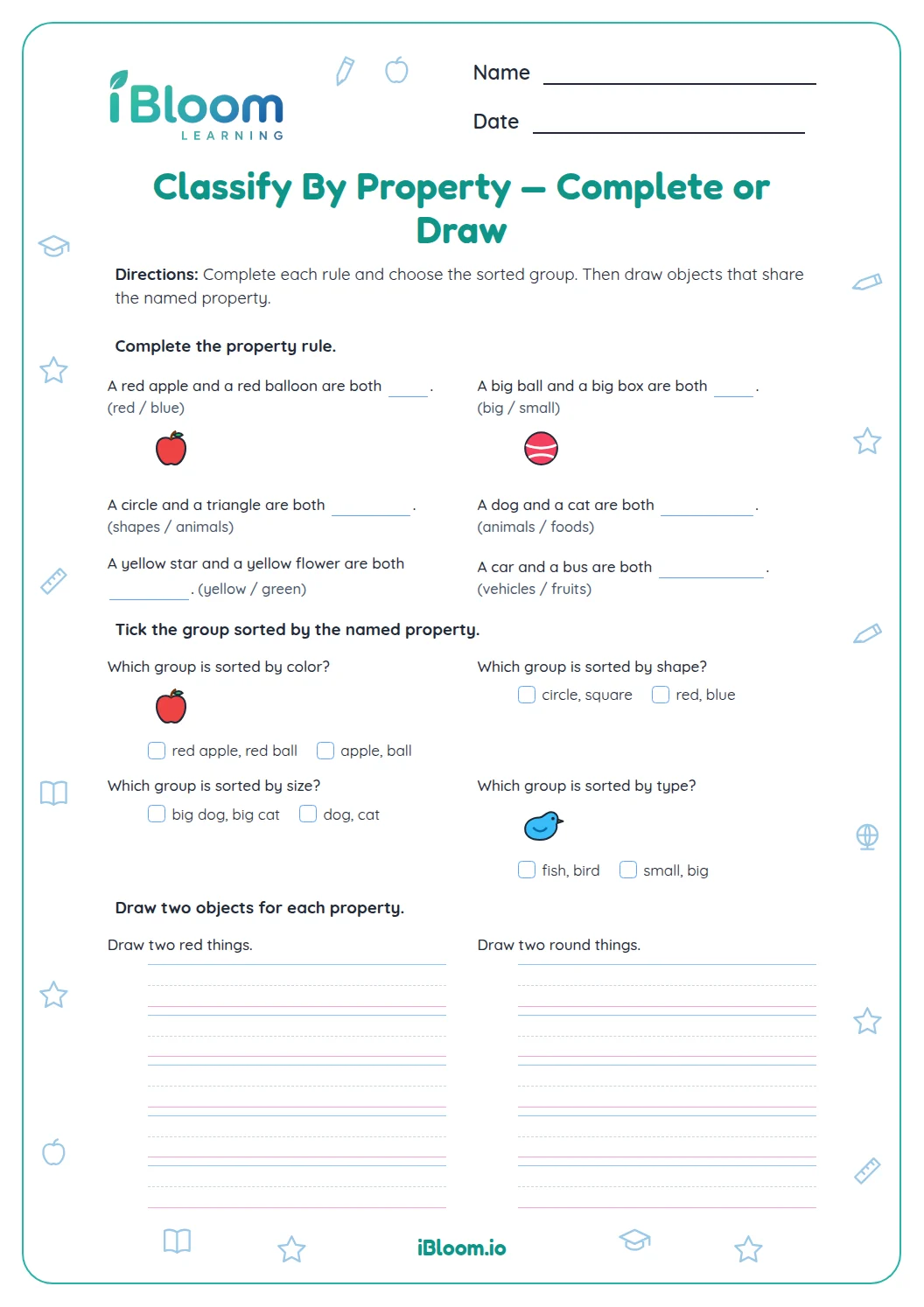
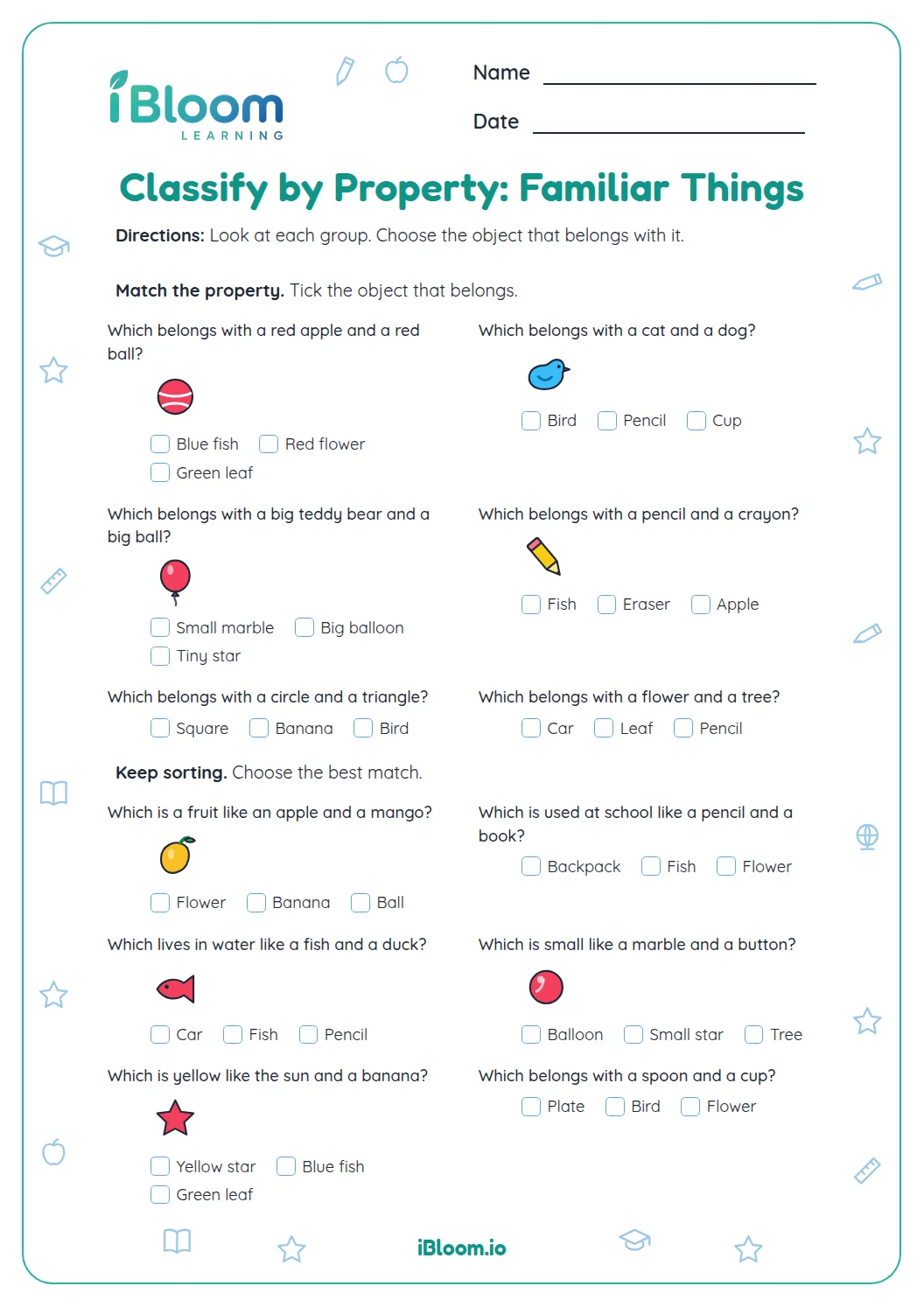
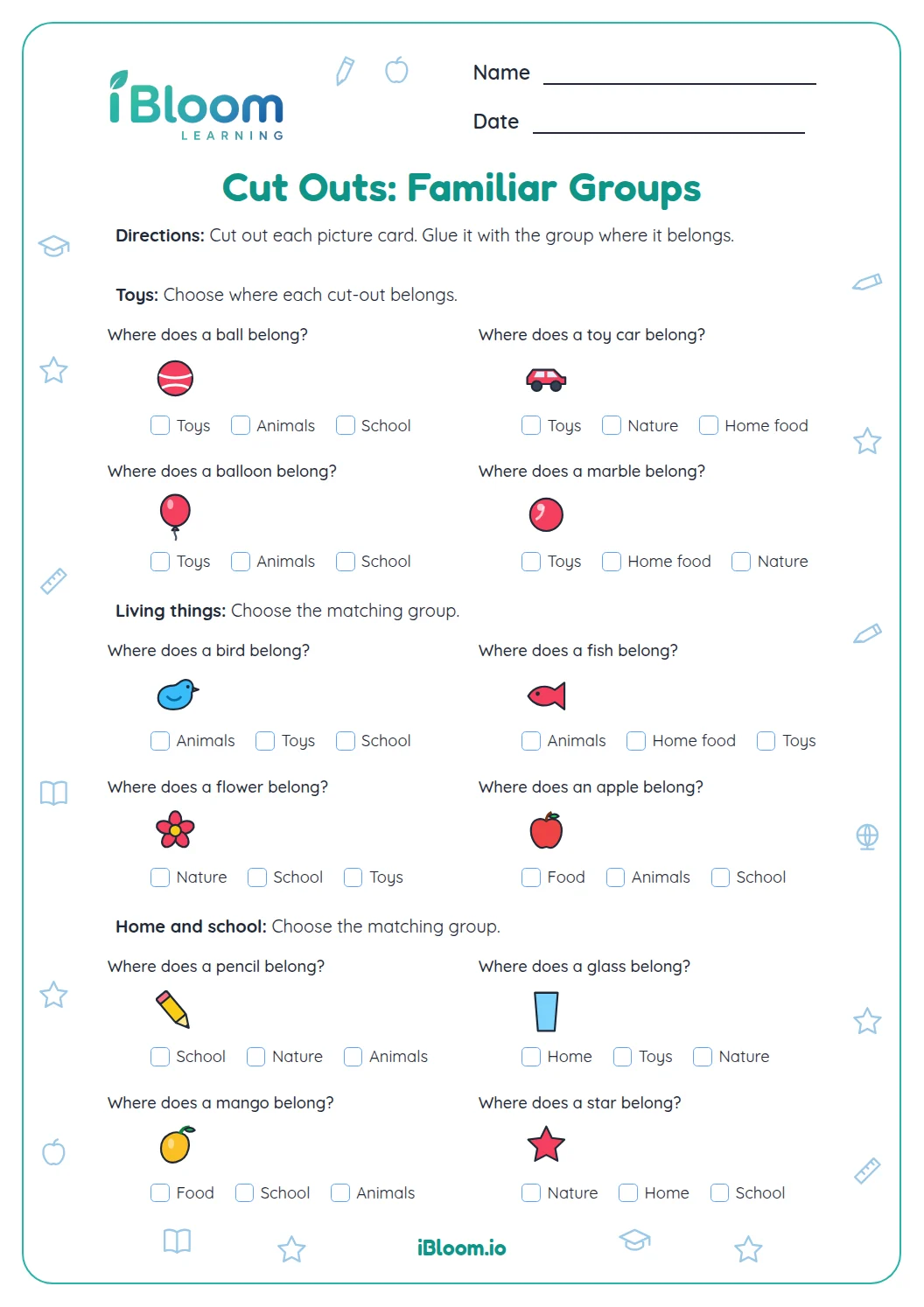
This picture-based printable is for preschool and kindergarten learners practicing how to sort objects into two familiar groups and count the groups. Children identify which pictured object belongs, compare group sizes, draw items to complete a group, and count a pictured set. The page keeps the old sheet’s picture-led sorting and drawing approach. Its kindergarten counting and sorting practice aligns with CCSS K.MD.B.3.
Aligned to K.MD.B.3
How do children sort objects into groups?
Choose the feature named in the question, such as fruit, animals, or things to wear. Look at each picture and decide whether it belongs in that group. The early questions use familiar objects and short prompts.
- 1Which set has only fruit?
- 2Choose the apple and pear pictures.
How can children compare and count groups?
Compare the number of objects in each group by counting one at a time. Questions ask which group has more, whether two groups have the same amount, or how many objects are in a pictured set.
What does the drawing question add?
The draw task asks children to add a matching item to a group. Invite them to name the group feature first, then draw an object that fits it. The answer key shows a sample drawing response.
How to use this worksheet
- 1Name the group feature in the prompt.
- 2Look at each picture and decide whether it matches that feature.
- 3For “more” or “same” questions, count each group aloud.
- 4Draw an object that belongs with the named group.
- 5Count the pictured apples one at a time.
- 6Review answers with the key and ask what makes each item belong.
Common mistakes and quick fixes
The mistake
Sorting by color when the prompt names an object type.
The fix
Repeat the group name and sort by that feature.
The mistake
Counting one picture twice or skipping one.
The fix
Point to each picture once while saying the count.
The mistake
Drawing an object that does not fit the group.
The fix
Name the group first, then choose a familiar item that shares its feature.
Curriculum alignment
This worksheet gives practice with the Common Core skill below.
Sort objects into categories and count the objects in each category.
On this sheet: Learners sort pictured objects into two familiar categories and add a matching item.
Show the official wordingHide the official wording
Classify objects into given categories; count the numbers of objects in each category and sort the categories by count.
What to practice next
Make more practice
Further reading
Questions parents and teachers ask
What skills are practiced?
Children practice sorting familiar pictured objects into named groups, comparing group sizes, counting a set, and drawing an item that belongs. The 14 questions include 12 picture choices, a drawing task, and a count-the-apples item. An adult may read prompts aloud.
Is this worksheet suitable for preschool?
The prompts use familiar objects and pictures, so an adult can read each question aloud and let the child point to a choice. Children who are ready can count groups and draw a matching item on their own.
How many questions are included?
There are 14 questions across three parts. Most ask children to choose the picture that matches a named group; one asks them to draw a matching object, and one asks them to count six apples. The separate key provides the expected choices and count.
What supplies are needed?
Print the worksheet and provide a pencil or crayon. Children use the printed picture choices, draw one additional item, and count a pictured set. An adult can point to objects or read prompts aloud when useful. No extra materials are needed.
How should I help with the draw task?
Ask the child to say the group name and think of one object that belongs there. The answer key gives a sample flower for the “things that grow” group; other clear examples that fit the group may also work. Invite the child to explain the choice.