






About this worksheet
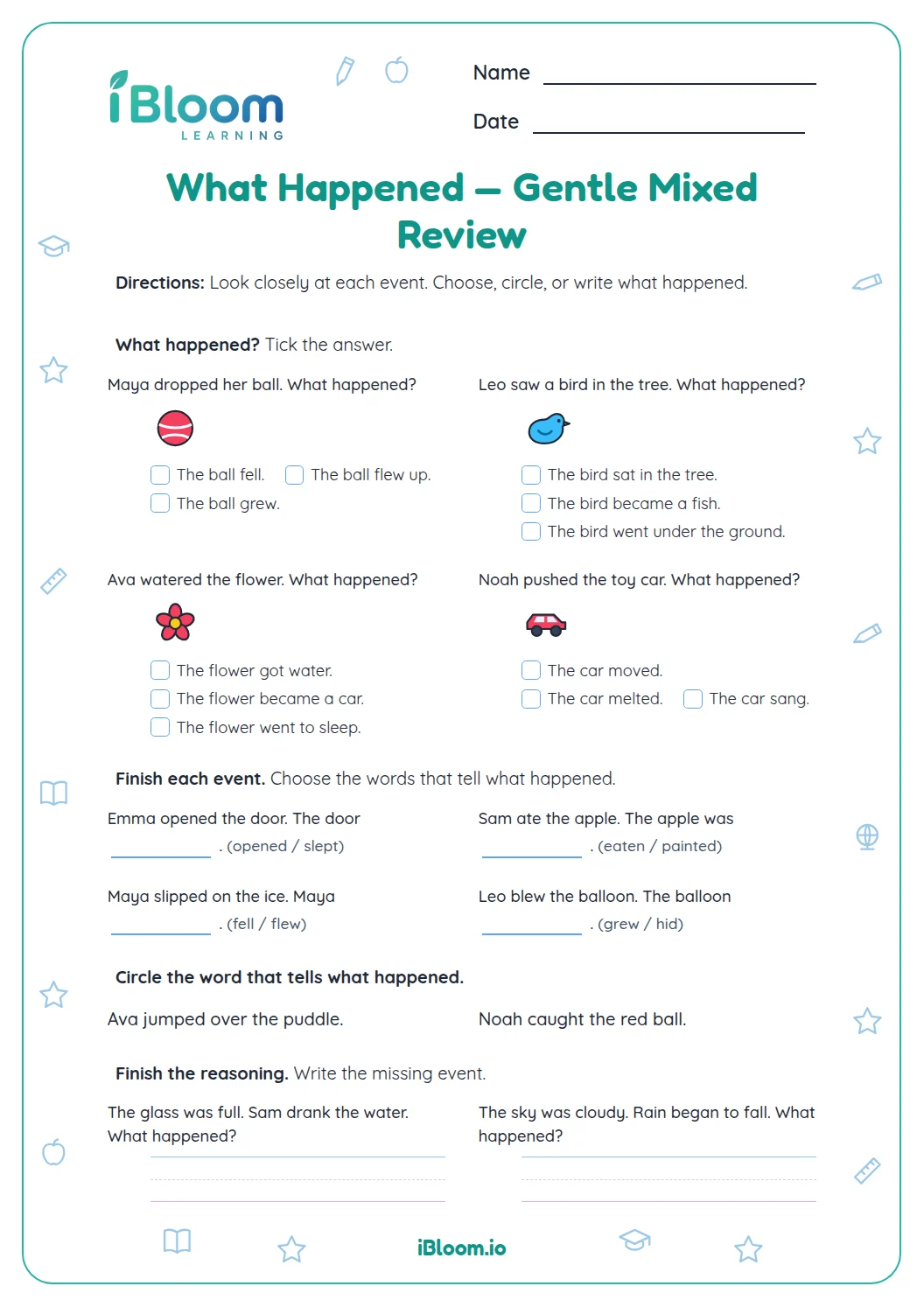
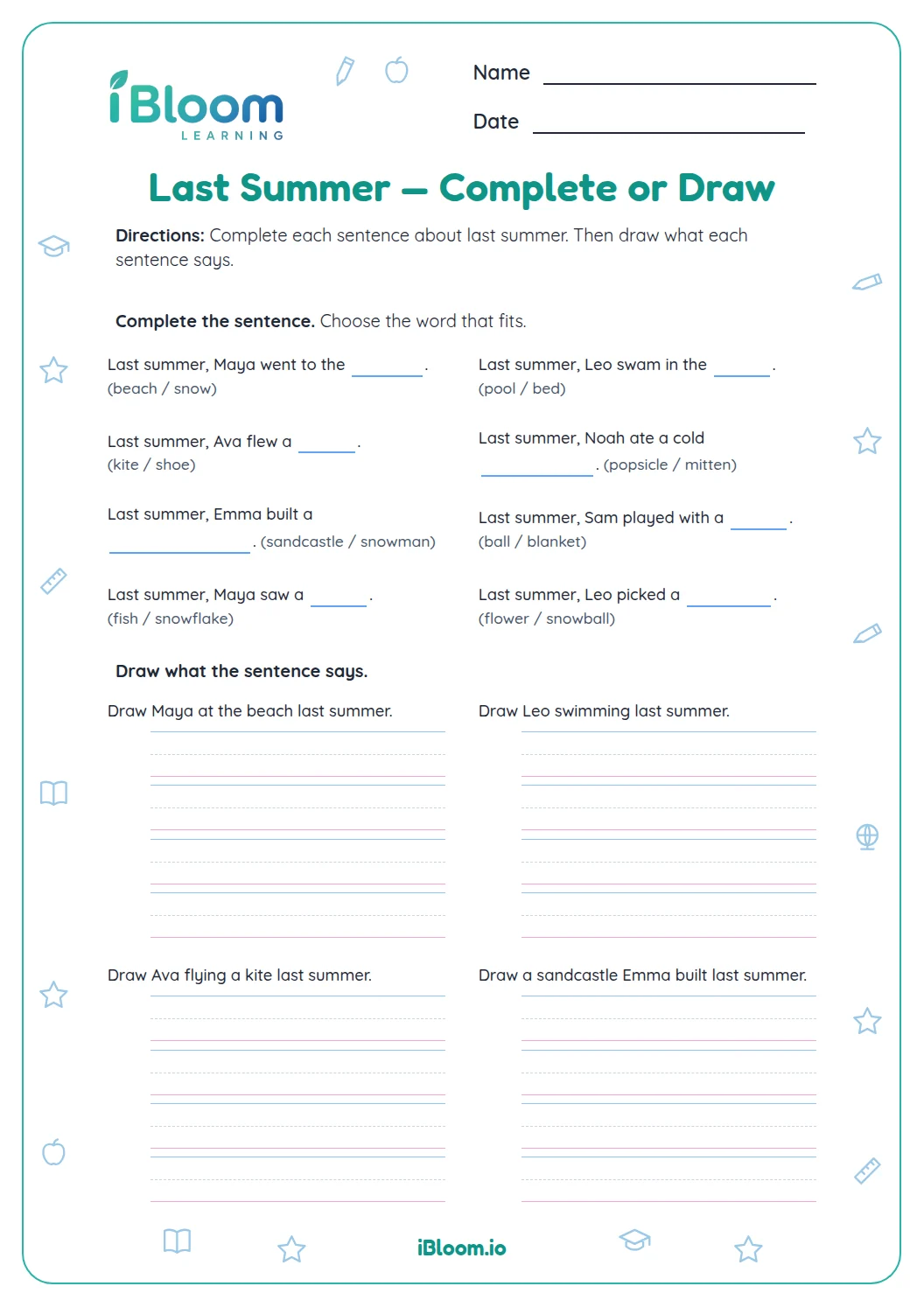
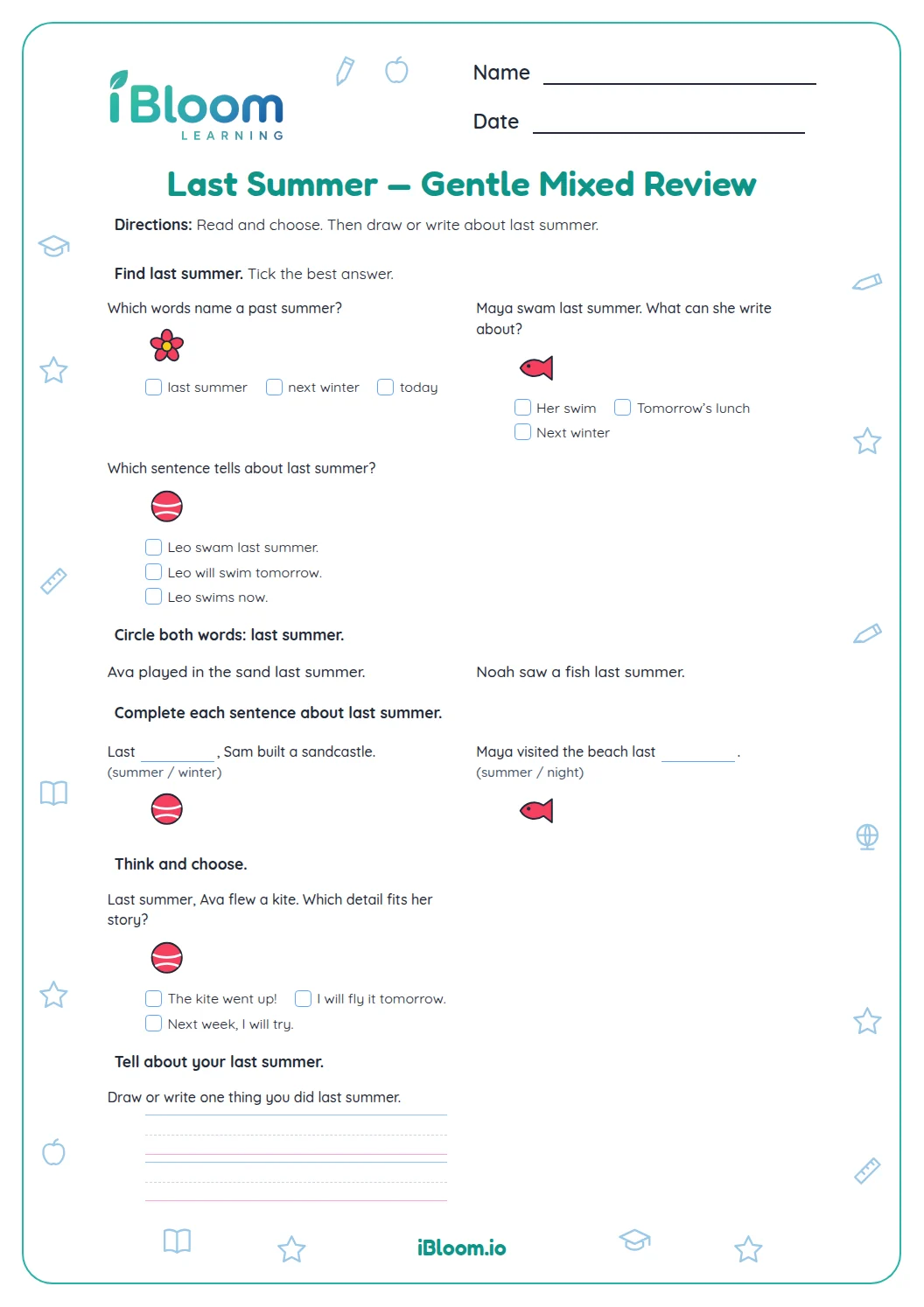
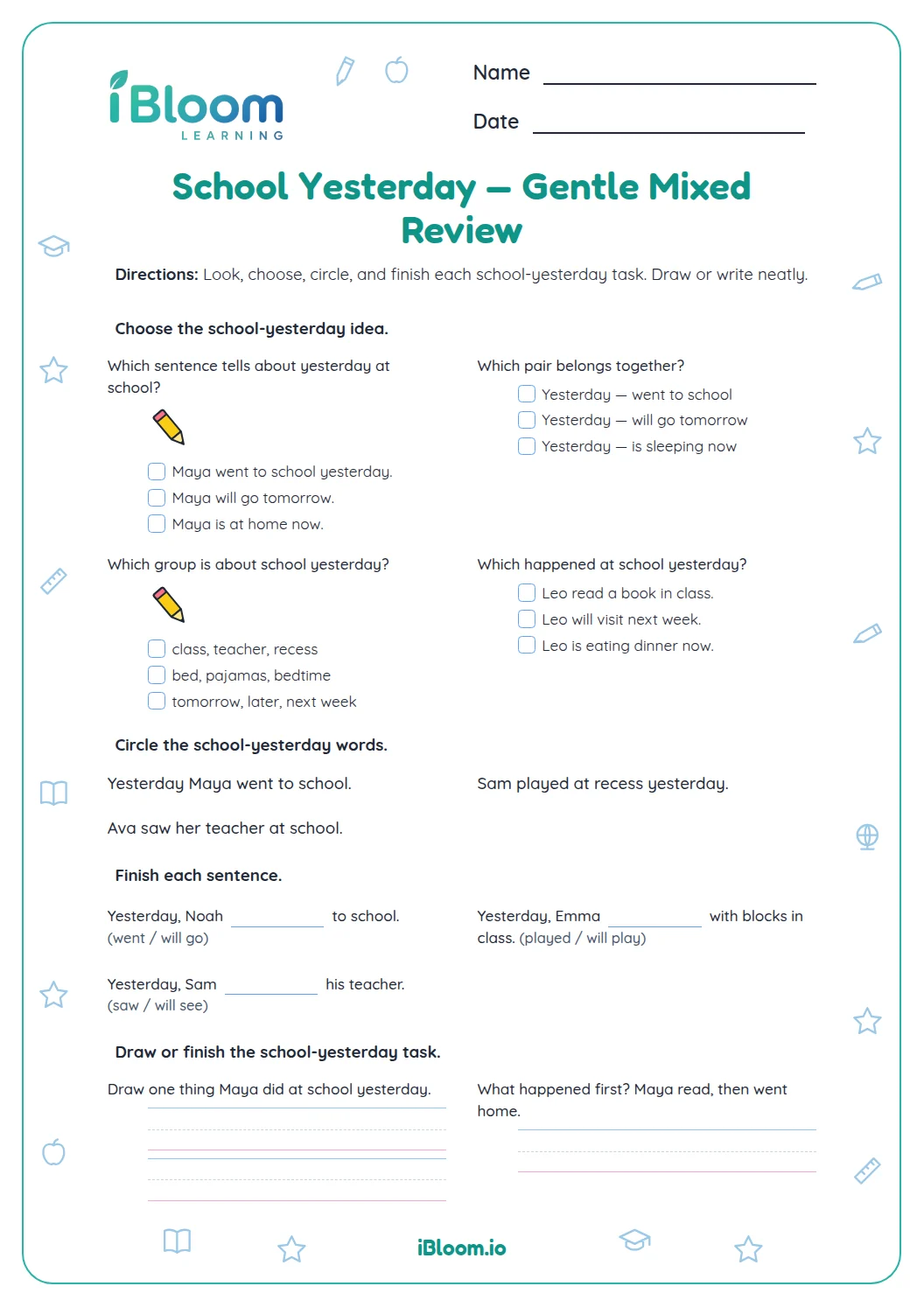
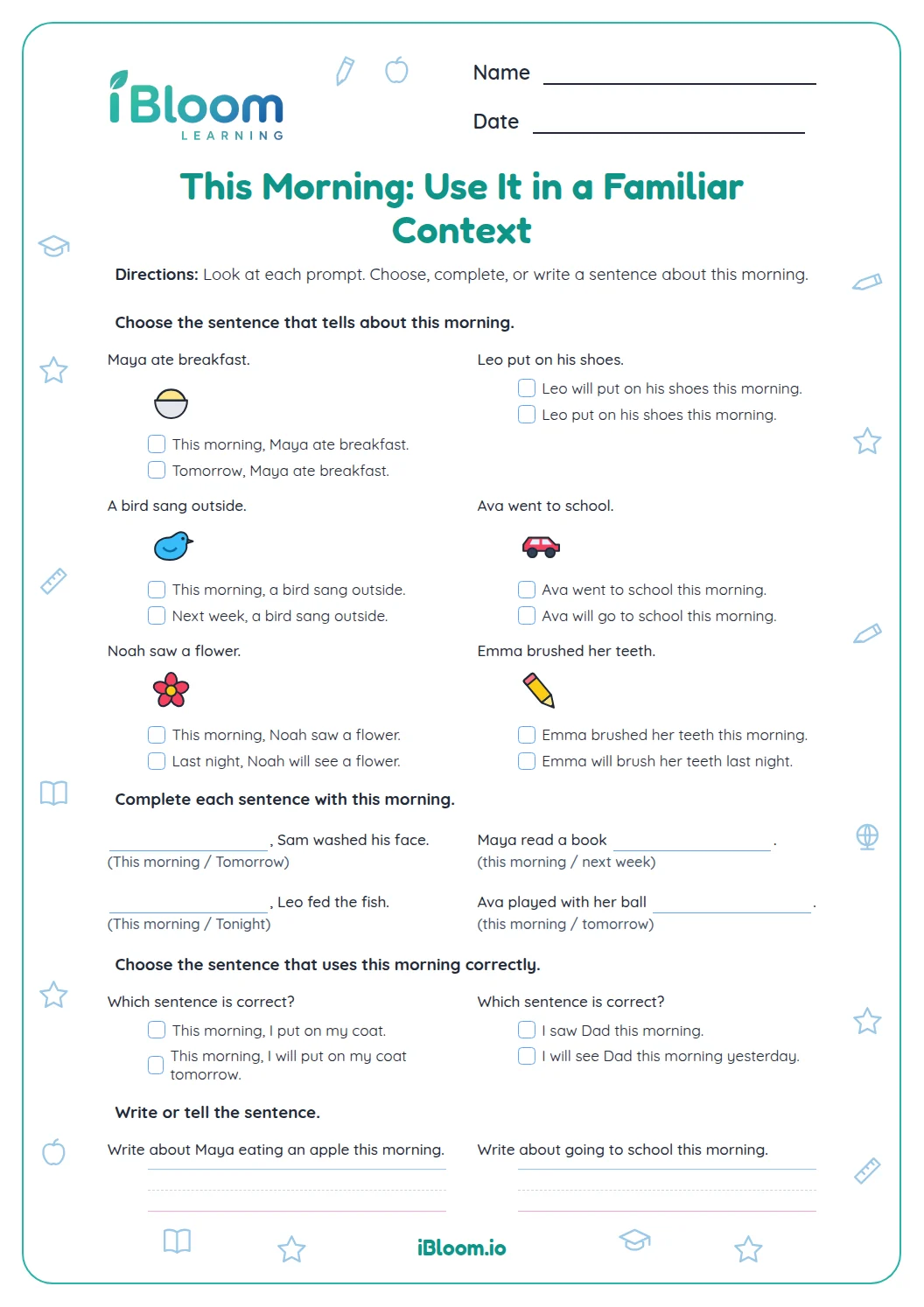
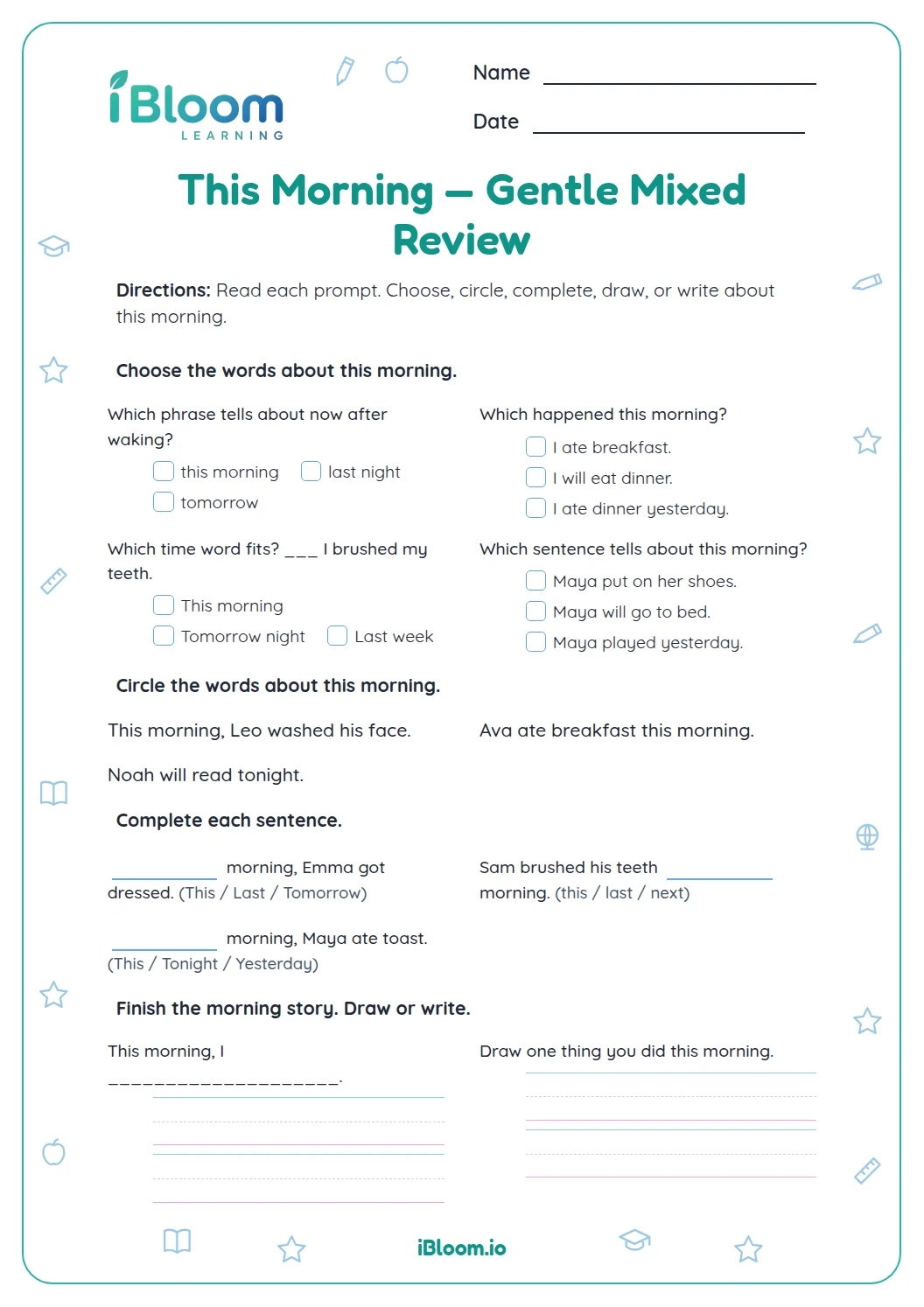
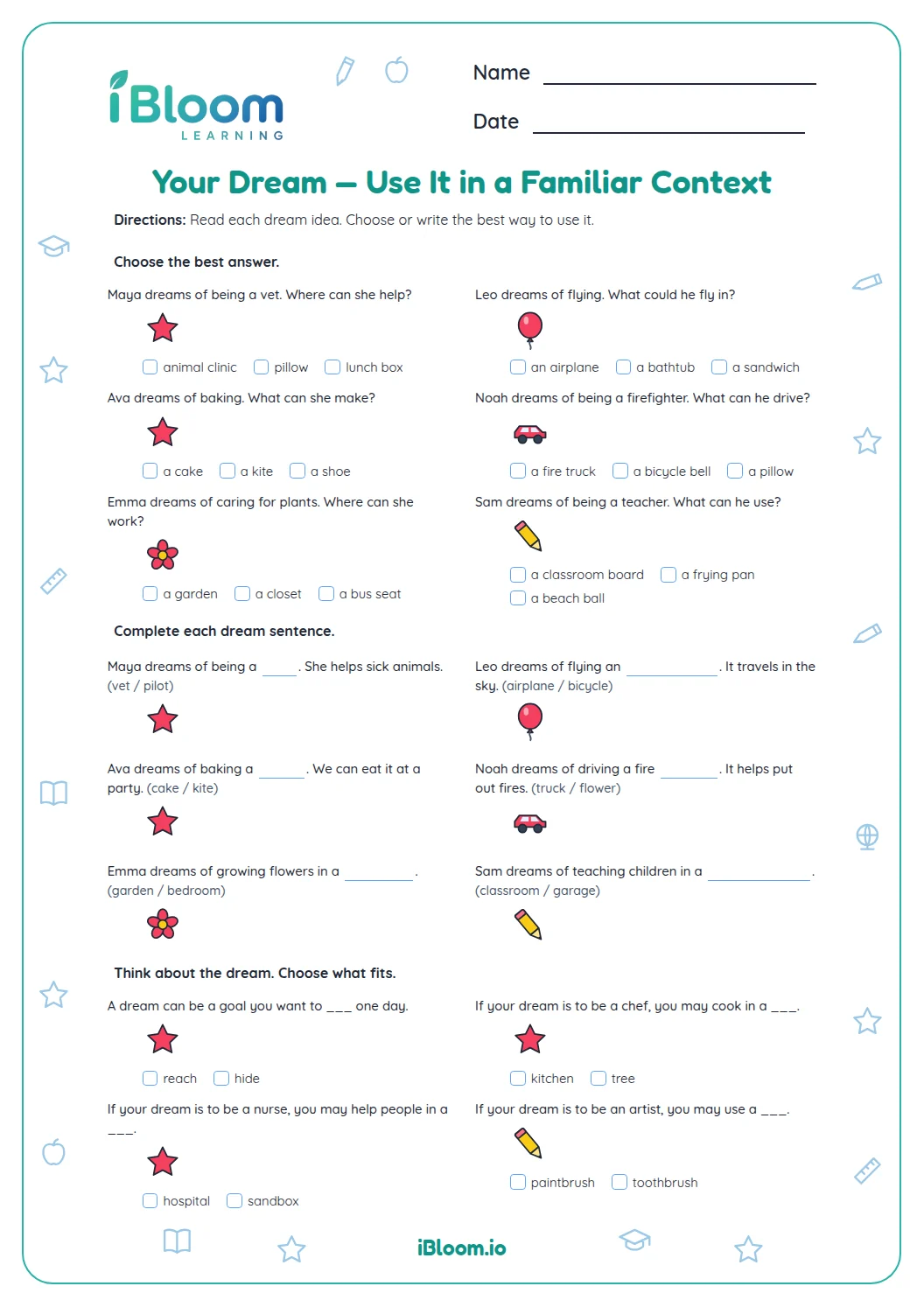
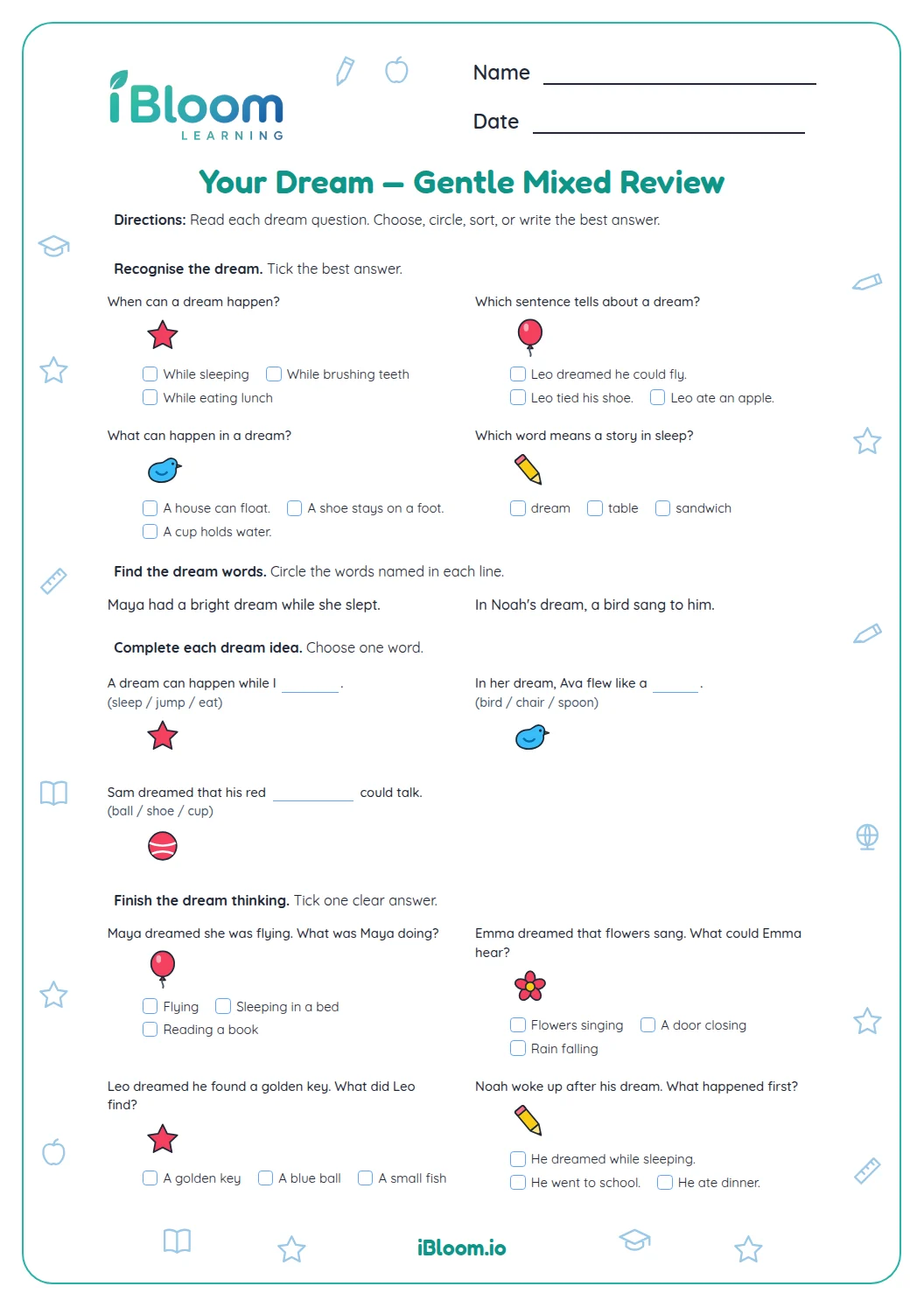
This two-page printable supports preschool and kindergarten children as they recognize familiar events and complete short sentences. Five picture-supported choices ask what happened in everyday situations; nine more picture-supported prompts build familiar phrases and event language. An adult can read the prompts aloud while the child points, says the missing word, or writes it. The separate answer key gives the intended responses.
How can I help my child tell an event in order?
Ask about something the child knows: getting ready, planting, playing, or snack time. Give a quiet moment to remember, then ask what happened first and what happened after.
Question 10 says, “After planting a seedling, I give the seed ___.” The picture and sentence meaning point to water.
- 1After planting a seedling, I give the seed ___.
- 2The seedling picture and sentence point to water.
- 3Answer: water
What do the picture choices practice?
The first five questions pair a short familiar event with an inline picture clue and two choices. Adults can invite a short explanation: “I see a backpack. I use it when I go to school.”
How can an adult support a spoken answer?
An adult can read each prompt and let the child point, say the word, or try writing it. The answer key shows the intended word for each blank; accept clear pronunciation and early spelling attempts when a child is working independently.
How to use this worksheet
- 1Read the prompt aloud and let your child look at the picture choices.
- 2Ask which picture fits and invite a short reason.
- 3For order prompts, say the events aloud and use first, next, and last.
- 4Let your child tell the event aloud before writing a sentence.
- 5Accept a sensible personal story; write down the child’s words if helpful.
Mistakes to watch for
The mistake
Giving events without an order
The fix
Ask “What happened first?” and then “What happened after that?”
The mistake
Choosing a picture that is unrelated to the situation
The fix
Reread the prompt and name what the character is doing.
The mistake
Expecting every child’s story to match the sample
The fix
Use the key as an example; accept another familiar event that makes sense.
What to practice next
Make more practice
Questions parents and teachers ask
Is this worksheet for preschool or kindergarten?
It is written for both preschool and kindergarten learners, with an adult reading prompts as needed. An adult can read each prompt aloud while children point to the picture or say a response. An adult can accept pointing or a spoken answer and help add one detail.
Does my child need to write full sentences?
No. The sheet uses picture choices and nine short sentence completions. An adult can read the sentence aloud and let the child explain why the word fits. Invite the child to name the person or object in the picture before telling the event.
How do picture clues support the activity?
Each small picture gives a concrete cue for a familiar situation, such as school, a garden, or a pet. Ask the child to connect the clue with the prompt and explain the choice in a few words. A short retell is enough; let the child add a detail in their own words.
What is the answer key for an open story?
The answer key lists the intended picture choices and missing words. For a written response, accept a child’s recognizable spelling or spoken answer when it names the same pictured object or completes the sentence meaning. Read the prompt together if the child is not yet reading independently.
How can we practice first, next, and last?
Use a familiar routine and talk through what happened first, then what came next. On the sheet, question 1 begins with waking up before getting ready, and question 4 connects putting on a shoe with going to the bus. Invite the child to say each event aloud.