


About this worksheet
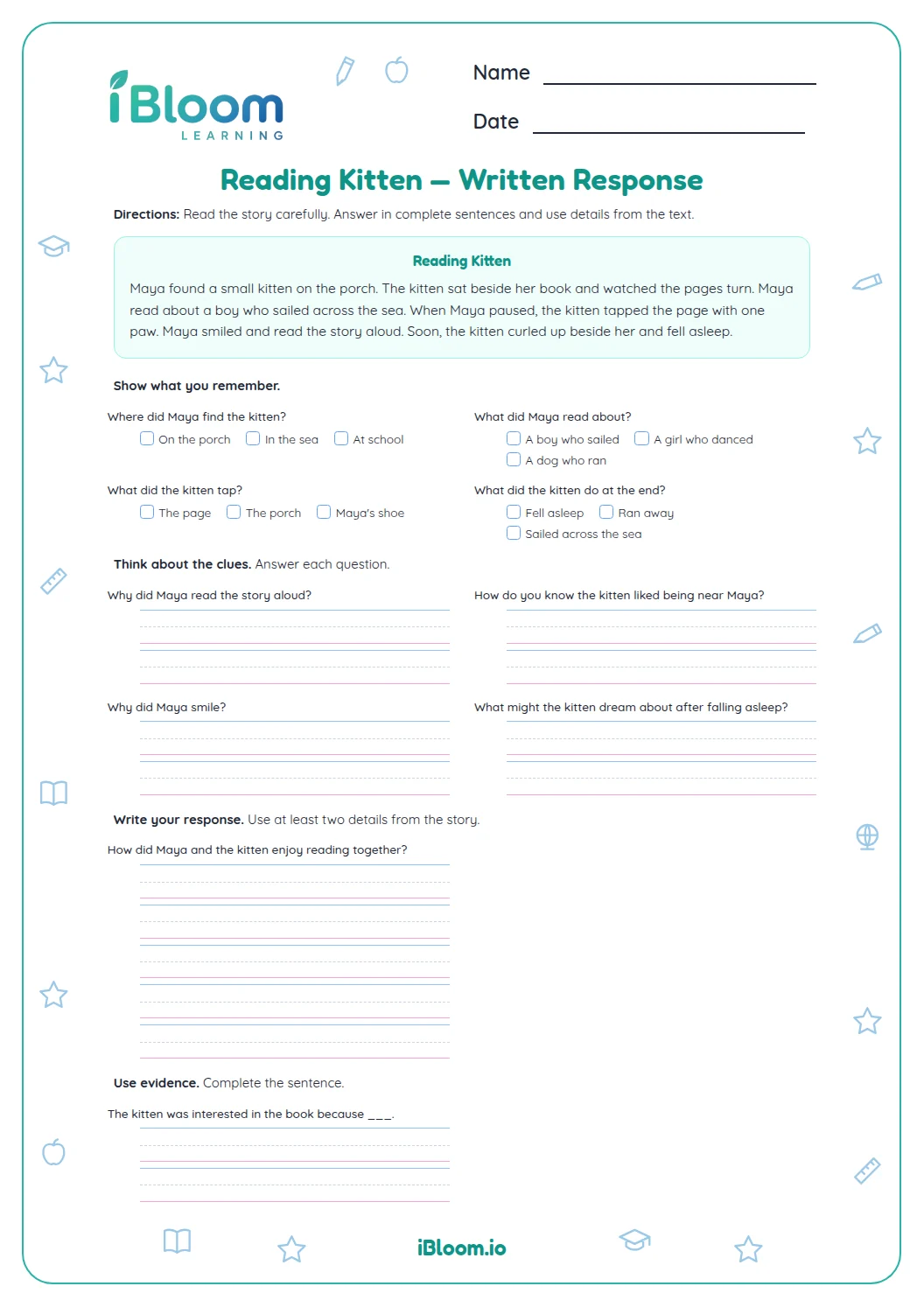
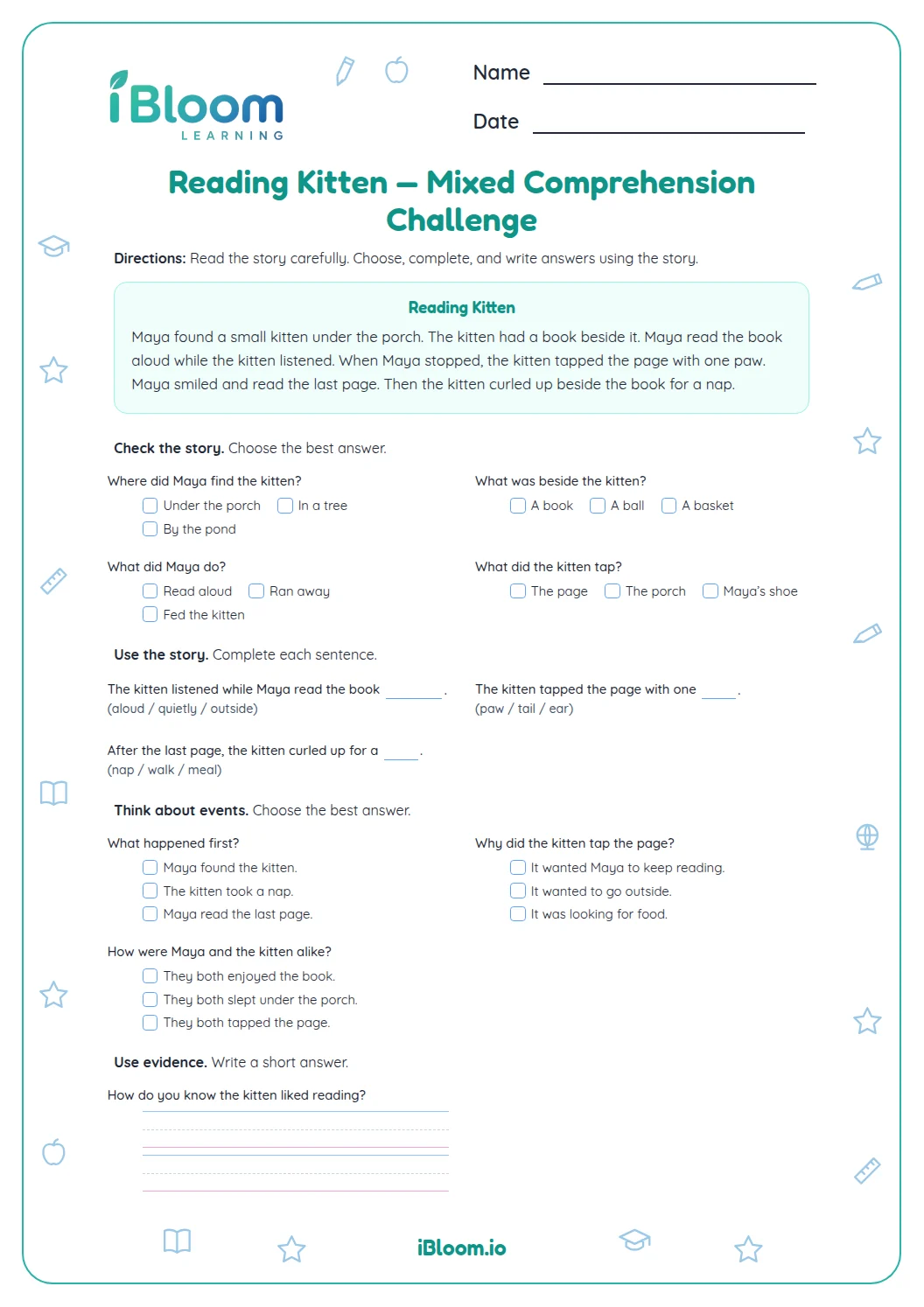
This Grade 1 printable pairs an original 77-word story with 14 questions about details, sequence, and story structure. Children read how Mia cares for a kitten, put events in order, and use clues to explain the ending. The questions move from finding story details to ordering events and explaining clues. The answer key includes sample responses for open questions. The sheet practices CCSS RL.1.3 by asking children to describe characters and major events with story details.
Aligned to RL.1.3
What happens in the Reading Kitten story?
Mia hears a kitten near the garden gate and gets help from her dad. The two care for it until its owner arrives. The time words first, next, then, and in the morning make the event order clear.
How can a reader find a story detail?
Look back at the sentence that tells who, what, or where. For question 2, the story says the kitten sat beside a wet leaf; choosing a likely place such as a box would not match the text.
- 1Question 2: “Where was the kitten sitting?”
- 2The passage says it sat beside a wet leaf.
- 3Answer: beside a wet leaf.
How do time words help put events in order?
The passage says what happened first, next, and then. Reread those sentences before answering what happened after the kitten drank or just before the neighbor arrived.
How do story clues explain the ending?
Mia and her dad give the kitten water and a warm bed before its owner comes. The kitten’s purr is a clue about how it feels, and Mia’s wave suggests she is glad it is going home.
How to use this worksheet
- 1Read the whole passage once for the main events.
- 2Reread the sentence that matches each detail question.
- 3Mark the time words to track the order of events.
- 4For open responses, include a detail from the story.
- 5Check the answer key and compare your evidence.
Common mistakes and quick fixes
The mistake
Guessing from what usually happens instead of rereading.
The fix
Point to the sentence that gives the answer. If it is not stated, use a clear clue.
The mistake
Mixing up which event came first.
The fix
Follow the passage’s time words and retell the events aloud.
The mistake
Giving a feeling without a story clue.
The fix
Name the action or detail that supports the feeling.
Common Core alignment
This story page practices describing characters and major events with key details.
Describe characters and major events using details from the story.
On this sheet: Children identify Mia, her actions and the sequence of major events.
Show the official wordingHide the official wording
Describe characters, settings, and major events in a story, using key details.
What to practice next
Make more practice
Further reading
Questions parents and teachers ask
How long is the story?
The passage has 77 words. It follows Mia from hearing a kitten near the garden gate through its reunion with a neighbor. The short story gives children several clear events to retell, along with details they can find by rereading. Fourteen questions check details, sequence, and story clues.
How many questions are included?
There are 14 questions after the passage. Children first find story details, then answer questions about event order and story clues, and finish with a written response about Mia’s feelings. Items include multiple choice, short answers, and one open response with a sample in the key.
Can answers to the written questions vary?
The final question asks how Mia feels, so more than one feeling can fit if the child supports it with a story clue. The answer key suggests that she feels glad because she waves as the kitten goes home. Detail and sequence questions have specific answers.
What does sequence mean on this page?
Sequence is the order in which events happen. Children use details such as Dad drying the kitten, Mia setting out water, and the pair making a bed. Time words in the passage help readers decide what happened first, next, and last.
How can I talk about the story after printing?
Ask your child to retell how Mia and her dad helped the kitten, using first, next, and last. Then ask which detail shows the kitten became comfortable. The child can point to the purr or the warm bed and explain how that detail supports the answer.
Is the passage original?
Yes. “Mia and the Kitten” was written for this worksheet. It introduces Mia, her dad, a kitten by the garden gate, and the neighbor who comes to take the kitten home. The questions refer to events and details in this passage, and the answer key follows that same story.