


About this worksheet
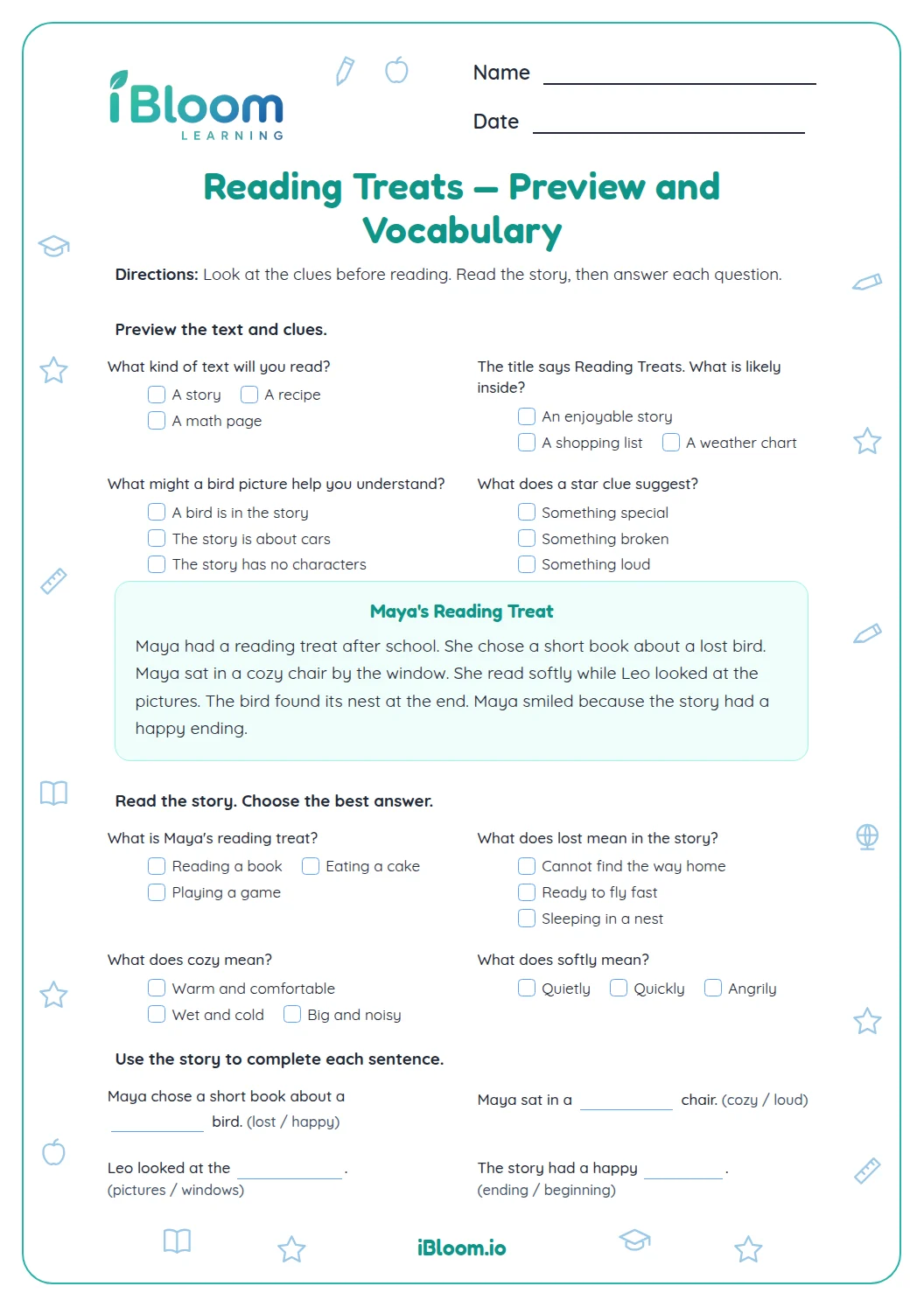
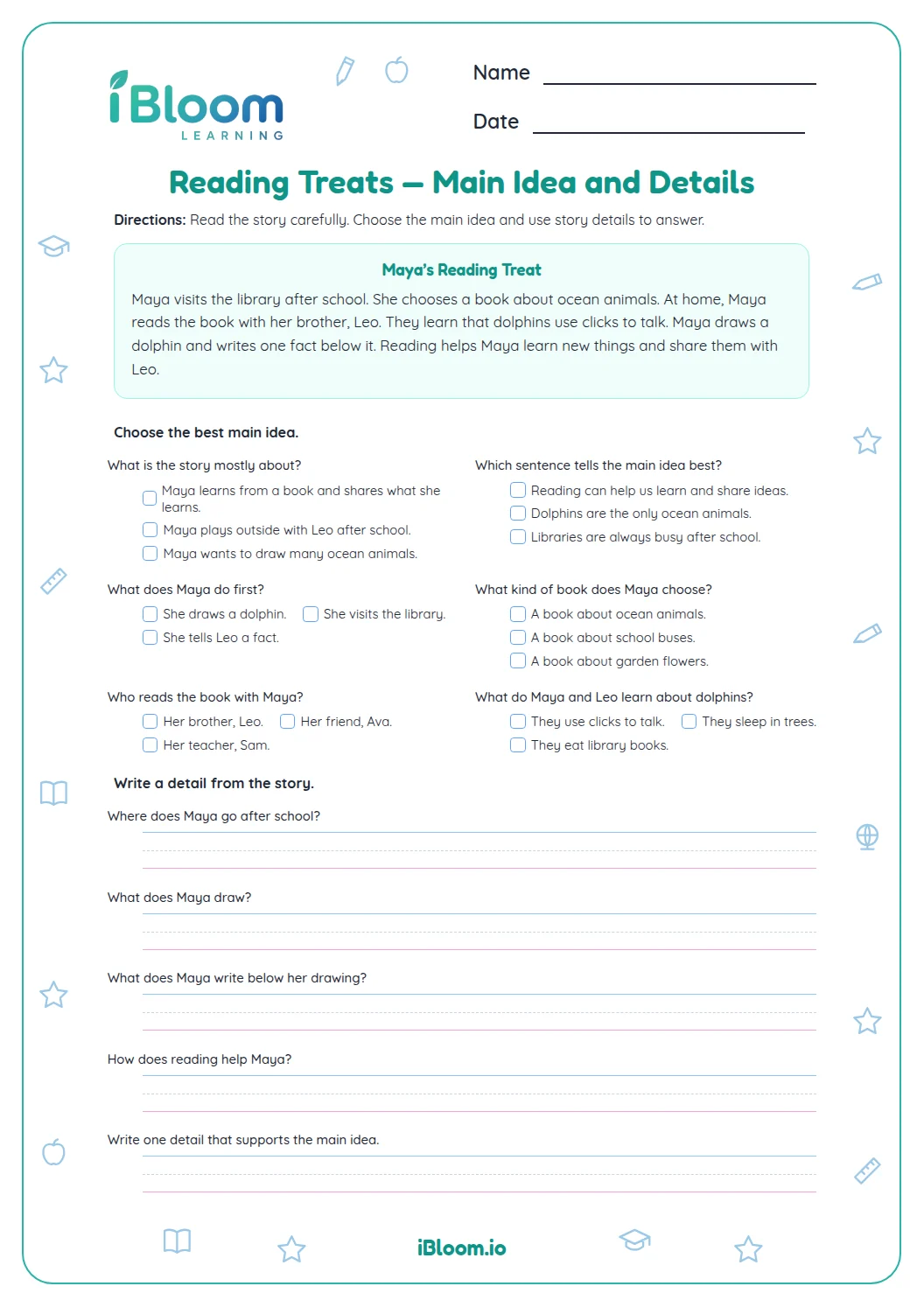
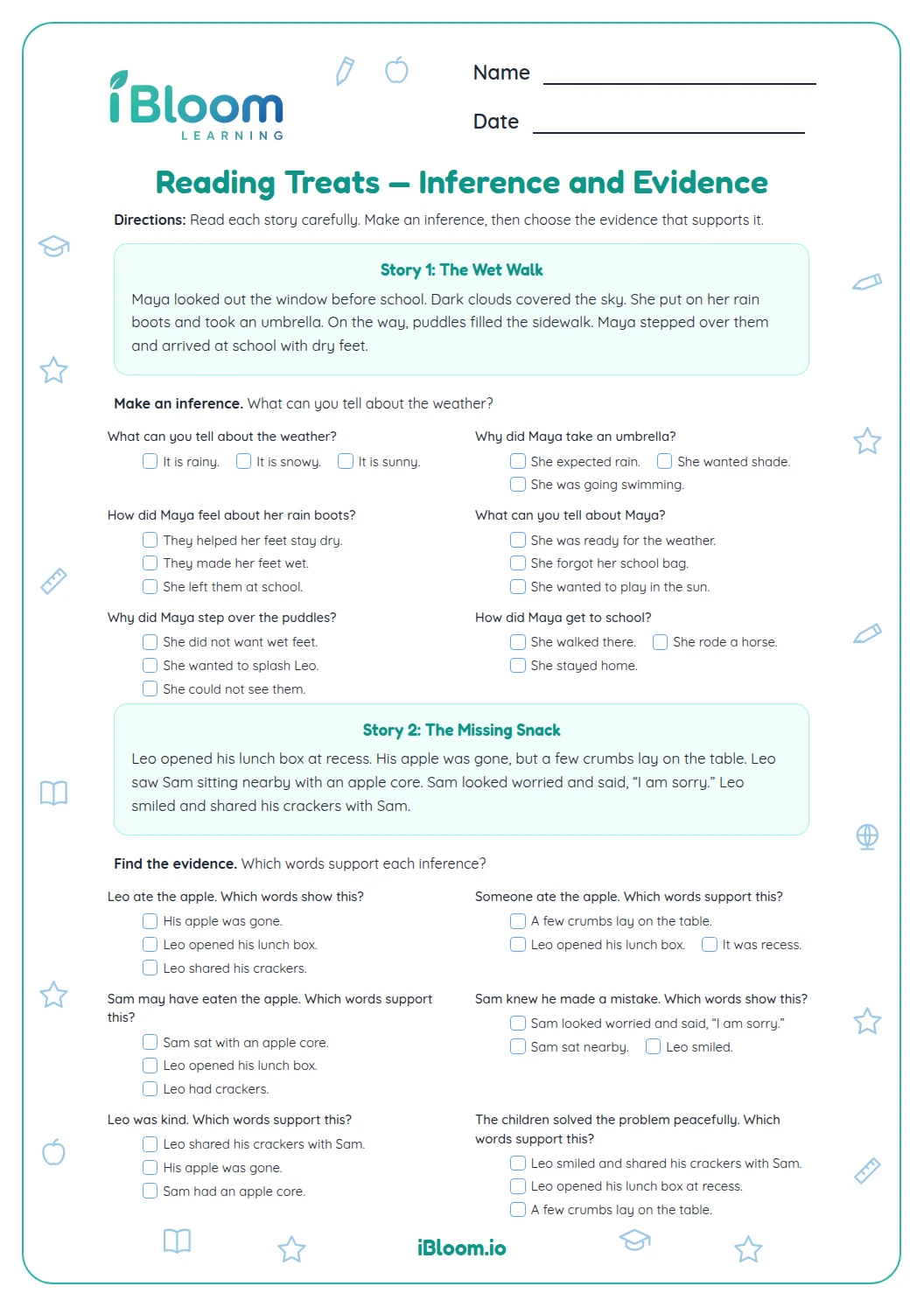
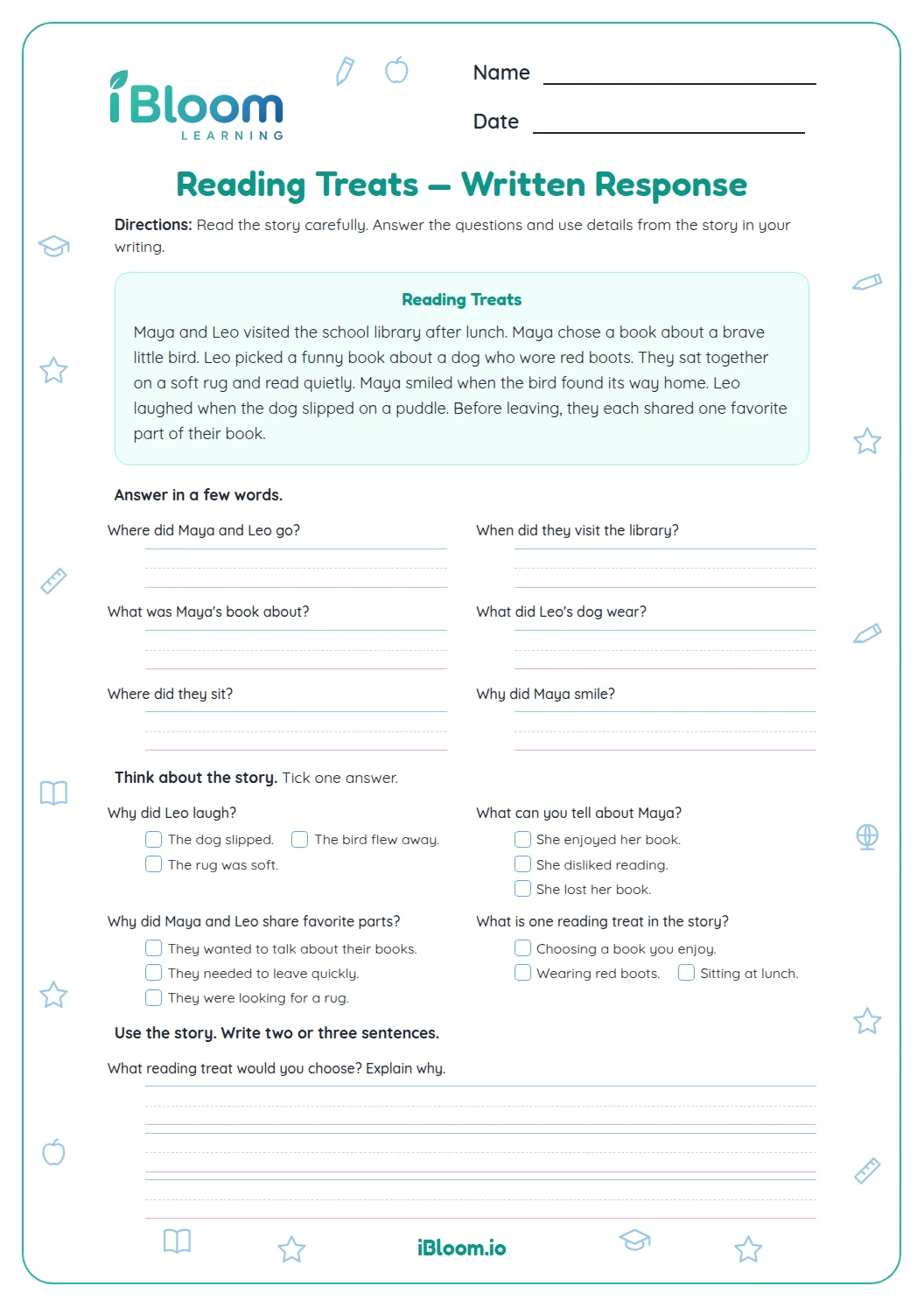
This free printable Grade 1 worksheet uses Maya’s Reading Treat to practice sequence and story structure. Maya chooses an animal book, reads about a fox, draws it, and tells Leo her favorite part. Part A contains the story. Part B has ten questions about the events, their order, and why reading is a treat. Part C asks children to number three events, and Part D has two short written responses. The 15 questions practice Common Core RL.1.2 and RL.1.3 through retelling, key details, and the idea that reading can be enjoyable. A separate key includes sample responses.
Aligned to RL.1.2 and RL.1.3
What does each part ask children to do?
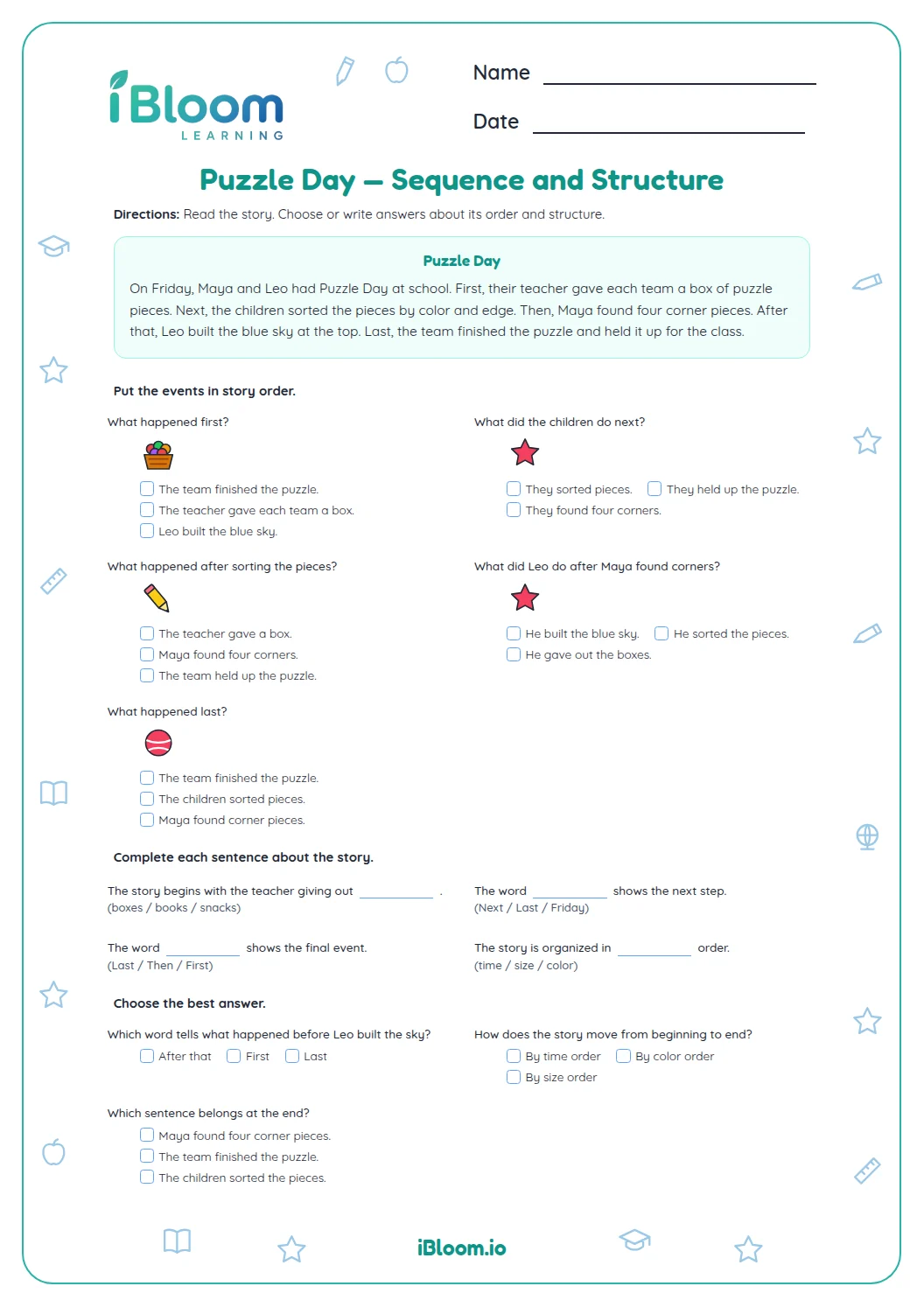
Part A contains the complete story. Part B asks ten questions about Maya’s actions, time words, the middle, and the idea of reading as a treat. The choices include events that happen at another point in the story, so children need to check the order.
Part C mixes three events for children to number 1, 2, and 3. Part D asks them to retell the ending and explain how the time words help a reader.
How can children check the order of events?
Find each event in the passage and look at the time word beside it. Maya chooses the book first, reads and draws in the middle, and tells Leo her favorite part at the end.
- 1Maya tells Leo her favorite part. → 3
- 2Maya chooses an animal book. → 1
- 3Maya draws the fox. → 2
- 4Retell: choose the book, draw the fox, tell Leo.
How do the beginning, middle, and ending fit together?
The beginning gets Maya ready to read: she chooses a book and finds a chair. The middle tells what she reads and draws. The ending shows her sharing a favorite part with Leo. Each stage follows the one before it.
The treat is the enjoyable reading experience. There is no snack in this story. Ask your child what Maya does because she enjoys the book, then connect that answer to the final sentence.
How to use this worksheet
- 1Read the title and story aloud together.
- 2Find and say the time words: First, Next, Then, After that, Finally.
- 3Complete Part B, pointing to a detail that supports each answer.
- 4Locate the three Part C events before numbering them.
- 5Say each Part D answer aloud before writing a sentence.
- 6Check the key and retell the story in order.
Mistakes to notice and fix
The mistake
Putting drawing before reading.
The fix
Compare Then and After that: Maya reads about the fox before drawing it.
The mistake
Numbering the mixed events 1, 2, 3 as printed.
The fix
Find each event in the story; the printed order is 3, 1, 2.
The mistake
Saying the treat is candy.
The fix
Reread the last sentence: the book itself is the special treat.
Common Core alignment
Retell Maya’s reading activities and explain why the book is a treat.
On this sheet: Children order the events, retell the ending, and identify enjoyment as the reason reading is a treat.
Show the official wordingHide the official wording
Retell stories, including key details, and demonstrate understanding of their central message or lesson.
Use details about Maya, her cozy chair, and the events in her reading time.
On this sheet: Questions ask what Maya chooses, where she settles, what she reads, and what she does afterward.
Show the official wordingHide the official wording
Describe characters, settings, and major events in a story, using key details.
What to practice next
Make more practice
Further reading
Questions parents and teachers ask
Can I read the passage aloud?
Yes, read the story and questions aloud while your child follows the words. Pause at each time word and name what Maya does at that point. When choosing an answer, ask your child to point to the sentence that supports it before marking a choice.
What are the numbers for Part C?
The numbers are 3, 1, and 2 in the printed order. Maya tells Leo her favorite part last, chooses the book first, and draws the fox between those events. After labeling, read the three sentences aloud in number order and compare them with the passage.
What counts as a correct ending response?
A correct response says that Maya tells Leo her favorite part of the book. Children can use their own words; they do not have to copy the key. Ask for the action and the person she shares it with, rather than only saying she feels happy.
Why does the sheet ask about time words?
Time words show the order of Maya’s actions. First introduces choosing the book, Next introduces finding a chair, and Finally introduces telling Leo. Children identify the final-event word and explain how these clues help a reader follow the story from its beginning to its ending.
What does treat mean in this story?
Here, a treat is something Maya enjoys: reading her book. It does not mean a sweet snack. Her drawing and her conversation with Leo show that the book gives her something to think about and share. Question 8 asks children to recognize that idea.