

About this worksheet
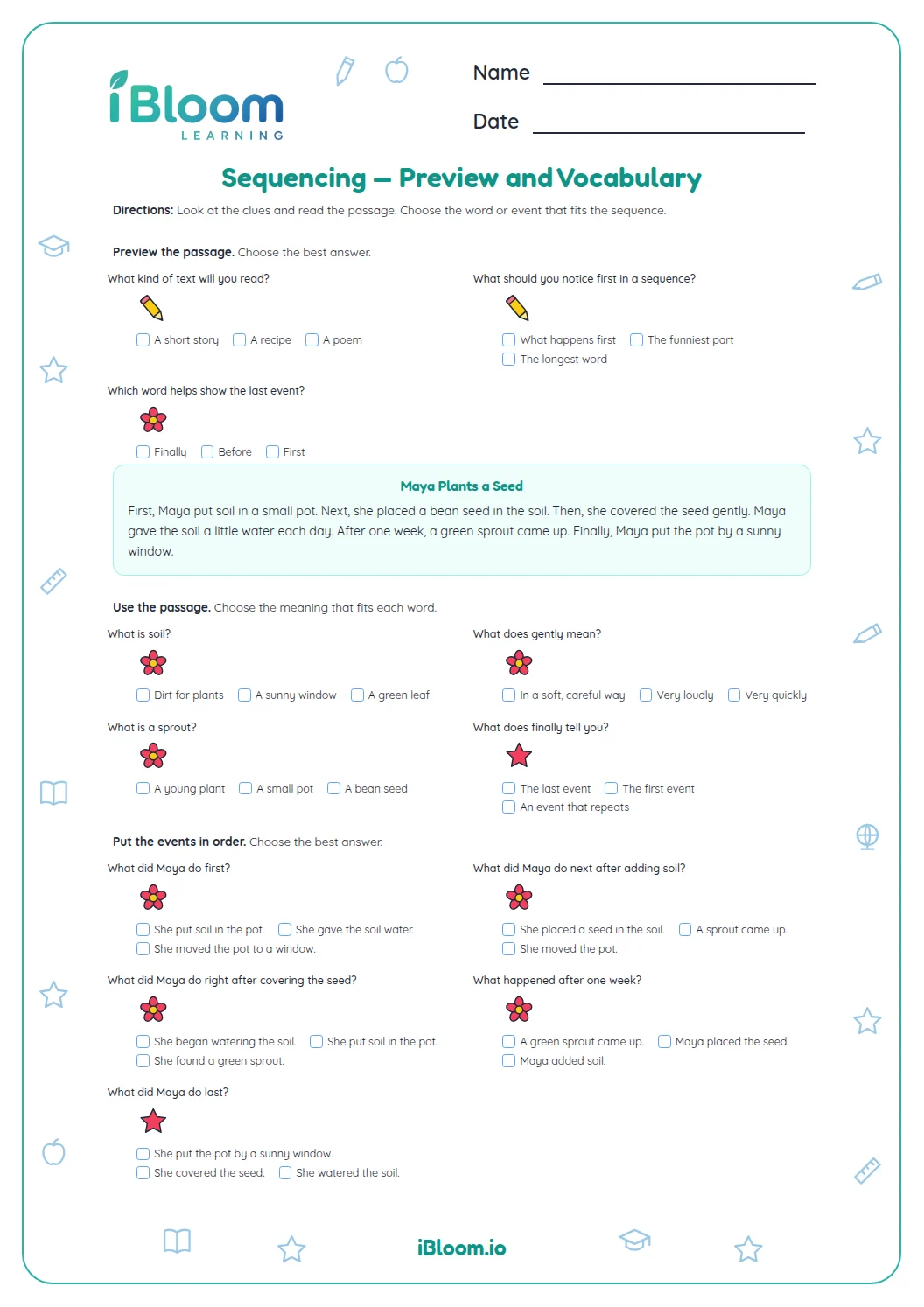
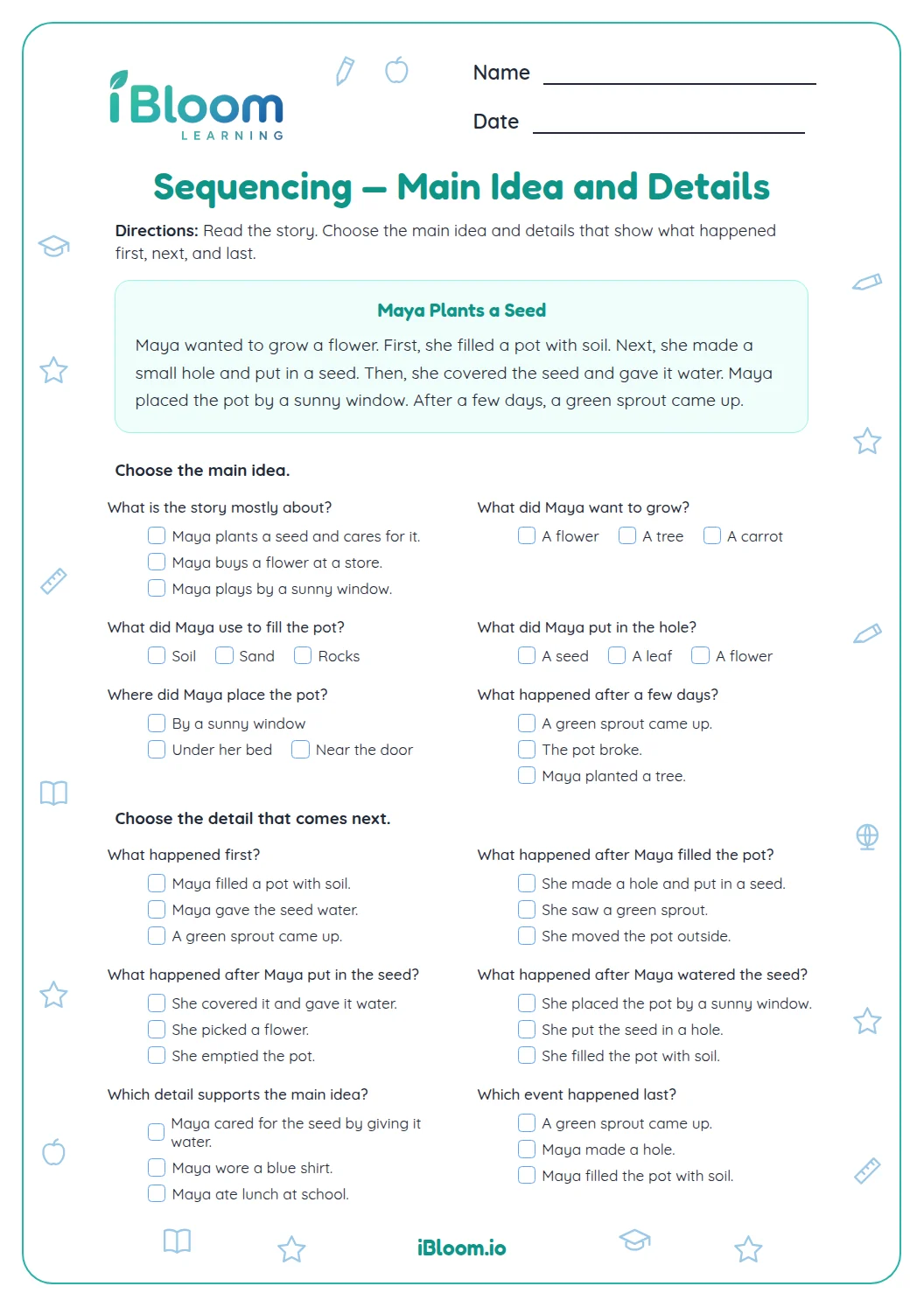
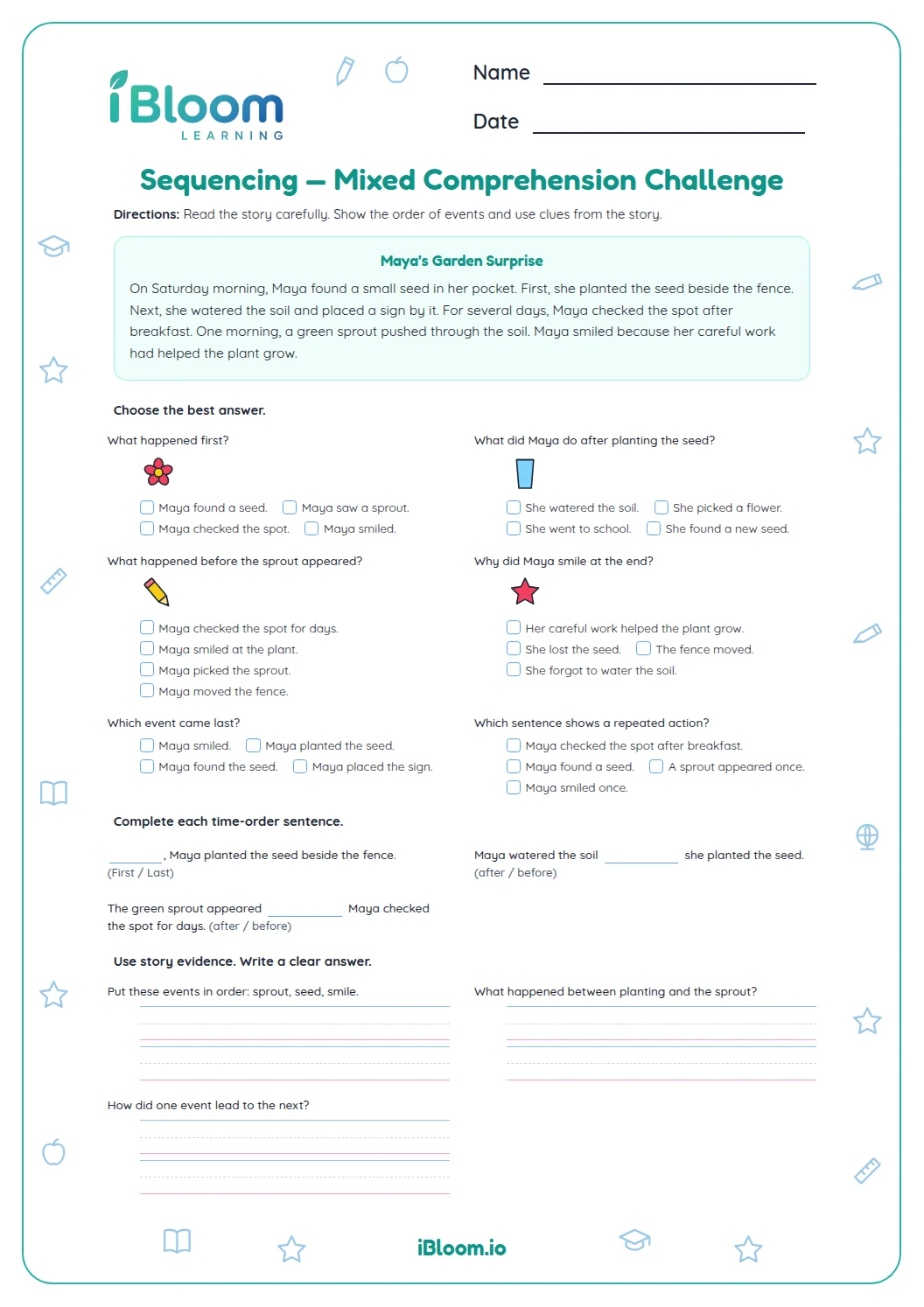
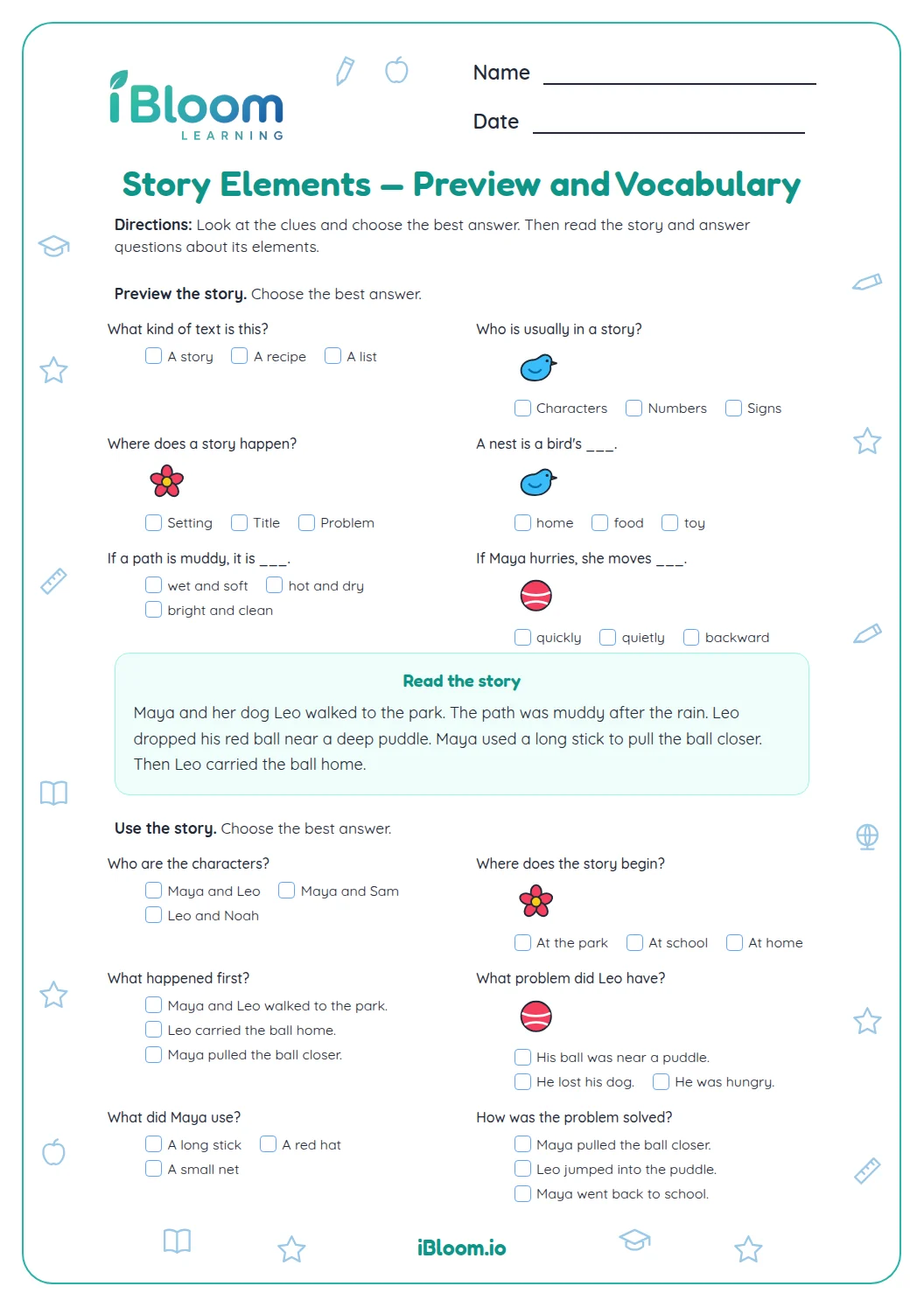
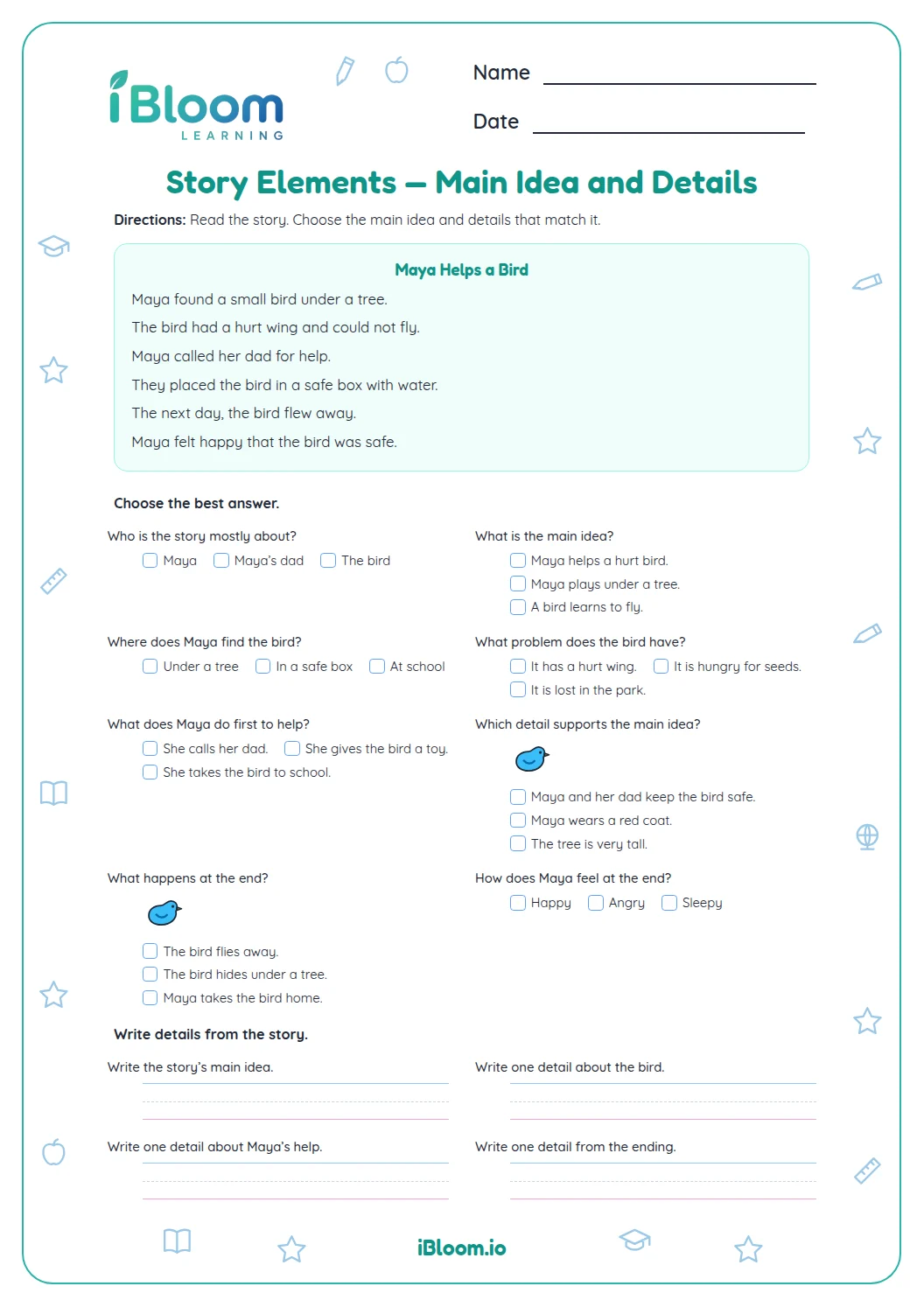
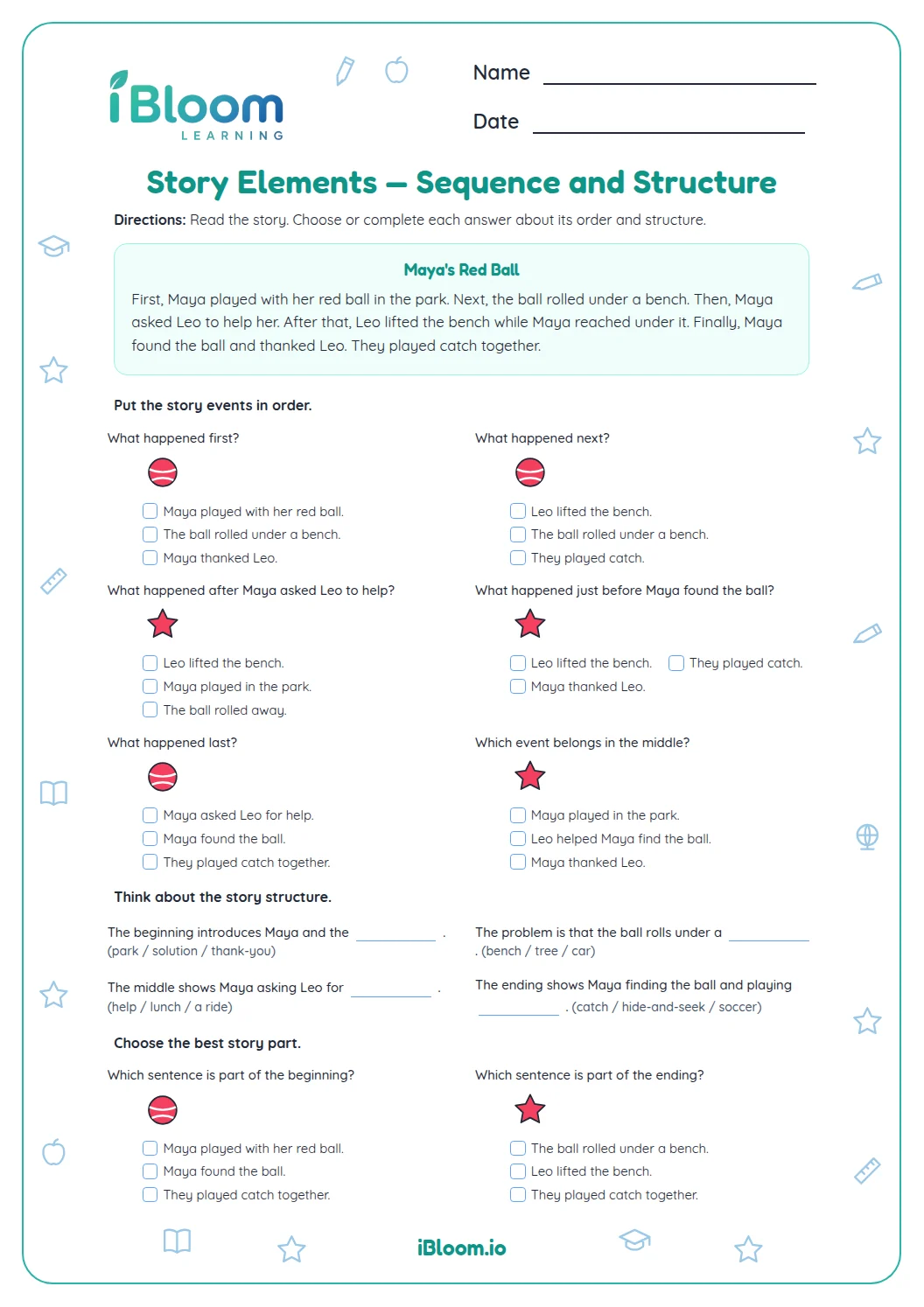
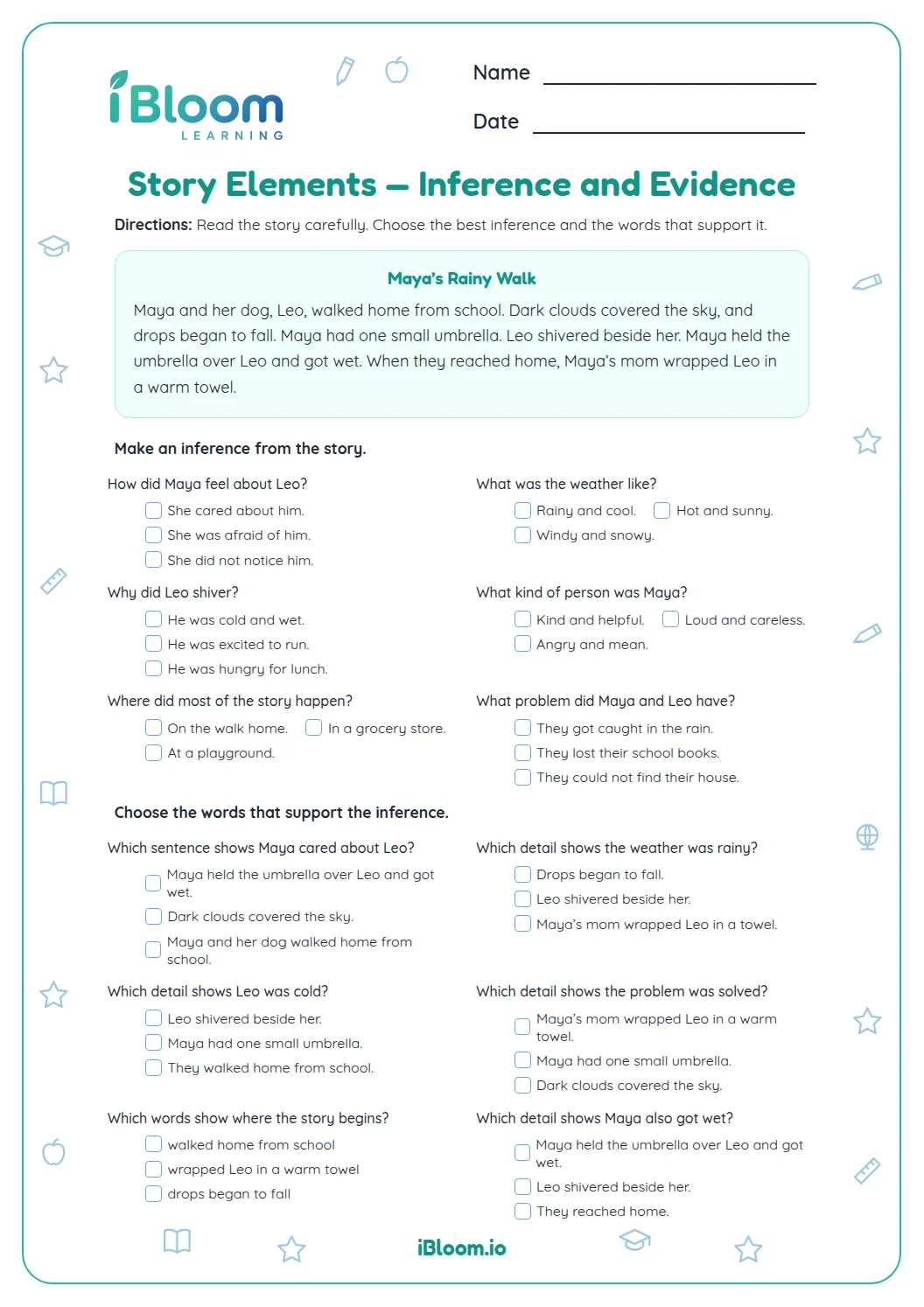
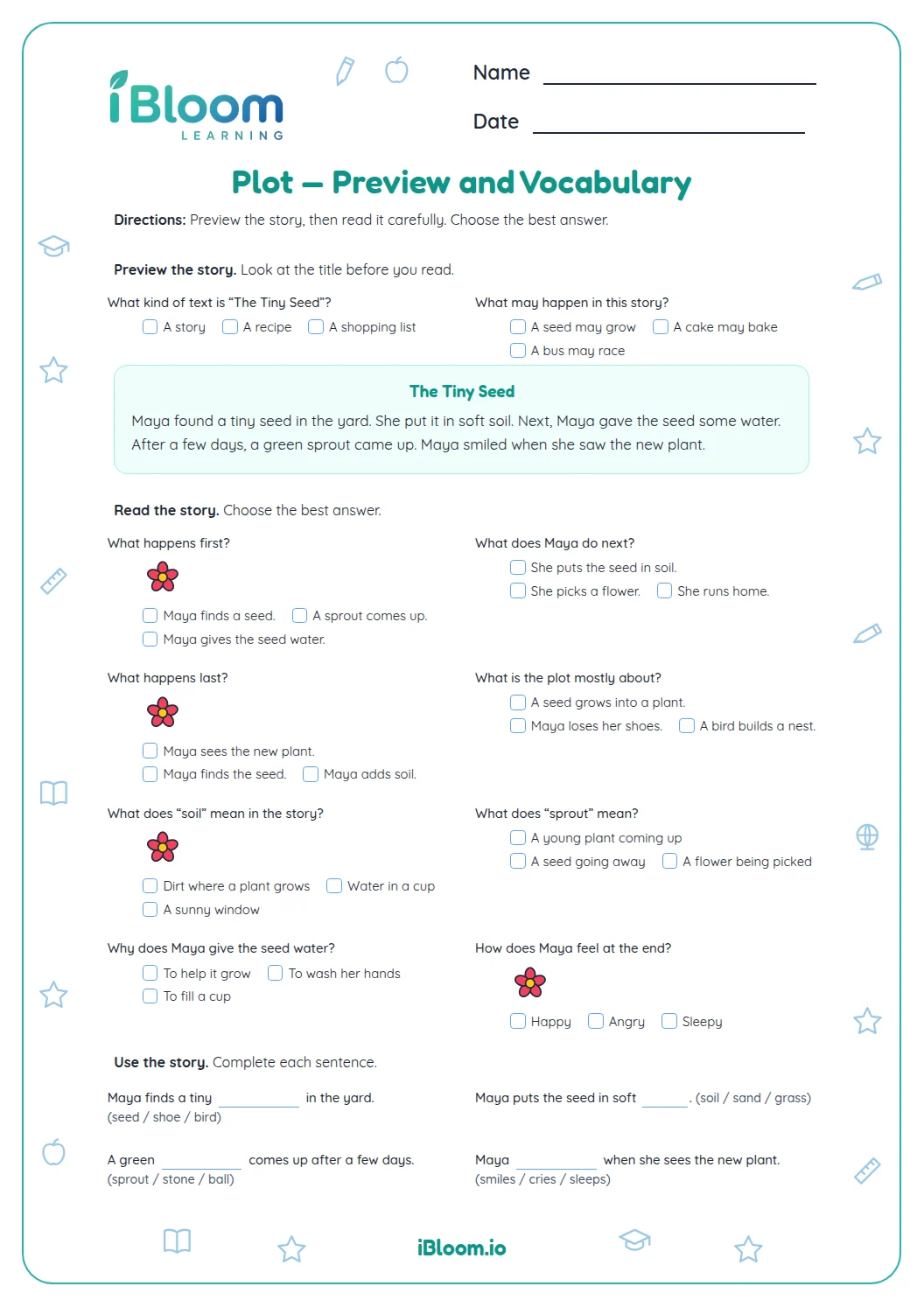
This free Grade 1 reading-comprehension worksheet uses the original story “Mia’s Seed.” Students answer four short-answer questions, seven multiple-choice questions, and four written responses about the events and details, including what happened first and last. The sequencing and retelling practice supports CCSS RL.1.2. A separate answer key gives story-based answers and sample responses.
Aligned to RL.1.2
How do you put story events in order?
The passage follows Mia from finding a seed through seeing a sprout. Part B asks four short-answer questions; Part C checks details with seven choices; Part D asks for four written responses about the sequence and outcome.
- 1Mia pressed the seed into the soil.
- 2The story says she then poured water.
- 3So watering came after planting.
Which details help explain what happened?
Use time words and story clues to put actions in order. Mia finds the seed, gets a pot, adds soil and seed, waters it, moves it to a sunny window, and later sees a sprout.
How can a child write a short retell?
The three question parts contain 15 questions after the passage. Students retrieve details, identify what happened first and last, and write about the sequence in their own words.
How to use this worksheet
- 1Read the whole passage once.
- 2Reread and notice time words such as “then” and “after several days.”
- 3Answer the four event questions in the order the story gives.
- 4Use the passage to check each detail choice.
- 5Write short retells using first, next, and last ideas.
- 6Compare responses with the key and accept accurate wording.
Common mistakes and quick fixes
The mistake
Putting the sprout before Mia plants the seed.
The fix
Check which action must happen first for a later event to occur.
The mistake
Mixing up where Mia found the seed and where she kept the pot.
The fix
Reread the sentence that names each place.
The mistake
Adding an event that is not in the passage.
The fix
Use only details the story gives when writing the retell.
Common Core alignment
The questions ask students to sequence and retell key events from a story.
Put key story events in order and retell them with details.
On this sheet: Put key story events in order and retell them with details.
Show the official wordingHide the official wording
Retell stories, including key details, and demonstrate understanding of their central message or lesson.
What to practice next
Make more practice
Further reading
Questions parents and teachers ask
What does sequencing mean in a story?
Students put Mia’s actions in story order and use details to explain what happened. The passage starts when Mia finds a seed beside the garden gate and ends with her drawing the new sprout in her notebook. Children can point to each event as they retell the story.
What happens in Mia’s story?
The key provides answers tied to the passage and sample wording for the written responses. Accept a child’s own wording when it preserves the events and their order, such as finding the seed before planting it. It also helps adults check important details.
Can written answers use different words from the key?
There are fifteen questions after the passage: four short answers, seven multiple-choice questions, and four written responses. The passage is printed on the worksheet, and the complete set uses three worksheet pages and three key pages, so there is room to write.
How many pages are included?
Ask the child to retell the events using first, next, then, and finally. The story gives a clear order: Mia finds the seed, plants and waters it, sets the pot by a sunny window, then sees a sprout.