
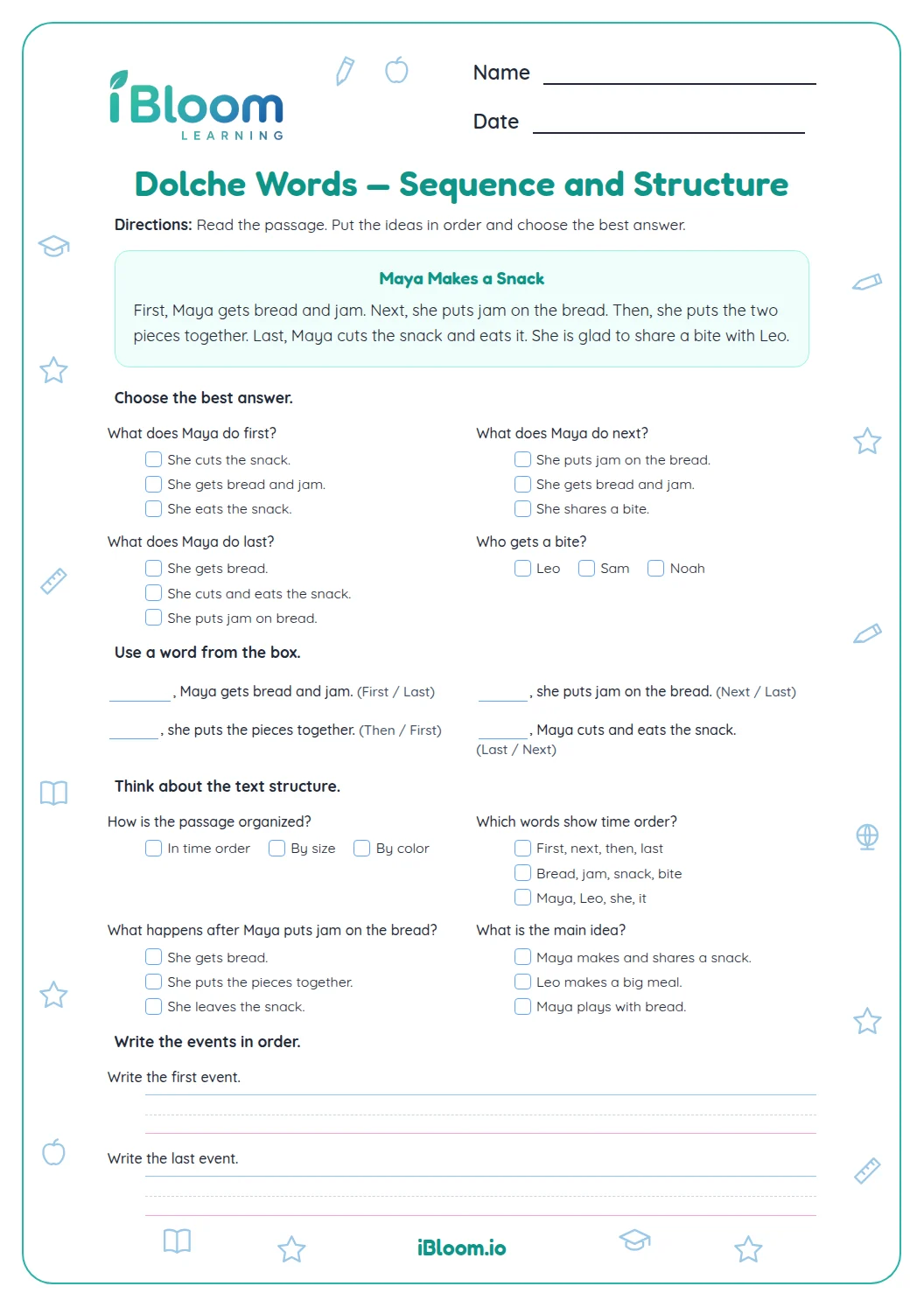

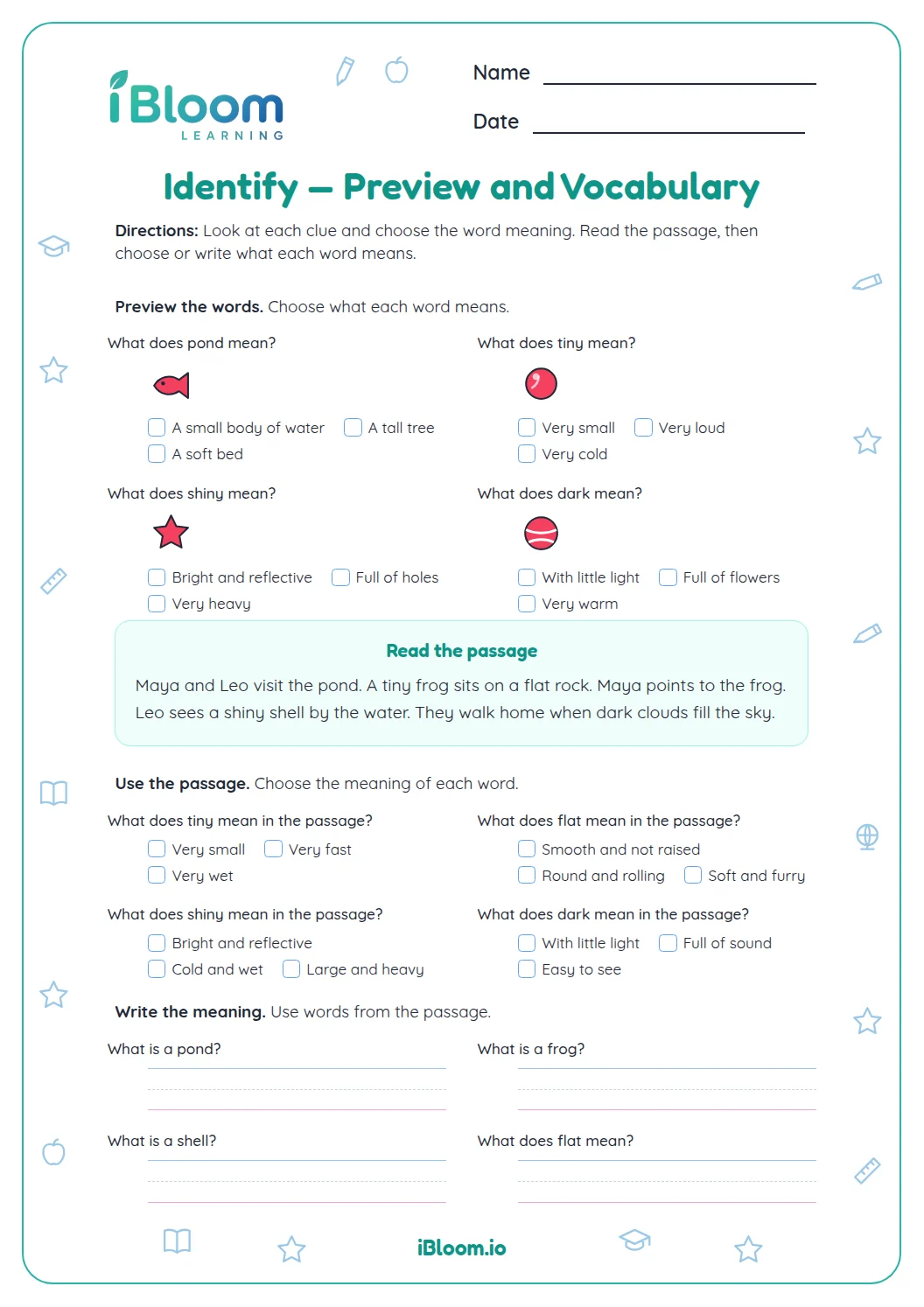
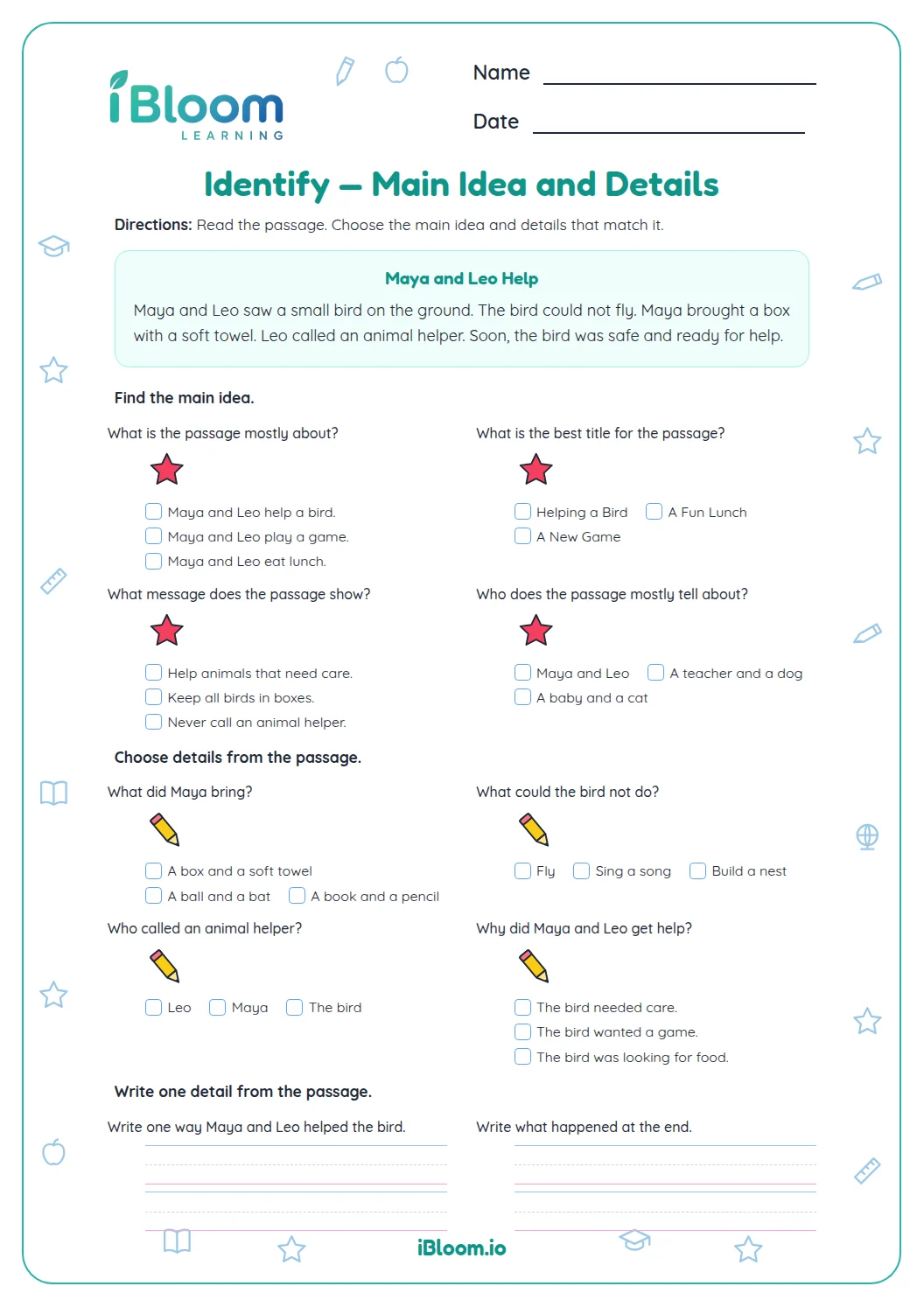
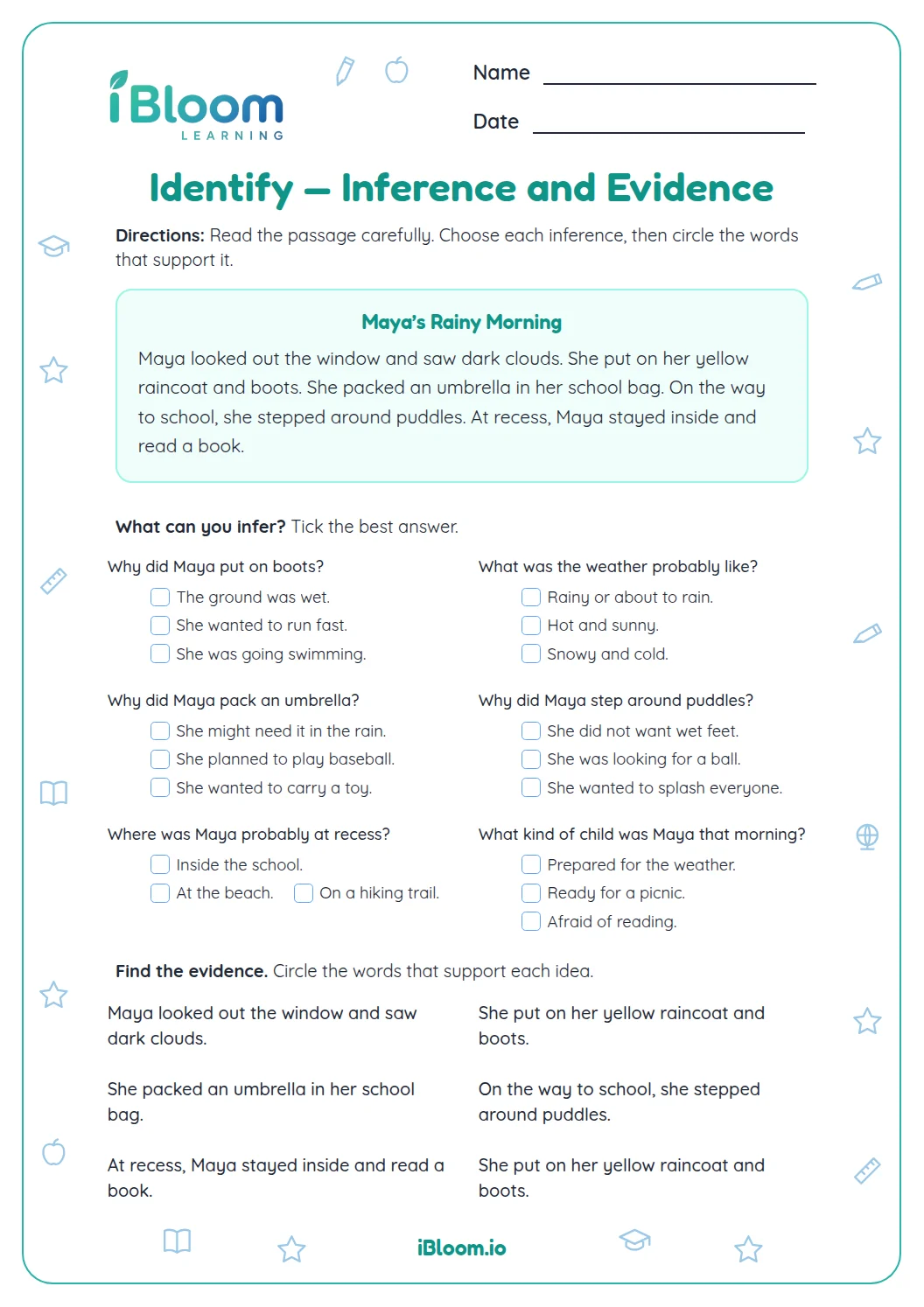
About this worksheet
This free printable is for Grade 1 readers practicing common sight words, a story’s main idea, and supporting details. Learners read a 77-word original story about Sam and Lee caring for a garden, find and copy four sight words, then answer questions about the whole story and its details. The separate answer key supports a quick review. Retelling the key details and identifying the central message practices 1.RL.2.
Aligned to 1.RL.2
How can a reader practice the sight words?
Read the story from beginning to end. Then scan for each printed word and copy the same letters in order. The four words appear in the passage, so learners can check each one in context.
How do you find the main idea?
Ask what the whole story is mostly about. A good main idea includes the central topic and action, while a small detail tells just one thing.
- 1Sam and Lee plant a small garden. They water it, and green leaves appear.
- 2Main idea: Sam and Lee grow a garden.
Which details support the main idea?
Look for actions and facts that show the garden growing: the children plant seeds, water them, and see green leaves. A detail should come from the story, not from a guess.
How to use the worksheet
- 1Read the story aloud or silently from start to finish.
- 2Find each sight word and copy it exactly.
- 3For main-idea questions, think about the whole story.
- 4Return to the passage to locate details.
- 5Use a detail to explain why the main idea fits.
Reading slips to watch for
The mistake
Choosing a sentence that gives only one small detail as the main idea.
The fix
Ask which answer covers the whole story.
The mistake
Answering a detail question from memory.
The fix
Find the sentence in the passage that tells the answer.
The mistake
Copying a sight word with a different ending or letter.
The fix
Point to each letter in the story while copying it.
Common Core alignment
Learners use the story’s key details to identify what it is mostly about.
Retell key details and identify the story’s central message.
On this sheet:
Show the official wordingHide the official wording
Retell stories, including key details, and demonstrate understanding of their central message or lesson.
What to practice next
Make more practice
Further reading
Questions parents and teachers ask
What is the main idea of “A Garden for Sam”?
The story is mostly about Sam and Lee growing a garden together. Details such as planting a seed, watering it, and seeing green leaves support that main idea. Readers can point to these moments in the passage before choosing an answer.
Which sight words does the worksheet ask children to find?
The first section asks readers to find and copy “they,” “the,” “and,” and “our” from the passage. Each word appears in the story, so children can use the text to check their copying and notice the words in context. This builds visual recognition of common words.
How many questions are on the worksheet?
There are 18 questions: four sight-word copying prompts and 14 comprehension questions. The comprehension items cover the main idea, story details, and details that connect back to the main idea. The original passage is included on the worksheet. The questions are grouped by reading skill.
Should a child read the passage independently?
A Grade 1 learner may read it independently or listen to an adult read it aloud, depending on current reading practice. After reading, the learner can return to the text to find the sight words and details, building a routine of checking the passage.
Does the answer key include sample answers?
The key lists an answer for every question. The comprehension answers come from the passage; sight-word prompts show the exact word to copy. For questions about the main idea, discussing which details support the answer can extend the review. The answer key helps with a quick check.