
About this worksheet
This free Grade 1 worksheet combines sight word reading with a short story about Sam and his missing lunch. Part A is the passage. Part B asks children to read was and said in sentences. Part C pairs three inferences with the details that support them, and Part D has two short written explanations. The ten questions practice Common Core RF.1.3g and RL.1.1: reading irregularly spelled words and answering questions about key details. A separate answer key includes sample responses for the writing.
Aligned to RF.1.3g and RL.1.1
What does an inference look like in this story?
An inference is an idea a reader works out from clues. The passage never names Sam’s first feeling. It gives actions instead: his bag is empty, and he puts his head down. Children connect those actions to the feeling sad.
Questions 3 and 4 make that connection visible. First the child chooses a feeling; then the child chooses the detail that supports it. Both choices need to agree with the same moment in the story.
- 1Question 3: How does Sam likely feel when his bag is empty?
- 2Clue: He puts his head down.
- 3Answer: sad. His action supports that feeling.
Which sight words do children practice?
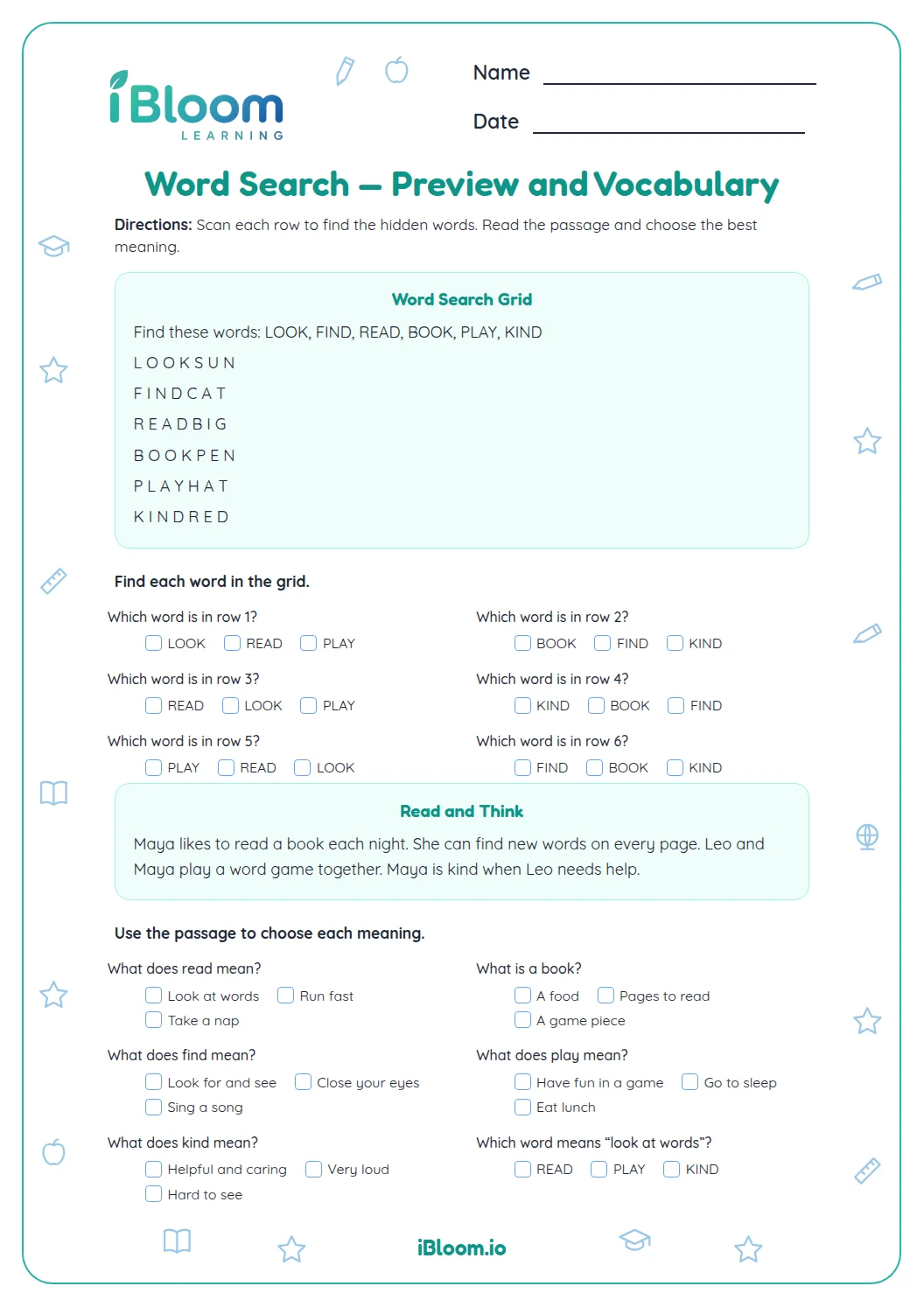
Part B focuses on was and said. Read each complete sentence aloud, have the child identify the missing word, and then reread with that word in place. The choices look similar, so attending to the letters matters.
The passage also includes familiar words such as his, the, you, and come. Keep the story available while children answer. They can return to a sentence to check a word and its meaning together.
How should adults check the written answers?
Part D asks why Sam wants Ben to sit with him and why Sam’s feeling changes. The key gives a sample for each. Accept a different short sentence when it answers the question and fits the text.
For the invitation, a child might say Sam wants company or wants to thank Ben. Ask for the detail about Ben bringing the lunch or Sam inviting him to sit. For the change in feeling, connect the empty bag to the return of Sam’s lunch.
How to use this worksheet
- 1Read the story title, then let the child read the passage with help on unfamiliar words.
- 2Have the child read both Part B sentences aloud before marking the missing words.
- 3In Part C, reread the story after each feeling or reason question and find its supporting clue.
- 4Let the child say each Part D answer aloud before writing one sentence.
- 5Use the key to check choices and compare the written responses with the story.
Mistakes to notice and how to help
The mistake
Choosing saw for “His bag ___ empty.”
The fix
Read the whole sentence with was, then point out the different letter order in saw.
The mistake
Picking happy for Sam’s first feeling because he smiles later.
The fix
Return to the empty-bag sentence. Match the feeling to that moment.
The mistake
Explaining an answer with an event that is not in the story.
The fix
Ask the child to point to the exact action or words that support the idea.
Common Core alignment
Read was and said accurately in the story and sentence questions.
On this sheet: Part B asks children to read and select was and said in context.
Show the official wordingHide the official wording
Recognize and read grade-appropriate irregularly spelled words.
Answer questions about Sam and support ideas with details from the lunch story.
On this sheet: Parts C and D connect feelings and reasons to specific story details.
Show the official wordingHide the official wording
Ask and answer questions about key details in a text.
What to practice next
Make more practice
Further reading
Questions parents and teachers ask
Which words are the focus of Part B?
Was and said are the two focus words. Children read them in the story and choose them to complete sentences in Part B. Ask your child to say each word, look closely at its letters, and reread the completed sentence so the word stays connected to meaning.
What is the evidence that Sam feels sad?
Sam puts his head down after finding his bag empty. Those actions support sad as the best choice in question 3. Question 4 then asks for the supporting detail. Have your child point to that moment in the passage before discussing how Sam feels later.
Can my child give a different written answer from the key?
Yes, a different sentence is acceptable when the story supports it. For question 9, wanting company or wanting to thank Ben can both explain the invitation. Ask your child to connect the answer to Ben bringing the lunch or to Sam asking him to sit.
Should I read the passage aloud to my first grader?
You can help with words that interrupt the reading. Let your child try was and said, then supply other words as needed and reread the sentence together. For the comprehension questions, ask the child to choose an answer and point to a clue before you explain it.
How do the questions move from reading to reasoning?
The ten questions begin with two sight word choices, continue with six paired inference and evidence choices, and end with two written responses. The passage stays available throughout. Children can practice reading a word, finding a relevant detail, and explaining an idea within the same short story.