

About this worksheet
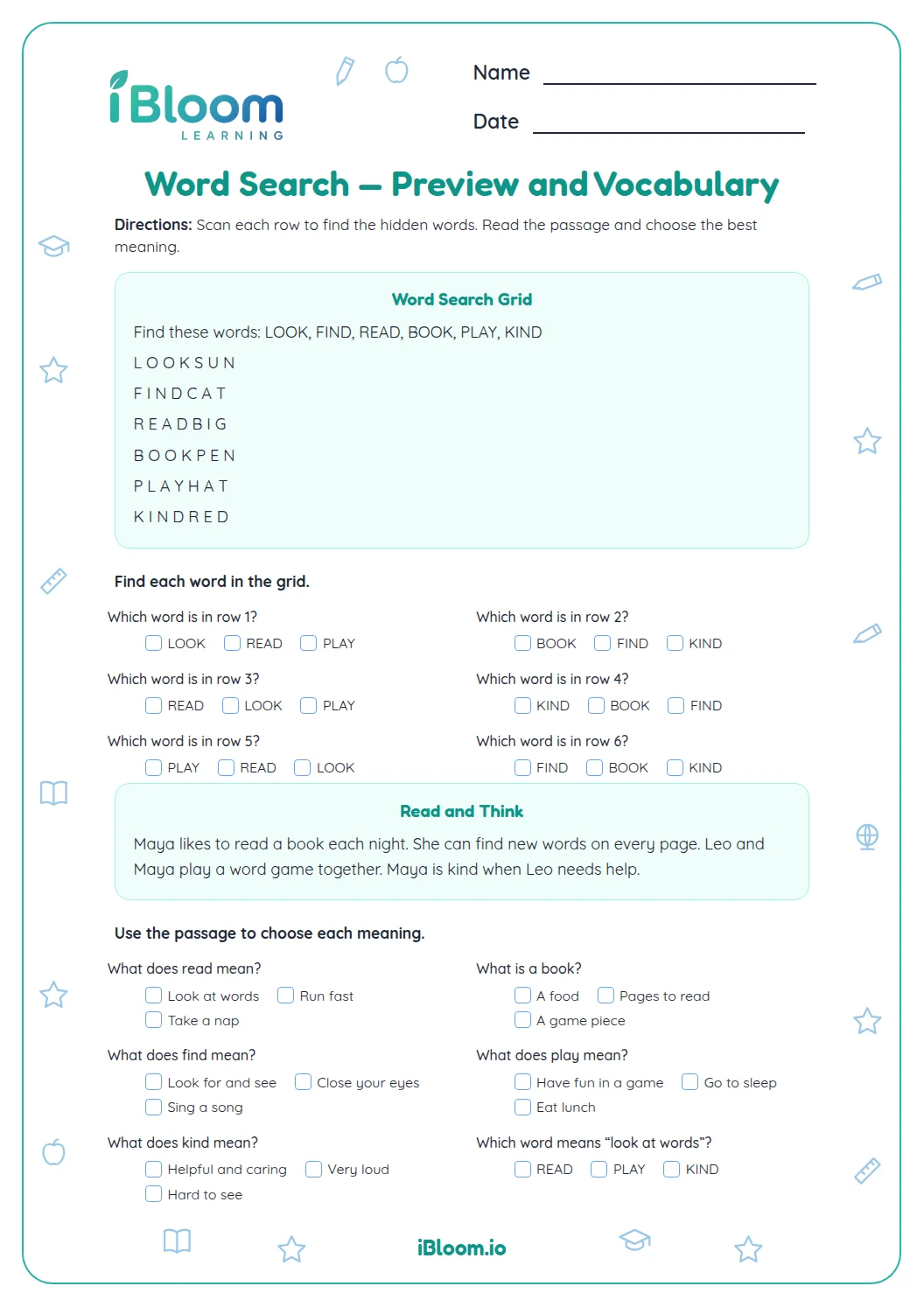
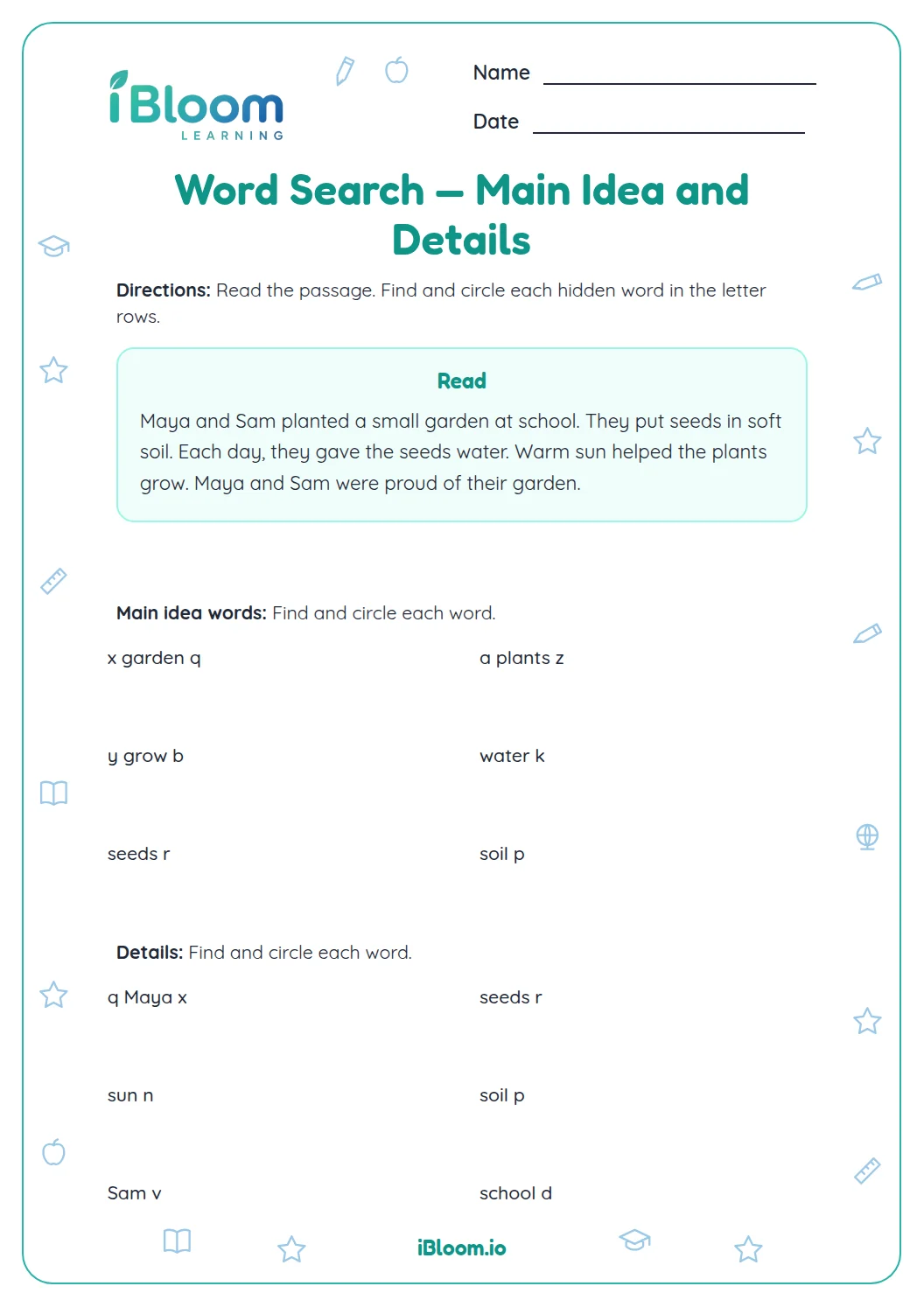
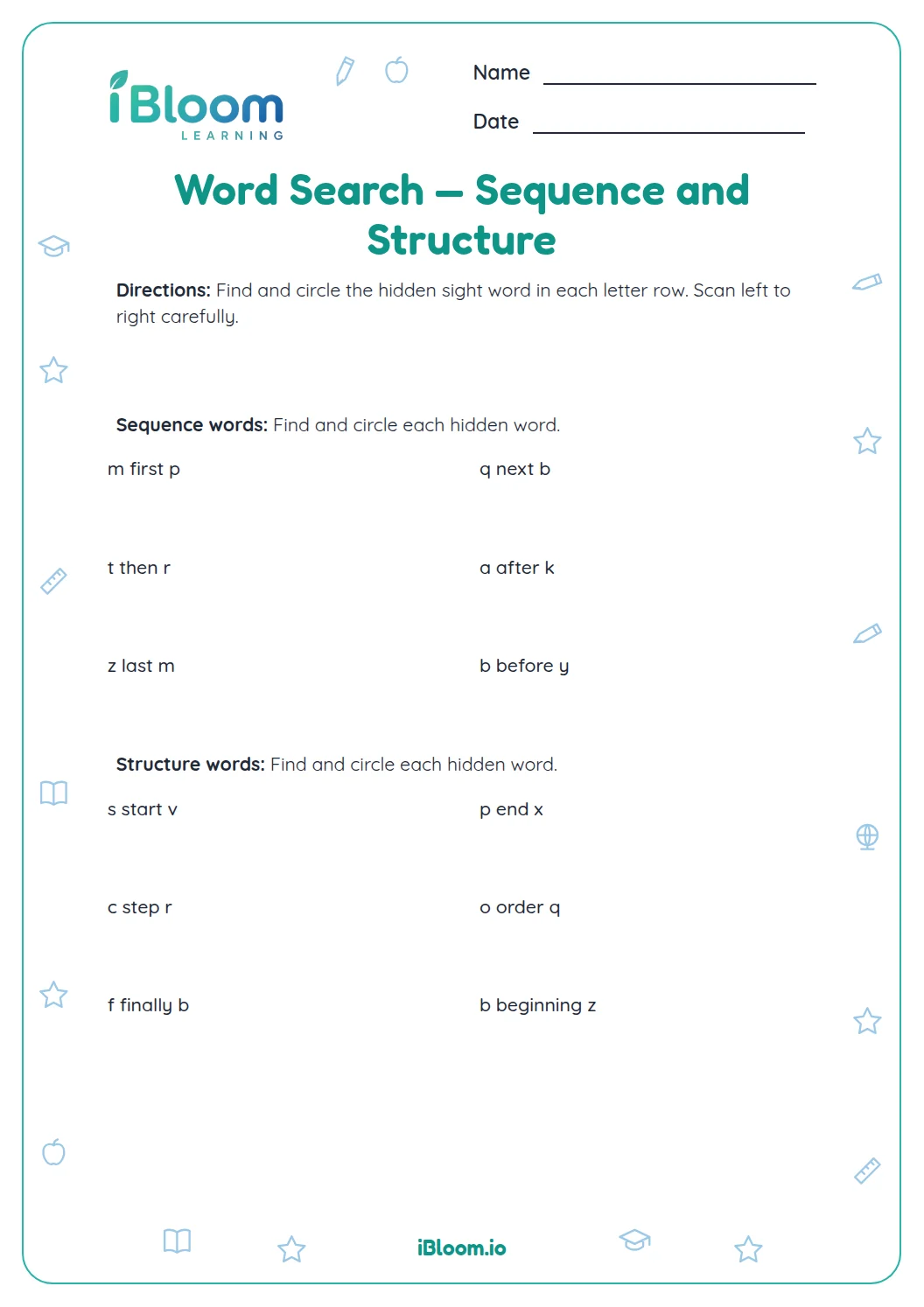
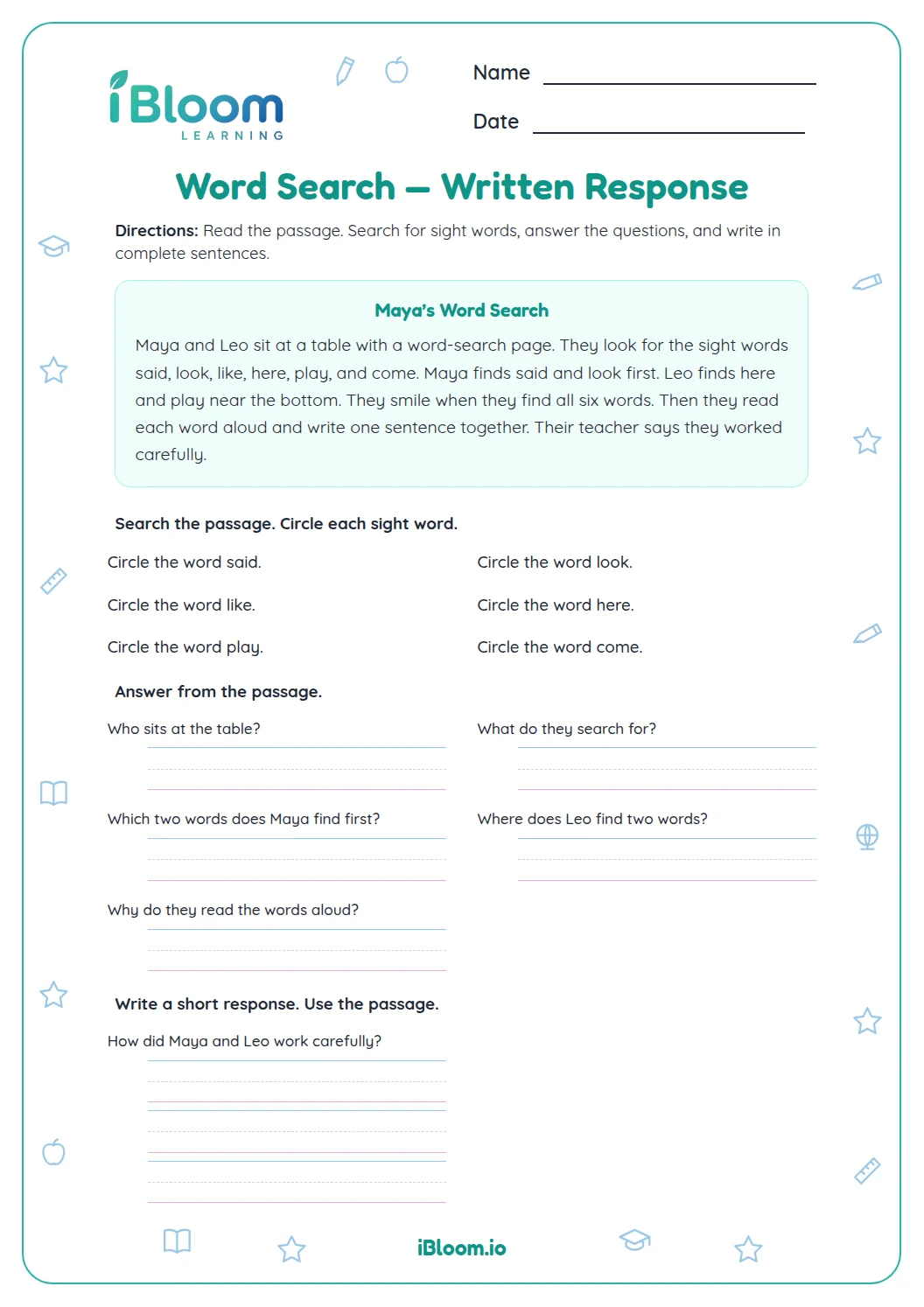
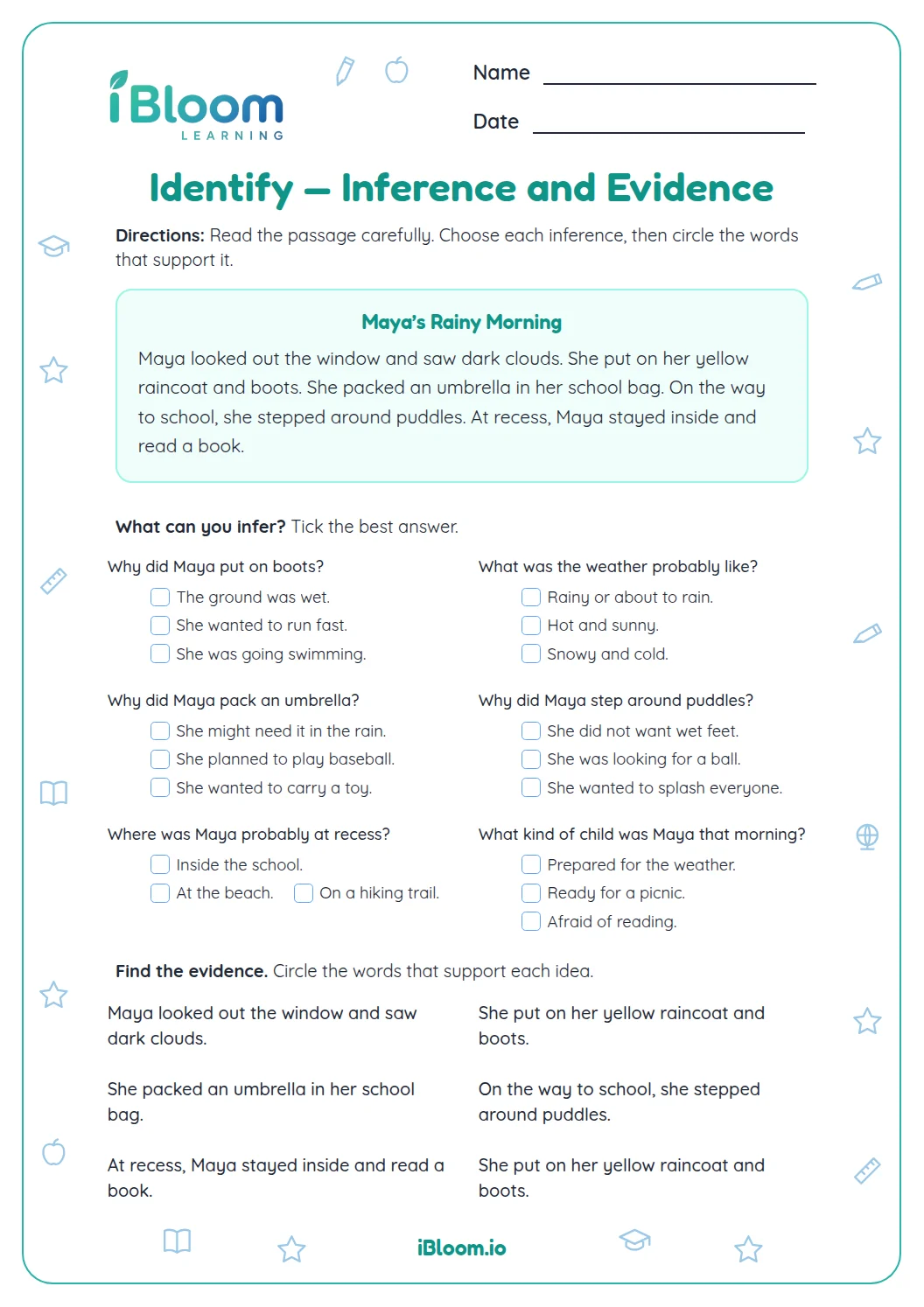
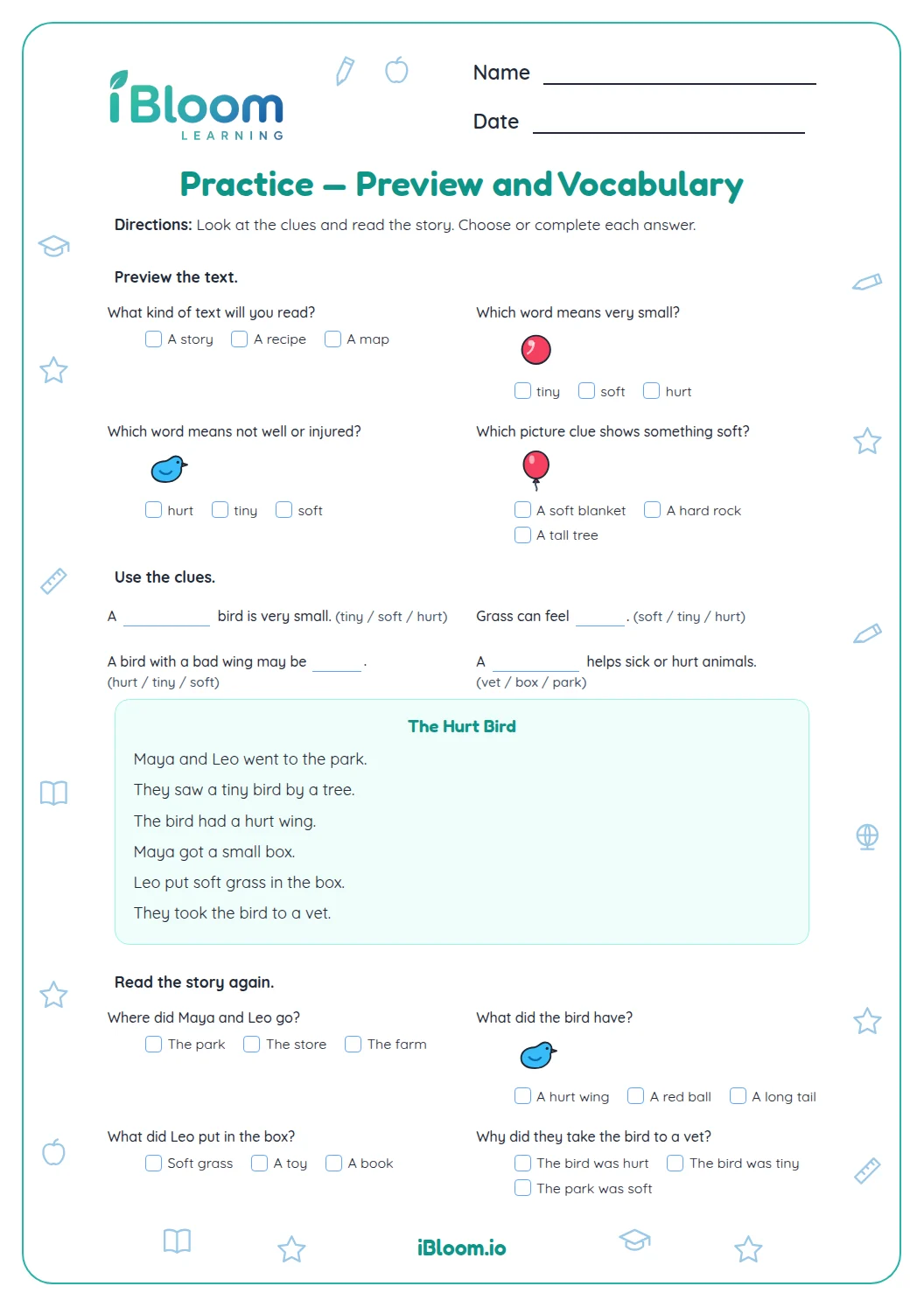
This Grade 1 printable uses two short word searches and 14 choice questions to practice inference and evidence. Students find words such as rain, boots, hungry, and friend, then decide what those clues may suggest. The answer key identifies the words and supported choices.
Which clue words can students find?
Grid A contains warm, coat, rain, boots, wet, and home. Grid B contains hungry, apple, lunch, share, friend, and smile. Find each listed word before answering its clue questions.
How can a word suggest an idea?
A clue can point toward an idea without stating it as a full sentence. If the words include rain, wet, and boots, a rainy walk is a sensible inference.
- 1Clue words: wet and boots.
- 2Idea: Maya may have walked in rain.
- 3The clue words support the idea.
How do you choose evidence?
Look for the exact word that supports the choice. For example, boots suggest keeping feet dry, while a friend suggests someone may be with Leo. The answer should connect to a word in the grid.
How can you use this worksheet?
- 1Read the story once to understand what happens.
- 2Circle each target word in the word-search grid.
- 3Reread the passage when a question asks for a detail.
- 4For an inference, combine a clue with what it suggests.
- 5Write a short answer using the passage’s words or details.
- 6Check each response against the story and answer key.
What errors should you watch for?
The mistake
Treating an inference as a detail stated word for word.
The fix
Point to the exact clue first, then explain the idea it suggests.
The mistake
Choosing an answer that sounds possible but has no story clue.
The fix
Reread and find a sentence that supports the answer.
The mistake
Giving a very broad answer such as “the dog.”
The fix
Use the question words to make the answer specific, such as “a wet, small dog.”
What to practice next
Make more practice
Further reading
Questions parents and teachers ask
What words are hidden in Grid A?
Grid A contains warm, coat, rain, boots, wet, and home. Students search for each word before using it as a clue. The follow-up choices ask what these words may suggest about weather, clothing, and where someone might go.
What words are hidden in Grid B?
Grid B contains hungry, apple, lunch, share, friend, and smile. Students use these words to choose ideas about food, company, and feelings. The word itself serves as evidence for the selected inference. A student can reread the word list before choosing and point to that word when explaining the answer.
What is an inference on this worksheet?
An inference is a reasonable idea suggested by one or more clue words. For instance, rain and wet can suggest that the ground may get wet. The page asks students to connect the clue with an idea instead of choosing an unrelated possibility.
How should a student choose evidence?
Find the word that supports the answer choice. If the question asks what could keep feet dry, boots is the evidence. If it asks who may be with someone, friend is the matching clue word. A student can reread the word list before choosing and point to that word when explaining the answer.
Does this page include a story passage?
No. The activity follows the old sheet’s word-search approach: students find a small set of words, then use those words as clues. Each question supplies enough context to connect a grid word to a simple inference or evidence choice.
Is there an answer key?
Yes. The separate key lists the words in both grids and the correct choice for each clue question. Ask the learner to point to a matching word in the grid when explaining why an answer fits. A student can reread the word list before choosing and point to that word when explaining the answer.