



About this worksheet
Read a Grade 1 version of The Cat and the Fiddle, then answer 12 questions about characters, events, the fable’s lesson, and a retell. The separate key includes sample responses. CCSS RL.1.2.
Aligned to RL.1.2
How do you find a key detail?
Match the question word to information stated in the passage. A who question asks for a character; a when question asks for a time. Reread the sentence that gives the detail.
How do details support the main idea?
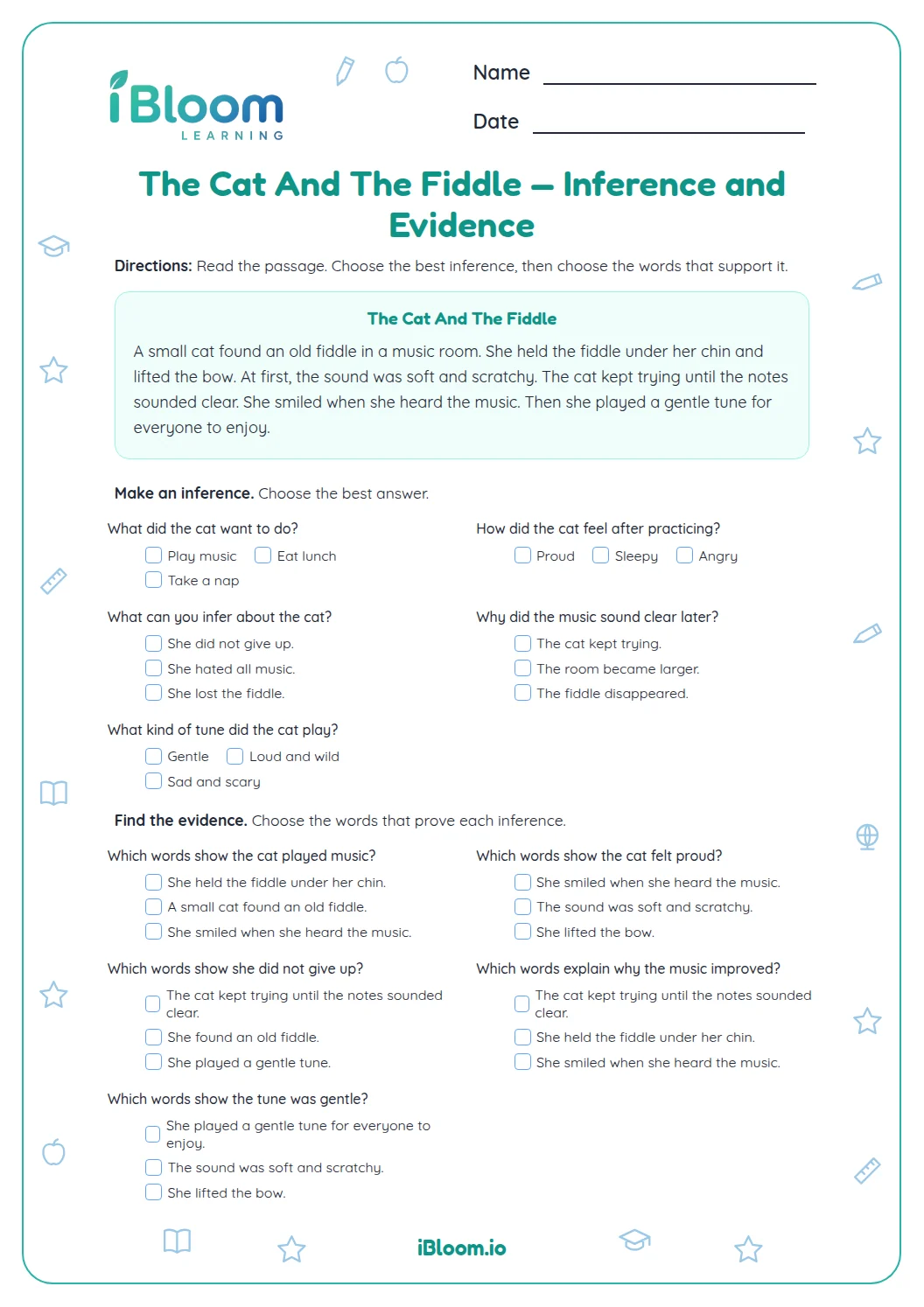
The fable’s lesson is that music can bring a group together. At first, the animals react with surprise; when the cat plays again, they clap along. Question 10 asks for that supporting detail.
How can you retell the events in order?
Retell the main events in order: the cat begins to play, the animals react to the tune, and the farm animals clap together at the end.
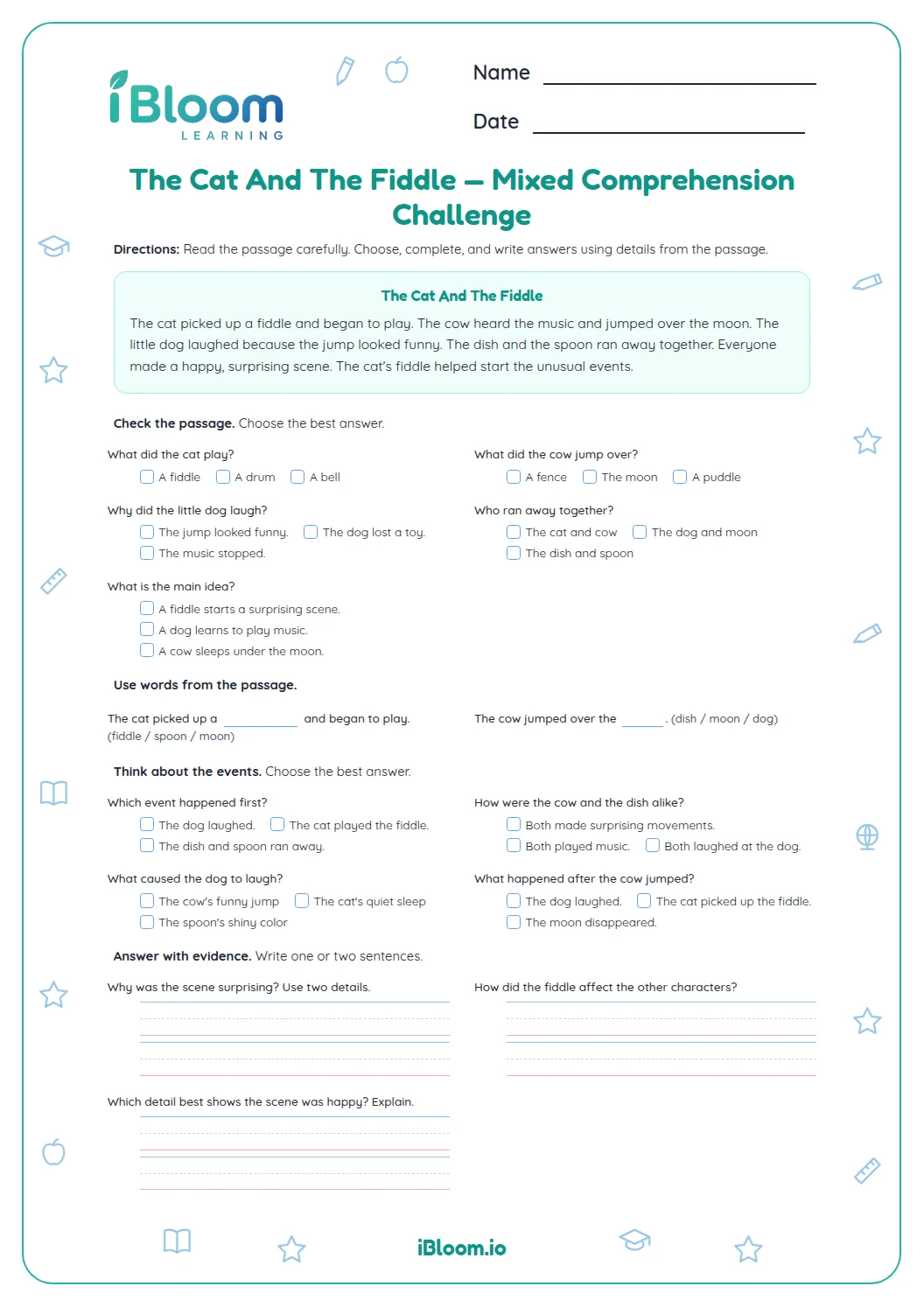
- 1For question 4, the passage says the cow jumped when she heard the music. The tune caused the cow’s surprising reaction.
How to use this worksheet
- 1Look for what the character tries more than once.
- 2Match a question word such as who, where, or when to one story detail.
- 3Use an event from the beginning, middle, or end to support an idea.
- 4Reread the sentence that answers each question before writing.
Common mistakes and quick fixes
The mistake
Answer from memory without checking a detail in the passage.
The fix
Fix: Reread the sentence that tells who, where, or when.
The mistake
Name a lesson that the character’s actions do not support.
The fix
Fix: Point to an event that shows the character learning or changing.
The mistake
Retell every small detail instead of the main events.
The fix
Fix: State what happened first, next, and last.
Common Core alignment
This page connects the printed practice to the following Common Core standard.
Retell the fable and explain its lesson using details.
On this sheet:
Show the official wordingHide the official wording
Retell stories, including key details, and demonstrate understanding of their central message or lesson.
What to practice next
Make more practice
Further reading
Questions parents and teachers ask
How long is the passage?
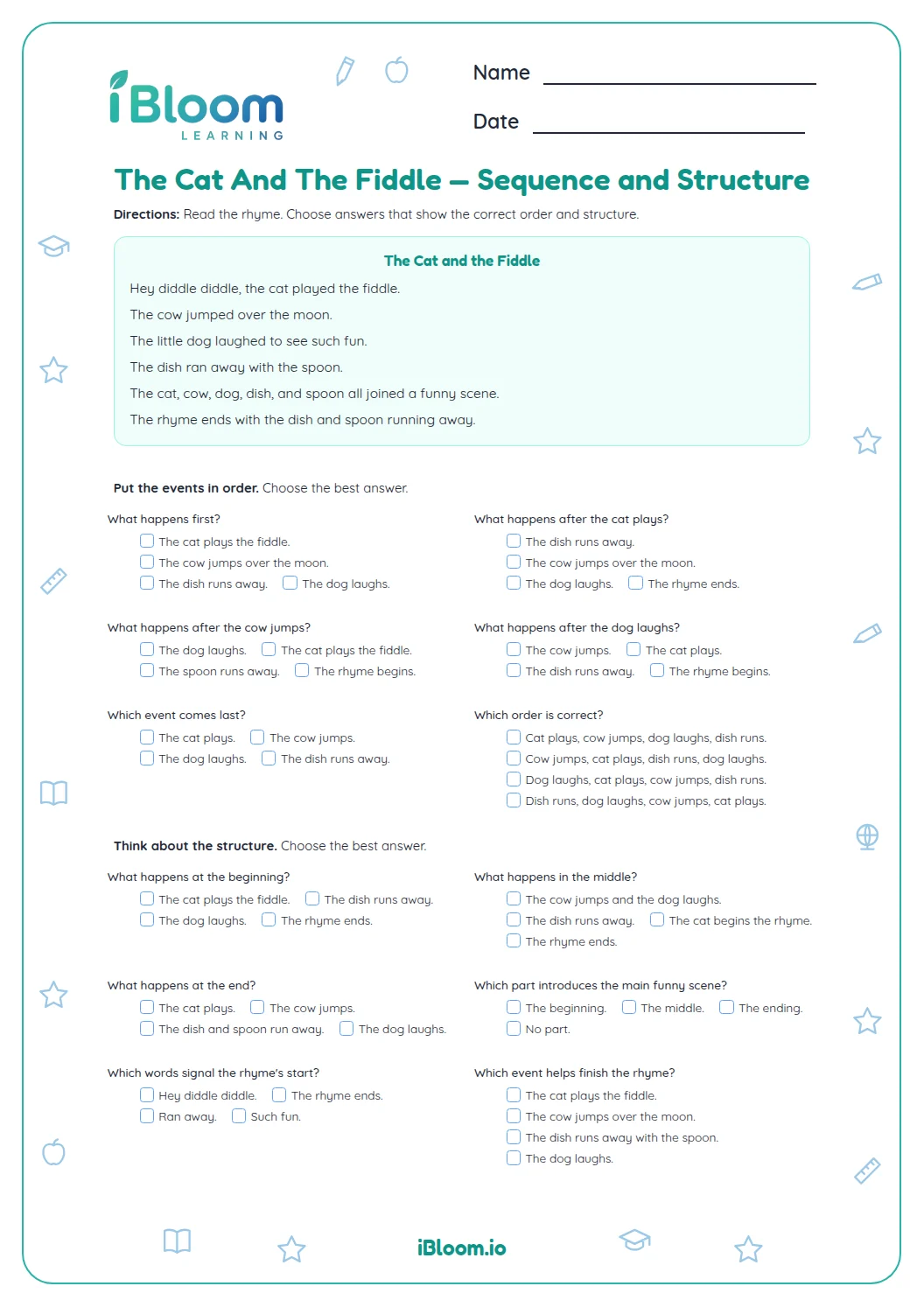
The fable is about 75 words and uses familiar characters and actions: a cat plays a fiddle, a cow jumps, a dog laughs, and the dish and spoon run away. Children can reread the passage to check each answer and find a detail for the lesson.
What does the answer key include?
The separate key gives short answers for direct detail questions and sample responses for open-ended items. A child’s wording can differ from the sample and still be correct when it matches the passage, explains the lesson, or retells the events accurately.
How does the page practice a fable’s lesson?
Questions ask what the animals do and what happens when they listen together. Readers connect those events to the idea that music can bring a group together, then point to the animals clapping as a detail that supports that lesson.
Can an adult read the story aloud?
Yes. An adult can read the fable aloud, pause after each event, and let the child answer in their own words. The questions still ask readers to connect each answer to a detail in the printed story. Ask the child to point to the sentence that helped them decide.
What should a complete retell include?
A useful retell names the cat playing, the animals reacting to the lively tune, and the group clapping together at the end. Encourage the child to use first, next, and last so the events stay in order without copying the whole passage.