




About this worksheet
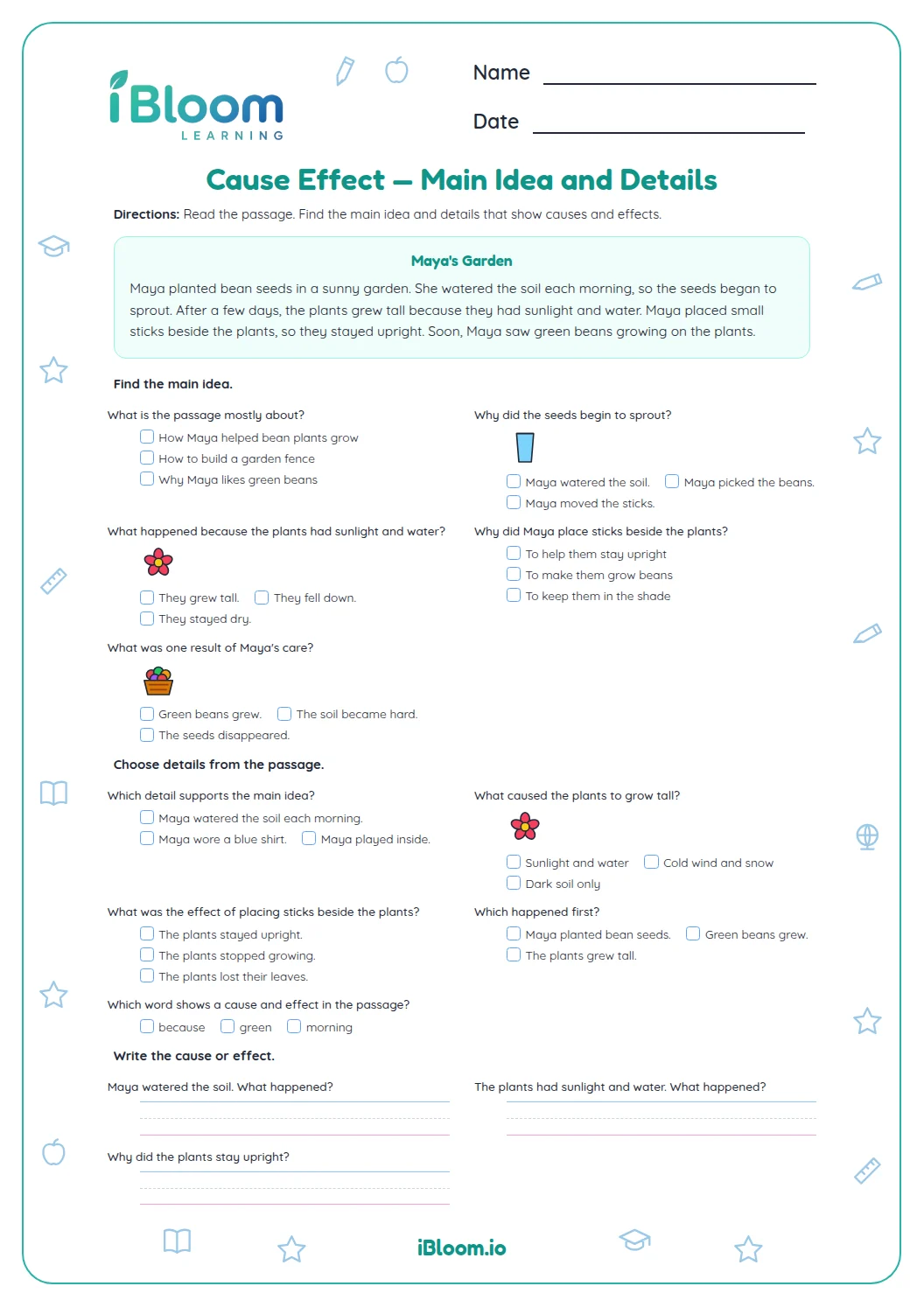
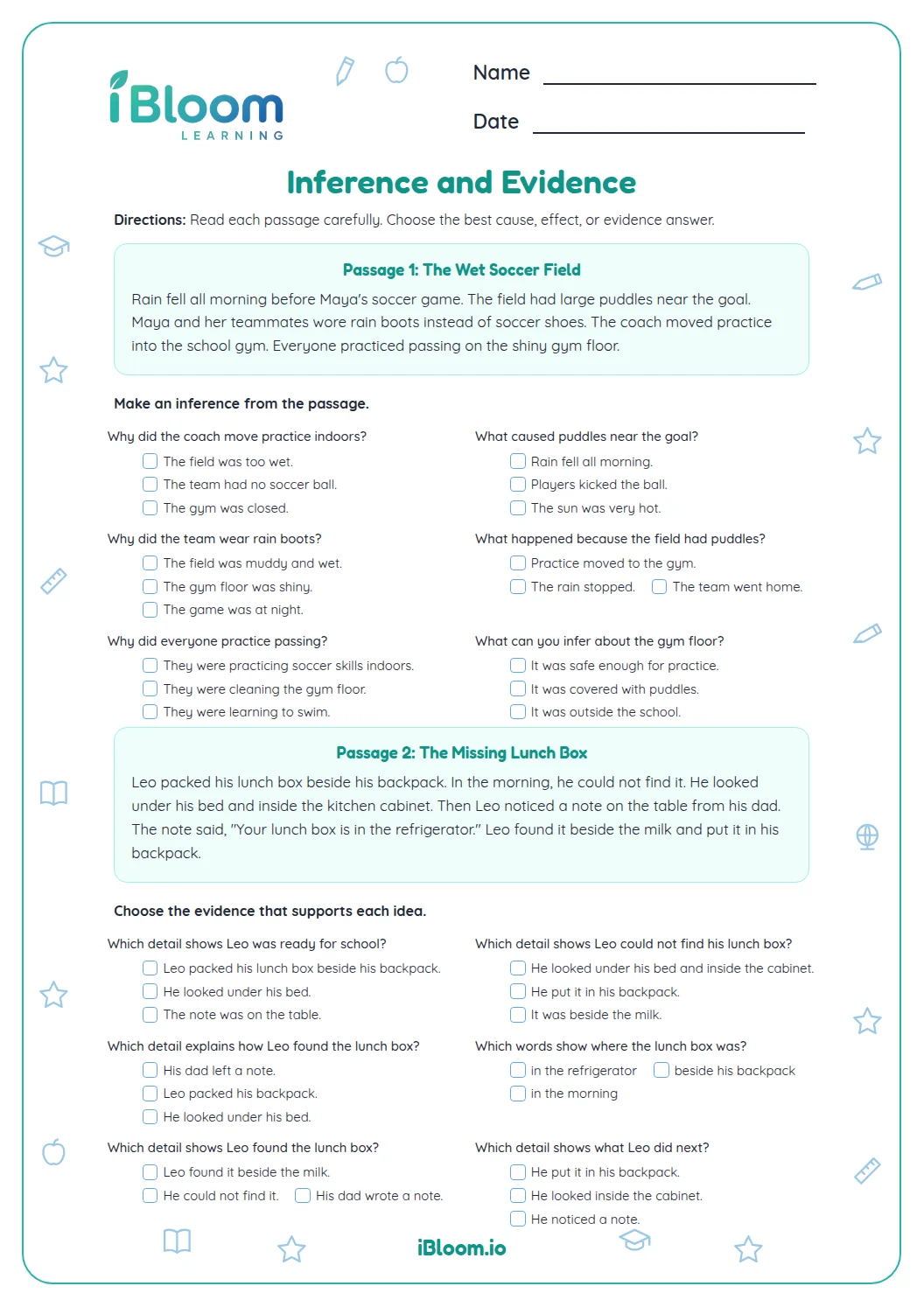
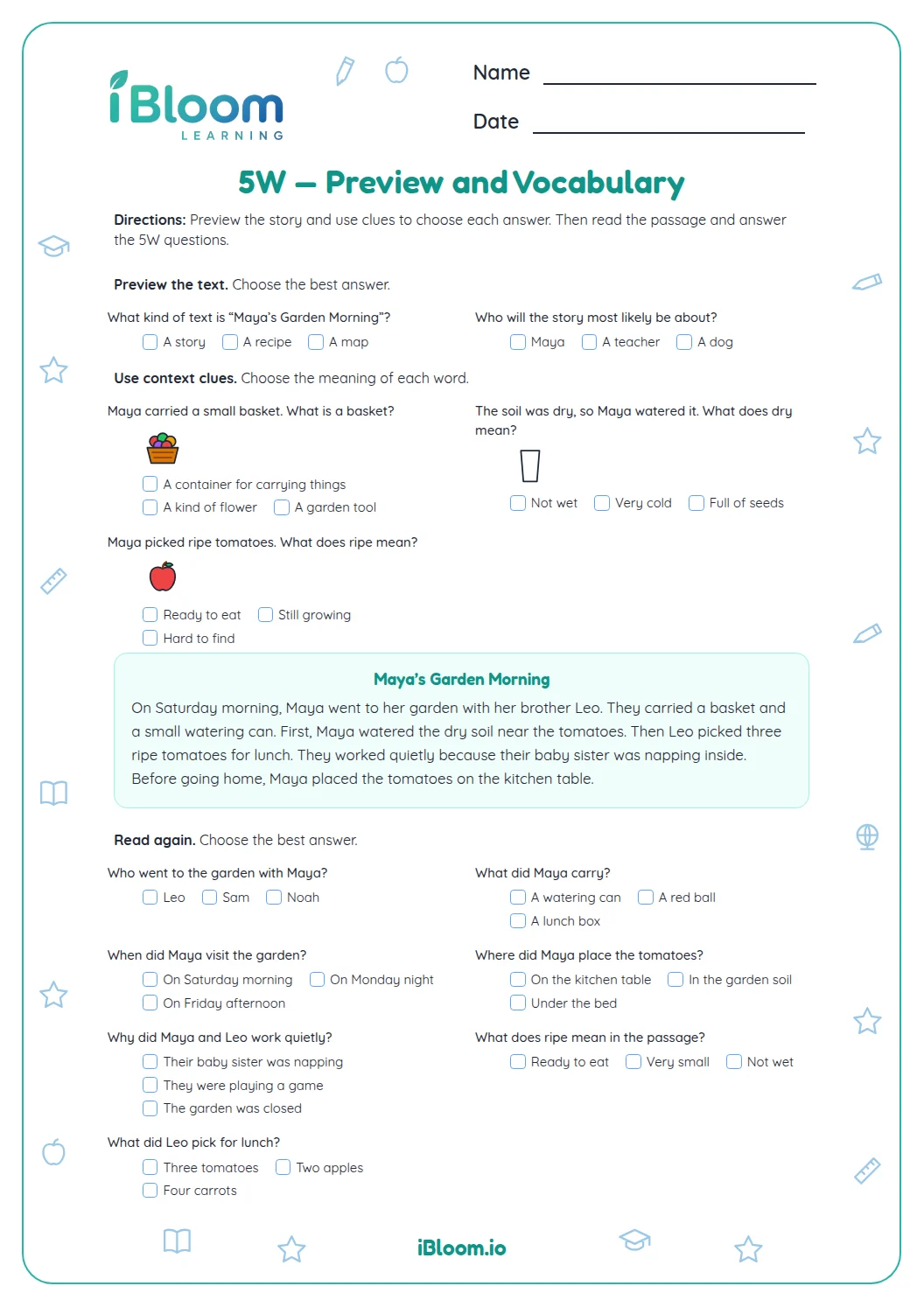
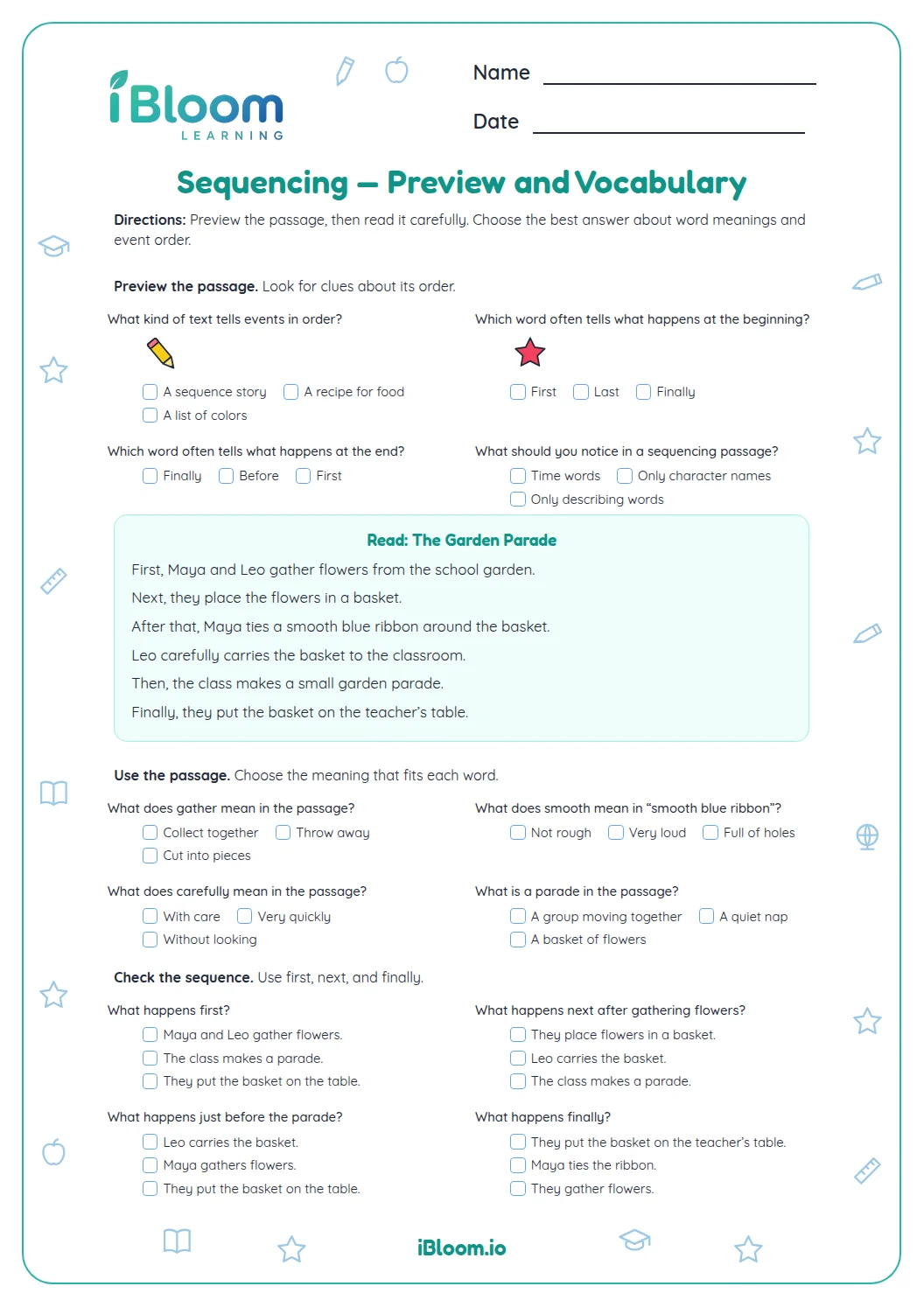
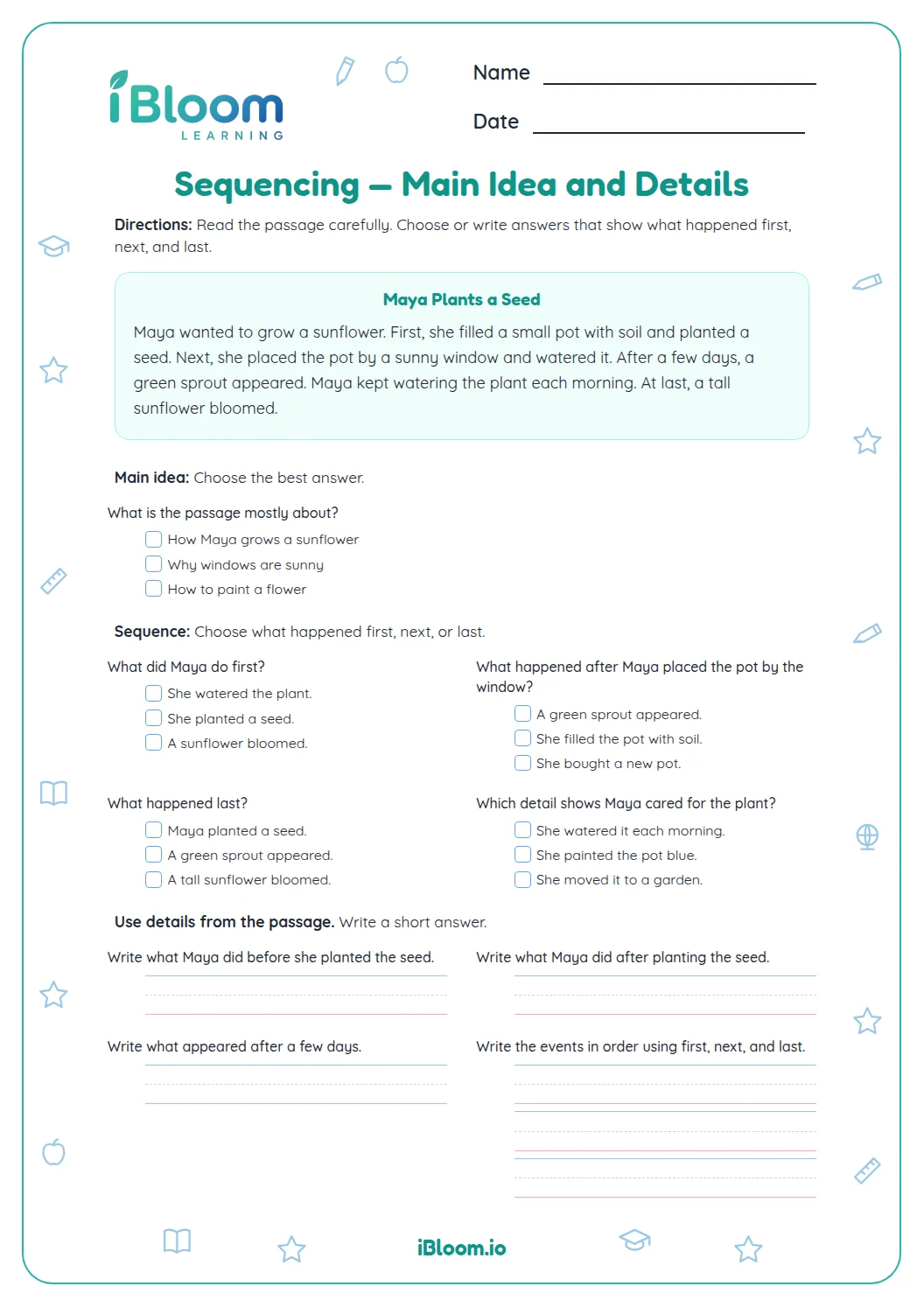
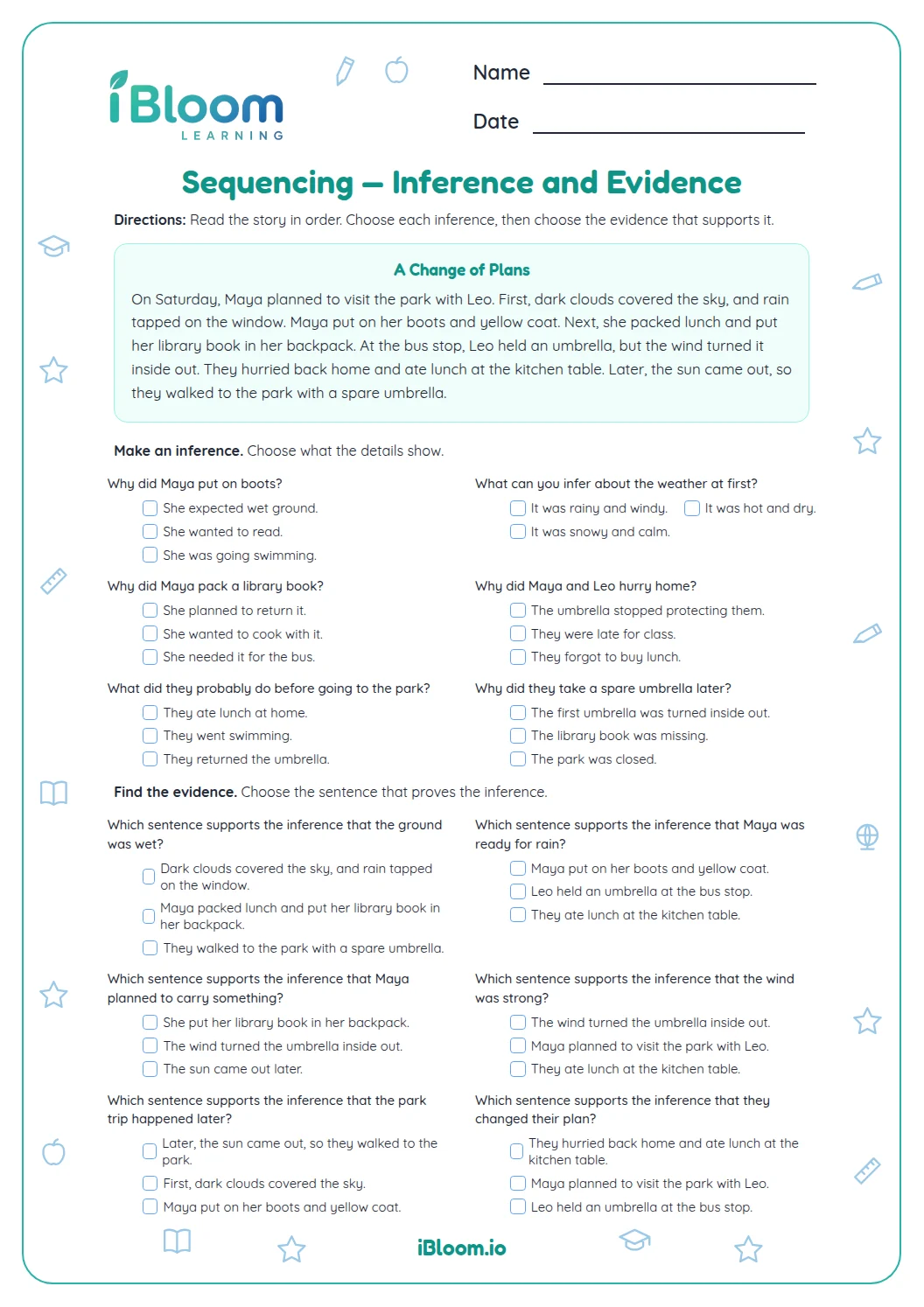
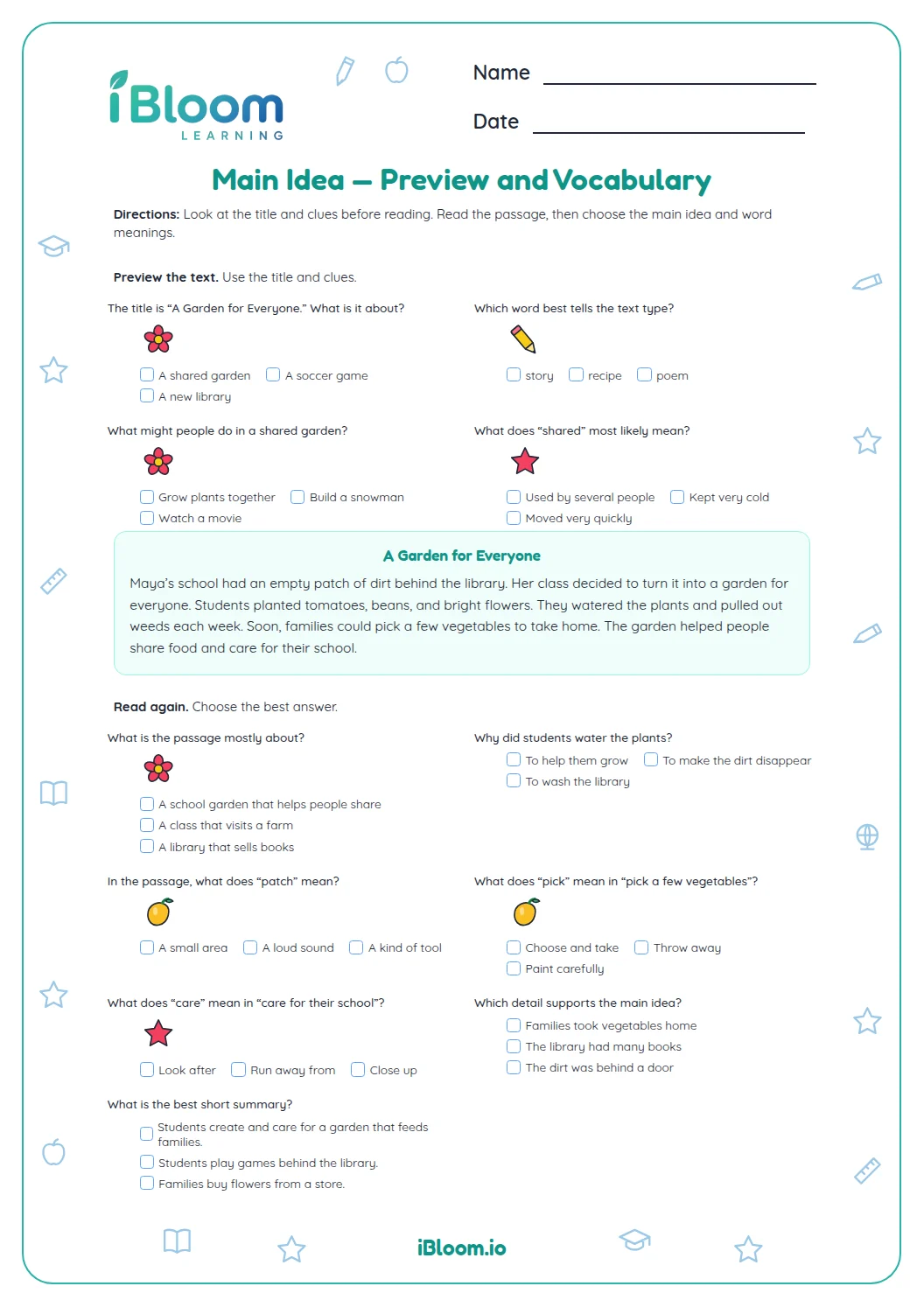
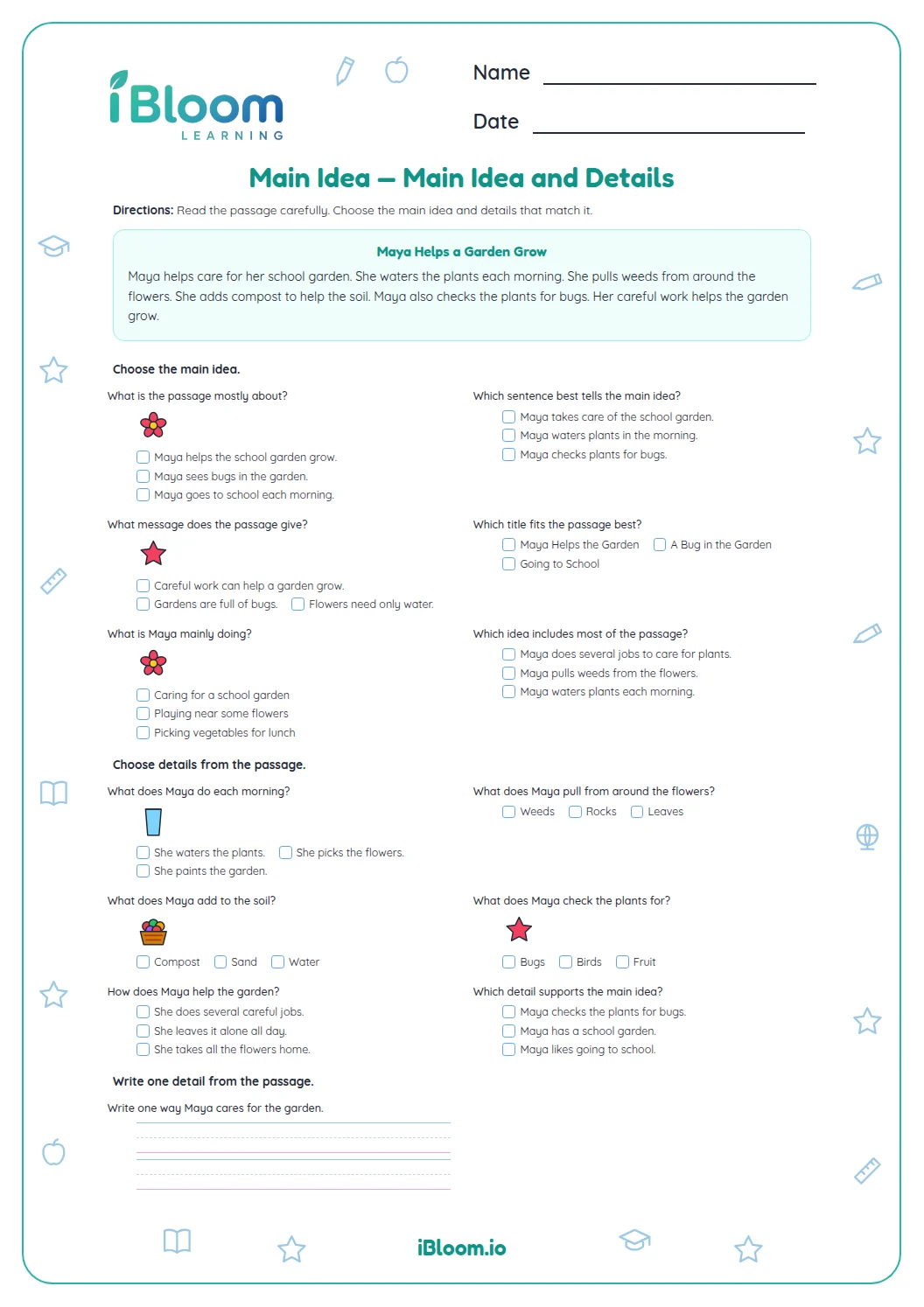
This Grade 2 reading worksheet pairs an original passage about planting bean seeds with 14 questions. Students identify causes and effects, follow key events, and use sentence clues for vocabulary. Two written responses ask them to explain using a passage detail. The questions use story details to answer who, what, and why questions (CCSS RL.2.1).
Aligned to RL.2.1
How do readers find cause and effect?
A cause explains why something happens. An effect is what happens as a result. Readers look for clues such as because, so, and when, then connect the clues to the events in the passage.
- 1Rain came at noon.
- 2The children moved the seed tray to the porch.
- 3Cause: rain was coming. Effect: they moved the tray.
How can context help with a new word?
Read the words around an unfamiliar word and try a meaning that fits the sentence. The story gives clues about a tray, a puddle, and the children’s actions.
- 1The children carried the seed tray to the porch.
- 2It held the seeds while they moved it.
- 3A tray is a flat holder for carrying things.
What will students read and answer?
The passage follows Maya and Ben as they move a seed tray, plant beans, and notice the first leaves. Part A asks about causes and effects. Part B checks word meaning and event order. Part C asks for brief written answers using story evidence.
- One original passage about planting bean seeds
- 12 multiple-choice questions
- 2 short written responses tied to story details
How to use this reading page
- 1Read the passage once to understand what the children are doing.
- 2On a second read, notice what happens before each change.
- 3For cause-and-effect questions, ask what happened and why.
- 4For vocabulary, reread the whole sentence and test each meaning.
- 5Use one story detail in each written response.
- 6Check the answer key and return to the passage when an answer is uncertain.
Common mistakes and quick fixes
The mistake
Naming an event but not explaining what caused it.
The fix
Ask “Why did this happen?” and point to the earlier detail that answers.
The mistake
Choosing a vocabulary meaning that does not fit the sentence.
The fix
Try the meaning in the sentence and reread it aloud.
The mistake
Using an idea that is not in the story for a written answer.
The fix
Find a matching sentence in the passage before writing.
Common Core alignment
The questions use story details to build comprehension and explain character responses.
Ask and answer questions using important details from the passage.
On this sheet: Students answer why and what questions by returning to key story events.
Show the official wordingHide the official wording
Ask and answer such questions as who, what, where, when, why, and how to demonstrate understanding of key details in a text.
What to practice next
Make more practice
Further reading
Questions parents and teachers ask
What does cause and effect mean?
A cause tells why something happens, and an effect tells what happens as a result. In the story, rain is the reason Maya and Ben move their seed tray to the porch. Students practice finding both details in the passage.
What is the passage about?
Maya and Ben plant bean seeds after rain changes their plans. They move the tray, prepare the garden soil, plant the seeds, and later see leaves. The questions use those events to practice cause, effect, sequence, and word meaning.
How many questions are on the worksheet?
There are 14 questions: 12 multiple-choice items and two written responses. The questions follow one original passage, and a separate three-page answer key gives the correct choices and sample responses for adults checking the work together after reading.
Can a child use the passage while answering?
Yes. Students should return to the passage to check a detail or find a clue. Rereading is especially useful for questions about why an event happened and for choosing a word meaning that fits the sentence in context.
What should a written response include?
Each response should give a clear answer in one sentence and connect it to a story detail. The answer key offers a sample response, but students may use different wording when the idea is supported by the passage.