


About this worksheet
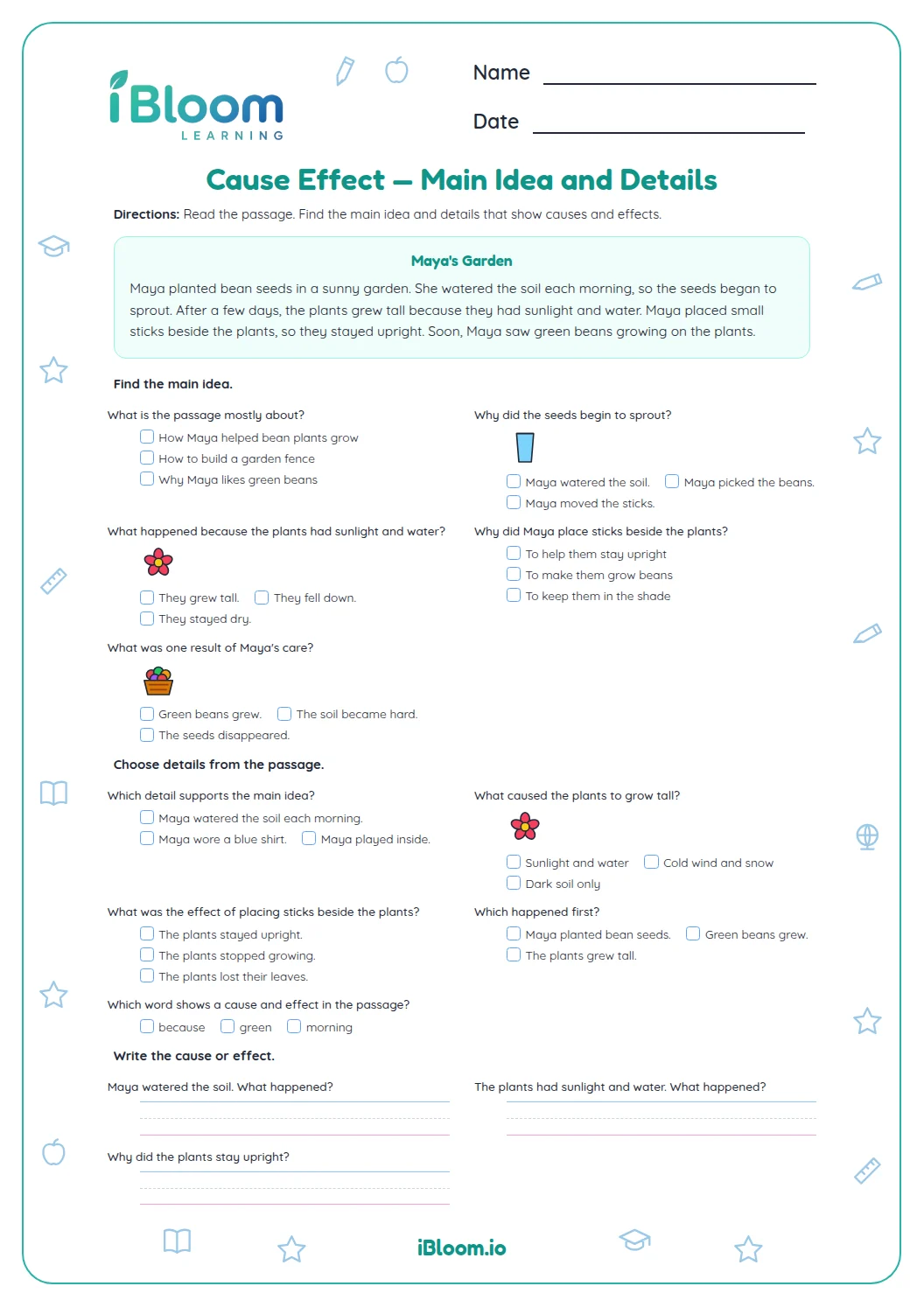
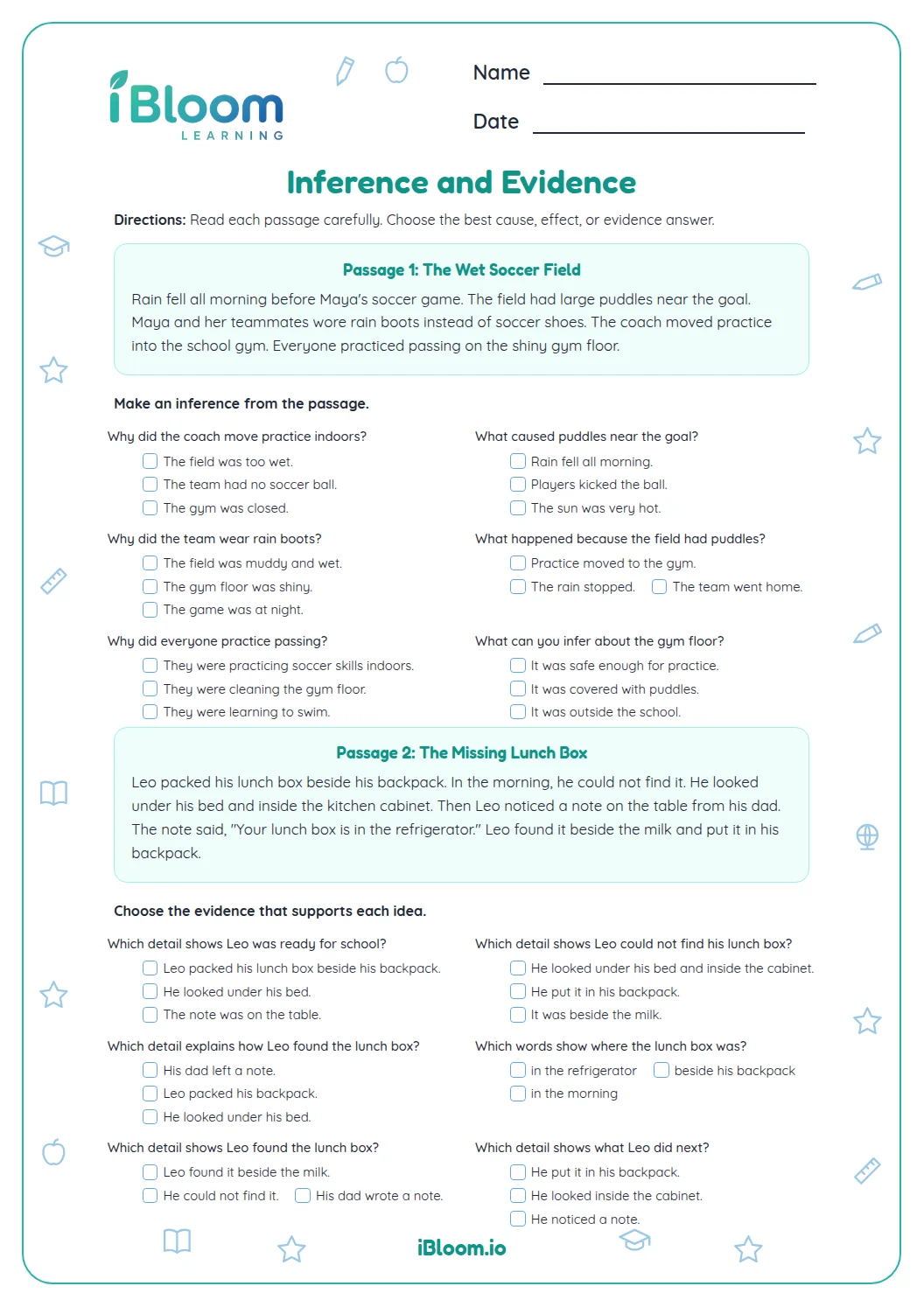
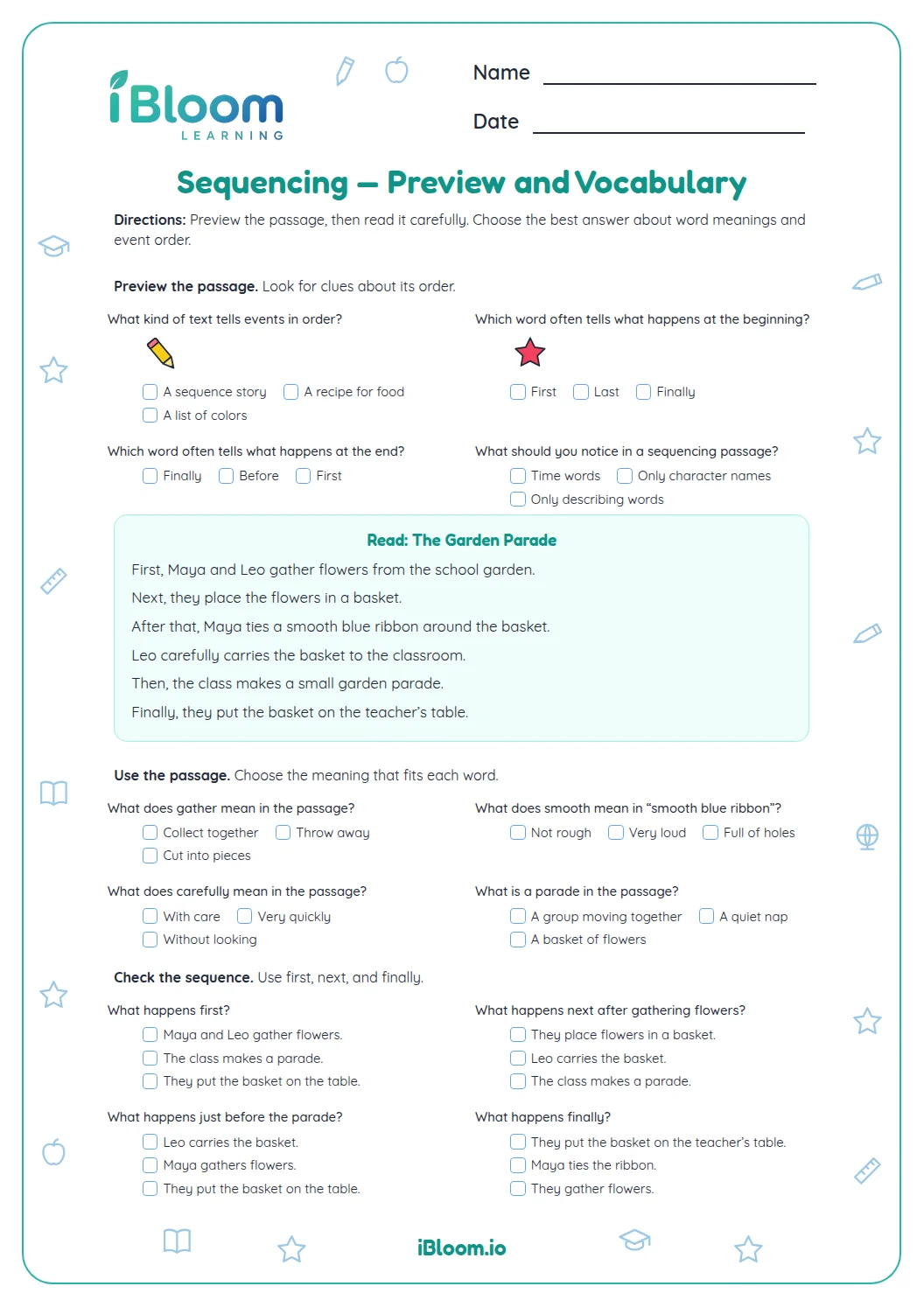
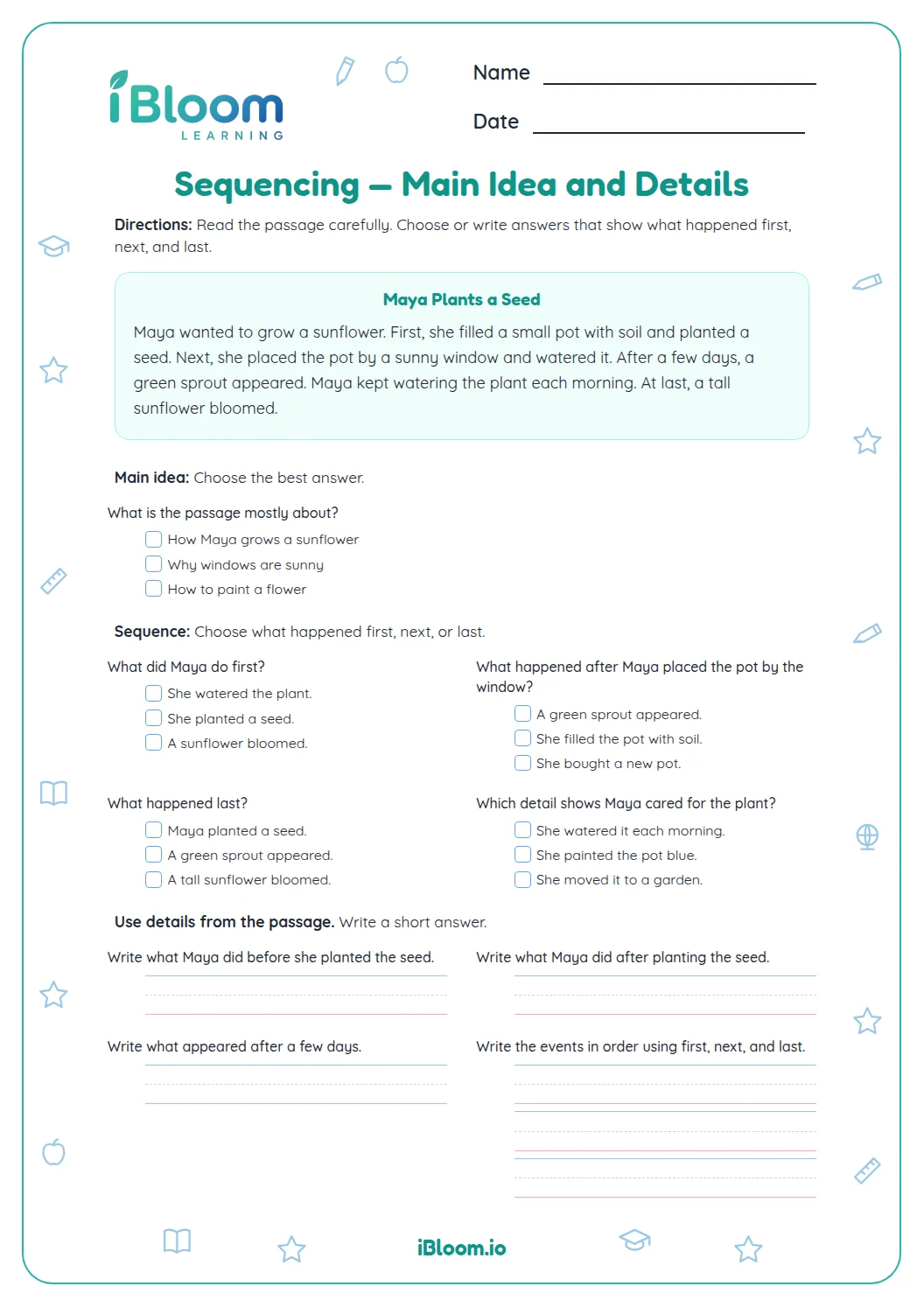
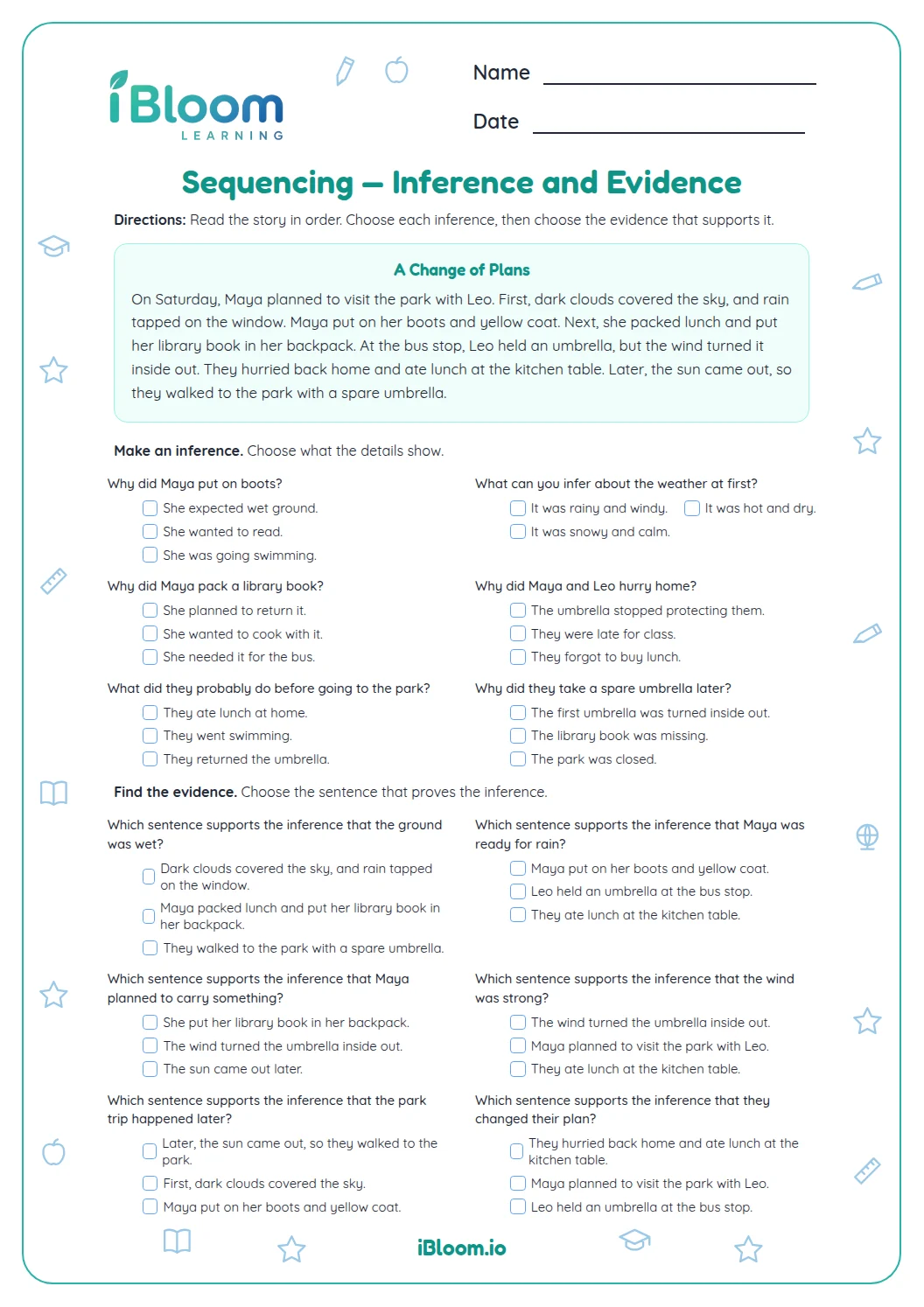
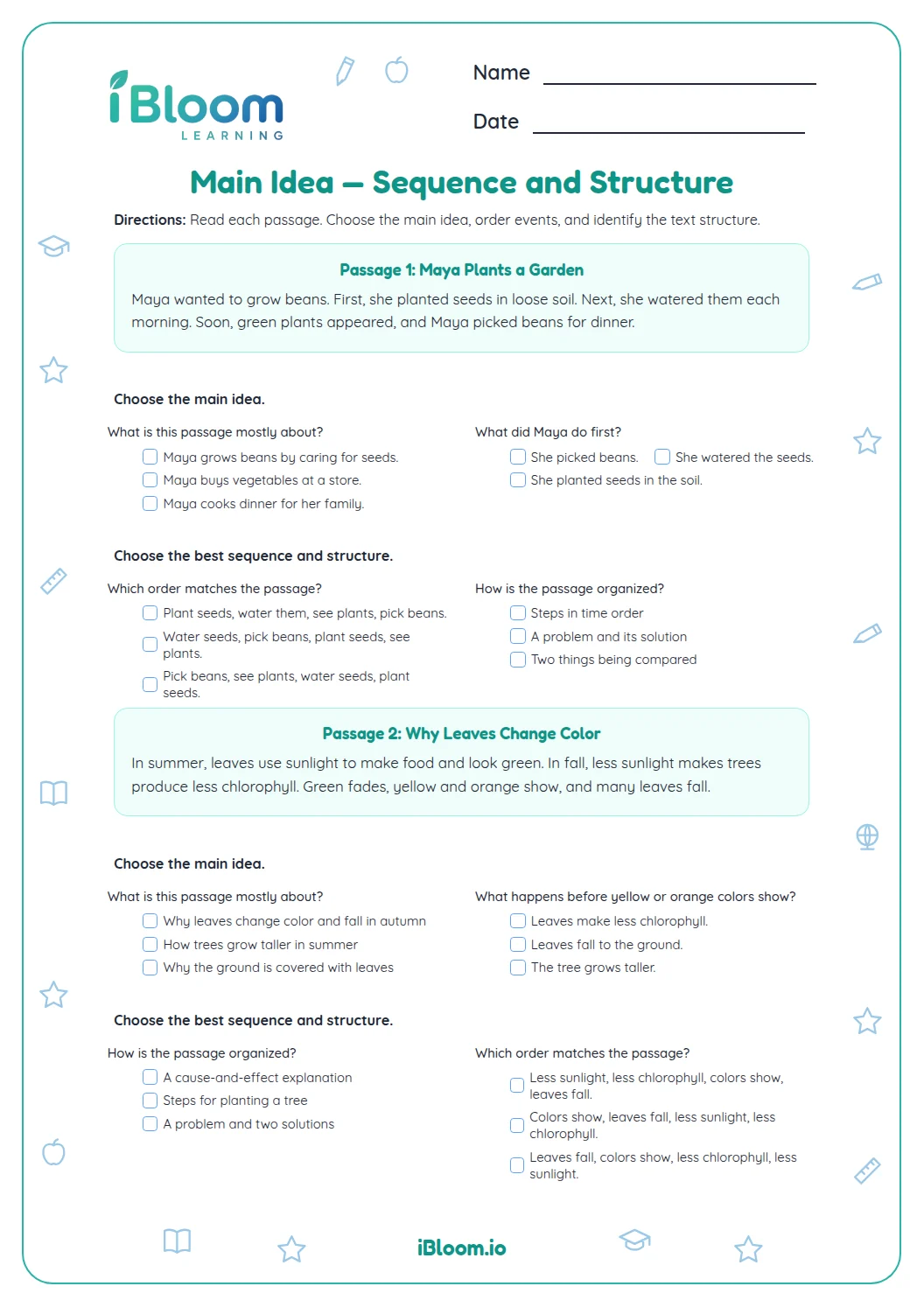
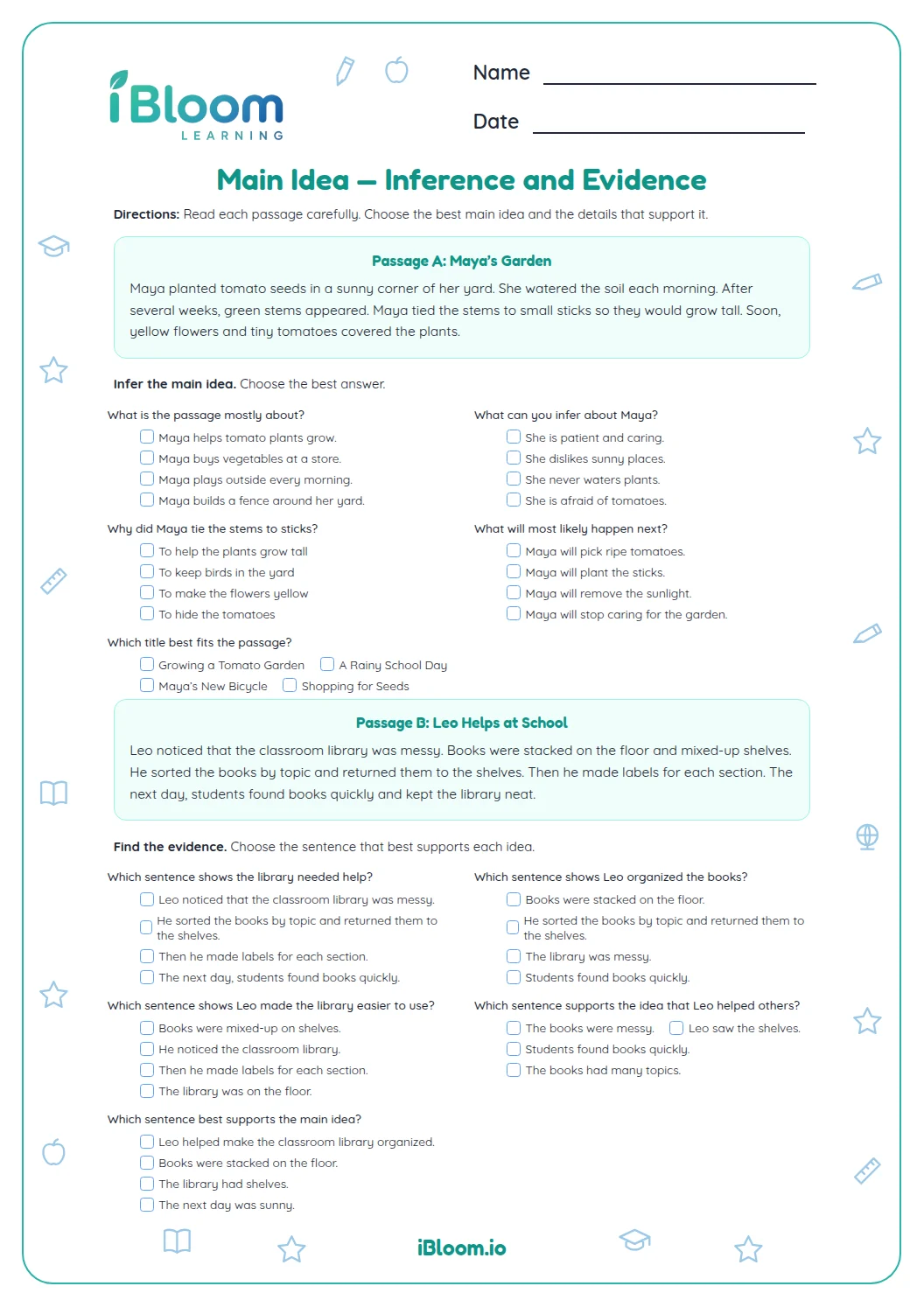
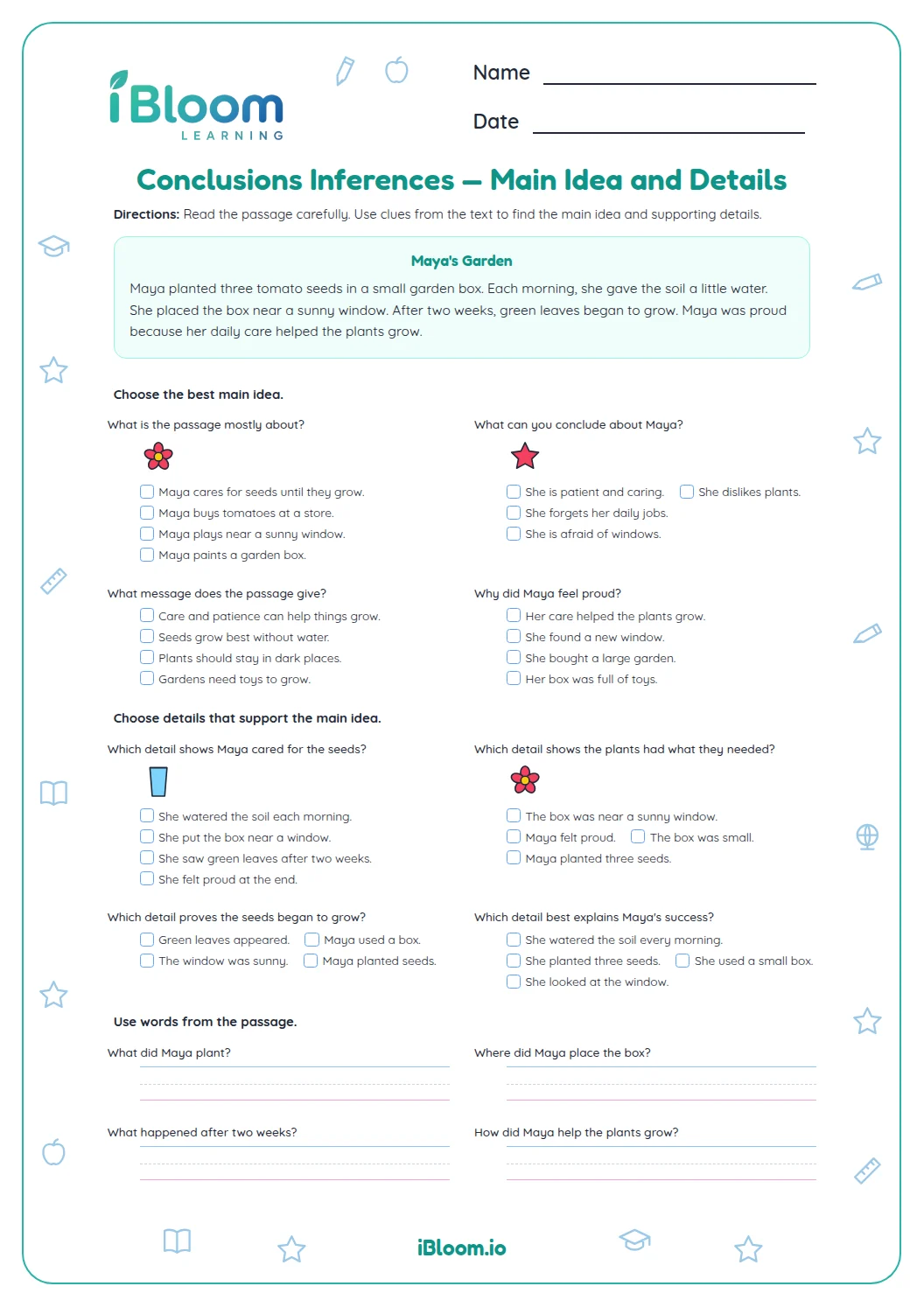
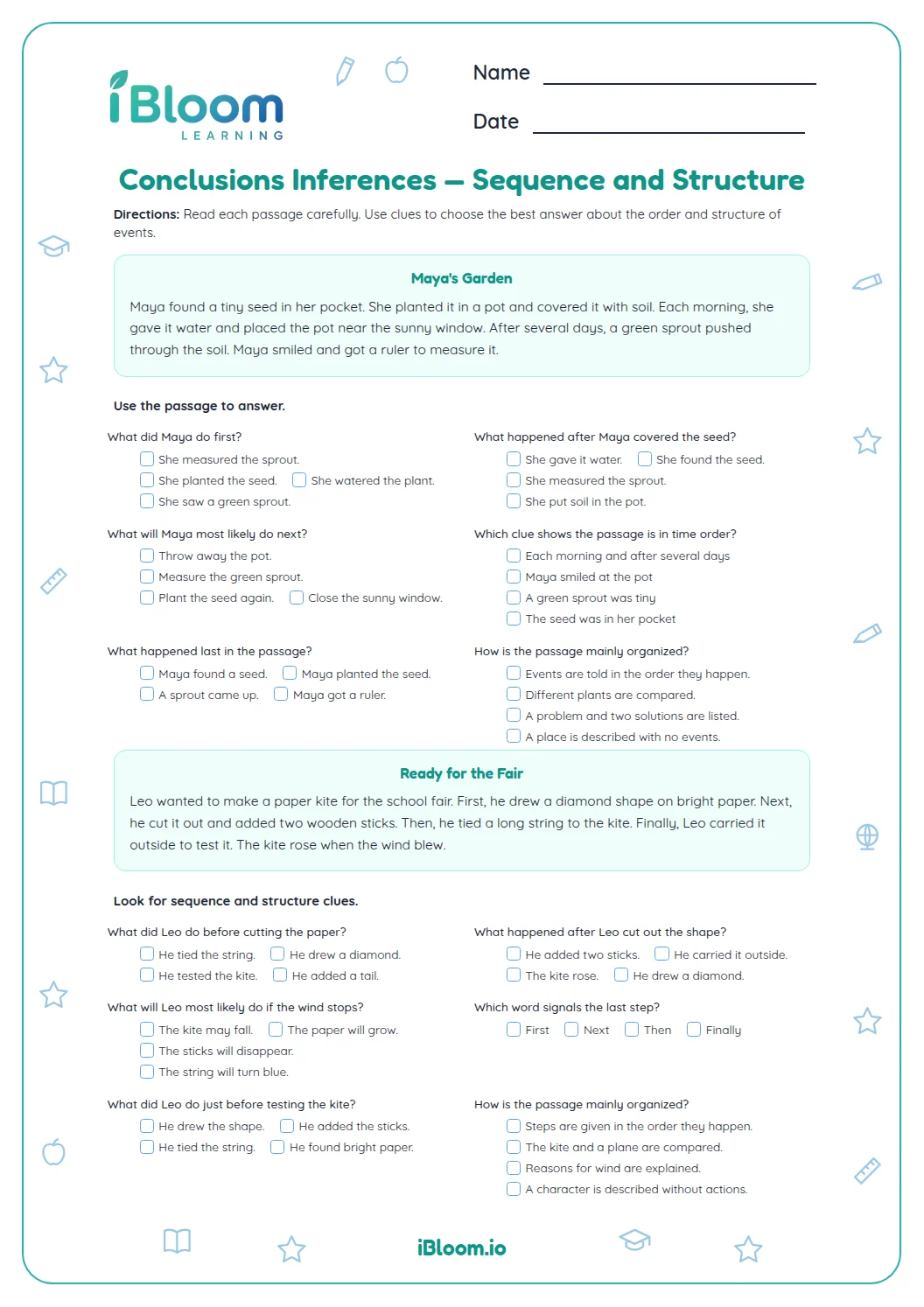
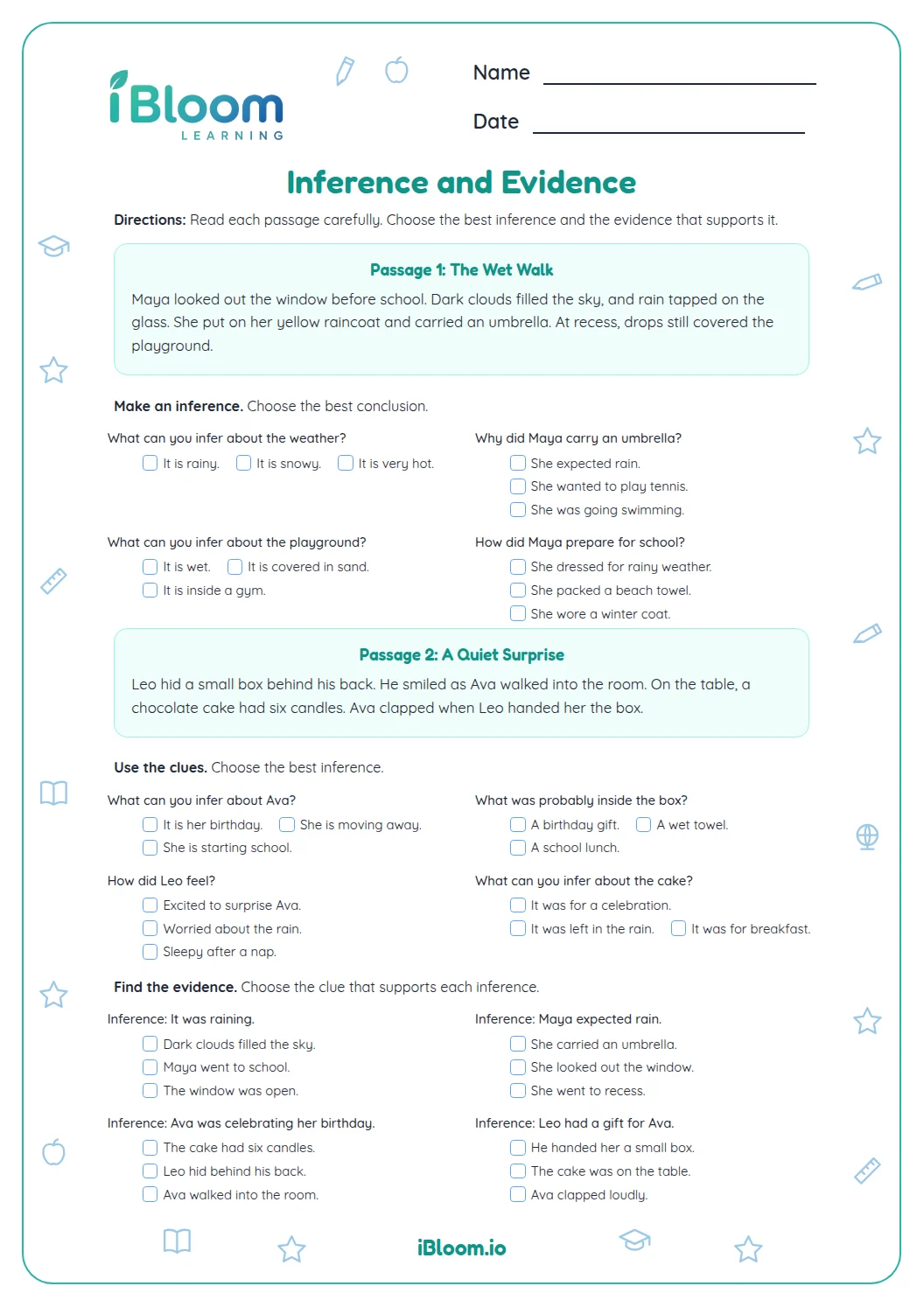
This Grade 2 comprehension sheet pairs an original bean-growing passage with 15 questions. Readers connect reasons with results, put the planting events in order, and notice the time-order structure. The passage follows Mia and Leo from planting a seed to moving its seedling into a garden; the separate key supports review.
How do causes connect to results?
A cause is why something happens; an effect is what follows. In the passage, the soil looks dry, so Leo waters it. Readers can identify the reason and the action it leads to.
- 1Cause: The soil looked dry.
- 2Effect: Leo added water.
Which clues help order events?
Time phrases mark when events happen. “On Saturday,” “On Monday,” and “After three weeks” help readers place planting, watering, and moving the seedling in order.
- 1First: They filled a cup with soil.
- 2After planting: They watered the seed.
What structure holds the passage together?
The passage follows the seed-growing events in time order, from planting to moving the seedling outdoors. Reread the opening and ending to see how the project progresses.
- 1Structure: Events are told in time order.
A way to work through the sheet
- 1Read the whole passage once to follow the planting project.
- 2Underline a reason or result when a question asks why something happened.
- 3Use time phrases to check which event came first or last.
- 4Answer in a short phrase, then reread the passage to confirm it.
Check for these slips
The mistake
Mixing up a cause and its result
The fix
Ask what happened first and what it made happen.
The mistake
Using a possible detail that the passage never gives
The fix
Point to a sentence as evidence.
The mistake
Ordering events from memory
The fix
Check the time phrases in the passage.
What to practice next
Make more practice
Questions parents and teachers ask
How can a reader find a cause in this passage?
Ask why the event happened, then locate the sentence that gives the reason. The soil looked dry, which explains why Leo added water. The word “so” links the reason to the action, but rereading the full sentence confirms the connection.
How do time words help with sequence?
Time words show when events happen and help readers put them in order. “On Saturday,” “On Monday,” and “After three weeks” mark different points in Mia and Leo’s seed-growing project. Readers can use them to retell what happened first, next, and last.
What is the effect of the rain?
Rain made the path muddy, so Mia walked slowly while carrying the ruler. The passage gives both parts of the connection: the rain is the cause, and the muddy path is its result. The slower walk is Mia’s response to that result.
How is the passage organized?
The passage tells the events in time order, beginning with planting the seed and ending with moving the seedling into the garden. Phrases that name days and elapsed time help readers follow the steps. They can use those clues to support their answer to the structure question.
What should children do when an answer is not stated in one phrase?
Reread the two or three sentences around the event and look for a reason, result, or time clue. The answer can combine details from nearby sentences, as when the rain, muddy path, and Mia’s careful walk are connected in the passage.