


About this worksheet
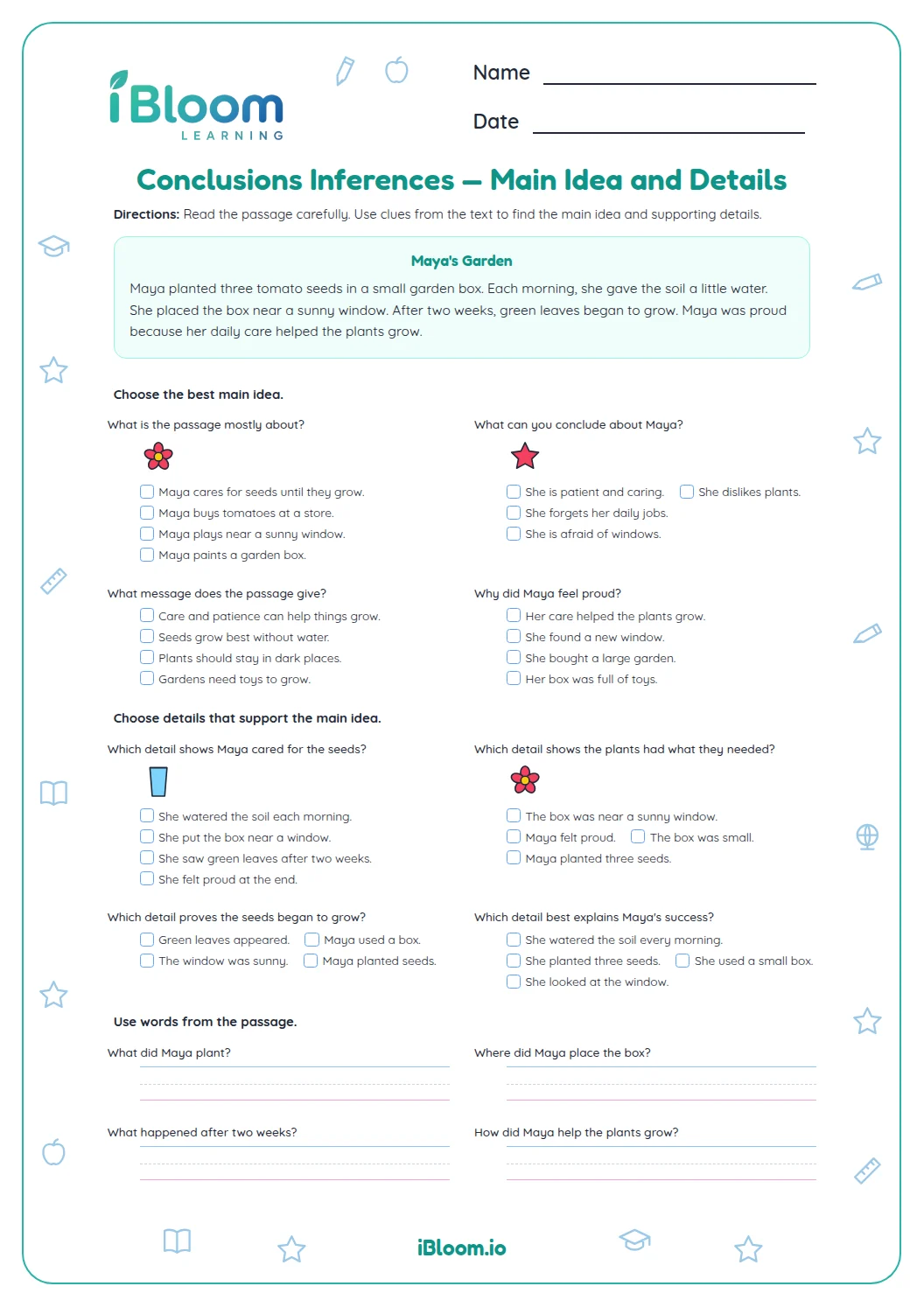
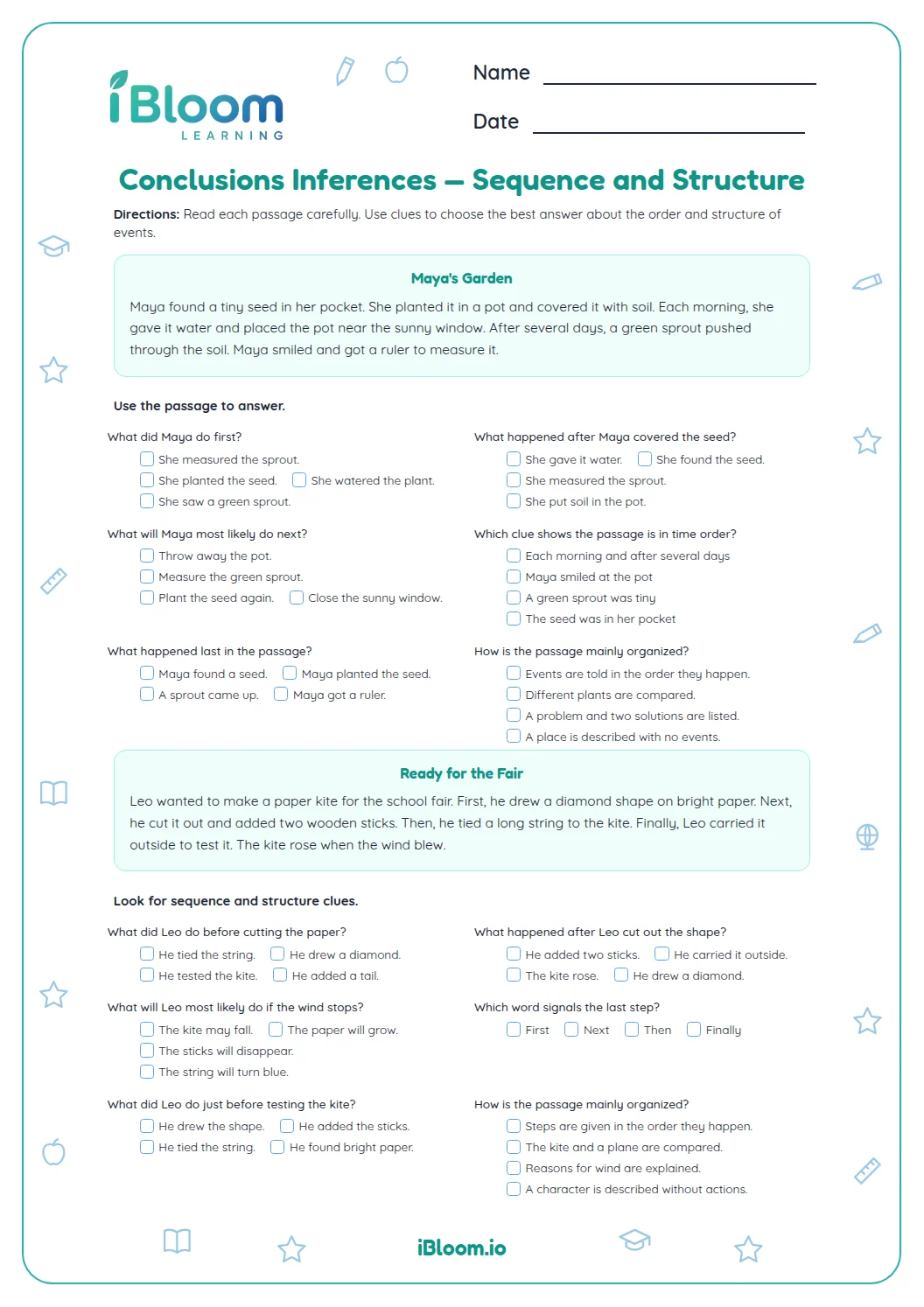
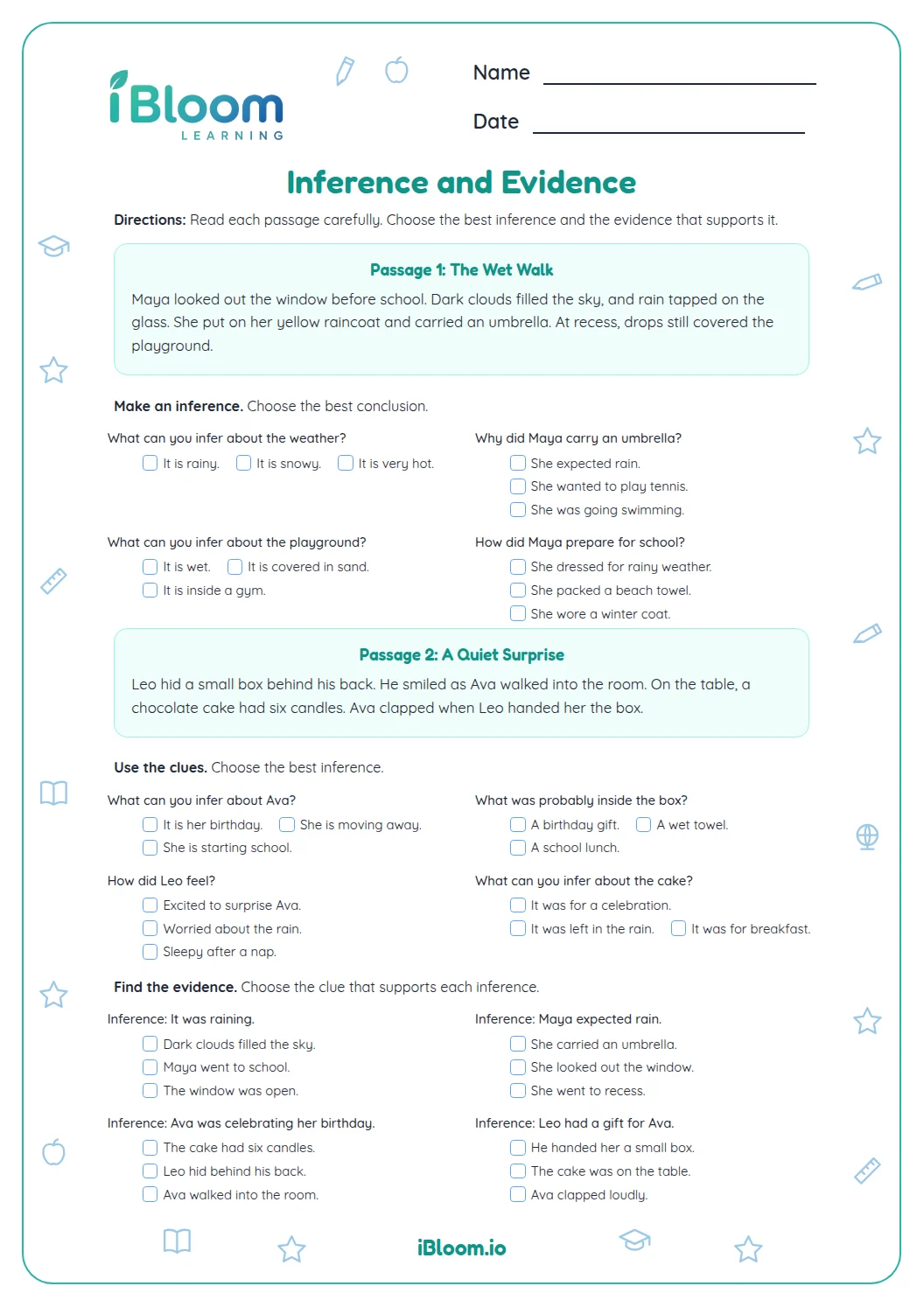
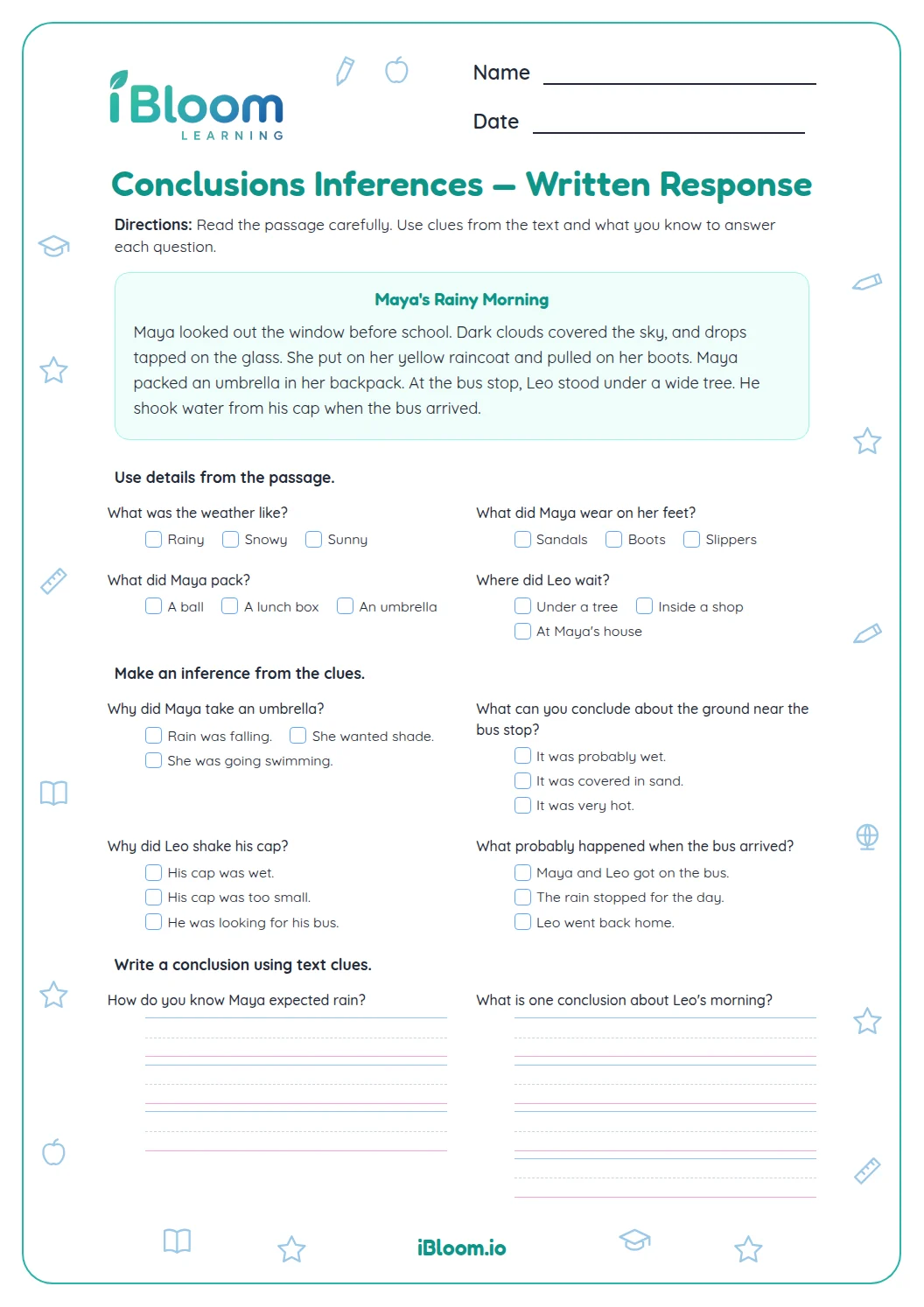
This Grade 2 worksheet pairs an original passage, “Nia’s Bean Plant,” with 14 questions about conclusions, supporting details, and vocabulary in context. Learners return to the story to choose evidence for their thinking. The answer key lists each correct choice.
Aligned to RL.2.1
How does the practice build?
Part A begins with story clues. Later parts ask learners to apply the same skill with less support.
- 1Why did Nia move the pot closer to the window?
- 2Work carefully, then check the answer key.
What will learners do on the page?
The worksheet has 8 items arranged in 2 parts: story clues, evidence and word meaning.
How can an adult support practice?
Read the direction once, then let the learner work independently. Ask how they checked one answer.
How to use this worksheet
- 1Read the page direction together.
- 2Complete Part A carefully.
- 3Continue to each new part in order.
- 4Check answers with the separate key.
Mistakes to watch for
The mistake
Rushing through a prompt.
The fix
Read each item aloud and name what it asks.
The mistake
Skipping a check.
The fix
Use the model or answer key to review one response.
The mistake
Changing an answer without a reason.
The fix
Explain the evidence or computation before revising.
Common Core alignment
This page practices the standard below through the activities on the worksheet.
Use passage details to answer questions and support inferences.
On this sheet: Use passage details to answer questions and support inferences.
Show the official wordingHide the official wording
Ask and answer such questions as who, what, where, when, why, and how to demonstrate understanding of key details in a text.
What to practice next
Further reading
Questions parents and teachers ask
What reading skills does this worksheet practice?
Learners read “Nia’s Bean Plant” and use details to make inferences, choose supporting evidence, and work out the meanings of tucked and tiny from context. The questions ask for conclusions based on the passage, not guesses unrelated to it. Adults can use this prompt for another short review after the page is complete.
What grade is the passage written for?
The passage and questions are written for Grade 2. The story follows one clear sequence: Nia plants seeds, waters the soil, notices a sprout, and records its growth. An adult can read the directions aloud while the learner reads and returns to the text for clues.
How can I teach a child to make an inference?
Ask the learner to name a detail from the passage and connect it to an idea the author does not state directly. For example, Nia moves the pot toward the window after a sprout appears; the child can infer that the plant needs light.
How should vocabulary questions be answered?
Reread the sentence around the unfamiliar word and use the action or description as a clue. In this passage, Nia tucks seeds into soil, which shows that tucked means placing them gently. Then check whether the chosen meaning fits the whole sentence.
Is there an answer key?
Yes. A separate key lists the best answer for all 14 questions. For a useful review, ask the learner to point to the sentence or event that supports the choice, especially on inference and evidence items. This keeps the check connected to the passage.
How long should this reading practice take?
Plan for about 20 minutes, including time to read the passage and return to it for evidence. A child who needs more time can pause between the inference questions and vocabulary items without losing the story sequence. Rereading is part of the practice.