




About this worksheet
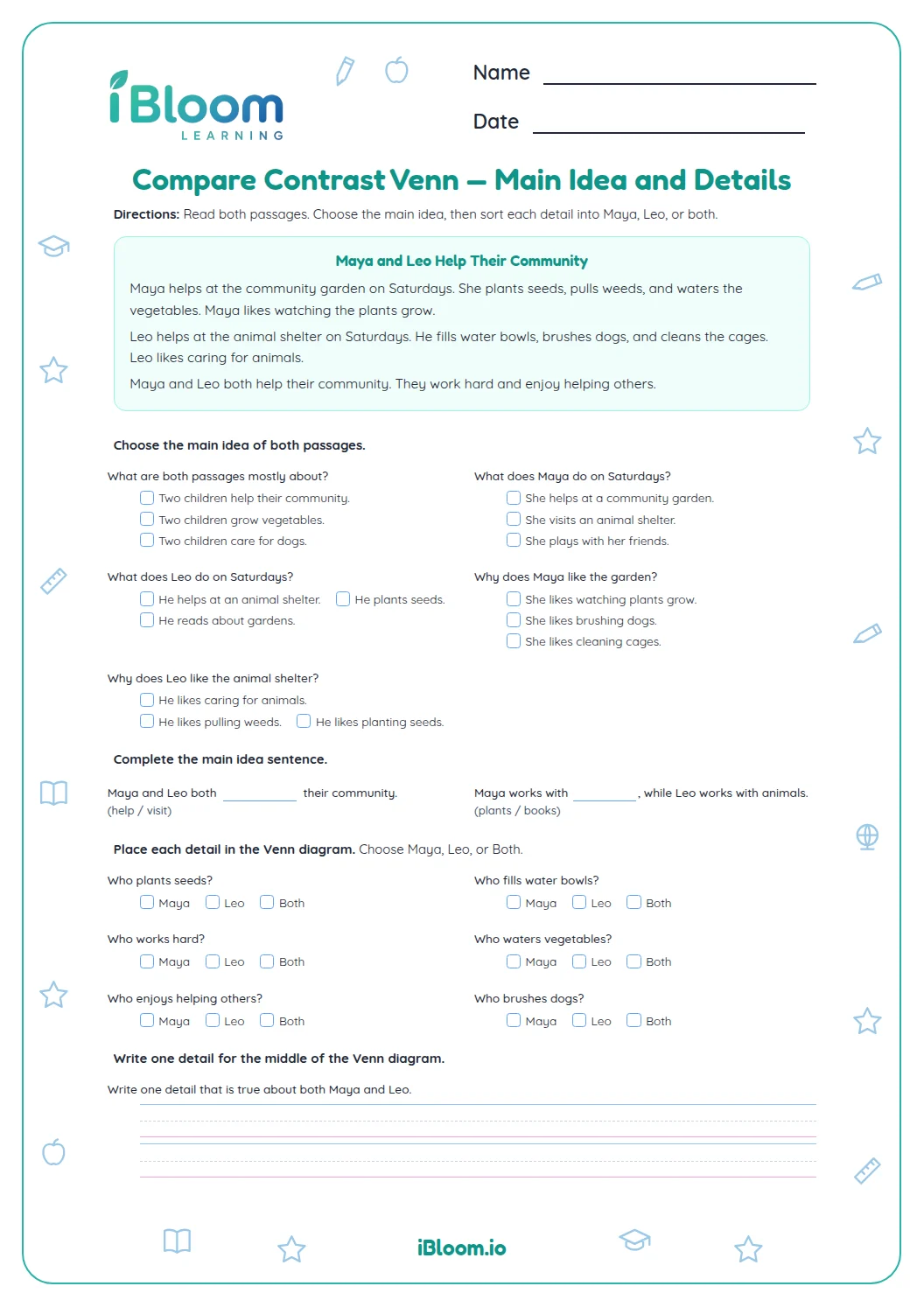
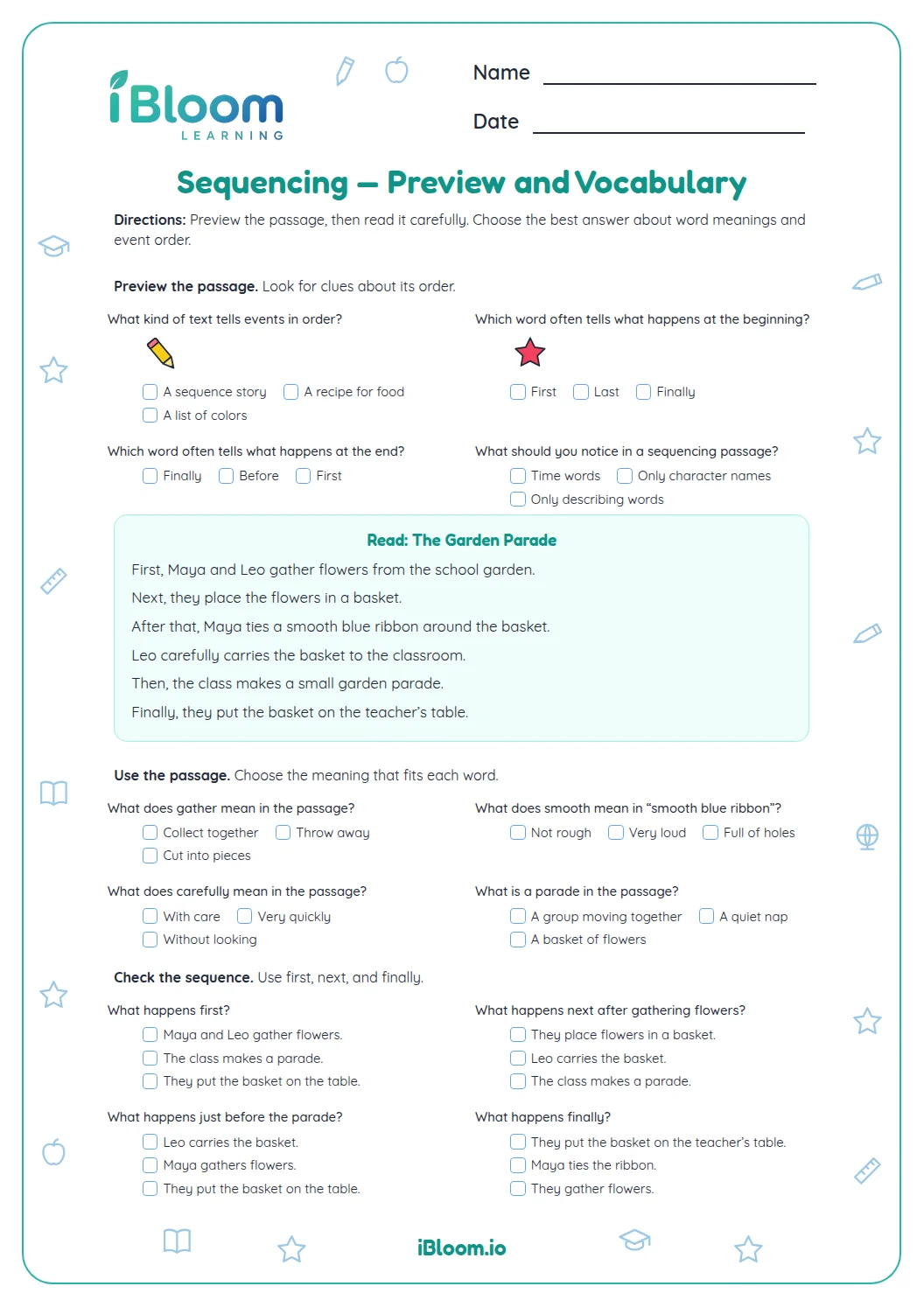
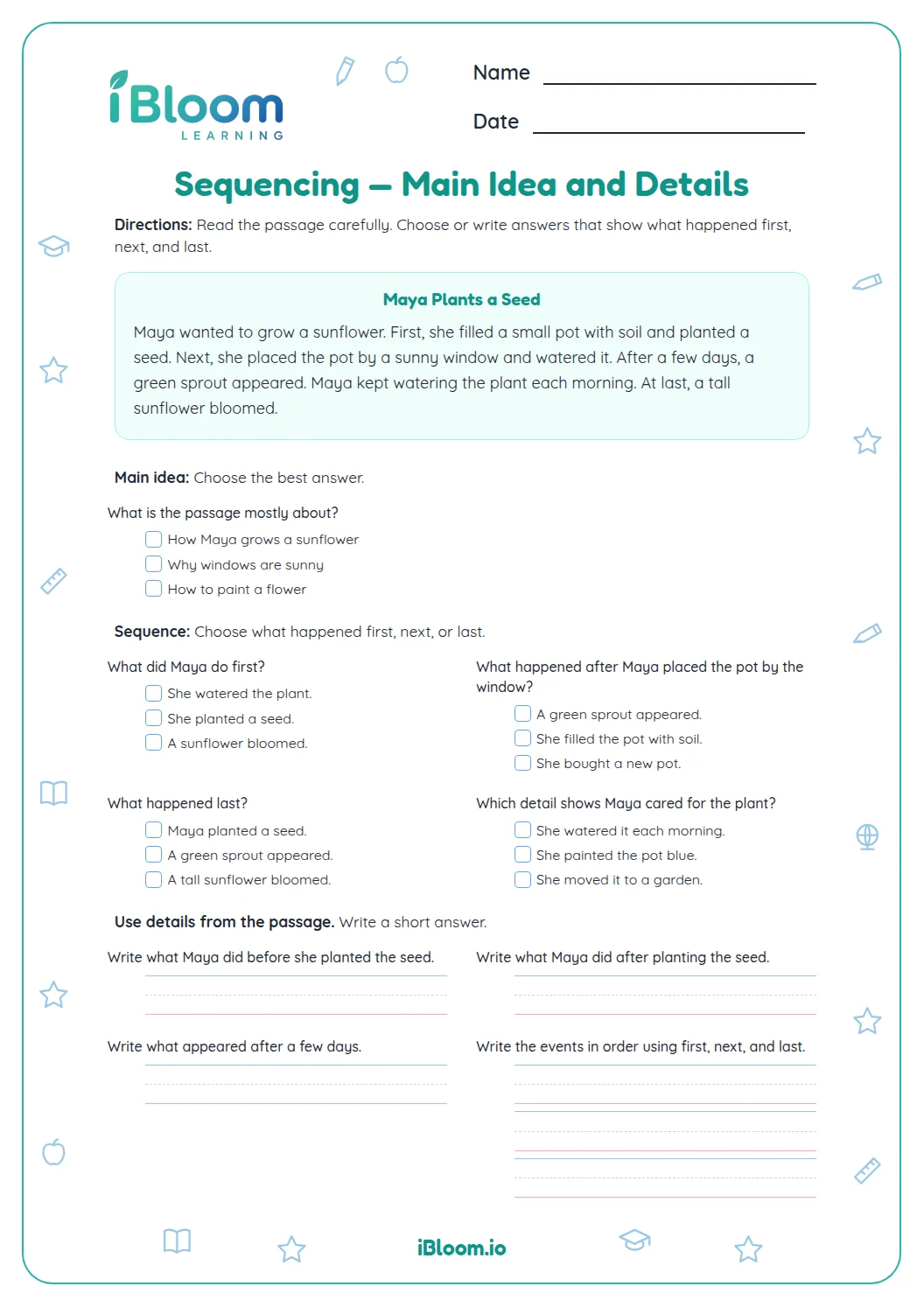
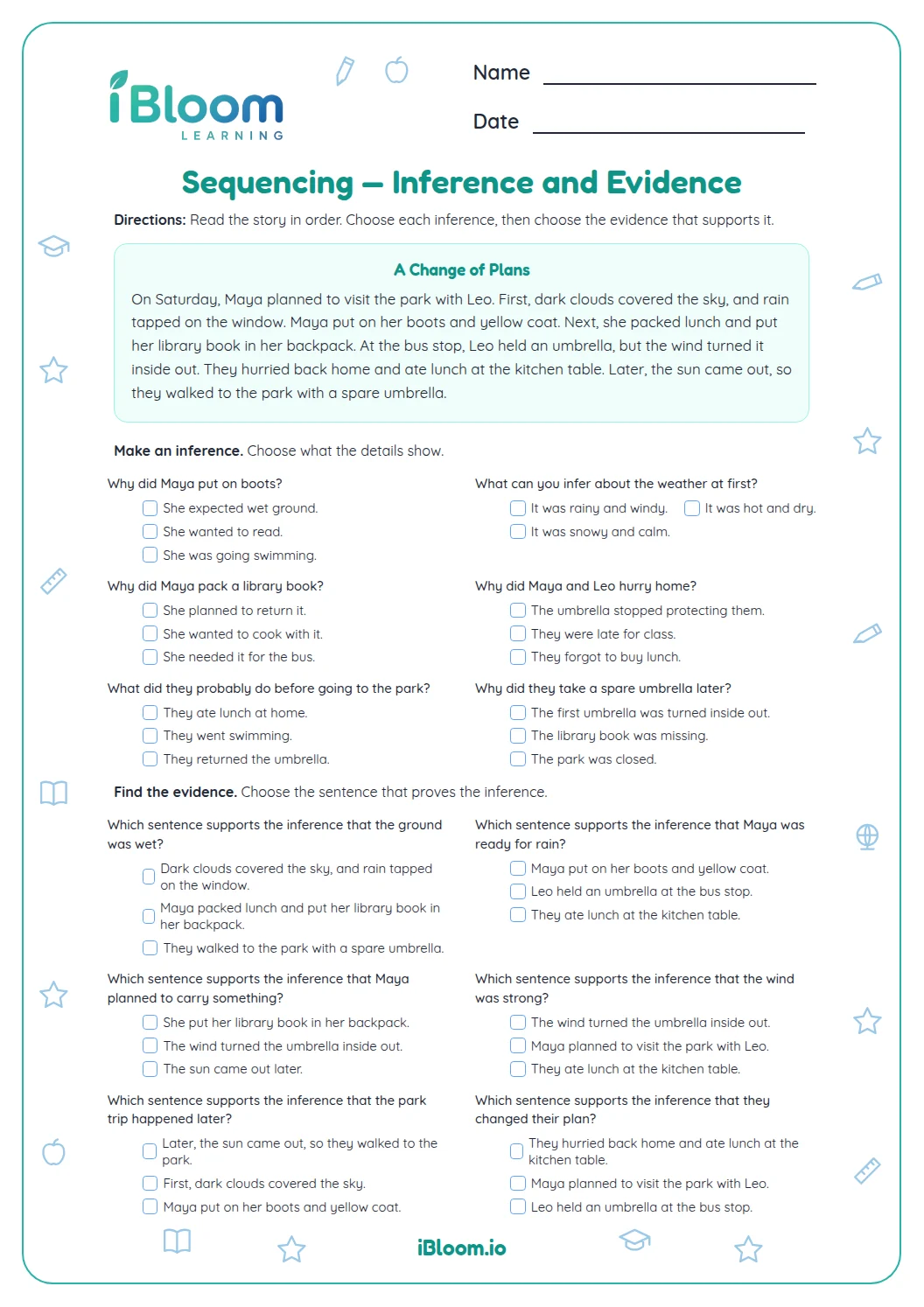
This Grade 2 printable uses two short apple snack directions to practice comparing texts and following a sequence. Children sort details by whether they belong to Maya, Leo, or both, then use transition words such as “first,” “next,” and “last” to follow actions. The final items ask how the directions are organized. It practices CCSS RI.2.3, with a separate answer key for quick checking.
Aligned to RI.2.3
How do readers compare the two snack directions?
Look for details each text shares, then notice what is unique. Questions 1–6 sort details by whether they belong to Maya, Leo, or both.
For example, question 5 asks what both children do. Each washes fruit, while only Maya uses peanut butter and only Leo adds yogurt.
- 1Both sets of directions mention washing fruit.
- 2Maya washes an apple; Leo washes an apple and a banana.
- 3Answer: Both
How do transition words show order?
Words such as “first,” “next,” and “last” signal where an action belongs. Read the sentence around the clue and match the action to the correct place in the procedure.
What does text structure tell the reader?
These short informational texts explain how to make a snack. Their steps follow a sequence from preparation to the finished snack. The last questions distinguish that structure from a story or place description.
How to use the snack directions
- 1Read Maya’s steps once, then retell them using first, next, and last.
- 2Read Leo’s directions and underline the transition words.
- 3Answer the compare questions by checking both texts for each detail.
- 4For sequence questions, find the action named and its transition clue.
- 5Use the final questions to explain how the steps are organized.
- 6Check responses with the answer key and revisit the text for evidence.
Common mistakes and quick fixes
The mistake
Choosing “both” because both children use fruit.
The fix
Check the exact detail in each text; fruit is shared, but yogurt is only in Leo’s steps.
The mistake
Putting “cuts the fruit” before “washes” because cutting feels like the main action.
The fix
Use the transition word at the start of each direction to track order.
The mistake
Calling the directions a story because people are named.
The fix
Ask what the text mainly does: it explains steps for making a snack.
Common Core alignment
The questions practice comparing informational texts and tracing the order of steps.
Track how steps connect and follow one another.
On this sheet: Questions ask readers to connect and sequence steps in two snack procedures.
Show the official wordingHide the official wording
Describe the connection between a series of historical events, scientific ideas or concepts, or steps in technical procedures in a text.
What to practice next
Make more practice
Further reading
Questions parents and teachers ask
How does a Venn diagram skill appear on this sheet?
The old activity used a Venn diagram to sort Maya’s, Leo’s, and shared snack details. This version keeps the same compare-and-contrast thinking in clearly labeled multiple-choice items, so children can focus on reading the two texts and checking each detail.
What are the two texts about?
Both texts explain how to make a fruit snack. Maya makes apple slices with peanut butter, while Leo prepares a fruit cup with apple, banana, and yogurt. Children compare what they share and how their steps differ. The answer key accepts other clear responses that show the same idea.
How can my child find the sequence of steps?
Have your child look for “first,” “next,” and “last” in each paragraph. These words name the order directly. The questions then ask what happens before or after a particular action, so rereading the sentence around each clue is useful. Each task keeps the practice connected to the named skill.
What does text structure mean here?
Text structure is the way information is arranged. Both passages give steps in order, which is a sequence structure. The worksheet asks children to recognize that purpose and distinguish it from a story or a description of a place. Each task keeps the practice connected to the named skill.
How many questions are included?
The worksheet has 14 multiple-choice questions: six compare details across the texts, four follow the steps, and four focus on sequence clues and text structure. A separate answer key page gives the correct choices. Each task keeps the practice connected to the named skill.
Which standards does this worksheet practice?
It practices CCSS RI.2.3 by asking readers to connect and follow steps in a procedure. The curriculum section links to the official Common Core ELA standards. Children also compare details in two related passages. The question provides a concrete way to practice the target skill.