



About this worksheet
This Grade 2 reading worksheet pairs two short scenes: Nora and Eli care for a school garden, while Ava and Noah build a blanket fort. Children answer detail questions, compare what the teams do, and make inferences supported by story clues. The 14 questions practice asking and answering about key details in a text (CCSS RL.2.1), with a separate answer key that gives sample responses for open-ended items.
Aligned to RL.2.1
How do readers compare two teams?
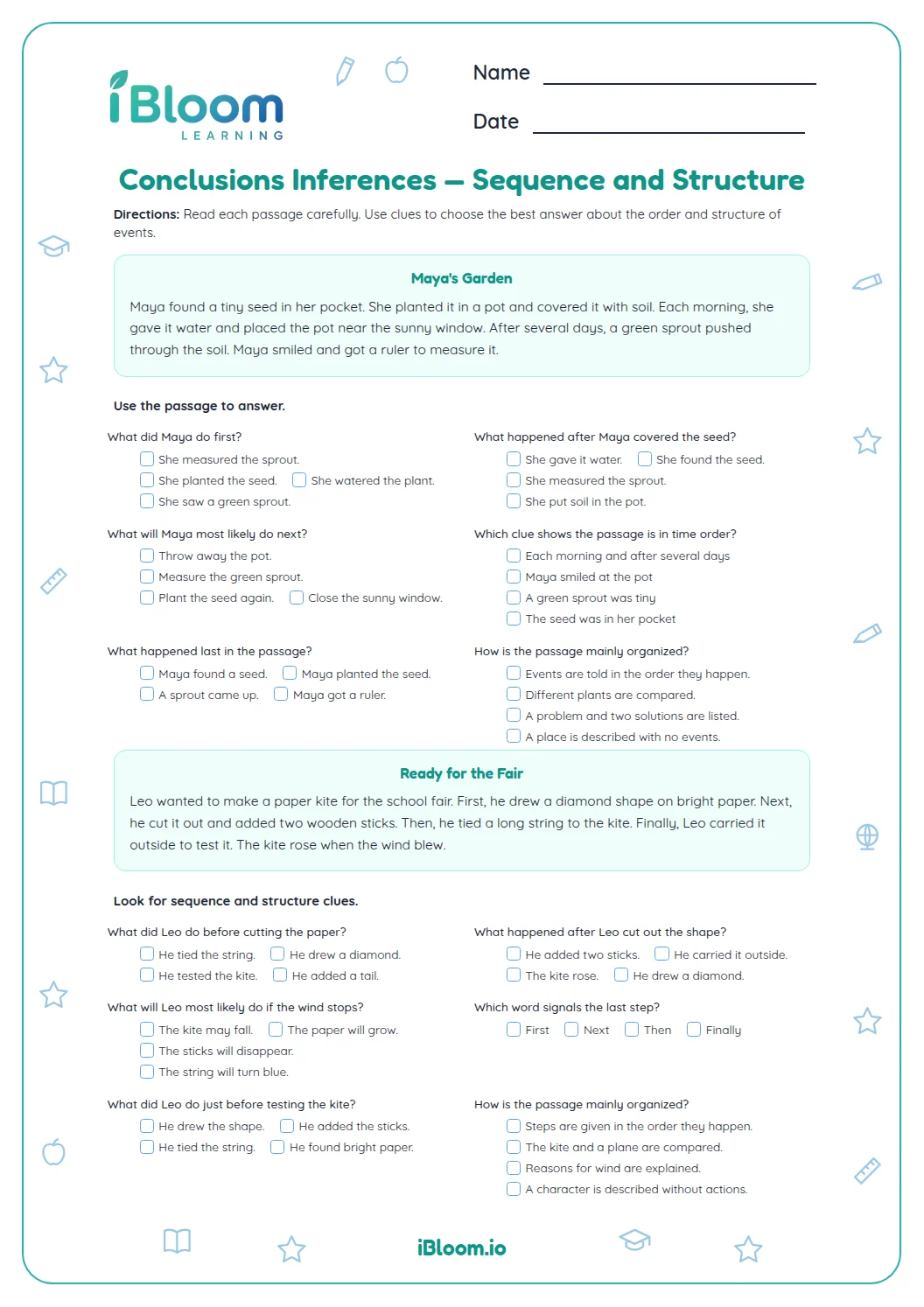
Notice what each character does, then look for a shared action or a difference. Nora makes holes and Eli plants seeds; Ava tests the fort corners and Noah brings pillows. Each answer should match a detail in the passage.
- 1Nora made shallow holes.
- 2Eli dropped in bean seeds.
- 3The first jobs are different, and both help the garden.
How can a detail support an inference?
The next five questions compare what the teams do and identify shared or different actions. The final four ask for an inference or the strongest supporting detail; each multiple-choice item has one best answer.
What will children answer?
The first five questions locate details in both scenes. The next five compare the teams and their actions. The final four ask for an inference, a reason, or the best evidence; the key includes sample answers for questions with more than one sound wording.
How to use this worksheet
- 1Read both scenes once to understand what each team is doing.
- 2For detail questions, return to the sentence that names the action.
- 3For comparison, state what is alike or different.
- 4For an inference, write an idea and add the clue that supports it.
- 5Use the key to check whether the response matches the passage, even if the wording differs.
Common comparison and evidence slips
The mistake
Naming what a character might do instead of what the passage says.
The fix
Find the sentence with that character’s action and answer from it.
The mistake
Calling two actions the same because both are helpful.
The fix
Name each action first, then say whether the actions match or differ.
The mistake
Giving an inference without a clue.
The fix
Add a specific passage action that makes the idea reasonable.
Common Core alignment
This worksheet asks readers to answer questions with details from two short passages.
Answer questions about important details and point to story evidence.
On this sheet: Questions ask children to find actions, compare details, and use a passage clue to support an inference.
Show the official wordingHide the official wording
Ask and answer such questions as who, what, where, when, why, and how to demonstrate understanding of key details in a text.
What to practice next
Make more practice
Further reading
Questions parents and teachers ask
What passages are on the worksheet?
The worksheet includes two short scenes. Nora and Eli work in a school garden, while Ava and Noah build a blanket fort. The questions ask children to find details from both scenes, compare the teams, and support an inference with an action from the text.
How should my child answer an inference question?
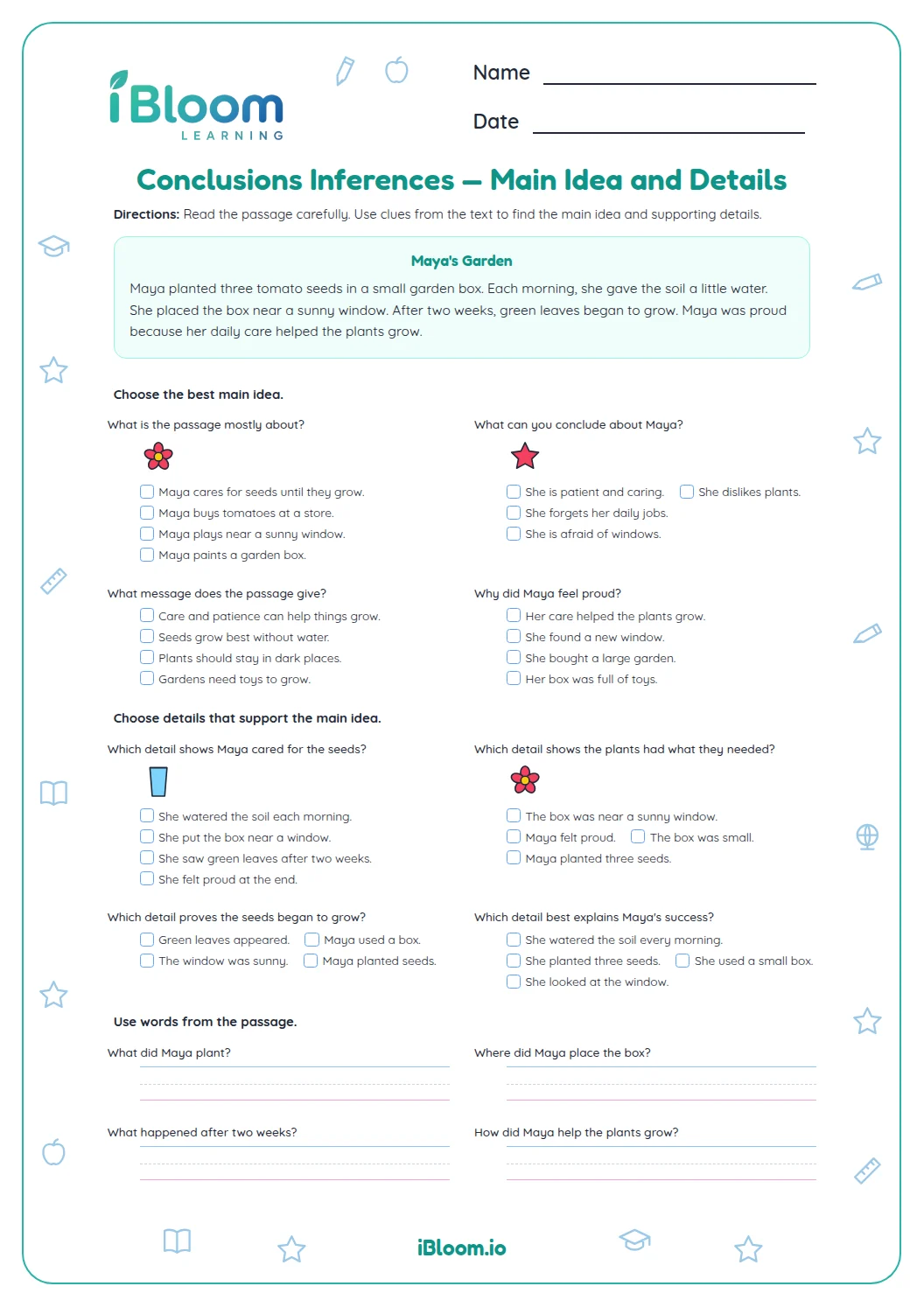
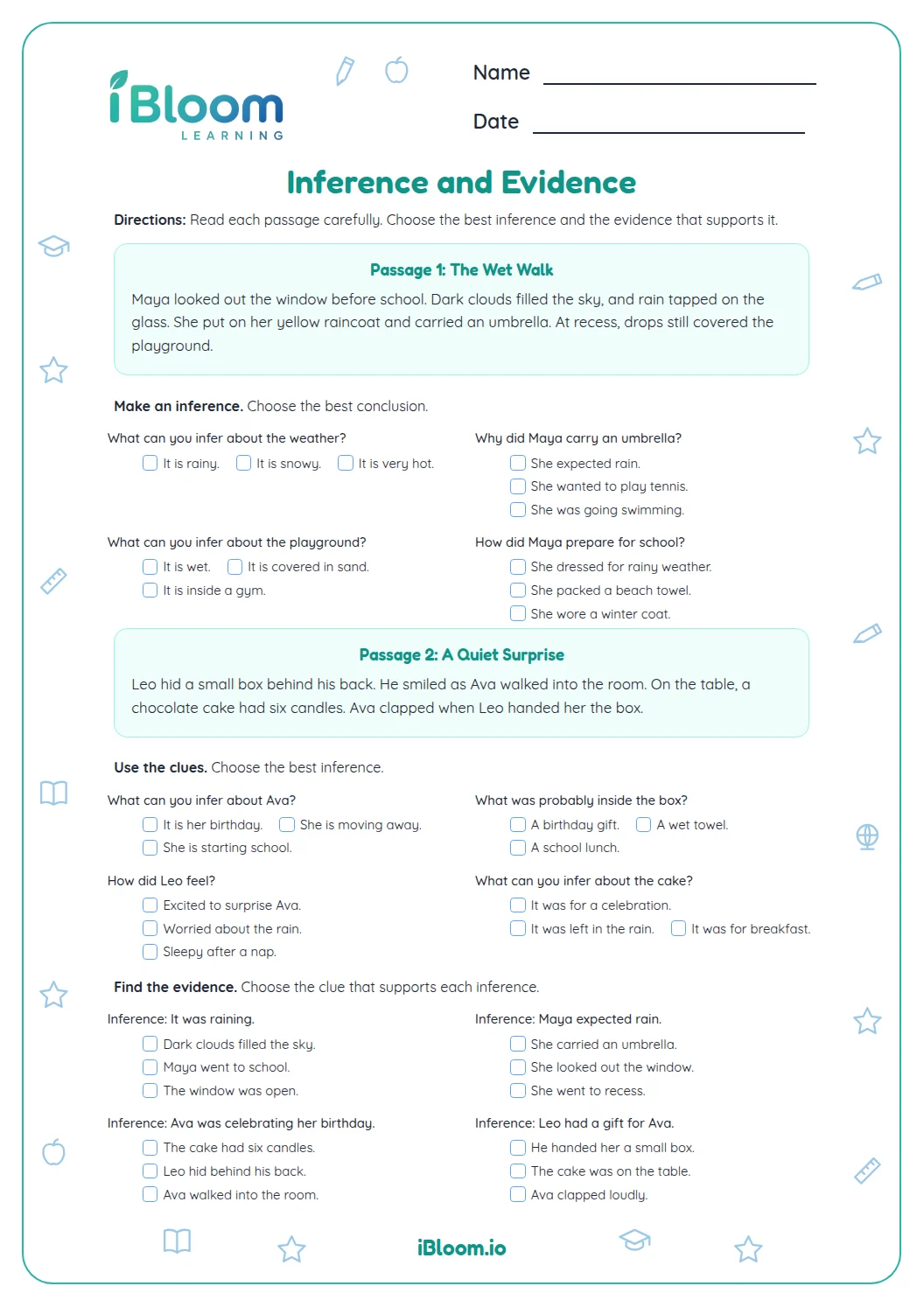
State a reasonable idea and connect it to a clue. For example, Nora may be observant because she notices the soil is dry and brings water. The answer key offers sample wording, but another answer is sound when a passage detail supports it.
Does the worksheet use a Venn diagram?
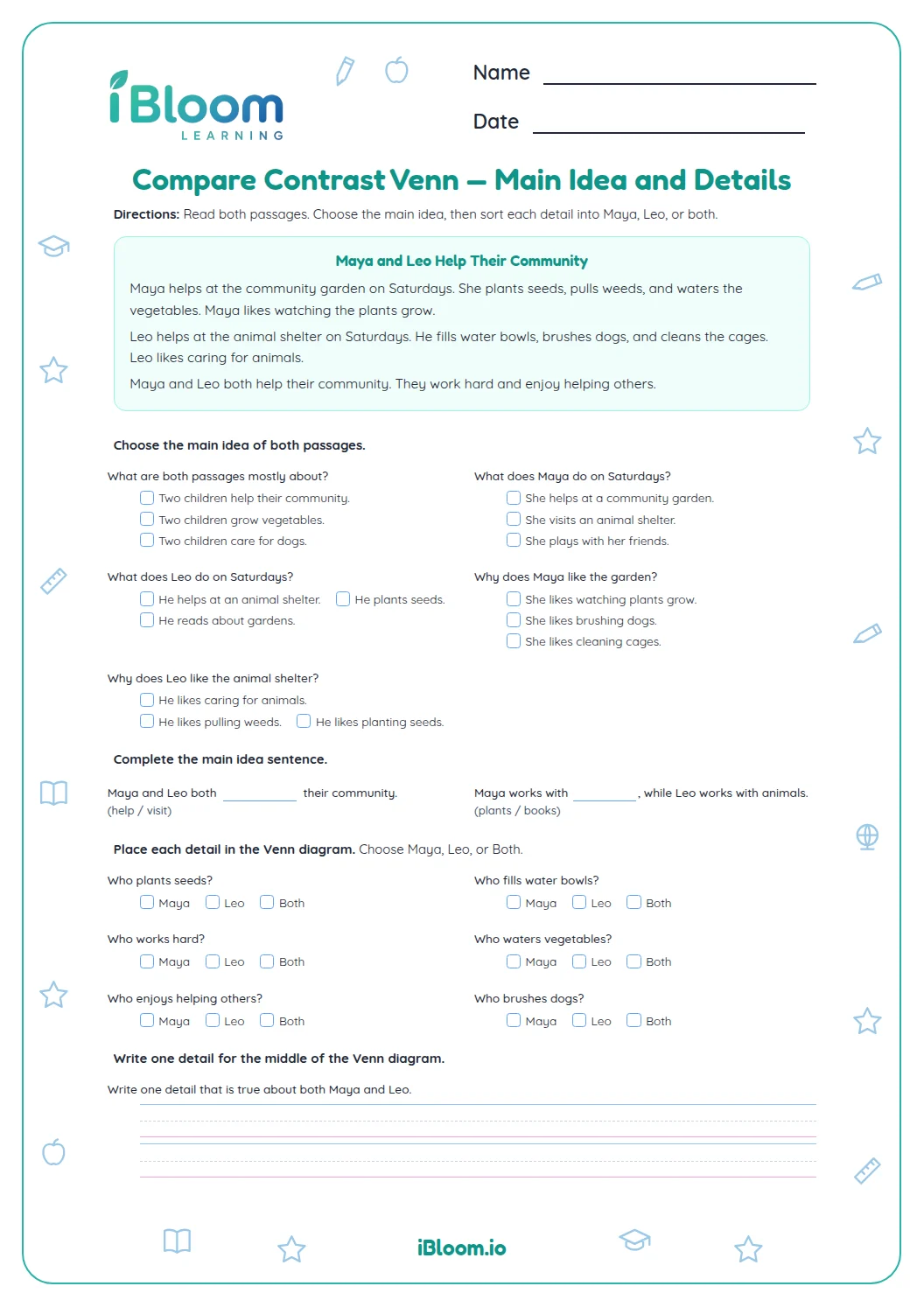
The old Venn checklist has been rebuilt as direct compare-and-contrast questions in the new worksheet. Children still identify what is shared and what differs, then support an idea with details. This gives each response a clear prompt and a separate place in the answer key.
Can more than one answer choice be correct?
Each multiple-choice question has one best answer based on the two passages. For an inference item, choose the idea supported by a stated action, such as Nora noticing dry soil or Noah bringing pillows. The answer key shows the selected choice for all 14 questions.
What does the answer key accept for written responses?
The key gives sample answers for questions that can be worded in different ways. A child’s response can use different words if it answers the prompt and points to an accurate detail from the passages. For evidence items, check that the cited action supports the inference.