





About this worksheet
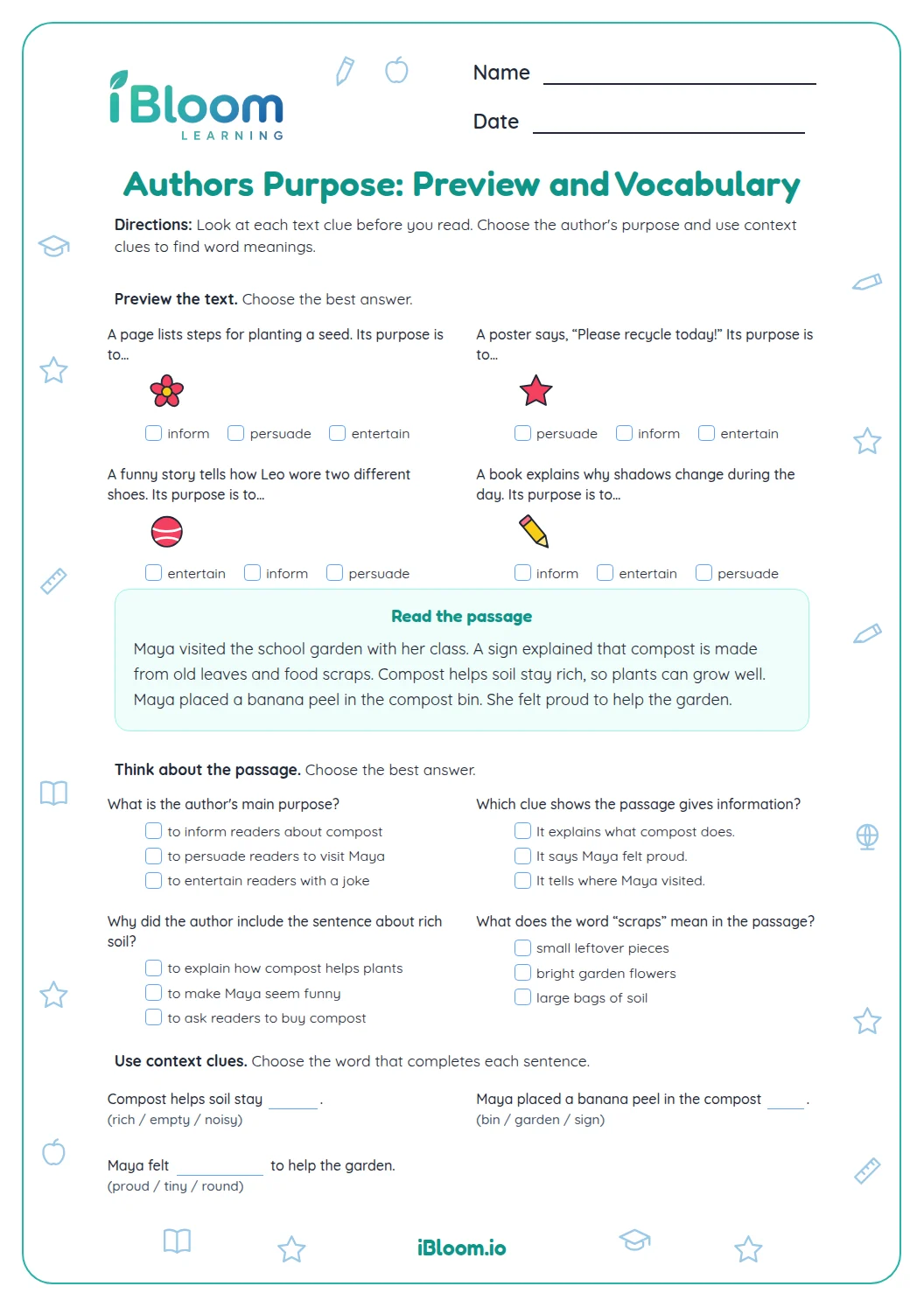
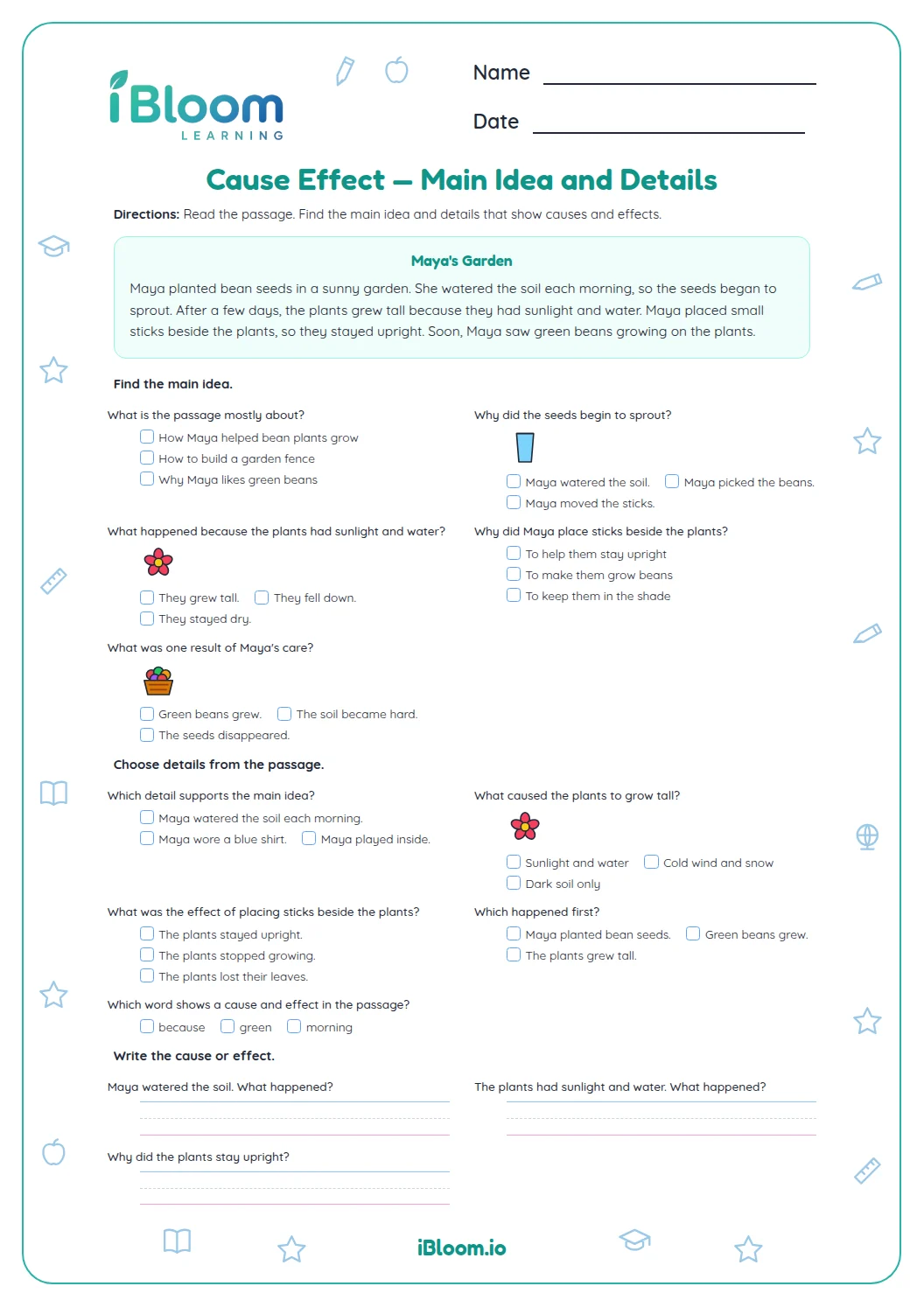
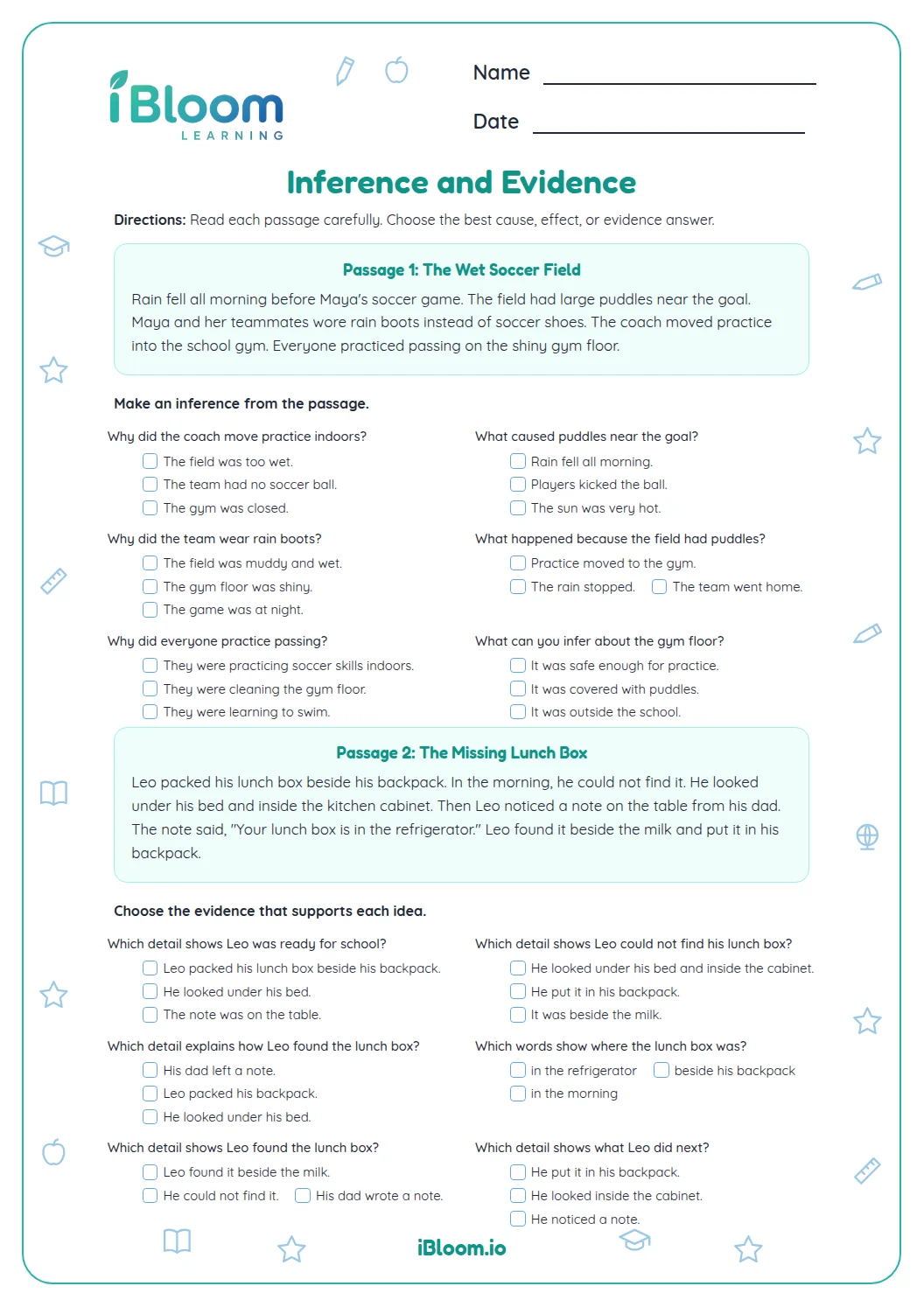
This Grade 2 worksheet introduces character traits through Nora and Ben’s choices in an original school story. Students connect actions and feelings to traits, use story details as evidence, and work out the meaning of a few words from context. The prompts use concrete events so children can point to a clue before choosing an answer. It practices Common Core RL.2.3, with an answer key for checking.
Aligned to RL.2.3
What traits do Nora and Ben show?
Nora returns a mitten so its owner can find it, which supports helpful and responsible as traits. Ben brings extra mittens for the lost-and-found, showing kindness. Ask which action supports each trait rather than treating a feeling, such as worry, as a personality trait.
- 1Nora takes the mitten to the office.
- 2She wants its owner to find it.
- 3That action supports the trait helpful.
How can context help with vocabulary?
The passage places “dismissal” beside the coat hooks and describes students leaving school. That helps readers infer it is the time school ends. Question 10 asks about “searched”; the sentence shows Ben looking through his backpack for the missing mitten.
How does a story detail support an answer?
Nora carries the mitten to the office so its owner can find it. That action supports a trait answer. Ben smiles when he gets it back, which helps readers understand how he felt. Return to the passage and point to the action before choosing.
How to use this worksheet
- 1Read the story and notice what Nora and Ben do when the mitten is lost.
- 2Choose a trait only after finding an action or words that support it.
- 3Use nearby words and events to work out “dismissal” and “searched.”
- 4For an inference, point to the passage detail that gives the clue.
- 5Check each response with the answer key and reread the relevant sentence.
Common mistakes and quick fixes
The mistake
Calling a temporary feeling a character trait.
The fix
Worry describes how Ben feels at one moment; kindness describes a trait shown by bringing extra mittens.
The mistake
Picking a trait without using an action from the story.
The fix
Connect the trait to evidence: Nora takes the mitten to the office to help its owner.
The mistake
Guessing a vocabulary word without using context.
The fix
Read the whole sentence and the nearby event. Coat hooks and dismissal together show when school ends.
Common Core alignment
This worksheet gives focused practice with the following Common Core skill.
Describe how characters respond to major events and challenges.
On this sheet:
Show the official wordingHide the official wording
Describe how characters in a story respond to major events and challenges.
What to practice next
Make more practice
Further reading
Questions parents and teachers ask
What character trait does Nora show?
Nora is helpful because she picks up the mitten and takes it to the office so its owner can find it. Readers can use that action as evidence. Question 1 asks for a trait, and question 2 asks which action best supports the idea that Nora is thoughtful.
What trait does Ben show at the end?
Ben shows kindness by bringing extra warm mittens for the class lost-and-found basket. The passage explains that he wants everyone to have a dry pair. That purpose helps explain the trait in question 8 and gives readers a clear story clue.
What does “dismissal” mean in the story?
“Dismissal” means the time when school ends. The clue is the event around it: Nora sees Ben by the coat hooks, where students get ready to leave. Question 4 asks readers to use that context instead of guessing from the word alone.
What does “searched” mean?
In the story, Ben searches his backpack while looking for his mitten. The nearby action shows that “searched” means looked through something to find an item. Question 10 asks students to connect the word with that context clue.
How can readers support a trait answer?
Find an action or words that show the trait. Nora takes the mitten to the office to help its owner, while Ben brings extra mittens for other children. Pointing to one of these events makes the answer clear and grounded in the story.
Is an answer key included?
Yes. The answer key shows the correct choices for all 14 questions. After checking an answer, ask the learner to reread the sentence that supports it. That quick step helps connect character traits and vocabulary to the passage.