

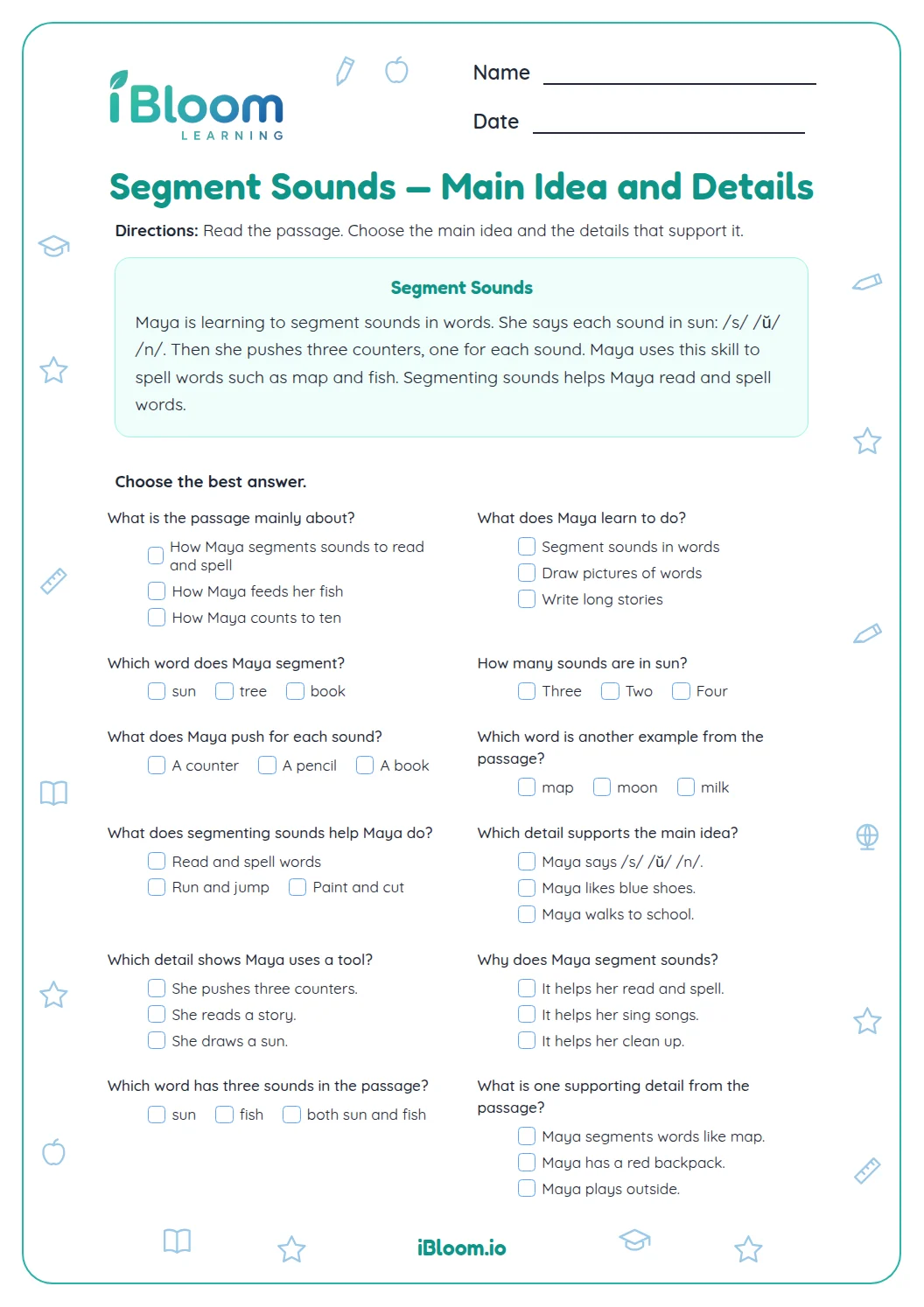
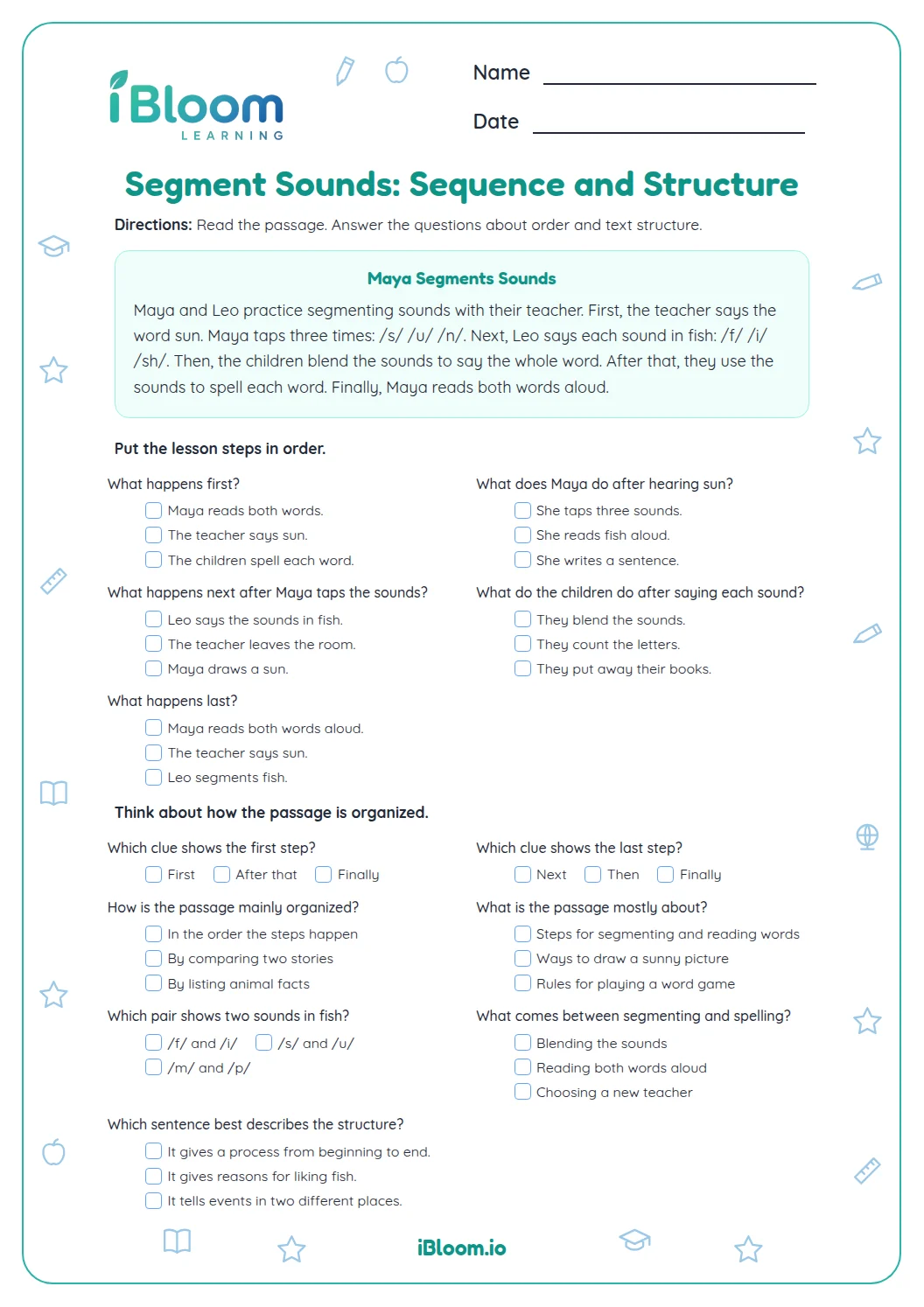

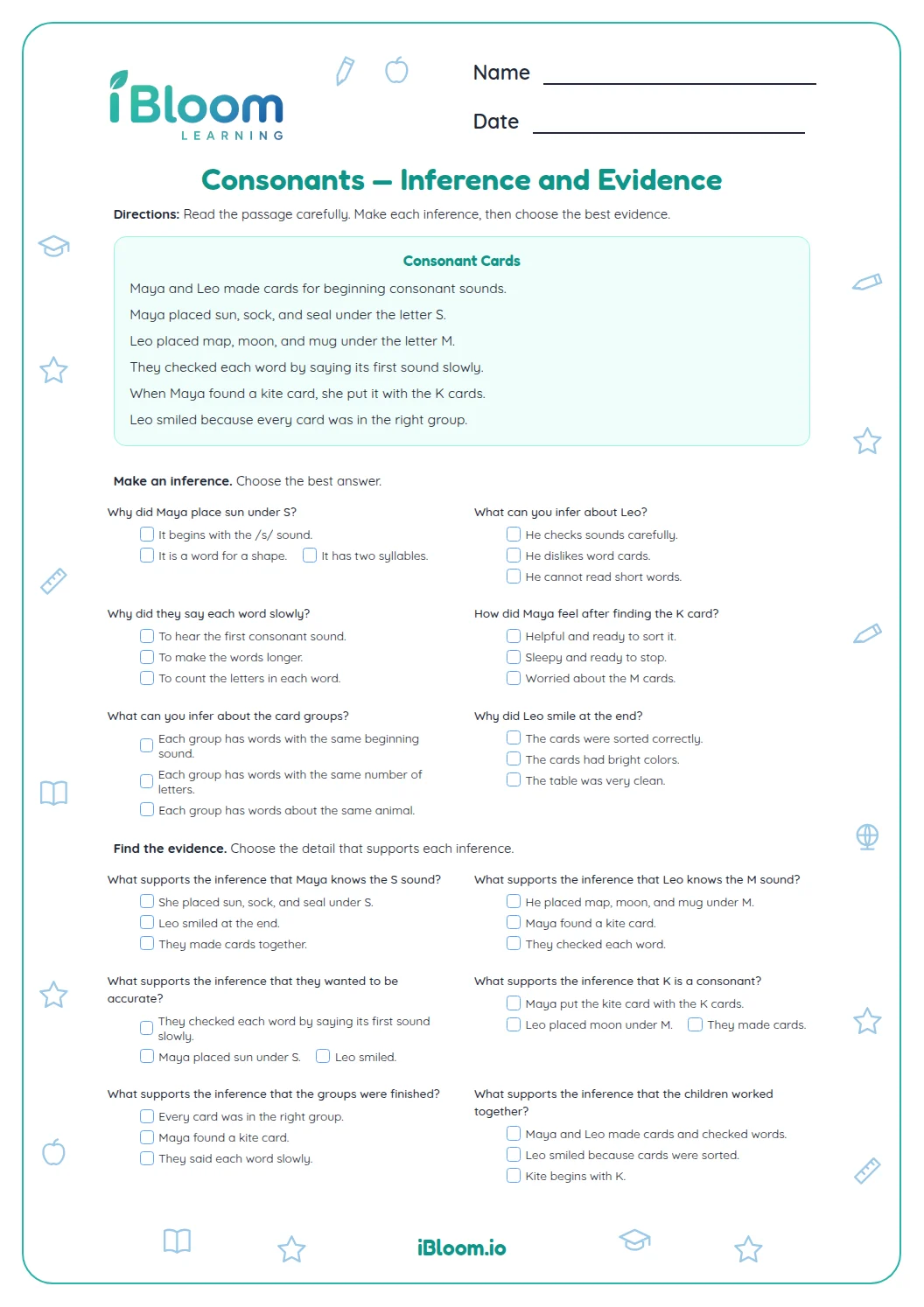
About this worksheet
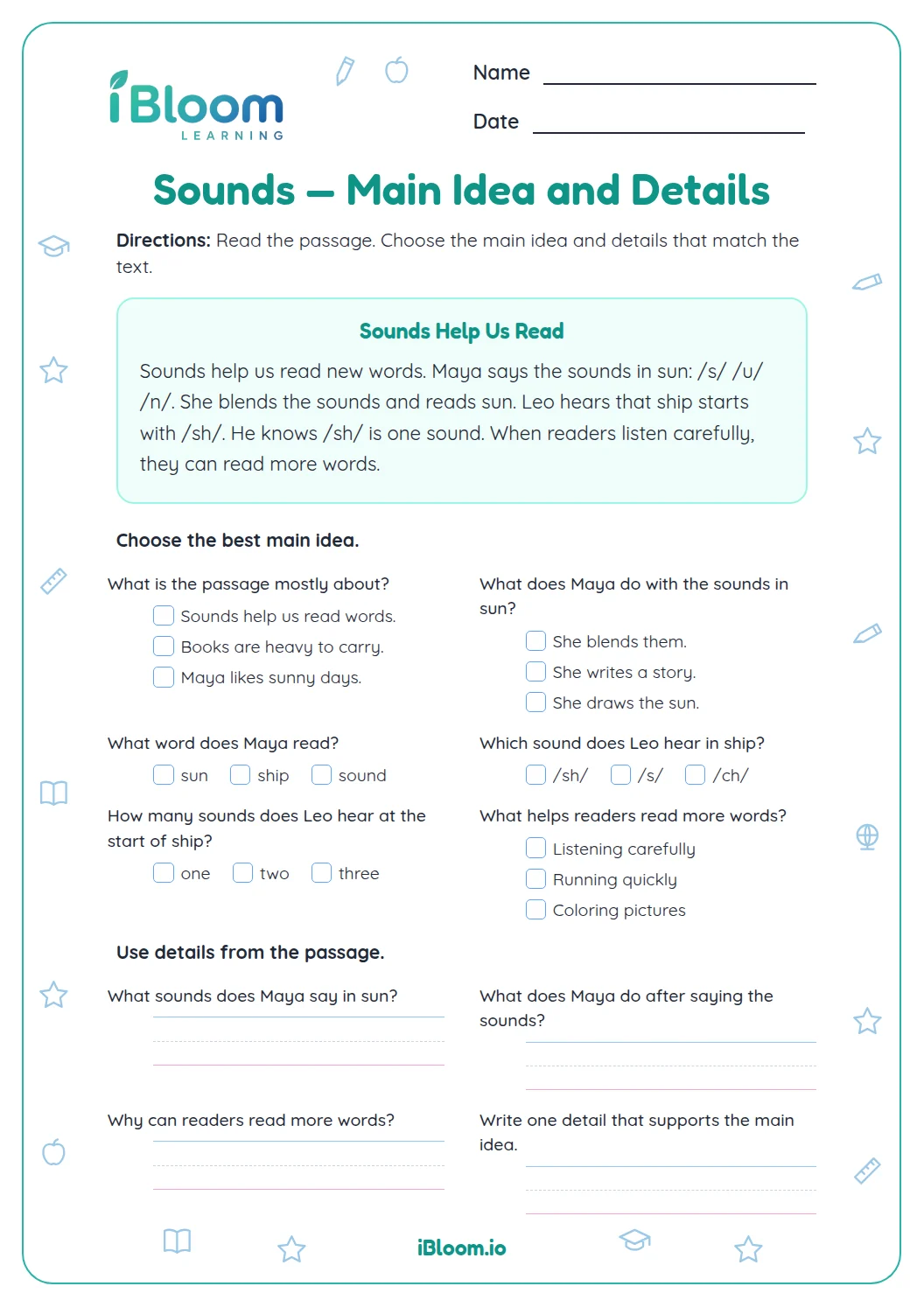
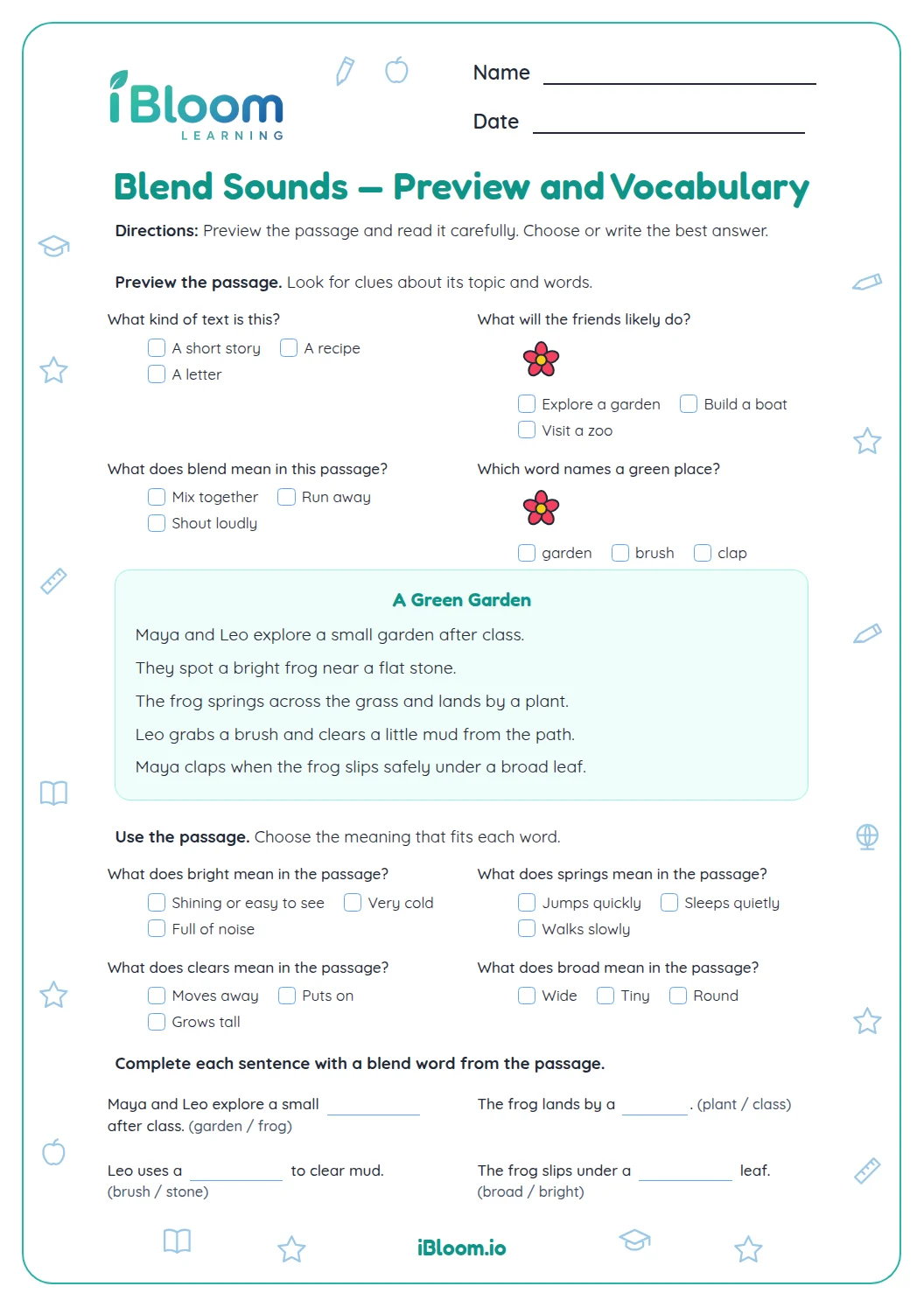
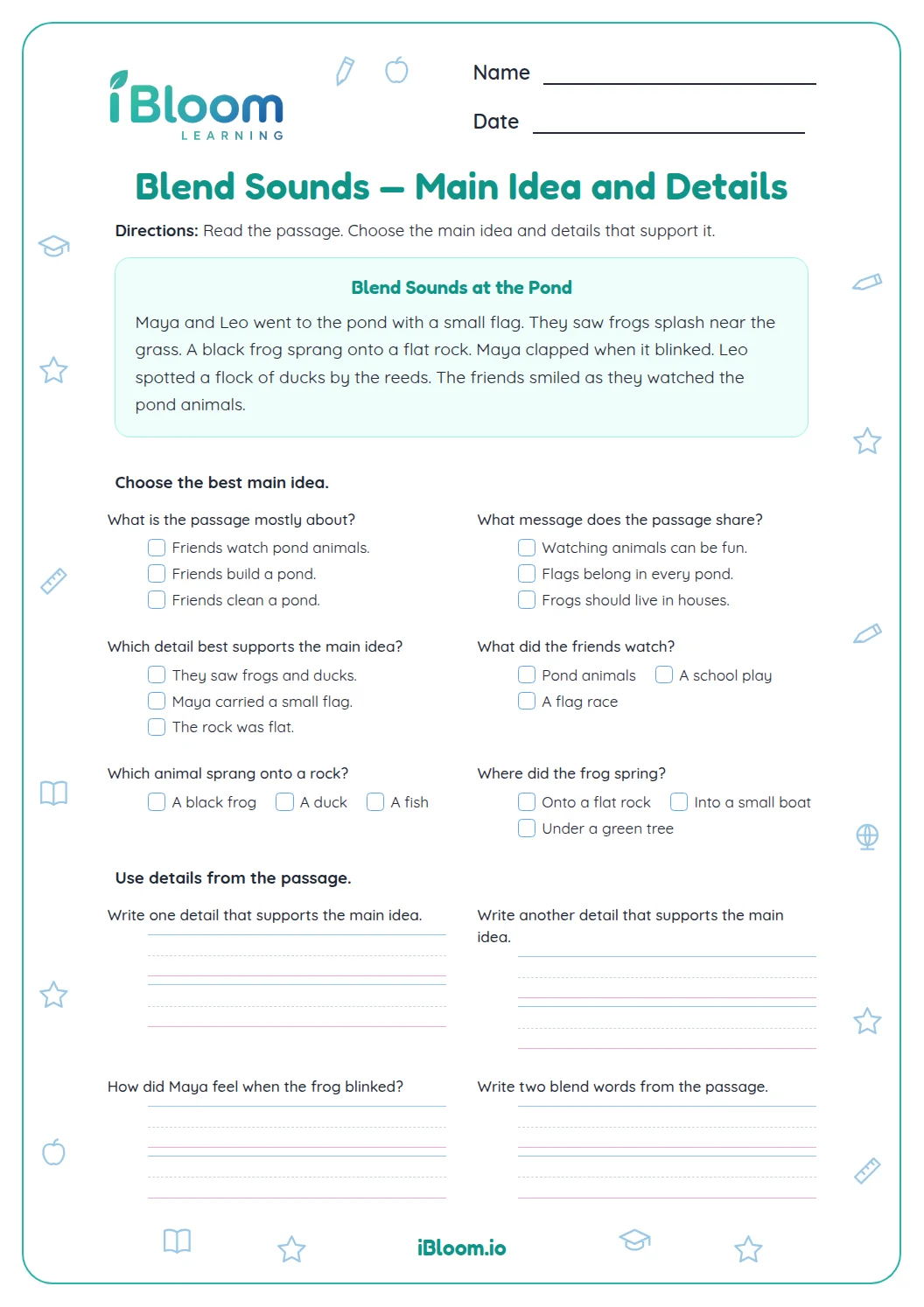
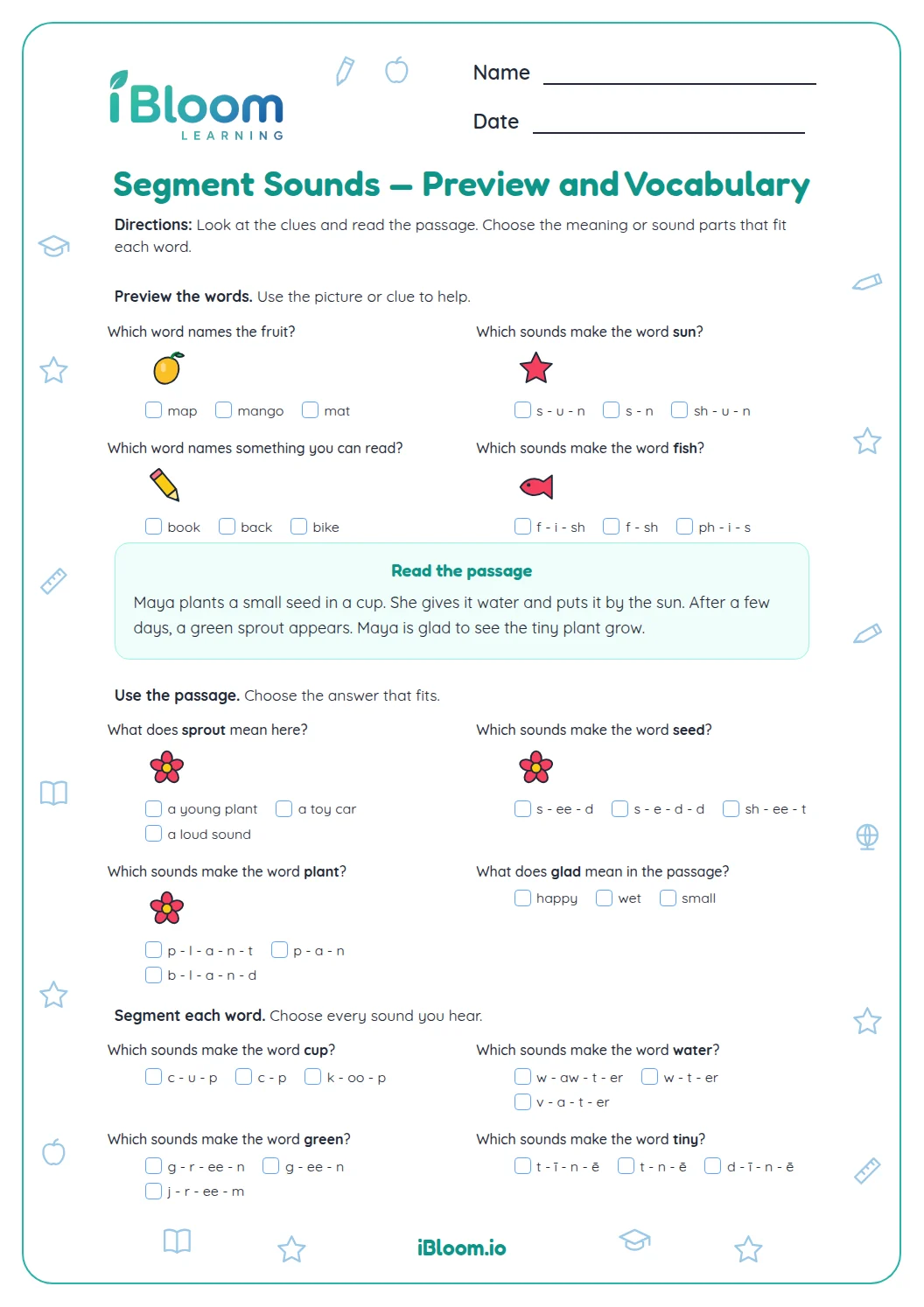
This Grade 2 printable pairs an original 105-word schoolyard sound-walk passage with 16 questions. Learners recall events, identify /tr/ in truck and /ch/ in chirp, and use context to explain trickled and rustle. The comprehension questions practice CCSS RL.2.1 by asking readers to answer with details from the text. A separate key includes answers and sample responses.
Aligned to RL.2.1
What happens on the sound walk?
Ms. Lee’s class listens near the garden, gate, fence, and trees. Each sound has a source: a robin chirps, a truck rumbles, water trickles, and leaves rustle. Read the passage once for the events, then again to locate details.
- 1Which word begins with /tr/?
- 2Find it in the passage: truck.
How can a reader notice sounds in words?
Say a word slowly and listen for the target sounds. Truck begins with the /tr/ blend, while chirp contains /ch/. The questions ask learners to find those sound patterns in words from the passage.
How does context explain a sound word?
Use the nearby action to infer meaning. Water moves from a hose into a bucket, so trickled suggests a small, gentle flow. Leaves under shoes rustle, a soft dry sound.
How to use this worksheet
- 1Read the full passage once without stopping.
- 2Return to the sentence named in each detail question.
- 3Say truck and chirp slowly to notice their target sounds.
- 4Use nearby actions to explain trickled and rustle.
- 5Answer the written prompts, then check with the key.
Common mistakes and quick fixes
The mistake
Guessing from memory without returning to the passage.
The fix
Point to the sentence that gives the answer.
The mistake
Mixing up /tr/ in truck and /ch/ in chirp.
The fix
Say each word slowly and listen to its beginning or middle.
The mistake
Treating trickled as a loud splash.
The fix
Use the hose and bucket clue: trickled describes a small flow.
Common Core alignment
This worksheet practices the following Common Core skill.
Answer who, what, where, when, why, and how questions about the passage.
On this sheet: Learners answer questions using details from the original passage.
Show the official wordingHide the official wording
Ask and answer such questions as who, what, where, when, why, and how to demonstrate understanding of key details in a text.
What to practice next
Make more practice
Further reading
Questions parents and teachers ask
What does the sound-walk passage describe?
Ms. Lee’s class listens outside near a garden gate, fence, and schoolyard. The children hear a robin chirp, a truck rumble, water trickle, and leaves rustle. The passage gives the details learners need to answer the comprehension and vocabulary questions.
Which sound patterns do learners notice?
The questions focus on /tr/ at the beginning of truck and /ch/ in chirp. Learners can say each word aloud, then point to the letters that represent the target sound. Other items ask about the beats in words and the sounds described in the story.
How can a child figure out what trickled means?
Reread the sentence about water moving from a hose into a bucket. That context suggests a small, gentle flow. The key accepts a phrase such as “flowed in a small stream,” which matches the action described in the passage.
Is there an answer key for the written responses?
Yes. The three-page answer key gives direct answers and sample sentences for the open responses. Because a learner may write a different correct sentence, compare it with the prompt and passage instead of requiring the exact sample wording.
How should we use the answer key?
Have the learner read the passage and answer all 16 questions first. Then use the key to check details and sound patterns. For a missed answer, return to the relevant sentence and identify the word or event that supports the response.