
About this worksheet
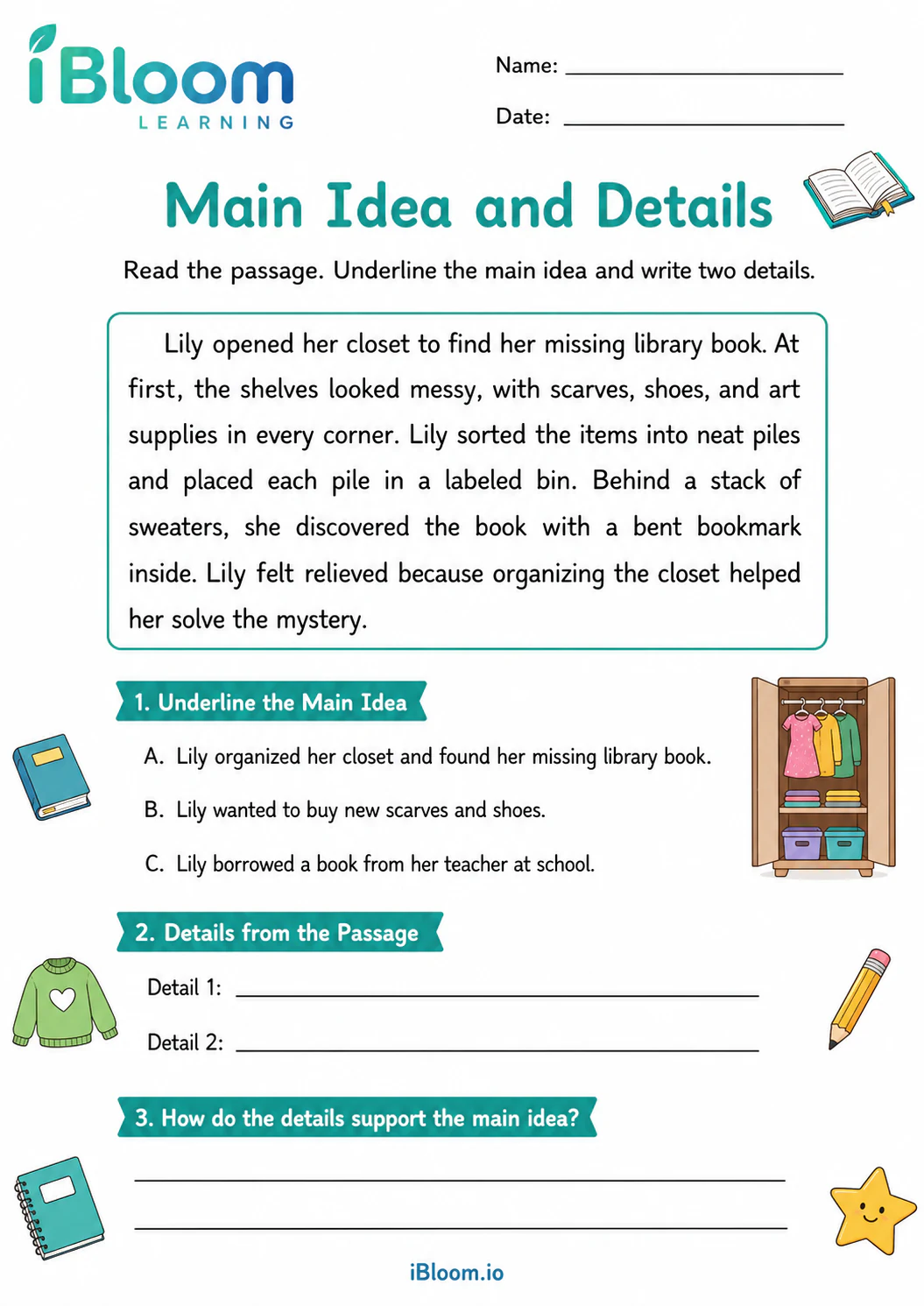
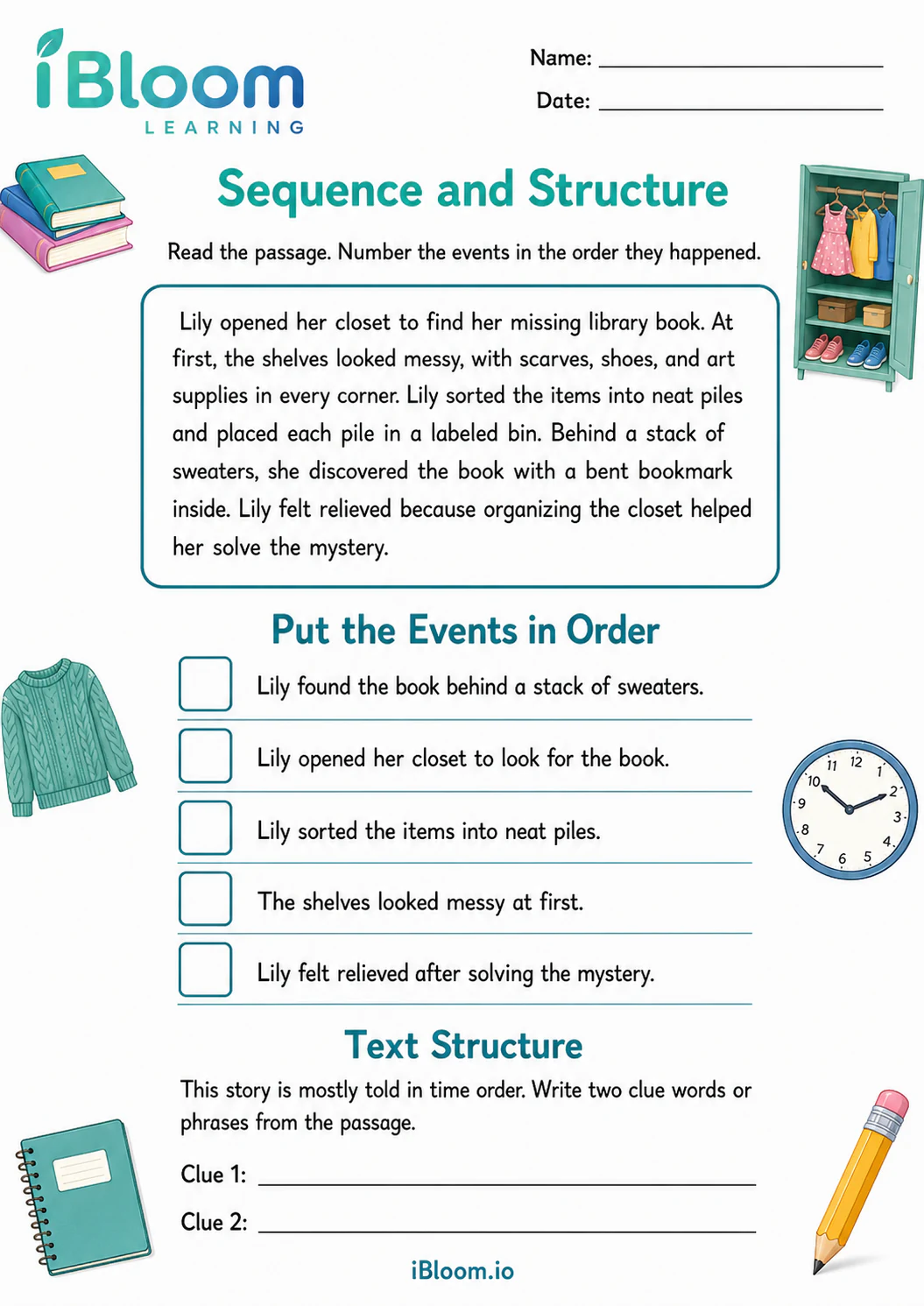
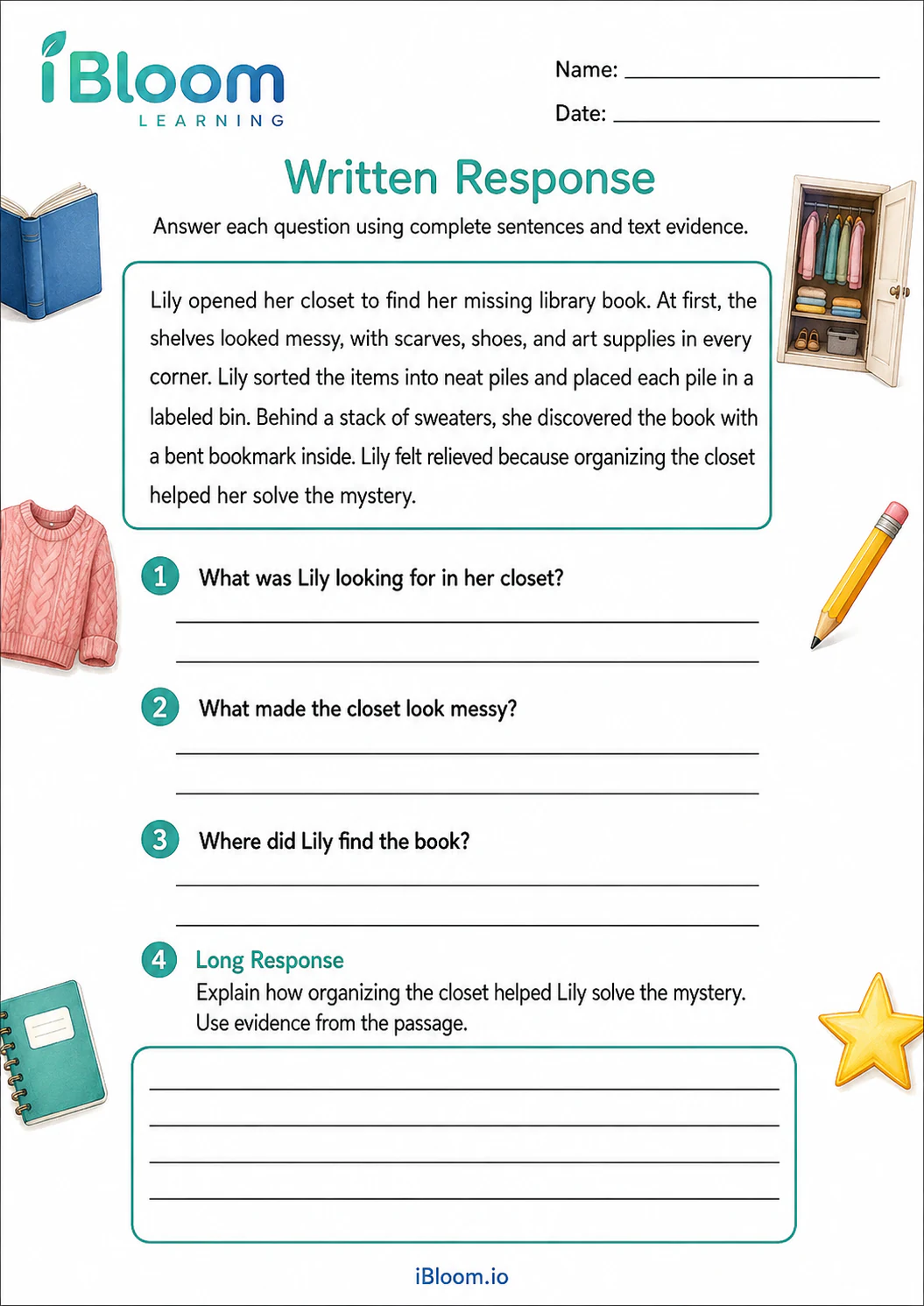
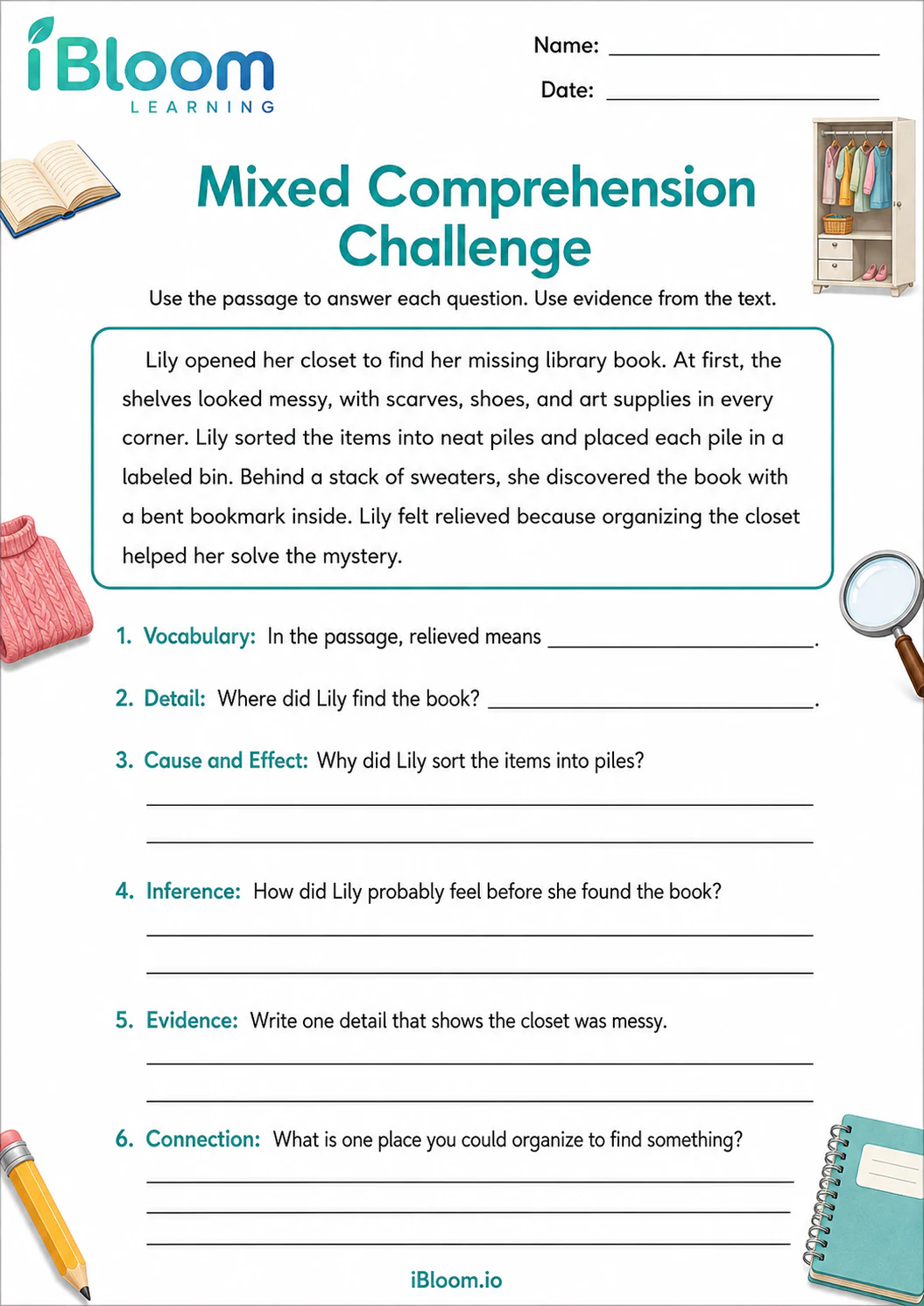
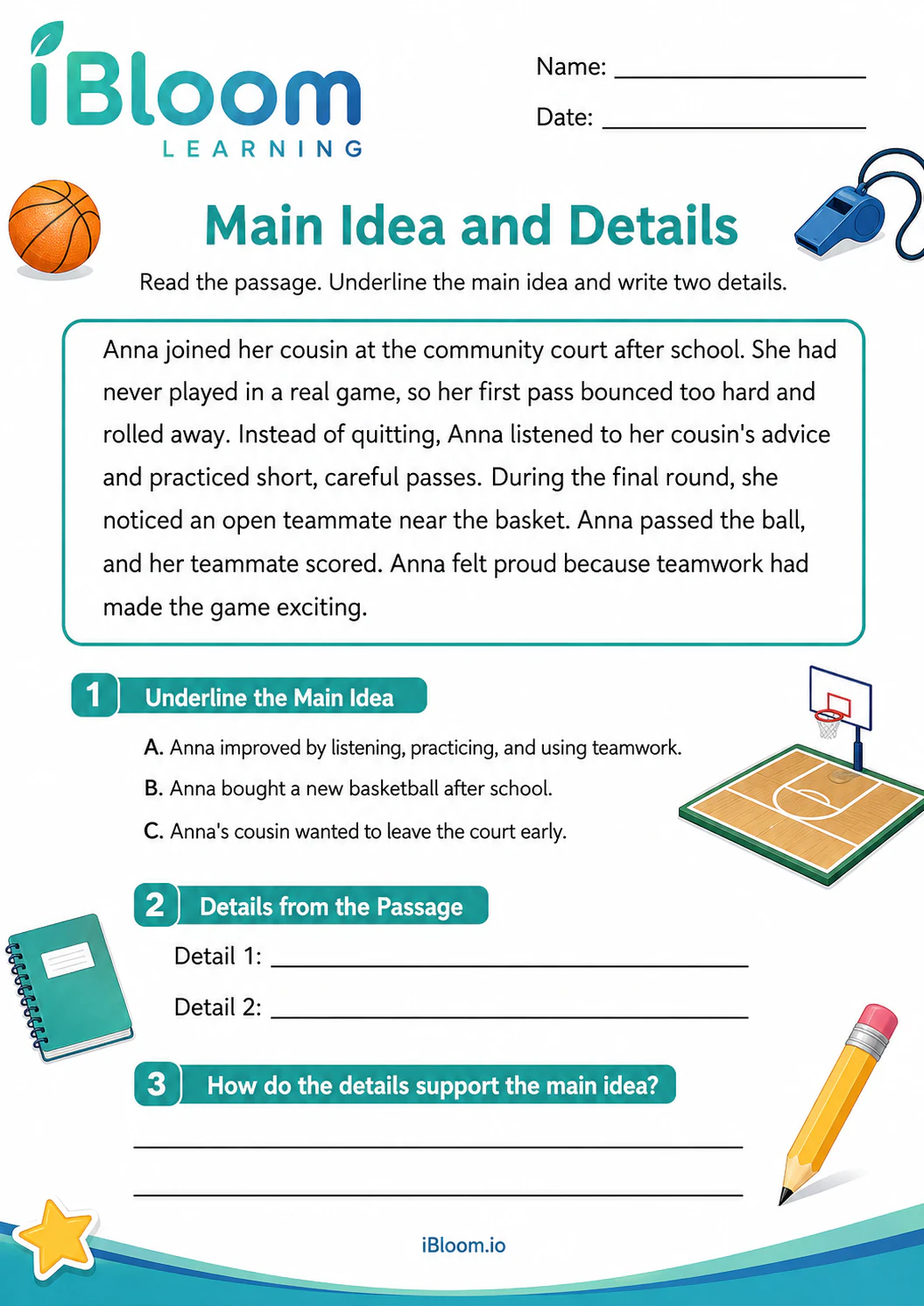
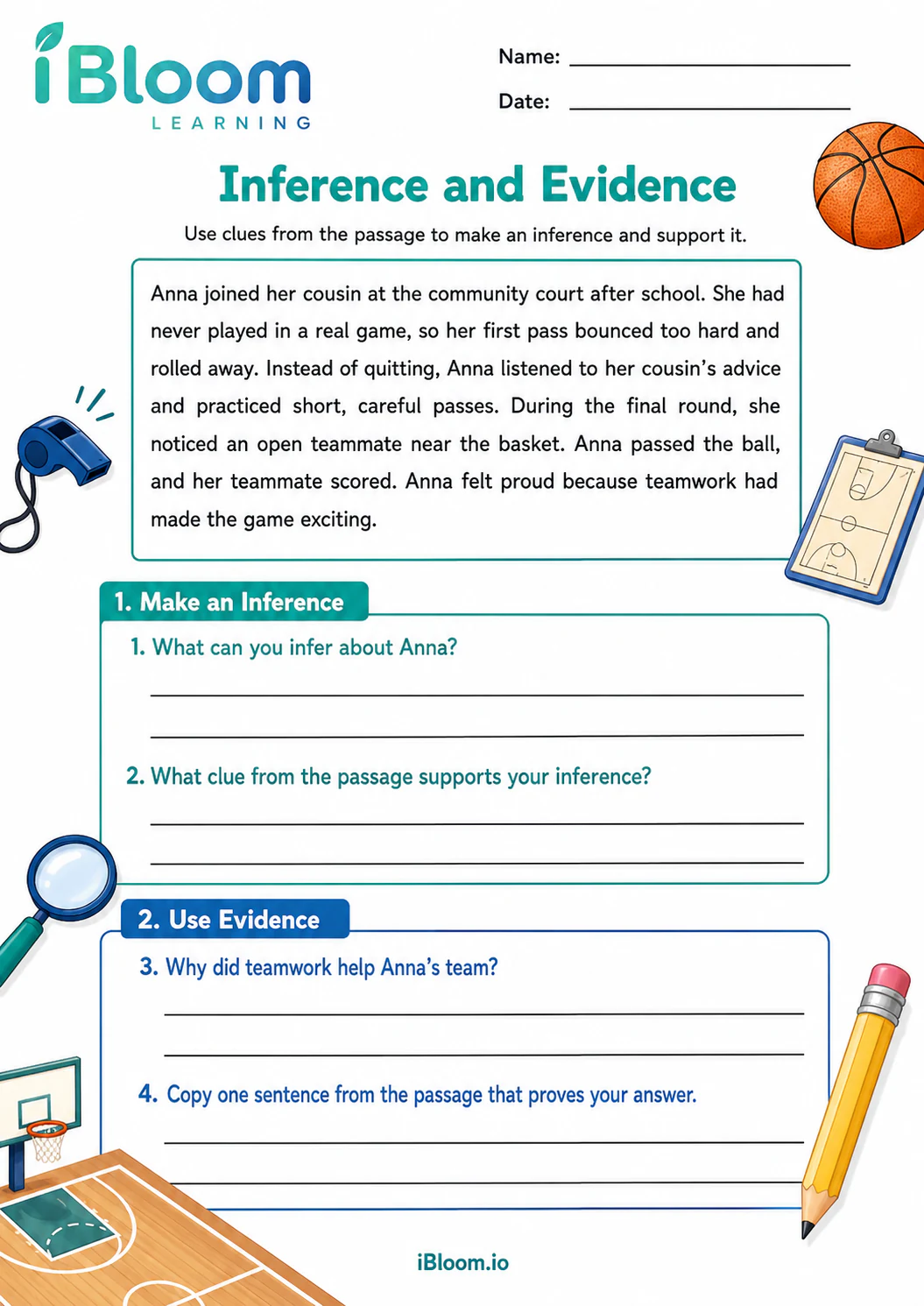
This Grade 3 reading worksheet uses an original story about Lily searching a messy closet for a library book. Students infer how she feels and what she may do next, then support their thinking with details from the passage. Fifteen written-response questions fill three pages, with a separate key that offers sample answers.
Aligned to RL.3.1
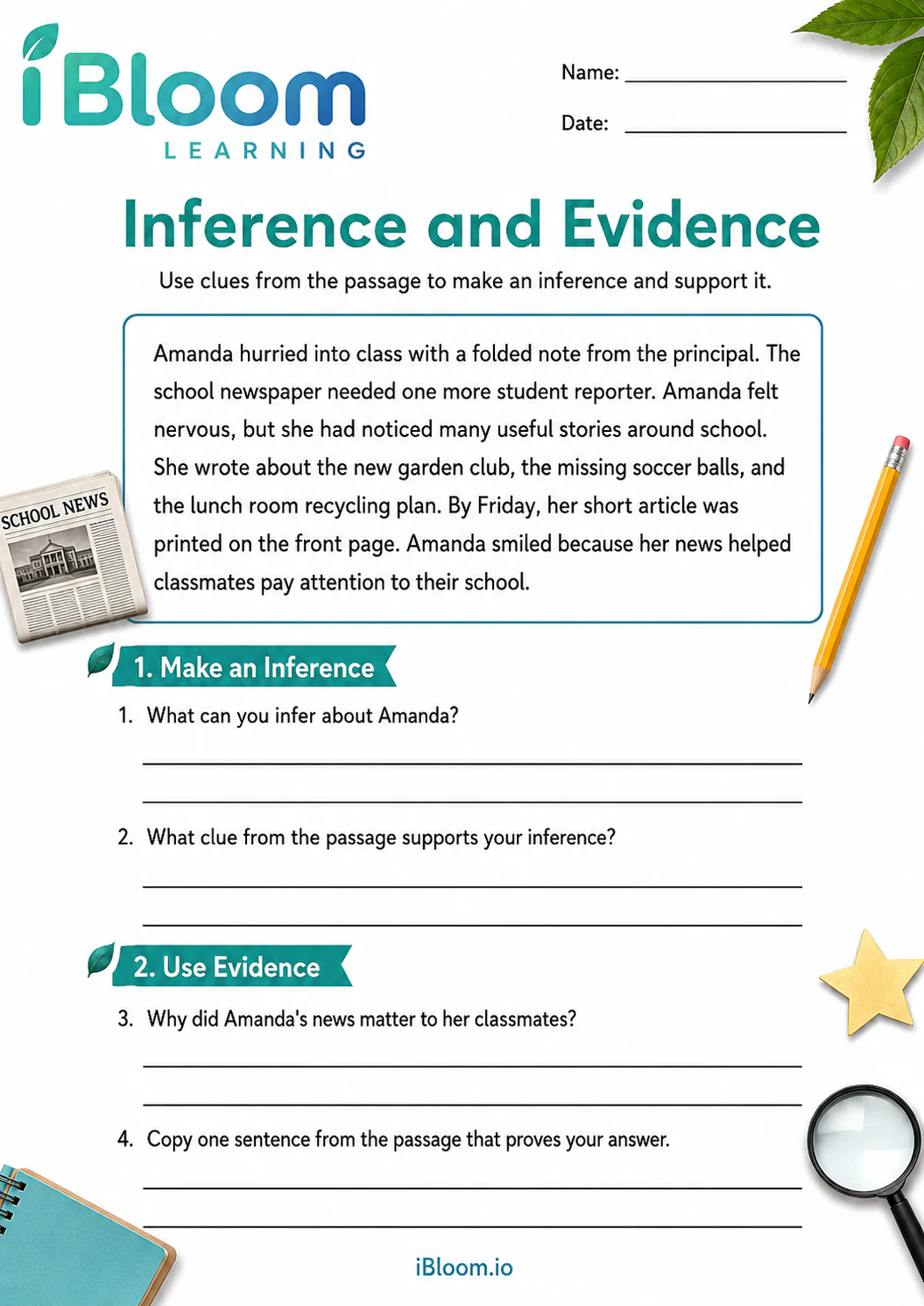
What can readers infer about Lily?
For question 1, the reader can infer that Lily feels relieved when she finds the missing book. Her smile and the words “with relief” support that answer.
Which details count as evidence?
The passage says Lily remembers putting the book away and later finds it behind sweaters. Those details support answers about her search and the messy closet.
How does the story end?
Lily puts the book in her backpack and makes a label for the shelf. A reader can infer she wants to find things more easily next time.
How to use the worksheet
- 1Read the part heading and direction before starting.
- 2Work through each prompt in order.
- 3Reread a sentence or inspect its model before choosing.
- 4Explain a choice by pointing to its clue.
- 5Use the separate key to check and correct answers.
Common slips and fixes
The mistake
Answering after reading only part of a prompt.
The fix
Reread the full sentence or direction before deciding.
The mistake
Choosing a response that is related but does not fit the exact clue.
The fix
Try the answer in the sentence or compare it with the model.
The mistake
Checking the key before trying the item.
The fix
Make a first attempt, then use the key to find and correct a missed clue.
Curriculum alignment
Answer story questions and point to passage details that support each inference.
On this sheet:
Show the official wordingHide the official wording
Ask and answer questions to demonstrate understanding of a text, referring explicitly to the text as the basis for the answers.
What to practice next
Further reading
Questions parents and teachers ask
What is the story about?
Lily searches a messy closet for a library book she misplaced. She sorts the items into groups, finds the book behind sweaters, and labels a shelf so she can locate things more easily next time. Return to the passage and underline the sentence or detail that supports it.
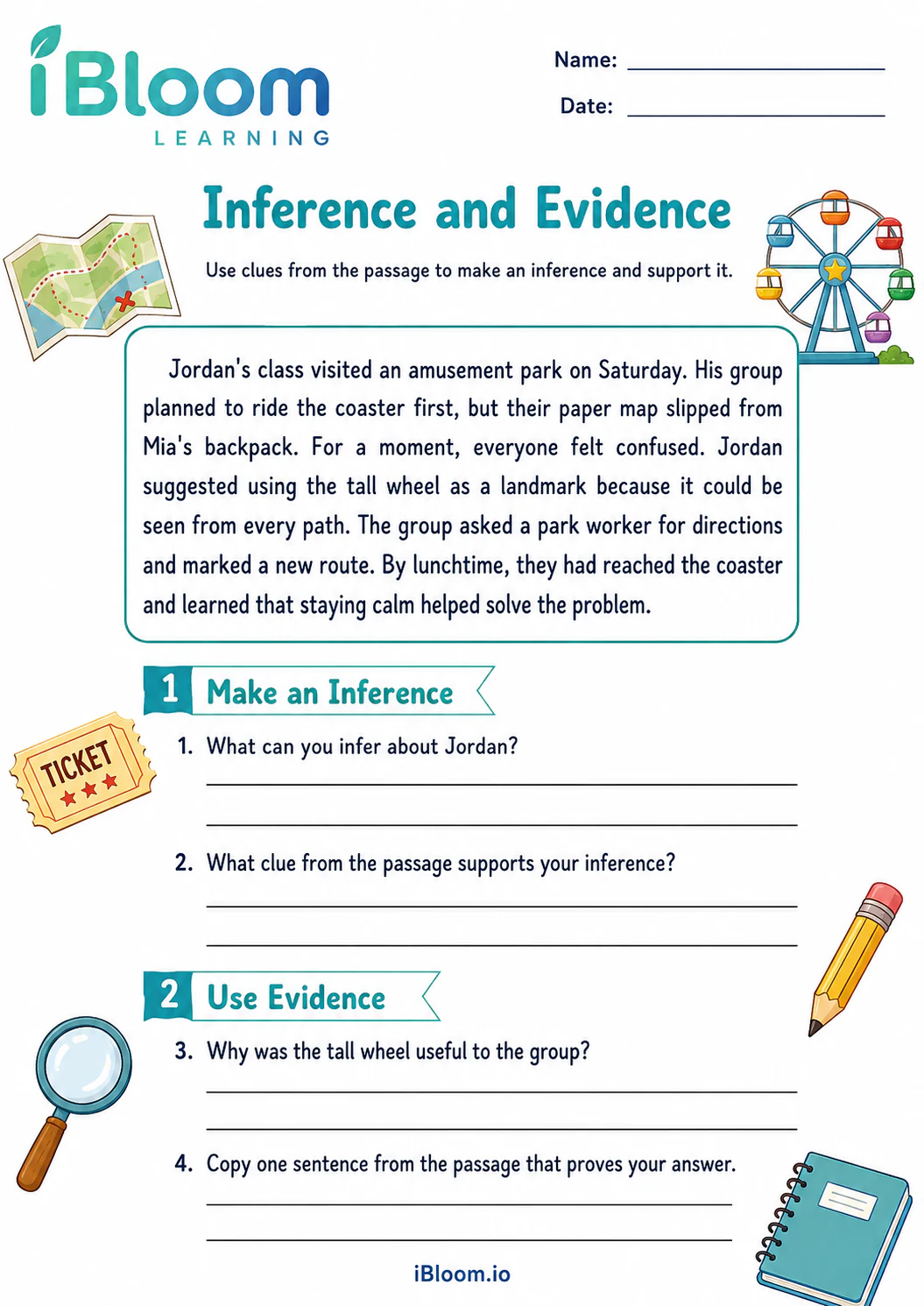
What does inference and evidence mean on this page?
An inference is an idea supported by clues in the story. For example, Lily seems relieved when she finds the book; her smile and the phrase “with relief” provide evidence for that conclusion. Return to the passage and underline the sentence or detail that supports it.
How many questions are on the worksheet?
There are 15 written-response questions in two parts. The first part asks students to make inferences, and the next asks them to use story details, answer direct questions, and copy a sentence as evidence. Return to the passage and underline the sentence or detail that supports it.
Are sample answers included?
Yes. The separate answer key gives sample responses for questions that allow different wording and exact details for questions with a specific answer. Students can compare their reasoning with the story rather than expecting every response to use identical words. Return to the passage and underline the sentence or detail that supports it.
Can an adult read the story aloud?
Yes. An adult may read the passage and questions aloud, then ask the child to point to a sentence or detail that supports an answer. The student can still practice forming an inference and connecting it to story evidence. Return to the passage and underline the sentence or detail that supports it.