



About this worksheet
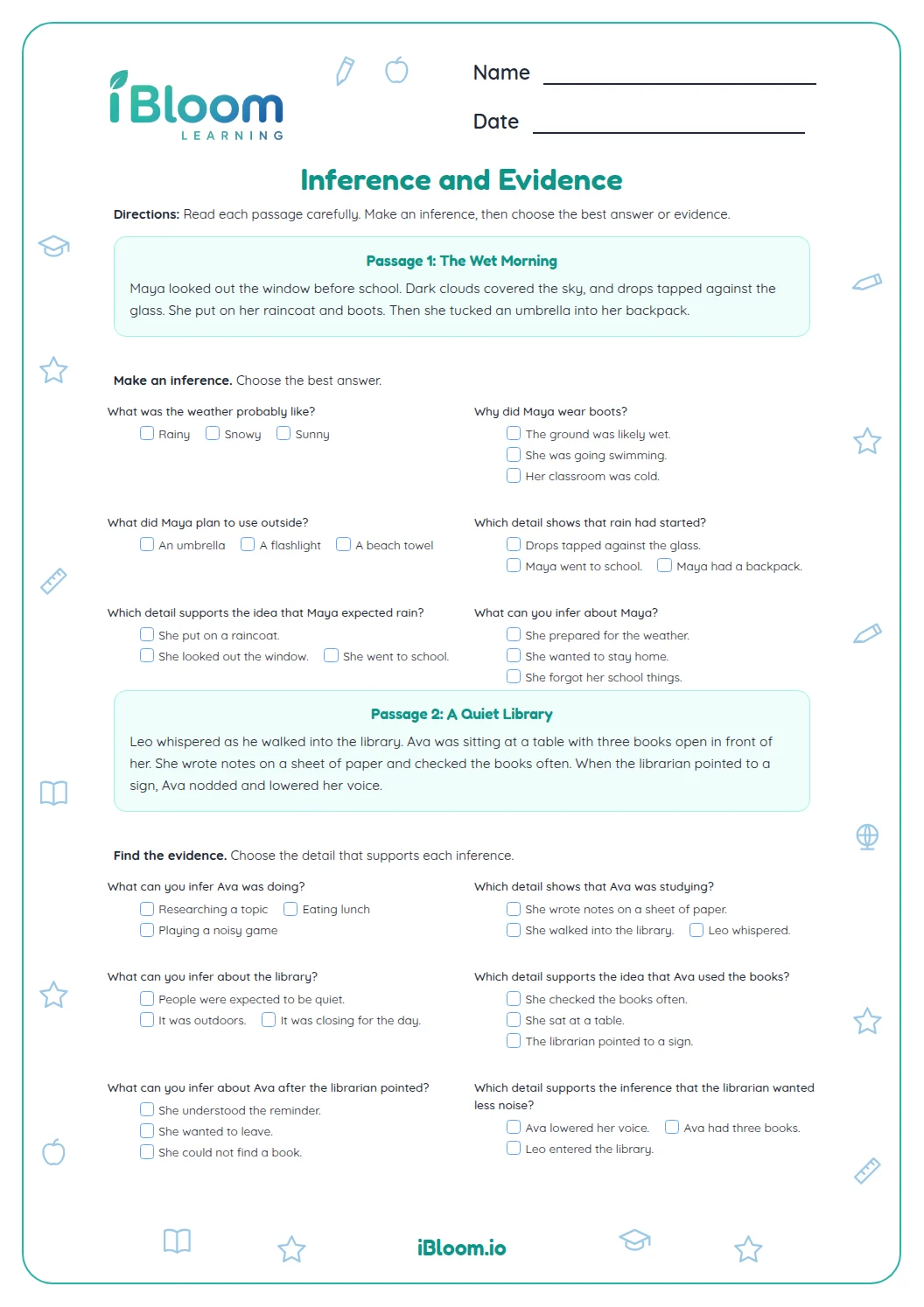
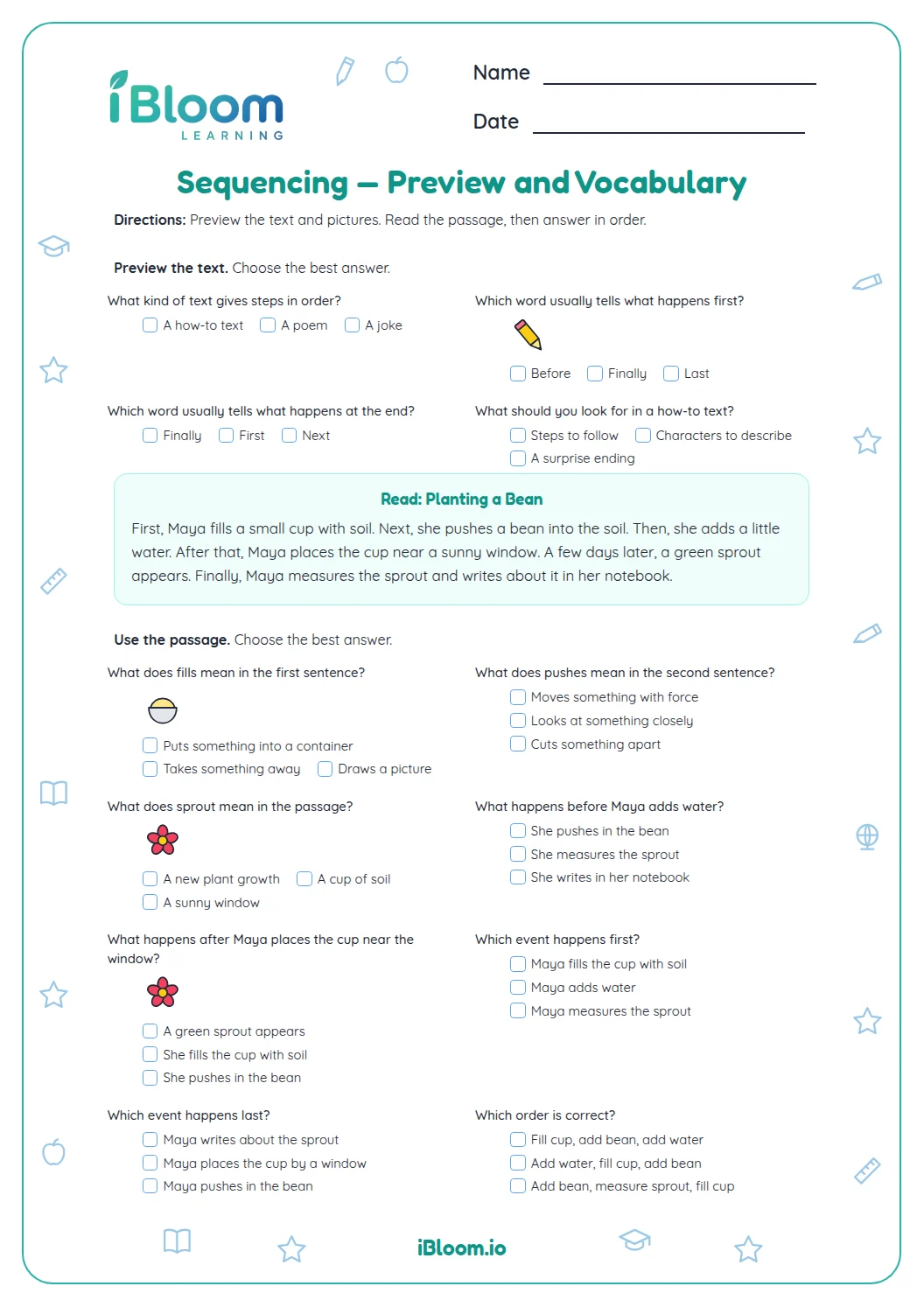
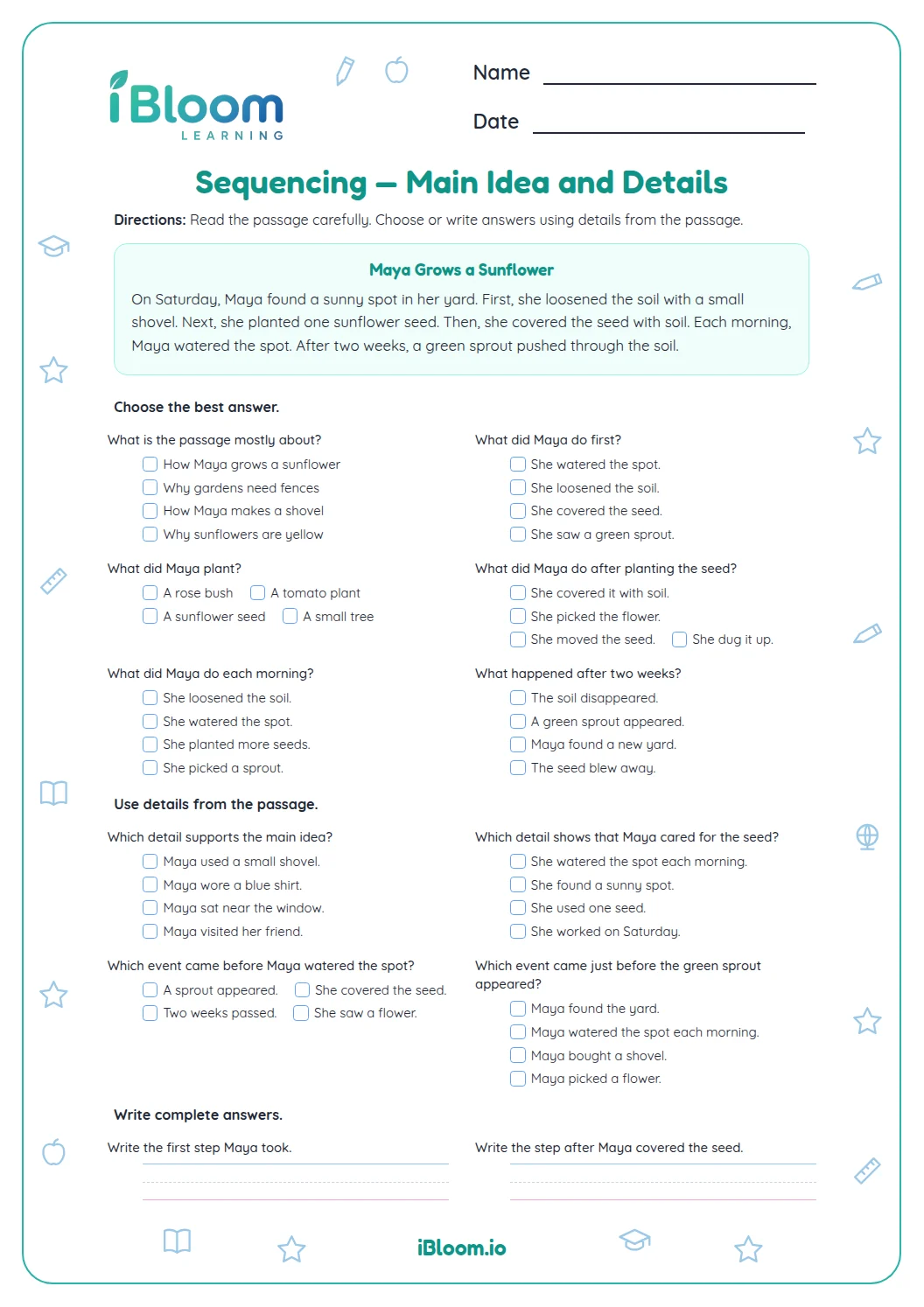
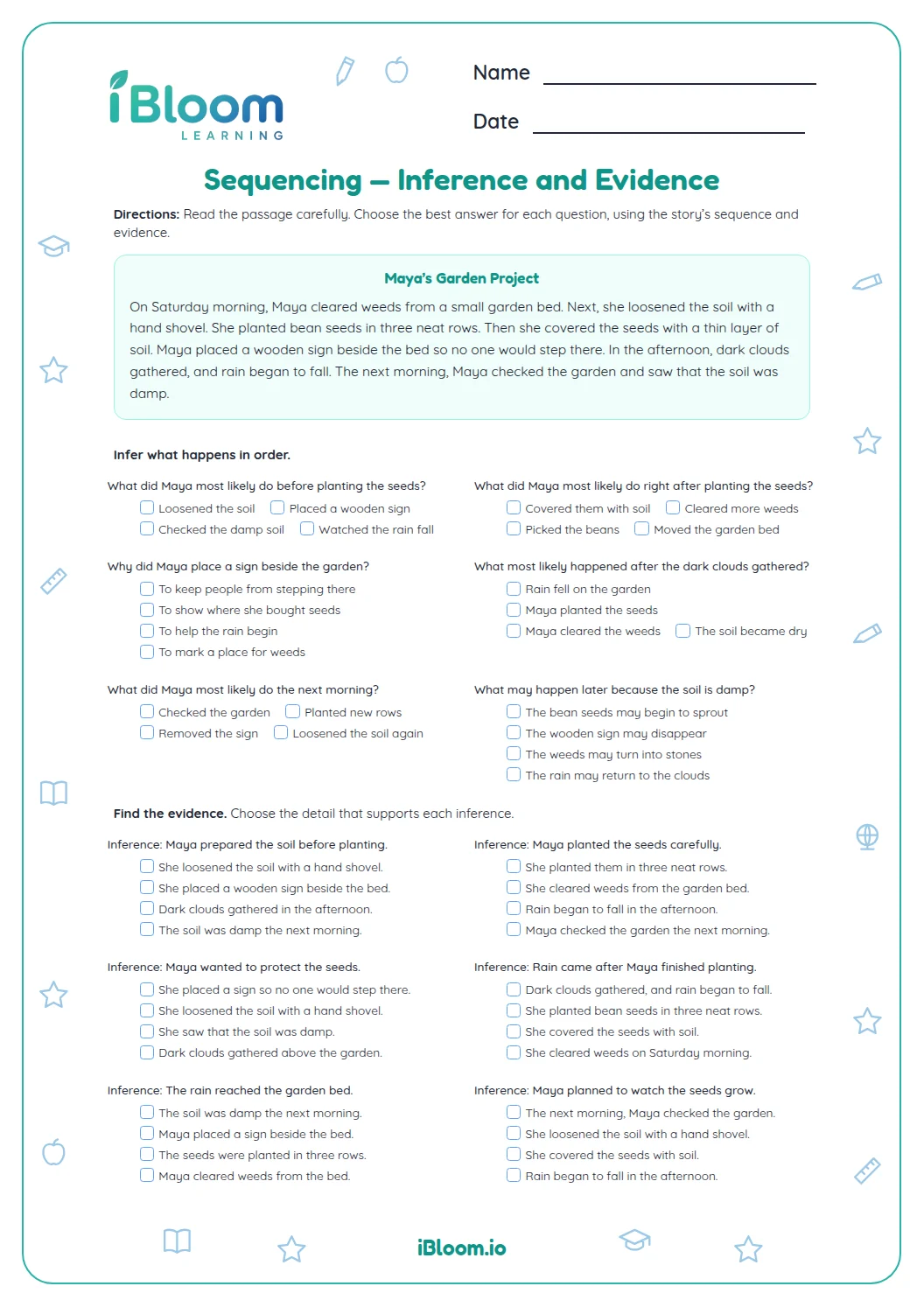
This Grade 3 reading worksheet follows a class hike that changes when rain and a rising creek affect the route. Students answer 14 questions about inferences, story evidence and plot events, using details from the original passage to explain their thinking. The answer key includes sample responses.
Aligned to RL.3.1 and RL.3.3
What happens on the class hike?
Rain makes the trail slick, and a rising creek blocks the class’s planned route back. Nora helps Ben and uses the map, while Mr. Lee leads the group to a safer path.
Part B asks students to infer from details and track important events. Later parts ask for a text clue and explain how the problem is resolved.
- Read the original hiking story
- Part B: infer from character actions and events
- Part C: connect an idea with a story clue
- Part D: explain the plot’s resolution
- Answer key includes sample responses
How can a detail support an inference?
An inference combines a story clue with what a reader knows. Point to the clue before explaining what it suggests.
- 1Clue: Nora walks near the back to help anyone who falls behind.
- 2Inference: Nora is considerate of her classmates.
- 3The clue supports the idea about her character.
How can students support a written answer?
A written answer should name a story clue and explain what it suggests. For plot questions, identify the event that creates the problem and the action that leads to the resolution.
How to use this worksheet
- 1Read the story once to follow what happens.
- 2For an inference, combine a clue in the text with what you already know.
- 3Find the exact event or detail that supports your idea.
- 4For plot questions, tell what the problem is, what changes and how the ending resolves it.
Inference and evidence
The mistake
Treating a guess about a character as an inference without pointing to a clue.
The fix
Name the story detail first, then explain what it suggests. Nora carries a map and a lantern, which supports the idea that she is prepared.
The mistake
Retelling the story instead of answering how the problem is solved.
The fix
Focus on the final response to the creek blocking the bridge: Mr. Lee leads the group along the marked side trail.
The mistake
Giving an inference without a story clue.
The fix
Name a sentence or event from the passage that supports the inference.
Common Core alignment
This narrative reading page practices Grade 3 comprehension and analysis.
Ask and answer questions using details from a story.
On this sheet: Students support responses with events and details from the hiking story.
Show the official wordingHide the official wording
Ask and answer questions to demonstrate understanding of a text, referring explicitly to the text as the basis for the answers.
Describe characters and explain how events shape the plot.
On this sheet: Questions connect Nora’s choices and Mr. Lee’s decisions with the story’s problem and resolution.
Show the official wordingHide the official wording
Describe characters in a story (e.g., their traits, motivations, or feelings) and explain how their actions contribute to the sequence of events.
What to practice next
Make more practice
Questions parents and teachers ask
What is an inference?
An inference is an idea supported by clues in a text and what a reader knows. For example, Nora notices Ben’s loose shoe and holds the snack bag while he ties it. Those details support the inference that she is considerate.
What evidence suggests Nora is prepared?
Nora brings a trail map and a small lantern on the hike. Those objects support the idea that she is prepared for the walk, and she also uses the map to help the class find its way back. Students can cite either detail.
How does the class solve the creek problem?
The creek rises over the bridge’s lowest boards, so Mr. Lee leads the group along a marked side trail that returns to the bus. Nora uses her map to point out the turn, helping the group follow the new route.
What counts as evidence in a written response?
Evidence is a detail or event stated in the story that supports the answer. A response about the blocked route can mention that the creek covered the bridge’s lowest boards. The answer key gives sample responses for the open-ended questions.
How many questions are on the worksheet?
There are 14 questions: seven multiple-choice items and seven written responses, following the passage. They ask students to infer, identify supporting details and explain how the story’s problem changes and is resolved. Sample responses appear in the answer key.