




About this worksheet
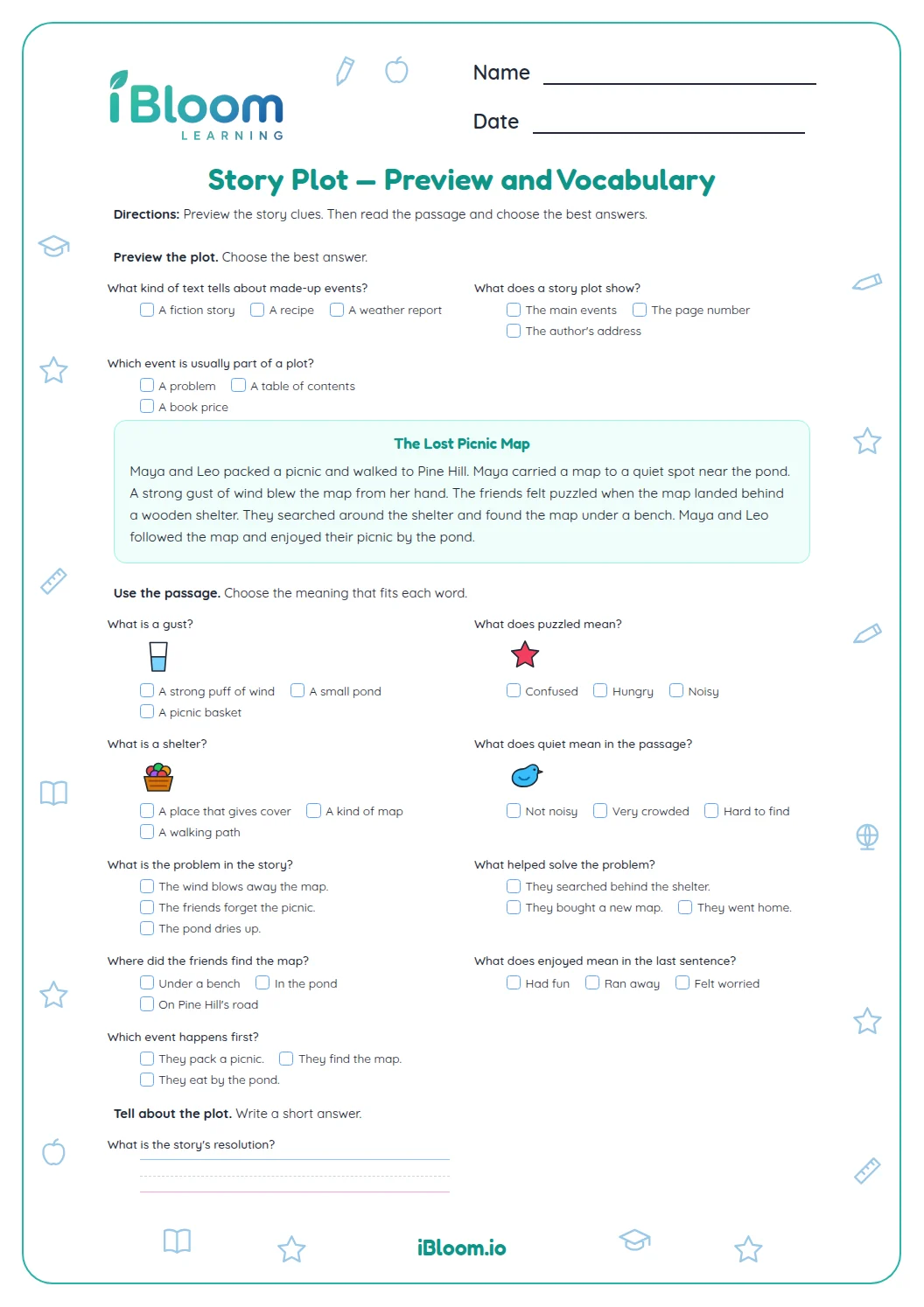
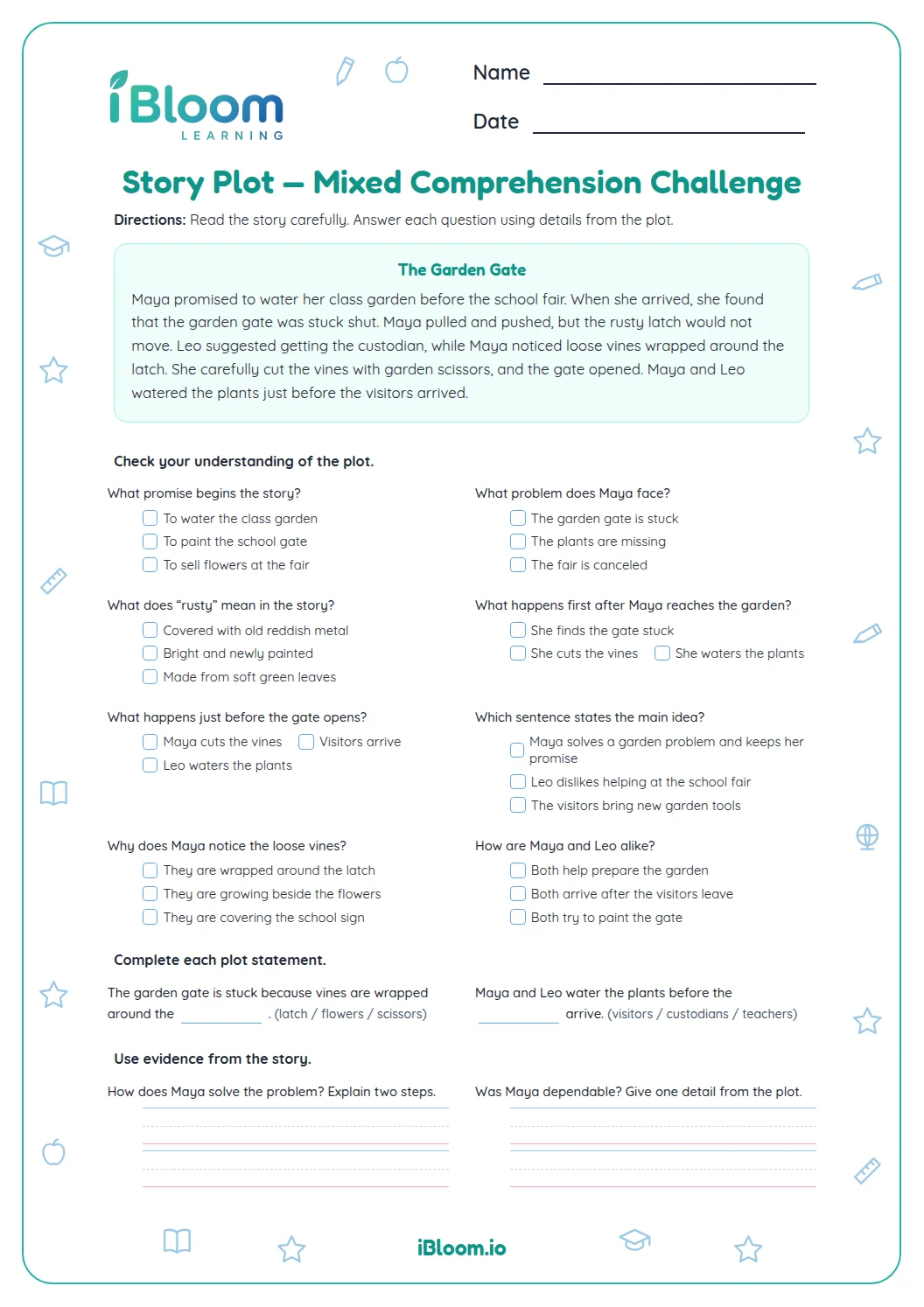
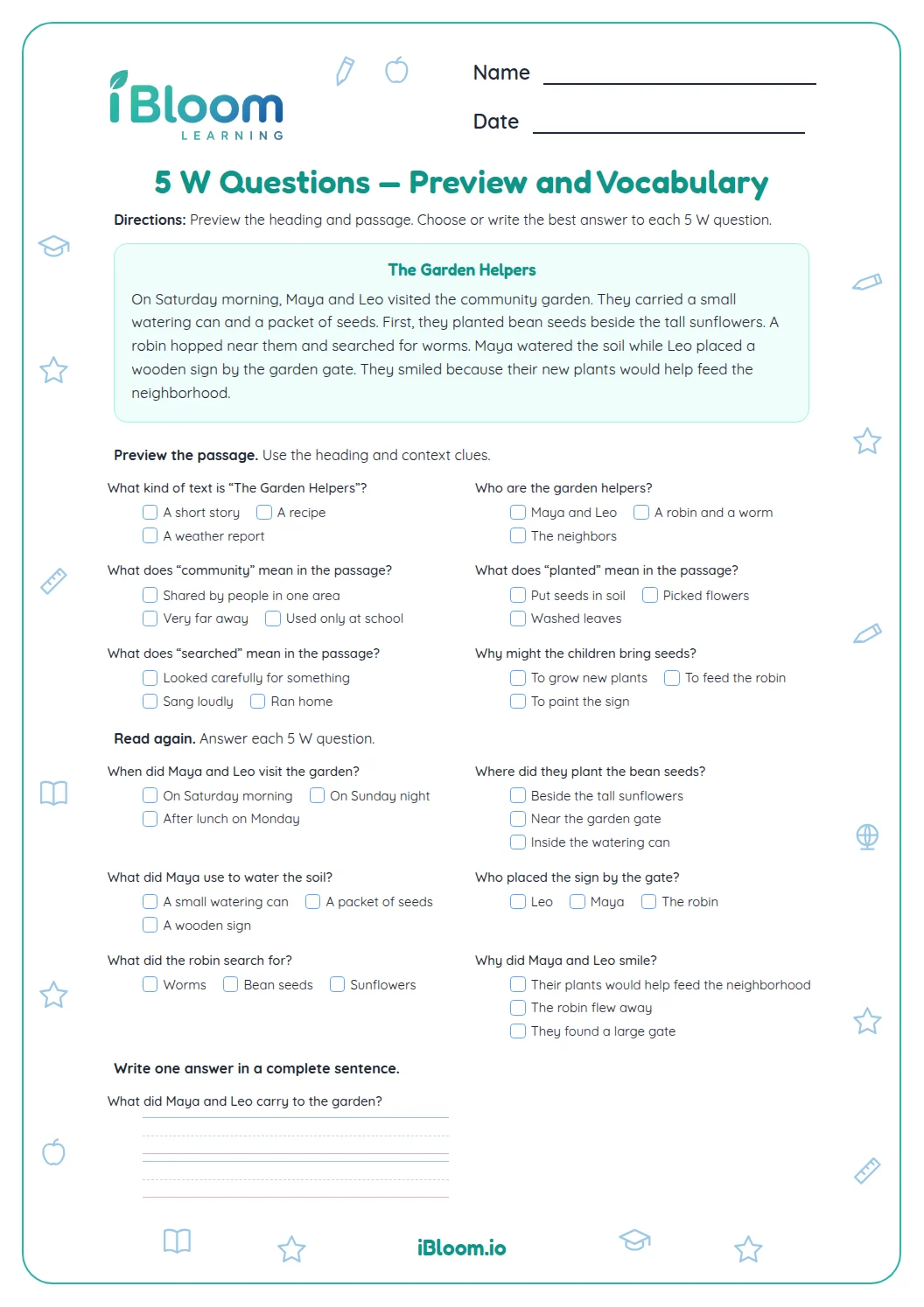
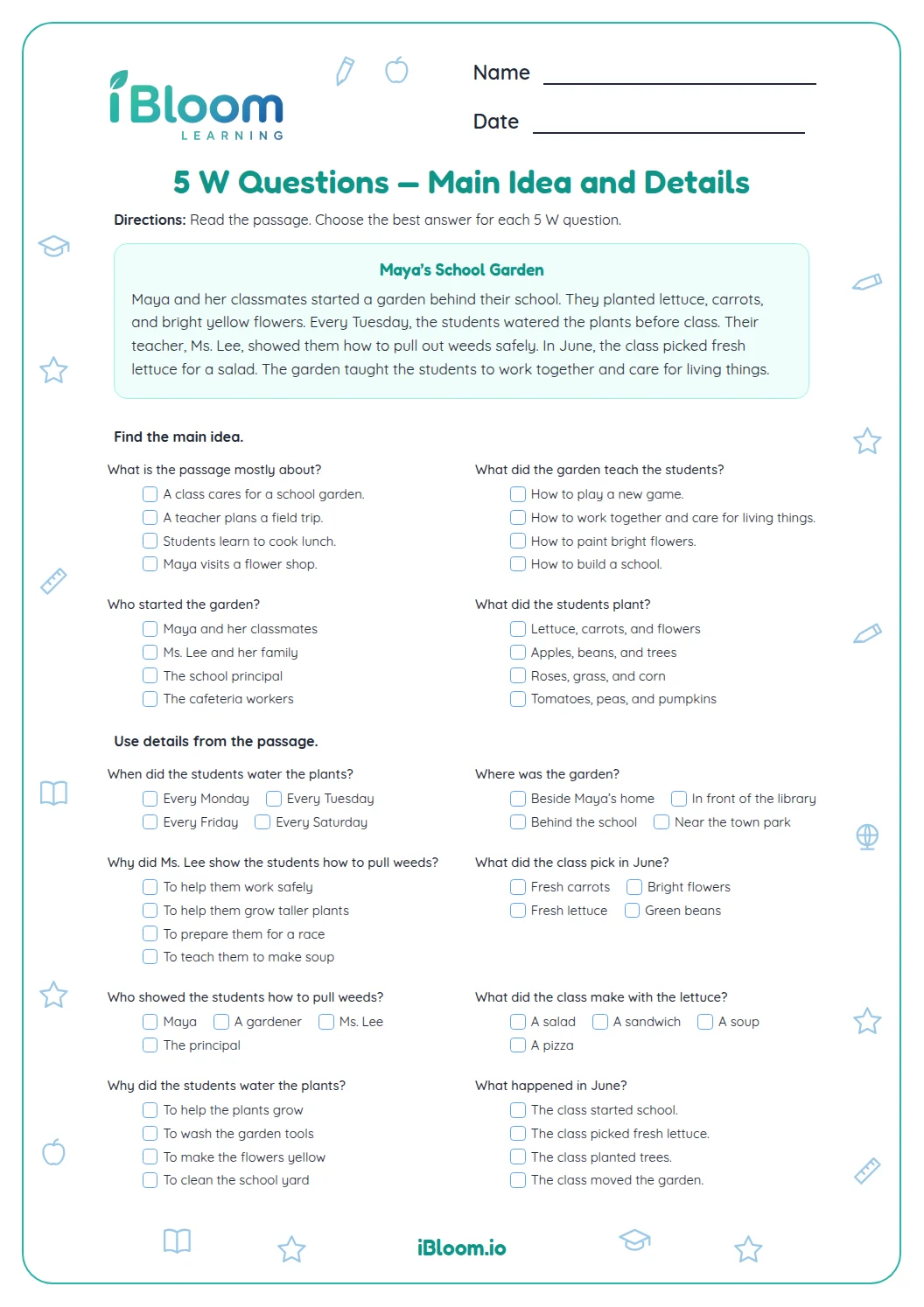
This Grade 3 reading worksheet pairs an original 170-word garden story with 15 questions about plot and main idea. Readers find details about Eli and Nia, follow what happens from Tuesday to Friday, and choose a message supported by the whole story. The separate key includes answers for all 15 items.
Aligned to CCSS.ELA-Literacy.RL.3.2
How do details help readers follow a story?
A detail names something that happened, a choice a character made, or a change in the setting. Readers can return to the passage and point to the sentence that supports an answer.
- 1Eli noticed that the garden looked dry.
- 2The detail identifies the problem that starts the story.
How do plot events support a main idea?
Plot events show how characters respond to a problem and what changes as a result. In this story, Eli and Nia begin watering, invite others to help, and see the plants grow. Those events support the idea that shared care helps the garden.
- Part B recalls details from the passage.
- Part C follows events and connects them to the story’s main idea.
How can a reader explain an answer with evidence?
State an idea, then add a relevant detail from the passage. For example, “The class worked together because every classmate took a turn on the watering chart.” The detail makes the explanation specific.
How to use this worksheet
- 1Read the passage once to learn who is in the story and what happens.
- 2Reread the paragraph named in a question before answering.
- 3For event-order questions, track what happened first, next, and last.
- 4For the main-idea question, choose an idea that fits the whole story.
- 5Use a specific story detail in the written response.
Common mistakes and quick fixes
The mistake
Choosing a tiny detail as the main idea.
The fix
Check that the idea explains more than one event in the story.
The mistake
Mixing up the order of two events.
The fix
Reread the story and mark the first time each event appears.
The mistake
Giving an opinion without story evidence.
The fix
Add a character action or event from the passage to support the answer.
Common Core alignment
The questions ask readers to retell events, identify a lesson, and connect details to it.
Readers recount a story and explain its message through key details.
On this sheet: Readers recount a story and explain its message through key details.
Show the official wordingHide the official wording
Recount stories, including fables, folktales, and myths from diverse cultures; determine the central message, lesson, or moral and explain how it is conveyed through key details in the text.
What to practice next
Make more practice
Further reading
Questions parents and teachers ask
How long is the passage?
The passage is about 170 words and follows Eli and Nia as they respond to a dry school garden. Children can reread the short paragraphs to locate the details needed for questions about the problem, character actions, event order, and the story’s main idea.
What skills do the questions cover?
The 15 items ask readers to recall details, follow the event sequence, explain character actions, select a main idea, and support a response with story evidence. The questions move from locating information toward explaining how the details fit together. The passage stays available during the activity, so readers can check each response against the story.
Does the worksheet include an answer key?
Yes. The answer key gives short responses for detail questions and marks the correct choices for the multiple-choice items. Other wording is acceptable for short answers when it accurately reflects the story and uses relevant evidence. The separate key is designed for quick checking after the child completes the page.
How should a child answer the written questions?
The last questions ask children to identify a useful detail and select a lesson that fits the whole story. Encourage them to point back to the passage and name the event or action that supports the choice. This helps keep the response connected to the text.
Can this be used in a small group?
Yes. A teacher or parent can read the story aloud, pause to discuss the problem and events, then have children answer independently or compare evidence with a partner. The passage and answer key are included with the printable. The passage stays available during the activity, so readers can check each response against the story.