



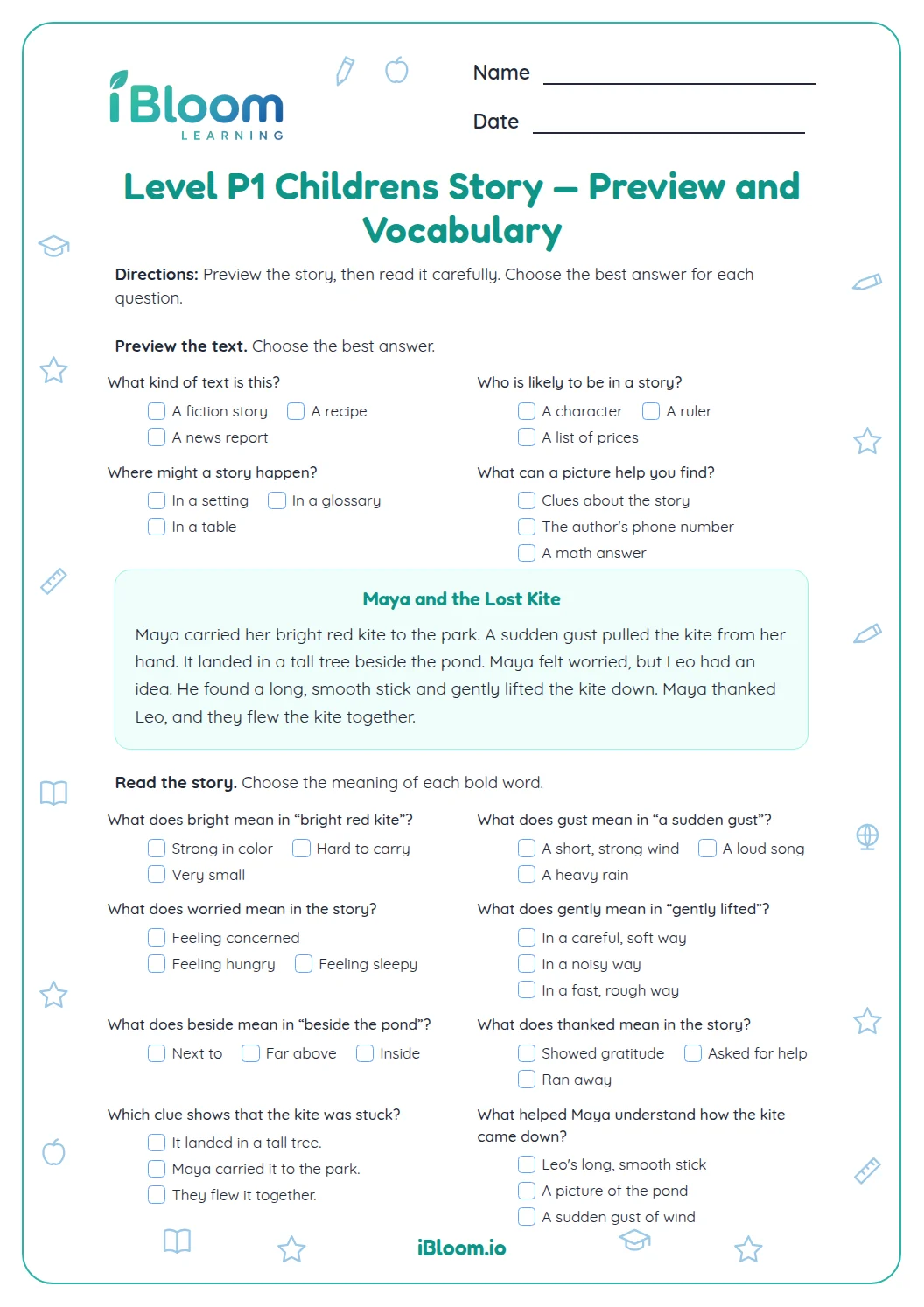
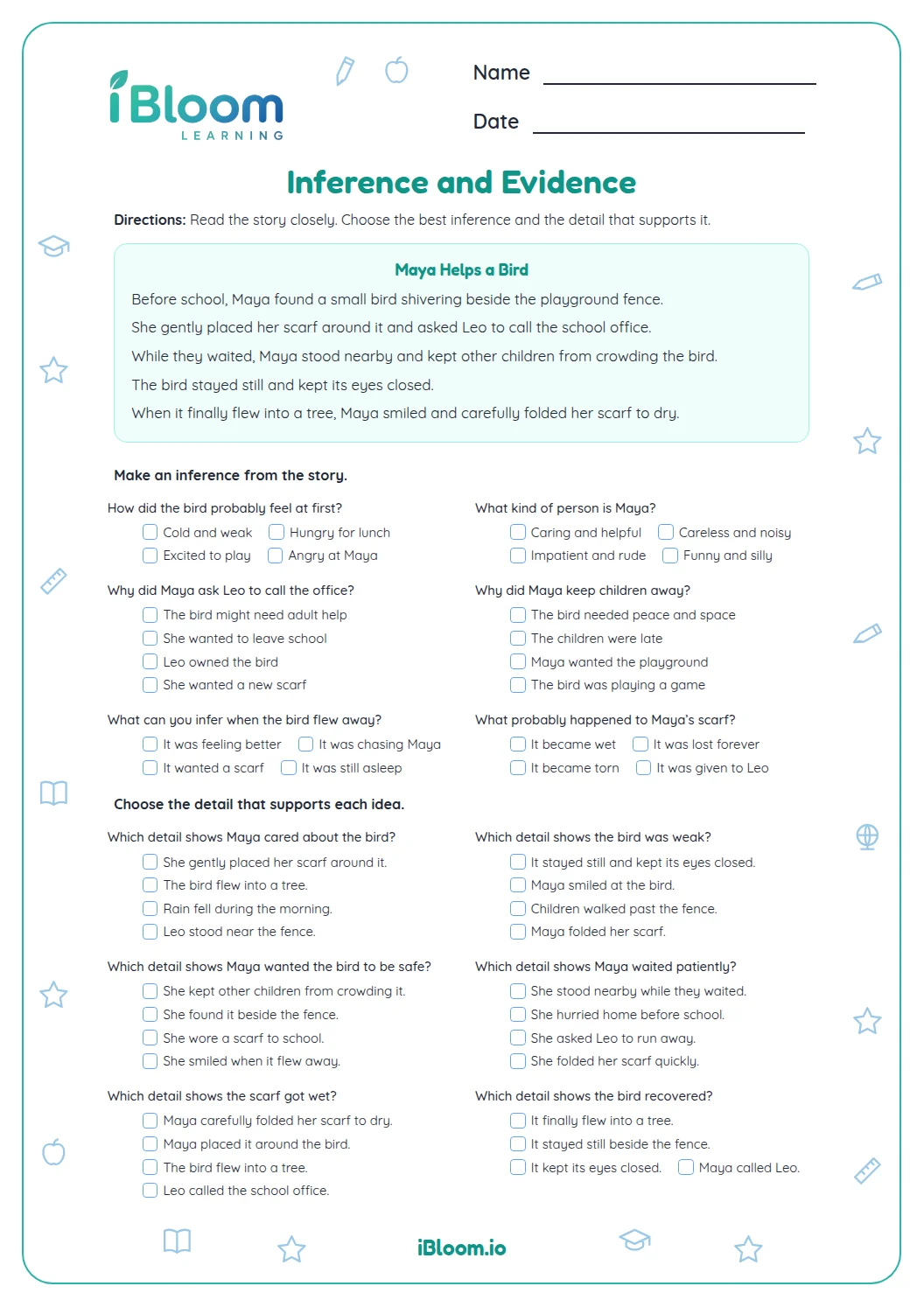
About this worksheet
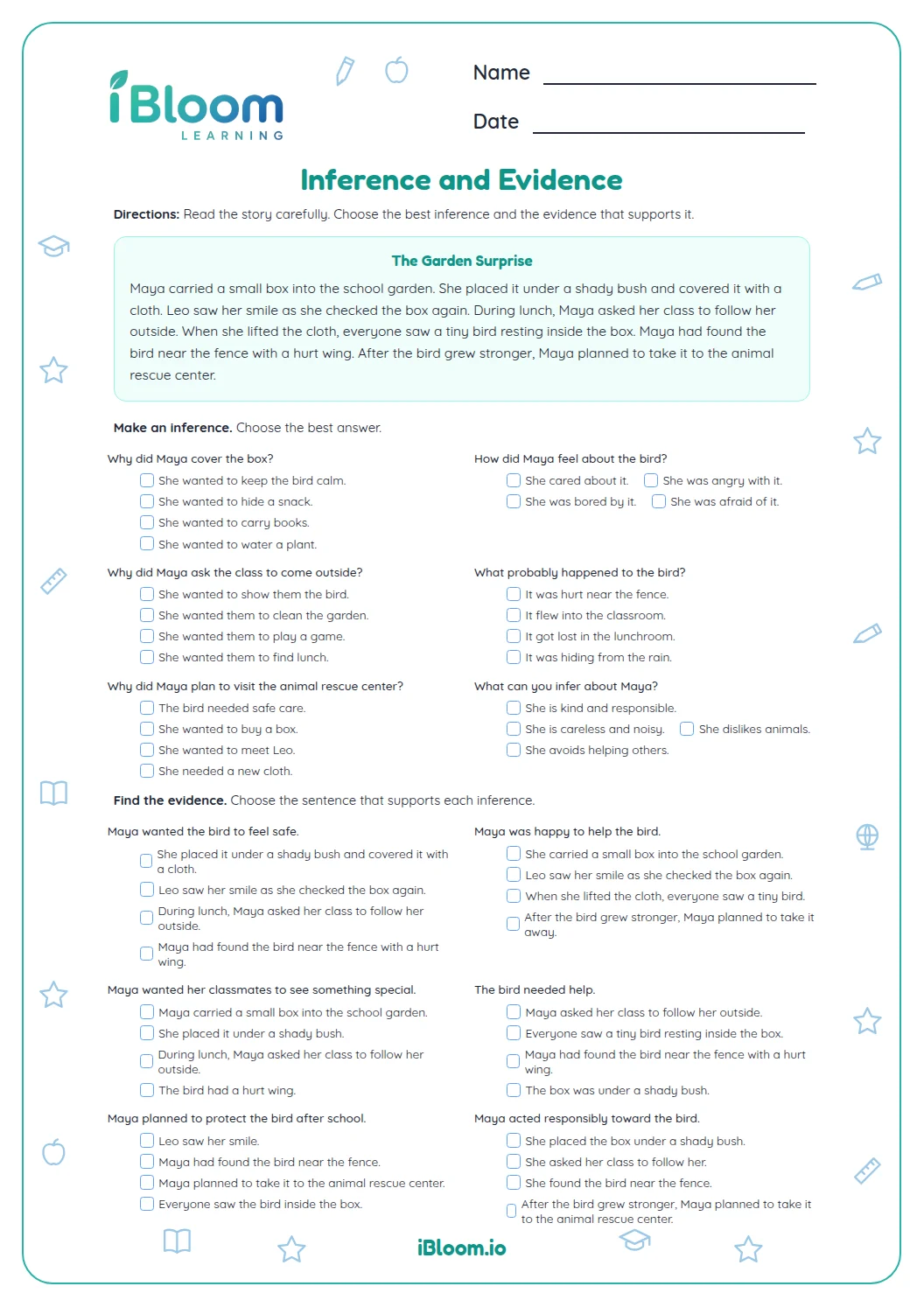
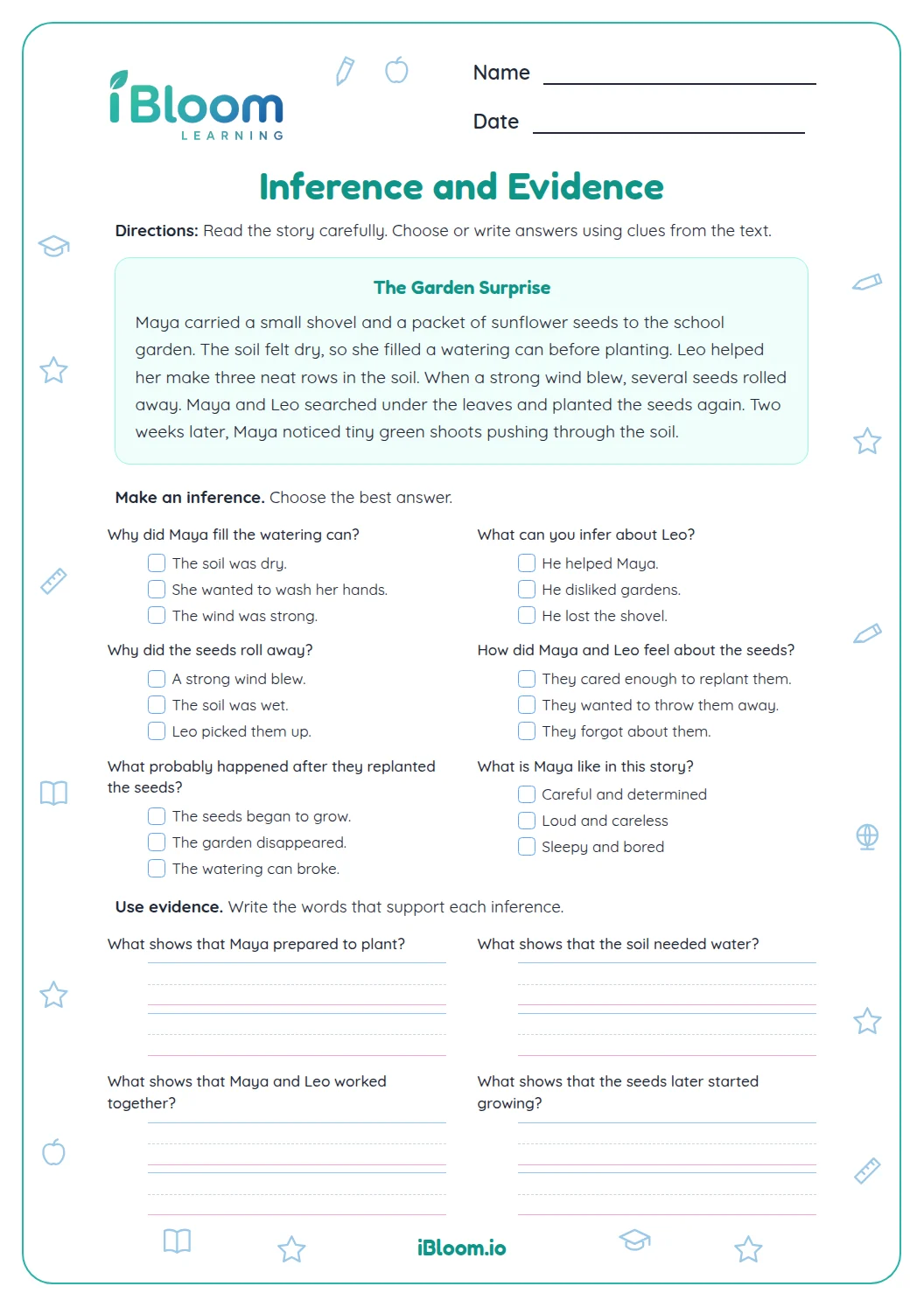
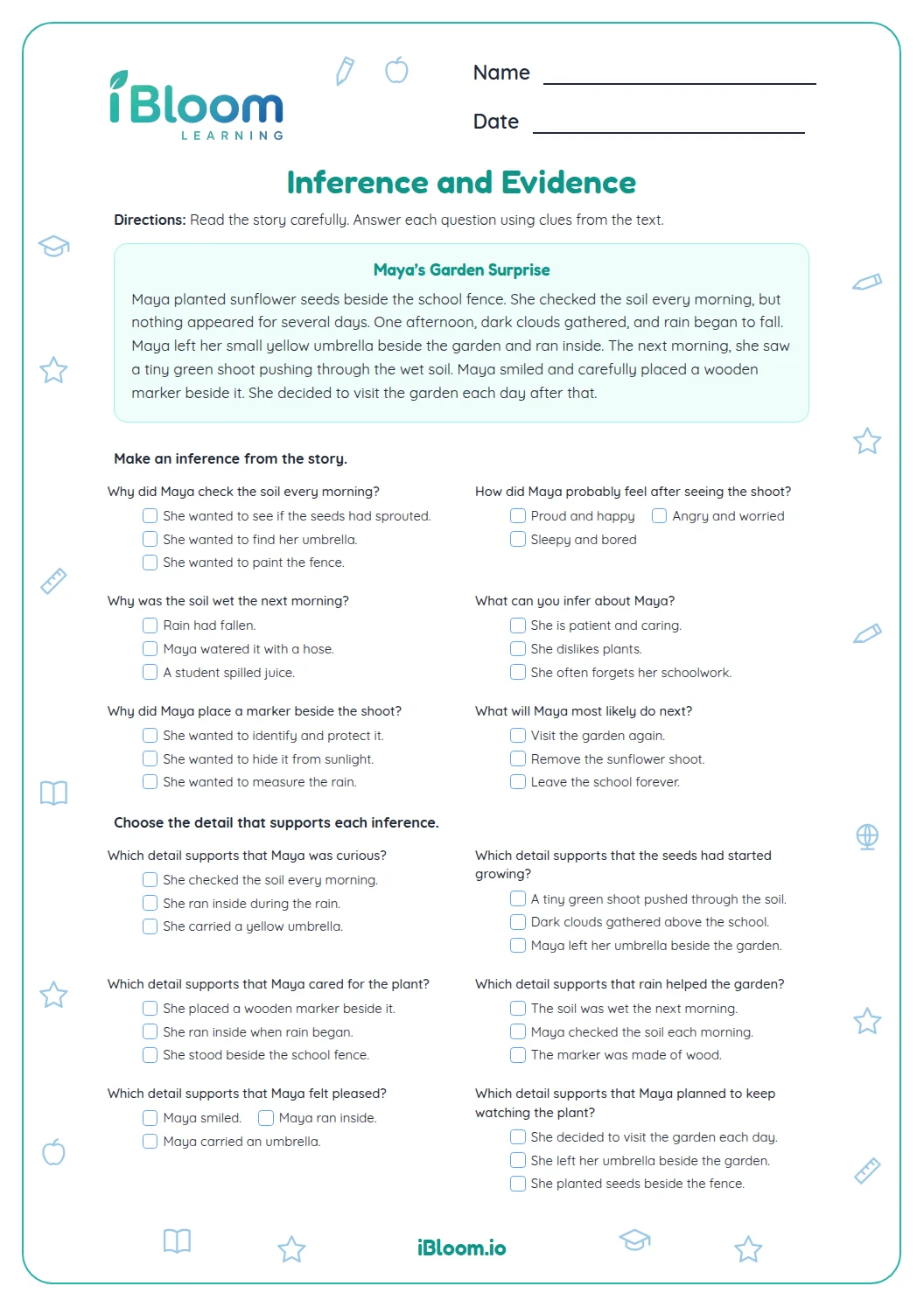
This free printable Grade 3 worksheet pairs an original children’s story, “The Bent Bean Plant,” with ten inference and evidence questions. Mia hopes to bring a perfect plant to school, but a bent stem changes her plan. Part A presents the story. Part B asks children to choose six conclusions supported by actions and dialogue. Part C asks for four written responses that connect an inference to a specific story detail. The worksheet practices CCSS RL.3.1: answering questions with the text as the basis for the answer. A separate key includes correct choices and sample written responses.
Aligned to RL.3.1
What does this story ask readers to infer?
The story gives visible clues about Mia’s feelings: she imagines classmates admiring her plant, her face grows warm when she sees the bent stem, and she hides the pot. Readers use those clues to infer pride, embarrassment, and a later willingness to share what went wrong.
Part B offers six choices about hopes, feelings, help, and change. Each has one answer supported by the passage, even when the feeling or reason is not named directly.
What makes a detail useful evidence?
Evidence needs to support the particular conclusion. Mia’s warm face and wish to hide the pot support embarrassment. Sam fetching a stick and yarn supports the conclusion that he wants to help. The bent stem explains what needs support; Sam fetching materials and helping tie it shows his helpfulness.
- 1Clues: Mia’s face grows warm; she hides the pot.
- 2Inference: She feels embarrassed about the bent plant.
- 3Sample response: She feels embarrassed; her face grows warm and she hides the pot.
How does Mia’s goal change by the end?
At first, Mia pictures classmates admiring a tall, straight plant. By the end, she carries the pot carefully and plans to talk about the bent stem. Her focus shifts toward explaining what happened and how she and Sam helped the plant.
The ending gives students a chance to connect details from different paragraphs. Question 10 asks them to compare Mia’s early hope with her final plan, using evidence for both.
How to use this worksheet
- 1Read the story once to understand what happens to Mia’s plant.
- 2Reread and mark actions or dialogue that reveal feelings or motives.
- 3Complete Part B, testing each choice against a specific story detail.
- 4For Part C, say an inference aloud and follow it with “because” and a clue.
- 5Compare written answers with the key for meaning and evidence, allowing different wording.
Mistakes to notice and fix
The mistake
Using a personal guess without a story clue.
The fix
Point to the sentence that makes the guess likely before writing the answer.
The mistake
Calling Mia angry because something has gone wrong.
The fix
Use her warm face and wish to hide the pot to identify embarrassment.
The mistake
Saying Mia still cares only about having a perfect plant.
The fix
Compare her imagined praise at the beginning with her plan to explain the bent stem at the end.
Common Core alignment
Use Mia’s actions and words as evidence for conclusions about her feelings and choices.
On this sheet: Six choices and four written responses ask children to draw conclusions supported by specific story details.
Show the official wordingHide the official wording
Ask and answer questions to demonstrate understanding of a text, referring explicitly to the text as the basis for the answers.
What to practice next
Make more practice
Further reading
Questions parents and teachers ask
What happens in the Level O1 story?
Mia grows a bean plant for school, but its stem bends before she can bring it in. Her brother Sam helps support it with a stick and yarn. Mia decides to share what happened instead of hiding the problem, giving readers clues about changing feelings and goals.
Which clue supports the answer embarrassed?
Mia’s warm face and her hiding the pot support embarrassed. These details show that she is uncomfortable about others seeing the bent plant. Children can mention one or both in their response, as long as they explain how the detail connects to that feeling.
How are an inference and evidence different?
An inference is a conclusion the reader reaches, while evidence is a detail from the story that supports it. For example, “Sam wants to help” is an inference. His fetching a stick and yarn and supporting the plant with Mia are actions that provide evidence for that conclusion.
Do the written answers have to match the key?
No, children may use their own words to express a supported idea. Check that each response answers its question and includes a relevant story detail. The key gives sample responses for questions 7–10, including Sam’s helpful actions and the change from Mia’s early hopes to her final plan.
How can I help a child who guesses at the choices?
Ask the child to locate a clue before choosing an answer. For a feeling question, reread what Mia does or thinks at that moment. For a motive question, reread Sam’s actions and words. Then compare the choices and keep the one that the selected clue supports most clearly.