
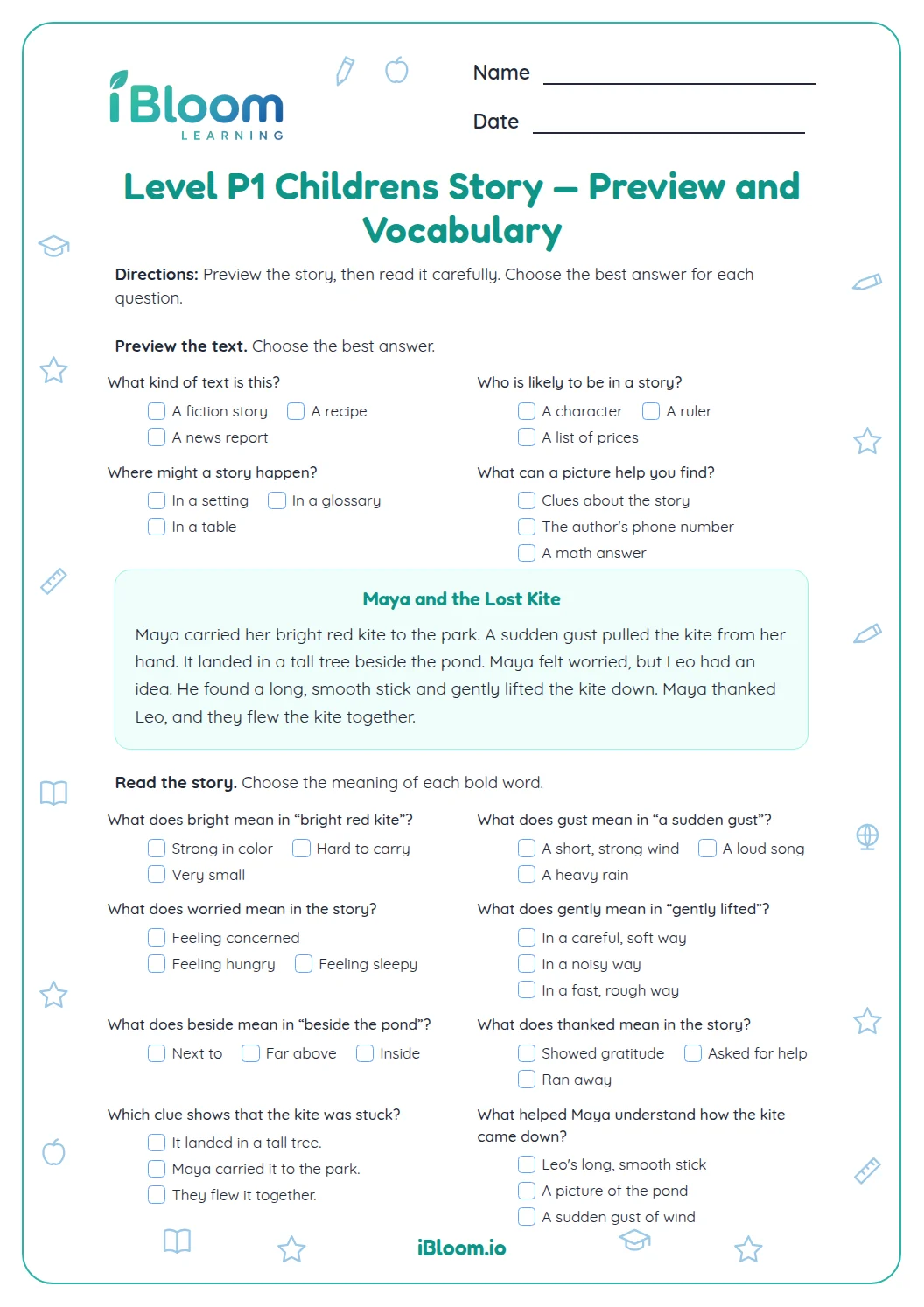
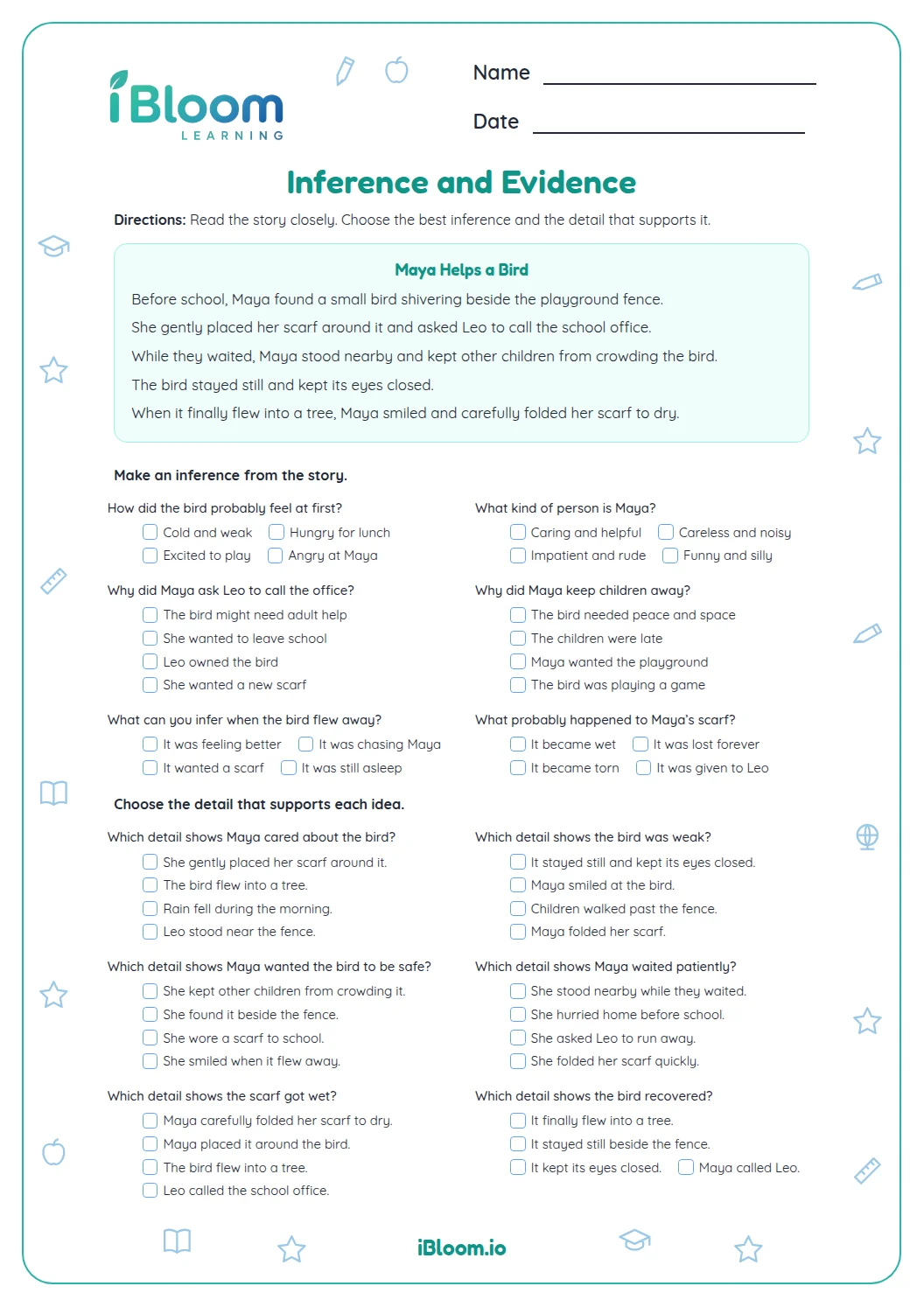


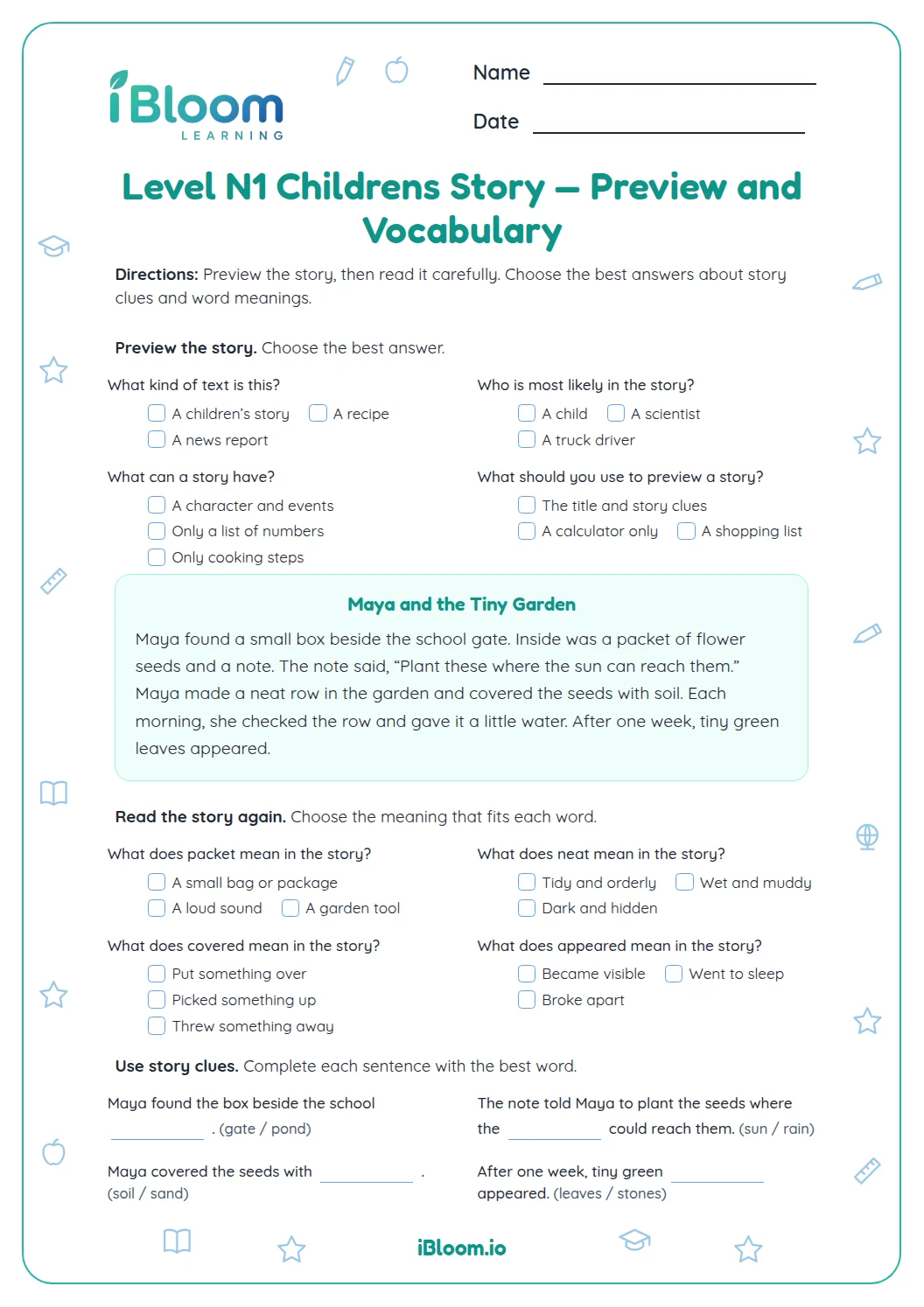
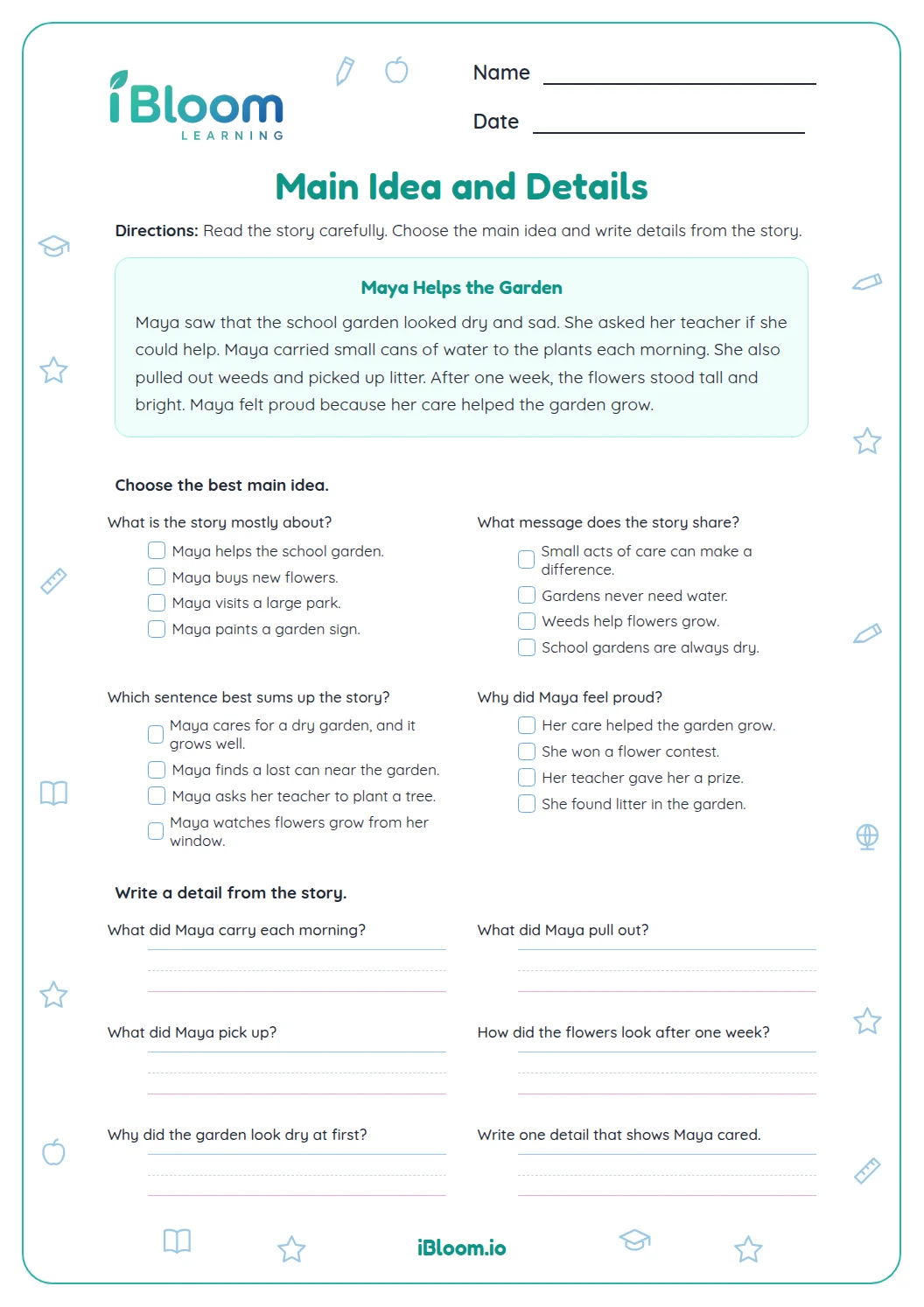


About this worksheet
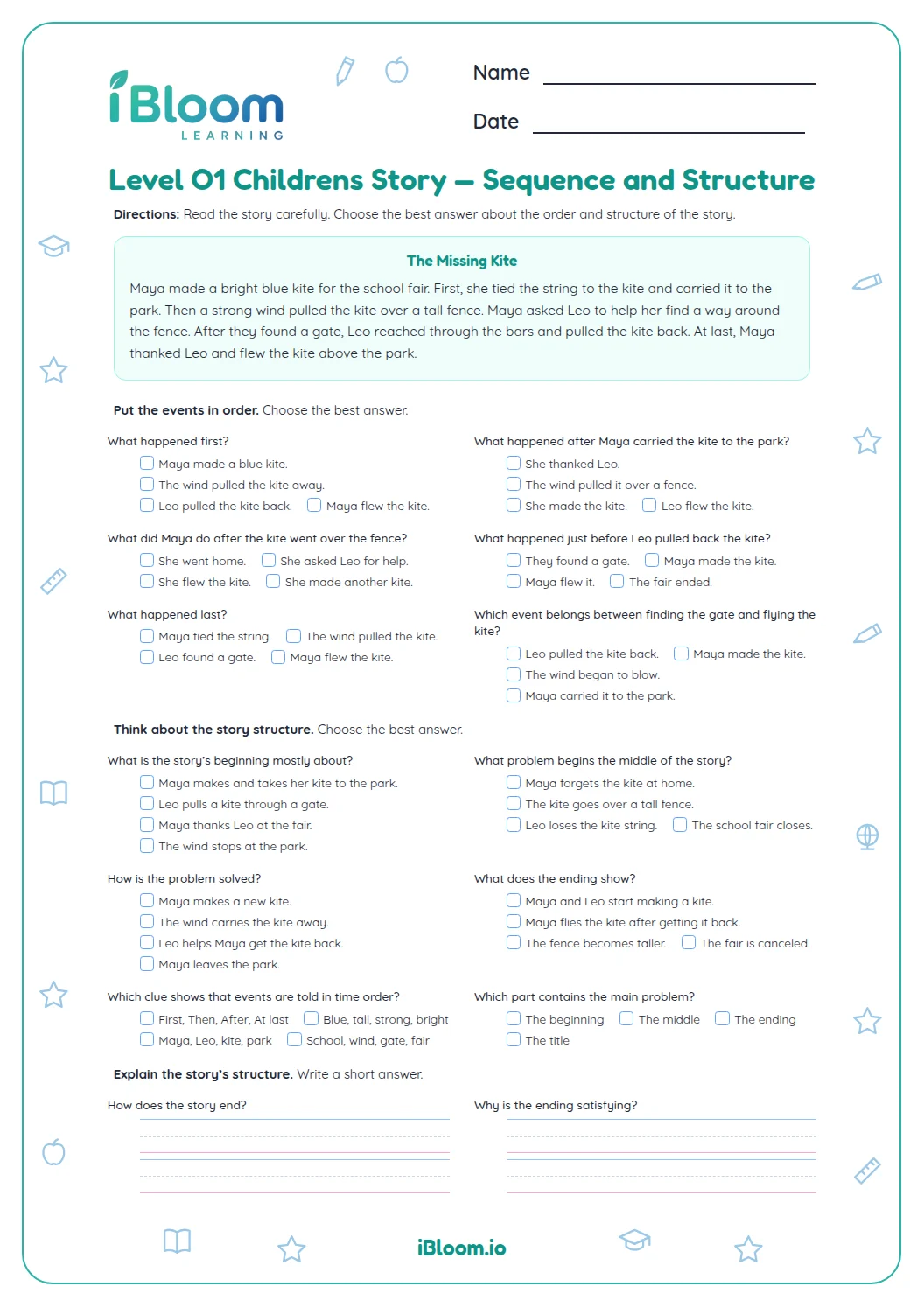
This free Grade 3 reading worksheet pairs an original story about Mia’s sunflower project with 14 questions on sequence and structure. Students track what happens first, next and later, find details, and explain how later events build on earlier ones. The work practices CCSS RL.3.5 and RL.3.1. The answer key includes short answers and sample written responses.
Aligned to RL.3.5 and RL.3.1
How can you keep story events in order?
Notice time words and cause-and-effect links. Mia plants the seed before it sprouts, and the class makes a chart after she records the plant’s growth. These details help readers place each event.
- 1First: Mia plants the seed.
- 2Later: the seed sprouts; near the end, the class makes a growth chart.
How does one part of the story lead to the next?
A later event often depends on an earlier choice or problem. Mia’s measurements help the class make a growth chart at the end. When explaining structure, tell how the earlier action prepares for what happens later.
Which details support an answer?
Look back at the passage for a sentence that answers the question. For questions about why, connect the detail to the next event. A clear answer names the event and explains its effect.
How to use this worksheet
- 1Read the passage once to understand the main events.
- 2Notice time words and changes in the characters’ actions.
- 3Return to the passage to find evidence for each answer.
- 4For order questions, identify what happened before and after.
- 5For written responses, explain how the details connect.
Common mistakes and quick fixes
The mistake
Choosing an event because it seems important, not because it happened first
The fix
Use time clues and reread the beginning before ordering events.
The mistake
Giving a detail without answering the why question
The fix
Add a sentence that explains how the detail causes or supports the next event.
The mistake
Mixing up the seedling’s pot and garden stages
The fix
Track where the plant is at each stage: cup, pot, then garden.
Common Core alignment
These standards describe the skills practiced in the questions below.
Describe how later parts of a story build on earlier events.
On this sheet: Questions ask students to order events and explain how later actions follow from earlier ones.
Show the official wordingHide the official wording
Refer to parts of stories, dramas, and poems when writing or speaking about a text, using terms such as chapter, scene, and stanza; describe how each successive part builds on earlier sections.
Answer questions using details stated in the story.
On this sheet: Readers select and explain details from the passage.
Show the official wordingHide the official wording
Ask and answer questions to demonstrate understanding of a text, referring explicitly to the text as the basis for the answers.
What to practice next
Make more practice
Further reading
Questions parents and teachers ask
What story does this worksheet use?
The original passage follows Mia as she plants and cares for a sunflower seedling with help from Leo. Readers track the plant from a paper cup to the garden and see how Mia’s notes help the class make a growth chart.
How many questions are included?
There are 14 questions in four parts: six multiple-choice questions, six short answers and two written responses. They ask about event order, details and how one part builds on what came before. The separate answer key gives the correct choices and sample explanations.
How can I help a child answer sequence questions?
Have the child notice time clues such as “each morning,” “on Thursday,” and “a week later.” Then ask what happened before and after each clue. Connecting the actions helps the reader reconstruct the story’s order. Encourage readers to point to the sentence that supports each response.
What does story structure mean here?
The questions focus on how events fit together. Mia’s early care helps the seedling grow, solving the drainage problem keeps it healthy, and her later notes give the class information for a growth chart. Readers can revisit the passage to trace this chain of events.
What should a written answer include?
A written answer should name a relevant event or detail and explain how it answers the question. For example, to explain how the ending connects to earlier actions, mention Mia’s care or observations and the chart made from her notes.