


About this worksheet
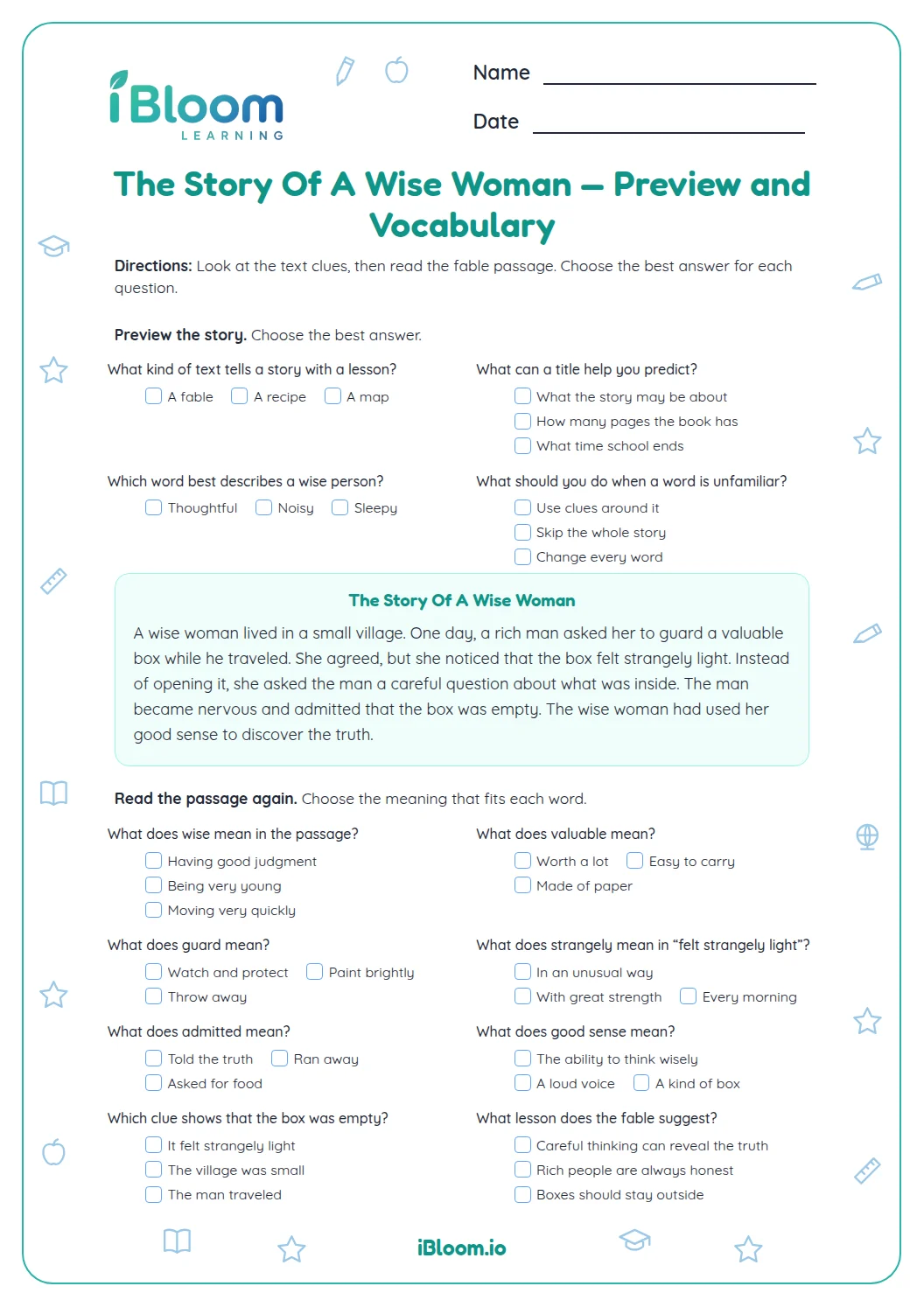
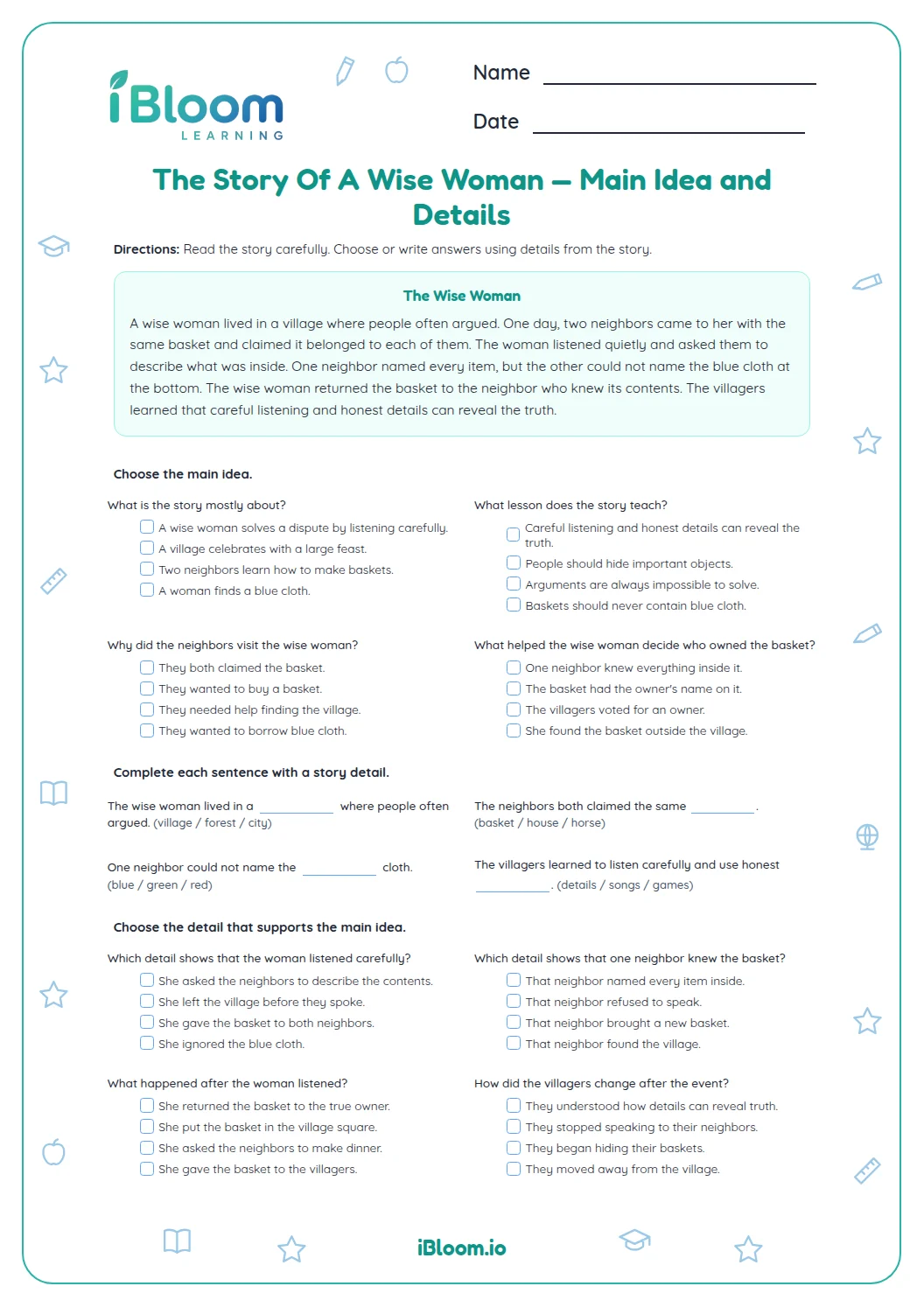
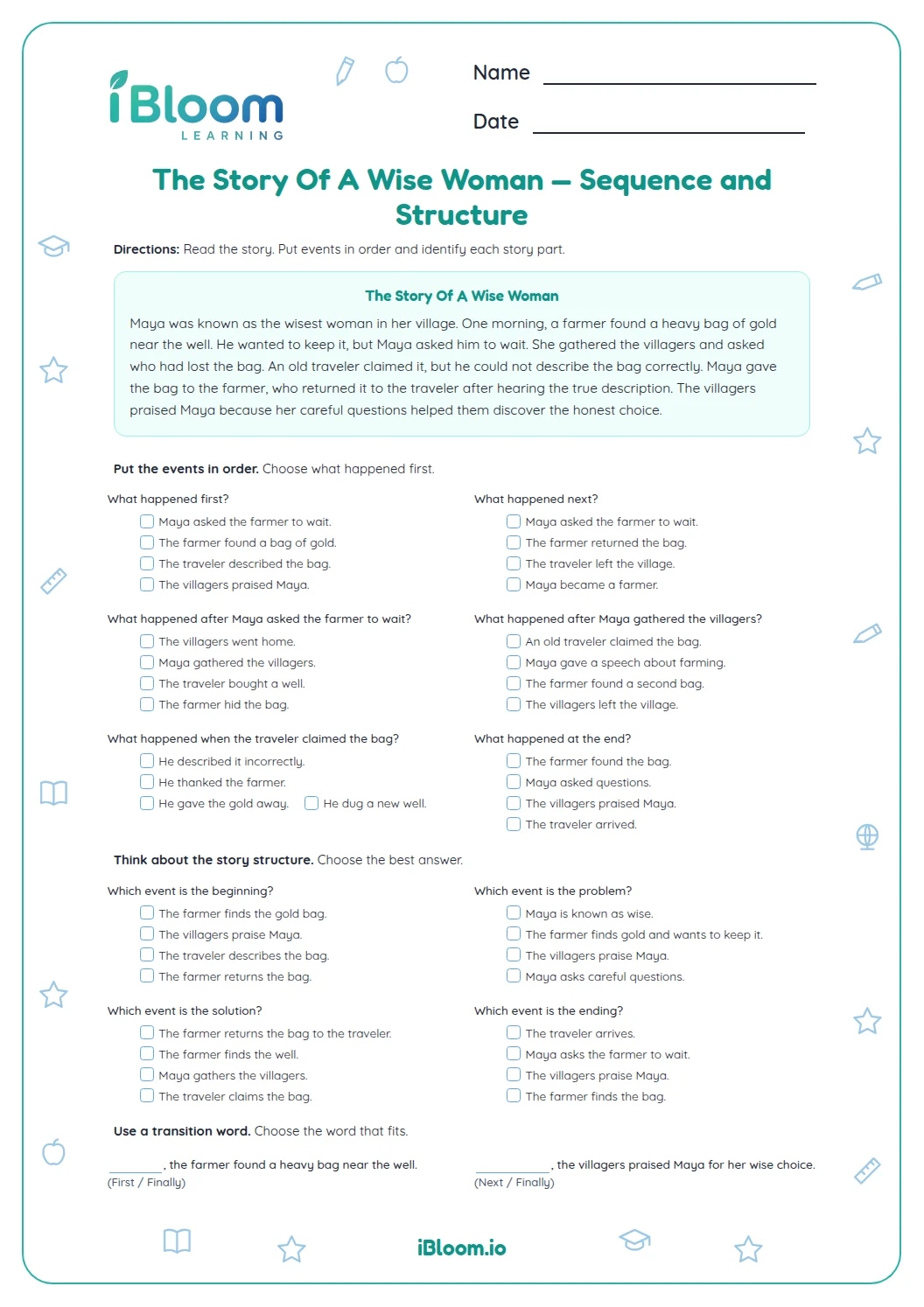
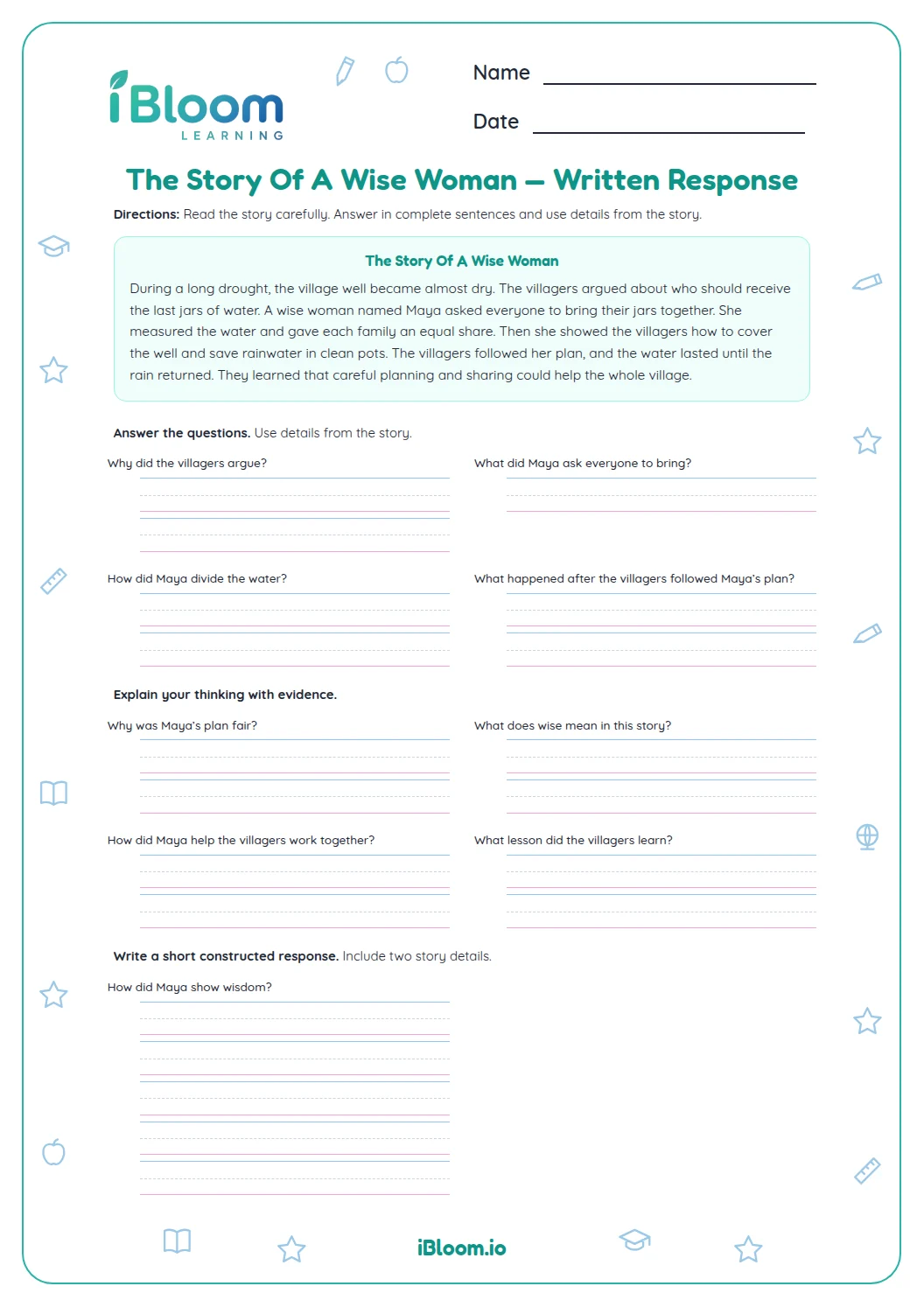
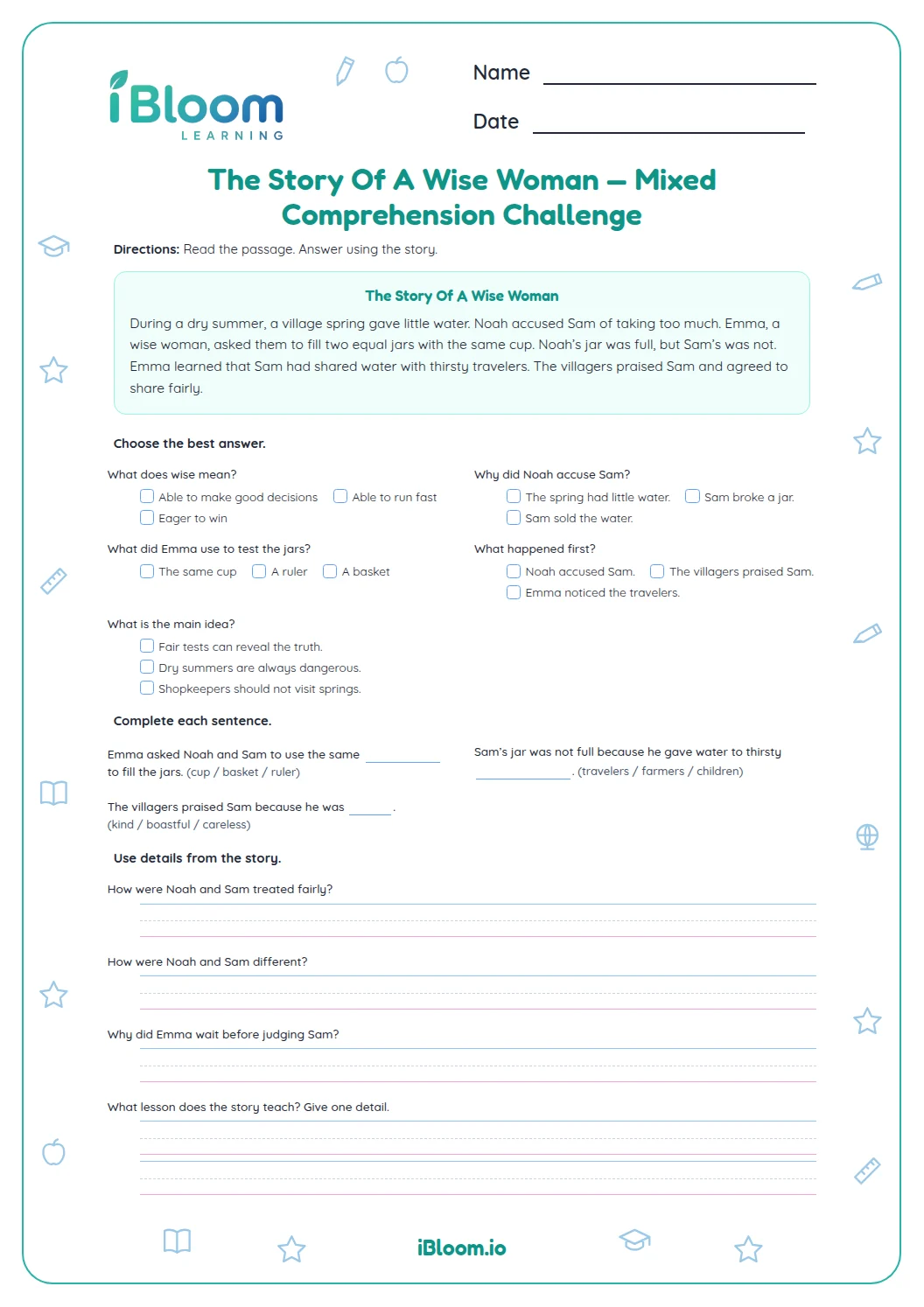
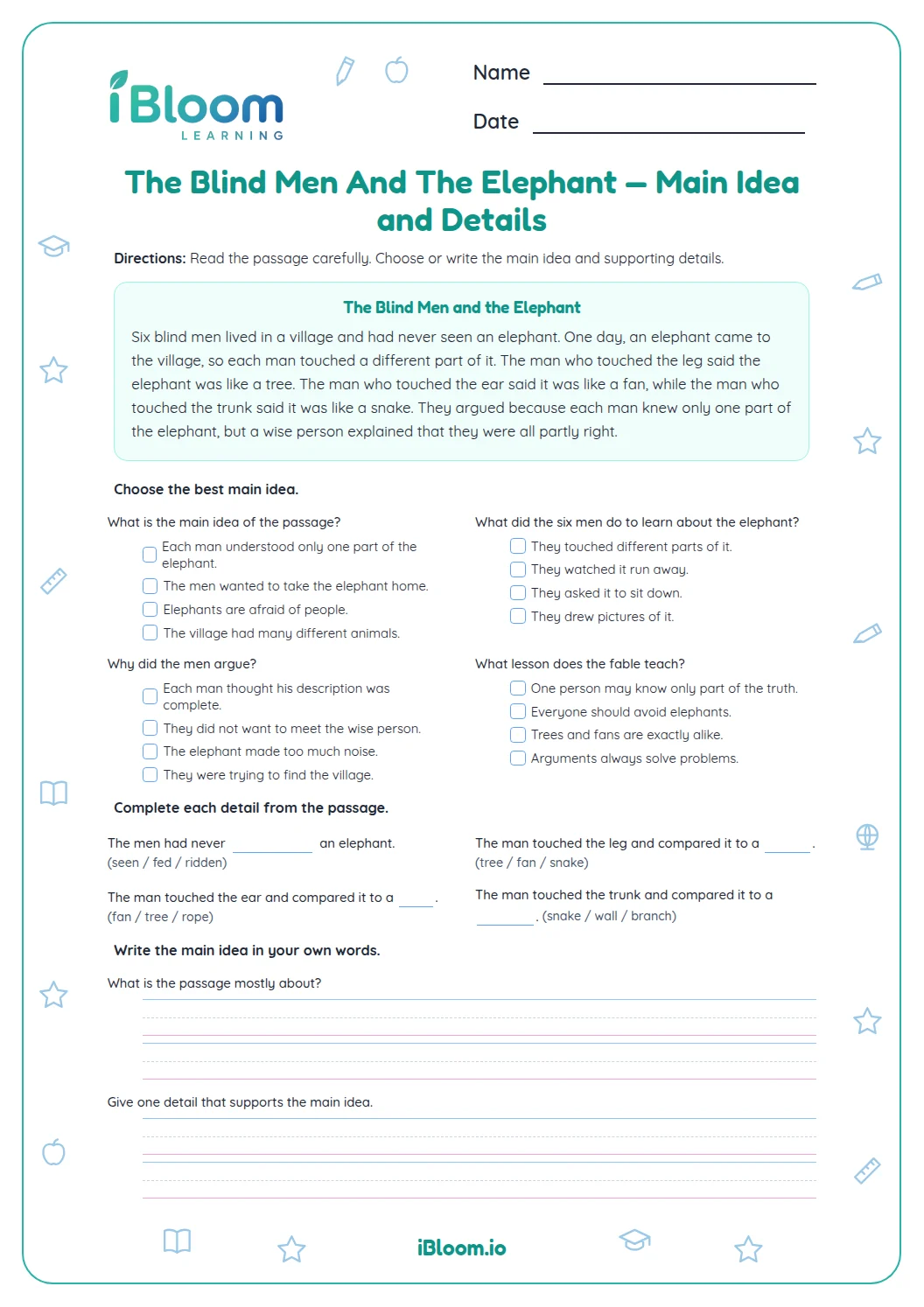
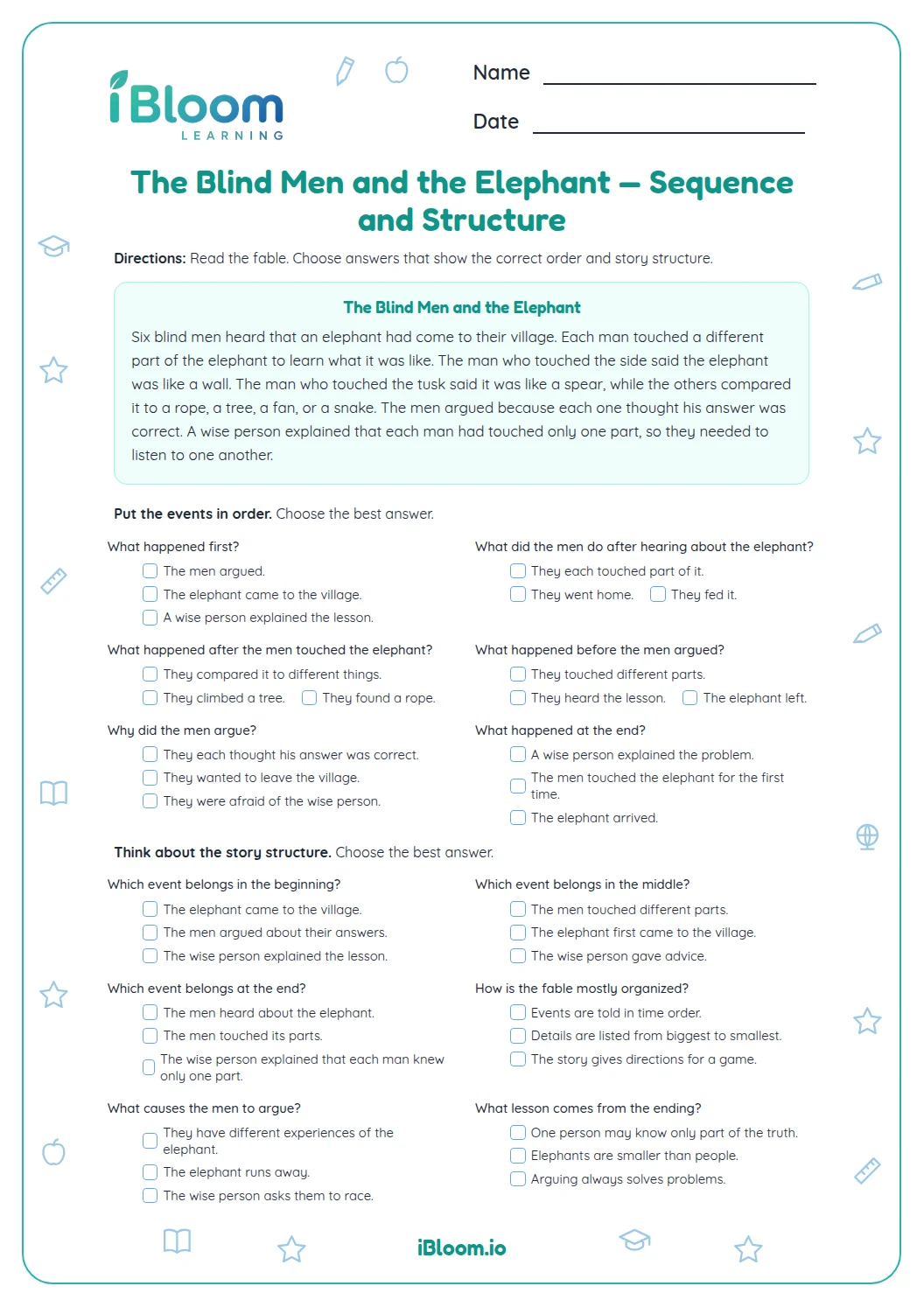
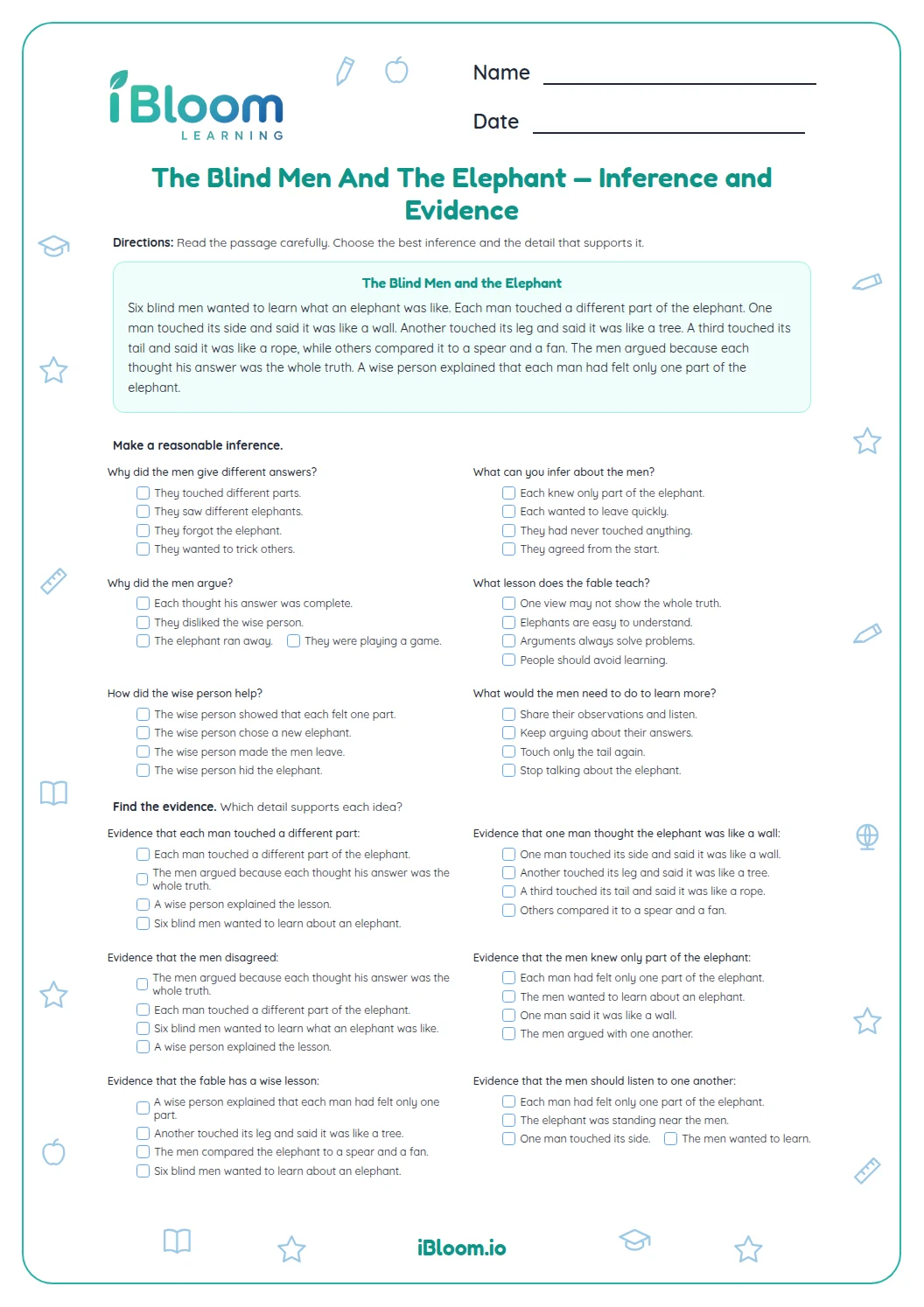
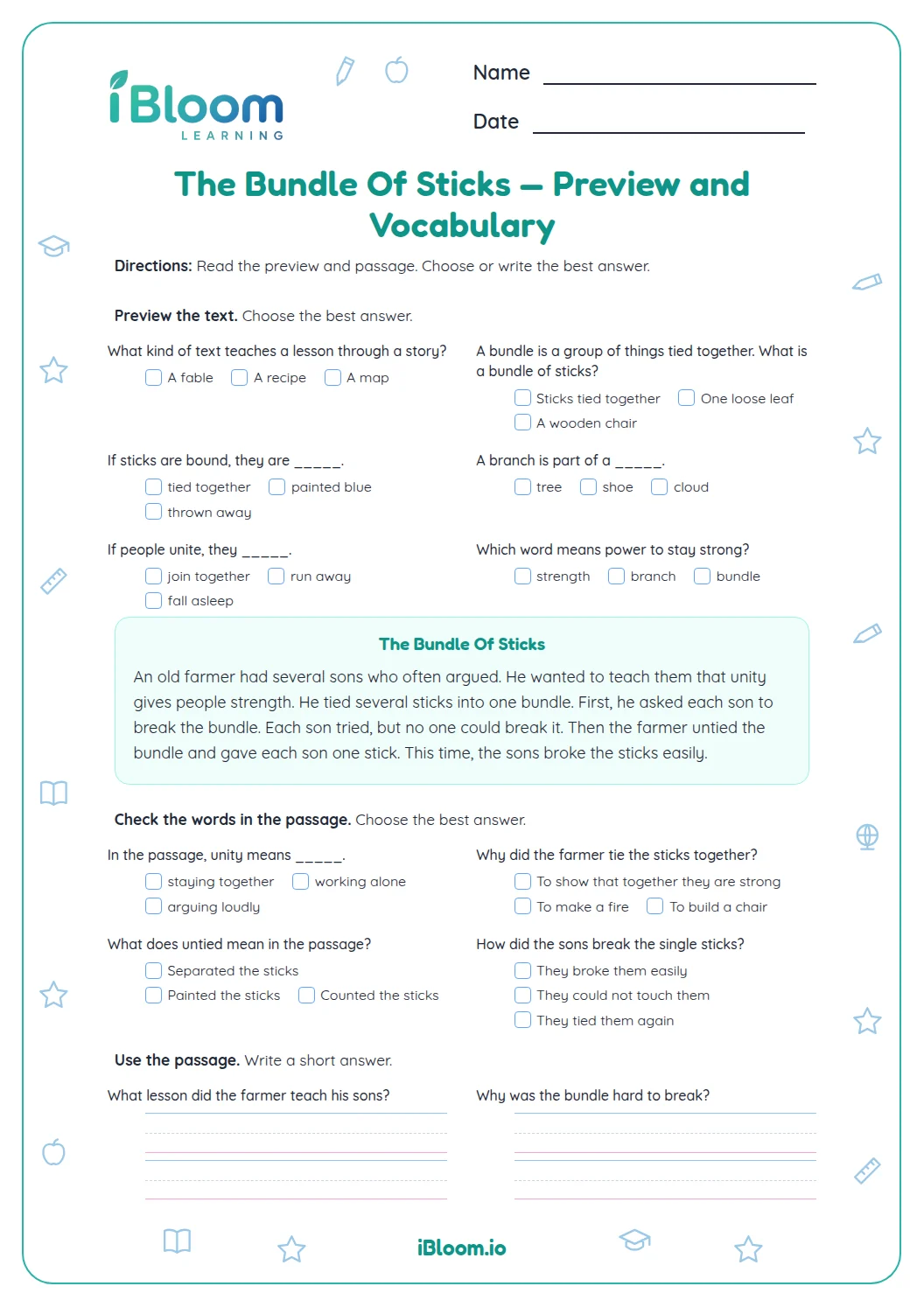
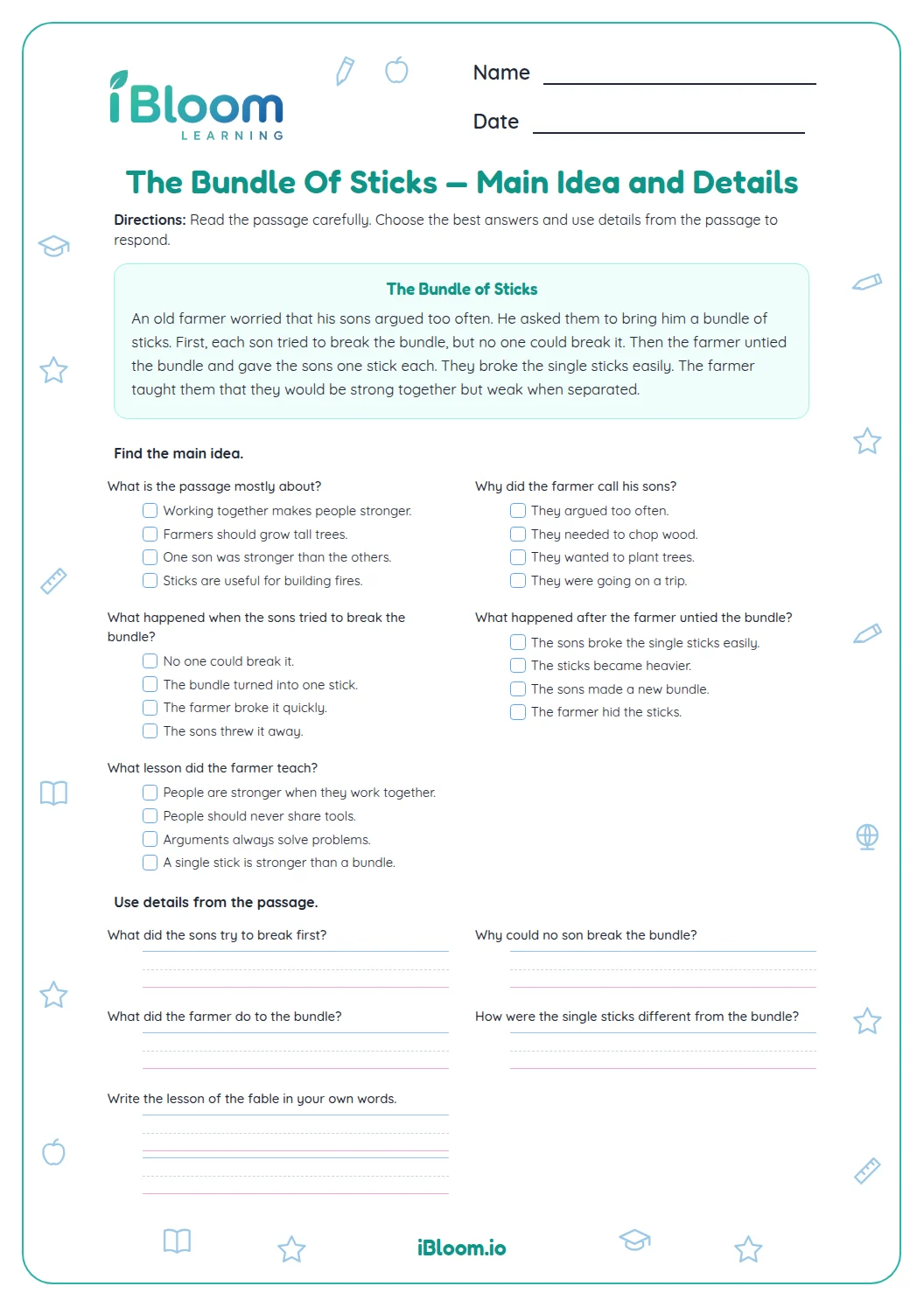
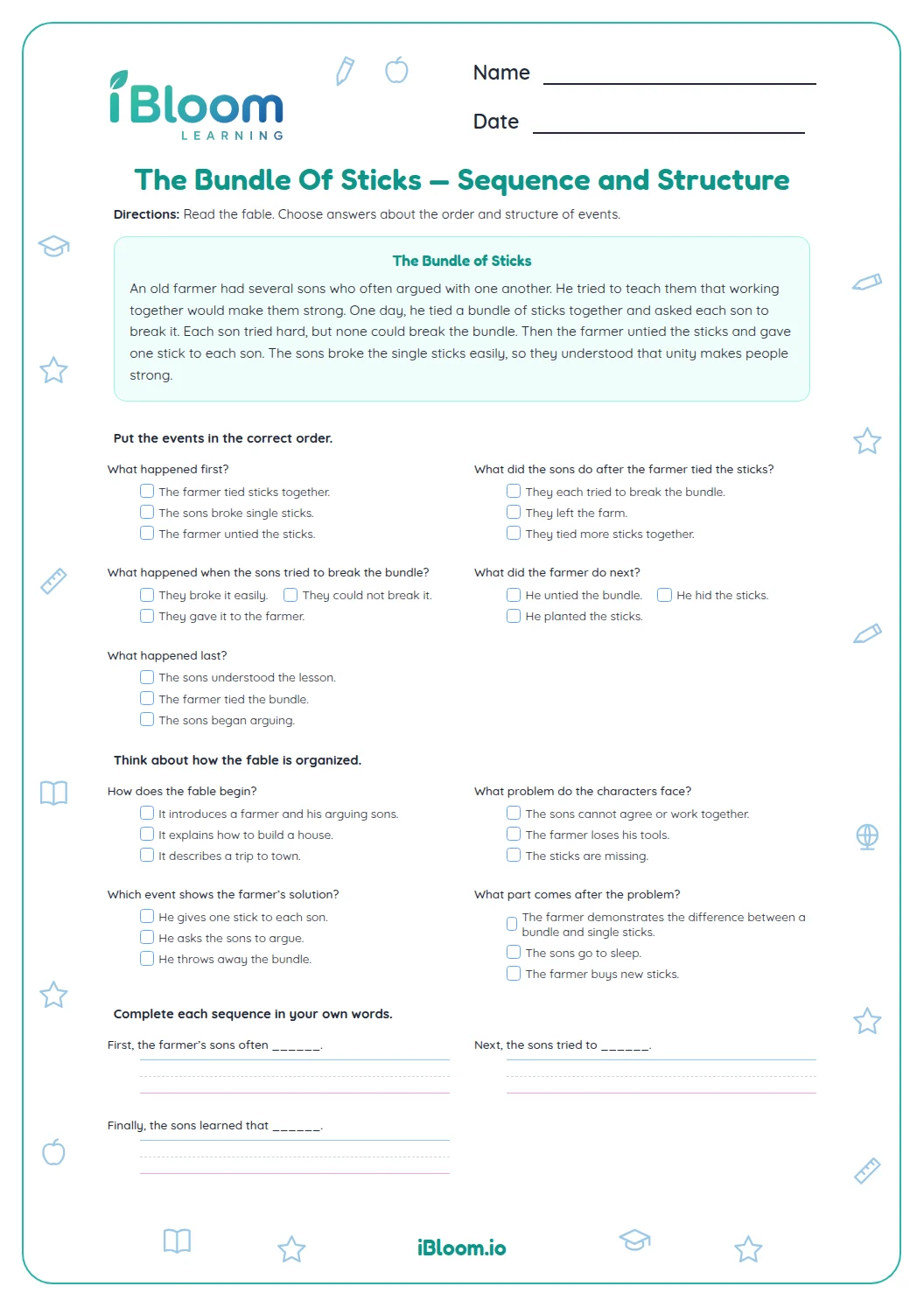
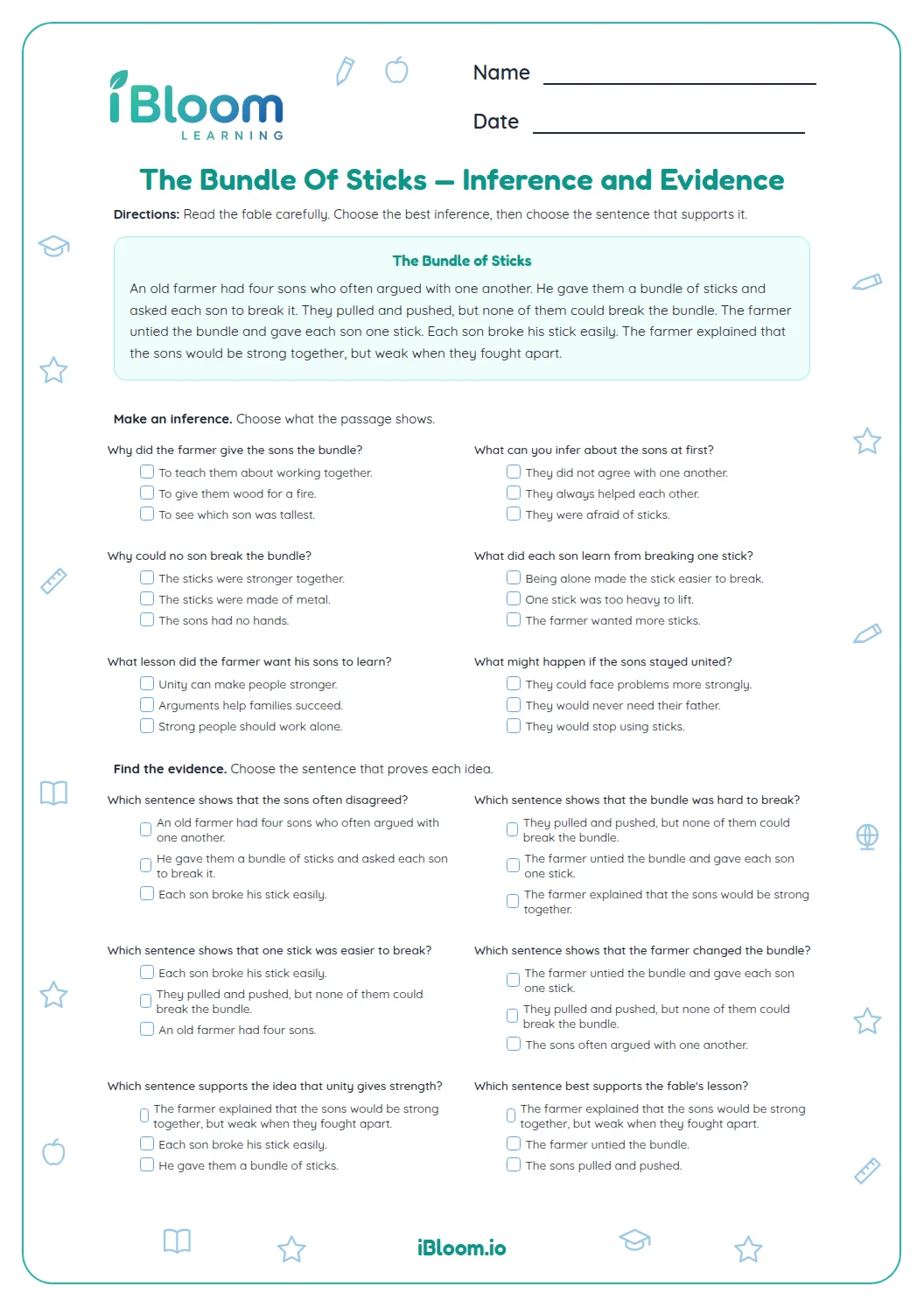
This Grade 3 reading-comprehension worksheet pairs the fable “The Story of a Wise Woman” with questions about inference and evidence. Students read how Maya responds to a village water problem, then answer 14 questions about her choices, the leader’s reaction, and details that support conclusions. The separate answer key includes sample responses and story evidence. It practices CCSS RL.3.1 by asking readers to answer questions using details from the text.
Aligned to RL.3.1
What counts as evidence for an inference?
An inference combines a text clue with what a reader knows. The answer may go beyond a sentence’s exact words, but the clue should still come from the story. A strong response names both the idea and the detail that supports it.
How can a reader connect a clue to an idea?
First identify what the story says. Then ask what that action suggests. Maya asks people to bring jars and work together, then points out clouds gathering above the hills; those choices suggest she notices problems and plans ahead.
- 1Maya suggests bringing jars and working together.
- 2Clue: People carried only small cups.
- 3Inference: Maya sees a problem and plans a practical solution.
What will students find in the passage?
The passage follows Maya as she notices the villagers’ small cups, points out clouds gathering over the hills, and helps the village benefit when rain fills the well. Part B asks readers to infer what characters think and feel. Part C asks them to infer from story events and details. Part D adds questions that connect conclusions to evidence.
How to use this worksheet
- 1Read the passage once to understand what happens.
- 2For each question, return to the sentence that contains a useful clue.
- 3For an inference, state the idea first and then name the evidence.
- 4Keep written responses focused on one answer and one supporting detail.
- 5Check with the key and revisit the story when an answer needs support.
Common mistakes and quick fixes
The mistake
Retelling the whole story instead of answering the question.
The fix
Answer the question first, then add one detail that supports it.
The mistake
Giving an inference with no passage clue.
The fix
Point to an action or outcome in the story and explain what it suggests.
The mistake
Copying a sentence without explaining its connection.
The fix
Add a short phrase such as “This shows…” to connect the clue to the idea.
Common Core alignment
This activity gives children focused practice with the language and reasoning named in this standard.
Read the story carefully, find a detail, and explain what it suggests.
On this sheet: Readers answer questions about the fable and point to explicit details that support their answers.
Show the official wordingHide the official wording
Ask and answer questions to demonstrate understanding of a text, referring explicitly to the text as the basis for the answers.
What to practice next
Make more practice
Further reading
Questions parents and teachers ask
What is an inference in this story?
An inference is an idea a reader works out from story clues. Maya notices that people carry only small cups and suggests bringing jars and working together. Those actions suggest she can recognize a problem and think of a practical plan.
What details support an answer about Maya?
The passage says Maya asks people to bring jars and work together, then calmly shows the leader clouds gathering above the hills. These details can support ideas about her planning and confidence. Choose a detail that directly connects to the inference.
Can students use their own words?
Yes. The written-response questions accept different wording when the idea matches the passage and the response uses a relevant detail. The key provides sample answers, not the only acceptable sentences. For evidence questions, the detail should come from the story.
How is evidence different from an inference?
Evidence is a detail stated in the passage; an inference is what a reader concludes from that detail. Maya points out clouds gathering above the hills. A reader may infer that she noticed a clue that rain could help refill the well.
Should an adult read the passage aloud?
An adult can read the fable aloud and pause while the child looks for clues. Ask what a character says or does, then what that detail suggests. The child can explain an idea orally before writing a focused answer about the story.
How many questions does the worksheet include?
There are 14 questions after the passage. They ask readers to infer what Maya and the leader think or learn, then use specific story details as evidence. The answer key includes sample responses, and other wording is acceptable when it is supported by the fable.