

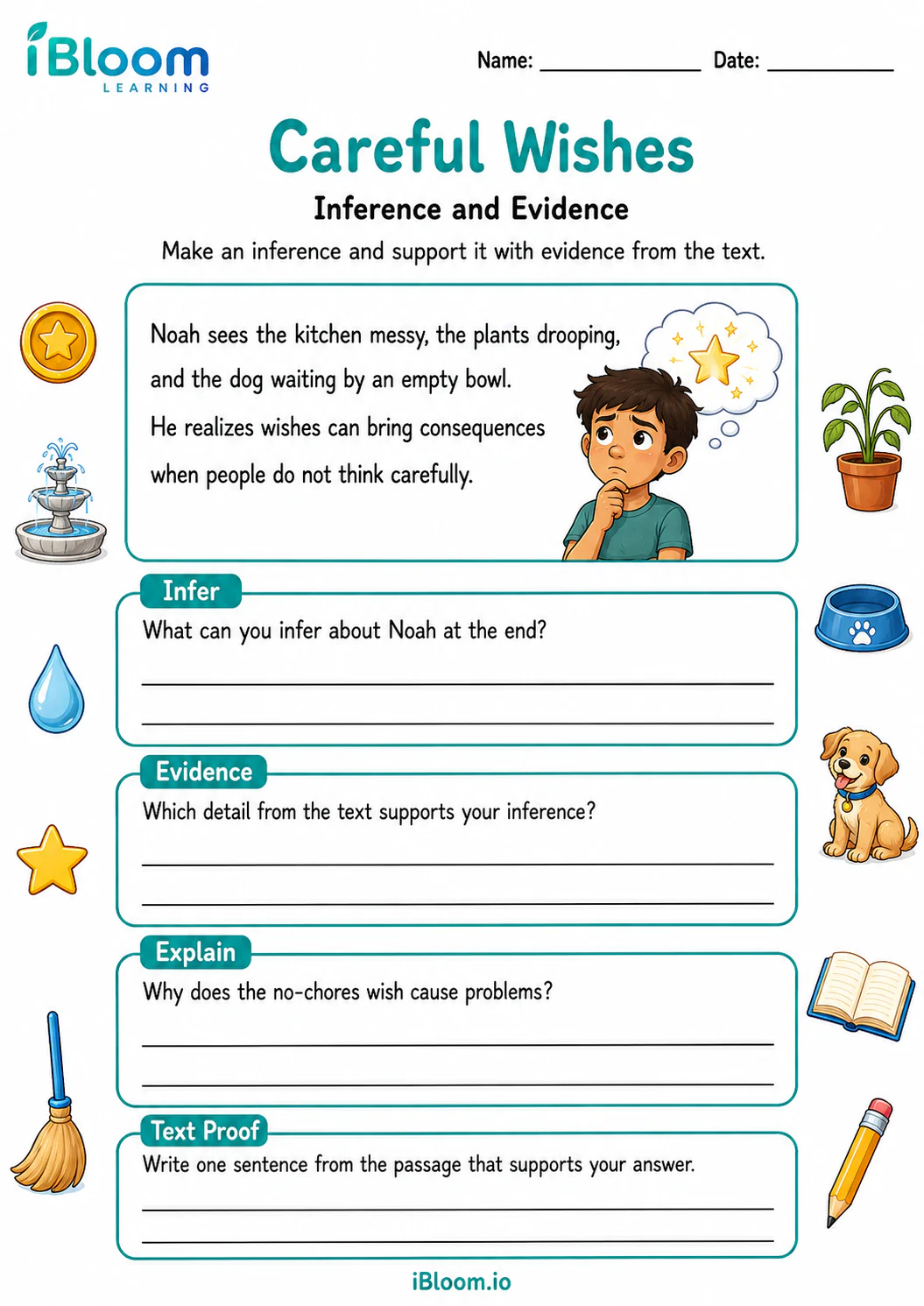
About this worksheet
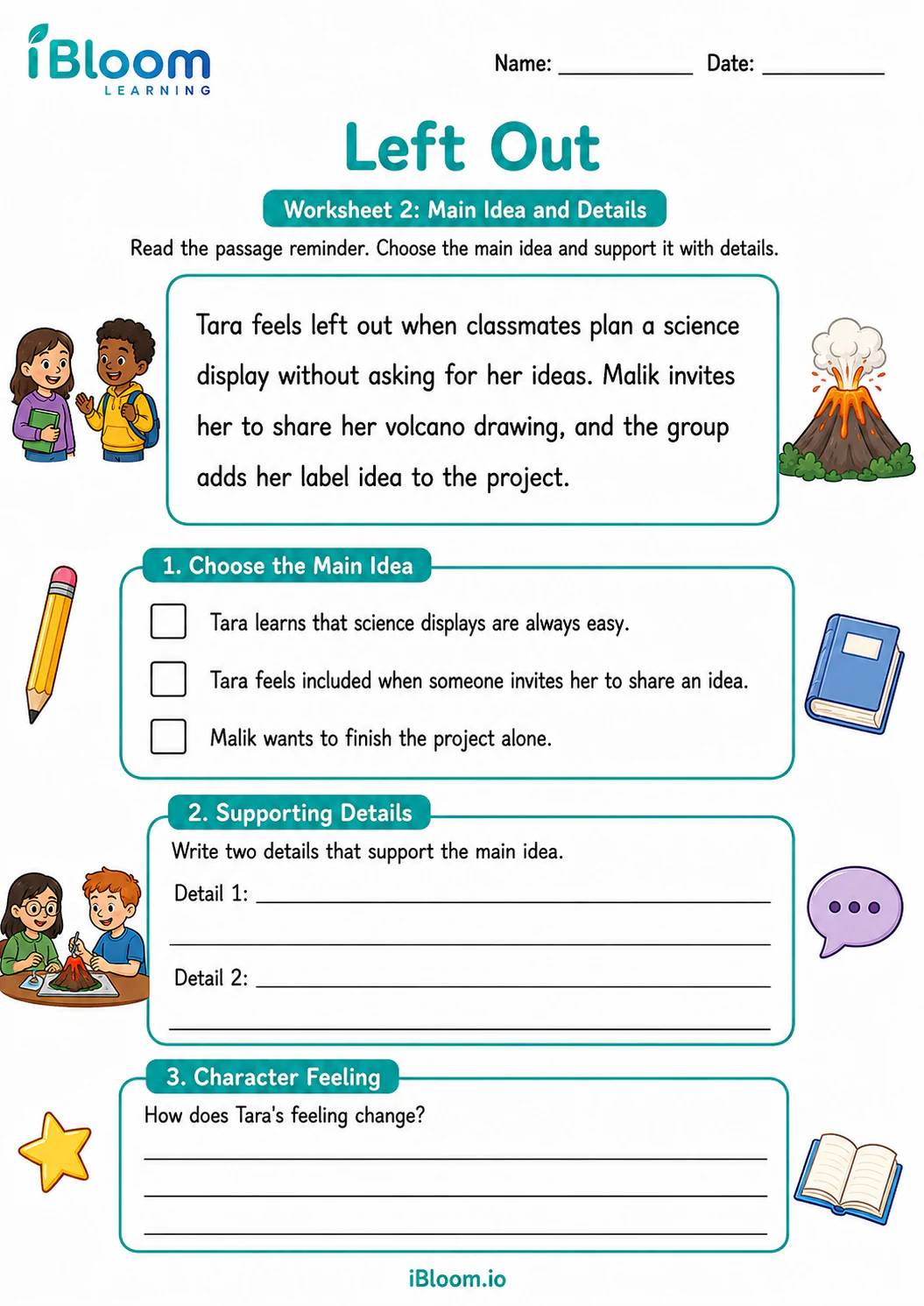
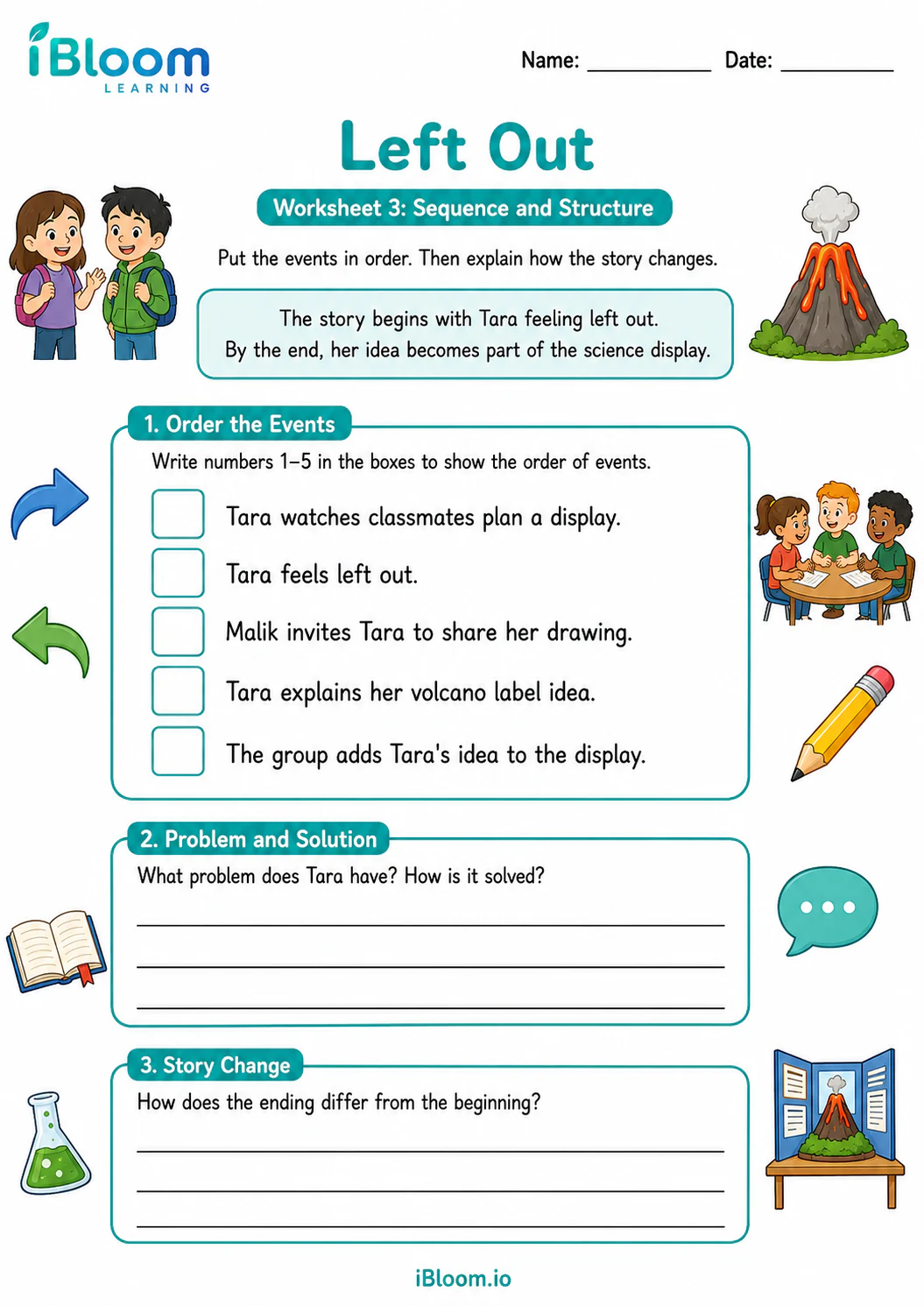
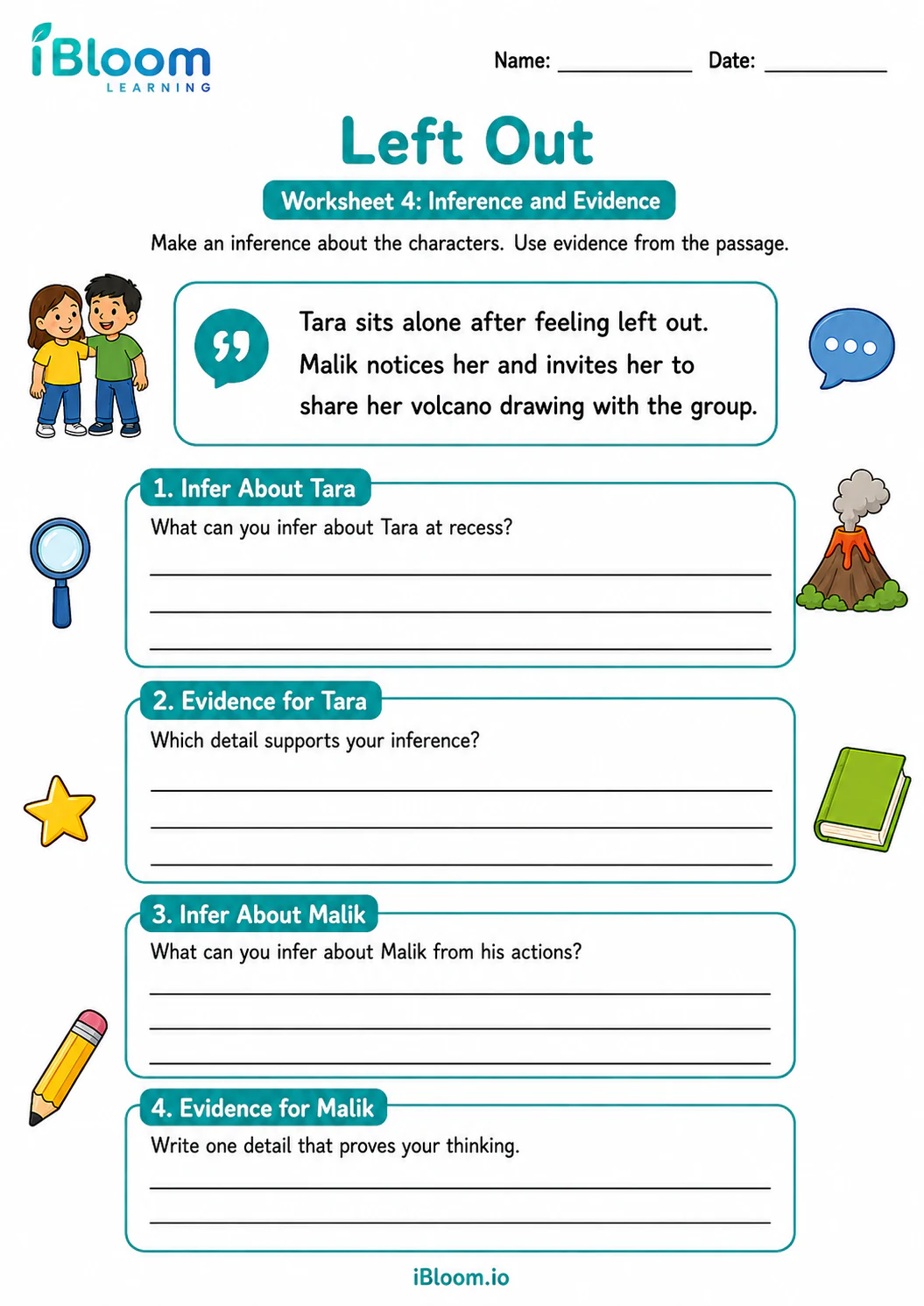
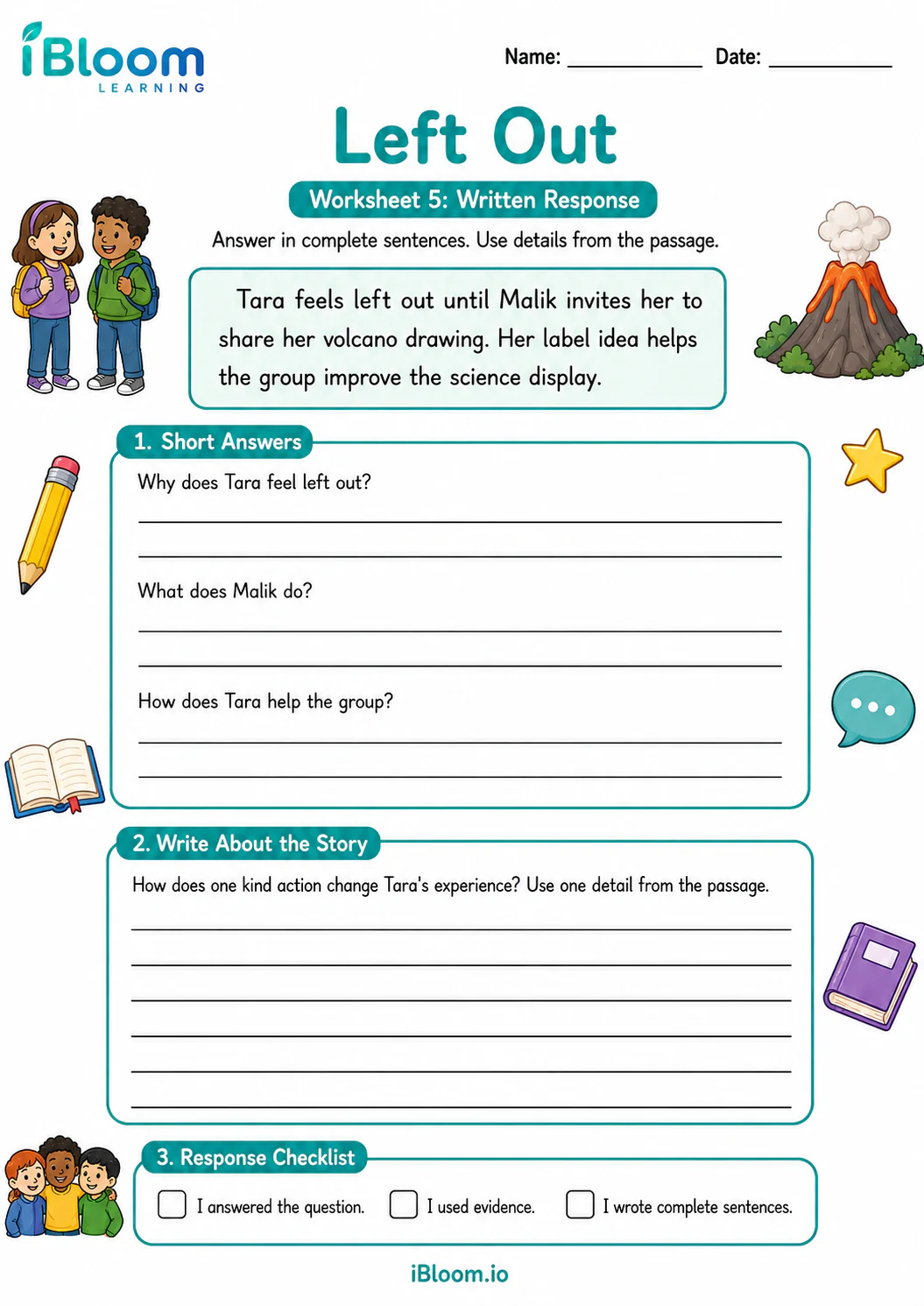
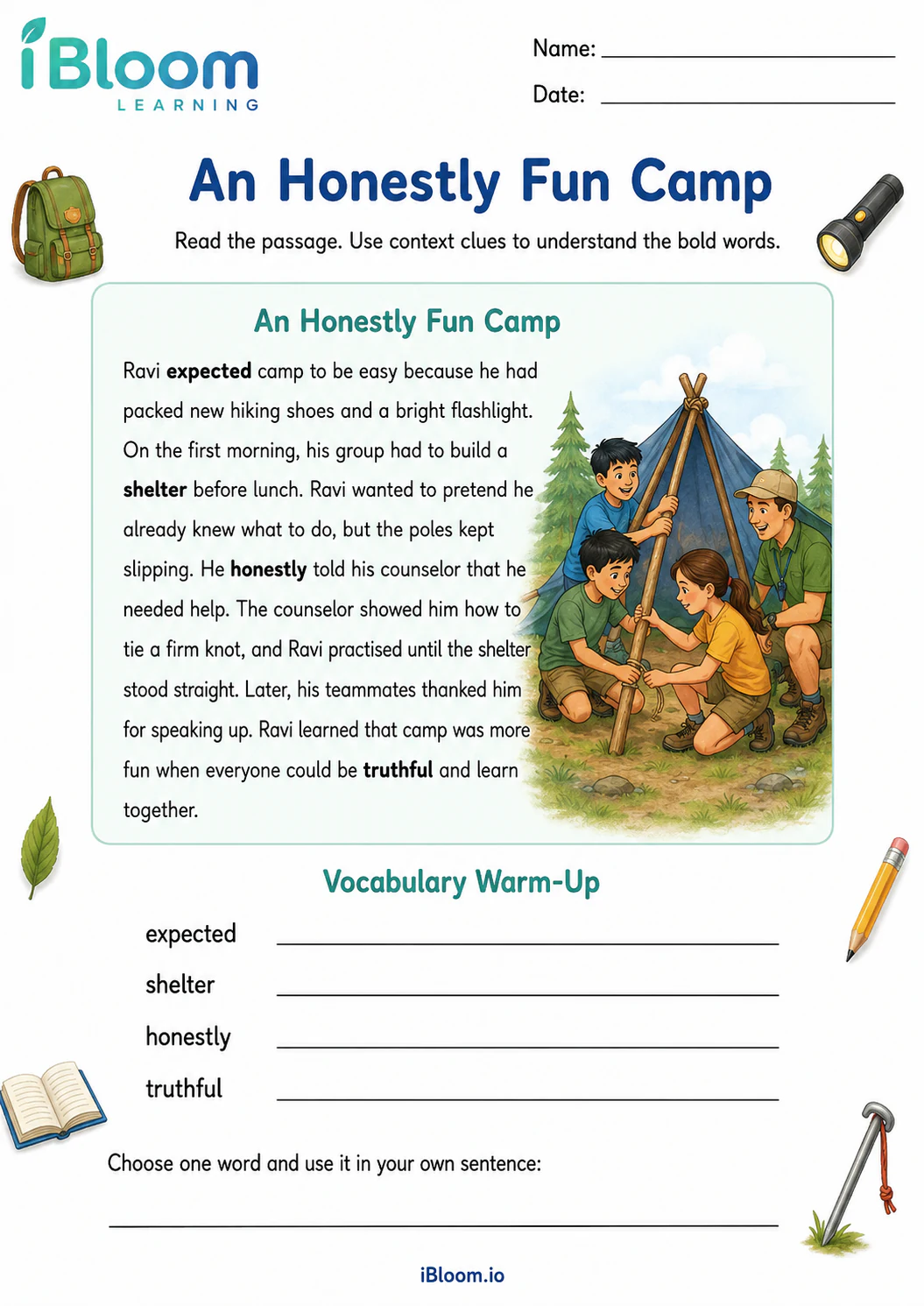
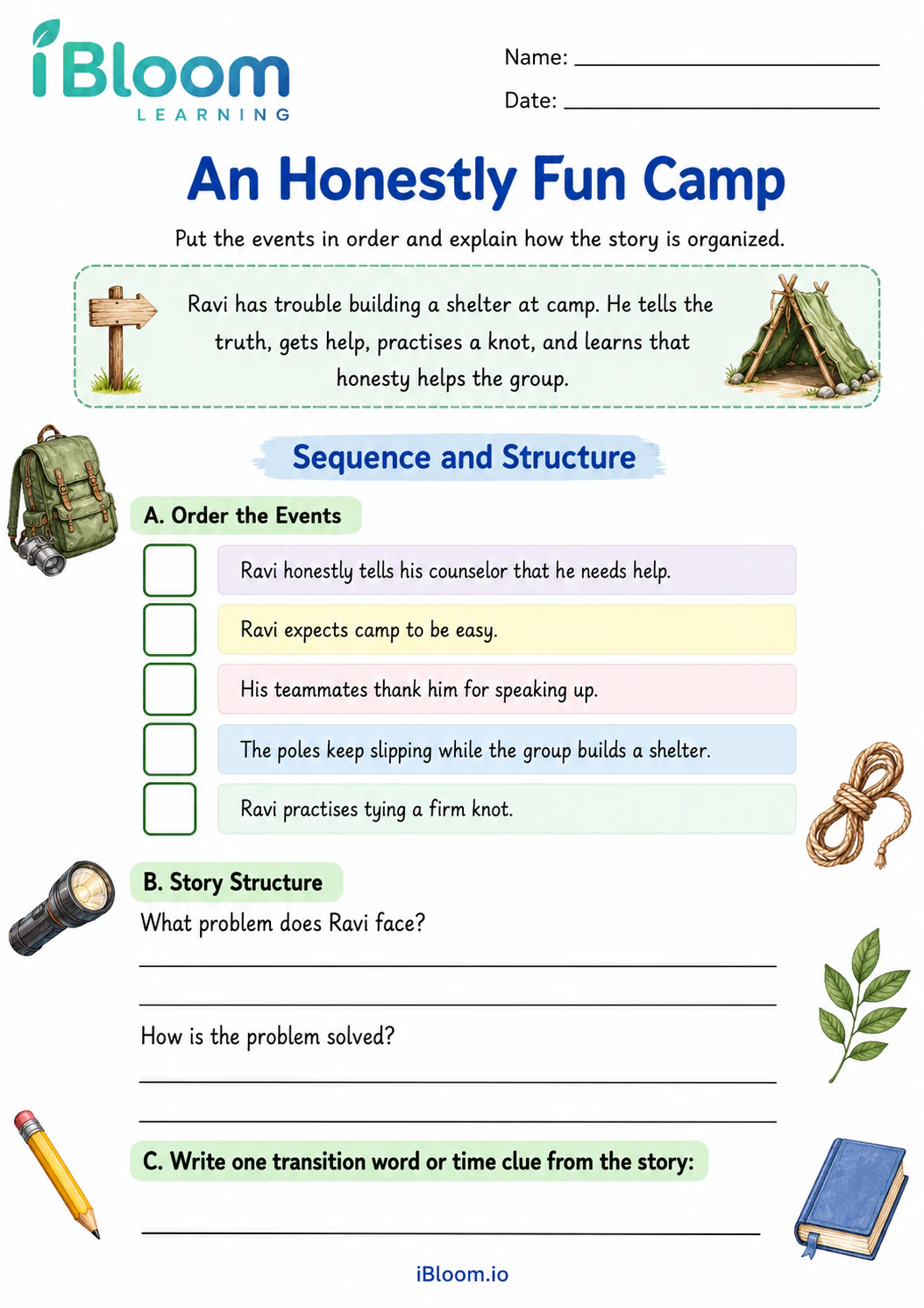
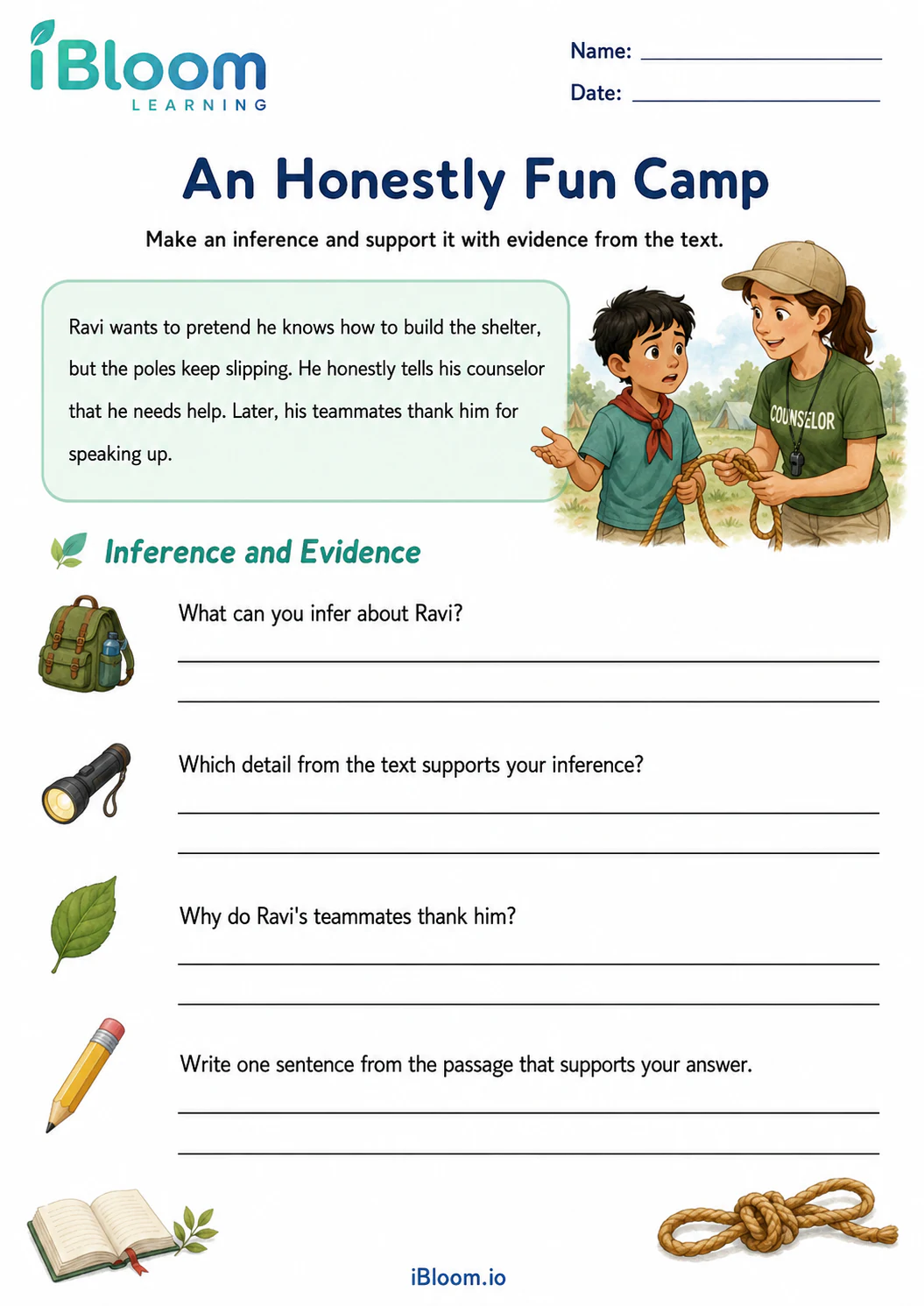
This free printable worksheet is for Grade 4 learners practicing story comprehension through Tara and Jordan’s story. It has 14 questions across the labeled parts and a separate answer key. Learners use what Jordan does, how Maya responds, and details in the passage to choose, complete, or explain an answer. The examples stay with the skill named in the worksheet title.
Aligned to RL.4.1
What does story comprehension look like here?
The questions use Tara and Jordan’s story. Learners pay attention to what Jordan does, how Maya responds, and details in the passage and check whether each answer fits the exact sentence, example, or situation.
How does the practice build?
The opening part establishes the task. Later questions ask learners to compare choices, apply the idea in a fresh example, or explain their thinking.
What is included in the printable?
There are 14 questions across 1 parts, followed by a separate answer key.
- Part A begins with answer from the story.
- The final items ask learners to apply or explain the target idea.
How to use this worksheet
- 1Read the directions and the first part heading together.
- 2Read each whole question before selecting or writing an answer.
- 3Point to the sentence detail or example that supports the response.
- 4For an explanation, name the clue and connect it to the answer.
- 5Check the key after completing the worksheet and revisit any mismatch.
Common mistakes and quick fixes
The mistake
Choosing an answer after reading only part of the prompt.
The fix
Read the full sentence or situation, then compare every choice.
The mistake
Giving a plausible answer that does not fit the specific clue.
The fix
Find the exact word, detail, or feature that supports the response.
The mistake
Writing an explanation without connecting evidence to the answer.
The fix
Name the clue and say what it tells you.
Curriculum alignment
Use story details to explain explicit ideas and draw inferences.
On this sheet: Questions ask readers to cite story details and make supported inferences.
Show the official wordingHide the official wording
Refer to details and examples in a text when explaining what the text says explicitly and when drawing inferences from the text.
What to practice next
Make more practice
Further reading
Questions parents and teachers ask
What does this worksheet practice?
This worksheet practices story comprehension with 14 questions about details, sequence, vocabulary, and inference. Learners choose an answer supported by the passage, then check their work with the separate answer key. An adult can ask the learner to point to the detail that supports a choice.
How many questions are included?
There are 14 questions arranged in three parts. The first part introduces the task, and later items ask learners to apply the same skill with additional detail. The answer key is provided separately so children can finish the practice before checking.
Is an answer key included?
Yes. A separate answer key lists the expected answer to each question. For an open response, the key gives a sample idea; accept other responses when they are accurate and supported by the task. Ask the learner to point to a specific example on the worksheet and tell how it supports the answer. This makes the checking step part of the practice.
How can I use this page at home?
Print the worksheet and let the learner work through one part at a time. Read a prompt aloud if needed, then ask the learner to explain what clue, detail, or reasoning led to the answer. Check responses together with the answer key.
How long should the worksheet take?
Plan for about 20 minutes, with flexibility for reading prompts aloud or discussing answers. Learners can pause between parts and return later. The main goal is careful practice and clear reasoning, rather than finishing quickly. Ask the learner to point to an example and explain how it supports the answer.