
About this worksheet
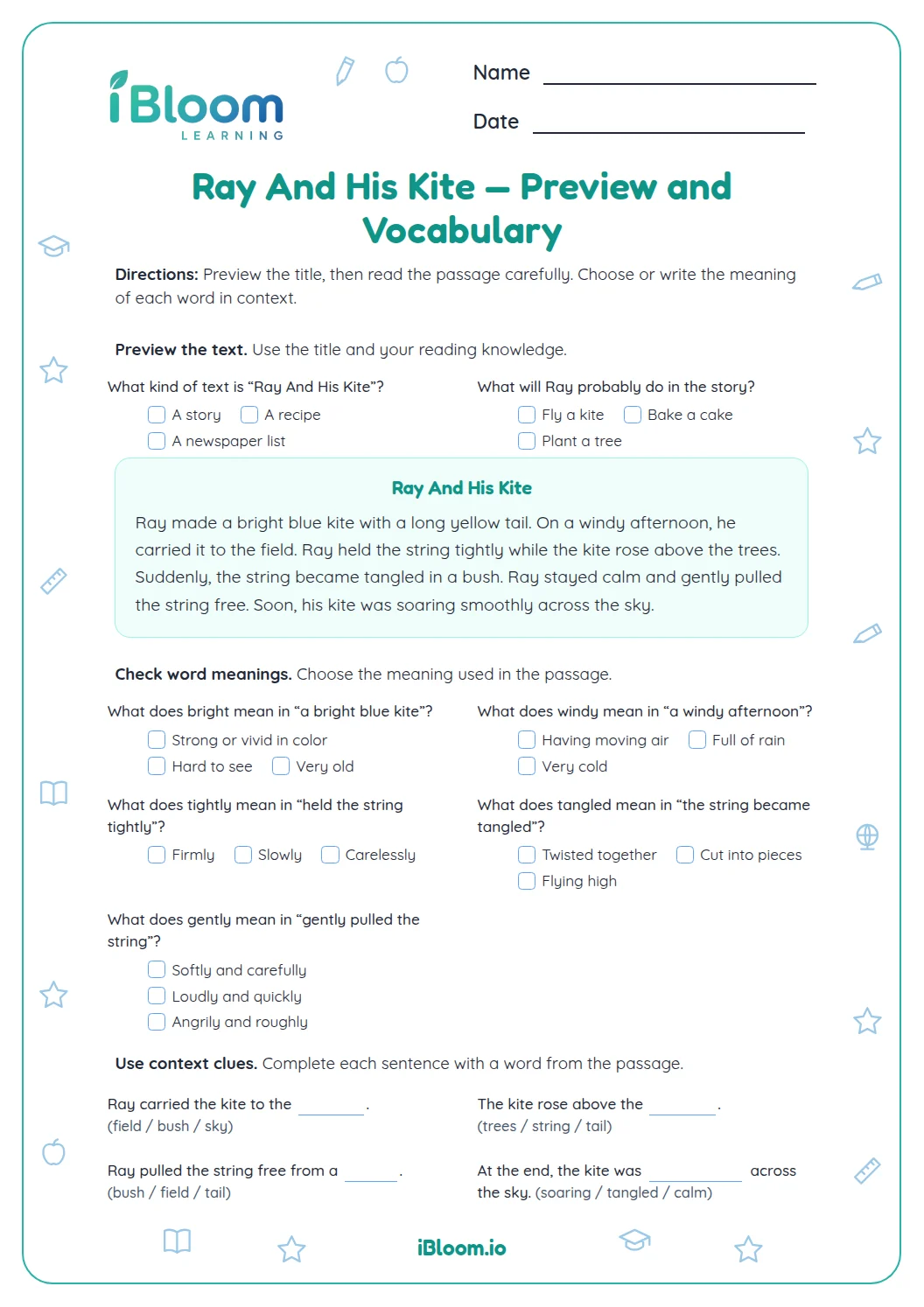
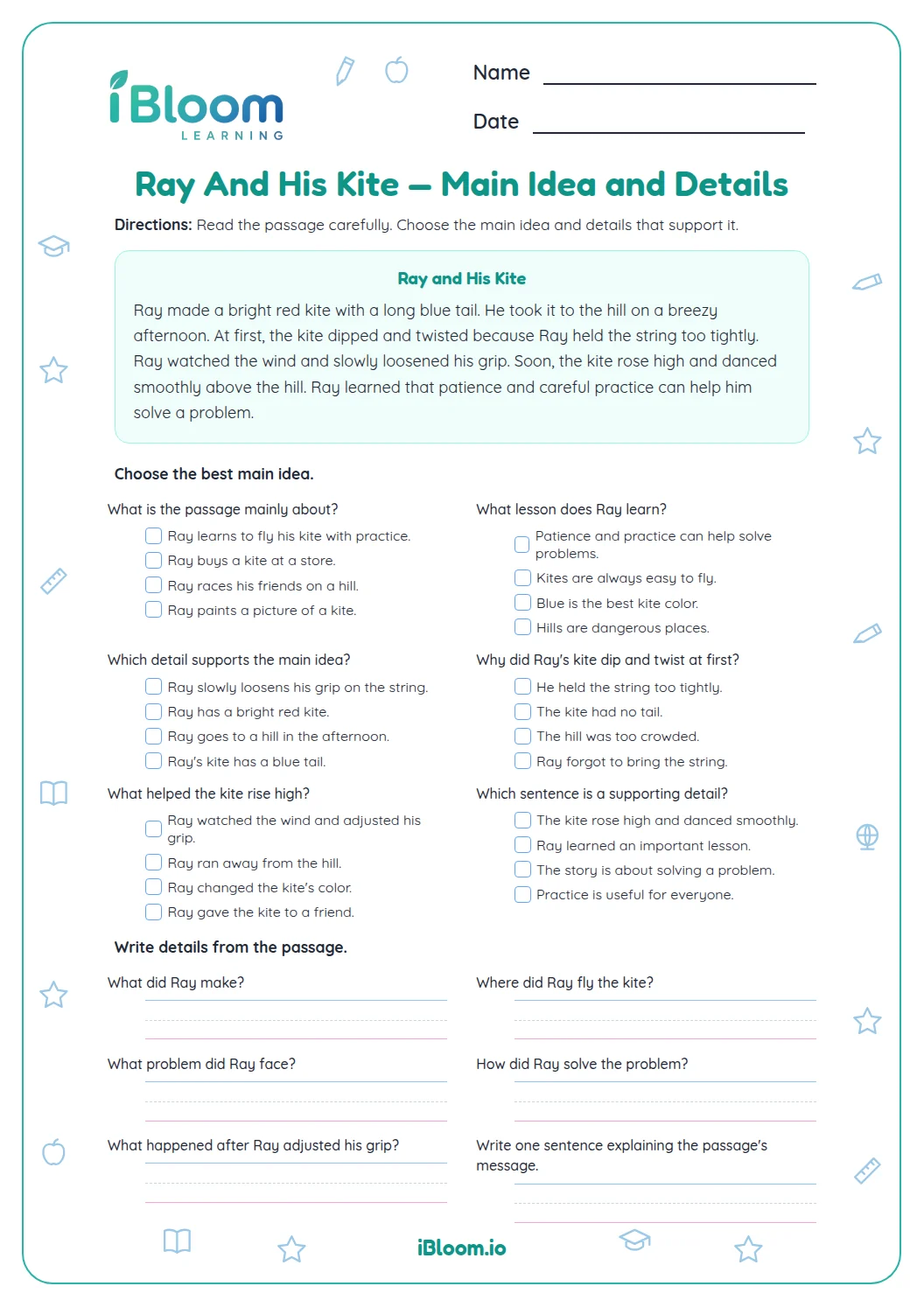
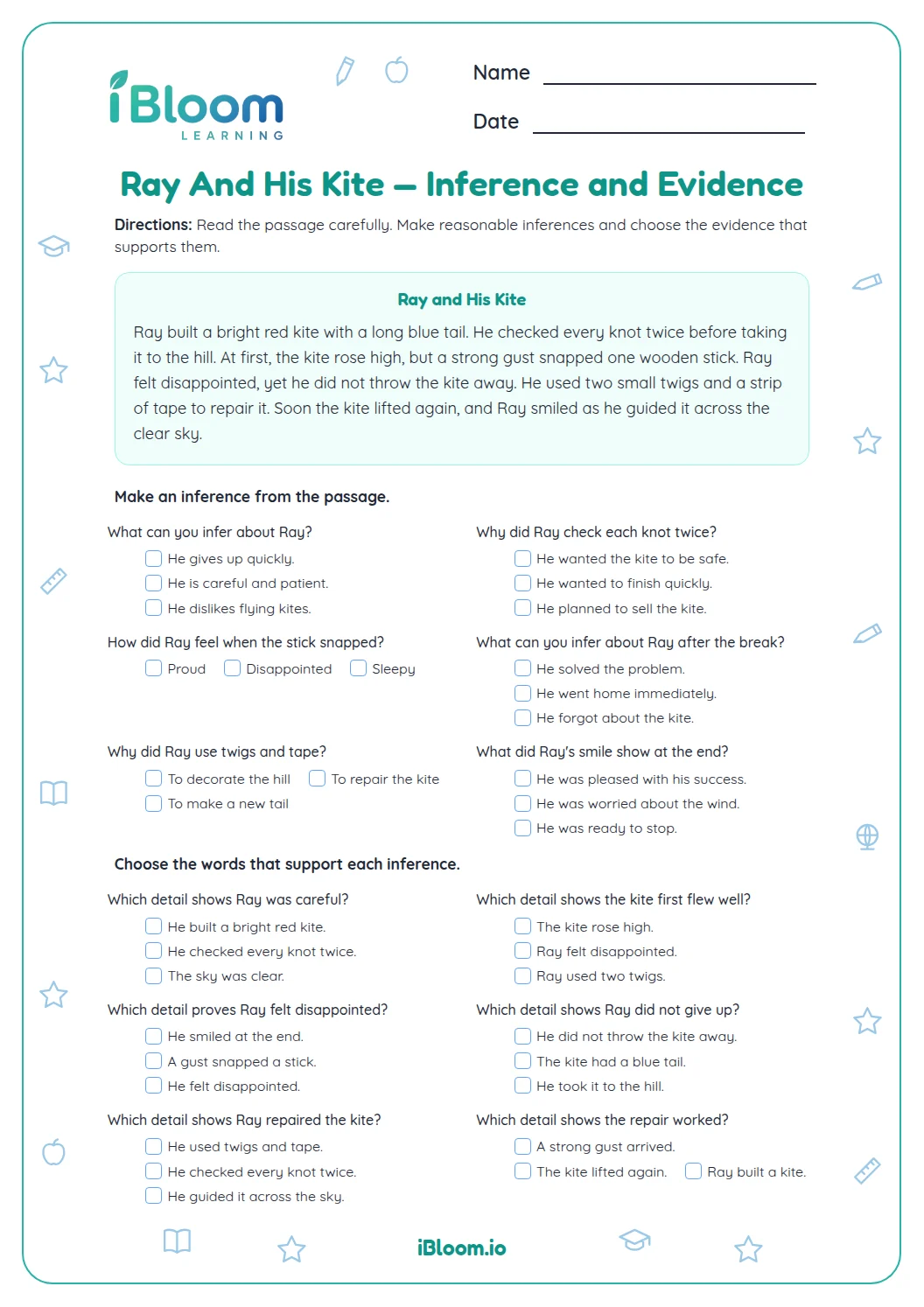
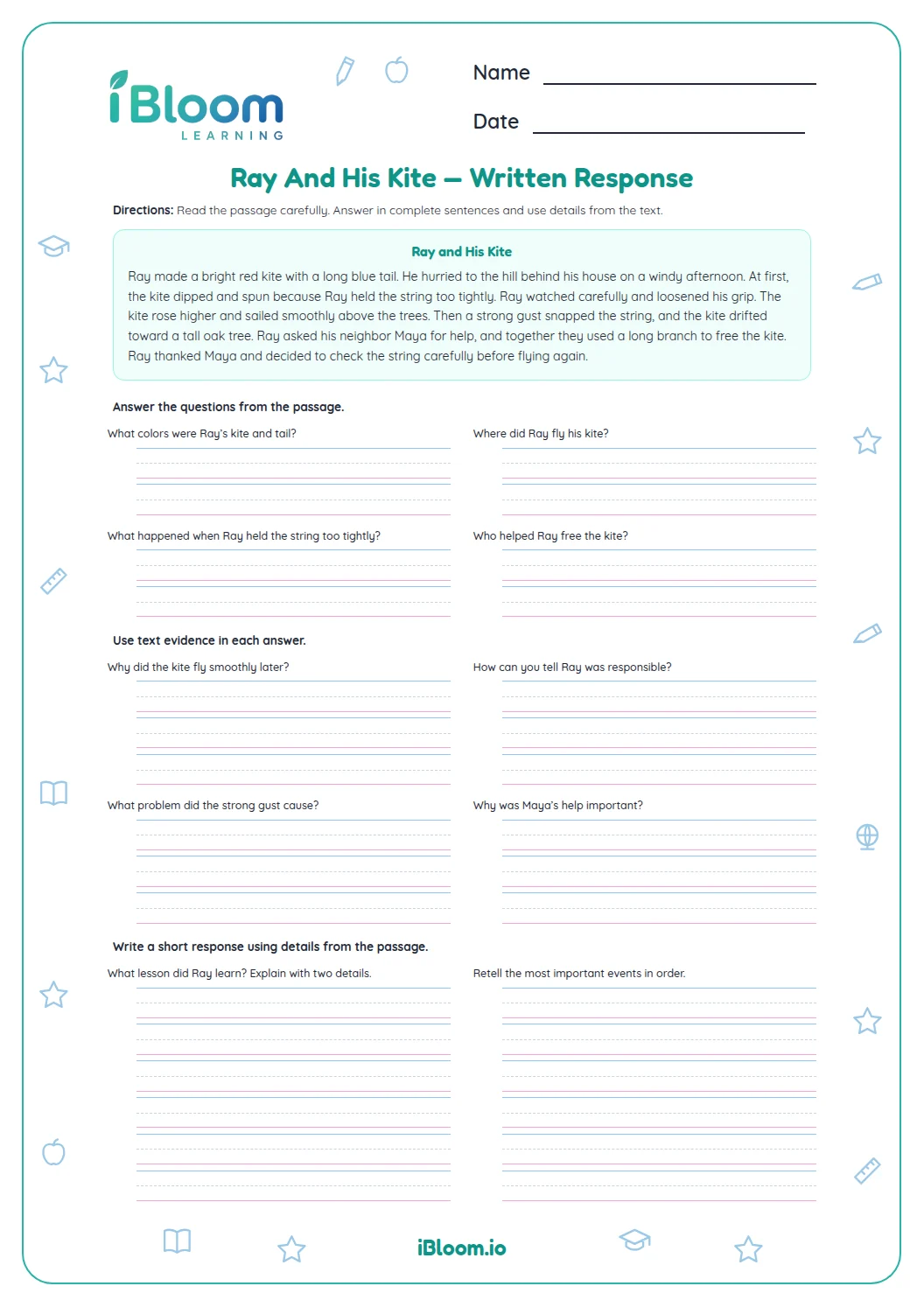
This Grade 4 reading worksheet features an original passage about Ray and Jo repairing a kite, watching the wind, and taking turns. Learners answer 16 questions on story details, vocabulary, sequence, inference, teamwork, and the main idea. The questions use details and examples as evidence, practicing CCSS RL.4.1. The answer key includes concise sample responses for questions that allow more than one accurate wording.
Aligned to RL.4.1
Which story details answer the first questions?
The opening paragraphs name the problems Ray and Jo find: a loose ribbon, a bent stick, and wind that is not yet steady. Part B asks learners to locate those details and explain what happens next.
- 1What did Jo notice was loose?
- 2Reread the first paragraph: one tail ribbon had come loose.
- 3Answer: a tail ribbon
How does the kite finally rise?
The events build in order. The kite first bumps along the ground; Ray and Jo repair it; they wait for a steady breeze; then Ray lets out string as Jo runs across the field. Question 8 asks learners to arrange three events in that order.
What can readers infer about the characters?
Ray’s decision to wait after Jo’s suggestion suggests patience and cooperation. The final paragraph supports the lesson with concrete actions: they fix the kite, watch the breeze, and help each other. A strong answer links an idea to one of those details.
How to use this worksheet
- 1Read the passage once to understand what happens.
- 2For detail questions, reread the paragraph where the event appears.
- 3For sequence, number events before writing them in order.
- 4For an inference, name the idea and cite a detail that supports it.
- 5Use the answer key to check evidence, not just matching words.
Common mistakes and quick fixes
The mistake
Answering from what usually happens with kites instead of this story.
The fix
Return to the passage and use its specific events.
The mistake
Giving an inference without evidence.
The fix
Add a detail that makes the idea reasonable.
The mistake
Mixing up the order of repairs and the successful flight.
The fix
Track the words “first,” “next,” and “then” as you reread.
Common Core alignment
Use details and examples from a story when answering questions.
On this sheet: Learners cite story details to answer literal and inferential questions.
Show the official wordingHide the official wording
Refer to details and examples in a text when explaining what the text says explicitly and when drawing inferences from the text.
What to practice next
Make more practice
Further reading
Questions parents and teachers ask
What does this reading comprehension worksheet practice?
It gives Grade 4 learners varied practice with using details, sequence, context, and evidence to understand a fable-style story. Each part builds on the idea introduced earlier, and the prompts use familiar contexts. The answer key follows the printable pages so an adult can review each response and discuss any answer that needs another look.
How many questions are on the worksheet?
There are 16 questions arranged in several parts, moving from recognition to application. The printable includes a separate answer key with answers and sample responses. A learner can complete one part at a time and check work after finishing the section.
How should I help if a learner gets stuck?
Ask the learner to reread the whole prompt and name the clue that matters. Then compare the answer with the key and talk through the step that led to it. For a missed item, try a similar example aloud before returning to the worksheet.
Can I use this in class or at home?
Yes. Print the worksheet pages and keep the answer key for checking. Learners can work independently or read the directions and questions with a teacher or family member. The short sections also make it easy to pause and review a strategy before moving on.
What is the best way to check answers?
Use the key after the learner completes a part. For written responses, look for the idea named in the sample answer; wording can vary when the meaning is clear. Ask the learner to point to the clue or step that supports the answer.