

About this worksheet
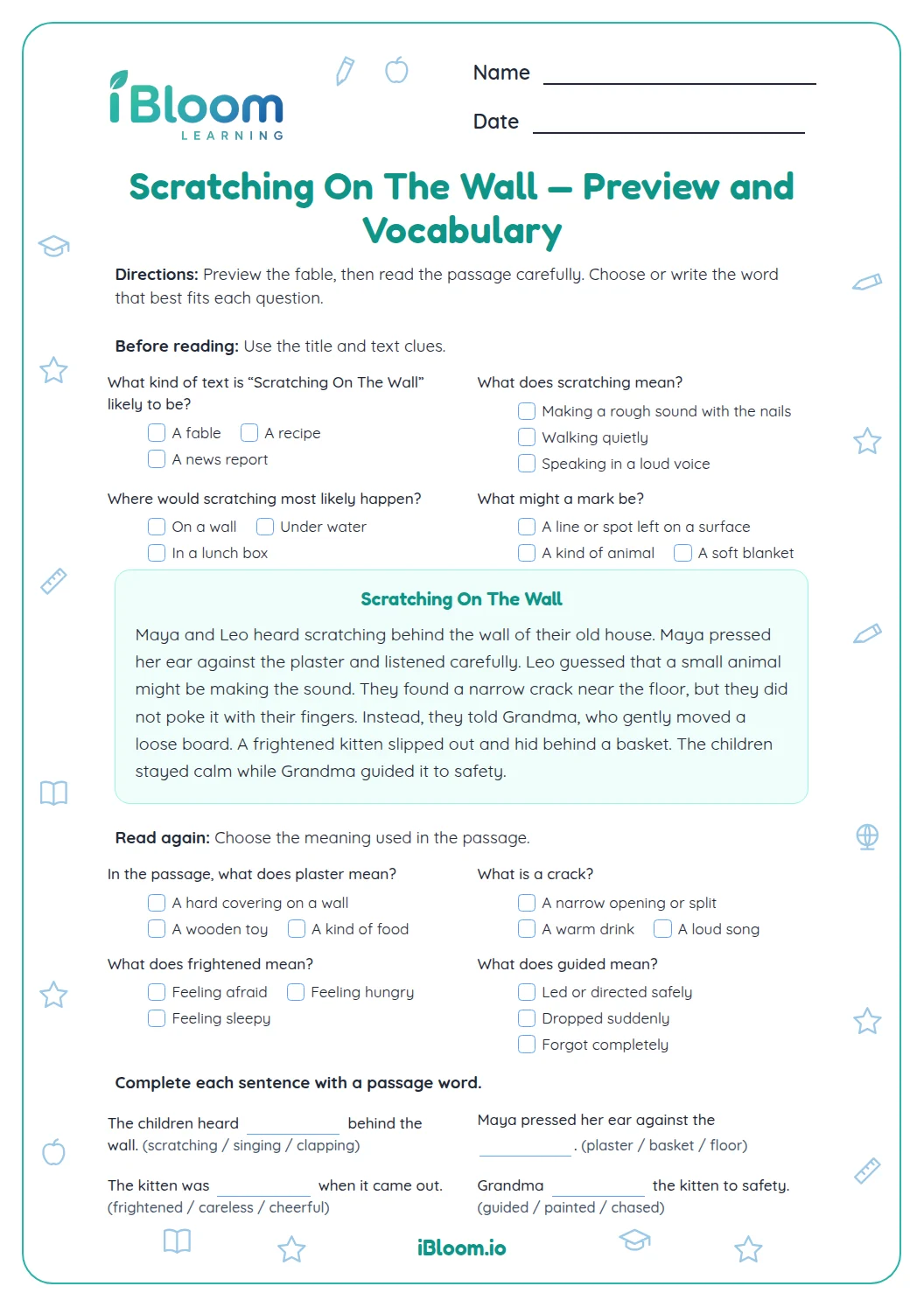
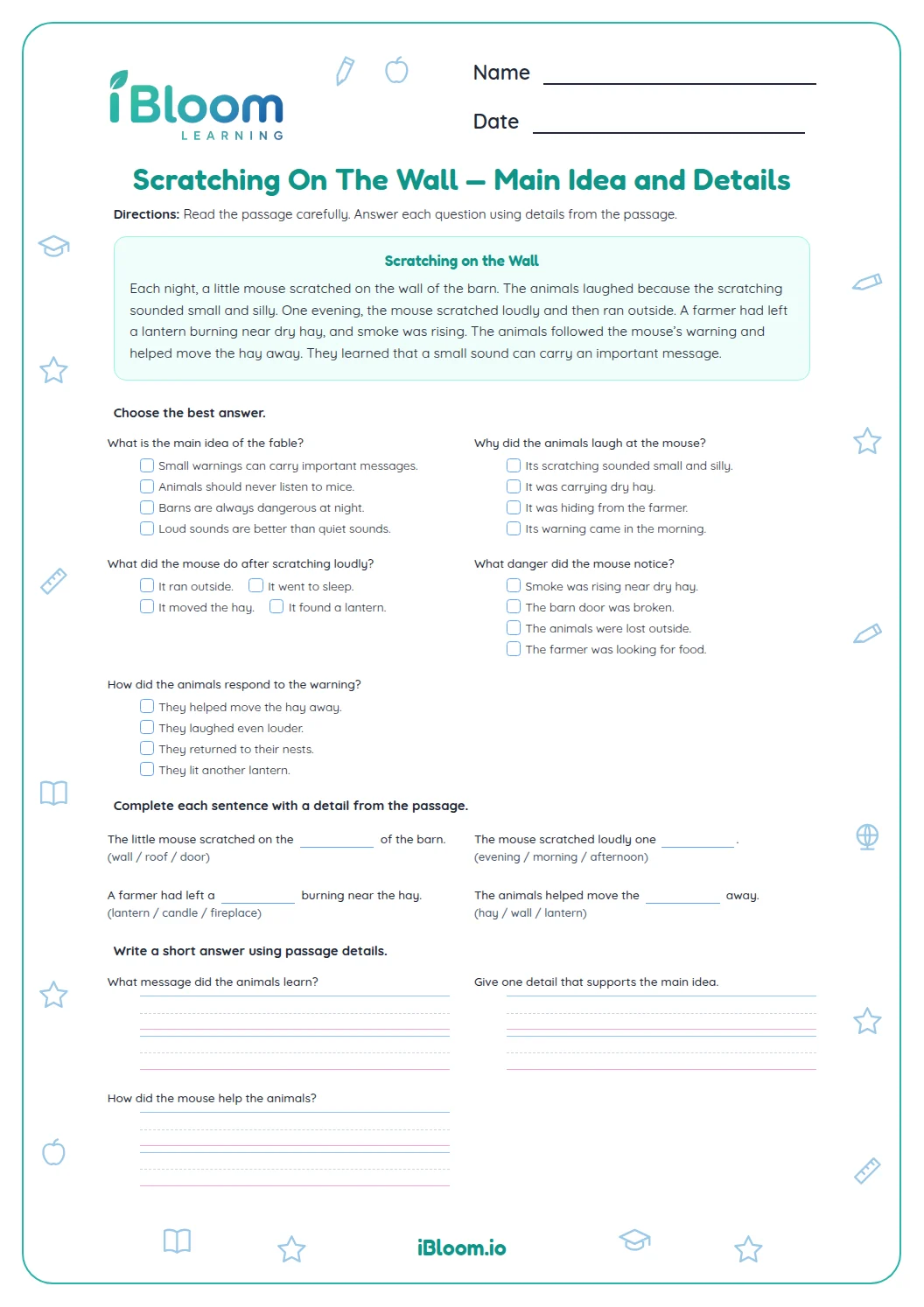
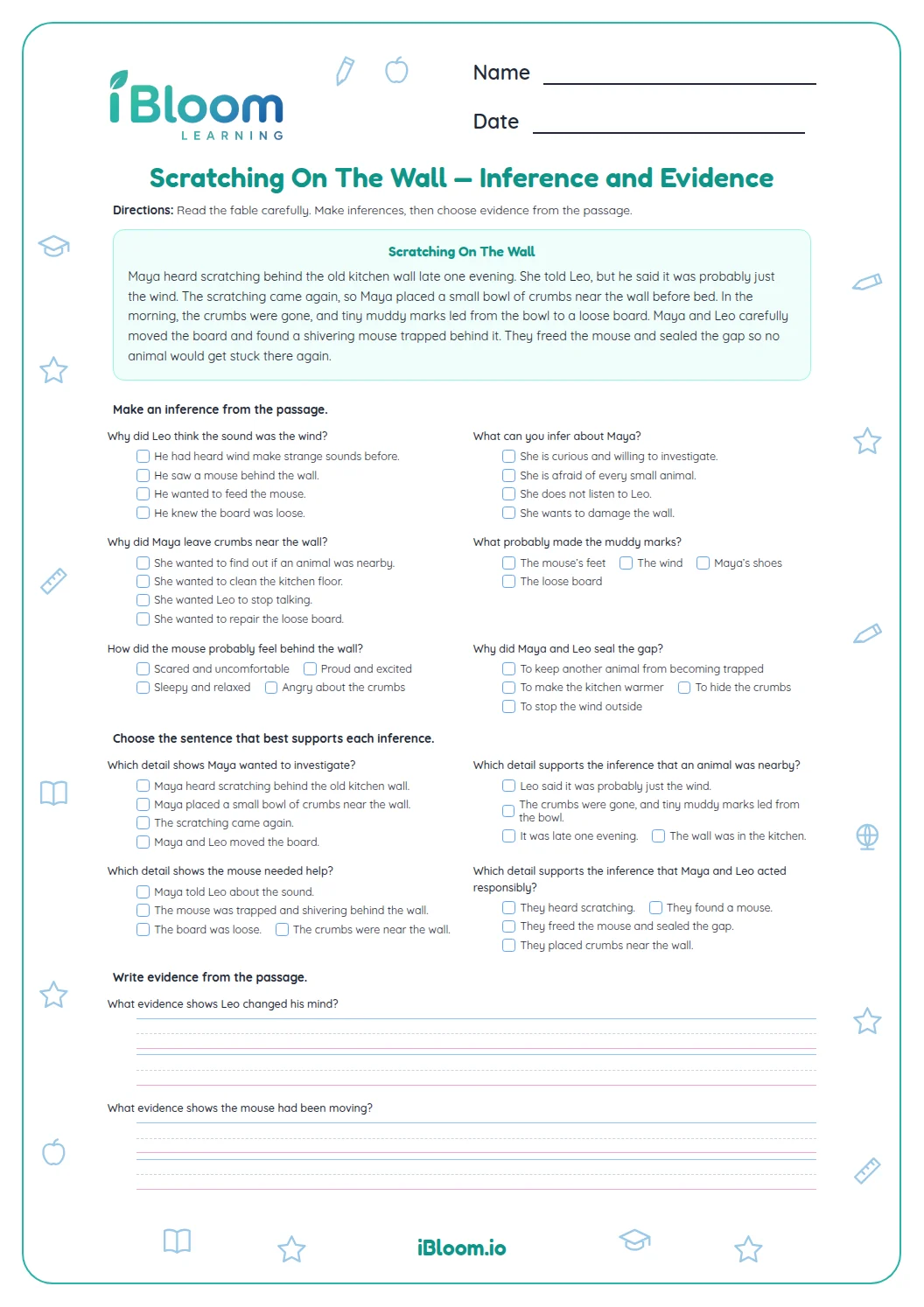
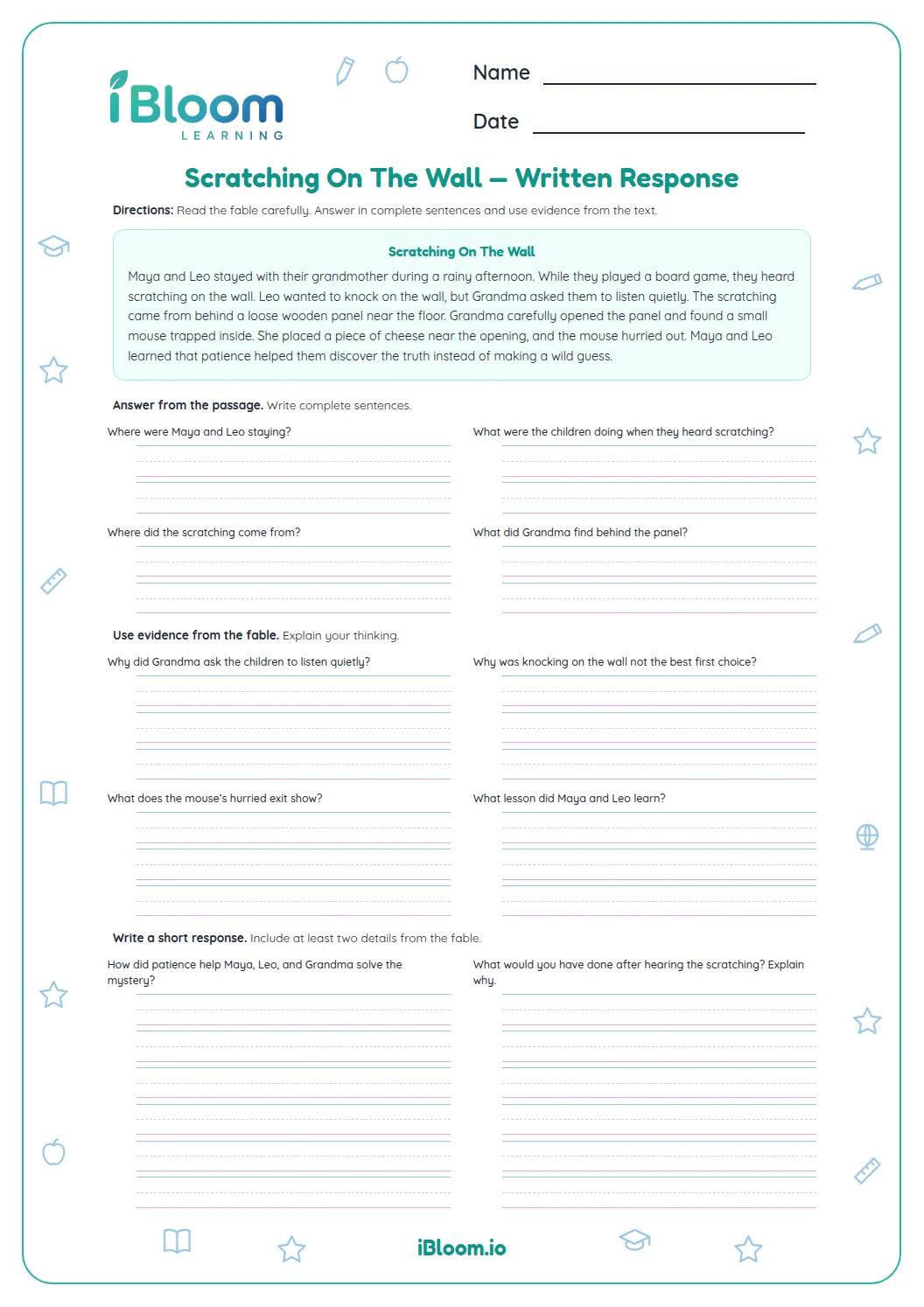
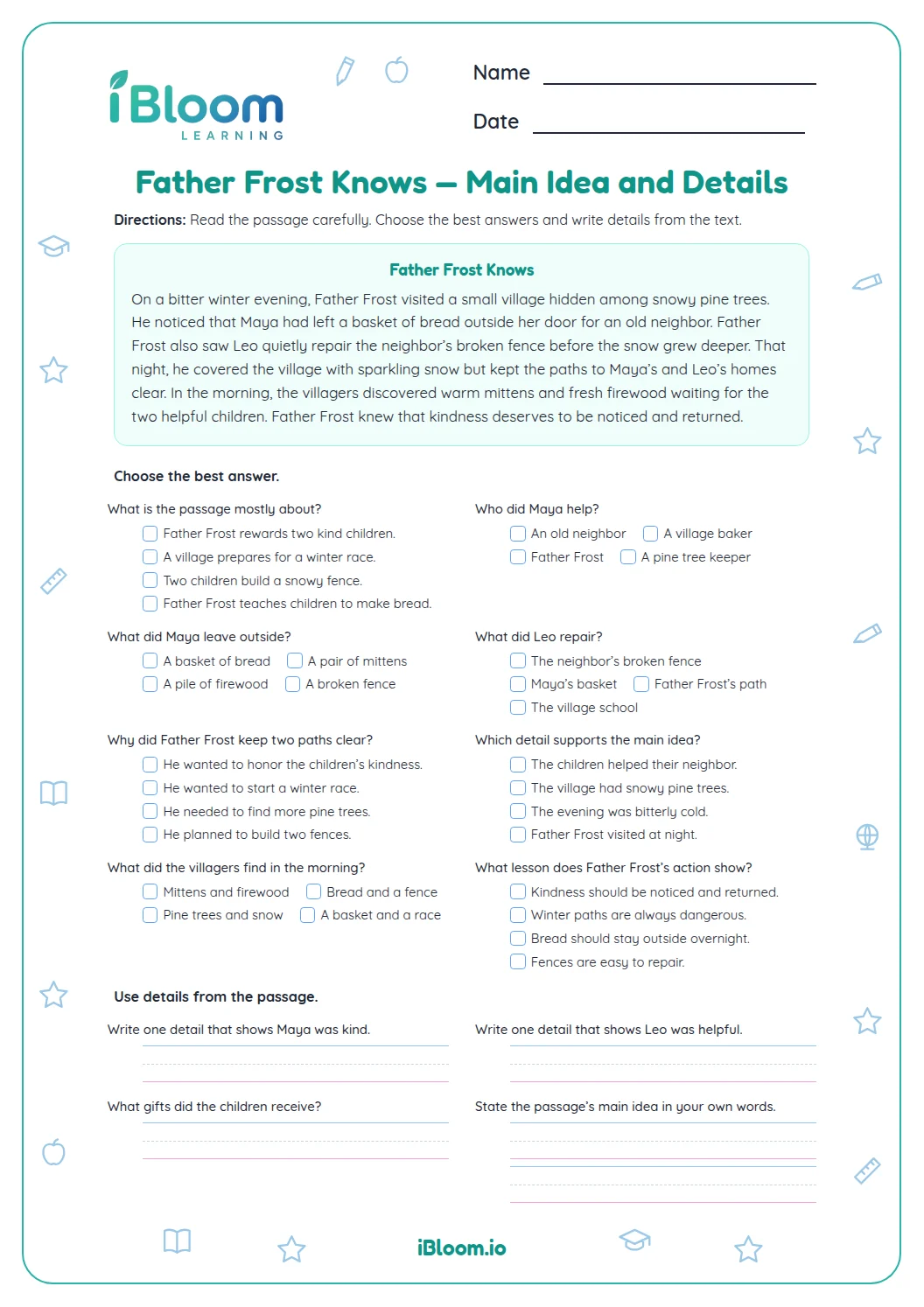
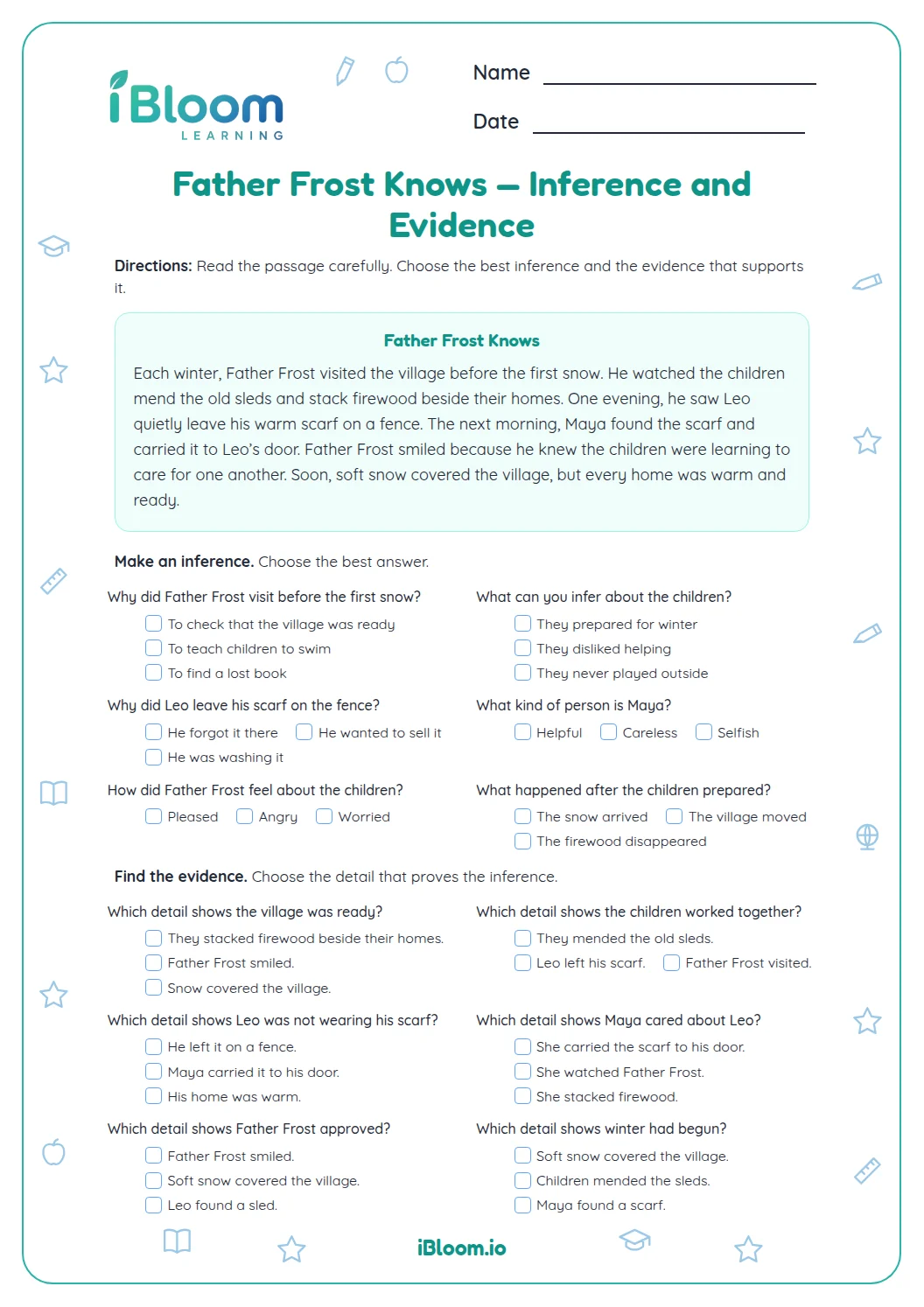
This Grade 4 reading worksheet pairs an original fable with 13 questions about details, sequence, inference, and evidence. Readers track what Maya and Leo learn when scratching behind a cupboard leads them to a lizard nest. A separate key gives answers and sample written responses.
Aligned to RL.4.1
What will children practice?
The sheet contains 13 questions about scratching on the wall. Items build from guided recognition toward independent practice.
Pause after each part to discuss the clue or strategy that led to an answer.
How can a child solve an item?
Read the whole prompt and identify the skill it asks you to use.
- 1Where did the scratching seem to come from?
- 2Use the direction and check the answer key.
How can families review the answers?
Compare each response with the key, then return to the relevant clue or sentence when an answer needs another look.
How to use this worksheet
- 1Read the directions together.
- 2Work through the first question as a model.
- 3Complete one part at a time.
- 4Ask the learner to name the clue used.
- 5Check responses with the answer key.
Common mistakes and quick fixes
The mistake
Rushing past a clue in the prompt.
The fix
Read the full question again and notice its key words.
The mistake
Choosing an answer that sounds familiar but does not fit.
The fix
Check it against the skill named in the directions.
The mistake
Leaving a response unfinished.
The fix
Return to the direction and complete every requested part.
Common Core alignment
The page practices scratching on the wall through focused questions.
On this sheet: The worksheet gives direct practice with the stated language arts skill.
Show the official wordingHide the official wording
Refer to details and examples in a text when explaining what the text says explicitly and when drawing inferences from the text.
What to practice next
Make more practice
Further reading
Questions parents and teachers ask
How many questions are included?
This worksheet has 13 questions arranged in short parts. A learner can finish one part, pause, and then continue. Use the separate answer key to review each item and talk through the clue or strategy that supports the response.
Which grade is this worksheet for?
This worksheet is written for Grade 4. An adult may read the instructions aloud or model the first item. Once the learner understands the routine, encourage independent work and return to the answer key for a calm review.
How should I use the answer key?
Check the key after the learner completes a part. For a written response, compare the idea with the sample rather than requiring identical wording. If the answer misses the point, reread the prompt and ask which clue or rule can help.
Can a child use this worksheet at home?
Yes. Print the worksheet and its answer key, then set aside a quiet place to work. Read the directions together and let the child complete one part at a time. A brief review after each part can clear up confusion before it grows.
What helps when an answer feels difficult?
Return to the exact words in the prompt and name the skill it asks about. Then use the strategy practiced in that section, such as checking a sentence, comparing letters, or finding evidence. Explain the clue before changing the answer.