
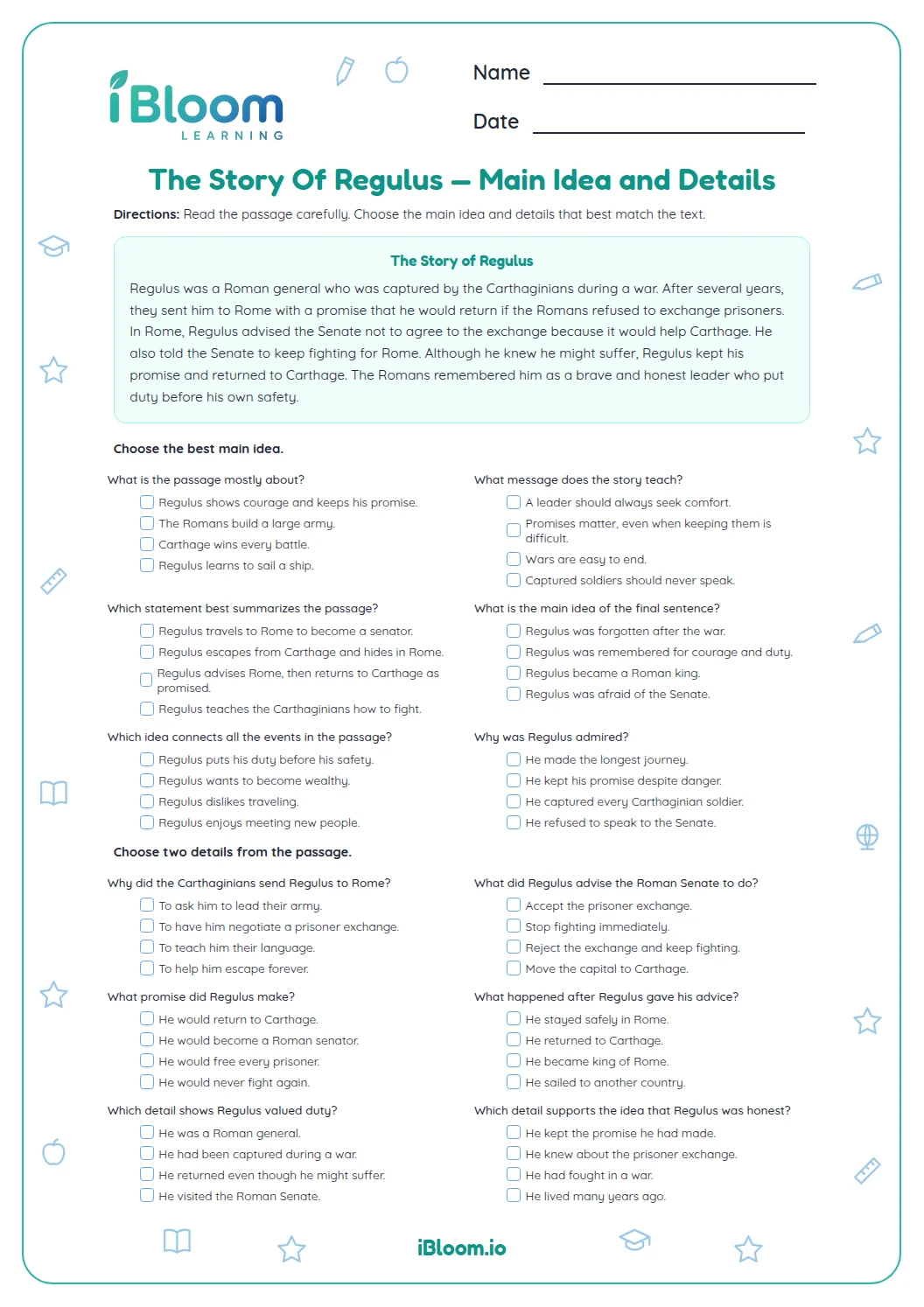
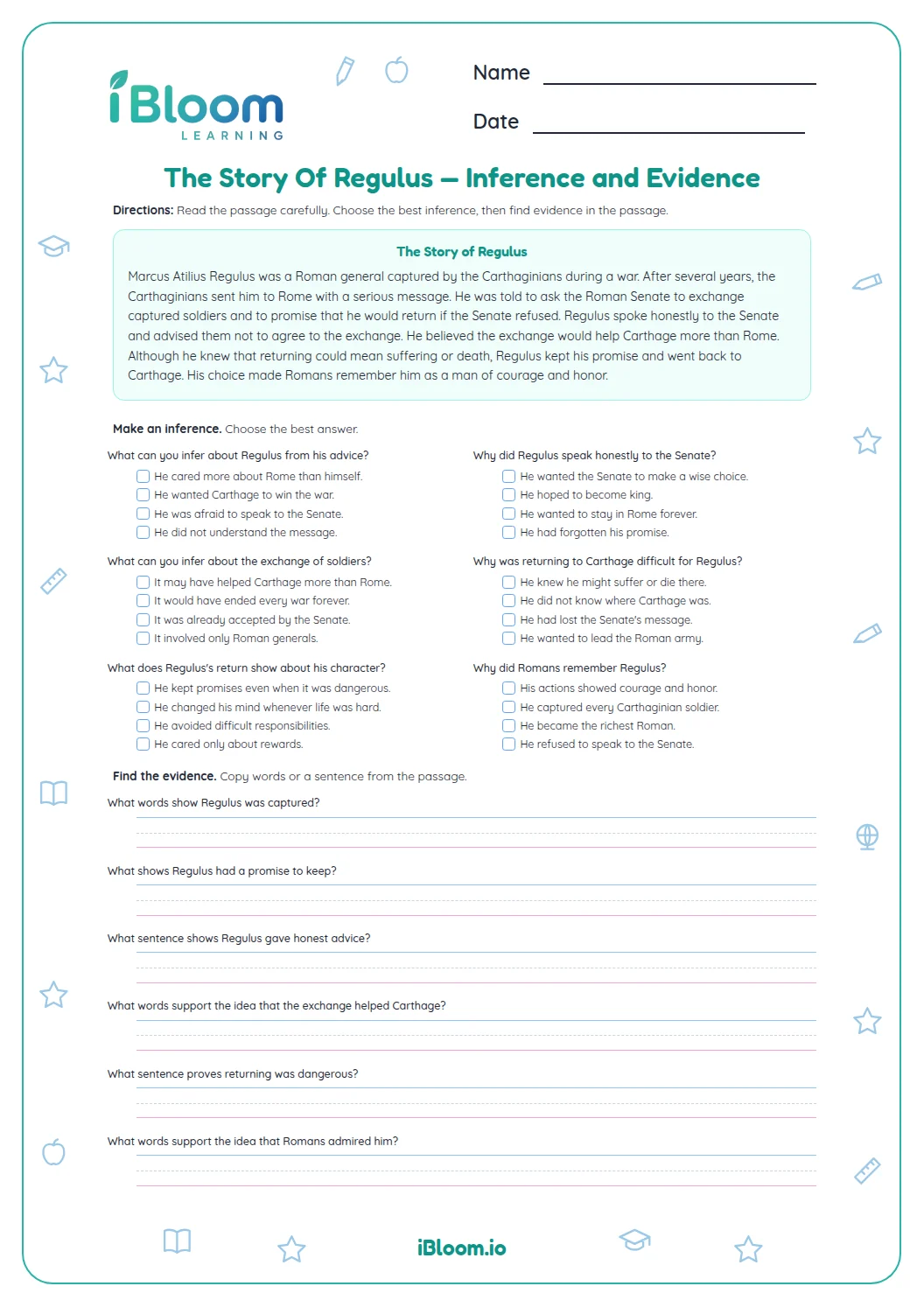

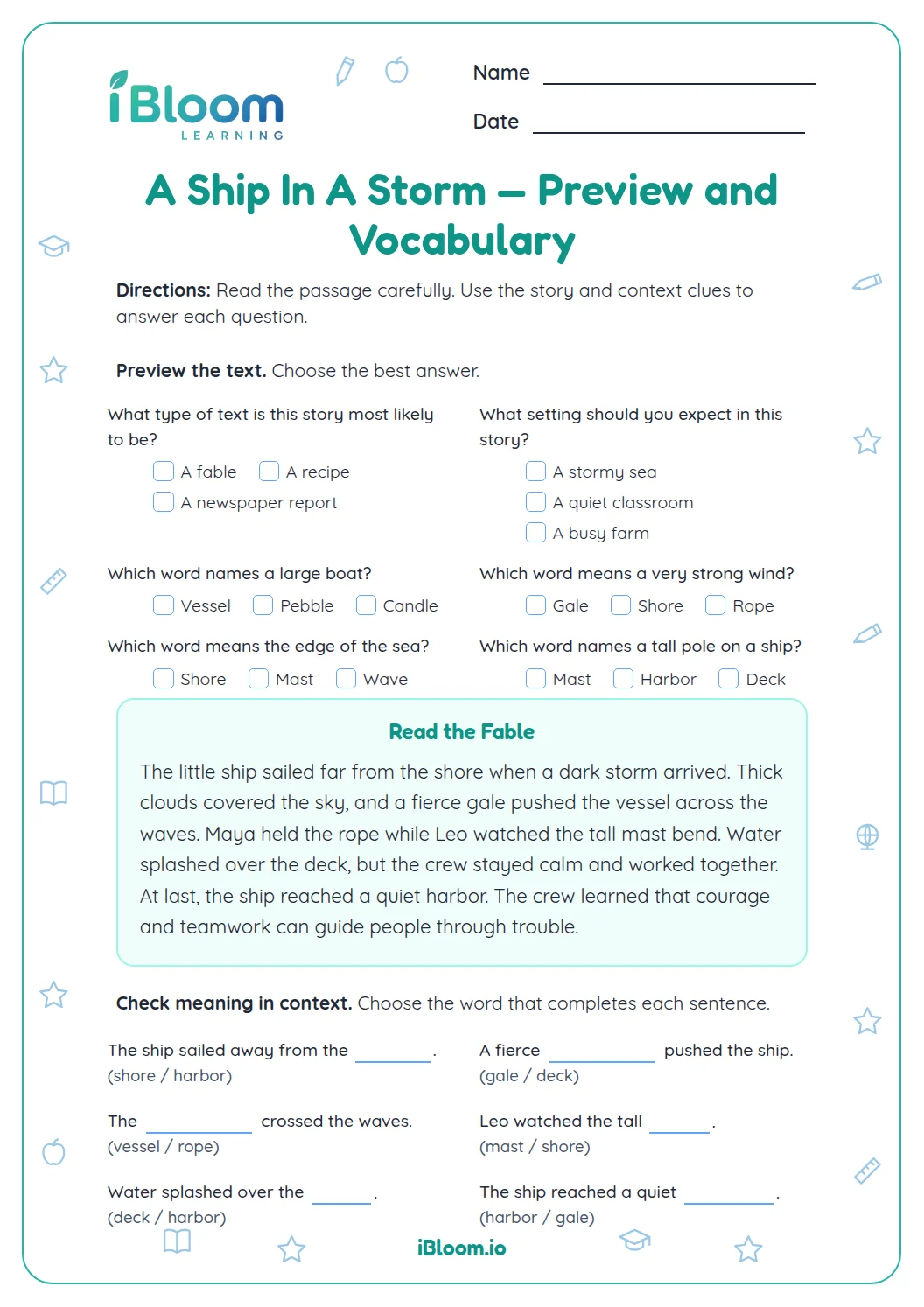
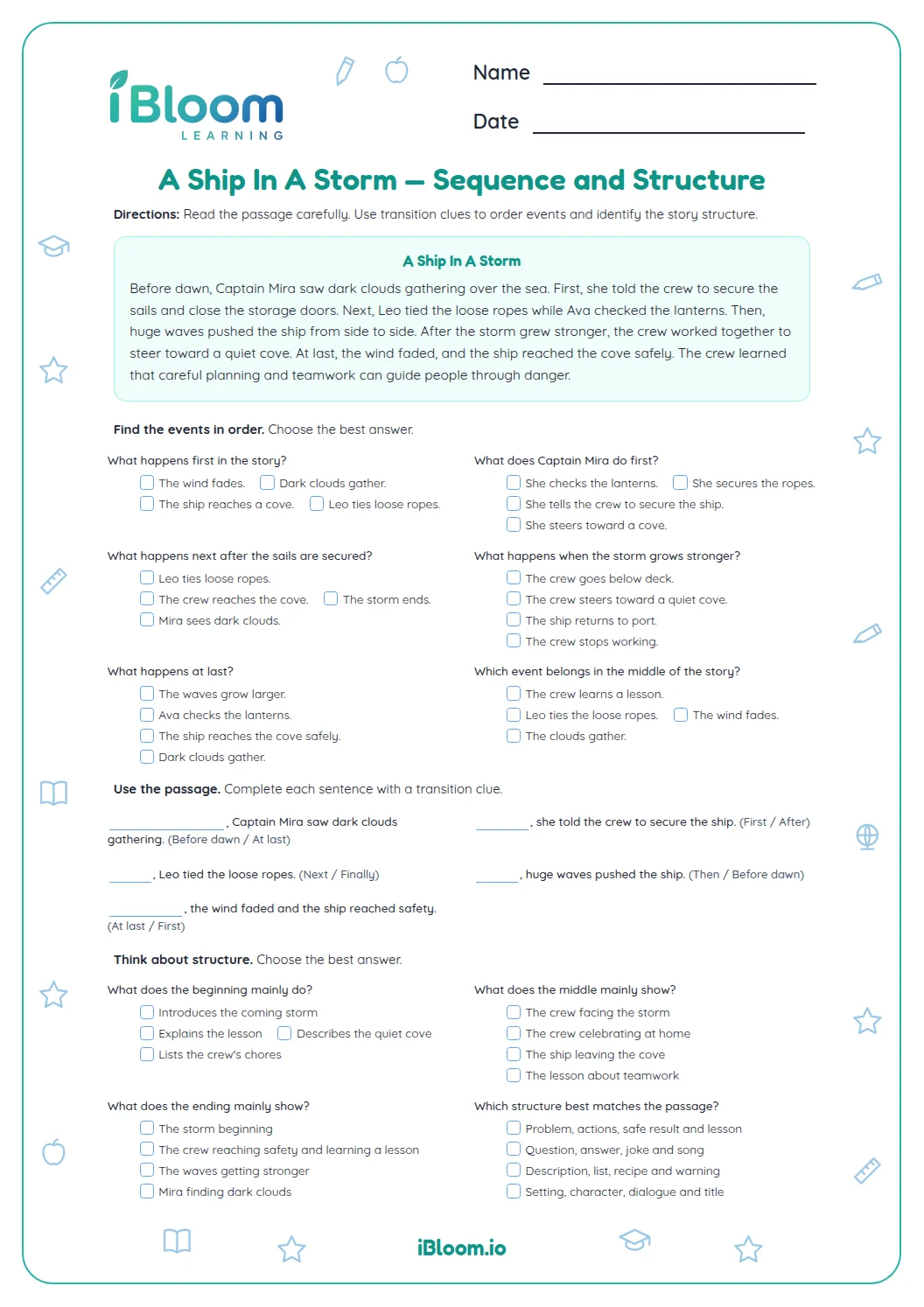

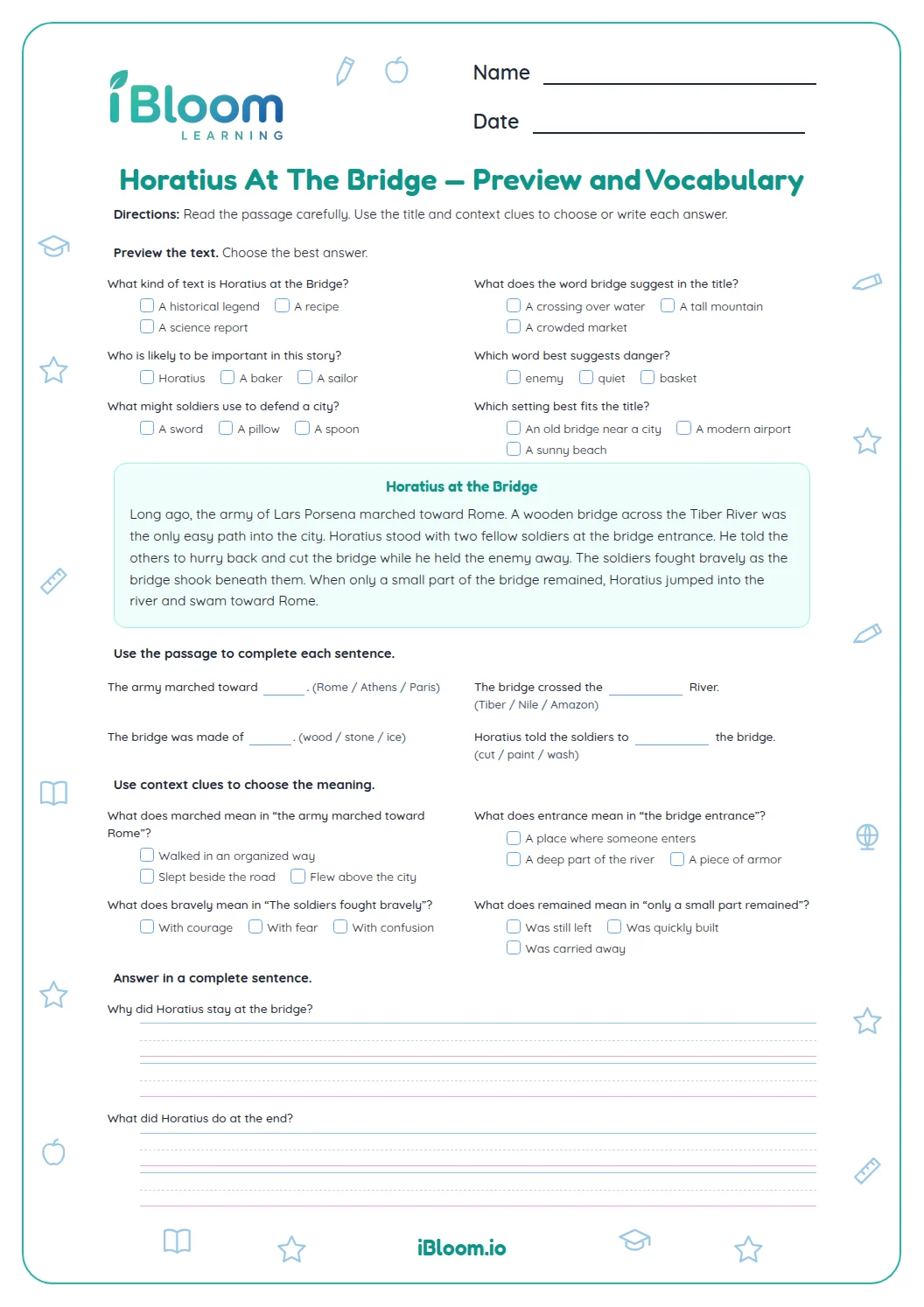

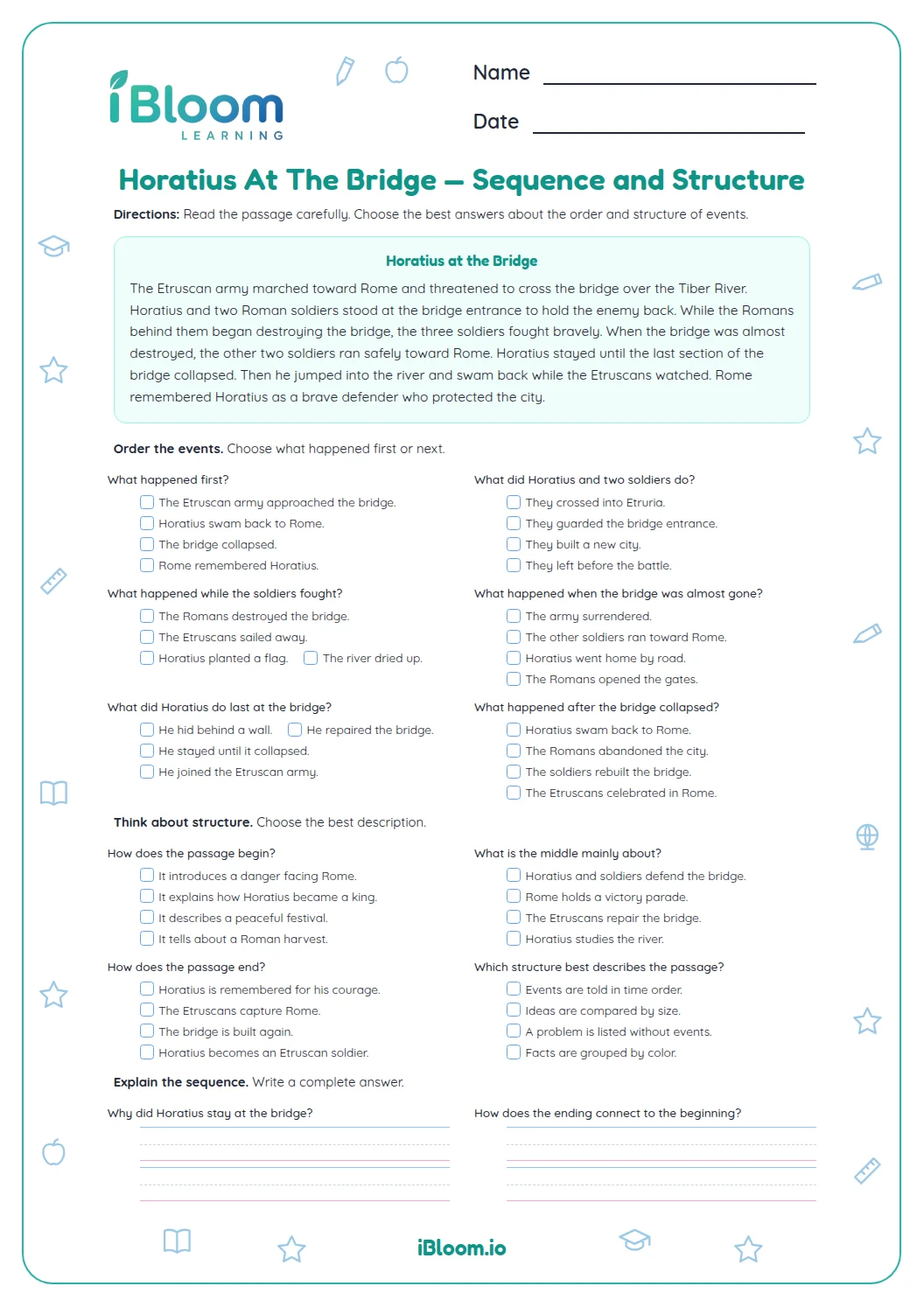
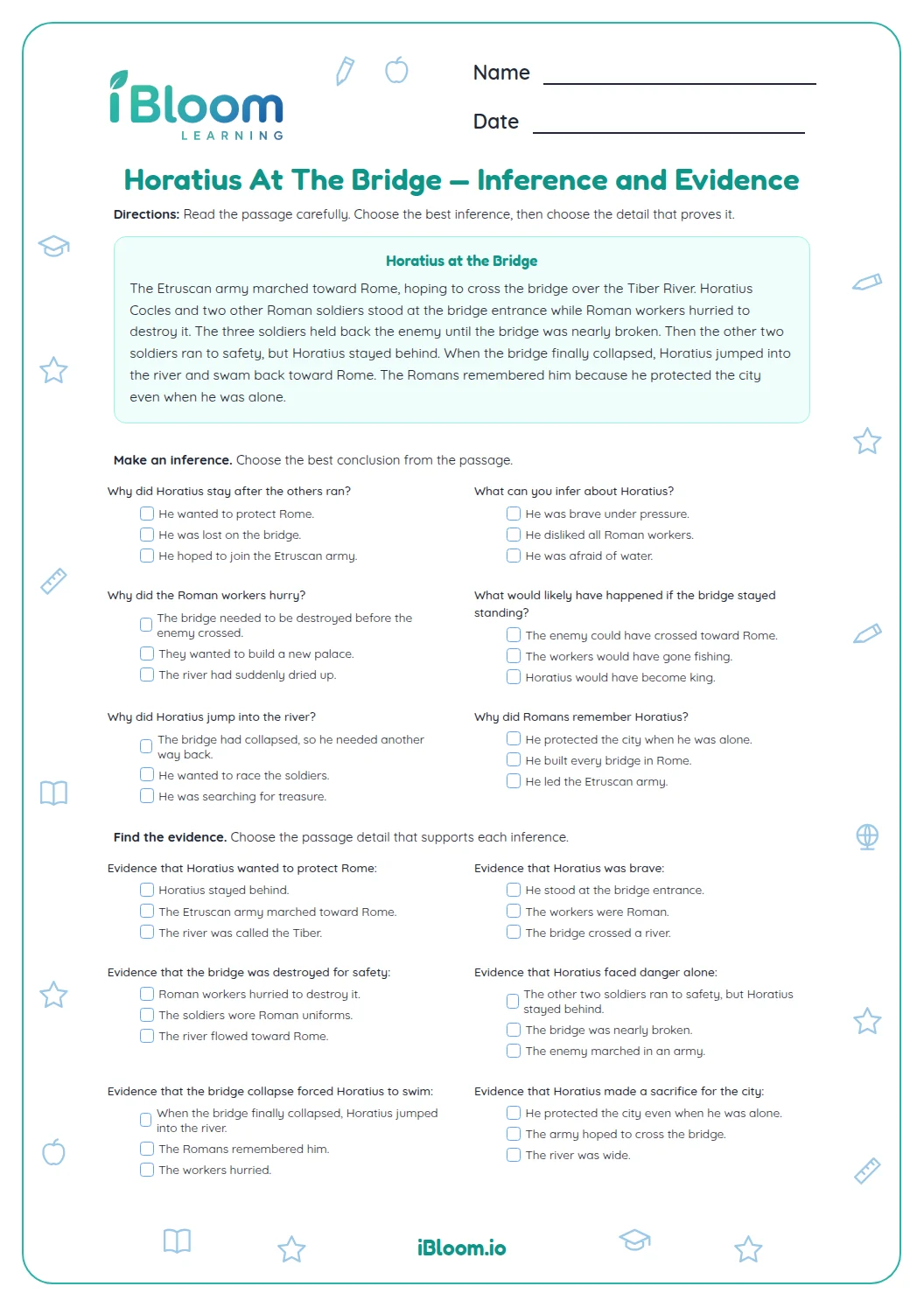
About this worksheet
This Grade 5 worksheet uses the established short passage about Regulus to study event sequence and how a choice shapes an ending. Children track his capture, trip to Rome, advice to the Senate, return to Carthage, and the consequence of keeping his promise. The 14 questions include event order, cause and consequence, and a problem-choice-consequence pattern, with three brief written responses and a separate answer key.
How do the events unfold?
Regulus is captured first. Carthage then sends him to Rome to propose an exchange. After he advises the Senate and it refuses, he returns to Carthage as promised. The order matters because each event sets up the next.
- 1Captured → sent to Rome → advises Senate → returns to Carthage.
- 2This sequence follows the passage from problem to choice.
How does the choice shape the ending?
The capture and proposed exchange create the problem. Regulus’s advice and promise shape the central choice. His return and punishment show the consequence, while the final sentence explains how his loyalty is remembered.
How can a passage detail support an explanation?
Use a specific event and connect it to the structure. For example, the ending follows his decision to return, so it shows the consequence of keeping his promise.
How to use this worksheet
- 1Read the passage once for the whole story.
- 2Mark the events in the order they occur.
- 3Notice the problem that starts the action.
- 4Connect Regulus’s decision to what happens afterward.
- 5Use a passage detail in each written response.
Common mix-ups and fixes
The mistake
Putting the return before the advice.
The fix
The Senate refuses only after Regulus gives his advice.
The mistake
Calling the punishment the opening problem.
The fix
Capture and the proposed exchange begin the conflict.
The mistake
Explaining the ending without the promise.
The fix
Mention that he returns because he promised to do so.
What to practice next
Make more practice
Further reading
Questions parents and teachers ask
What happens first in the passage?
Regulus is captured by Carthage. That event begins the conflict and leads to the proposed prisoner exchange. His trip to Rome, advice, return, and punishment happen later as the story develops. This opening introduces both the historical situation and the choice Regulus must face. The later events follow from the capture.
Why does Regulus return to Carthage?
He promised to return if Rome refused the exchange. After the Senate rejects it, Regulus keeps that promise and goes back to Carthage, even though the return puts him in danger. His promise connects his advice to the ending. When the Senate refuses, he follows through and returns to Carthage.
What creates the main conflict?
Regulus is a captive, and Carthage sends him to Rome to propose an exchange. He must advise the Senate while facing the promise that he will return if Rome refuses it. The passage explains that he believes the exchange would harm Rome. His advice creates tension because his promise requires him to return.
How does the final sentence contribute to the passage?
The final sentence says Regulus’s loyalty was remembered. It gives readers a lasting result of his choice and helps explain why the story recounts his return and sacrifice. The ending connects his personal fate to the story’s final idea about loyalty. It shows what followed from his decision.
How many questions are on this worksheet?
There are 14 questions: 11 choices about event order and structure, followed by three short written explanations. The passage and answer key are included in this printable practice set. Children can use the separate key to check the event order and compare their written explanations with a passage-based model.