

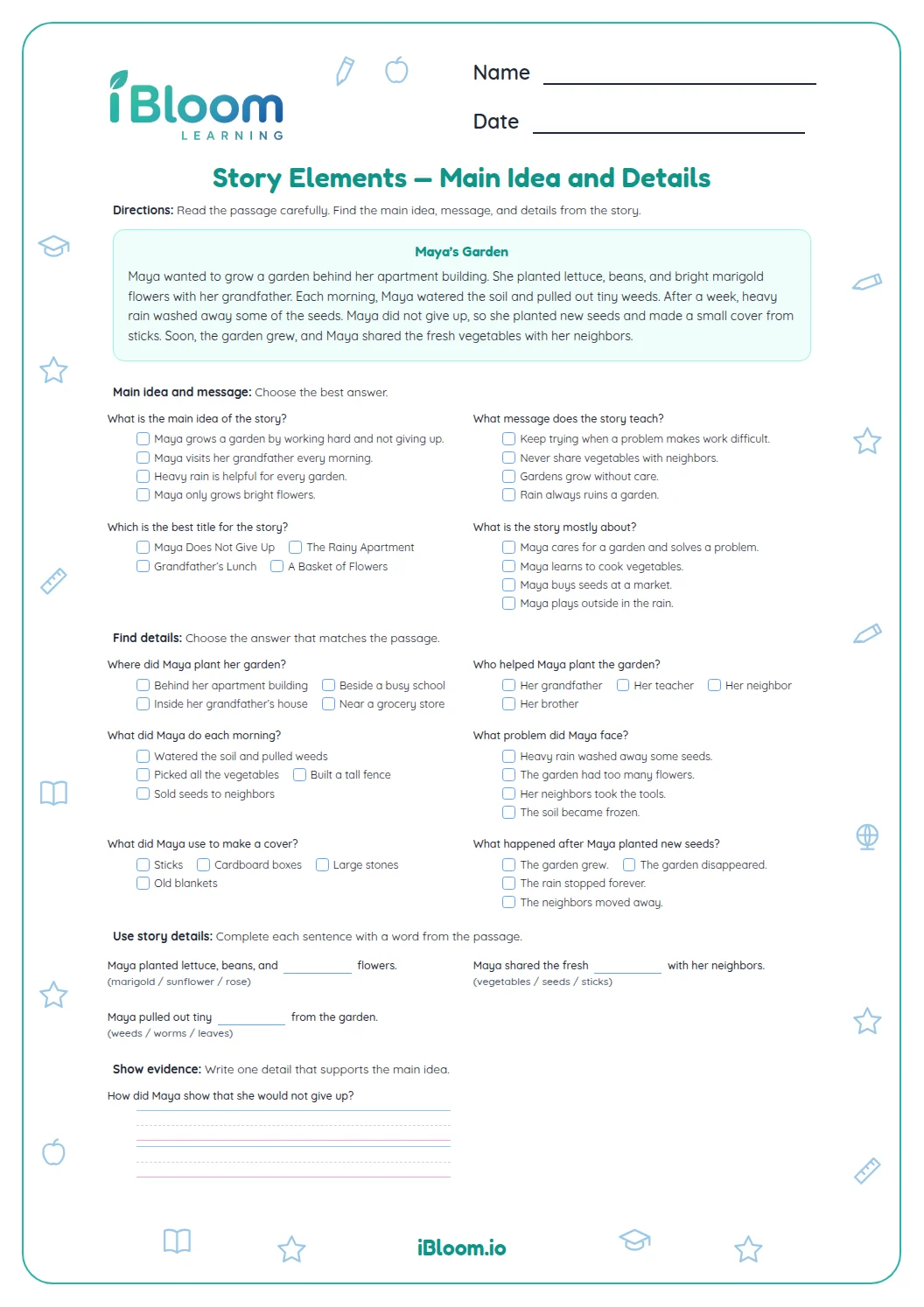

About this worksheet
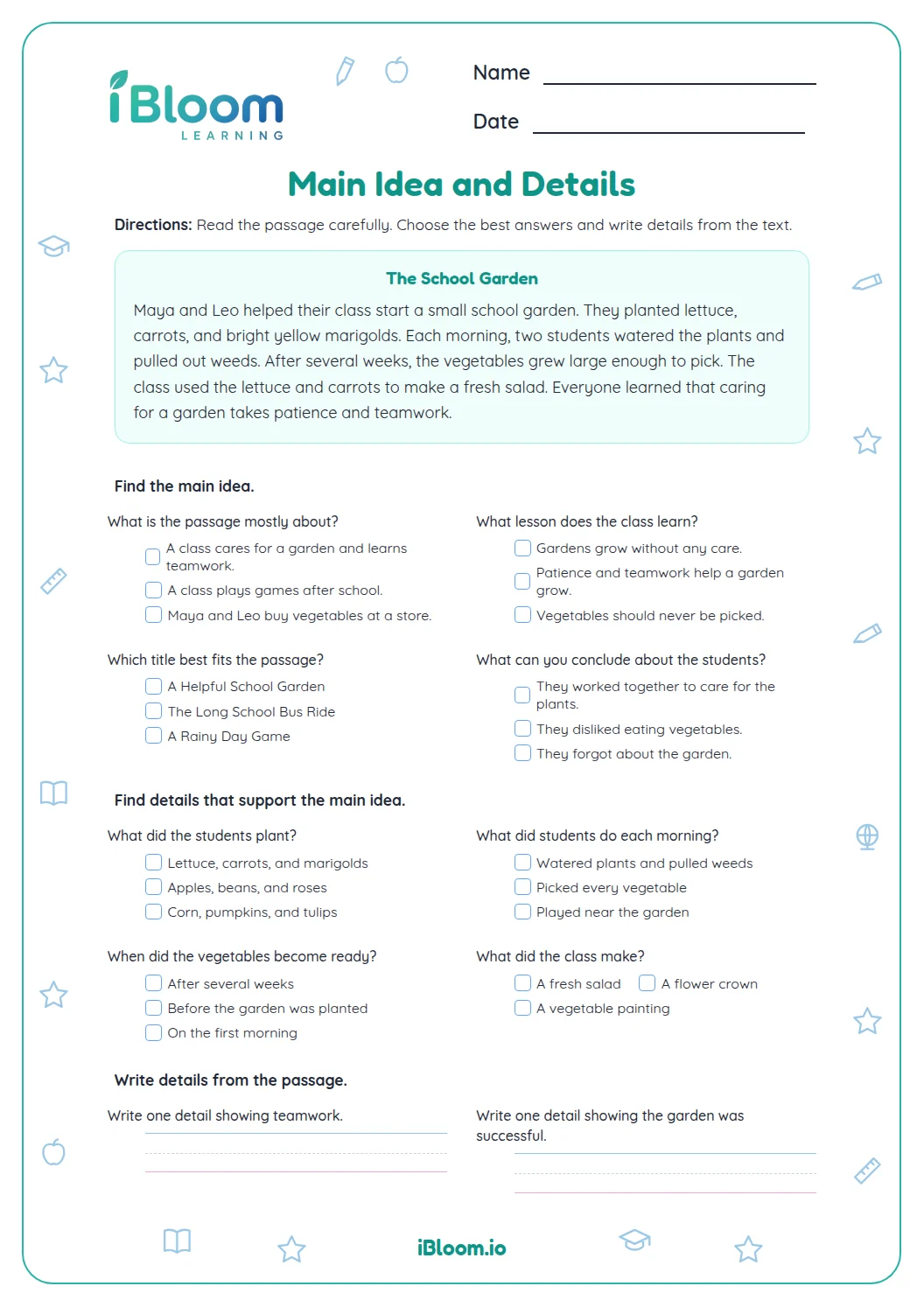
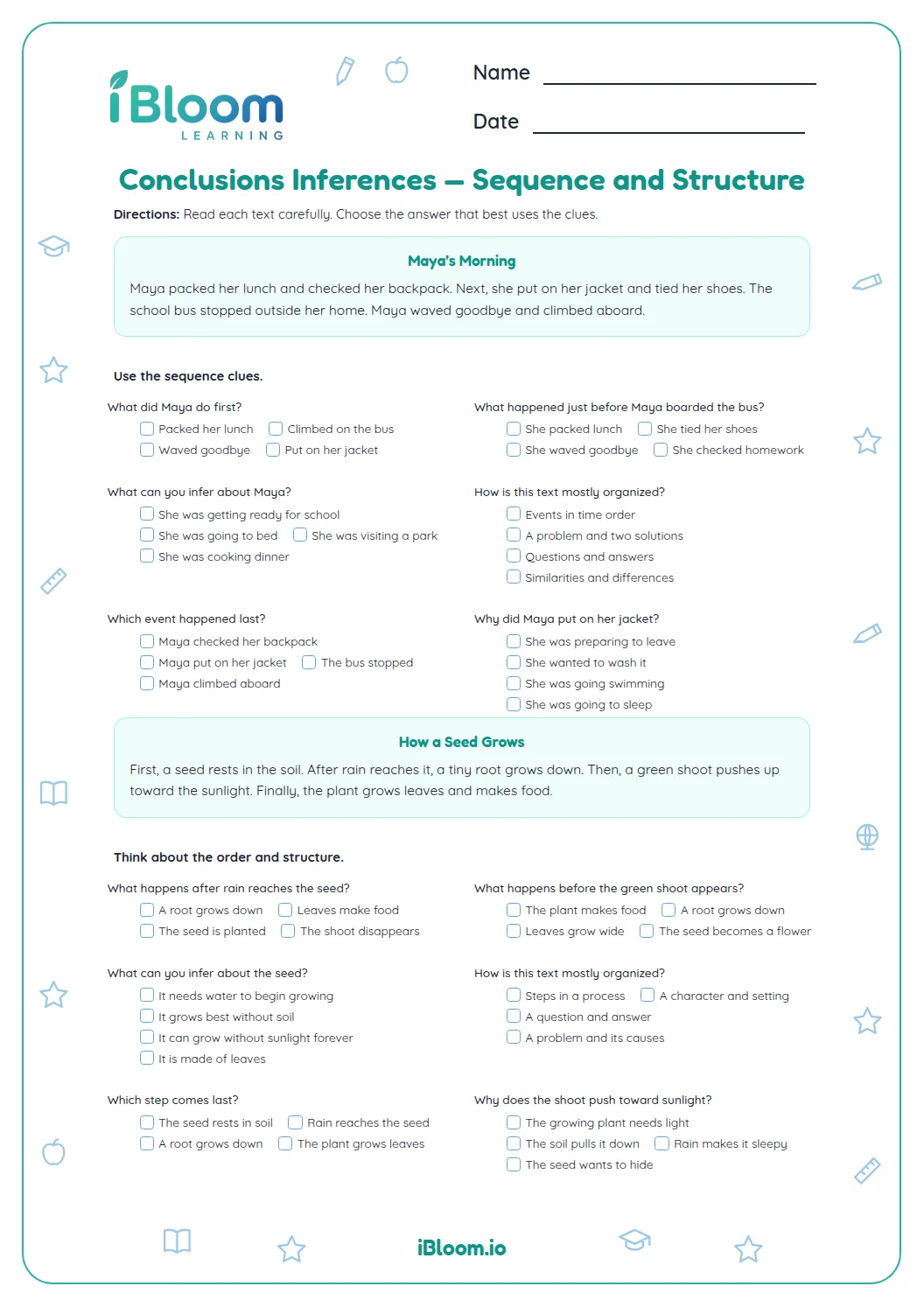
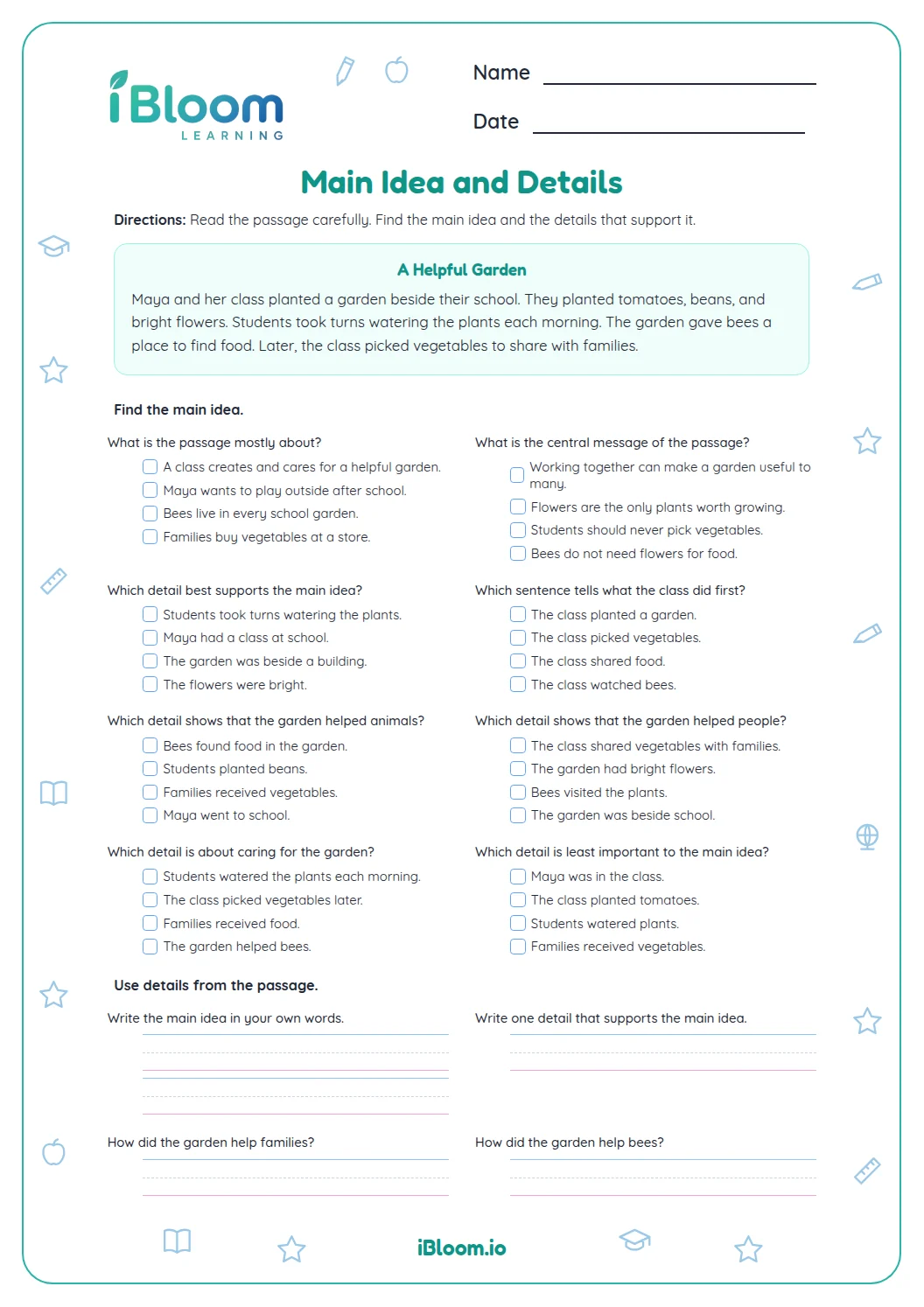
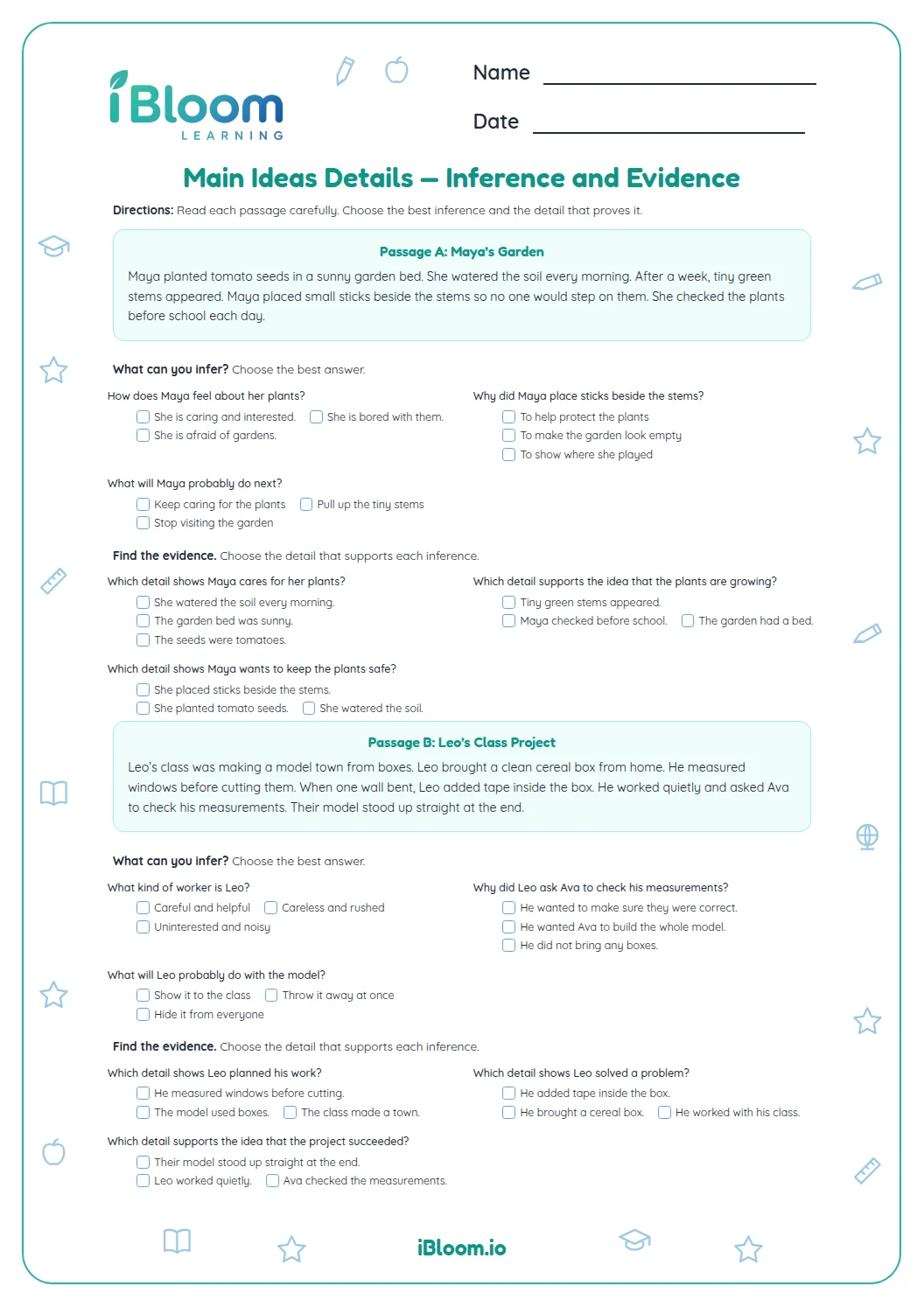
This Grade 3 reading worksheet pairs an original story with 14 questions about inference and evidence. In “The Empty Garden Pot,” Lena plants bean seeds, watches for changes, and records what she notices. Students choose inferences and supporting details based on the passage. A separate answer key identifies the supported choice for each question. The practice asks readers to refer to text details when answering.
Aligned to RL.3.1
What is an inference?
An inference combines a story clue with what a reader knows. Lena’s daily watering supports the idea that she is caring and patient.
- 1Question 1: Lena carries water each morning. That repeated action supports the inference that she is caring and patient.
How does evidence support an inference?
Evidence is a detail stated directly in the passage. The green hook pushing through the soil supports the inference that the seeds had started growing before Lena could see the shoots.
How should a written answer sound?
Name the inference, then point to a detail. “Lena is attentive because she waters the pot each morning” links the idea to evidence.
How to use this worksheet
- 1Read the passage once to learn what Lena does.
- 2Find a sentence connected to the question.
- 3For a choice, cross out answers the story does not support.
- 4For a written response, state an inference and add a story detail.
- 5Return to the passage and check that your evidence matches.
Common mistakes and quick fixes
The mistake
Using a personal guess as evidence.
The fix
Find a sentence in the story that supports the inference.
The mistake
Copying a detail without explaining it.
The fix
Add what the detail suggests about the character or event.
The mistake
Treating an inference as a fact the story states.
The fix
Separate the text clue from the conclusion you draw.
Common Core alignment
This page practices the skills named in the standard below.
Answer questions with explicit story details as evidence.
On this sheet: Answer questions with explicit story details as evidence.
Show the official wordingHide the official wording
Ask and answer questions to demonstrate understanding of a text, referring explicitly to the text as the basis for the answers.
What to practice next
Further reading
Questions parents and teachers ask
What is the difference between an inference and a detail?
A detail is stated in the passage; an inference is a reasonable idea drawn from details. For example, Lena’s daily watering is a detail that supports the inference that she cares for the seeds. Students practice selecting both ideas in the questions.
What grade is this story for?
The passage and questions are written for Grade 3. The story follows Lena as she plants bean seeds, notices shoots, and records their growth. Students can reread the passage as they answer and point to a detail that supports each choice.
Are the questions all multiple choice?
Yes. All 14 questions have answer choices, including items about what Lena’s actions suggest and which story details support those inferences. The key lists the supported answer for each question. Readers still need to return to the passage to check the evidence.
How can I help without giving away an answer?
Ask the child to find a sentence connected to the question before looking at the choices. Then ask what that detail suggests. This keeps the passage as the source of evidence while letting the reader make the inference independently.
What does the answer key include?
The key identifies one supported choice for each of the 14 questions. Several items ask directly for a detail that supports an inference; others ask what Lena’s actions or observations suggest. Children can reread the relevant sentence to verify each answer.
How long does it take?
About 25 minutes allows time to read the story, answer the questions, and revisit details as evidence. Some readers may complete it sooner. Splitting the work after the passage can also give students time to return to the story with fresh attention.