




About this worksheet
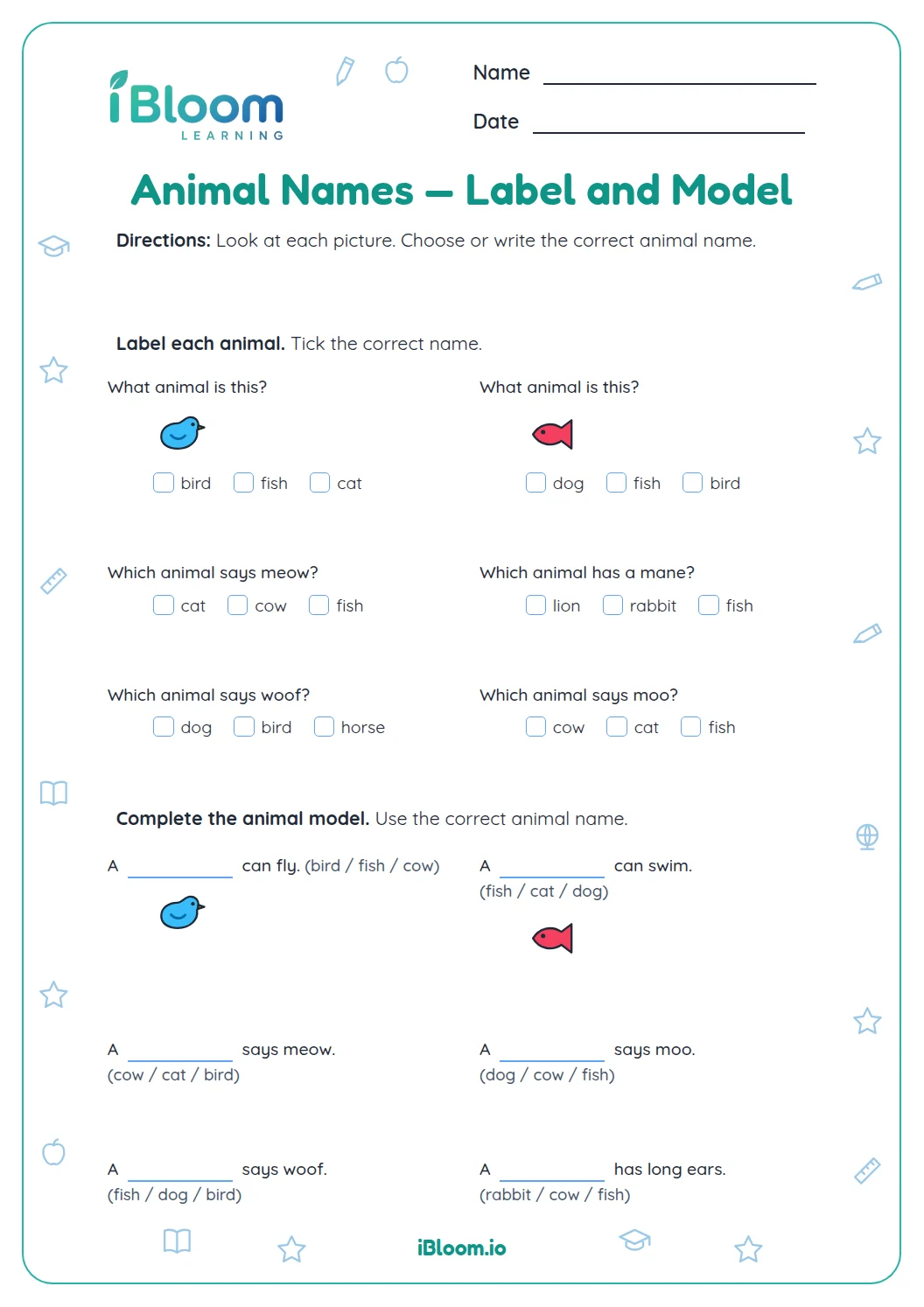
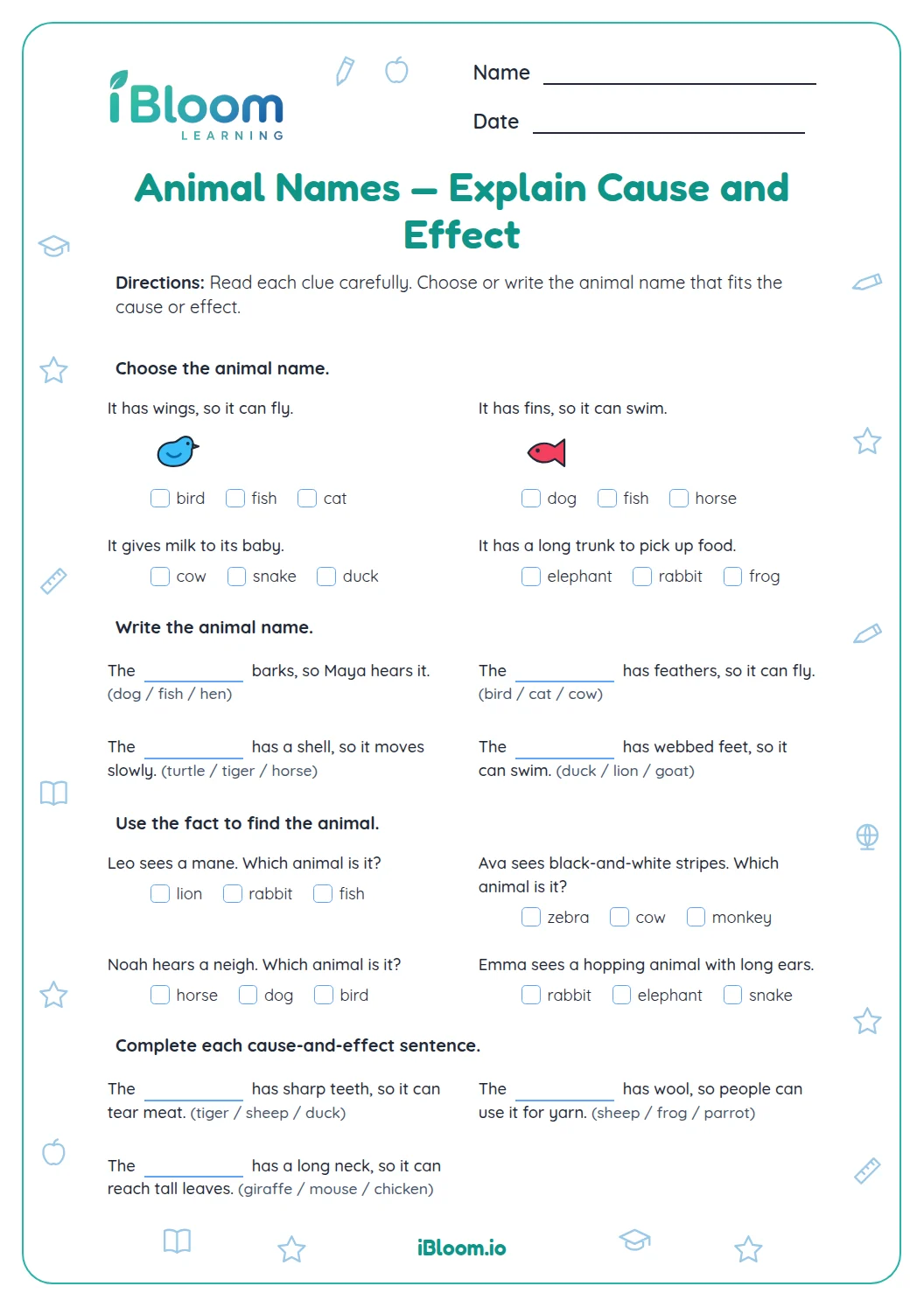
This Grade 1 review helps children recognize animals from useful clues: feathers, shells, gills, hooves, body parts, coverings and movement. Every question has one clear answer, and familiar vocabulary keeps the reasoning on the animal clue.
What clues do students use?
Students match animal names to body coverings, body parts, movement and familiar life stages. The clues distinguish animals rather than asking children to memorize an unrelated list.
- Part A: notice coverings and body structures.
- Part B: use movement and distinctive features.
- Each question has three answer choices.
How can children use observations to identify animals?
Look for a clue that can be seen or learned about the animal: feathers, a shell, stripes, a trunk or how it moves. One clue may fit several animals in real life, so each prompt includes enough detail to identify one answer among its choices.
How to use this worksheet
- 1Read the whole clue before looking at the choices.
- 2Ask which body part or movement the clue describes.
- 3Circle one animal name that fits.
- 4After checking the key, name the clue that helped you decide.
Common mix-ups and quick fixes
The mistake
Choosing any animal that lives in water when the clue asks for gills.
The fix
Think about the specific body structure. A fish has gills; a whale breathes air with lungs.
The mistake
Confusing a chick with other young animals.
The fix
A chick is a young chicken; a puppy is a young dog.
What to practice next
Make more practice
Questions parents and teachers ask
What features help identify animals on this page?
The clues mention visible or familiar animal traits, such as feathers, shells, gills, hooves, stripes, trunks, and ways of moving. Students should match the specific feature in the clue to the animal name that fits it. These observations help children explain how they identified each animal.
Why is a whale different from a fish?
A whale lives in water, but it is a mammal that breathes air with lungs and nurses its young. A fish uses gills to get oxygen from water. The worksheet asks students to use those distinguishing animal traits. For example, feathers point to a bird, while gills are a clue for a fish.
What should a student do if two choices seem possible?
Read the full clue again and focus on its most specific feature. The answer choices are selected so one is the best match. For example, a clue about gills points to a fish, while a clue about breathing air can point to a whale.
How can adults extend the animal-name review?
Invite the child to name another animal and describe one observable feature, such as its covering, body part, or movement. Then compare that clue with the animals on the worksheet and explain which details make each animal distinct. Students can use these clues to say what makes one animal different from another.
What clues help identify an animal?
Look for visible body parts, coverings, and ways of moving. The questions use clues such as feathers, a shell, gills, hooves, hopping, and a trunk. Students can explain how one clue rules out the other choices before selecting an animal name.