









About this worksheet
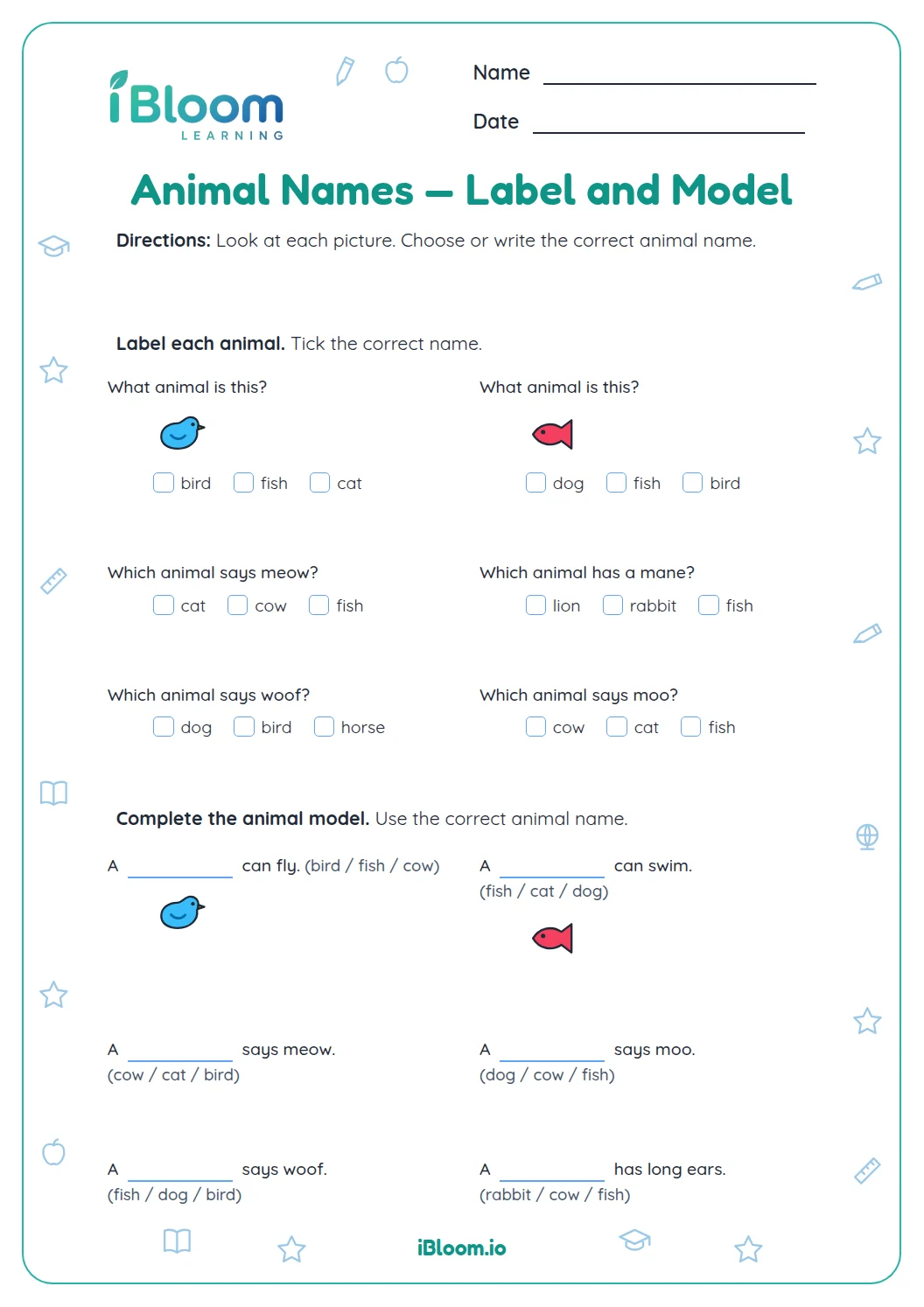
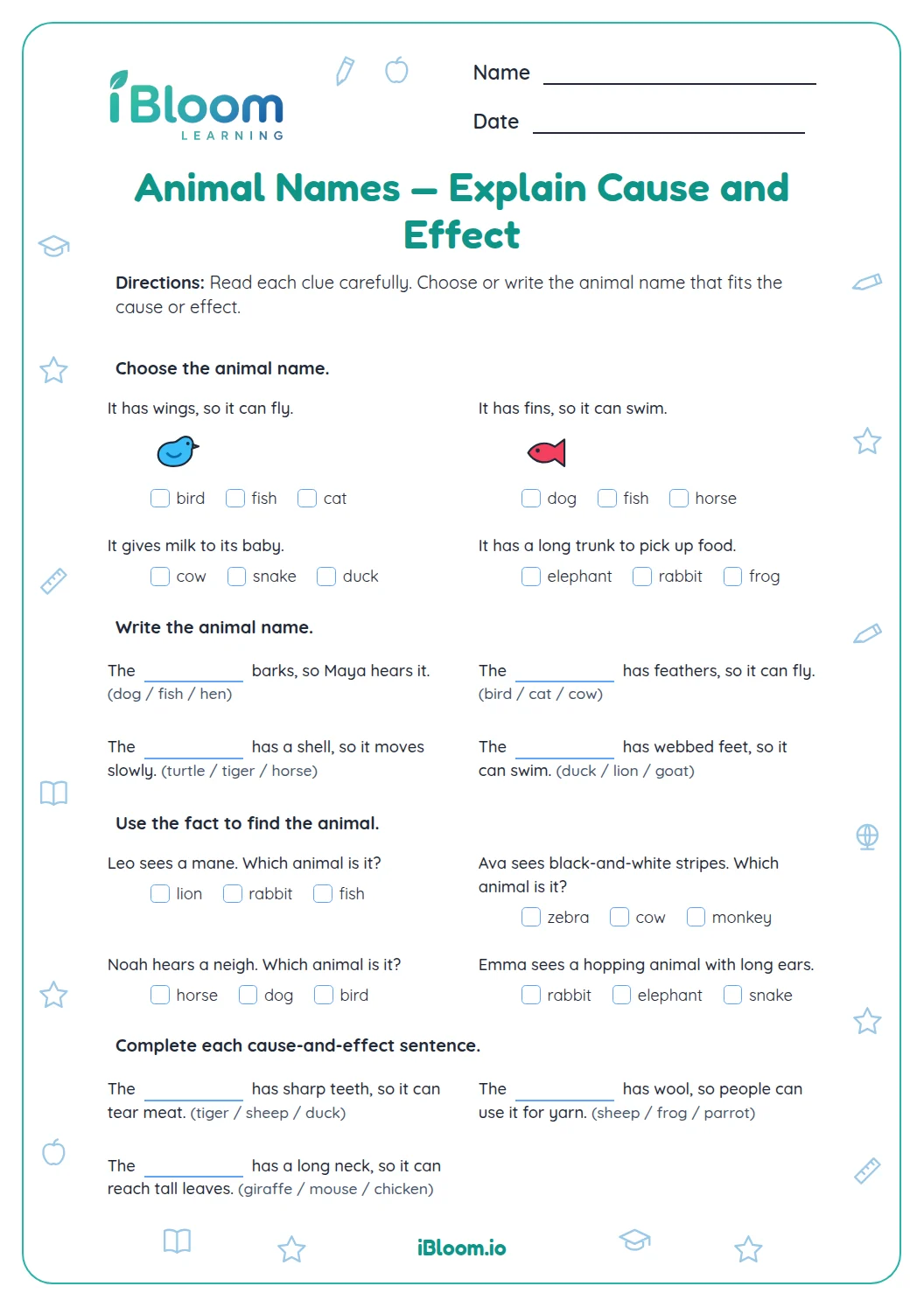
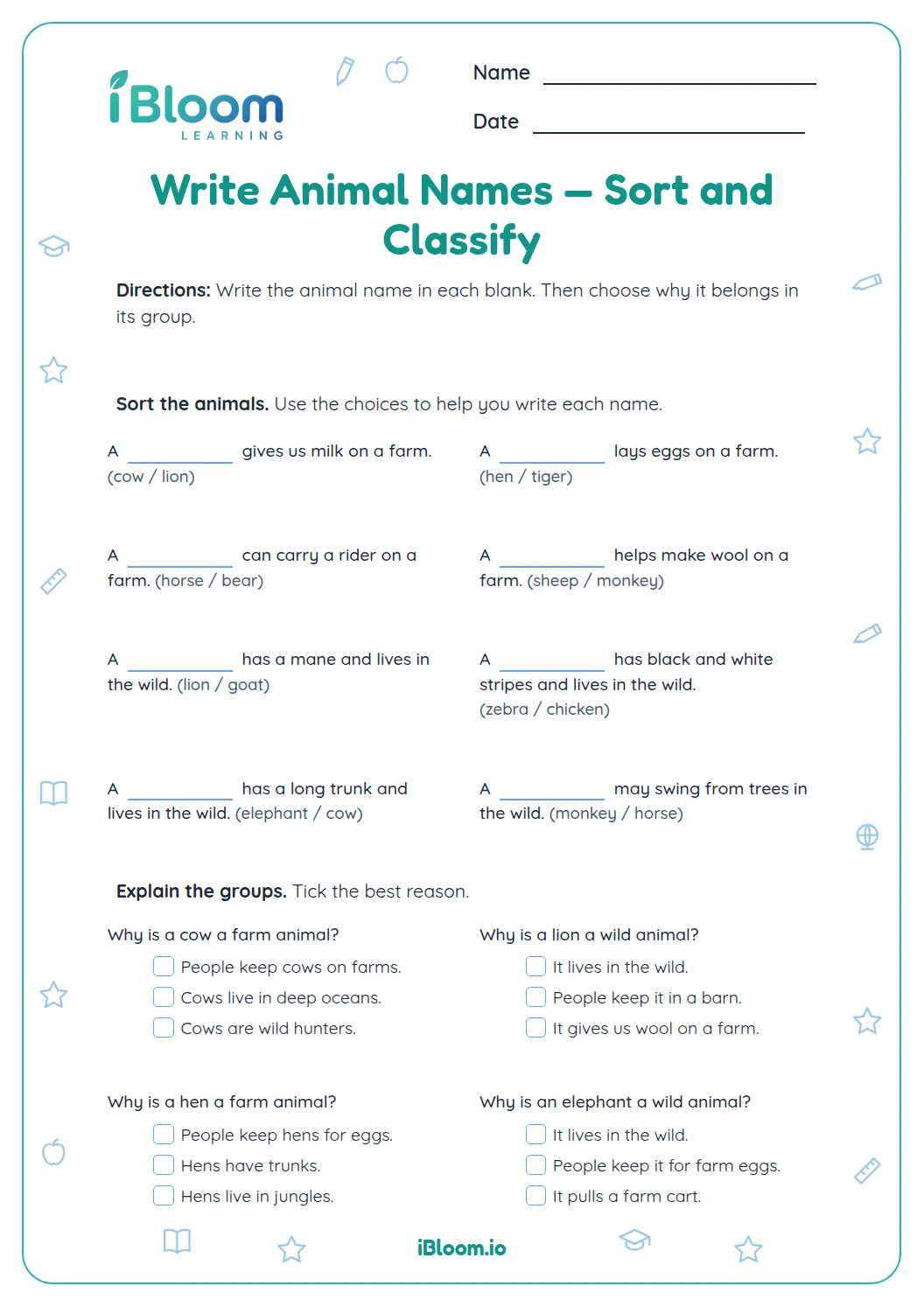
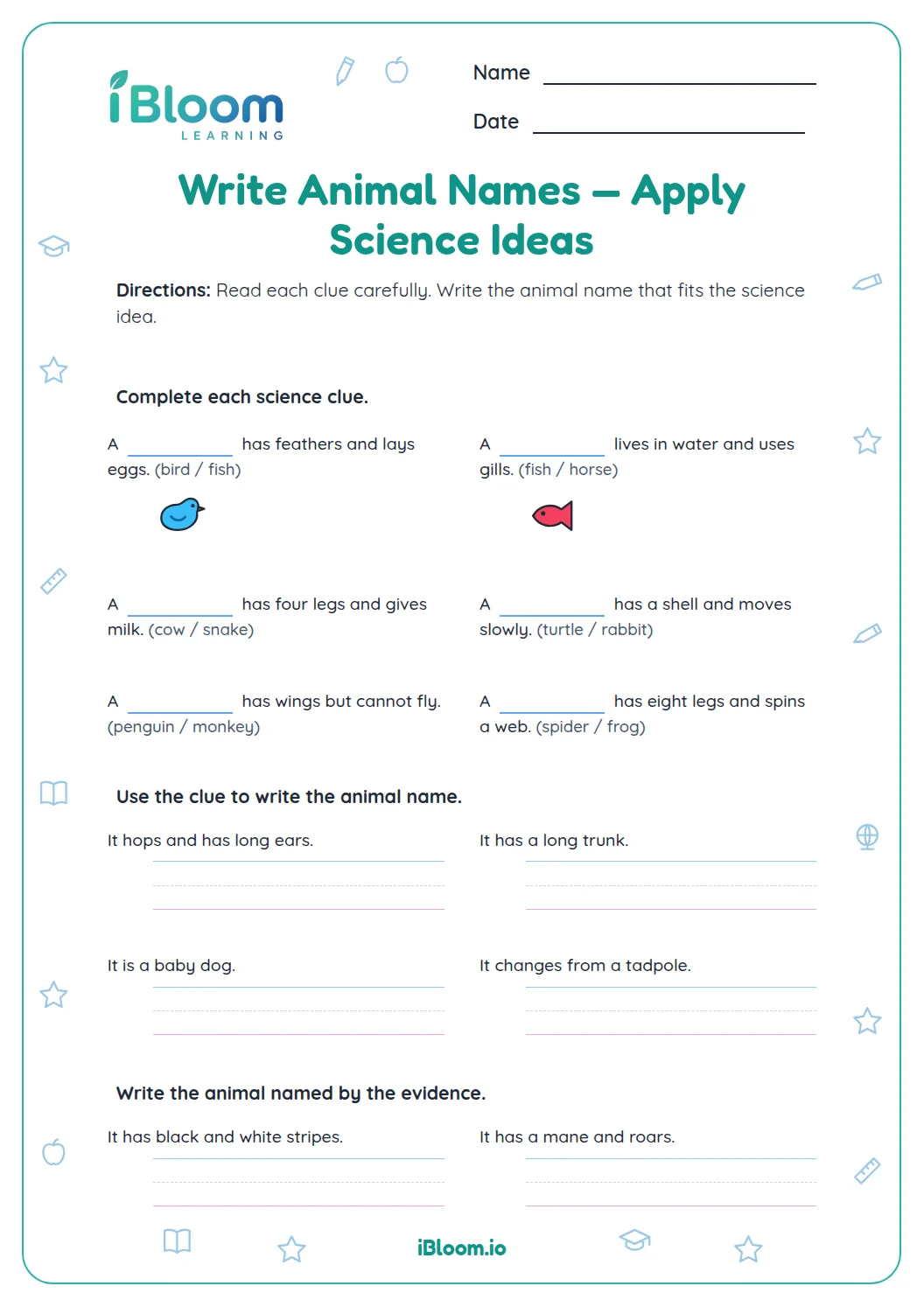
This Grade 1 science printable pairs animal naming with simple clue matching. Students name eight pictured animals, then answer six questions about feathers, gills, a shell, life stages, ears, and feet. The answer key lists all eight names and each clue answer. The activities connect animal names to observable features.
How can a student identify familiar animals?
The first eight picture prompts ask students to write a common animal name: dog, cat, fish, bird, frog, turtle, rabbit, or duck. Naming each one gives students words they can use as they compare the animal clues in the second part.
- 1Dog picture → dog
- 2Duck picture → duck
What can body features tell us?
A feature can help identify an animal. Feathers point to a bird, gills help a fish take oxygen from water, and a turtle has a hard shell. Students choose from four animal names for each clue.
- 1“Which animal has feathers?” → bird
How does a life clue help identify an animal?
Some animals change as they grow. A frog begins life in water and can live on land as an adult. Students connect that clue to the frog choice, then use the same look-and-match approach for other animal clues.
How to use this worksheet
- 1Name each pictured animal before moving to the next one.
- 2If unsure, look at the animal’s shape and familiar body parts.
- 3Read each clue all the way through before choosing.
- 4Match a feature such as feathers, gills, or a shell to an animal.
- 5For the frog clue, think about both its early life and adult life.
Common mistakes and quick fixes
The mistake
Guessing from color alone.
The fix
Look at the animal’s body shape and features; colors can vary among members of a species.
The mistake
Choosing an animal that lives in water for the gills clue.
The fix
Gills are the key clue: fish use them to take oxygen from water.
The mistake
Thinking a frog stays in water its whole life.
The fix
The clue includes two stages: a young frog begins in water, while an adult can live on land.
What to practice next
Make more practice
Questions parents and teachers ask
Which animals do students name?
Students name eight pictured animals: dog, cat, fish, bird, frog, turtle, rabbit, and duck. Six additional multiple-choice items ask them to use a feature or life clue. The answer key lists each expected animal name and clue answer.
What animal clues are included?
Six multiple-choice questions focus on feathers, gills, a turtle shell, a frog’s life stages, rabbit ears, and duck feet. Each question uses animal picture choices. Students use the clue to pick the best match, and the answer key shows the matching animal.
Why are animal pictures included?
The pictures give beginning readers a clear visual cue for each name and make the feature questions concrete. Students can look at an animal and connect its picture to the word they write, then use the same set of images to answer simple science clues.
Does the worksheet include answers?
Yes. The separate key lists all eight animal names and the six feature or life-clue answers. For the picture-name items, it gives the intended common animal name. A student’s handwriting or letter formation does not affect whether the name is correct.
What changed from the earlier activity?
The replacement keeps the focus on animal names throughout. It uses eight familiar animal pictures for direct naming and adds six clue questions about features and life stages. This gives students repeated naming practice while connecting the words to simple observations.