Free printable practice
Legs Wings Practice Activities
Grade 1 science worksheets help children identify, compare, and sort animals by legs, wings, and how those body parts help them move.
Free printable worksheet PDFs
Preview every available page, then download the free worksheet PDF for home, homeschool, tutoring, or classroom practice.
Preview the exact activity before downloading it.
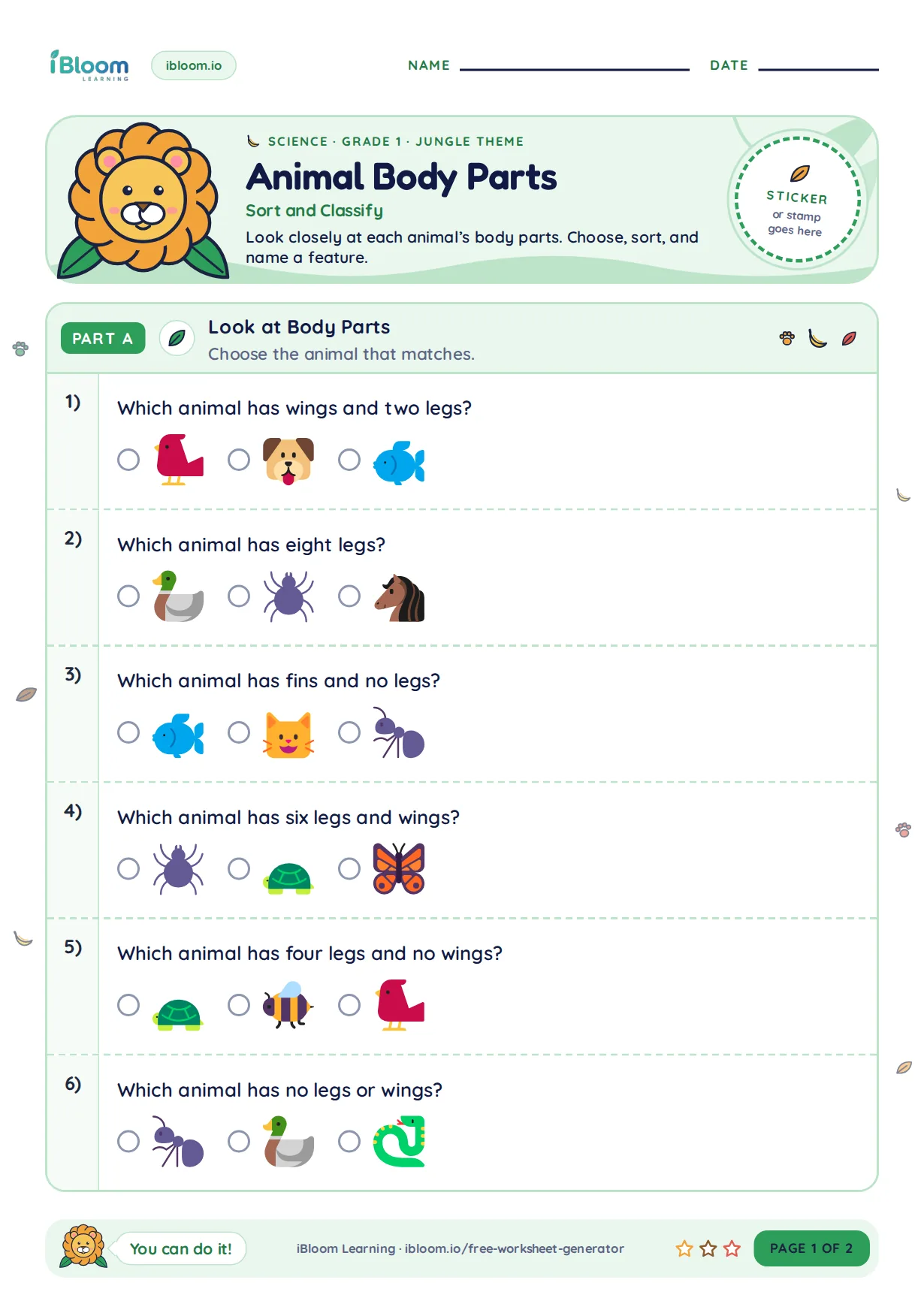 Legs Wings — Sort and ClassifyGrade 1 science worksheets help children identify, compare, and sort animals by legs, wings, and how those body parts help them move. This sort and classify worksheet provides a distinct, age-appropriate way to practise the same lesson.Grade 1Free PDF preview
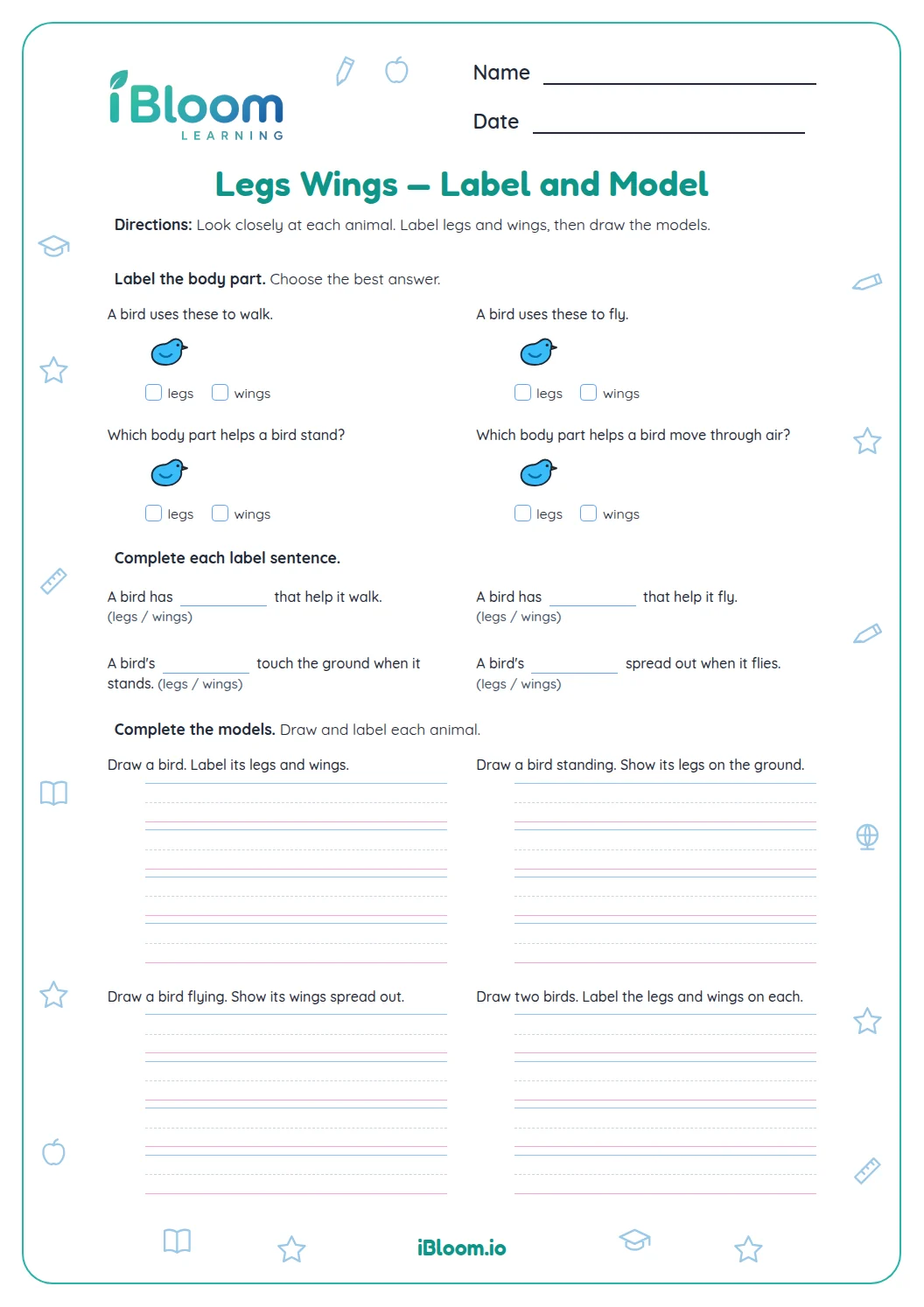 Legs Wings — Label and ModelGrade 1 science worksheets help children identify, compare, and sort animals by legs, wings, and how those body parts help them move. This label and model worksheet provides a distinct, age-appropriate way to practise the same lesson.Grade 1Free PDF preview
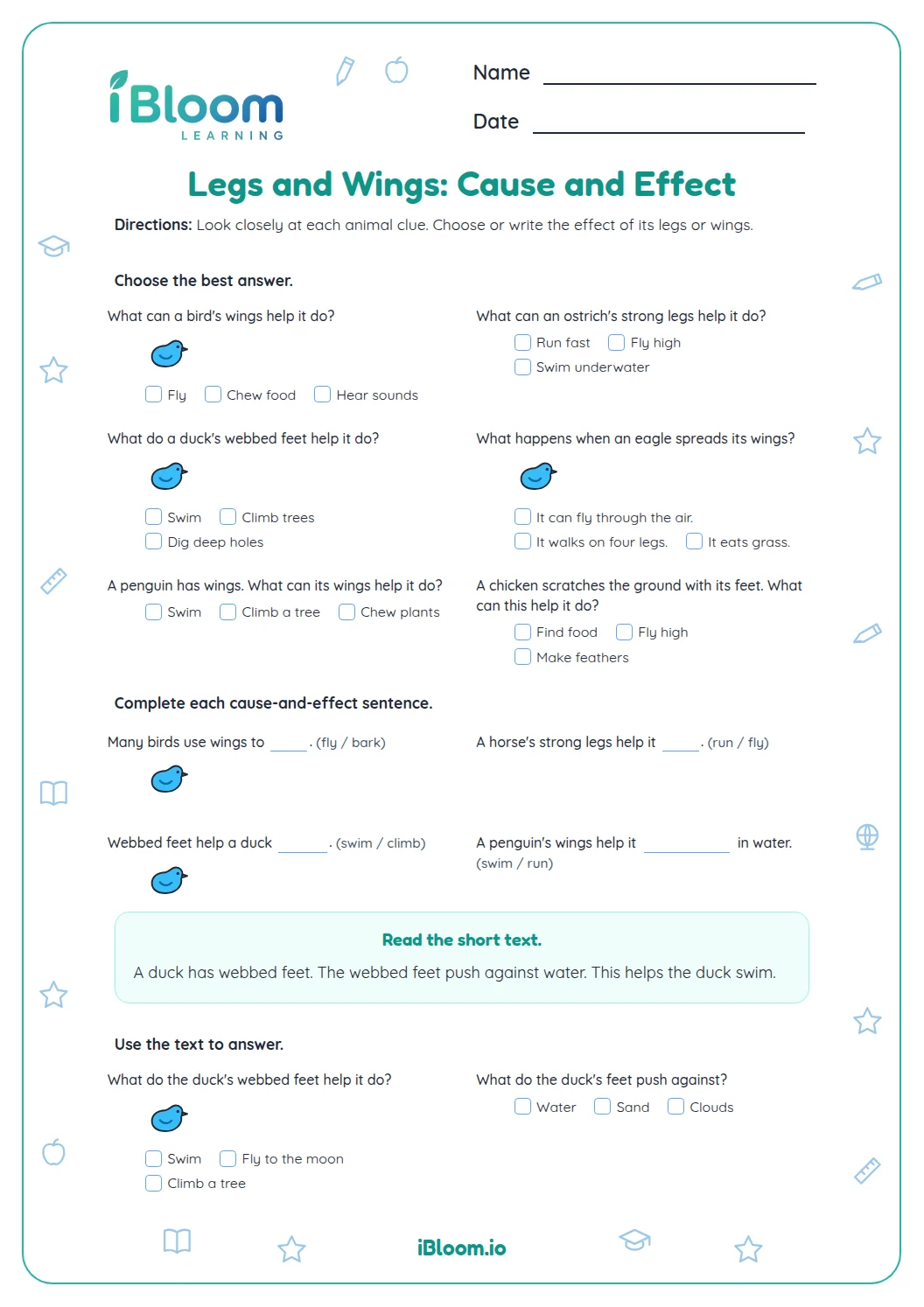 Legs Wings — Explain Cause and EffectGrade 1 science worksheets help children identify, compare, and sort animals by legs, wings, and how those body parts help them move. This explain cause and effect worksheet provides a distinct, age-appropriate way to practise the same lesson.Grade 1Free PDF preview4 pages
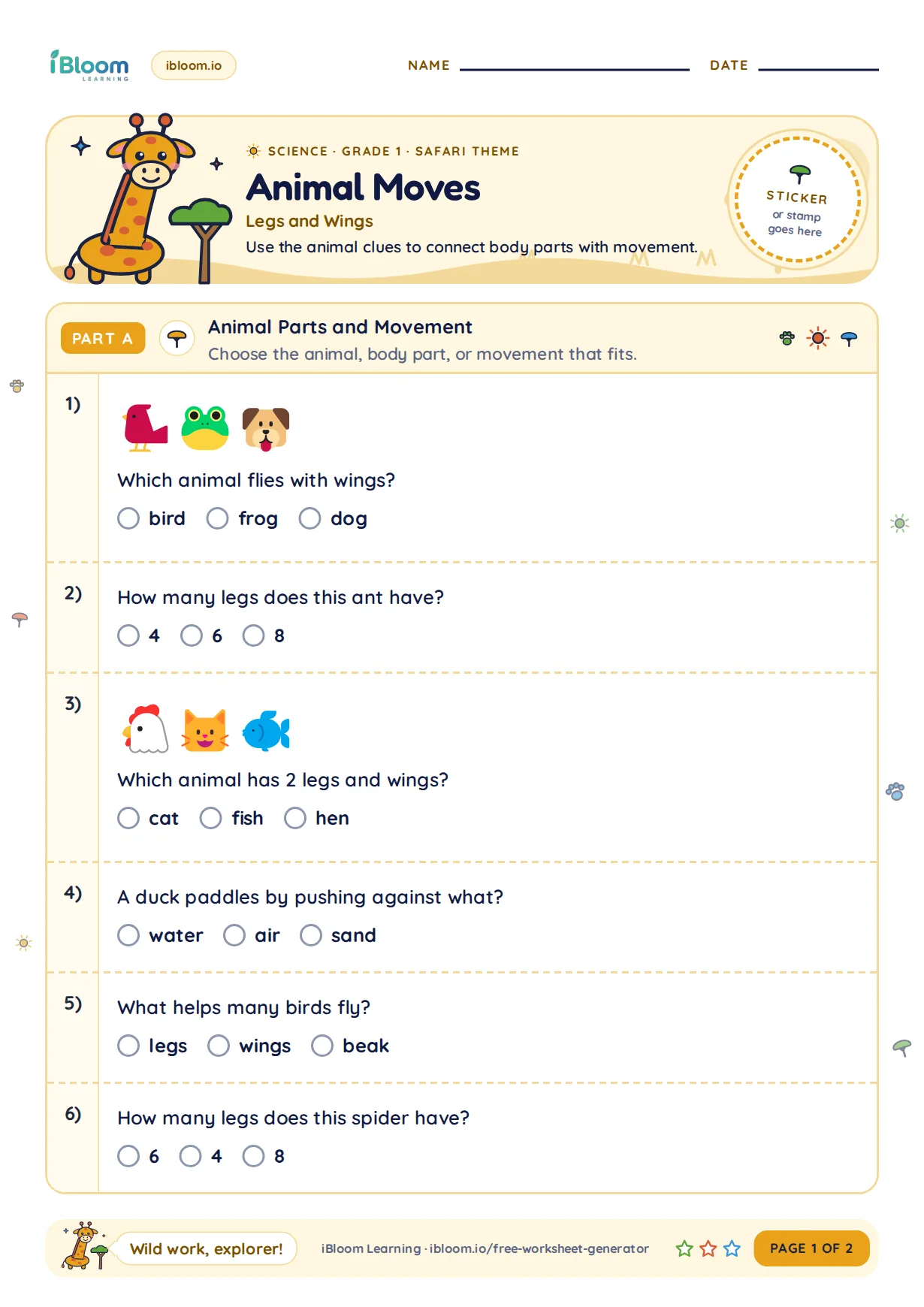 Legs Wings — Apply Science IdeasGrade 1 science worksheets help children identify, compare, and sort animals by legs, wings, and how those body parts help them move. This apply science ideas worksheet provides a distinct, age-appropriate way to practise the same lesson.Grade 1Free PDF preview6 pages
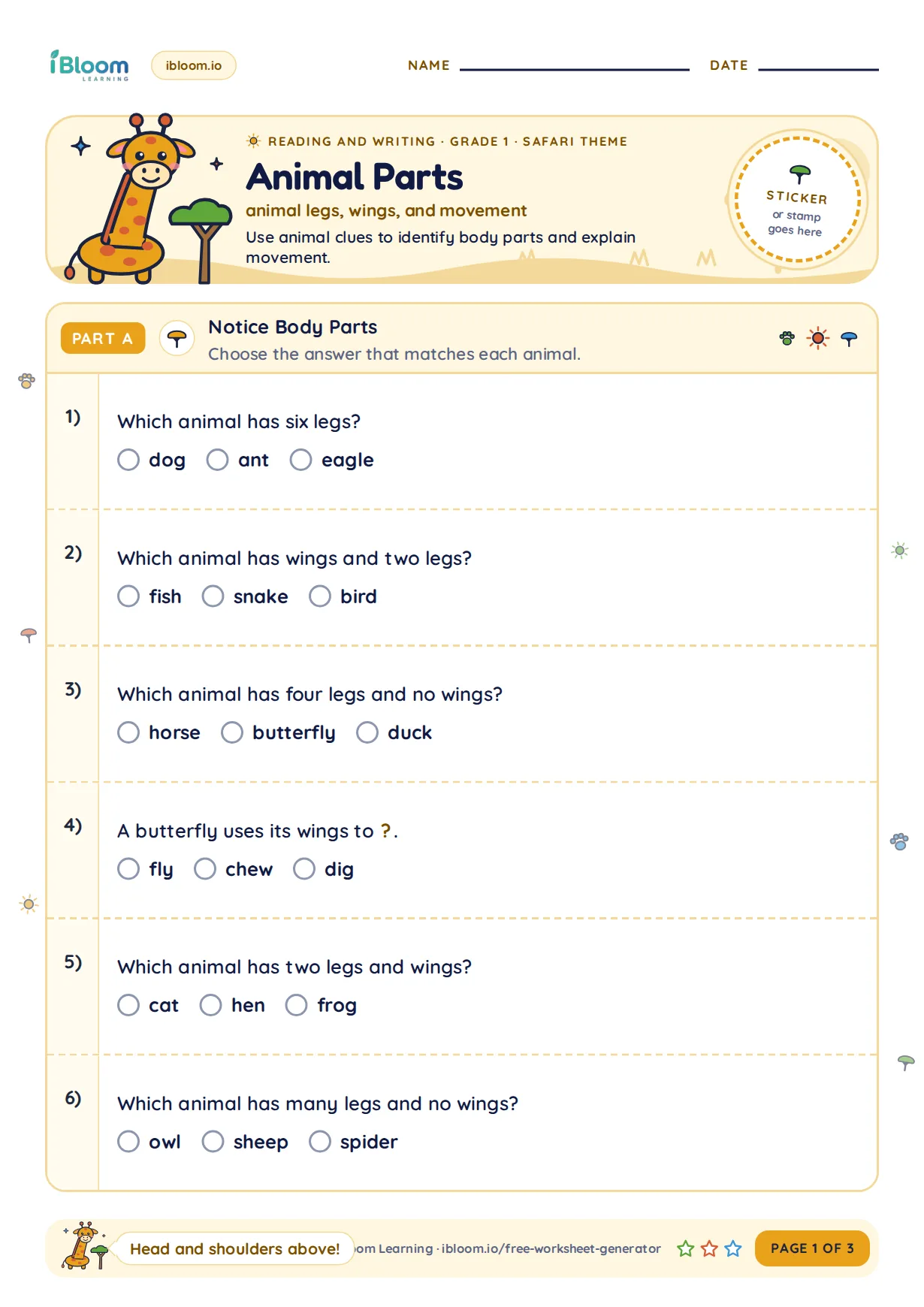 Legs Wings — Science Reasoning ReviewGrade 1 science worksheets help children identify, compare, and sort animals by legs, wings, and how those body parts help them move. This science reasoning review worksheet provides a distinct, age-appropriate way to practise the same lesson.Grade 1Free PDF preview
Practice that builds confidence
What children learn about legs and wings
These Grade 1 animal worksheets focus on two easy-to-observe body parts: legs and wings. Children practise noticing whether an animal has legs, wings, both, or neither, then connect those features to movement such as walking, hopping, running, flying, or swimming.
The printable activities include child-friendly animal pictures, sorting tasks, matching prompts, circle-the-answer questions, and simple observation-based comparisons. They are designed to build accurate science vocabulary while keeping the work visual and accessible for early readers.
Legs and wings are animal body parts that give useful clues about how an animal moves and lives. In these worksheets, children look closely at familiar animals such as birds, insects, dogs, frogs, and ducks, then describe what they see. A bird may have both legs and wings; a dog has legs but no wings; many insects have legs and wings. The goal is not to memorize every animal, but to practise careful observation.

From naming to comparing
The activities move from simple identification to comparison. First, children point out or circle legs and wings. Next, they sort animals into groups, such as animals with wings and animals without wings. Then they answer questions that require a reason: “This animal can hop because it has strong legs” or “This animal can fly because it has wings.” This progression helps first graders connect body parts with function.
A practical parent routine
At home, begin with a quick picture walk. Ask, “What body parts do you notice?” before reading any directions. After one worksheet, look around the house, yard, or a picture book and find three animals to discuss. Use complete sentence frames: “A ___ has ___.” and “It uses them to ___.” If your child says “wings mean flying,” gently add exceptions, such as a chicken or ostrich, to show that science often includes careful details.

Classroom uses for Grade 1 science
Teachers can use these printables during an animals unit, science centers, small-group review, or as a follow-up to a read-aloud about animal movement. They also work well for oral language practice: partners can explain why they sorted an animal into a group. For early finishers, ask students to draw one more animal in each category and label legs or wings.

Common errors to watch for
Some children count a tail as a leg or assume every winged animal is a bird. Others may miss small insect legs because the picture is detailed. Encourage students to trace with a finger around the animal and look for repeated body parts. A short child-friendly strategy is: “Look, name, count, then tell what it helps the animal do.”
Free printable PDF download
Use this grade 1 legs and wings worksheet page to preview the activity, print it, or download it as a PDF for quick practice. It works well for homework, homeschool lessons, tutoring, morning work, revision, and classroom centers.
Answers and answer key support
After the child completes the worksheet independently, parents and teachers can use the answer support or answer key information to check the work, review mistakes, and choose the next practice step.
Why iBloom worksheets help
iBloom worksheets keep the science focus clear: observe the animal, identify the part, and explain the movement. The mix of pictures, sorting, matching, and short responses supports different learners while strengthening Grade 1 vocabulary such as legs, wings, body parts, move, fly, walk, hop, and run.
Helpful answers
Frequently asked questions
What skill do these Legs Wings worksheets teach?
They teach Grade 1 children to observe animals, identify legs and wings, and connect those body parts to movement such as walking, hopping, running, or flying.
Are these worksheets only about birds?
No. Birds are included, but the activities also use other animals such as insects, dogs, frogs, and ducks so children can compare animals with legs, wings, both, or neither.
How can I help my child if they confuse legs and wings?
Ask your child to point to each body part and tell what it helps the animal do. Use the simple routine: look, name, count, then explain the movement.
Can these worksheets be used in science centers?
Yes. Teachers can place them in animal or body-parts centers for sorting, matching, labeling, and partner talk about how animals move.
Do the worksheets include writing?
Some activities may use short labels, sentence frames, or simple explanations, but the focus stays visual and appropriate for Grade 1 learners.
Is this grade 1 legs and wings worksheet free?
Yes. You can preview it for free and use the printable worksheet for home or classroom practice.
Can I download this grade 1 legs and wings worksheet as a PDF?
Yes. Use the worksheet download option to save a printable PDF, or print the worksheet directly from the page.
Does this grade 1 legs and wings worksheet include answers or an answer key?
When the activity has fixed answers, iBloom includes answer support so parents and teachers can check the completed worksheet.