Free printable practice
Habitats Practice Activities
Printable Grade 1 science activities help children identify animal habitats and connect animals with the places that meet their basic needs.
Free printable worksheet PDFs
Preview every available page, then download the free worksheet PDF for home, homeschool, tutoring, or classroom practice.
Preview the exact activity before downloading it.
 Habitats — Sort and ClassifyPrintable Grade 1 science activities help children identify animal habitats and connect animals with the places that meet their basic needs. This sort and classify worksheet provides a distinct, age-appropriate way to practise the same lesson.Grade 1Free PDF preview
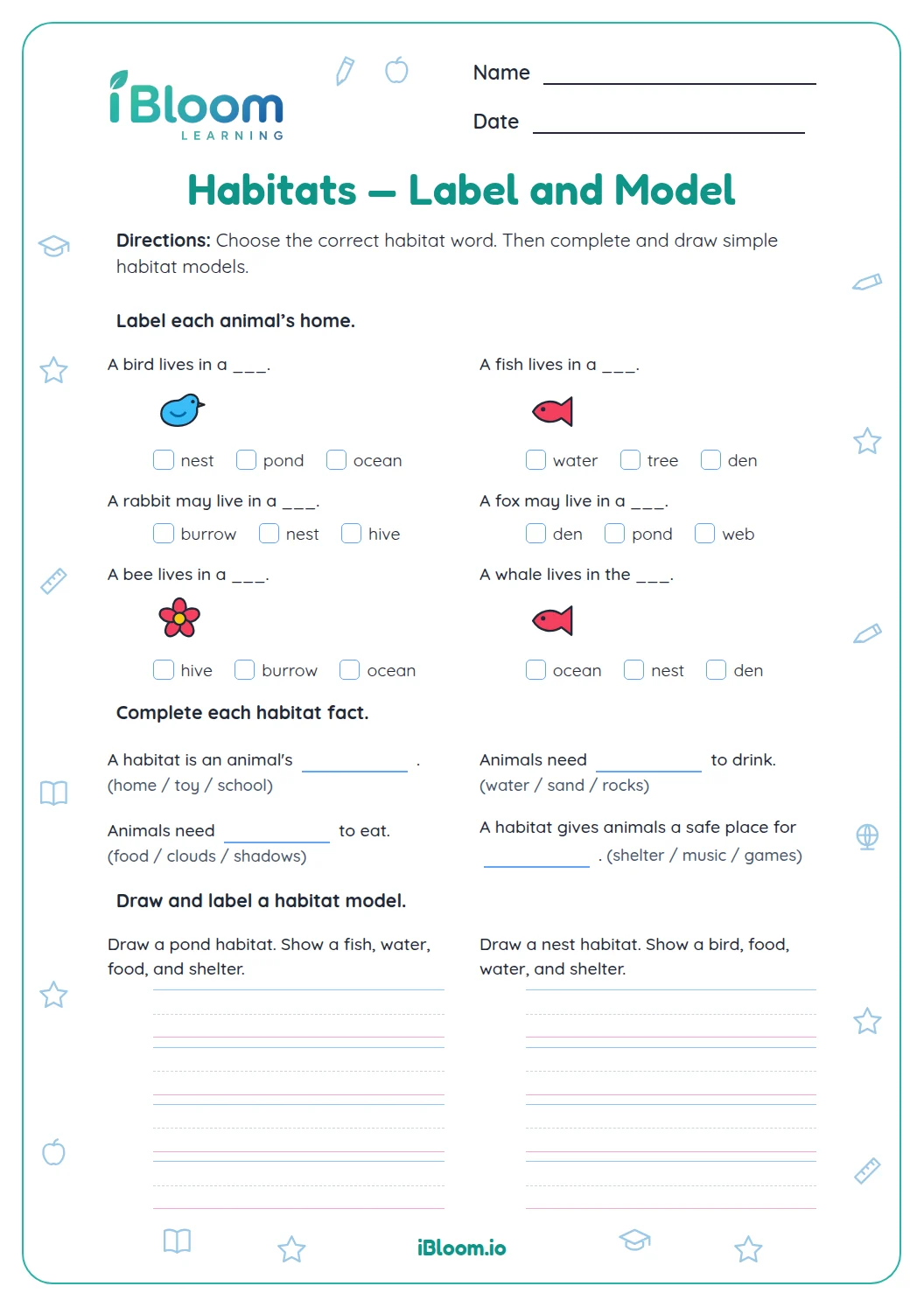 Habitats — Label and ModelPrintable Grade 1 science activities help children identify animal habitats and connect animals with the places that meet their basic needs. This label and model worksheet provides a distinct, age-appropriate way to practise the same lesson.Grade 1Free PDF preview
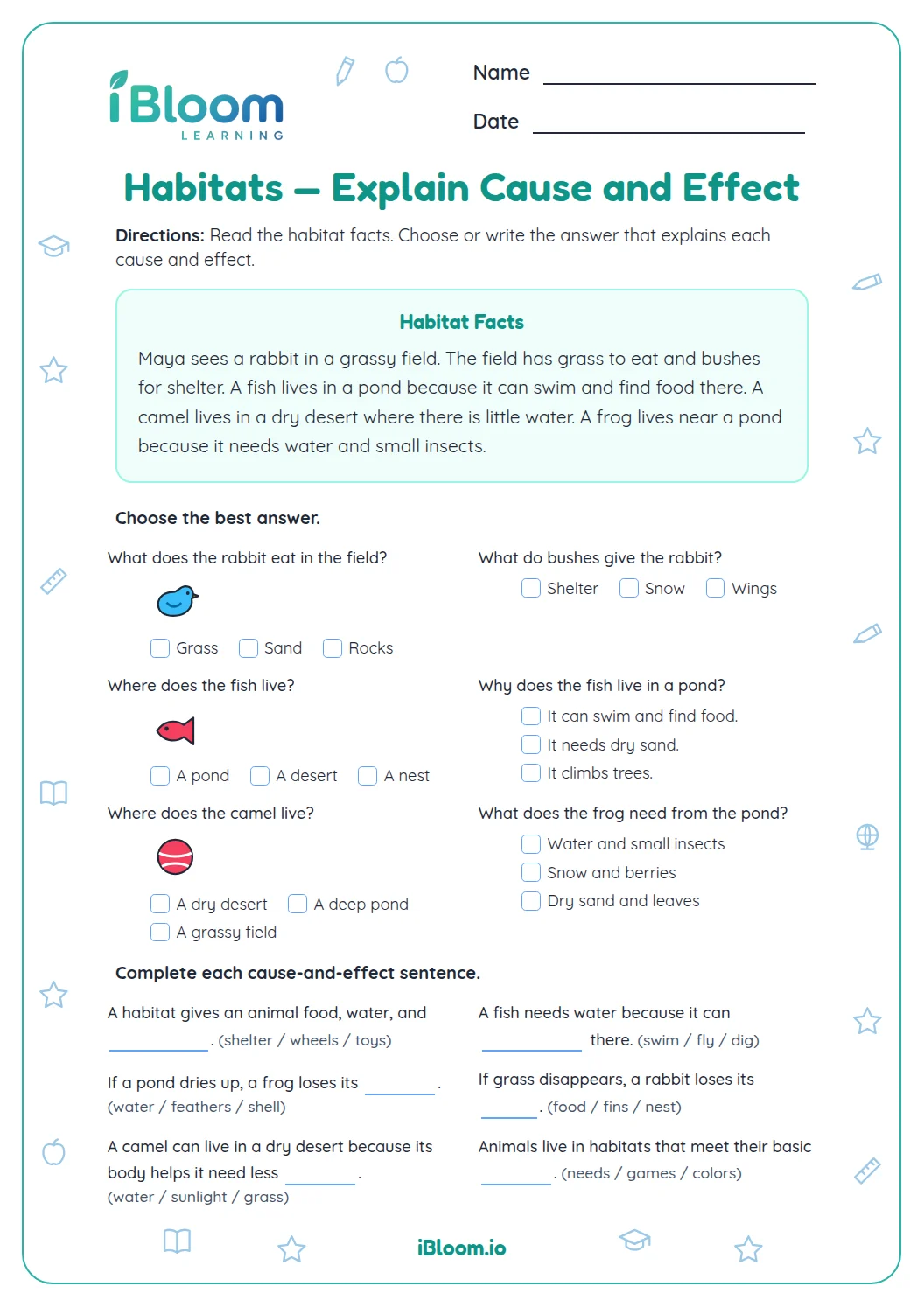 Habitats — Explain Cause and EffectPrintable Grade 1 science activities help children identify animal habitats and connect animals with the places that meet their basic needs. This explain cause and effect worksheet provides a distinct, age-appropriate way to practise the same lesson.Grade 1Free PDF preview
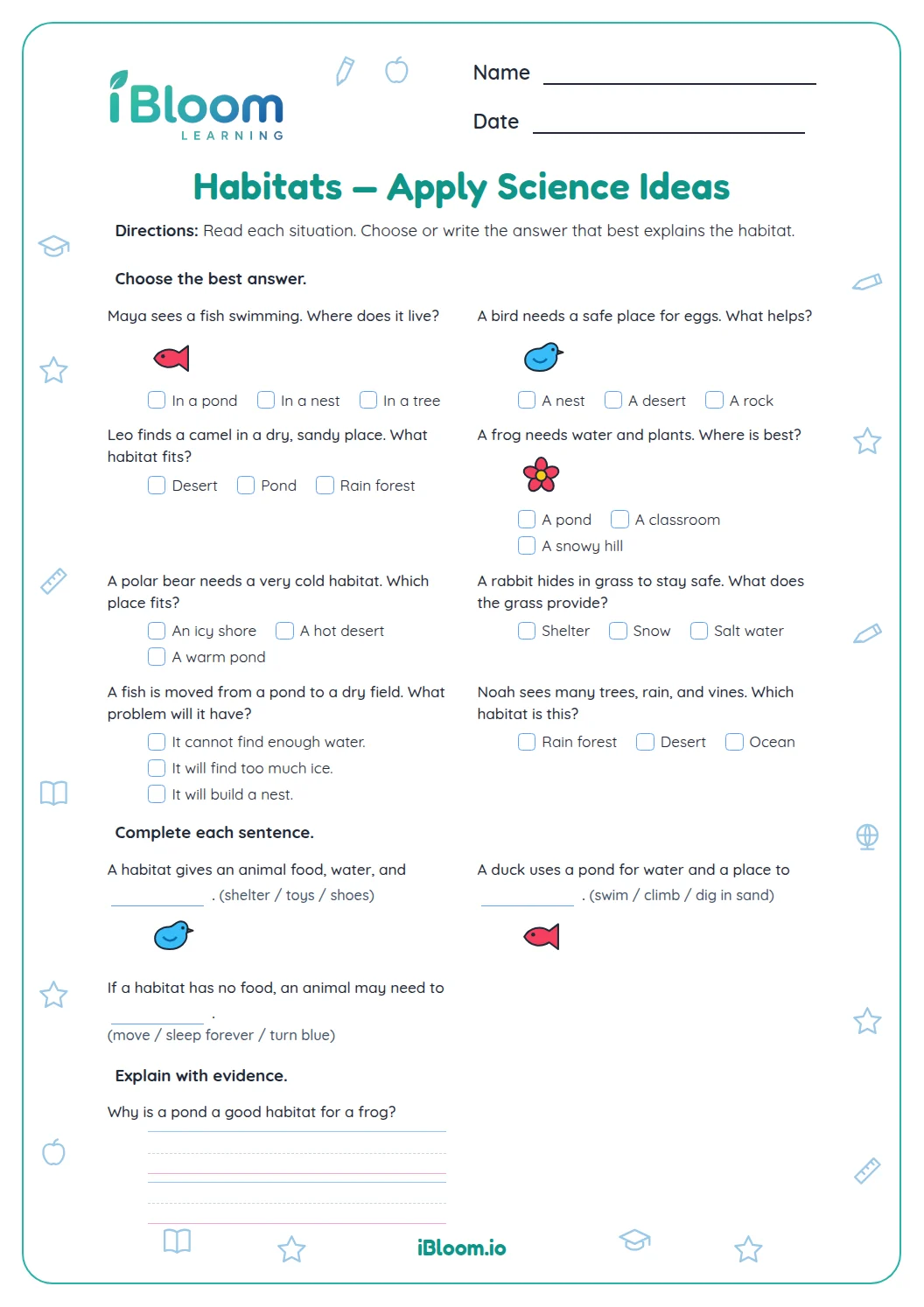 Habitats — Apply Science IdeasPrintable Grade 1 science activities help children identify animal habitats and connect animals with the places that meet their basic needs. This apply science ideas worksheet provides a distinct, age-appropriate way to practise the same lesson.Grade 1Free PDF preview
 Habitats — Science Reasoning ReviewPrintable Grade 1 science activities help children identify animal habitats and connect animals with the places that meet their basic needs. This science reasoning review worksheet provides a distinct, age-appropriate way to practise the same lesson.Grade 1Free PDF preview
Practice that builds confidence
What children learn about habitats
These Grade 1 habitats worksheets help children understand that animals live in places that provide food, water, shelter, and space. Learners practise naming common habitats, observing animal features, and explaining why an animal belongs in a certain environment.
The printable activities include matching, sorting, labeling, drawing, and simple explanation tasks. Children work with familiar habitats such as forests, ponds, oceans, deserts, grasslands, and polar regions while building early science vocabulary.
A habitat is the natural place where an animal lives. In these worksheets, Grade 1 children learn that animals are not placed in habitats by chance. A fish needs water, a camel can live in a dry desert, and a frog may be found near a pond because each place helps the animal survive. The focus is on simple, observable connections rather than memorizing long facts.

How the activities progress
The practice begins with recognizing habitats in pictures, then moves to matching animals to suitable homes. Children may sort animals by habitat, label a scene, choose the best answer, or draw what an animal needs around it. This progression helps them move from “I know this animal” to “I can explain where it lives and why.” Useful words include habitat, shelter, land, water, desert, forest, ocean, pond, and grassland.
A simple parent routine
At home, start with one worksheet and ask your child to name the animals first. Then ask, “What does this animal need?” and “Where could it find that?” Use everyday examples: birds in trees, worms in soil, ducks near water, or pets needing food and shelter. After the page, invite your child to draw one animal in its habitat and say one reason it belongs there.

Classroom uses for teachers
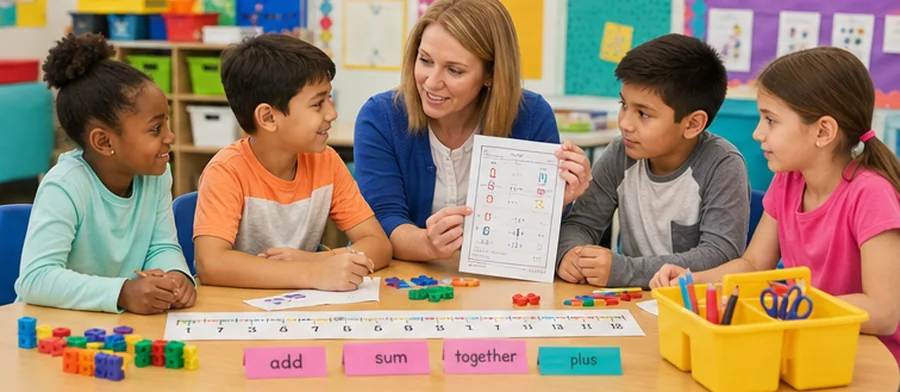
Teachers can use these printables in a Grade 1 animals unit, science centers, morning work, or small-group review. The sorting pages work well for partner talk because children can justify choices aloud. A completed worksheet can also become a quick check for whether students understand the difference between an animal’s home, its body features, and the things it needs to live.
Common errors to watch for
Some children match animals to habitats based only on color or background, such as placing any white animal in snow. Others may confuse a zoo, cage, or pet bed with a natural habitat. Encourage children to look for evidence: Does the animal need water? Can it find food there? Is there shelter? If more than one answer seems possible, ask them to explain their thinking.
Free printable PDF download
Use this Grade 1 habitats worksheet page to preview the activity, print it, or download it as a PDF for quick practice. It works well for homework, homeschool lessons, tutoring, morning work, revision, and classroom centers.
Answers and answer key support
After the child completes the worksheet independently, parents and teachers can use the answer support or answer key information to check the work, review mistakes, and choose the next practice step.
Why iBloom worksheets help
iBloom worksheets keep the science clear, visual, and age-appropriate. The pages combine pictures, simple language, and varied response types so children can practise observation, classification, and early reasoning. A child-friendly strategy is: “Look at the animal, think about its needs, then choose the place that helps it live.”
Helpful answers
Frequently asked questions
What habitat skills do these Grade 1 worksheets practise?
Children practise identifying common habitats, matching animals to suitable environments, sorting animals by where they live, and giving simple reasons based on food, water, shelter, and space.
Are these worksheets suitable for children who are just beginning science?
Yes. The activities use pictures, familiar animals, and short prompts so first graders can build understanding through observation before writing longer explanations.
Which habitats are usually included in this practice?
The worksheets may include common Grade 1 examples such as forests, ponds, oceans, deserts, grasslands, and polar regions, along with animals that can reasonably live in those places.
How can I help my child explain an animal-habitat match?
Ask questions like, “What does this animal need?” and “Can it find food, water, or shelter there?” This helps your child move beyond guessing and use evidence from the habitat.
What mistakes should I watch for when teaching habitats?
Children may match by picture color, choose a zoo as a natural habitat, or place animals where they look cute rather than where they can survive. Encourage them to think about the animal’s needs.
Is this Grade 1 habitats worksheet free?
Yes. You can preview it for free and use the printable worksheet for home or classroom practice.
Can I download this Grade 1 habitats worksheet as a PDF?
Yes. Use the worksheet download option to save a printable PDF, or print the worksheet directly from the page.
Does this Grade 1 habitats worksheet include answers or an answer key?
When the activity has fixed answers, iBloom includes answer support so parents and teachers can check the completed worksheet.