Free printable practice
Animal Life Cycles Practice Activities
Grade 1 science worksheets that help children sequence, compare, and explain how animals grow and change through their life cycles.
Free printable worksheet PDFs
Preview every available page, then download the free worksheet PDF for home, homeschool, tutoring, or classroom practice.
Preview the exact activity before downloading it.
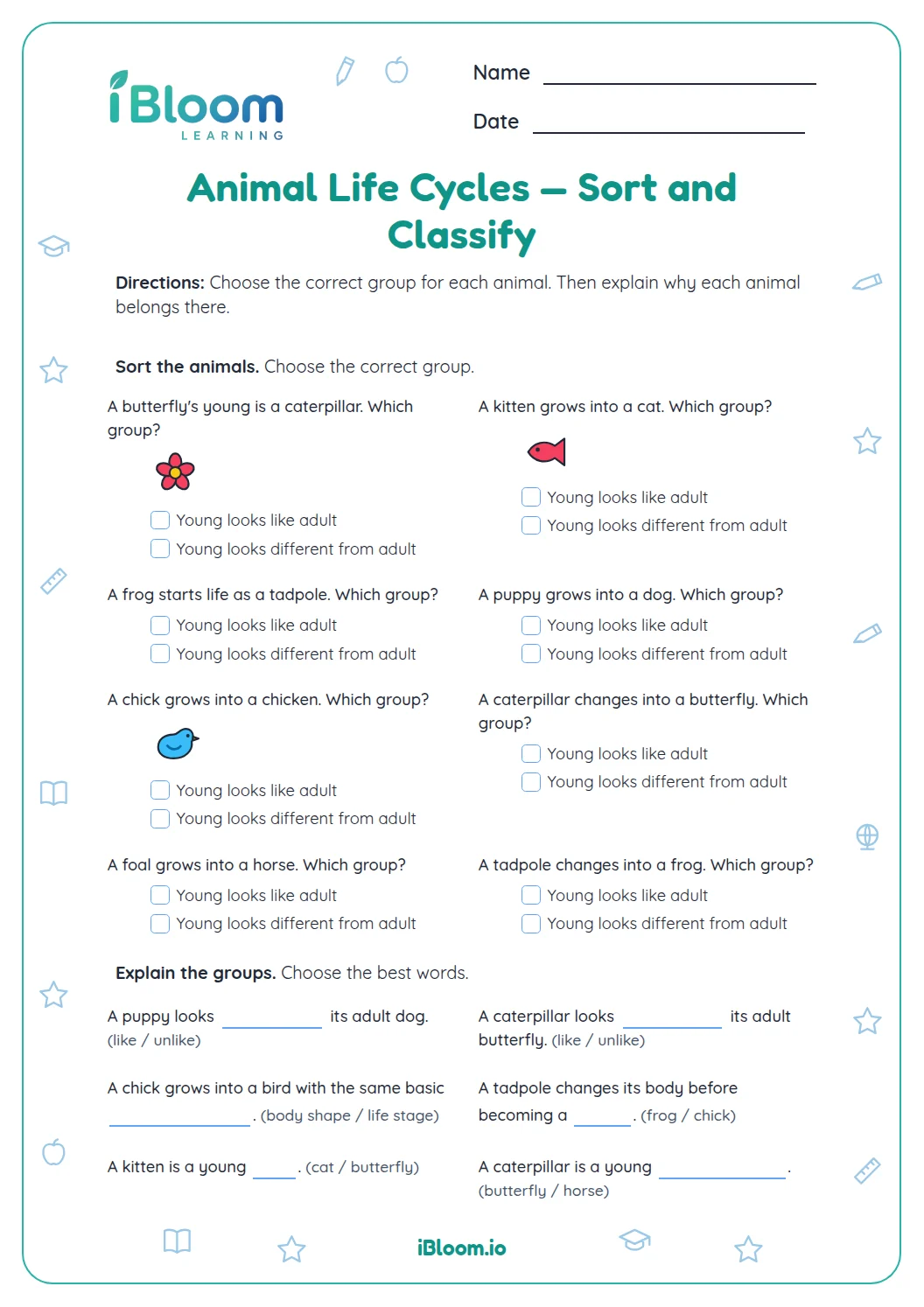 Animal Life Cycles — Sort and ClassifyGrade 1 science worksheets that help children sequence, compare, and explain how animals grow and change through their life cycles. This sort and classify worksheet provides a distinct, age-appropriate way to practise the same lesson.Grade 1Free PDF preview
 Animal Life Cycles — Label and ModelGrade 1 science worksheets that help children sequence, compare, and explain how animals grow and change through their life cycles. This label and model worksheet provides a distinct, age-appropriate way to practise the same lesson.Grade 1Free PDF preview
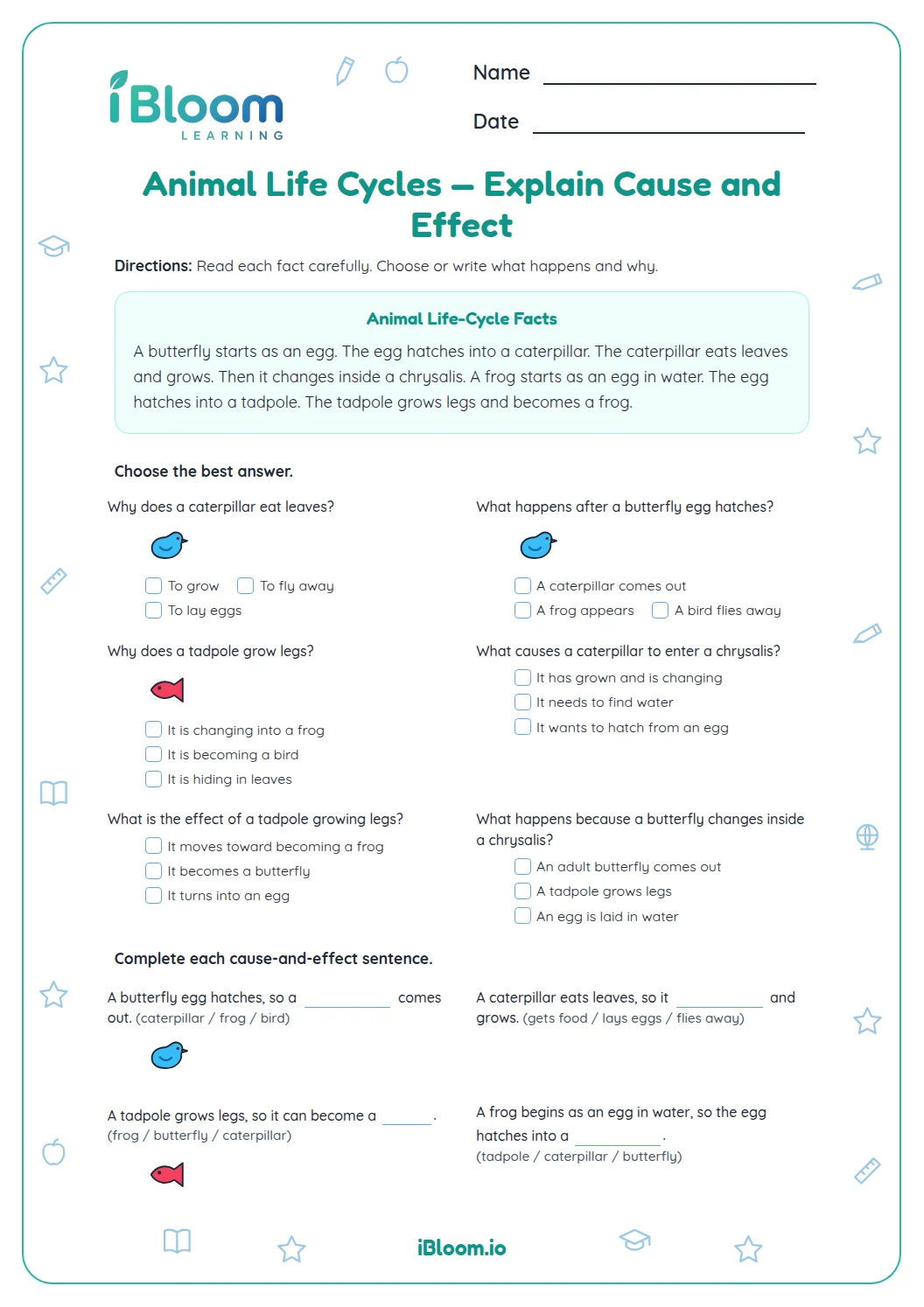 Animal Life Cycles — Explain Cause and EffectGrade 1 science worksheets that help children sequence, compare, and explain how animals grow and change through their life cycles. This explain cause and effect worksheet provides a distinct, age-appropriate way to practise the same lesson.Grade 1Free PDF preview
 Animal Life Cycles — Apply Science IdeasGrade 1 science worksheets that help children sequence, compare, and explain how animals grow and change through their life cycles. This apply science ideas worksheet provides a distinct, age-appropriate way to practise the same lesson.Grade 1Free PDF preview4 pages
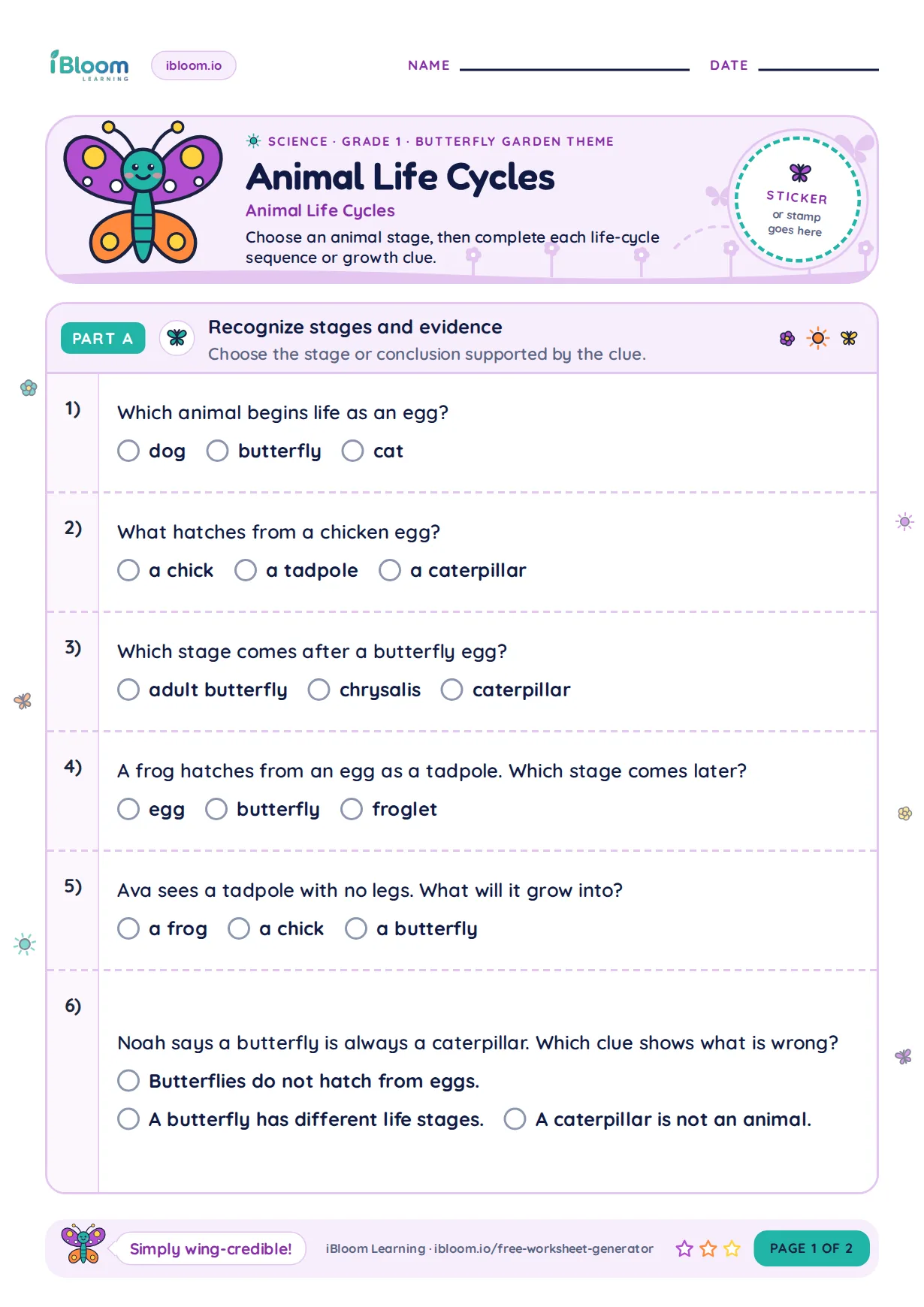 Animal Life Cycles — Science Reasoning ReviewGrade 1 science worksheets that help children sequence, compare, and explain how animals grow and change through their life cycles. This science reasoning review worksheet provides a distinct, age-appropriate way to practise the same lesson.Grade 1Free PDF preview
Practice that builds confidence
Building the idea of a life cycle
These Grade 1 animal life cycles worksheets help children notice how animals begin life, grow, change, and become adults. Students practise using science words such as egg, baby, young, adult, hatch, grow, and change while comparing familiar animals.
The printable activities include picture sequencing, cut-and-paste life cycle order, matching young animals to adults, simple labeling, and short response prompts. Children build the idea that different animals have different life cycles, but all living things grow and change over time.
Animal life cycles can feel abstract to first graders, so these worksheets use clear pictures and familiar examples to make the pattern visible. Children look at animals such as butterflies, frogs, chickens, and mammals, then identify stages like egg, young animal, and adult. The focus is not memorizing every detail, but understanding that animals have ordered stages of growth.

Sequencing and comparing stages
Activities move from recognizing pictures to placing stages in the correct order. A child may sequence egg, caterpillar, chrysalis, butterfly, or match a chick to a hen. Other pages ask students to compare how a baby animal and an adult animal look alike or different. These tasks strengthen observation, vocabulary, and cause-and-effect thinking.
A simple parent routine
At home, start by naming one animal on the page and asking, “What does it look like when it is young?” Let your child point, describe, and then number the stages. After the worksheet, use a quick real-life connection: talk about a pet, a bird’s nest, tadpoles, or an insect outside. Encourage complete sentences such as, “A chick hatches from an egg and grows into a chicken.”

Classroom uses for Grade 1 teachers
Teachers can use these printables during an animals unit, science centers, small-group reteaching, or as a follow-up to read-alouds about frogs, butterflies, or farm animals. The pages also work well for sorting tasks: animals that hatch from eggs, animals that look like their parents, and animals that change a lot as they grow.

Common errors to watch for
Some students may think a life cycle is just “baby to adult” and miss the beginning stage. Others may confuse similar stages, such as caterpillar and worm, or place the adult before the egg because the adult lays the egg. Use sequence words—first, next, then, last—and ask children to explain why one stage comes before another.
Free printable PDF download
Use this grade 1 animal life cycles worksheet page to preview the activity, print it, or download it as a PDF for quick practice. It works well for homework, homeschool lessons, tutoring, morning work, revision, and classroom centers.
Answers and answer key support
After the child completes the worksheet independently, parents and teachers can use the answer support or answer key information to check the work, review mistakes, and choose the next practice step.
Why iBloom worksheets help
iBloom worksheets give children repeated practice with pictures, labels, and short explanations so they can move from noticing to reasoning. A helpful child-friendly strategy is: “Look, name, order, tell.” Look carefully at each picture, name the stage, put the stages in order, and tell the life cycle in your own words.
Helpful answers
Frequently asked questions
What do Grade 1 students learn in animal life cycle worksheets?
They learn that animals begin life, grow, change, and become adults. The worksheets focus on sequencing stages, comparing young and adult animals, and using simple science vocabulary.
Do these worksheets include animals that hatch from eggs?
Yes. Activities may include examples such as butterflies, frogs, and chickens so children can practise identifying egg, young, and adult stages.
How can I help my child if they put the stages in the wrong order?
Ask them to use sequence words: first, next, then, and last. Have them explain what happens in each picture, then reorder the stages based on how the animal grows.
Are these activities suitable for science centers?
Yes. The picture-based sequencing, matching, labeling, and sorting tasks are useful for Grade 1 science centers, small groups, or independent practice.
What vocabulary should children know for this topic?
Helpful words include life cycle, egg, hatch, baby, young, adult, grow, change, first, next, then, and last.
Is this grade 1 animal life cycles worksheet free?
Yes. You can preview it for free and use the printable worksheet for home or classroom practice.
Can I download this grade 1 animal life cycles worksheet as a PDF?
Yes. Use the worksheet download option to save a printable PDF, or print the worksheet directly from the page.
Does this grade 1 animal life cycles worksheet include answers or an answer key?
When the activity has fixed answers, iBloom includes answer support so parents and teachers can check the completed worksheet.