




About this worksheet
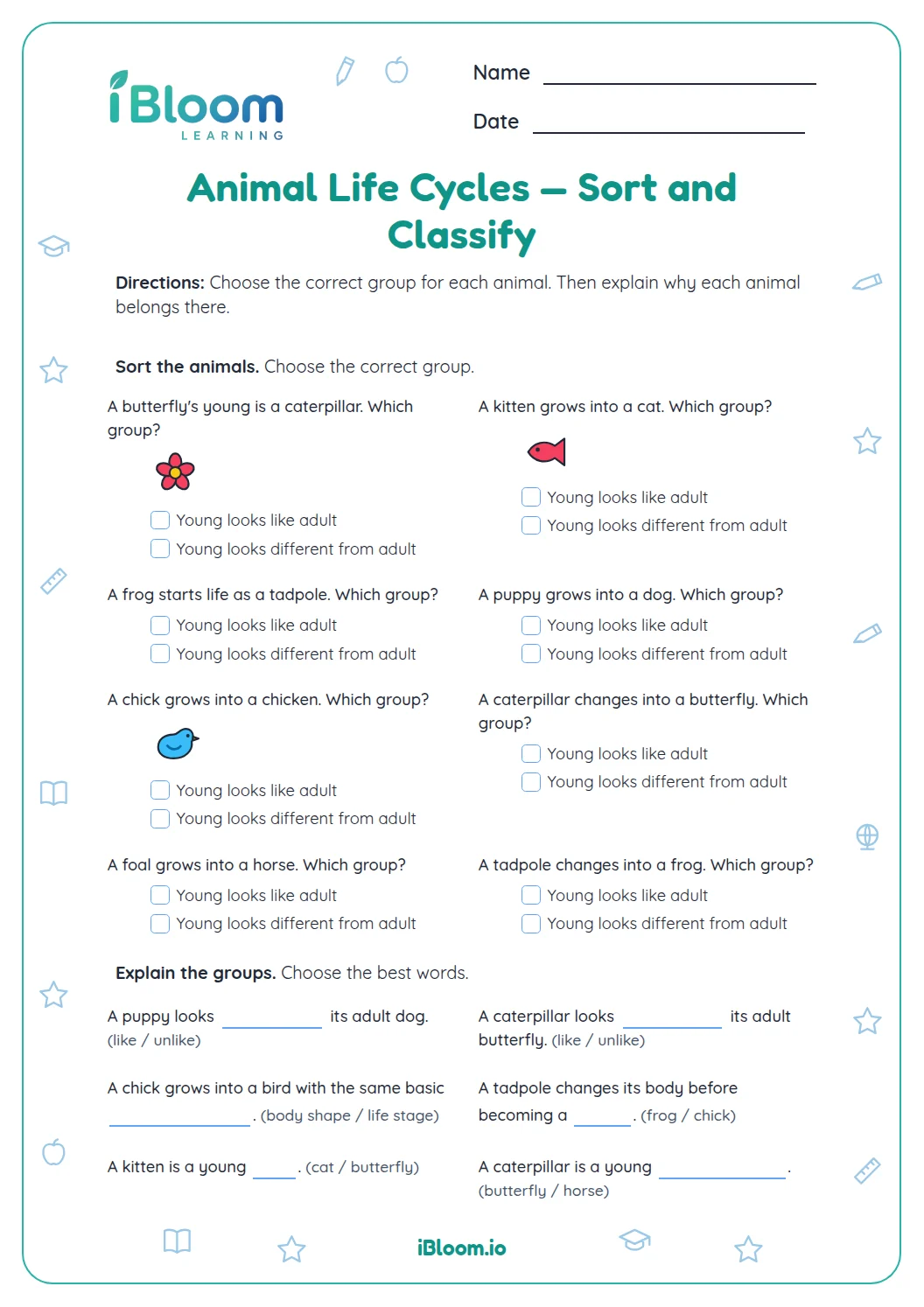
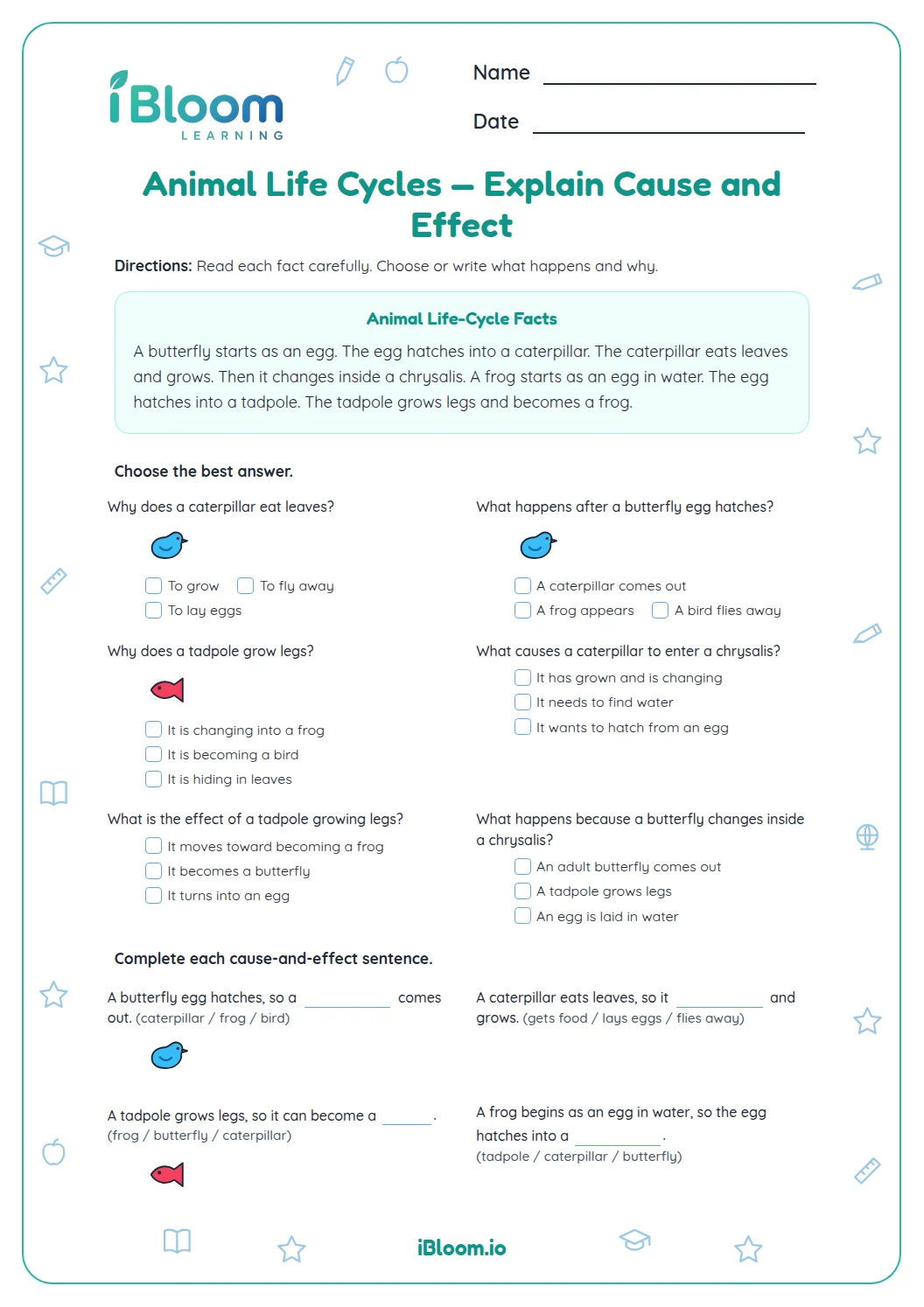
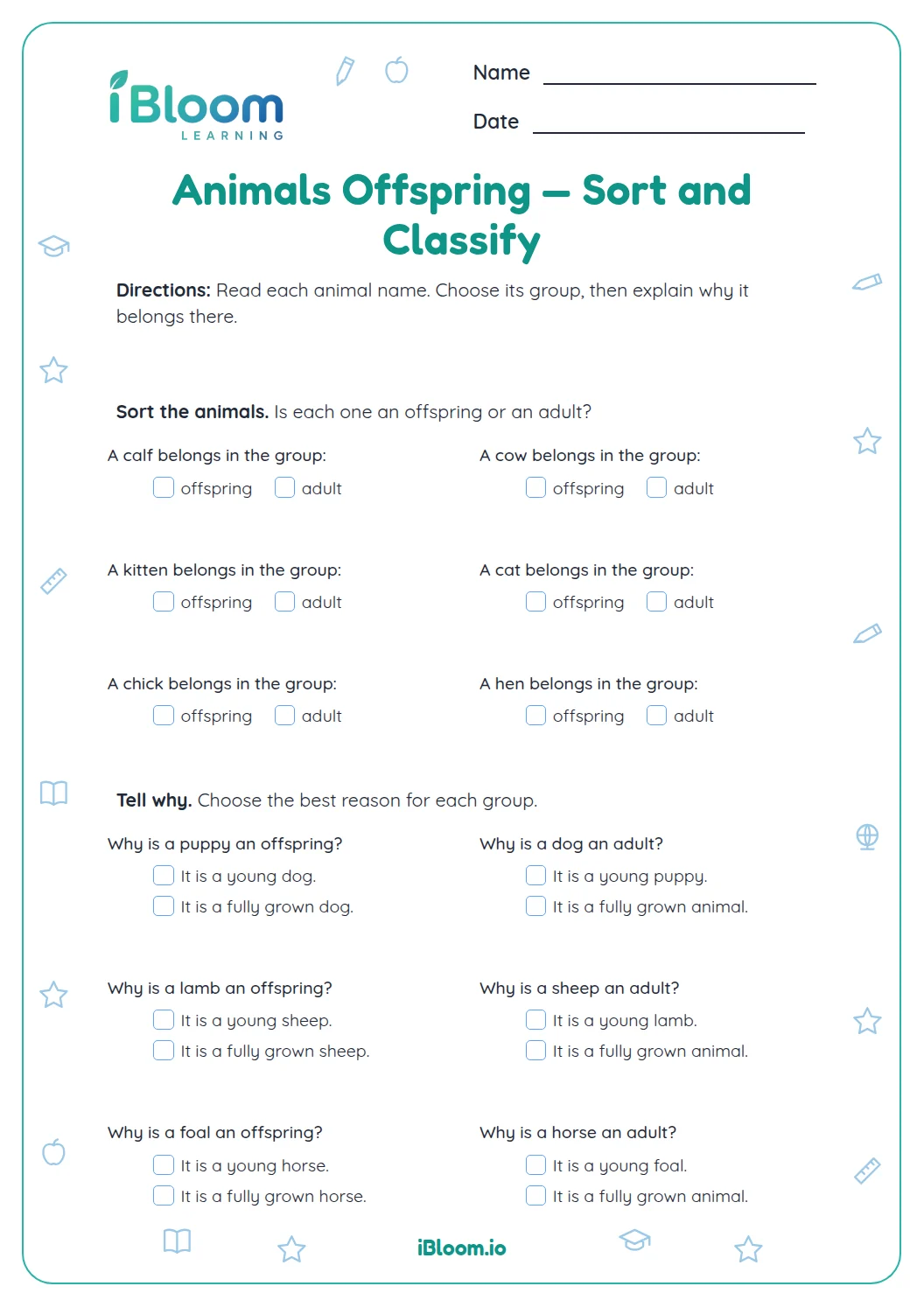
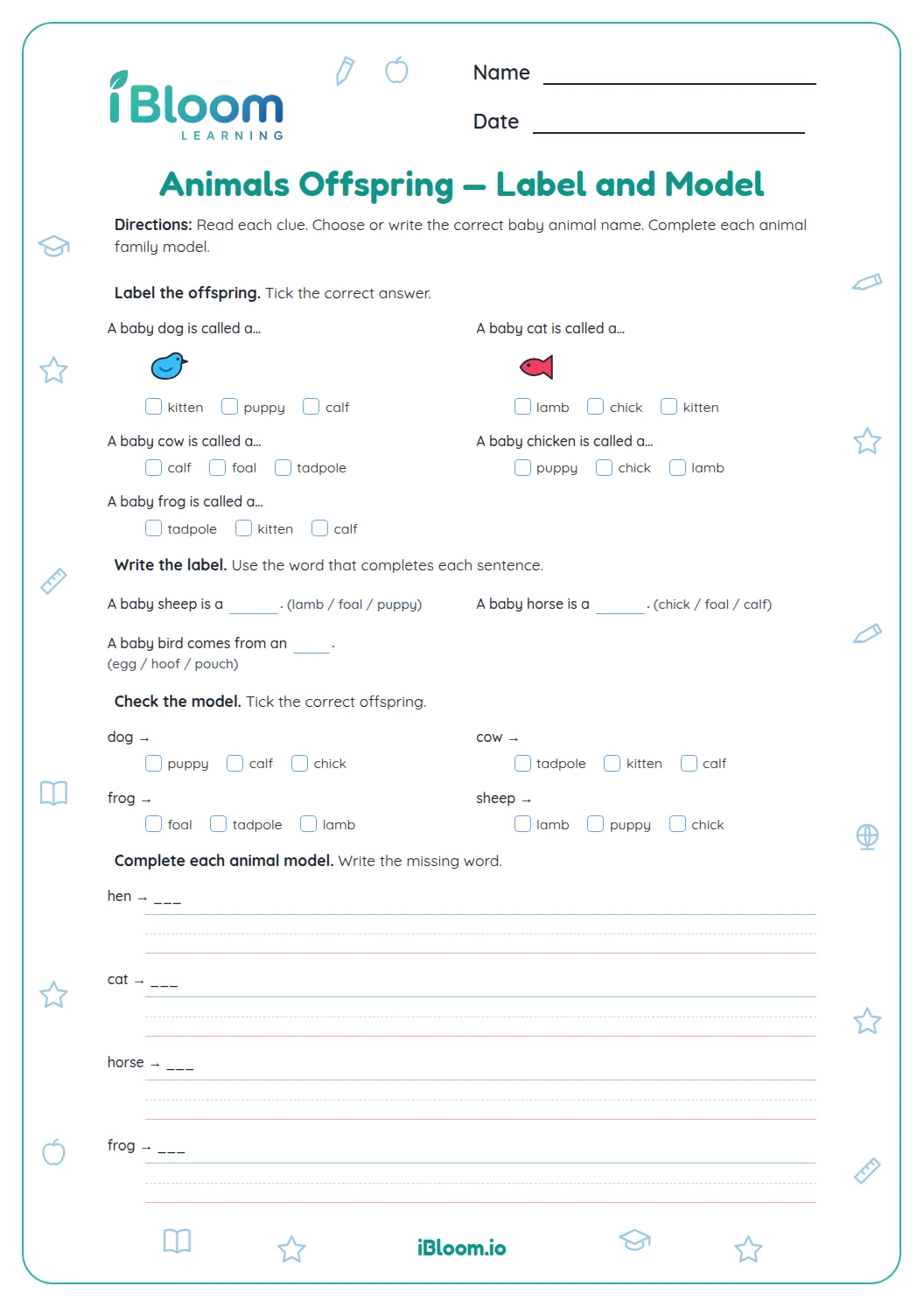
This Grade 1 science review gives learners 14 questions about frog, butterfly, and chicken life cycles. Part A asks them to identify stages and choose conclusions supported by animal clues. Part B completes short life-cycle sequences and growth statements. The practice connects familiar examples to NGSS 3-LS1-1. A separate answer key includes each response.
Aligned to 3-LS1-1
How do clues support a life-cycle idea?
Part A asks learners to name stages and reason from simple observations. A tadpole with no legs will grow into a frog; a chick beside a hen can grow into an adult hen.
- 1Ava sees a tadpole with no legs.
- 2The clue names an early frog stage.
- 3It will grow into a frog.
How do you complete a life-cycle sequence?
Part B gives a short sequence with one missing stage. Name the animal first, then use the stages around the blank. For a butterfly, the young stage after an egg is a caterpillar.
What changes as animals grow?
The final items connect stages to growth and to the larger life cycle. Use the animal named in the sentence; a chrysalis belongs in a butterfly life cycle, while a frog passes through egg and tadpole stages.
How can you use this worksheet?
- 1Name the animal in the question before choosing a stage.
- 2For Part A, match each young stage to its animal.
- 3For Part B, read the stages before and after the blank.
- 4Write the stage or growth word that fits.
- 5Check each answer with the key.
What mistakes can learners check?
The mistake
Mixing up a tadpole and a froglet.
The fix
A tadpole hatches first; a froglet is a later young frog stage.
The mistake
Putting the adult before the young stage.
The fix
Start with the egg and move through growth toward the adult.
The mistake
Assuming every young animal is called a chick.
The fix
Use the stage name that belongs to the animal in the question.
Curriculum alignment
This page gives learners focused practice with the stated skill.
Use life-cycle models to describe stages shared by organisms.
On this sheet:
Show the official wordingHide the official wording
Develop models to describe that organisms have unique and diverse life cycles but all have in common birth, growth, reproduction, and death.
What to practice next
Make more practice
Further reading
Questions parents and teachers ask
Which animals are included in the review?
Learners review frogs, butterflies, and chickens. The items include eggs, a tadpole, froglet, caterpillar, chrysalis, chick, and adults. Part A also uses observations, such as a chick beside a hen, to reason about how an animal grows. The key names the expected stage for every sequence.
How many questions are on the worksheet?
There are 14 questions in two parts. Seven multiple-choice items ask learners to identify a stage or choose a conclusion supported by a clue. Seven fill-in items ask them to complete a sequence or name a life-cycle idea.
What is the difference between a tadpole and a froglet?
A tadpole is an early young frog stage that hatches from an egg. As it grows legs and changes, it becomes a froglet, then develops toward an adult frog. The worksheet asks learners to connect these stages with frog growth.
Must written answers match the key exactly?
The answer key gives the expected stage or word for each blank. Learners can say more when discussing the item, but the written response should include the stage that completes the named animal’s sequence, such as “caterpillar” after a butterfly egg.
How can an adult support this review?
Invite the child to name the animal in each clue and say what it shows. For a sequence, have the child point to the stages before and after the blank. Then use the key to check the stage name and discuss how the animal changes as it grows.