






About this worksheet
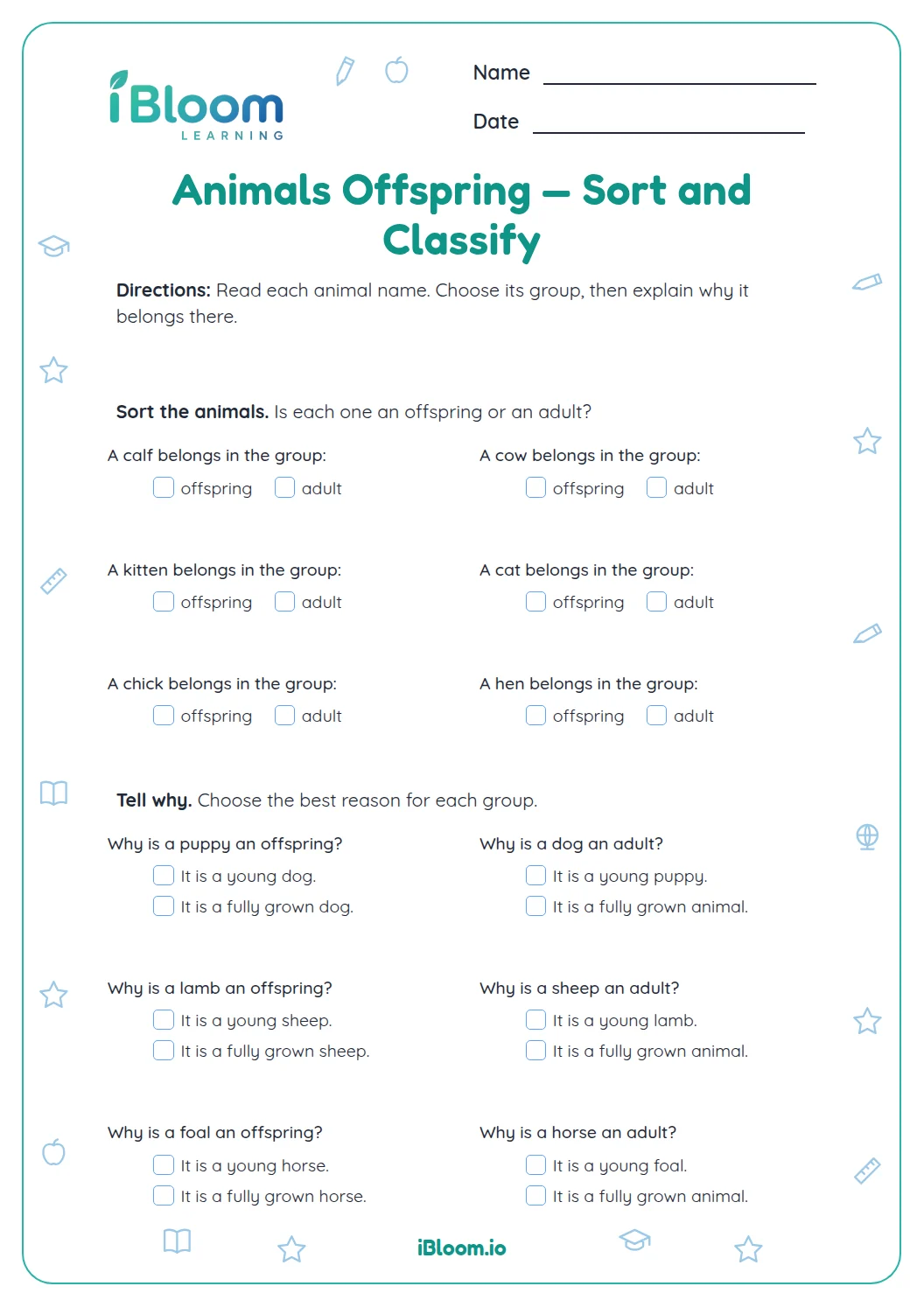
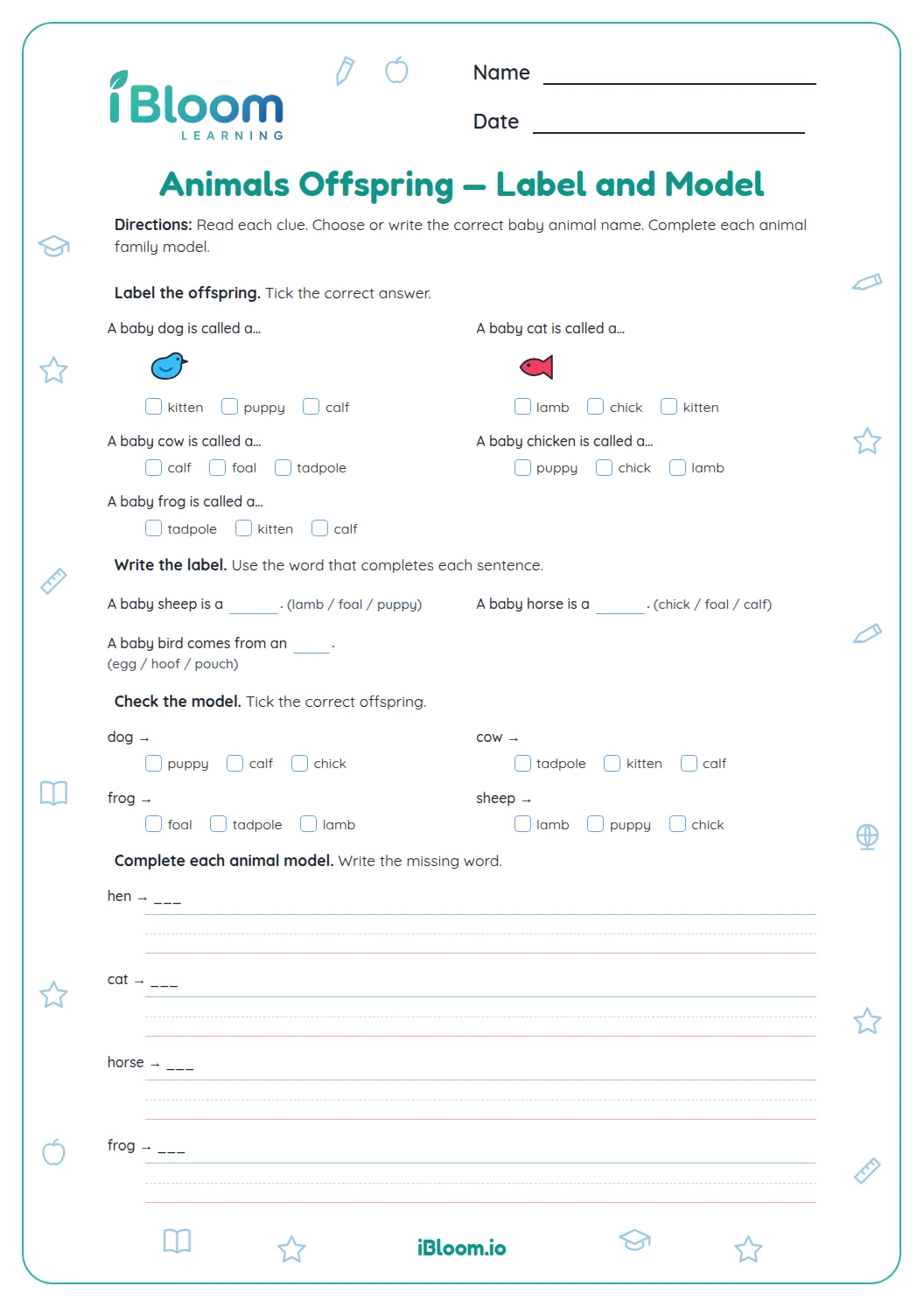
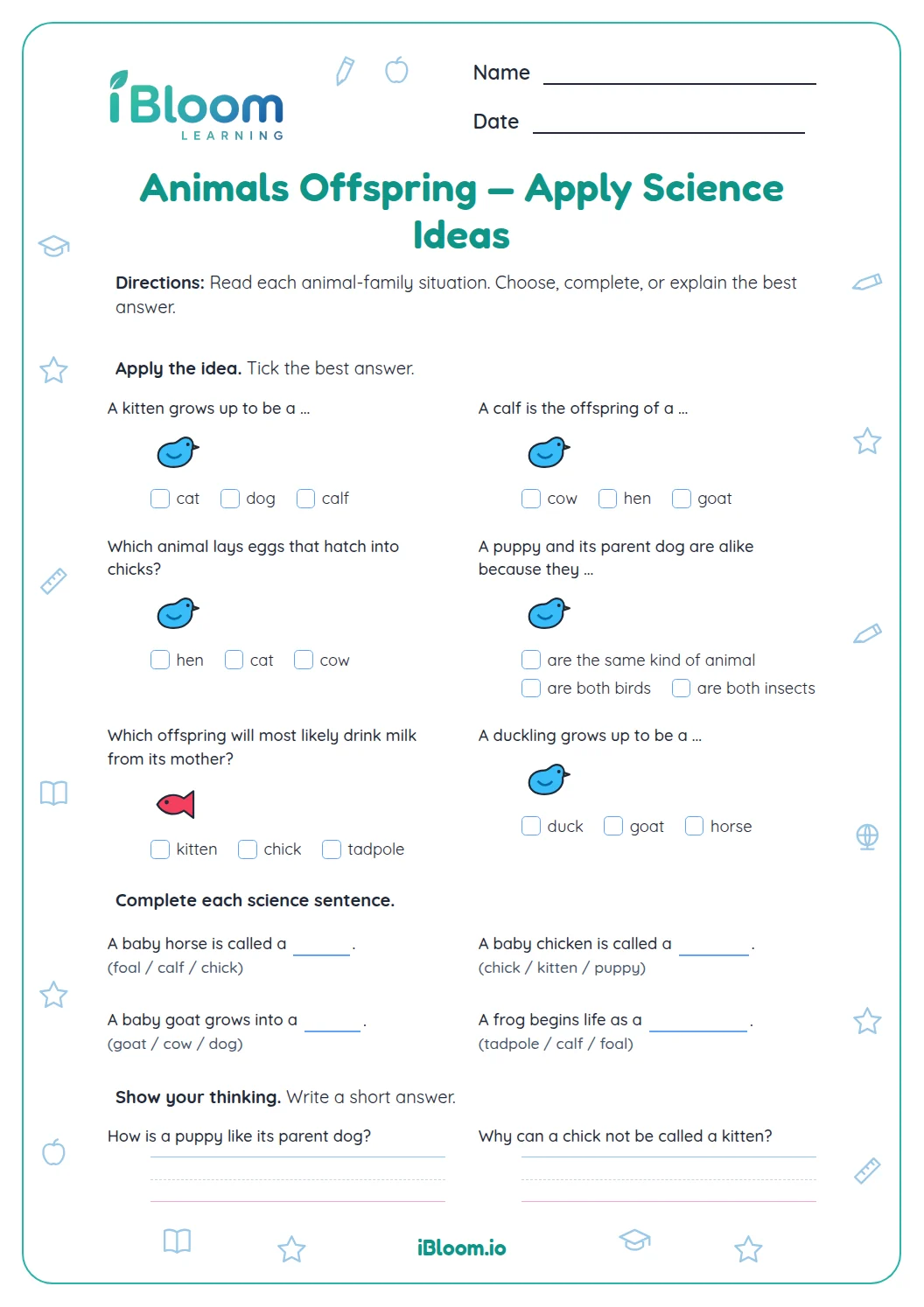
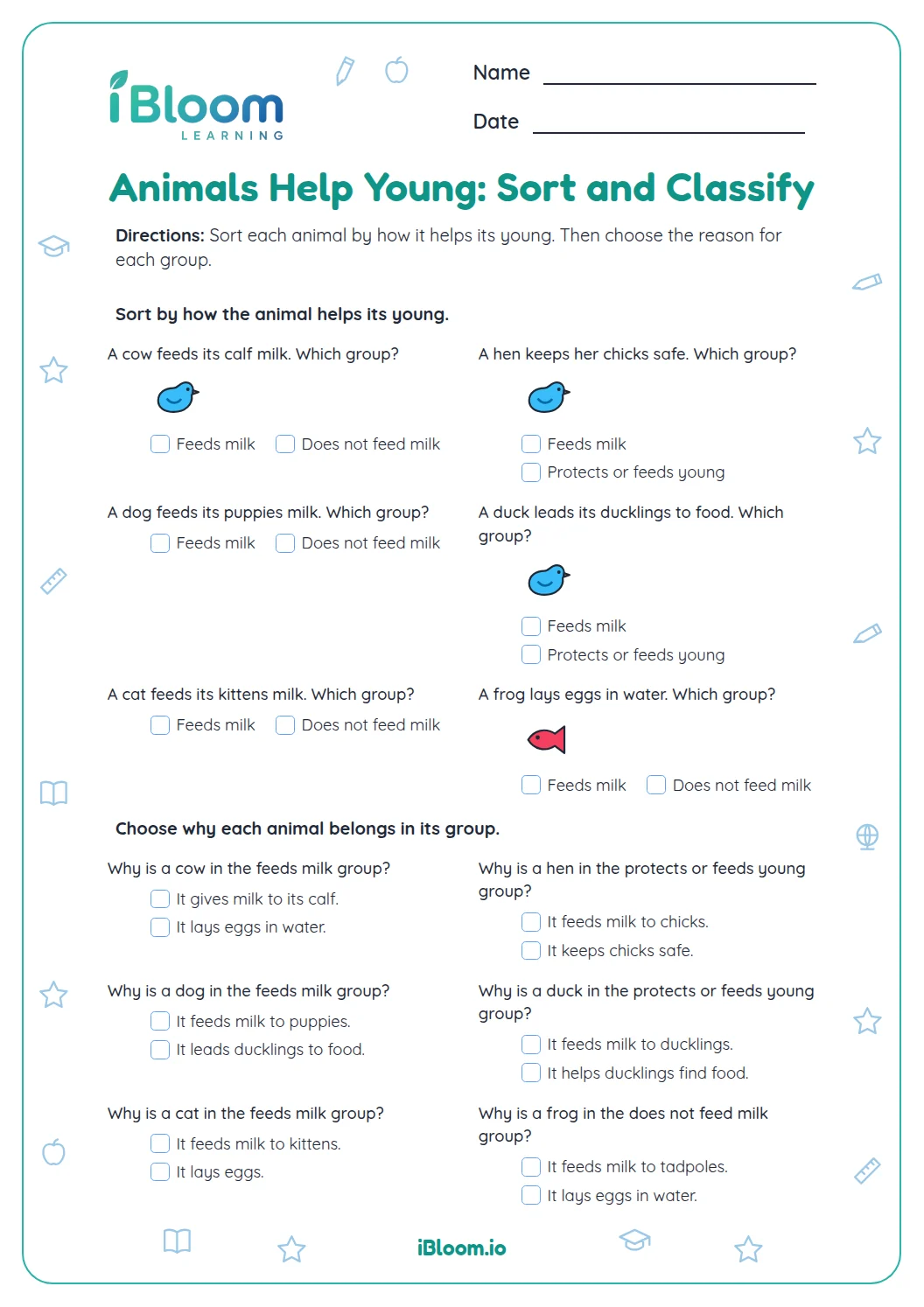
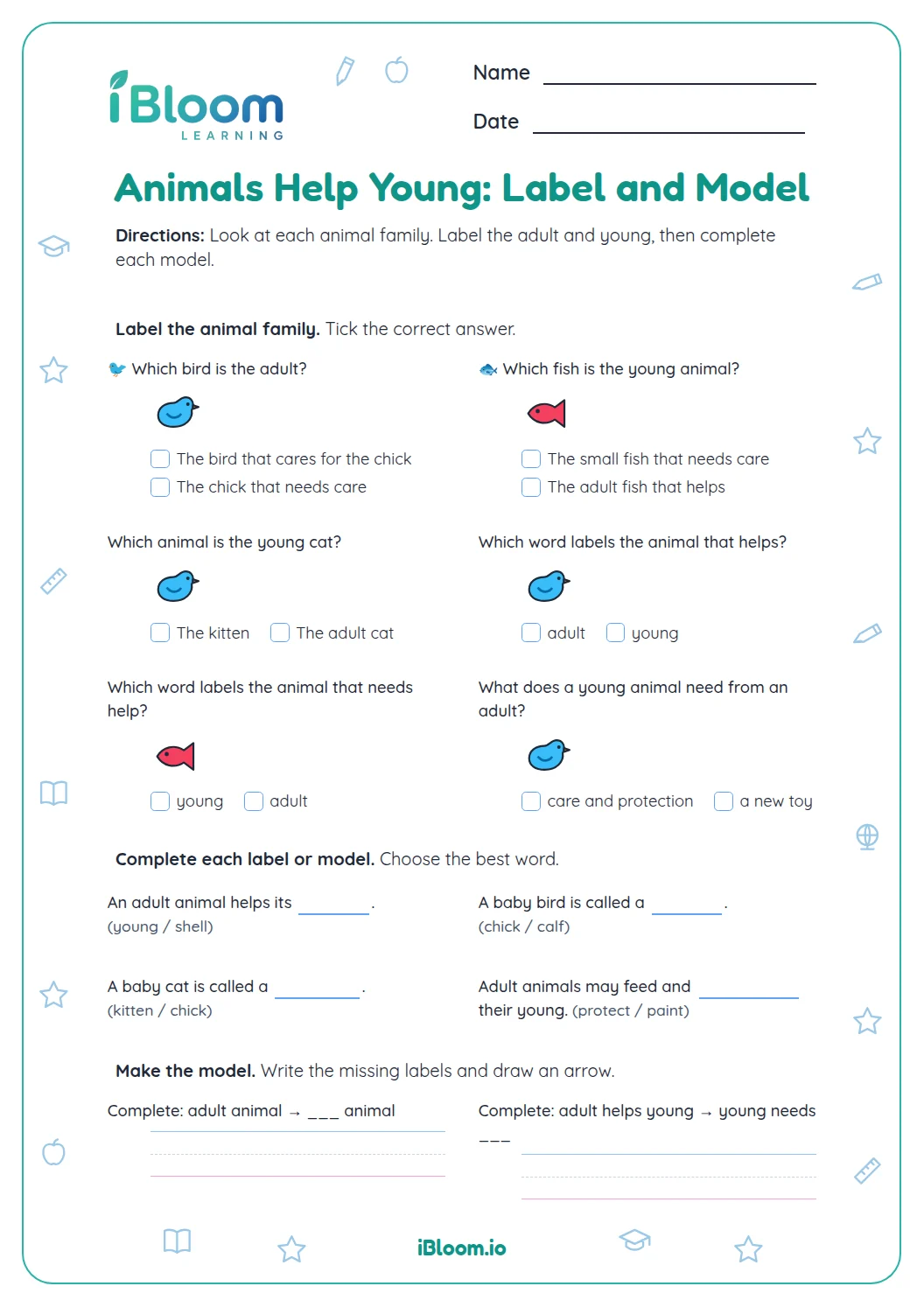
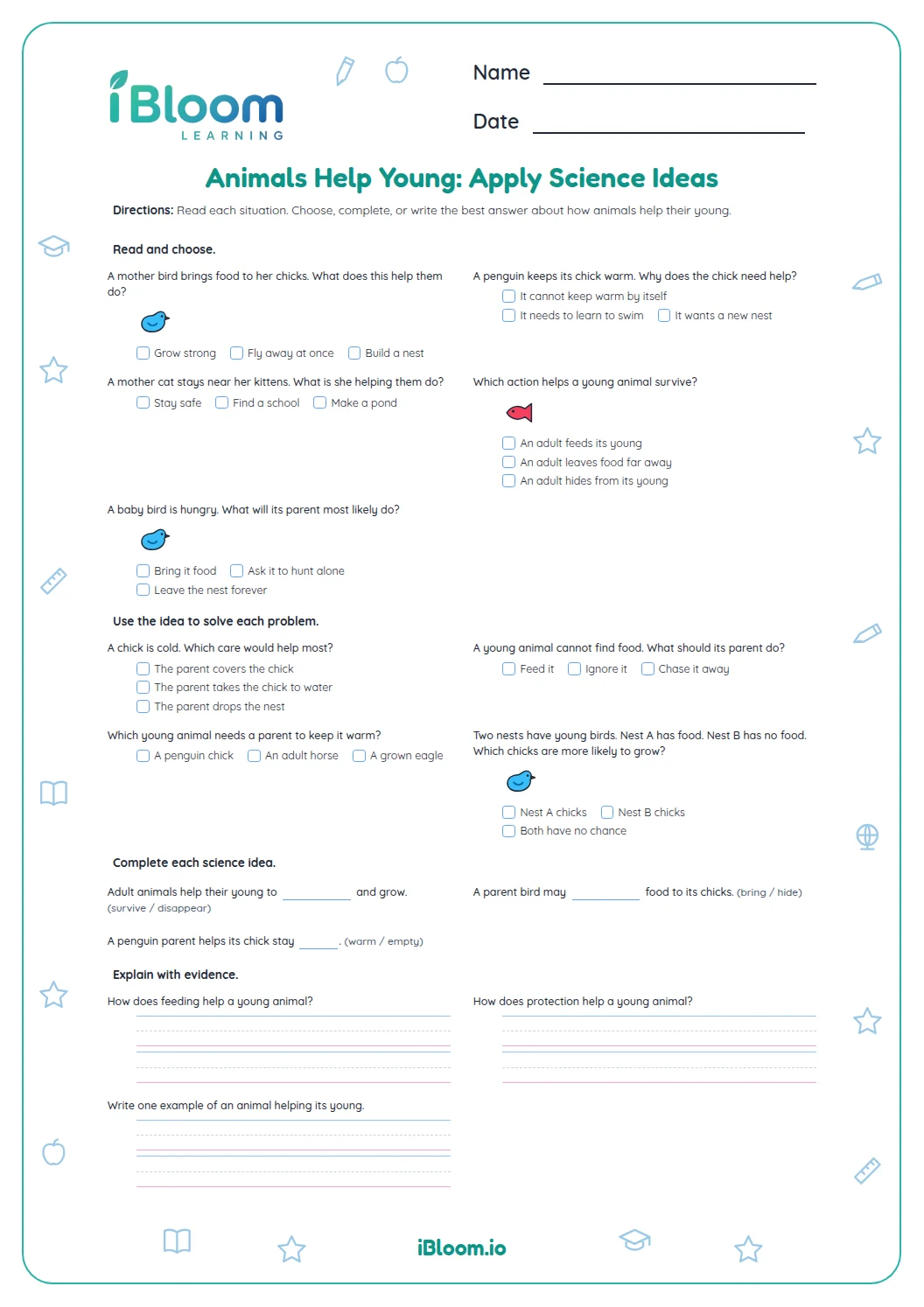
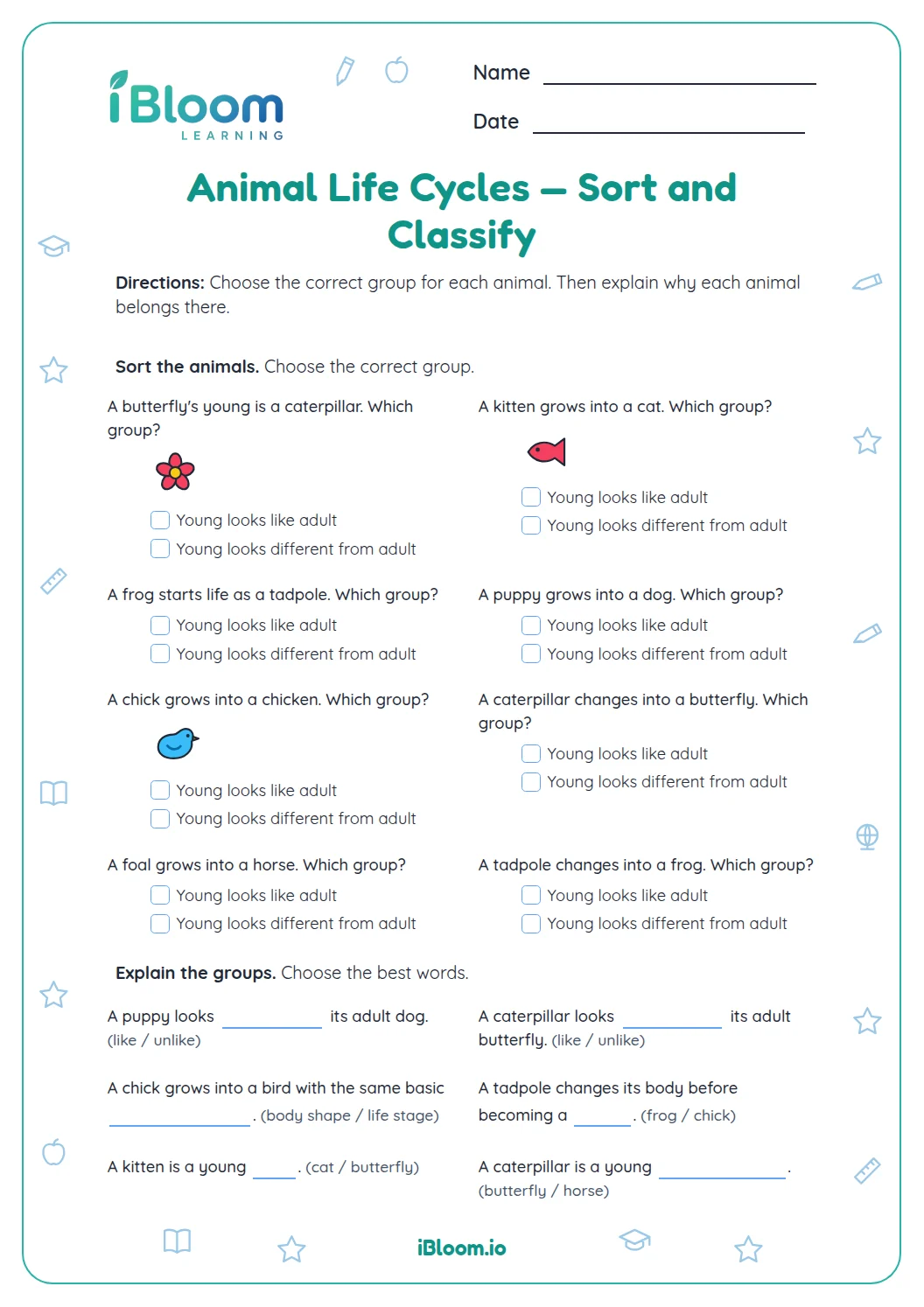
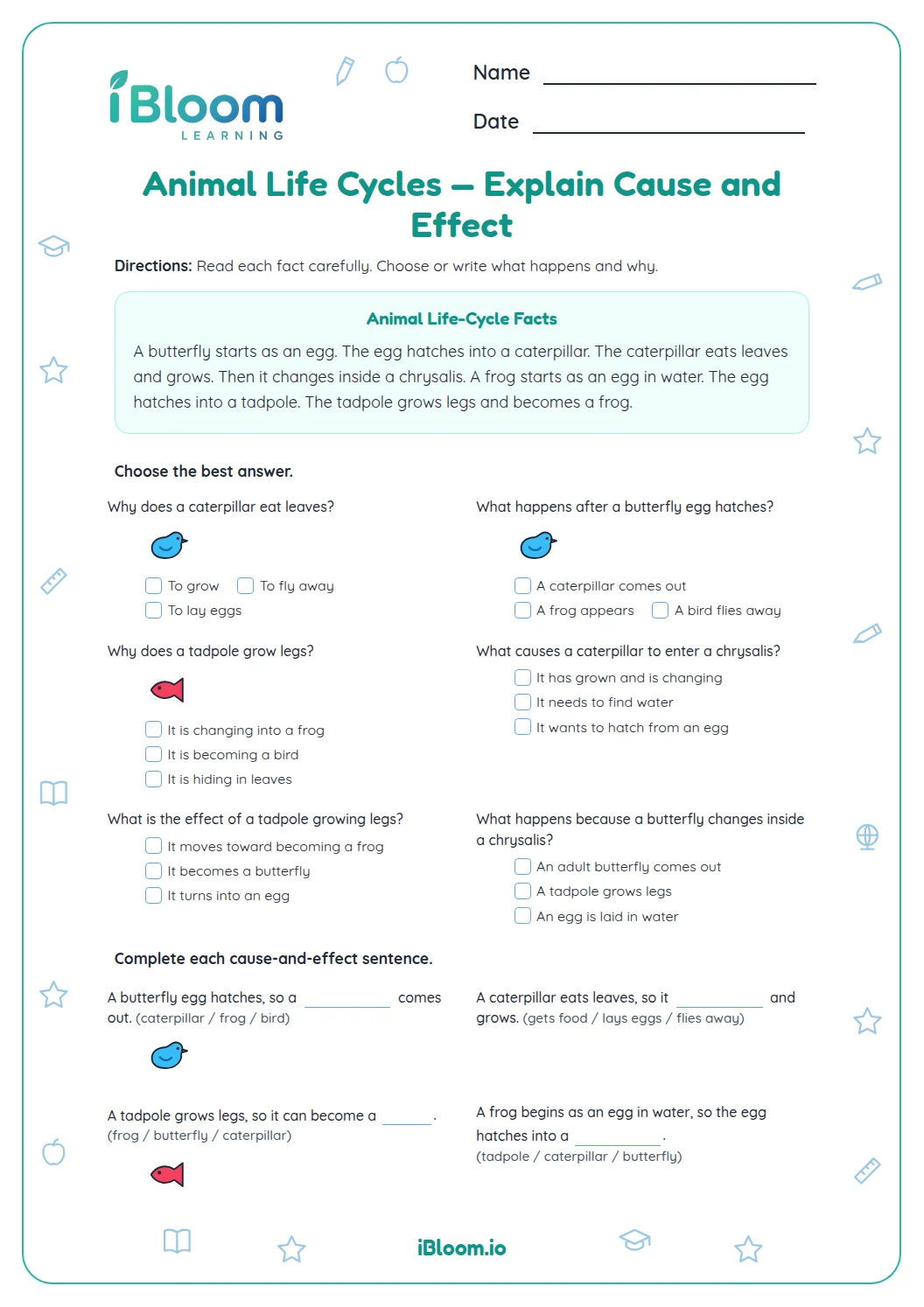
This Grade 1 printable focuses on animal offspring and cause and effect. Children read short situations about a chick calling, a parent bringing food, or a young animal staying close to an adult. Part A asks for a cause or effect; Part B asks children to notice patterns and apply them to new situations. An answer key gives short answers for each item. The sheet aligns with NGSS 1-LS1-2 by asking children to notice patterns in parent and offspring behavior that help young animals survive.
Aligned to 1-LS1-2
How do you spot a cause and an effect?
A cause is what happens first; an effect is what happens because of it. Part A gives connected events and asks which one is the cause or result.
- 1The chick cheeps. The hen comes close.
- 2The cheeping is the cause; the hen coming close is the effect.
What patterns do offspring and parents show?
A call or movement from a young animal may prompt an adult to feed, warm, or protect it. Children use the details given in each situation rather than assuming every animal behaves in exactly the same way.
How can a child explain the connection?
Part B asks children to identify a behavior pattern or explain how an adult response can help its young. Answers are short phrases.
How can I use this worksheet?
- 1Read each situation from beginning to end.
- 2Underline or say what the young animal does first.
- 3Find the adult’s response and decide whether it is the cause or effect asked for.
- 4For a written answer, connect the behavior to warmth, food, or protection.
- 5Compare open answers with the samples in the key.
What mistakes should I watch for?
The mistake
Calling the adult the cause when the question asks what happened first.
The fix
Put the events in order and identify the first action.
The mistake
Naming a behavior without explaining its benefit.
The fix
Add how it can help the young animal get food, warmth, or protection.
The mistake
Treating every animal behavior as identical.
The fix
Use only the behavior described in that question.
Next Generation Science Standards alignment
Children use short observations to notice how an adult’s response can help young animals survive.
Notice patterns in parent and offspring behavior that support survival.
On this sheet: The prompts connect calls or actions by young animals with adult responses such as feeding, warming, and protecting.
Show the official wordingHide the official wording
Read texts and use media to determine patterns in behavior of parents and offspring that help offspring survive.
What to practice next
Make more practice
Further reading
Questions parents and teachers ask
What is an animal offspring?
An offspring is a young animal, such as a chick, puppy, or kitten. This worksheet focuses on what young animals do and how an adult may respond to help them stay warm, fed, or protected. The examples use familiar animals and short situations for cause-and-effect practice.
What does cause and effect mean here?
A cause is an action or event that leads to another event. For example, a chick cheeps and a hen comes close: the chick’s call is the cause, and the hen’s response is the effect. Other items ask how feeding, warmth, or staying close can help young animals.
How many questions are included?
The sheet has 14 short-answer questions in two parts. Part A asks children to name a cause, an effect, or a helpful result. Part B asks them to notice behavior patterns and explain how an adult response may help its young. A separate two-page key gives concise answers.
Can written answers differ from the key?
Yes. The key gives a concise model for each prompt, but a different short answer is fine when it correctly names the event or explains how the behavior may help the young animal. For instance, “It stays warm” and “The mother keeps it warm” both explain the puppy example.
Which science standard does it address?
It aligns with NGSS 1-LS1-2: “Read texts and use media to determine patterns in behavior of parents and offspring that help offspring survive.” The questions present short situations about calls, feeding, warmth, and protection, then ask children to connect the young animal’s behavior with an adult response.
How can we use it together?
Read one situation aloud and ask what happened first. Then ask what happened next and how that response might help the young animal. Encourage the child to answer in a short phrase and point back to the words in the situation before checking the separate answer key.