




About this worksheet
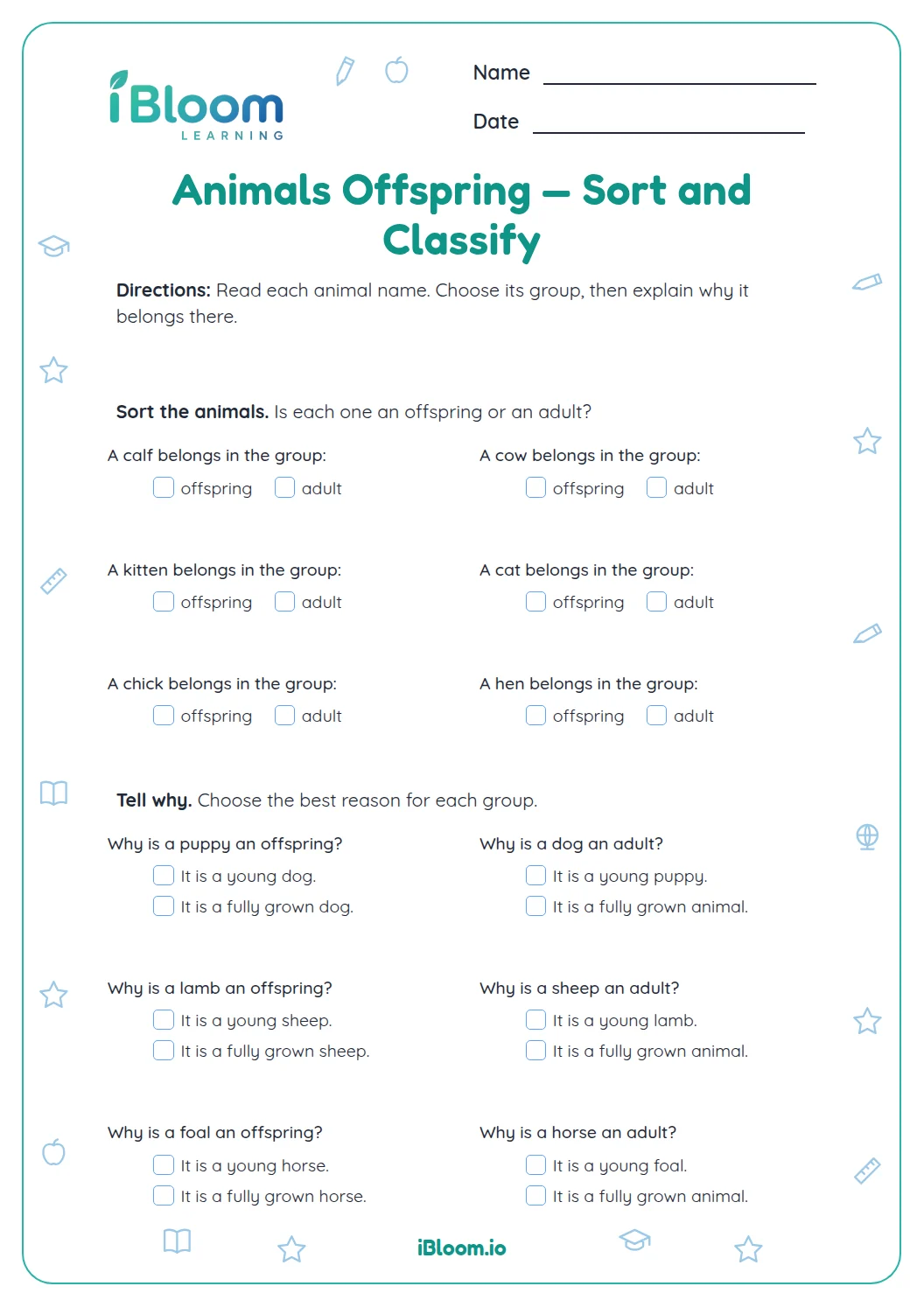
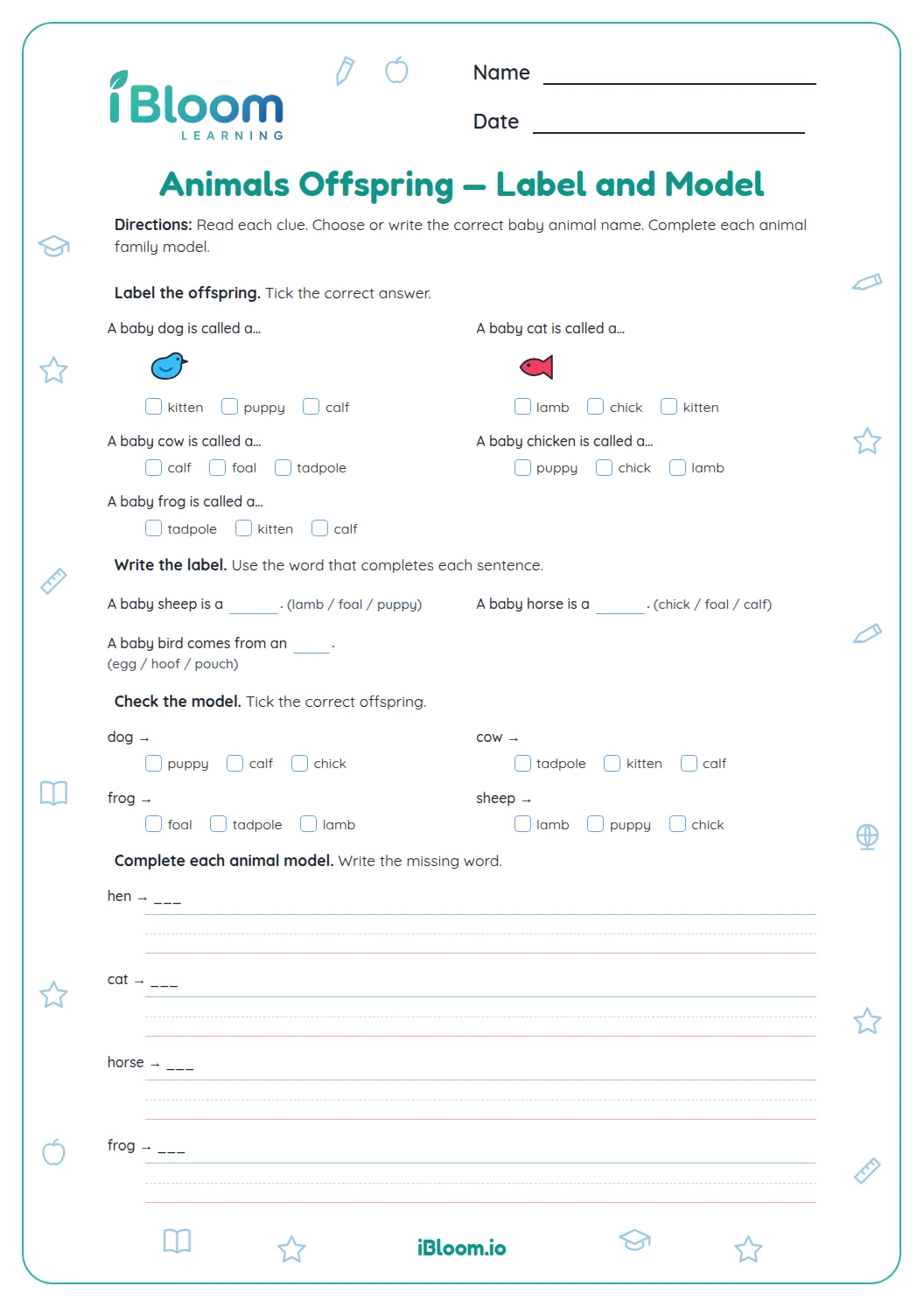
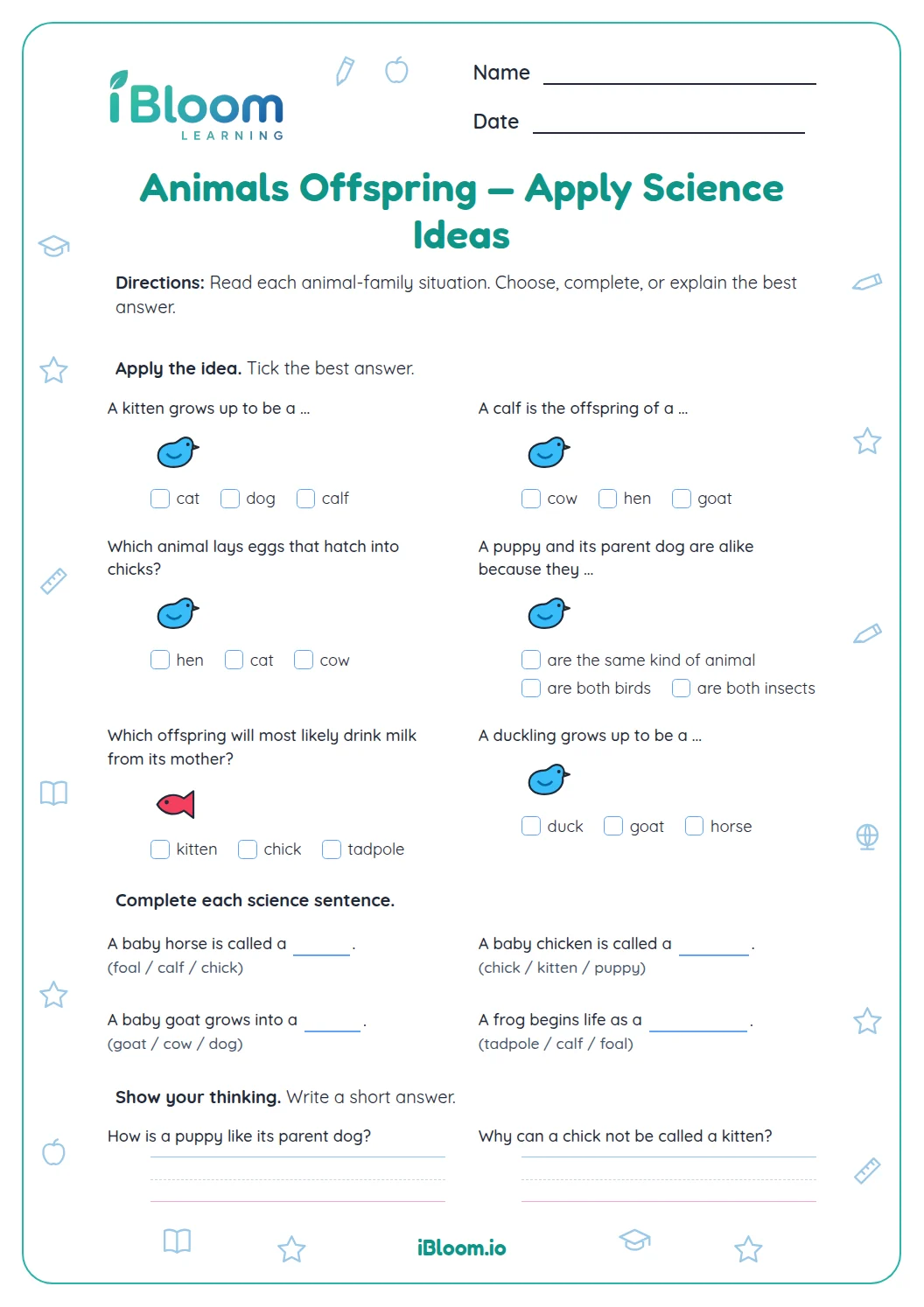
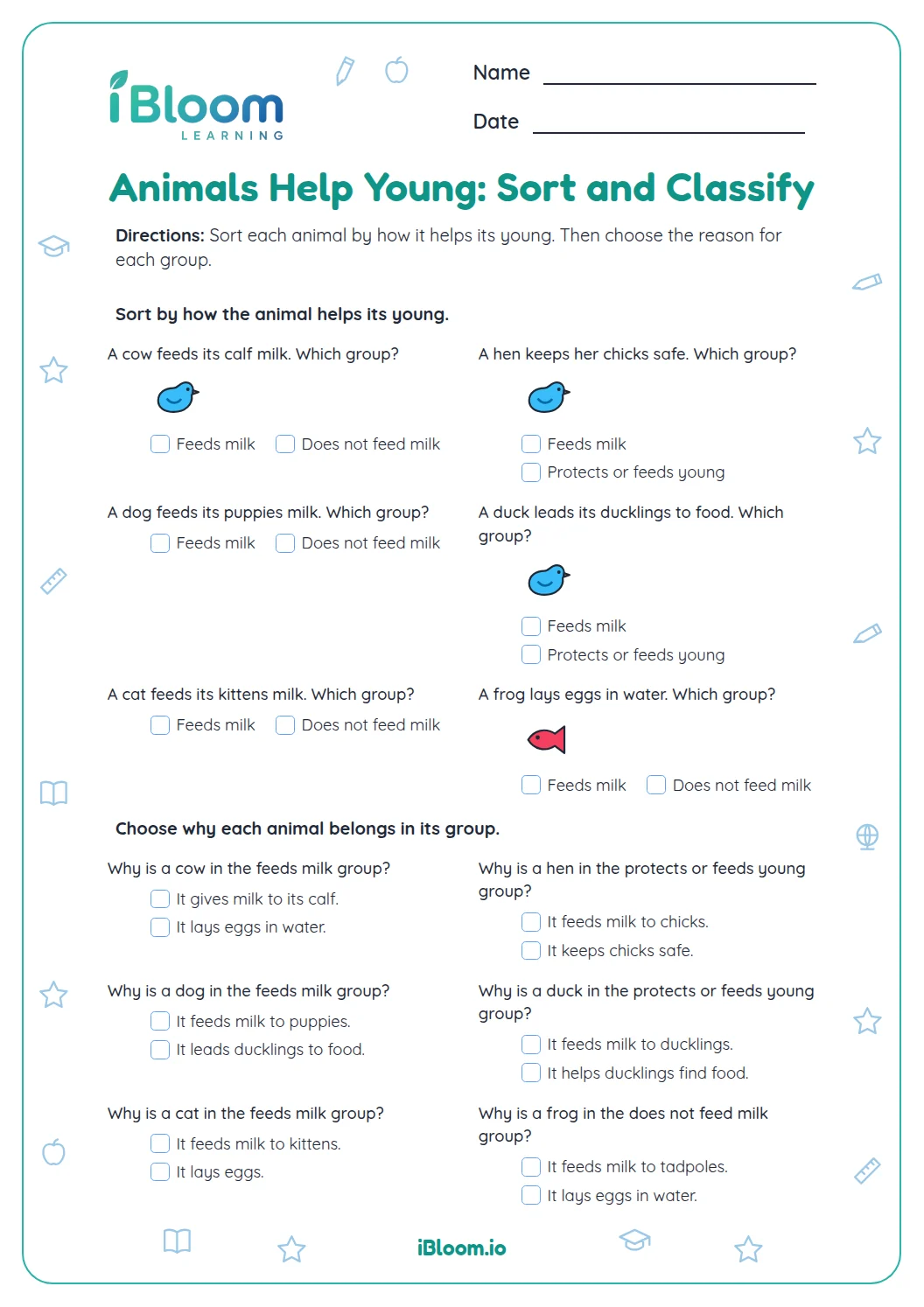
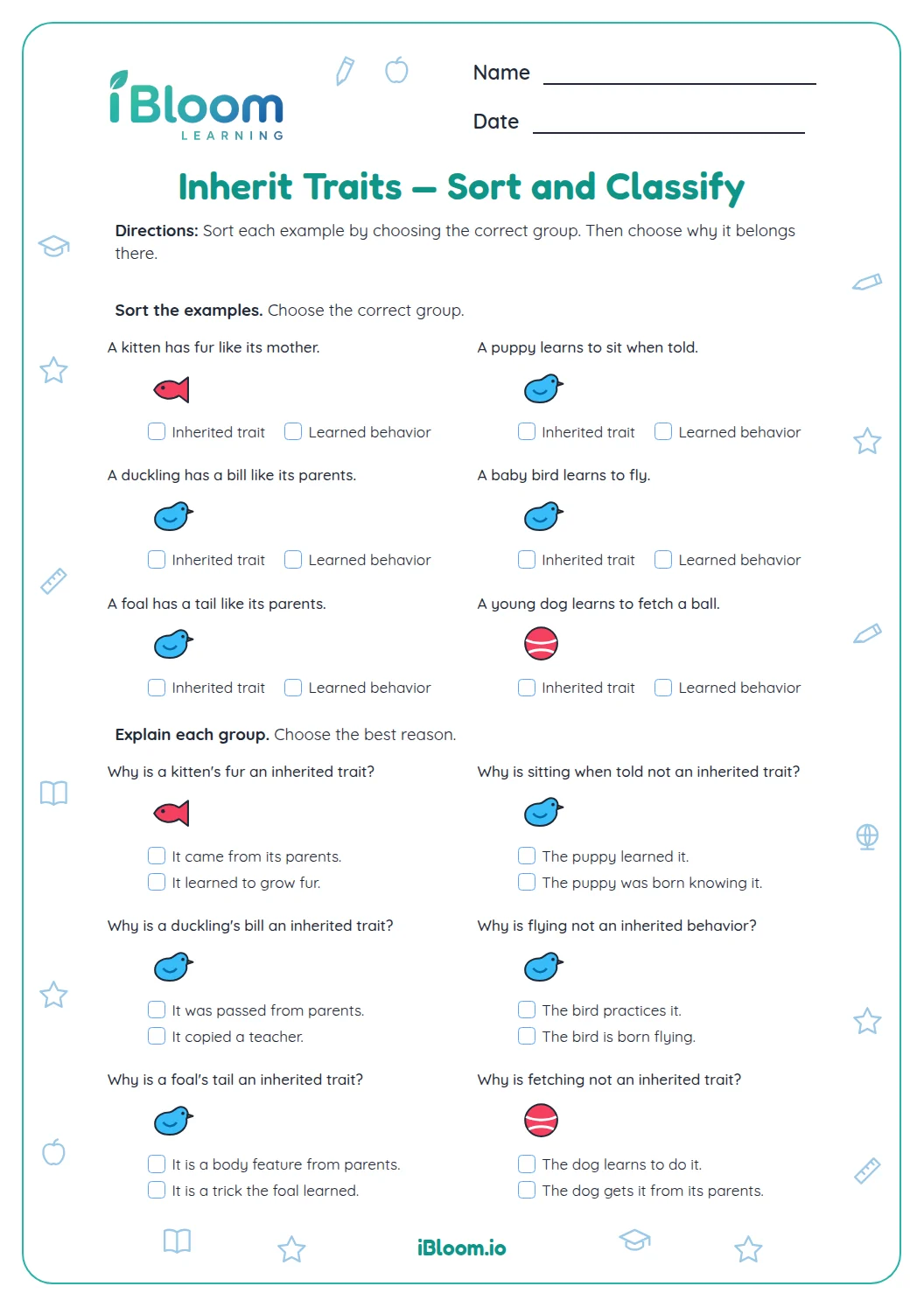
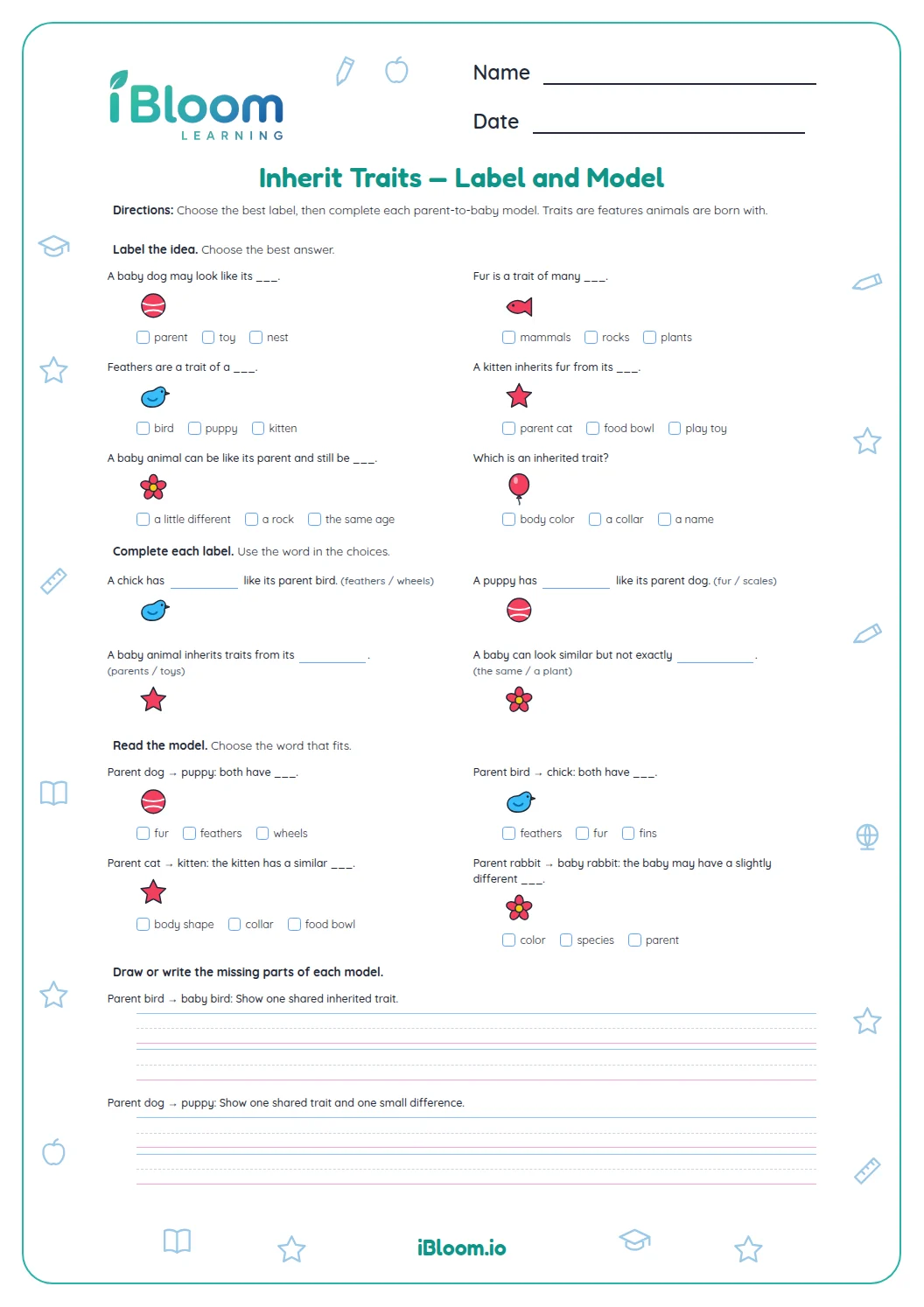
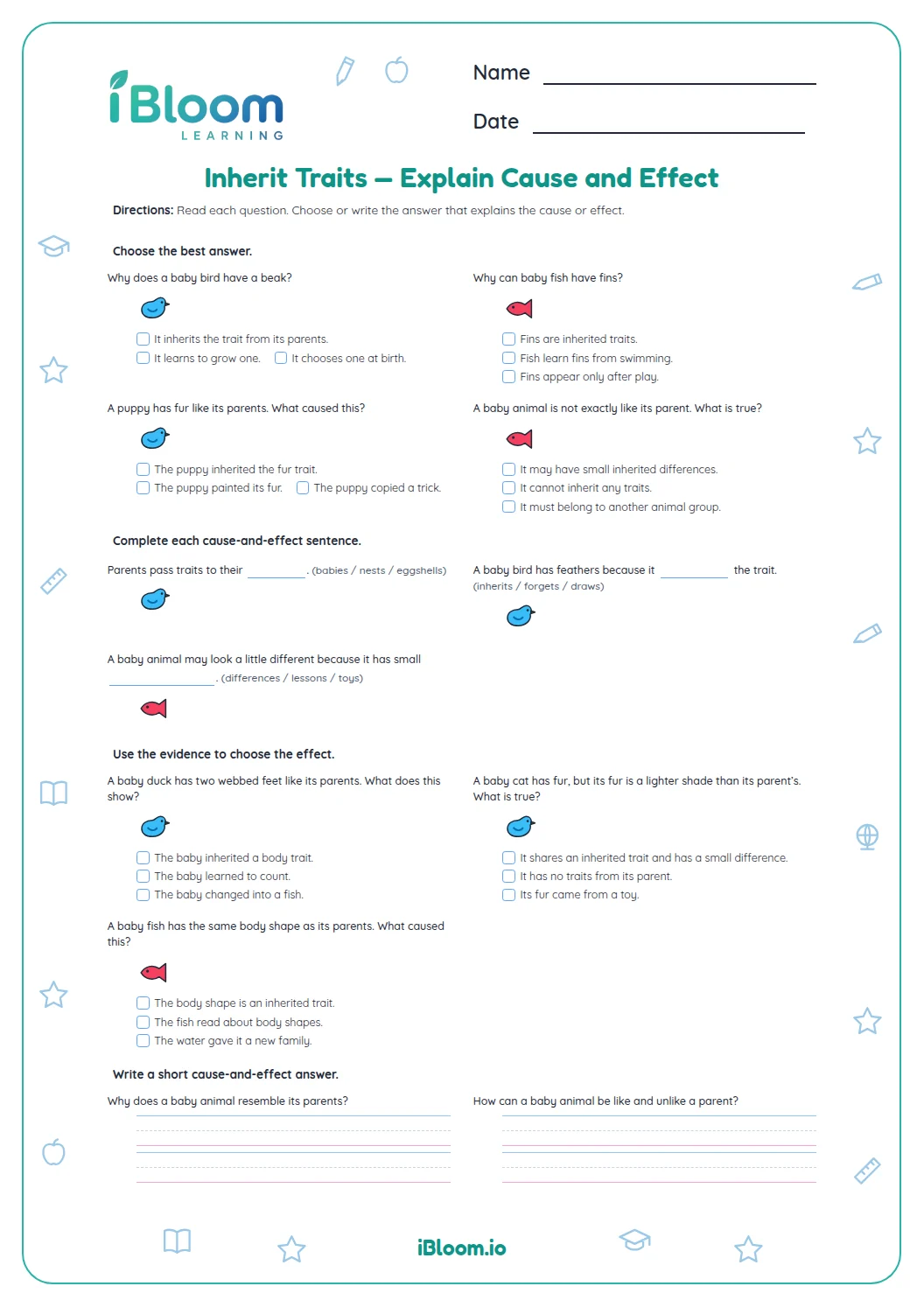
This Grade 1 science worksheet explores how young animals resemble their parents while differing in ways such as size. Children identify familiar young and adult animals with pictures, name offspring and shared traits, then use observations to choose evidence-based statements. The answer key supports discussion of how each observation connects to a claim. The comparisons align with NGSS 1-LS3-1 through observation and evidence.
Aligned to 1-LS3-1
What does offspring mean?
An offspring is a young animal. A kitten is the offspring of a cat, and a chick is the offspring of a hen. Young and adult animals can share features while differing in size or other details.
How can children use observations as evidence?
A useful observation names something that can be noticed, such as feathers, fur, webbed feet, or size. Children can compare the young and adult animal, then choose a claim that matches the evidence.
- 1Observation: A duckling and adult duck both have webbed feet.
- 2Evidence: They share a body feature.
- 3This supports a similarity without saying they are exactly alike.
What makes a comparison evidence-based?
A useful claim points to a feature in the observation. If the prompt names feathers, use feathers as evidence; do not infer a different trait that is not described.
How to use this worksheet
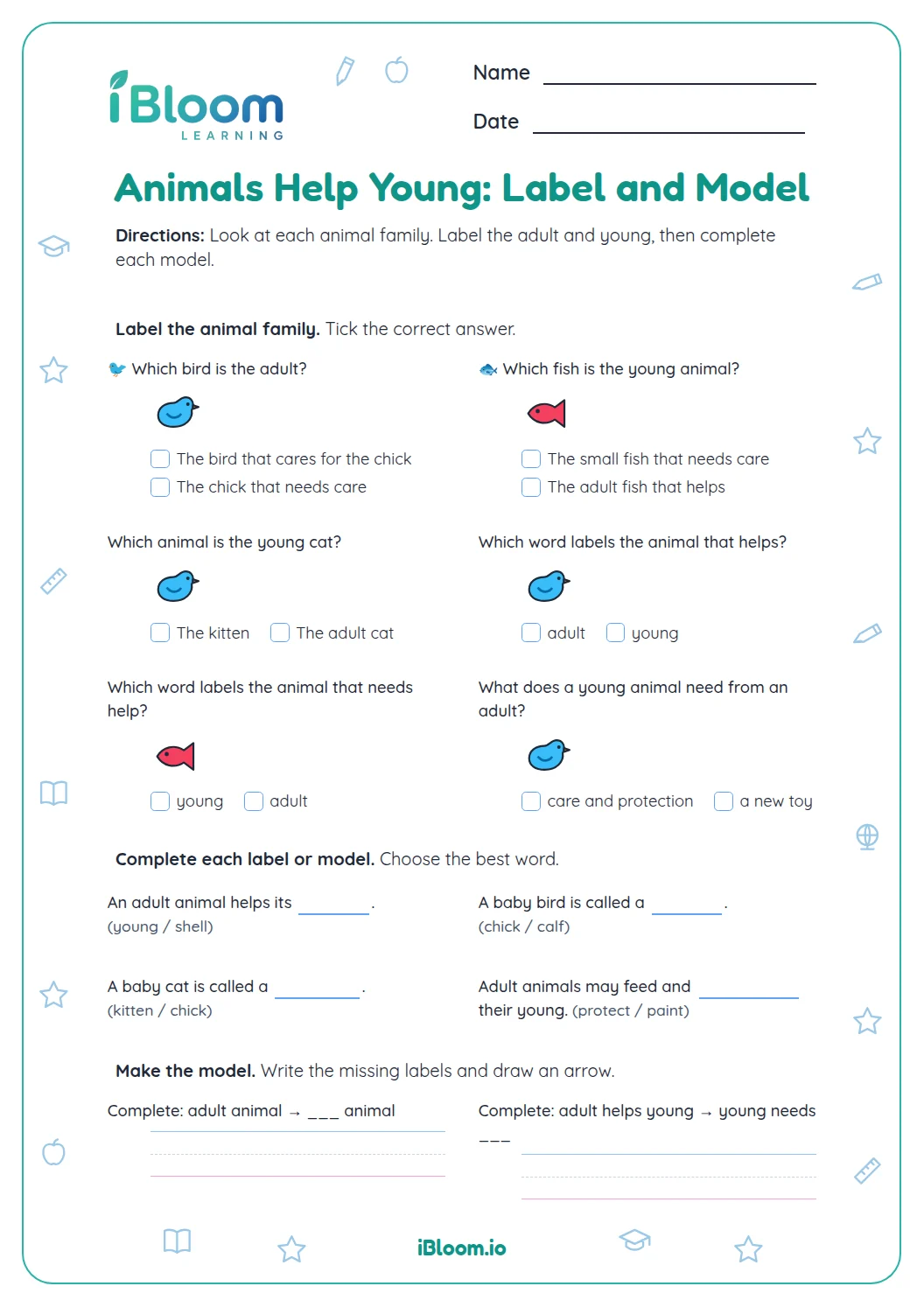
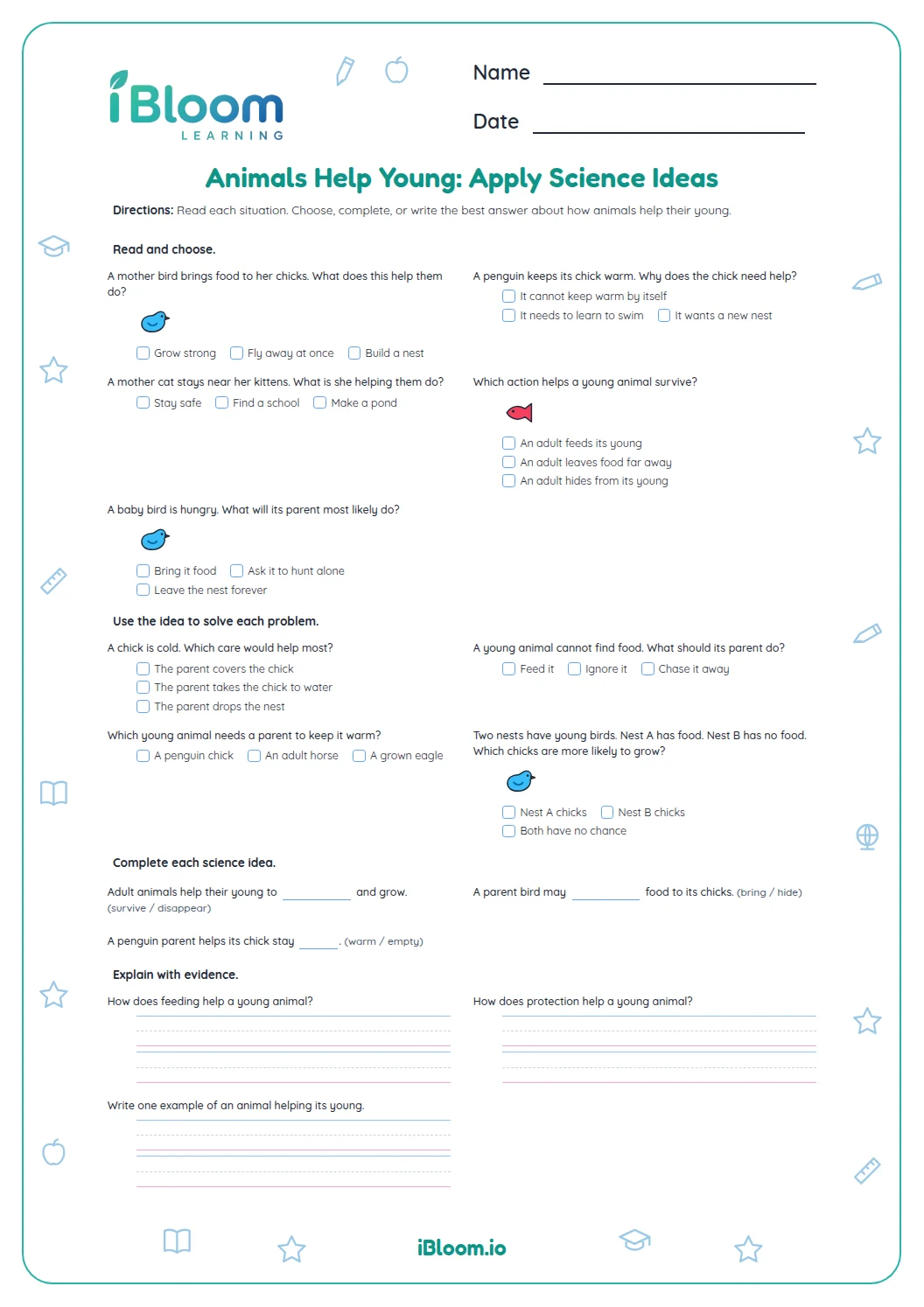
- 1Name the young animal in each picture before choosing its adult.
- 2Use a feature you can observe, such as fur, feathers, or webbed feet.
- 3For each comparison, decide whether the detail shows a similarity or a difference.
- 4Choose a claim supported by the observation in the prompt.
- 5Use the key to check which evidence supports each answer.
Common mistakes and quick fixes
The mistake
Saying a young animal and its parent are exactly alike.
The fix
Name one shared feature and one way they can differ, such as size.
The mistake
Choosing a claim that the observation does not show.
The fix
Point to the specific feature in the prompt and make only a claim it supports.
The mistake
Confusing an animal’s young with a different kind of animal.
The fix
Use the adult animal shown or named to check which animal the young one grows into.
Curriculum alignment
This worksheet gives learners practice with the listed standard.
Observe ways young animals resemble, but are not exactly like, their parents.
On this sheet: Children compare young and adult animals and use visible traits as evidence for similarities and differences.
Show the official wordingHide the official wording
Make observations to construct an evidence-based account that young plants and animals are like, but not exactly like, their parents.
What to practice next
Make more practice
Further reading
Questions parents and teachers ask
What is an animal offspring?
An offspring is a young animal. A kitten is a cat’s offspring, and a chick is a hen’s offspring. On this page, children use pictures and clues to identify familiar young animals, then compare traits they share with adults. The word describes a young member of the same kind.
How are young animals like their parents?
Young animals may share traits with adults of their kind, such as fur, feathers, or webbed feet. They may differ in size or other details. The worksheet asks children to use specific observations to support a simple comparison. For example, a lamb has wool like a sheep but is smaller.
What does the science reasoning part ask?
The last five questions pair an animal picture with an observation. Children choose a statement that the observation supports, such as recognizing that a duckling and duck share webbed feet or that a puppy is smaller than an adult dog.
Can a child answer from the picture alone?
The picture helps identify the animal, while each sentence supplies the observation needed for reasoning. Encourage the child to use both pieces of information and avoid making claims about traits the prompt does not mention. The words in the prompt give the evidence to compare.
Is an answer key included?
Yes. The key marks the animal matches and evidence-based choices. For questions about similarity or difference, ask the child to name the exact feature in the prompt that supports the chosen statement. Ask the child to name the observation that supports a choice.