Free printable practice
Animals Practice Activities
Grade 1 animal worksheets for naming, sorting, habitats, needs, coverings, movement, life cycles, offspring, camouflage, and simple adaptations.
Explore Animals
Free printable worksheet PDFs
Preview every available page, then download the free worksheet PDF for home, homeschool, tutoring, or classroom practice.
Preview the exact activity before downloading it.
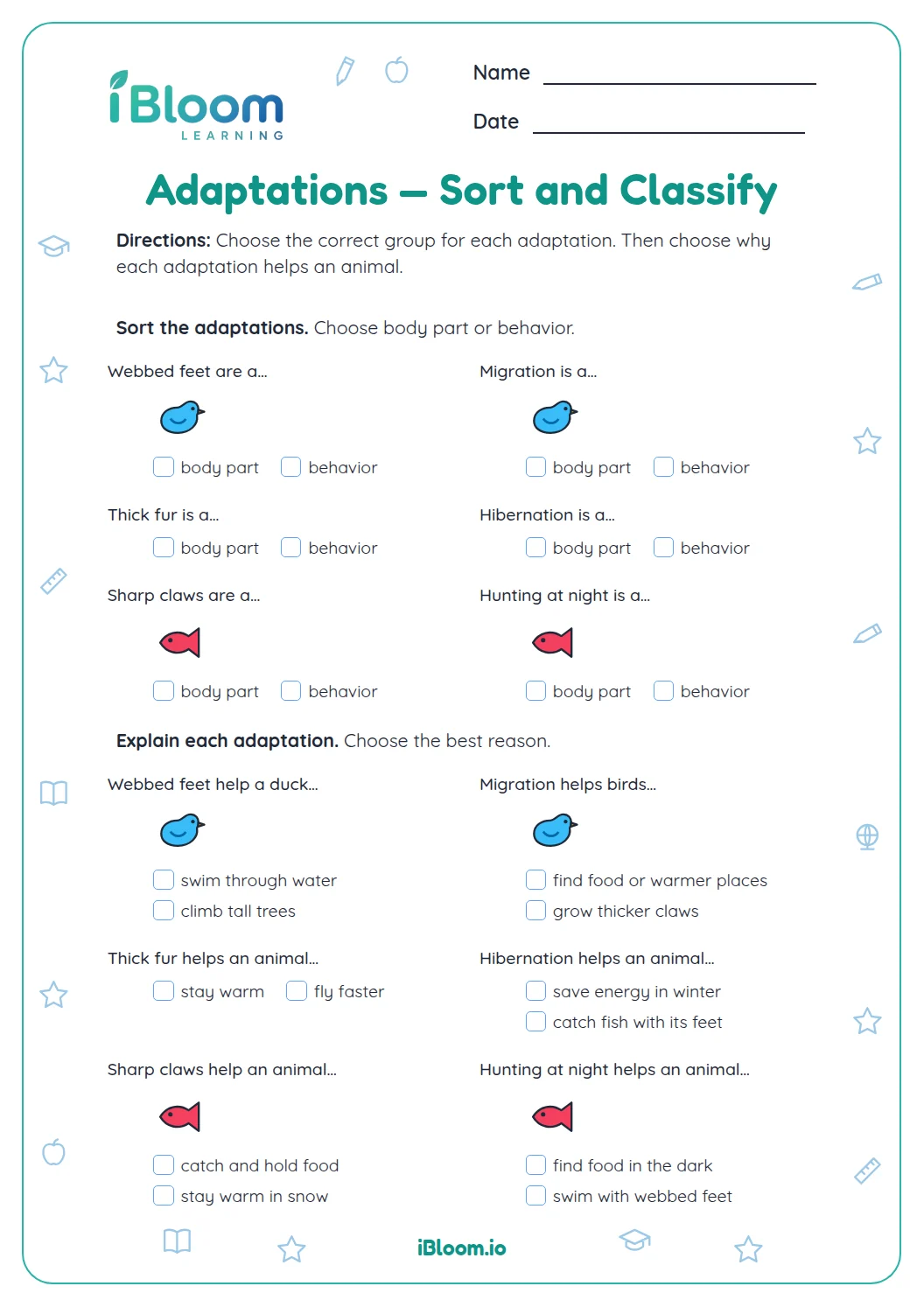 Adaptations — Sort and ClassifyGrade 1 science worksheets that help children identify how animal body parts and behaviors help animals live in their habitats. This sort and classify worksheet provides a distinct, age-appropriate way to practise the same lesson.Grade 1Free PDF preview
 Animal Homes — Sort and ClassifyGrade 1 science worksheets help children identify animal homes such as nests, dens, burrows, webs, hives, ponds, and trees. This sort and classify worksheet provides a distinct, age-appropriate way to practise the same lesson.Grade 1Free PDF preview
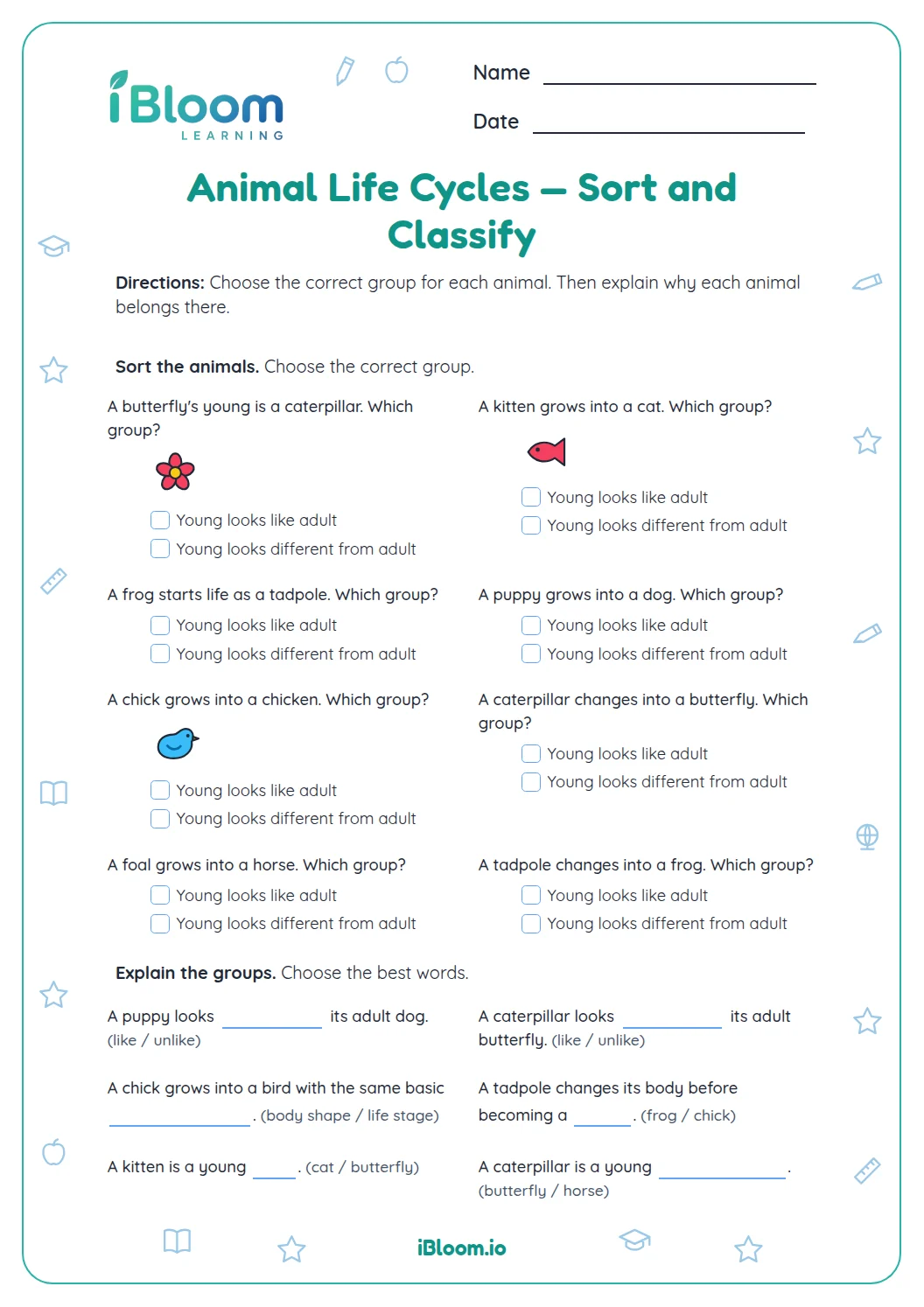 Animal Life Cycles — Sort and ClassifyGrade 1 science worksheets that help children sequence, compare, and explain how animals grow and change through their life cycles. This sort and classify worksheet provides a distinct, age-appropriate way to practise the same lesson.Grade 1Free PDF preview4 pages
 Animal Names — Sort and ClassifyGrade 1 science worksheets that help children recognize, read, and write common animal names using pictures, labels, and simple vocabulary practice. This sort and classify worksheet provides a distinct, age-appropriate way to practise the same lesson.Grade 1Free PDF preview
 Animal Needs — Sort and ClassifyGrade 1 science worksheets help children identify the basic needs of animals, including food, water, air, shelter, and safe places to live. This sort and classify worksheet provides a distinct, age-appropriate way to practise the same lesson.Grade 1Free PDF preview
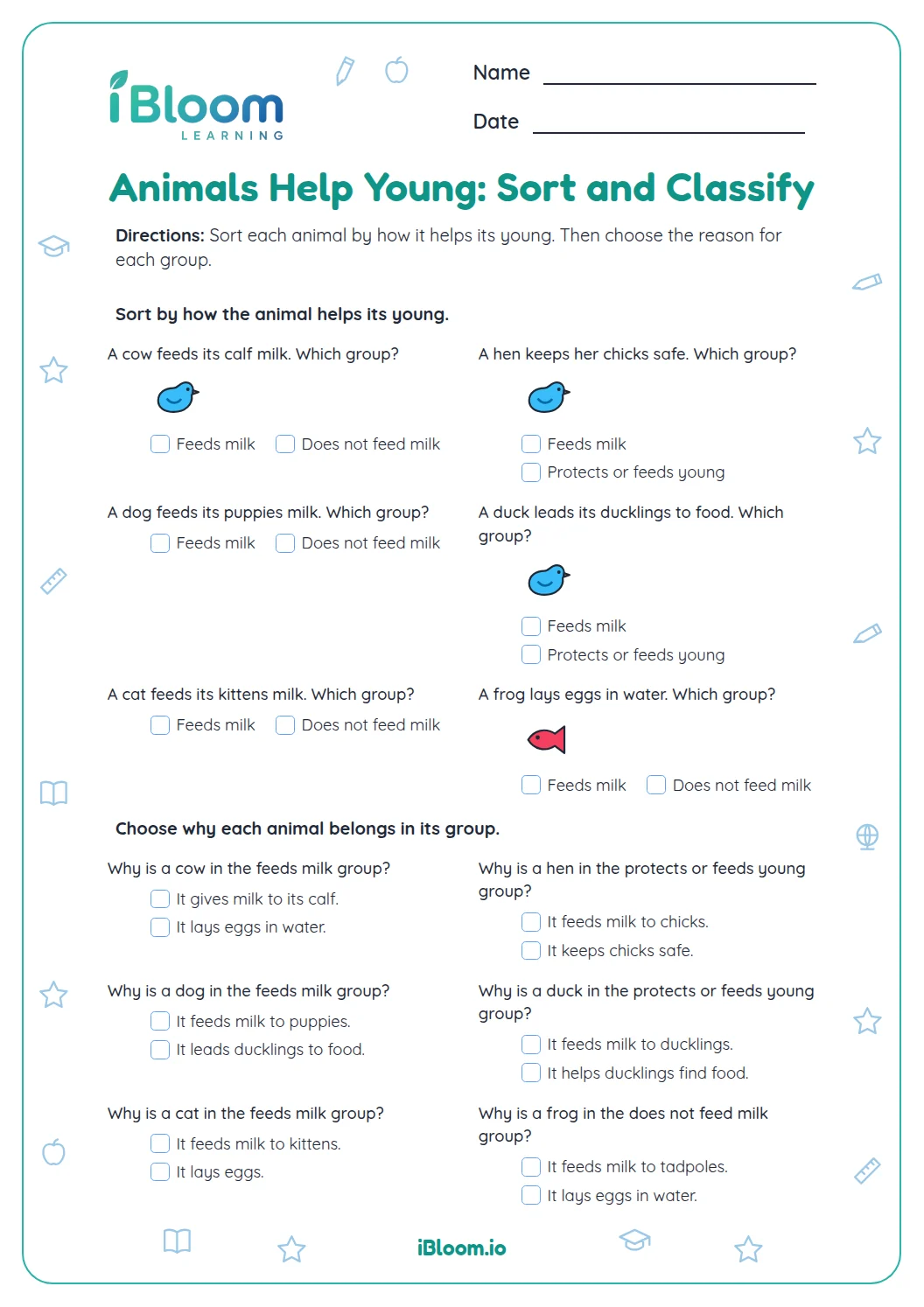 Animals Help Young — Sort and ClassifyExplore animals help young practice activities within Animals Practice Activities, organised so children, families, and elementary teachers can move from broad learning areas to focused printable practice. This sort and classify worksheet provides a distinct, age-appropriate way to practise the same lesson.Grade 1Free PDF preview
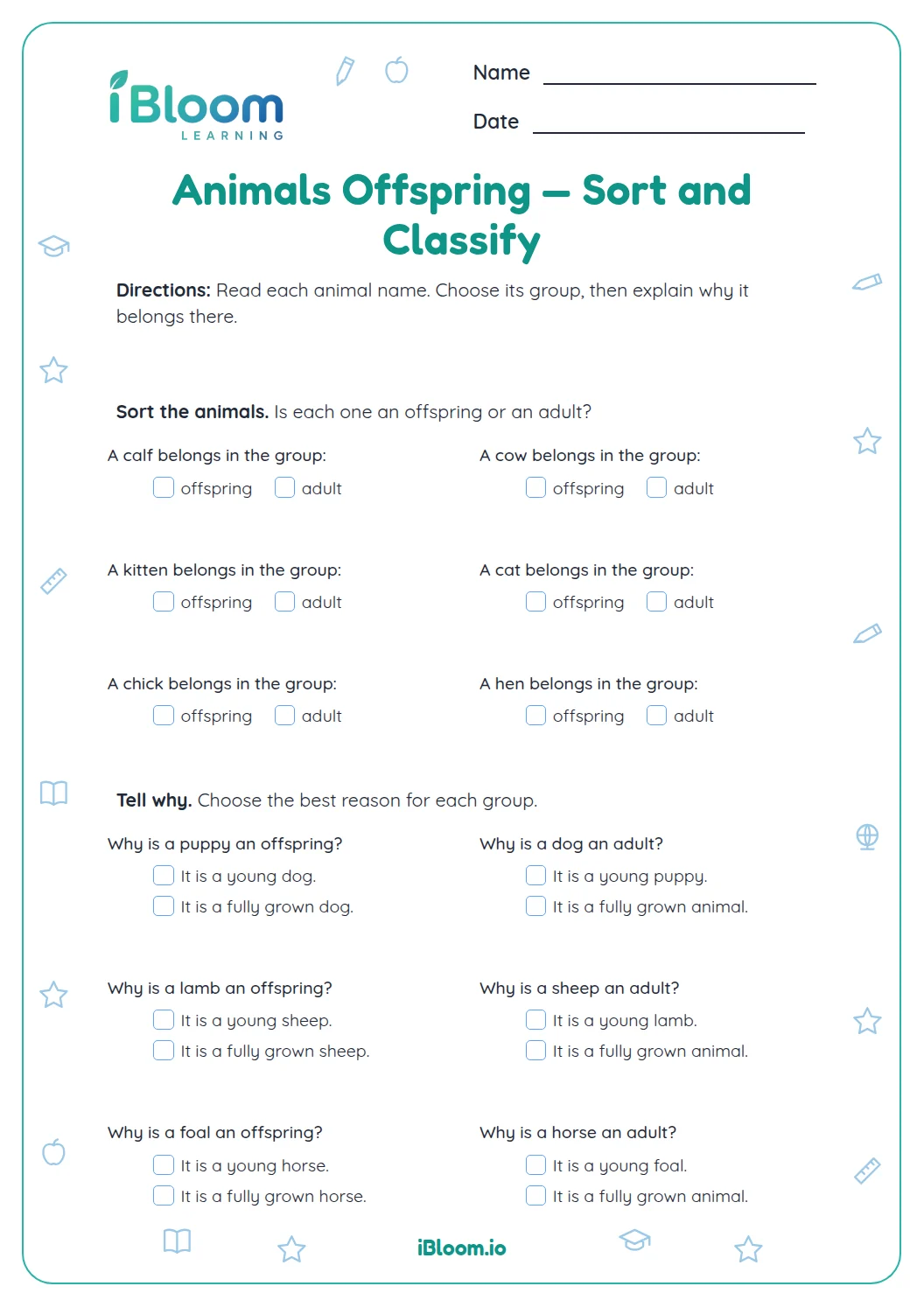 Animals Offspring — Sort and ClassifyExplore animals offspring practice activities within Animals Practice Activities, organised so children, families, and elementary teachers can move from broad learning areas to focused printable practice. This sort and classify worksheet provides a distinct, age-appropriate way to practise the same lesson.Grade 1Free PDF preview4 pages
 Camouflage — Sort and ClassifyGrade 1 science worksheets help children understand how animal colors, patterns, and body coverings can help them blend into their habitats. This sort and classify worksheet provides a distinct, age-appropriate way to practise the same lesson.Grade 1Free PDF preview4 pages
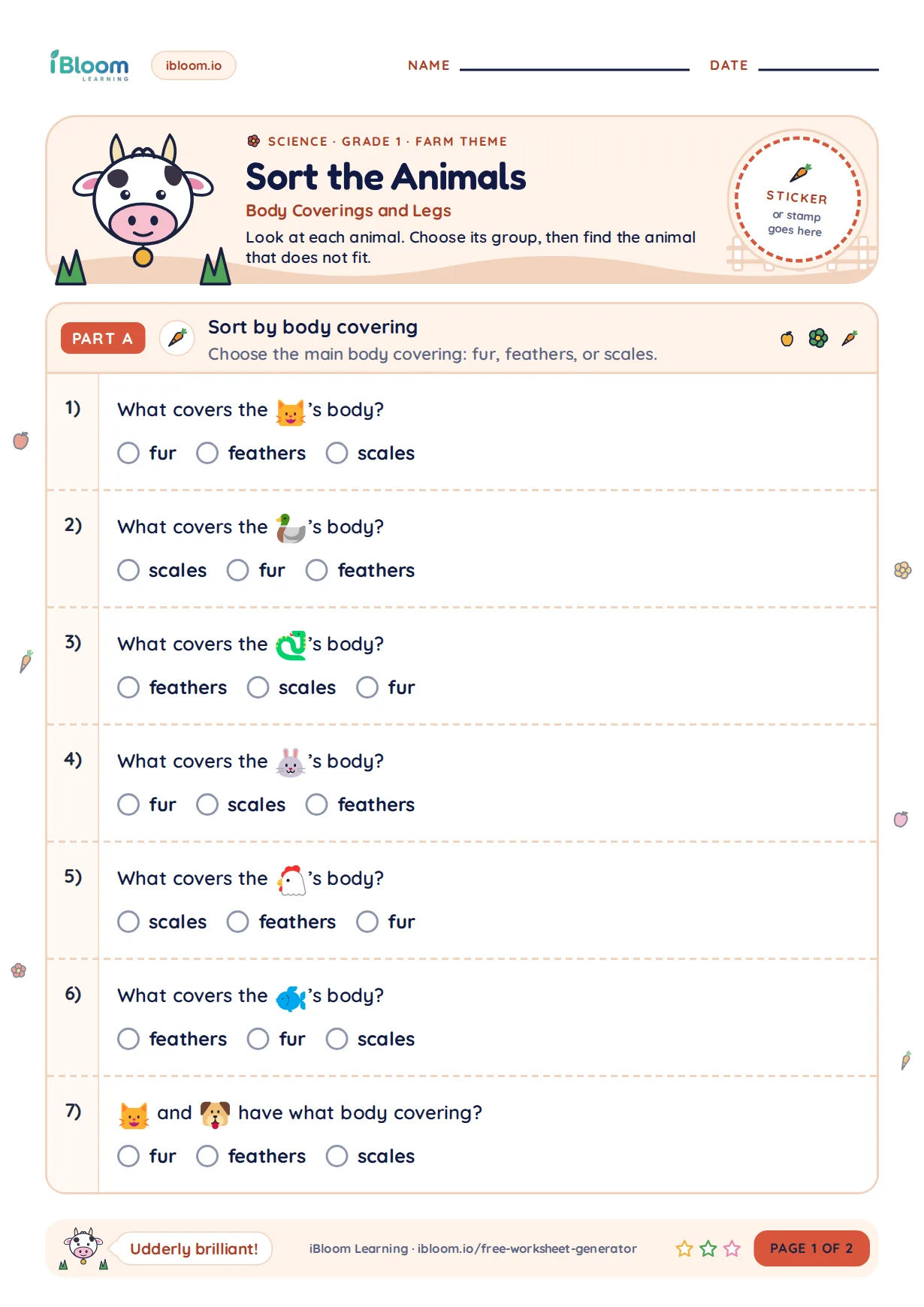 Classification — Sort and ClassifyPrintable Grade 1 science activities that help children sort and classify animals by observable features such as coverings, body parts, movement, and habitat. This sort and classify worksheet provides a distinct, age-appropriate way to practise the same lesson.Grade 1Free PDF preview
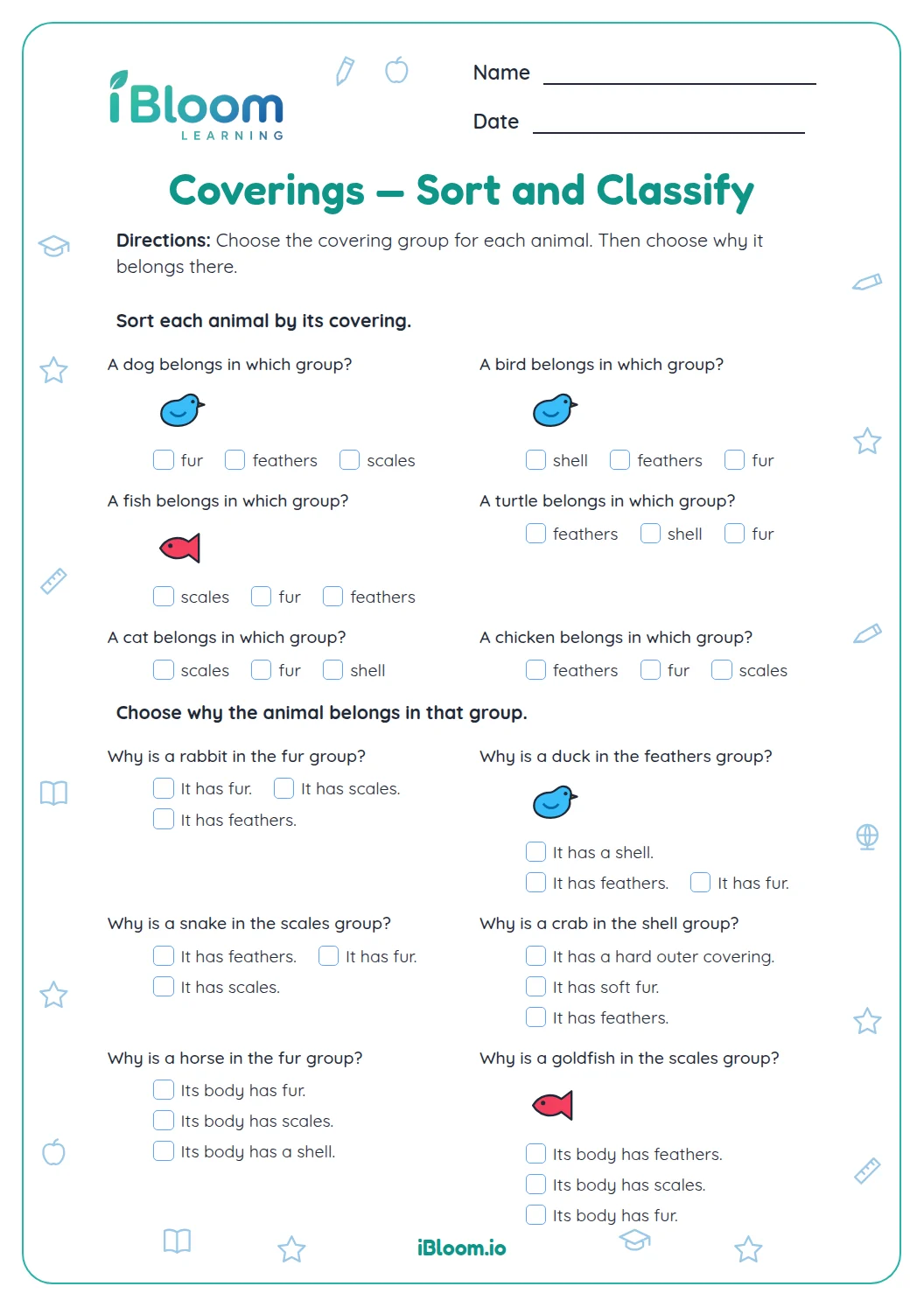 Coverings — Sort and ClassifyExplore coverings practice activities within Animals Practice Activities, organised so children, families, and elementary teachers can move from broad learning areas to focused printable practice. This sort and classify worksheet provides a distinct, age-appropriate way to practise the same lesson.Grade 1Free PDF preview
 Food — Sort and ClassifyGrade 1 science worksheets help children explore what animals eat and how food helps animals live, grow, and stay active. This sort and classify worksheet provides a distinct, age-appropriate way to practise the same lesson.Grade 1Free PDF preview
 Habitats — Sort and ClassifyPrintable Grade 1 science activities help children identify animal habitats and connect animals with the places that meet their basic needs. This sort and classify worksheet provides a distinct, age-appropriate way to practise the same lesson.Grade 1Free PDF preview
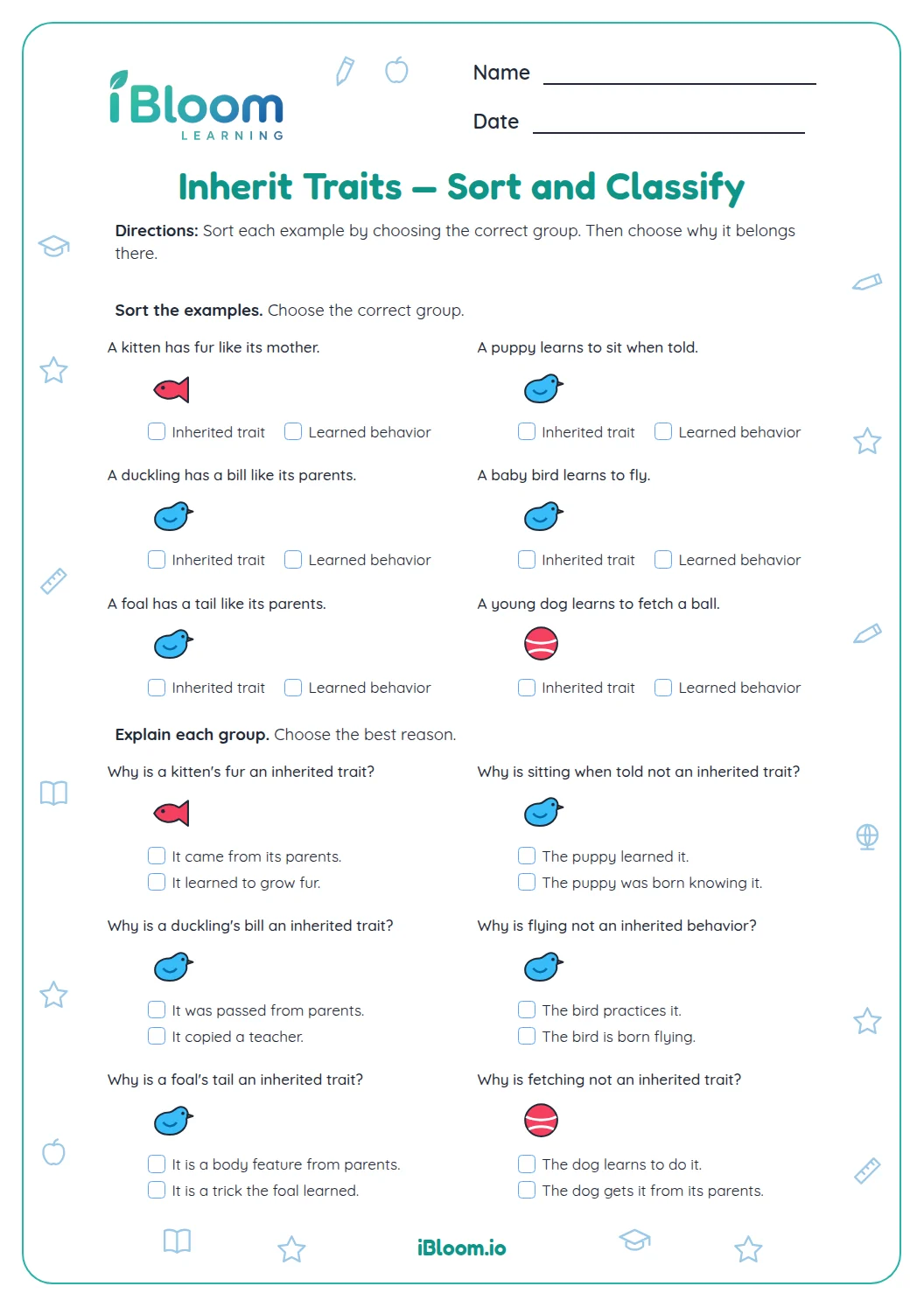 Inherit Traits — Sort and ClassifyPrintable Grade 1 science activities that help children notice how animal babies inherit traits from their parents while still showing small differences. This sort and classify worksheet provides a distinct, age-appropriate way to practise the same lesson.Grade 1Free PDF preview4 pages
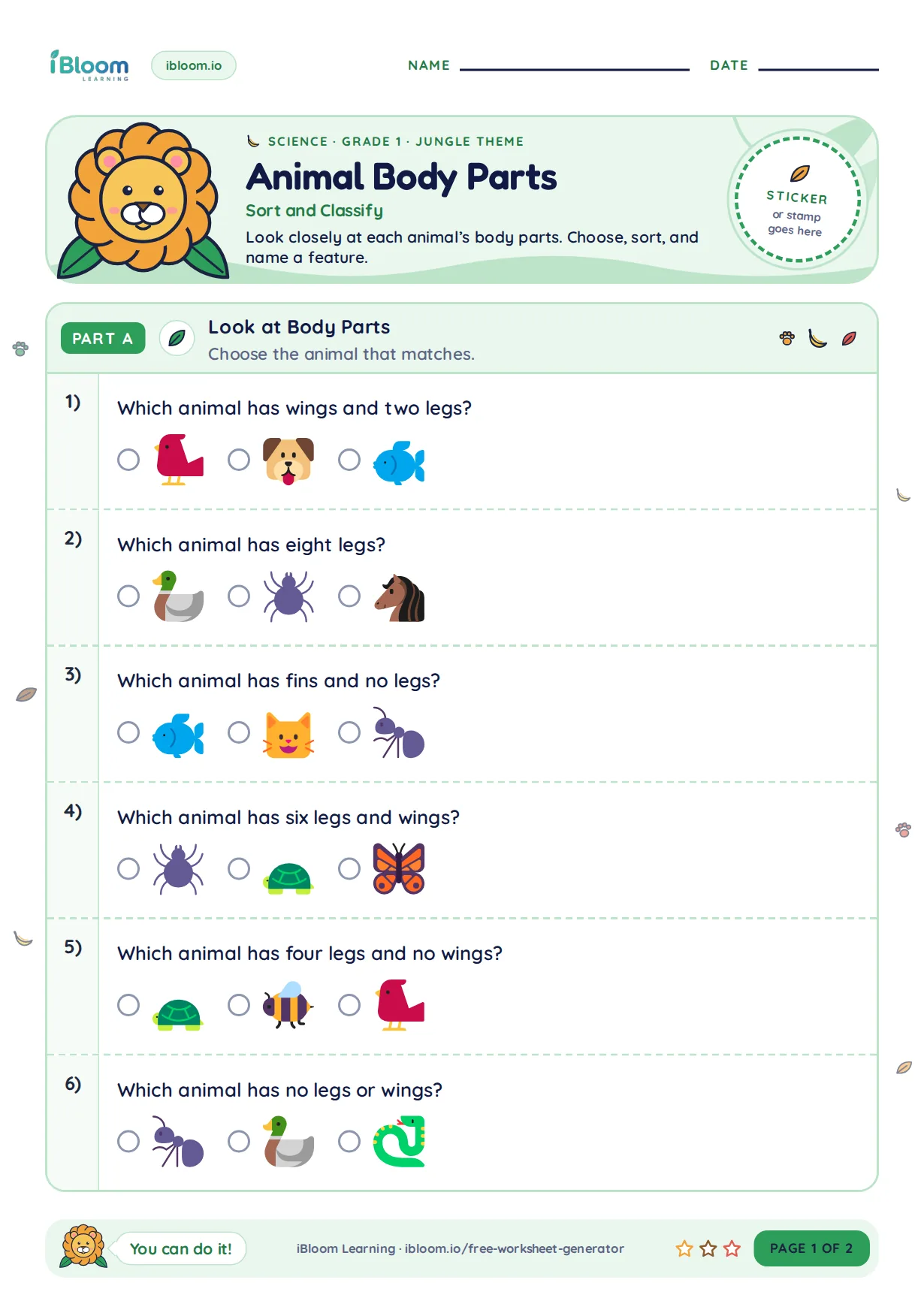 Legs Wings — Sort and ClassifyGrade 1 science worksheets help children identify, compare, and sort animals by legs, wings, and how those body parts help them move. This sort and classify worksheet provides a distinct, age-appropriate way to practise the same lesson.Grade 1Free PDF preview4 pages
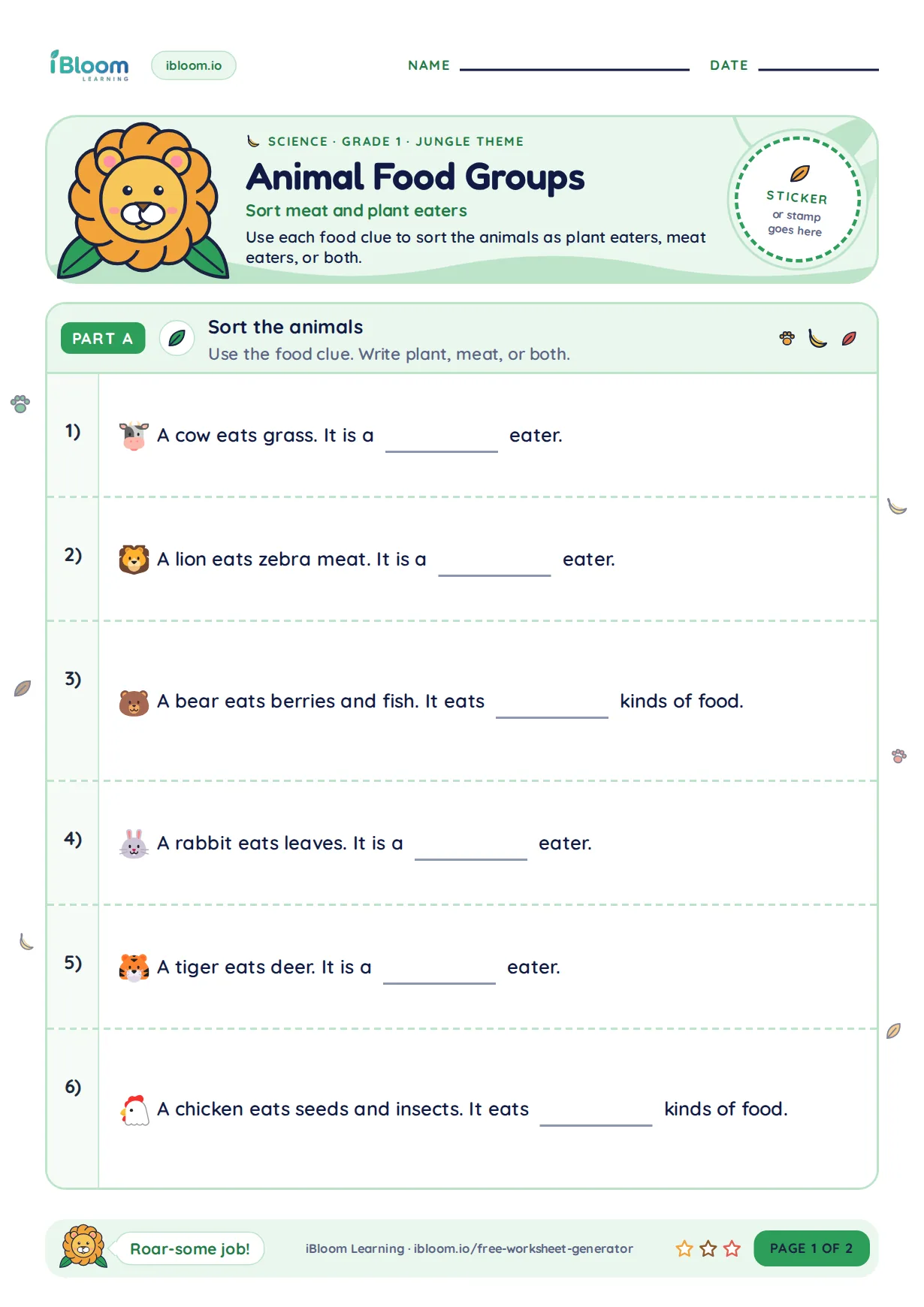 Meat Plant Eaters — Sort and ClassifyGrade 1 animal worksheets help children sort meat eaters, plant eaters, and animals that eat both using simple food clues. This sort and classify worksheet provides a distinct, age-appropriate way to practise the same lesson.Grade 1Free PDF preview
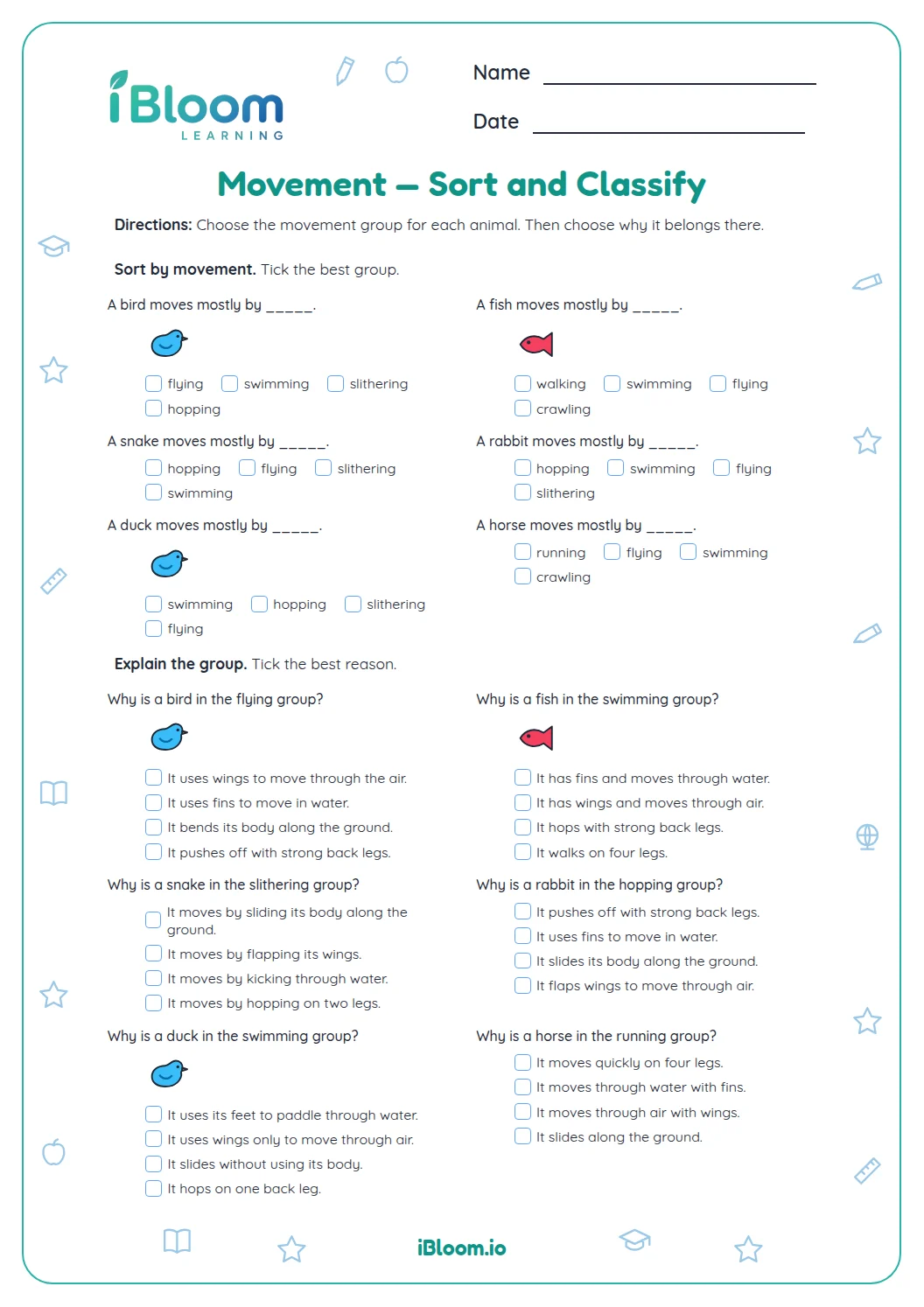 Movement — Sort and ClassifyGrade 1 science worksheets that help children describe how animals move using clear action words and real animal examples. This sort and classify worksheet provides a distinct, age-appropriate way to practise the same lesson.Grade 1Free PDF preview8 pages
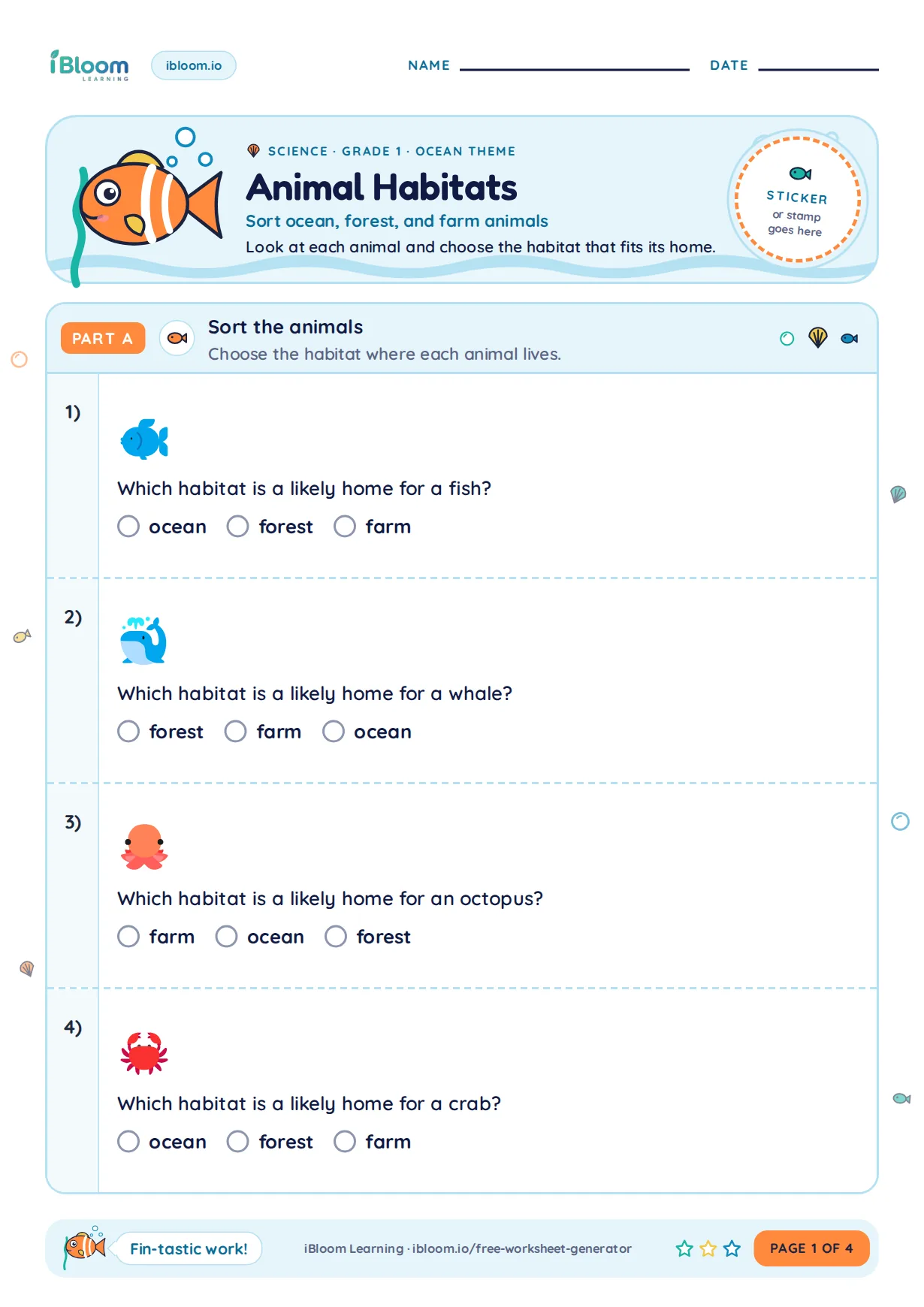 Ocean Forest Farm Habitat — Sort and ClassifyGrade 1 science learners sort animals by ocean, forest, and farm habitats while noticing basic needs and surroundings. This sort and classify worksheet provides a distinct, age-appropriate way to practise the same lesson.Grade 1Free PDF preview
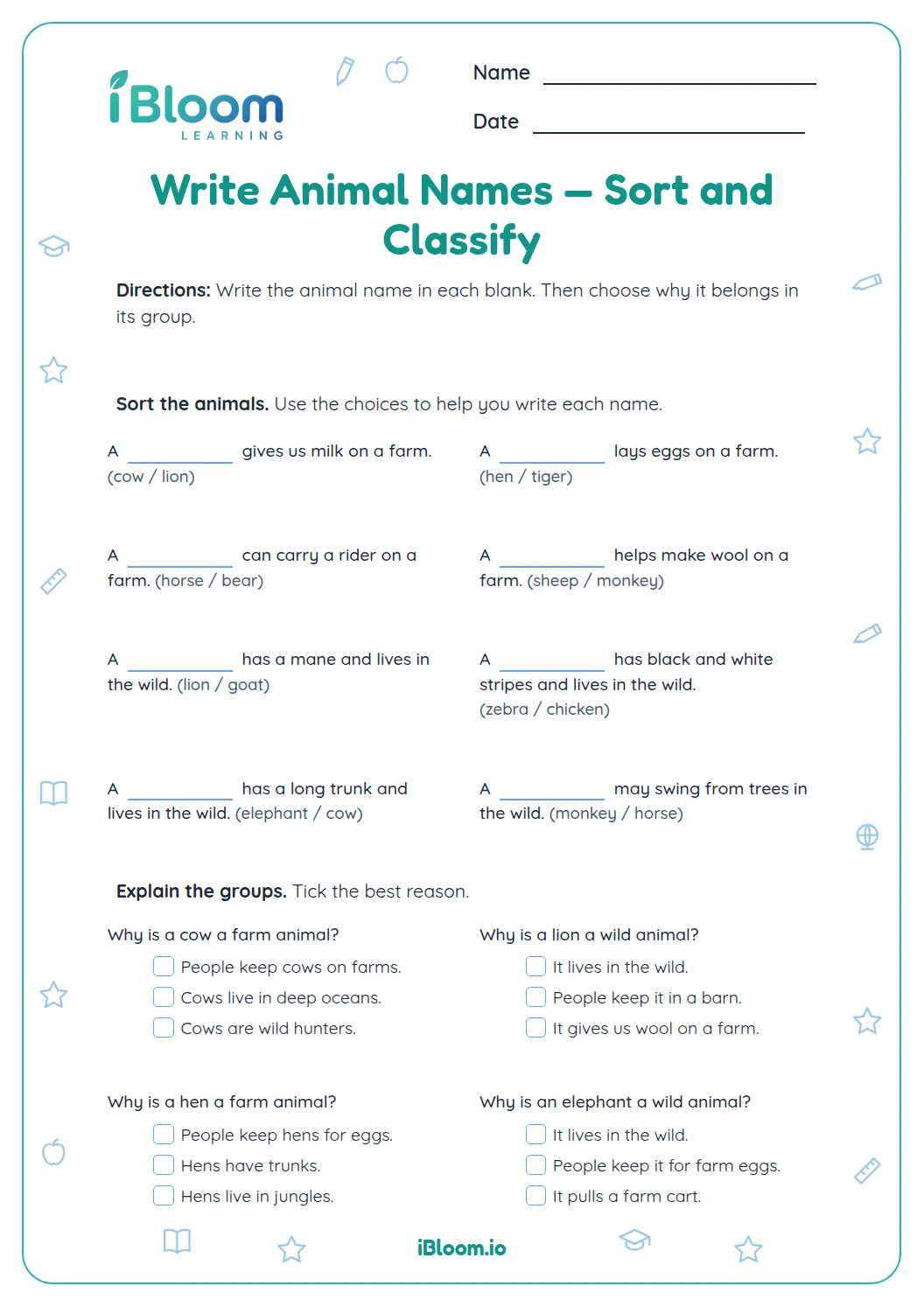 Write Animal Names — Sort and ClassifyGrade 1 science worksheets that help children recognize animals, say their names, and write the words clearly and confidently. This sort and classify worksheet provides a distinct, age-appropriate way to practise the same lesson.Grade 1Free PDF preview
 Adaptations — Label and ModelGrade 1 science worksheets that help children identify how animal body parts and behaviors help animals live in their habitats. This label and model worksheet provides a distinct, age-appropriate way to practise the same lesson.Grade 1Free PDF preview
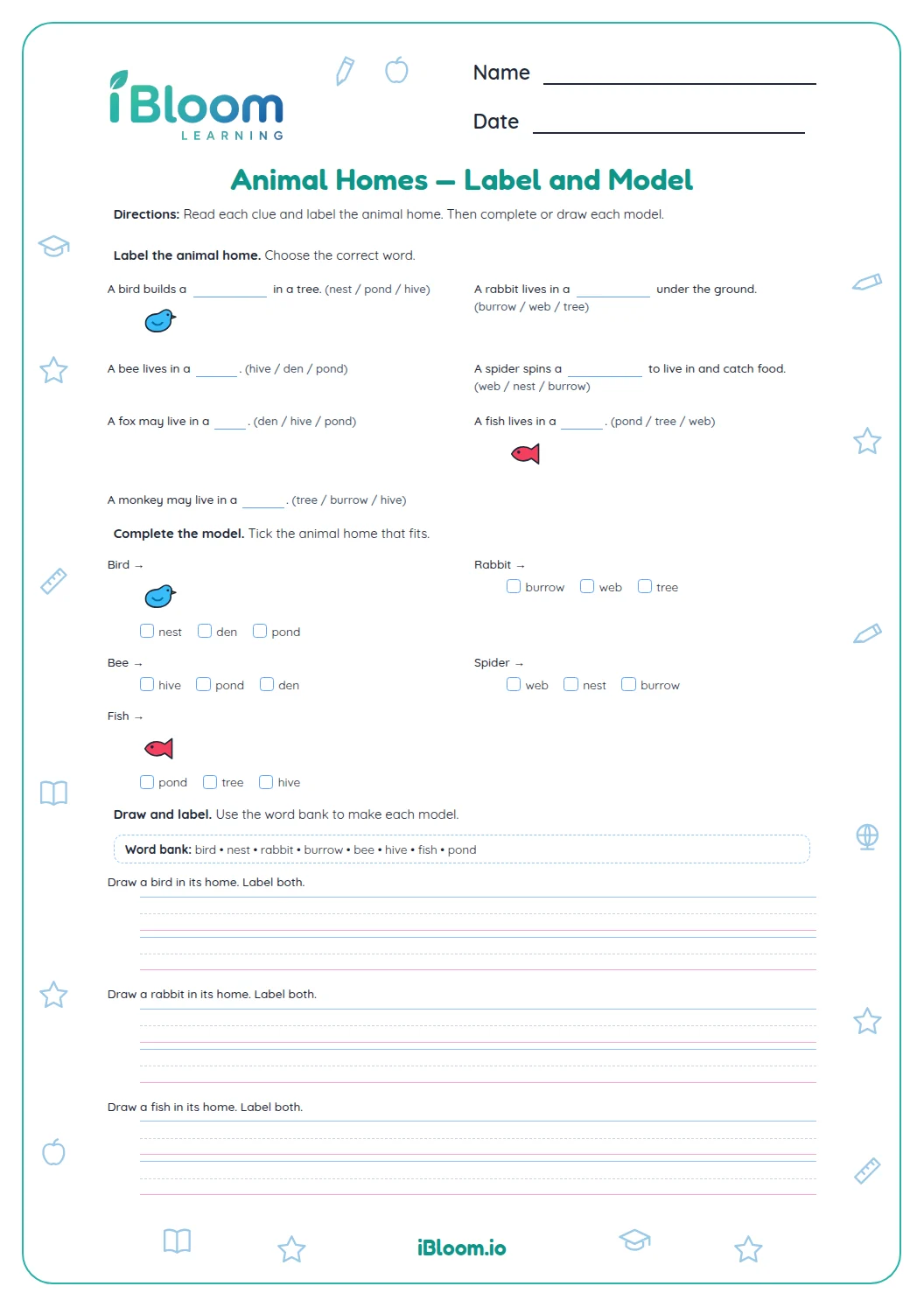 Animal Homes — Label and ModelGrade 1 science worksheets help children identify animal homes such as nests, dens, burrows, webs, hives, ponds, and trees. This label and model worksheet provides a distinct, age-appropriate way to practise the same lesson.Grade 1Free PDF preview
Practice that builds confidence
Building animal observation skills
These Grade 1 science worksheets help children observe animals closely and describe what makes them alike or different. Learners practise animal names, movement, body parts such as legs and wings, coverings, homes, needs, food choices, offspring, inherited traits, life cycles, camouflage, and adaptations.
The printable activities include sorting, matching, labeling, writing animal names, classifying animals, and connecting animals to habitats such as ocean, forest, and farm. Children build early science vocabulary while using pictures and simple facts to explain how animals live and survive.
Grade 1 children begin with what they can see: a bird has wings, a fish lives in water, a turtle has a shell, and a dog has fur. These worksheets turn those observations into science thinking. Children name animals, compare coverings, count or notice legs and wings, and describe movement such as swim, fly, crawl, hop, or walk.

From naming to explaining
The collection moves from simple identification to cause-and-effect ideas. A child may first match a cow to a farm, then explain that animals need food, water, air, and shelter. They compare meat eaters and plant eaters, connect animals to homes, and notice how camouflage or a body part can help an animal stay safe or find food.
Habitats, life cycles, and families
Activities include ocean, forest, and farm habitats, as well as animal homes and young animals. Children match offspring to adult animals, look at how animals help their young, and practise early life-cycle language. Inherited traits are introduced through features that young animals share with their parents, such as body covering, shape, or color patterns.
A simple parent routine
Choose one animal picture and ask three questions: “Where does it live?”, “What does it need?”, and “How does its body help it?” After the worksheet, invite your child to draw the animal’s home and write or say one sentence, such as “The duck has feathers and can swim.” This keeps practice short, concrete, and connected to real-world observation.

Classroom uses and common errors
Teachers can use these printables in science centers, small-group vocabulary work, or as follow-up after reading an animal book. Watch for children sorting only by one visible feature, such as putting all animals with four legs together even when the task asks for habitat. Other common mix-ups include calling every young animal a “baby,” confusing where an animal lives with what it eats, or thinking camouflage means an animal becomes invisible.

Free printable PDF download
Use this grade 1 animals worksheet page to preview the activity, print it, or download it as a PDF for quick practice. It works well for homework, homeschool lessons, tutoring, morning work, revision, and classroom centers.
Answers and answer key support
After the child completes the worksheet independently, parents and teachers can use the answer support or answer key information to check the work, review mistakes, and choose the next practice step.
Why iBloom worksheets help
Each page gives children a clear visual task and a reason to use science words. A child-friendly strategy is “look, name, tell why”: look at the animal, name one feature, then tell why it helps. This supports careful observation, classification, and early explanation without overwhelming first graders.
Helpful answers
Frequently asked questions
What animal science skills do these Grade 1 worksheets cover?
They cover animal names, movement, coverings, legs and wings, habitats, homes, food, needs, camouflage, adaptations, offspring, inherited traits, life cycles, and simple classification.
Are the worksheets mainly reading-based?
No. Many activities use pictures, matching, sorting, labeling, and short writing so first graders can practise science ideas even while their reading skills are still developing.
How can I help my child understand animal habitats?
Ask your child to name where an animal lives and what it can find there, such as food, water, shelter, or space. Then compare two habitats, such as ocean and farm, to spot differences.
Do these worksheets include animal babies and life cycles?
Yes. Children practise matching adult animals with offspring, noticing traits young animals share with parents, and using simple life-cycle ideas appropriate for Grade 1.
What mistakes should I watch for when my child sorts animals?
Check whether your child is sorting by the requested rule. For example, an animal’s number of legs, habitat, food type, or covering are different classification clues.
Is this grade 1 animals worksheet free?
Yes. You can preview it for free and use the printable worksheet for home or classroom practice.
Can I download this grade 1 animals worksheet as a PDF?
Yes. Use the worksheet download option to save a printable PDF, or print the worksheet directly from the page.
Does this grade 1 animals worksheet include answers or an answer key?
When the activity has fixed answers, iBloom includes answer support so parents and teachers can check the completed worksheet.