







About this worksheet
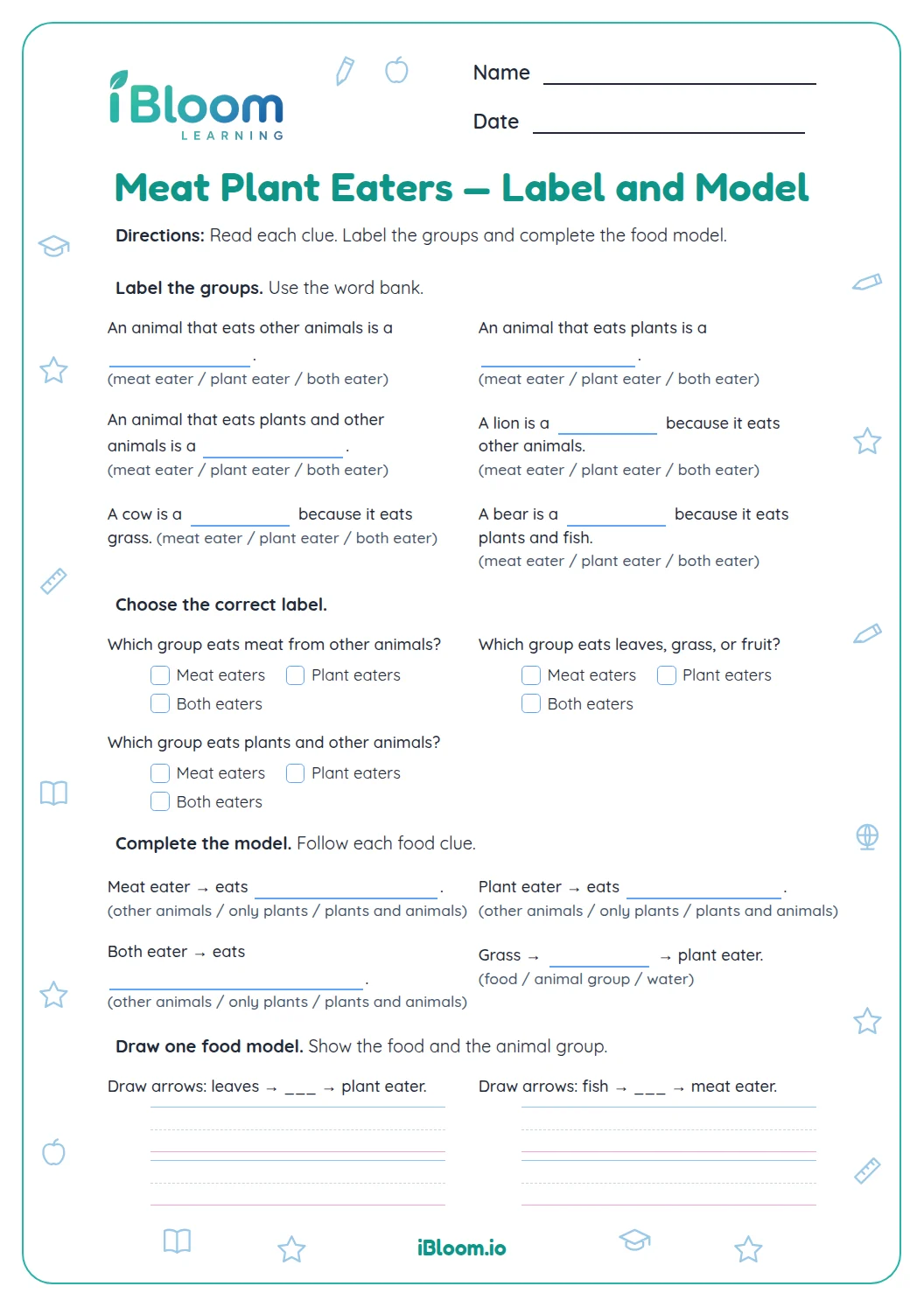
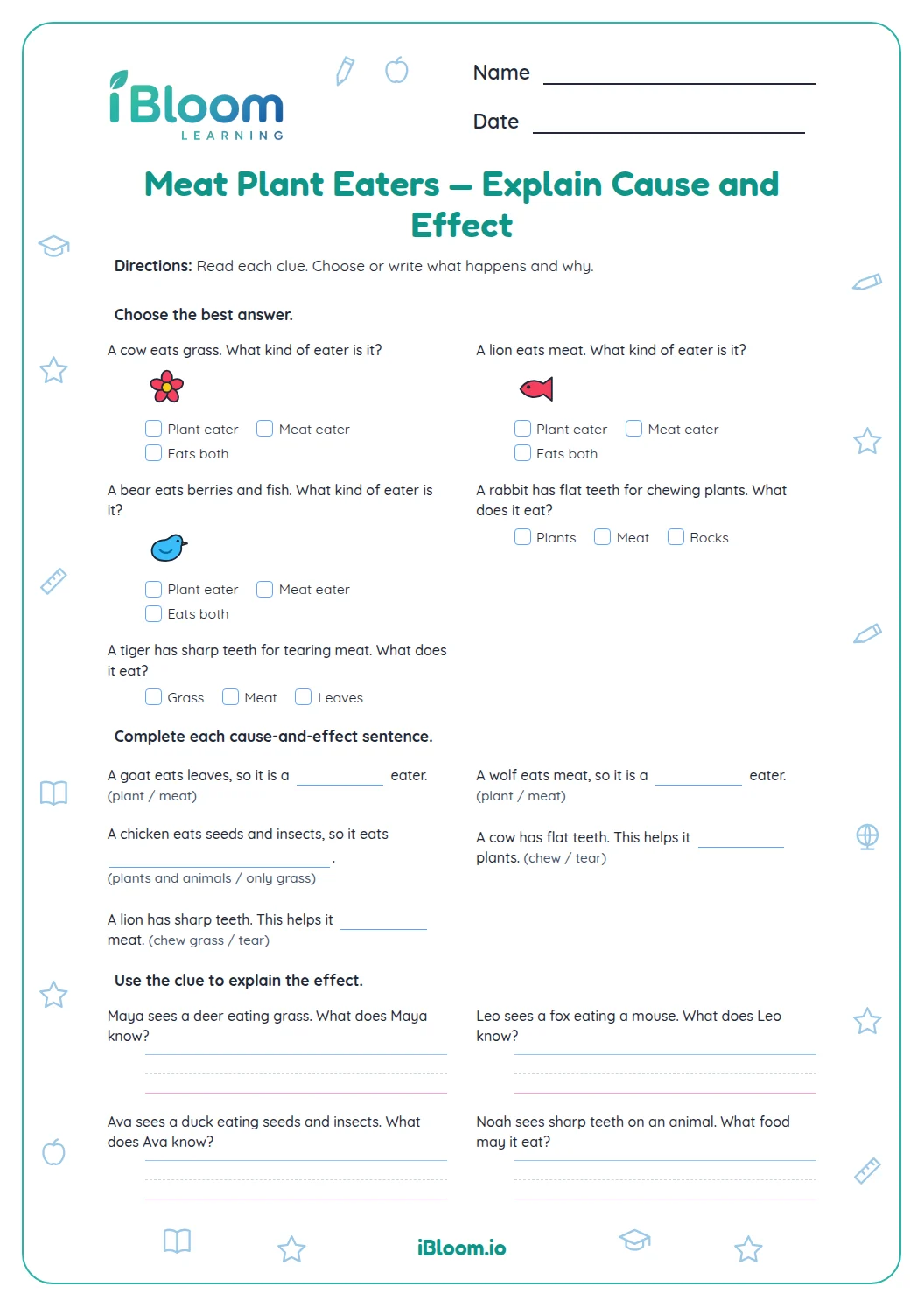
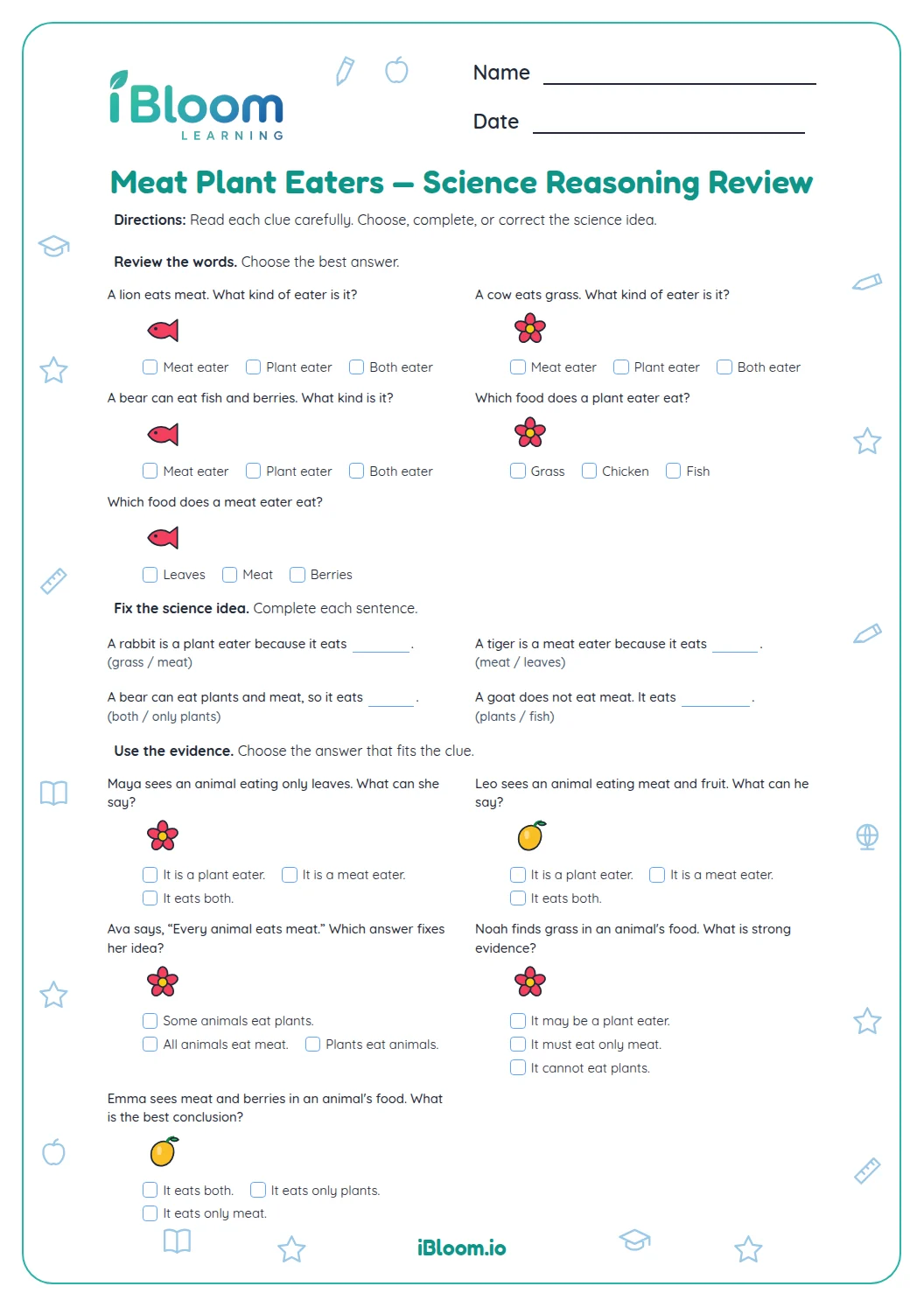
This free Grade 1 science worksheet asks children to sort animals by the foods they eat. Eight pictured animals come with feeding clues, from a cow eating grass to a bear eating berries and fish. Children then classify six more animals from short food clues. The 14 questions practice grouping by evidence: grass, clover and leaves come from plants, while fish and mice are animals. Some animals eat both kinds of food. This supports NGSS K-LS1-1 through observations of animal food needs. A separate answer key lists each group.
Aligned to K-LS1-1
What makes an animal a plant or meat eater?
A plant eater gets food from plants, such as grass, clover, berries, seeds or leaves. A meat eater gets food from other animals, including fish. An animal that eats both plant and animal foods belongs in the “both” group.
Each question gives a food clue. Read the whole clue before choosing a group, so the answer comes from the animal’s food rather than its size or appearance.
How can an animal eat both kinds of food?
Question 3 says that a bear eats berries and fish. Berries come from plants, while fish are animals, so the clue shows both kinds of food. The chicken in question 6 also eats seeds and insects.
For example, “A bear eats berries and fish” leads to both: berries are plant food and fish are animal food.
How does the worksheet build sorting practice?
Part A uses pictures with food clues for eight animals. Part B removes the pictures and asks children to classify six more animals from their clues. In both parts, children write plant, meat or both.
How to use this worksheet
- 1Read the food-group explanation aloud and explain that meat comes from animals.
- 2Look at each animal picture and read its food clue.
- 3Underline or say the food word that helps decide the group.
- 4Write plant, meat or both on the answer line.
- 5Use the answer key to check the food evidence, especially for animals that eat both kinds of food.
Mistakes to check and fix
The mistake
Sorting a bear as only a plant eater because it eats berries.
The fix
Read the full clue: fish are animals, so berries and fish put the bear in both.
The mistake
Putting fish in a different group from meat.
The fix
Fish are animals, so an animal that eats fish is a meat eater.
The mistake
Sorting a chicken as only a plant eater because it eats seeds.
The fix
Notice the insects in its clue too; seeds are plants and insects are animals.
NGSS alignment
Use animal food clues to find patterns in what different animals eat.
On this sheet: Children group animals using supplied feeding observations, then describe shared food patterns in Part C.
Show the official wordingHide the official wording
Use observations to describe patterns of what plants and animals (including humans) need to survive.
What to practice next
Make more practice
Further reading
Questions parents and teachers ask
Does my child need to know these animals’ diets already?
No, each sorting question supplies the food clue needed for its answer. A child can read or hear that a bear eats berries and fish, then sort it into both groups. The animal pictures help identify the subjects, while the words provide the evidence.
Why is a penguin a meat eater on this sheet?
The seal’s clue says it eats fish, and fish are animals. That makes the seal a meat eater on this worksheet. A bear, pig and fox belong in the “both” group because their clues include food from plants and animals.
What words should my child write for each animal?
Write plant for an animal whose clue names only plant food, meat for one that eats other animals, and both when its clue names foods from plants and animals. The answer key lists the group for all 14 clues. For example, the bear eats berries and fish, so its group is both.
Can I read the food clues aloud?
Yes, reading the clues aloud lets your child concentrate on the science sorting task. Pause after the food word and ask where that food comes from. Let the child choose the bubble or write the letter independently, then explain one answer in their own words.
What should I accept for the two written answers?
The key lists plant, meat or both for each animal. For a bear, accept “both” because berries are plant food and fish are animals. Children can explain their choices in their own words; the important step is using each animal’s food clue to choose a group.